Tabriz rugs: fine Persian manufactory in northwest Iran
Tabriz rugs are among the most refined Persian carpets, known for their finely knotted designs and remarkable variety of patterns.
- Region
- Persia / Iran
- Category
- Persian rugs
- Manufacturing
- Hand-knotted
- Knot density
- 120,000 – 1,000,000 knots/m²
Profile
- Manufacturing
- Hand-knotted
- Origin
- Iran — Tabriz, East Azerbaijan Province
- Pile material
- Wool on cotton, sometimes with silk
- Knot density
- 120,000 – 1,000,000 knots/m²
- Features
- Finest knotting quality, Raj classification, often medallion designs
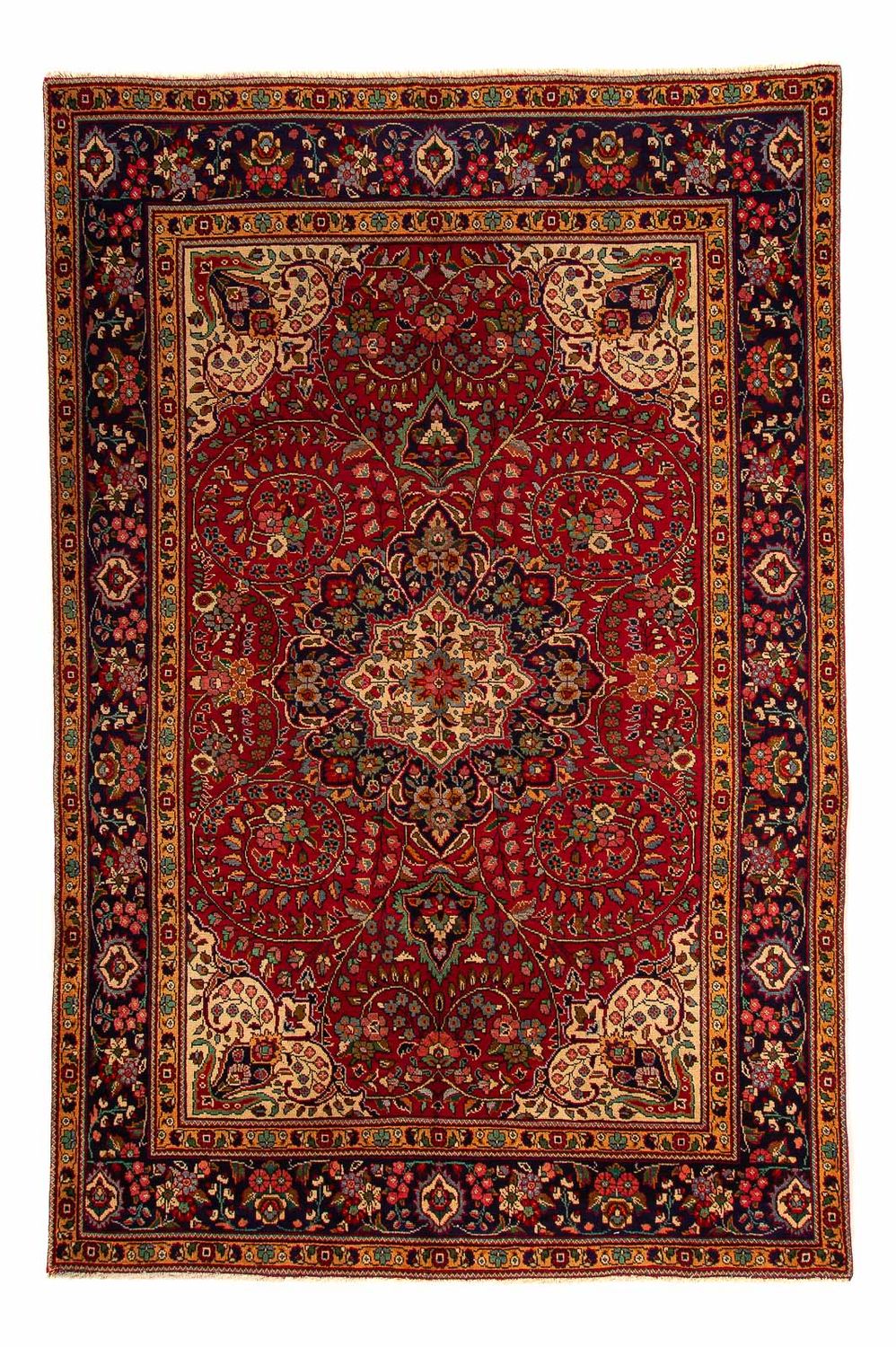
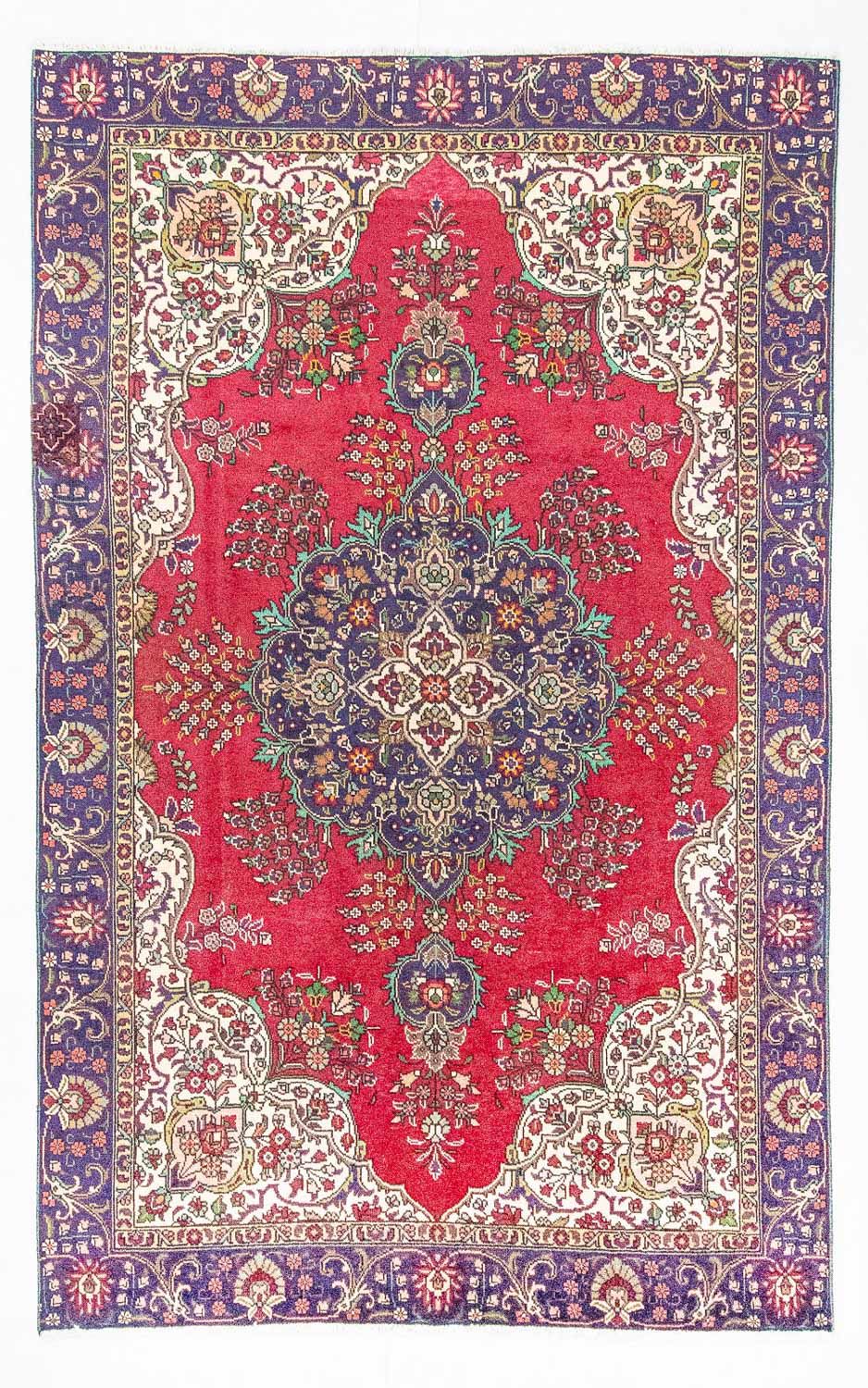
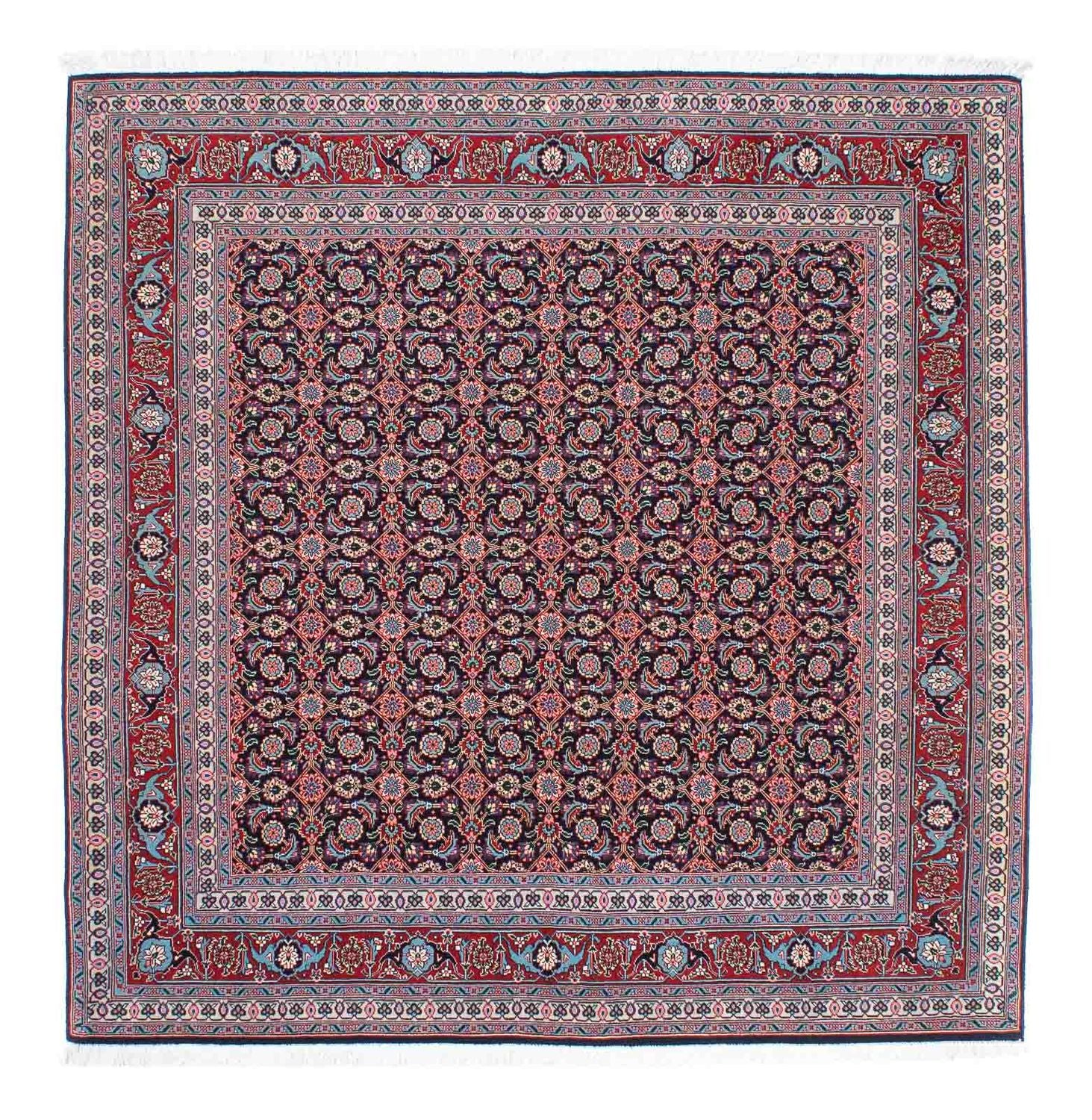
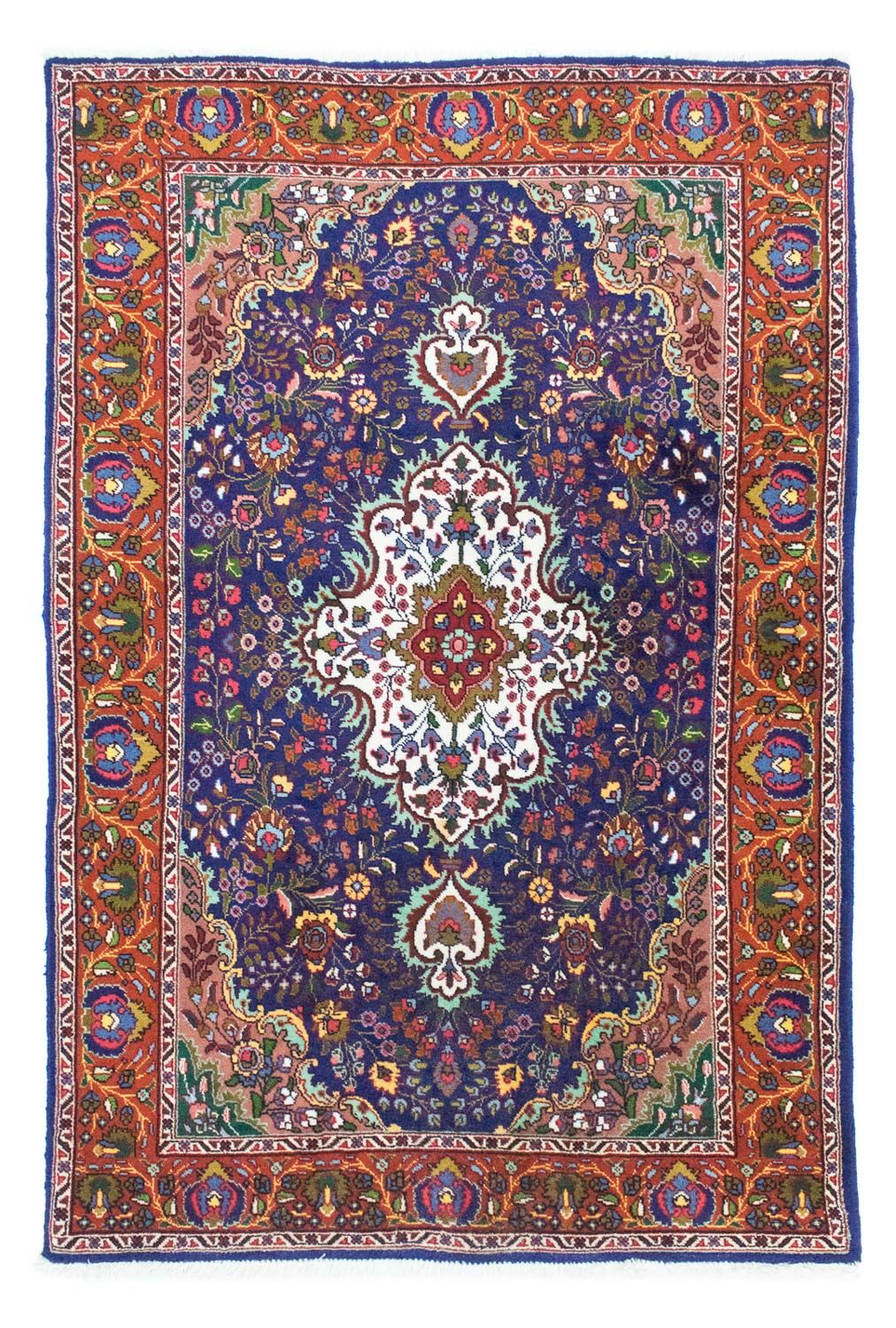
Photo: Morgenland Rugs
Tabriz rugs are hand-knotted Persian rugs from the city of Tabriz in north-western Iran, the historical centre of Persian rug art. Hardly any other provenance covers such a wide range: from sturdy working rug to the finest silk piece of collector quality. Characteristic are the clear, often symmetric pattern drawing, the enormous stylistic variety, and the own quality measure Raj, with which the fineness of a Tabriz is given.
What is a Tabriz rug?
A Tabriz is a hand-knotted rug from the city of Tabriz and its surroundings in the province of East Azerbaijan in Iran. It is knotted with the asymmetric Persian knot on a cotton warp; on top qualities also on silk. The pile is fine kork wool or silk. Unlike most provenances, Tabriz has no uniform quality but is classified by the Raj system, which refers the knot count to a fixed width.
Origin: city and province of Tabriz
Tabriz lies about 600 kilometres north-west of Tehran in the province of East Azerbaijan, of which it is the capital. The region looks back on one of the oldest knotting traditions of Persia. Already in the 15th and 16th centuries Tabriz was a leading centre of court rug art under the Safavid dynasty. To this era belongs one of the most famous rugs of all, the Ardabil rug, today exhibited in the Victoria and Albert Museum in London, whose workshop is presumed to lie in north-west Persia.
A flourishing era was followed by decline and revival. At the end of the 19th century, Tabriz experienced a renaissance through master knotters such as Haji Jalili, which still shapes the city's reputation today. His works from that period fetch collector prices at auction. Today numerous workshops and village ateliers in and around Tabriz produce both classical court patterns and original creations. The city is therefore among the few places where the history of Persian knotting can be traced continuously over several centuries.
Typical features
The most striking feature of a Tabriz is the enormous stylistic variety, probably the broadest of all Persian knotting regions. The repertoire reaches from classical medallion compositions through hunting and garden patterns to the motifs Herati, Mahi (fish ground), and Shah Abbas. Also characteristic are:
- Cleanly drawn, often strictly symmetric compositions
- A central medallion with corner spandrels as the most widespread base scheme
- Fine, differentiated colour gradations, often in a muted palette
- Formats from small accent rugs to large palace rugs
Tabriz knotters traditionally work from a template, the vagireh or the cartoon, which explains the precise, almost graphic feel of many pieces. This discipline sets Tabriz apart from the more freely drawn village and nomad rugs. Related north-west Persian styles are the geometric Heriz from the eastern surroundings, the heavy, dense Bidjar, and the floral Sarough.
Patterns and colours
The palette of a Tabriz is usually more restrained than the bold reds of south-Persian provenances. Common are ivory, beige, rust red, salmon, and a broad spectrum of blue tones finely graded against one another. The Mahi ground, a dense all-over of stylised fish and diamonds around a central rosette, counts as one of the most typical Tabriz patterns and is knotted throughout the region in countless variations. Alongside stand large, open medallion rugs whose calm ground surfaces emphasise the central motif.
Material and knotting technique
Tabriz rugs are knotted from fine kork wool, the soft wool from the undercoat of the sheep, on a cotton warp. Higher-quality grades contain silk accents that highlight contours, blossom centres, or individual details. The finest Tabriz rugs, especially in the upper Raj range, are worked entirely from silk. The robust sheep's wool of the lower qualities, by contrast, makes plain Tabriz rugs hard-wearing working rugs.
Tabriz uses the asymmetric Senneh knot, also called the Persian knot. In contrast to the symmetric Turkish knot, the Senneh knot allows a finer detail drawing and is therefore the precondition for the high knot densities for which the city is famous. The exact sequence from warping the loom to shearing the pile is described in the production section.
Knot density and quality: the Raj system
The quality of a Tabriz is measured by the Raj system. Raj denotes the number of knot pairs across a width of 7 centimetres. The higher the Raj number, the finer the pattern and the more detailed the execution. The system is a particularity of the region and makes Tabriz one of the few provenances with its own, trade-binding measure of fineness. How this number affects value and quality is covered in the article knot density explained.
| Raj | Knots/7 cm | Knots/m² (approx.) | Quality grade | Material |
|---|---|---|---|---|
| 30 | 30 | 90,000 | coarse | wool |
| 40 | 40 | 140,000 | entry | wool |
| 50 | 50 | 250,000 | mid-range | kork wool |
| 60 | 60 | 500,000 | fine | kork wool, silk accents |
| 70 | 70 | 700,000 to 1,000,000 | collector | often pure silk |
Entry qualities (Raj 40) are sturdy working rugs with clear pattern drawing. Mid-range qualities (Raj 50) already offer noticeably finer details and are the most widespread category. Fine qualities (Raj 60) allow complex figurative patterns and are often enhanced with silk accents. Collector qualities (Raj 70 and above) are top pieces in which every detail is precisely worked out, often entirely in silk. The Raj system is therefore the counterpart to the La grades used to describe the fineness of a Nain.
What is a Tabriz rug worth?
The value of a Tabriz depends above all on the Raj grade, the material, size, age, condition, and a possible master signature. Plain woollen Tabriz rugs in the Raj 30 to 40 range sit in price within the range of good working rugs. Fine kork wool and silk qualities from Raj 60 are considerably more expensive, and collector pieces in silk or with the signature of a well-known master knotter such as Haji Jalili reach the top of the market.
High-quality Tabriz rugs of the upper Raj qualities count as a solid store of value, provided they remain in good condition. A guarantee of appreciation, however, does not exist. For the placement, Identifying valuable Persian rugs and the general buying guide help.
How can you tell a genuine Tabriz rug?
Typical signs of a genuine Tabriz include:
- Asymmetric Senneh knot: Tabriz is knotted with the Persian knot, visible in the fine, clear back.
- Cotton warp with fringes from the weave: the fringes are the extended warp threads, not sewn on afterwards. On silk pieces the warp is also silk.
- Knot density matched to the stated Raj: the actual density should match the stated Raj grade. A coarse back at a high Raj label is a warning sign.
- Fine kork wool or silk in the pile with a low-sheared, precisely drawn pattern.
- Typical motif repertoire such as Mahi ground, classical medallion, or Shah Abbas palmettes.
- Signature on collector pieces: high-quality Tabriz rugs sometimes carry the master's signature knotted in.
Since Tabriz is the most versatile Persian provenance, this very breadth makes attribution harder. While an Isfahan or Nain can be recognised by a few marks, a Tabriz should always be judged across knot, material, pattern, and back together. A step-by-step guide is in Is my rug genuine?; the basics are in identifying an oriental rug.
Care
Regular vacuuming in the direction of the pile and occasional professional hand washing preserve the quality. Sharp cleaning agents are to be avoided, as is long, direct sunlight, since it bleaches the natural dyes. Spills should be blotted at once with clear water, without rubbing. Silk Tabriz rugs require particularly gentle treatment and should be cleaned exclusively by specialists. Detailed guidance is in the care overview.
Frequently asked questions
What does the Raj label on a Tabriz mean?
Raj gives the number of knot pairs across 7 centimetres of rug width. Higher Raj values mean finer pattern drawing and a higher knot density. Raj 40 is entry quality; Raj 70 and above counts as a collector piece.
What does a Tabriz rug cost?
The price depends on Raj grade, material, size, age, and condition. Plain woollen Tabriz rugs are affordable; fine kork wool and silk qualities from Raj 60 are considerably more expensive. Collector pieces in silk or with a master signature reach the highest prices.
How do I recognise a genuine Tabriz?
By the knotting technique with the asymmetric Senneh knot, the cotton or silk warp, and the fine kork wool in the pile. The actual knot density should match the stated Raj value, and the pattern should appear clearly on the back.
Why are Tabriz rugs so varied in quality?
Tabriz covers a very wide spectrum from the plain village rug to the workshop masterpiece. The region has no uniform quality grade. Only the Raj classification and the choice of material, whether wool, kork wool, or silk, make the difference tangible.
What is the difference between Tabriz and Isfahan?
Tabriz covers the whole range from coarse to collector quality and is very versatile in motifs, often with the Mahi ground. Isfahan consistently stands for the finest workshop quality with floral patterns, kork wool, and silk, as well as the deep Isfahan blue. Tabriz measures fineness in Raj; Isfahan over the plain knot density.
Are Tabriz rugs value-stable?
High-quality Tabriz rugs, especially from the upper Raj qualities or with a master signature, count as a solid store of value. Raj 60 and Raj 70 hold or grow their value over decades, provided they remain in good condition.
How do I care for a Tabriz rug correctly?
Vacuum regularly in the direction of the pile, do not use harsh cleaning agents, and have a professional hand wash every few years. Avoid direct sunlight and blot spills at once with clear water, do not rub. Have silk Tabriz rugs cleaned only by specialists.
Quality grades
Tabriz rugs are made in various quality grades. Each grade differs in knot density, material, and price.
Tabriz 40 Raj
Shop →An entry-level Tabriz quality, robust, with clear patterns and good wool.
- Pile material
- Wool on cotton
- Knot density
- approx. 140,000 knots/m² (40 knots per 7 cm)
- Features
- 40 Raj, clear medallion patterns, entry-level quality
Tabriz 50 Raj
Shop →A mid-range Tabriz quality with fine knotting and versatile designs.
- Pile material
- Wool on cotton, sometimes with silk accents
- Knot density
- approx. 250,000 knots/m² (50 knots per 7 cm)
- Features
- 50 Raj, fine medallion patterns, good wool, versatile
Tabriz 60 Raj
Shop →A fine Tabriz quality with a high share of silk and richly detailed patterns.
- Pile material
- Kurk wool with silk on cotton
- Knot density
- approx. 500,000 knots/m² (60 knots per 7 cm)
- Features
- 60 Raj, silk highlights, richly detailed, fine
Tabriz 70 Raj
Shop →The finest Tabriz quality, collector pieces with the highest precision.
- Pile material
- Kurk wool and silk on cotton or silk
- Knot density
- approx. 700,000 – 1,000,000 knots/m² (70 knots per 7 cm)
- Features
- 70 Raj, collector pieces, highest precision, finest wool
Impressions of the origin
Places, landscapes and landmarks around the home of Tabriz rugs. Click any image for a larger view.
Master weavers
These masters and workshops have shaped the Tabriz tradition.
Related styles
Isfahan
Isfahan rugs from the former Safavid capital are considered the pinnacle of Persian rug knotting, exceptionally fine and elegant.
Heriz
Heriz rugs from northwestern Iran are known for their bold geometric medallions and exceptional durability.
Ardabil
Ardebil rugs come from northwestern Iran and often show geometric patterns with Caucasian influence.


