Senneh rugs: finest Kurdish knotting from Sanandaj
Senneh rugs from Sanandaj in Iranian Kurdistan are some of the finest tribal rugs, known for their thin, almost flat pile.
- Region
- Persia / Iran
- Category
- Persian rugs
- Manufacturing
- Hand-knotted
- Knot density
- 150,000 – 400,000 knots/m²
Profile
- Manufacturing
- Hand-knotted
- Origin
- Iran — Sanandaj, Kurdistan Province
- Pile material
- Wool on cotton
- Knot density
- 150,000 – 400,000 knots/m²
- Features
- Very thin pile, fine knotting, classic Herati or boteh fields
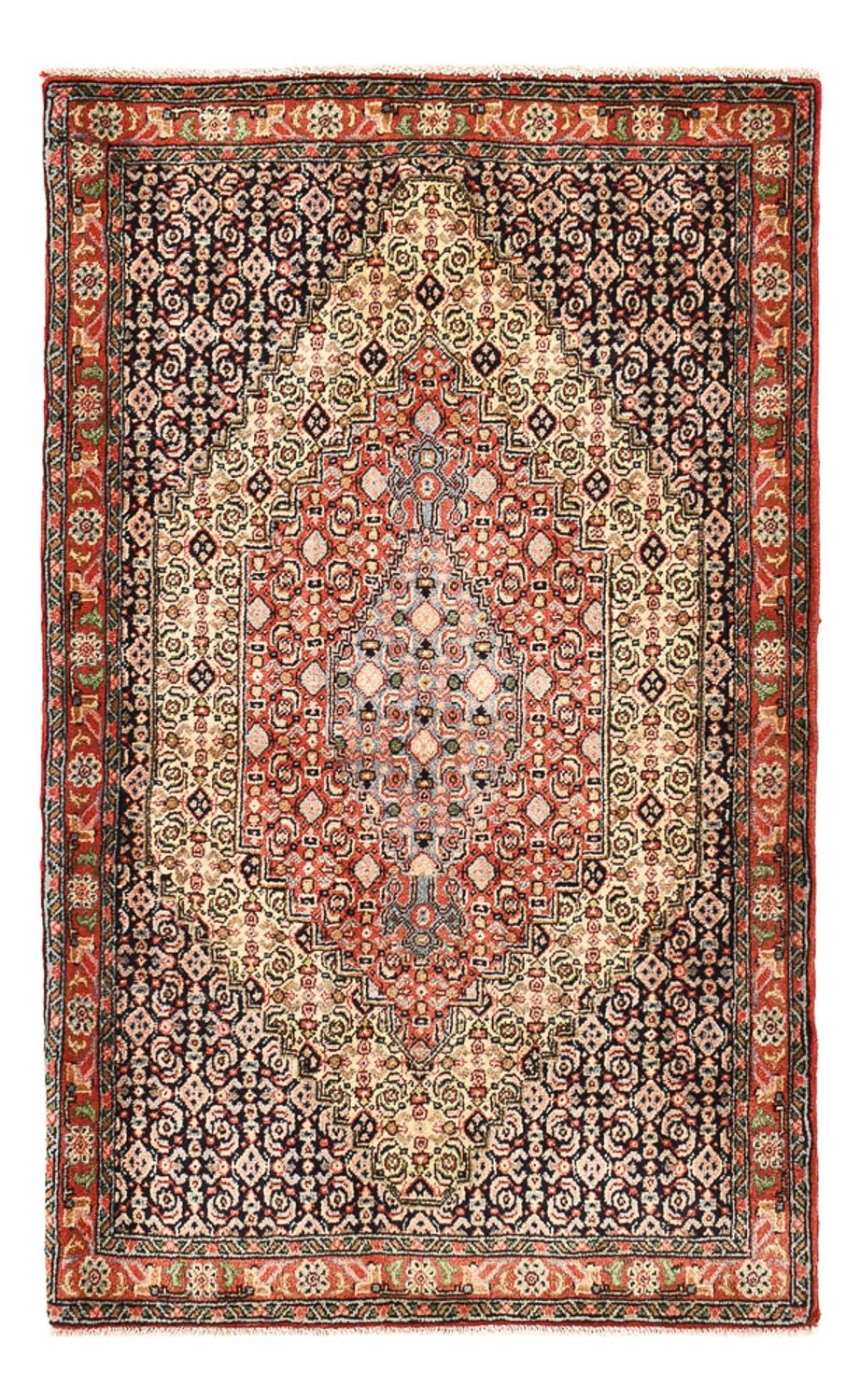
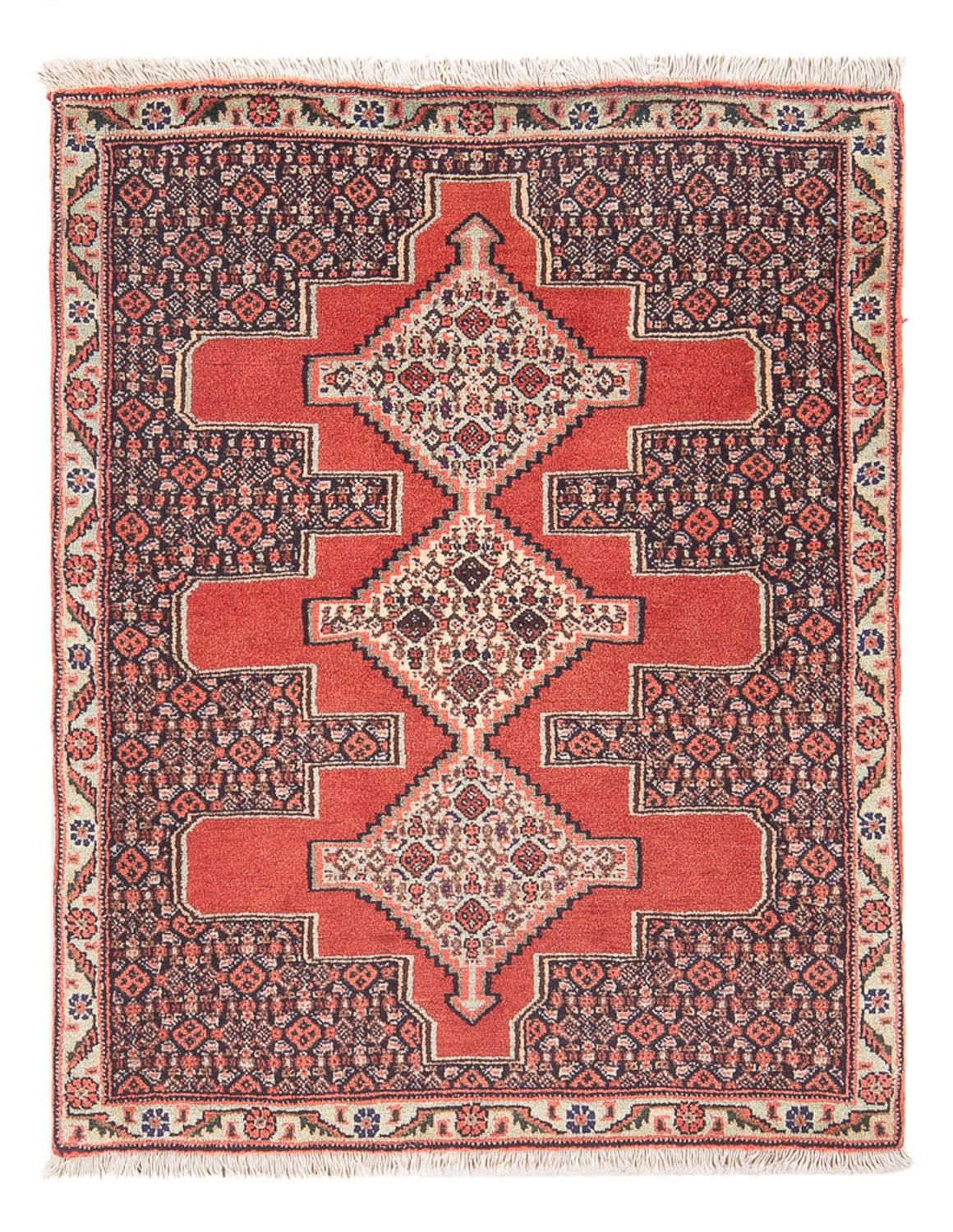
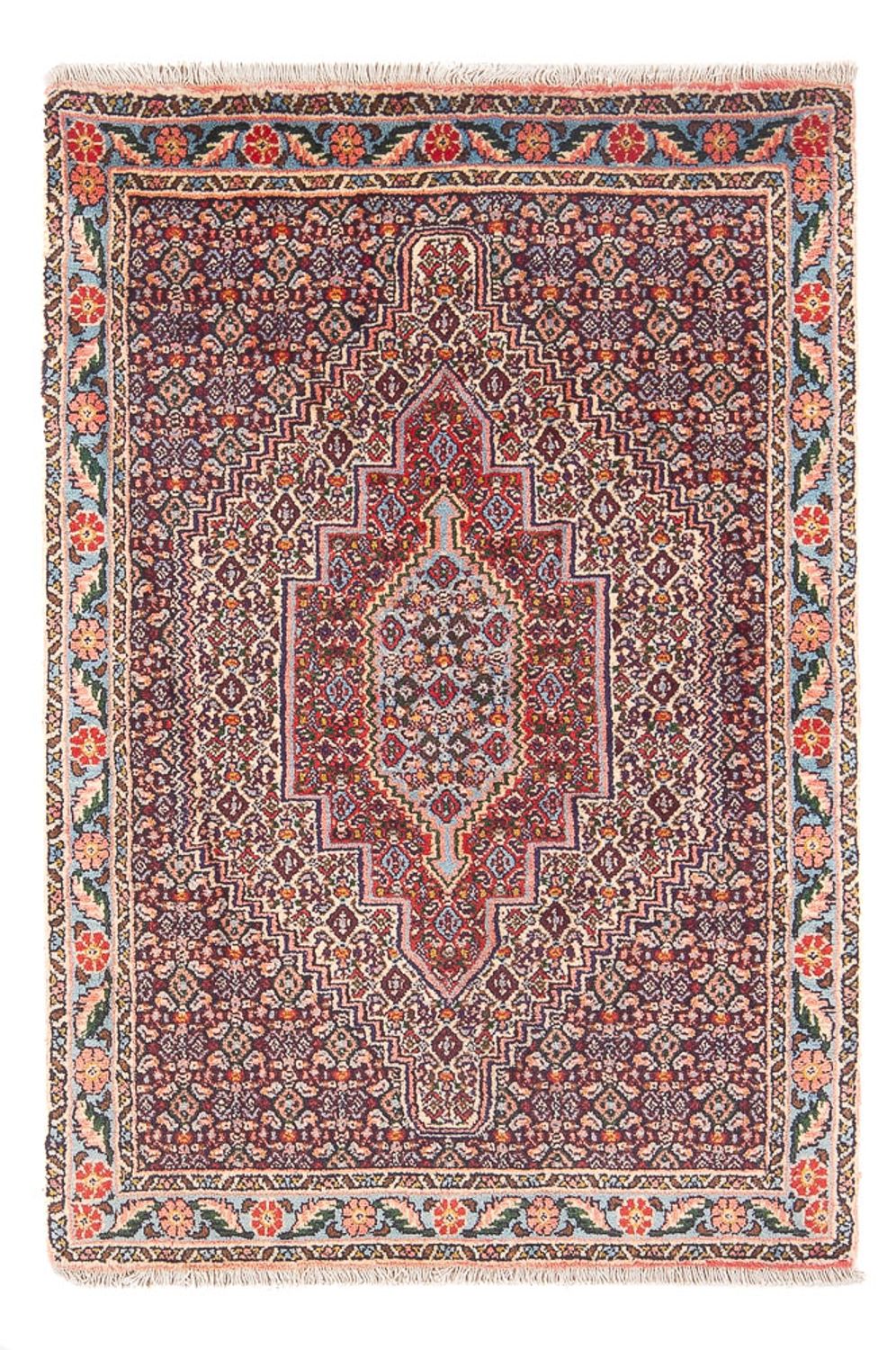
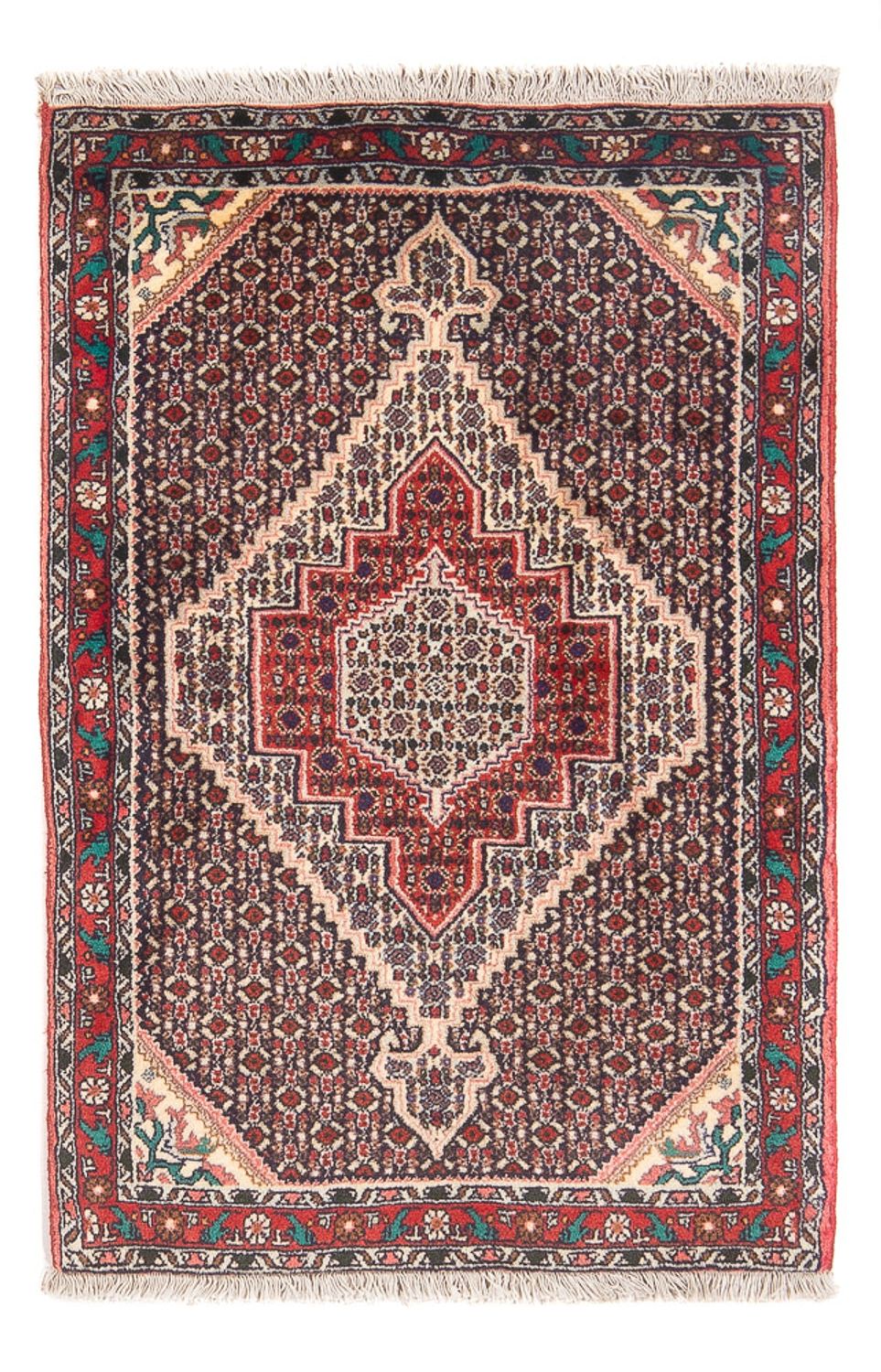
Photo: Morgenland Rugs
Senneh rugs belong to the finest Kurdish Persian rugs and come from the western Iranian city of Sanandaj, historically called Senneh. They are famous for their exceptionally fine knotting, the very short pile, and a precisely drawn Herati pattern. At the same time they carry one of the best-known names in rug studies, for the asymmetric knot is named after Senneh. Of all things, this knot is not traditionally used in genuine Senneh rugs. This article explains the origin, patterns, materials and knotting technique, clears up the famous knot paradox, and covers value, authenticity, and care.
What is a Senneh rug?
A Senneh rug is a hand-knotted Kurdish rug from the city of Sanandaj (formerly Senneh) and its immediate neighbouring villages in the Iranian province of Kordestan. Characteristic features include a very fine knotting, an extremely short-sheared pile, and a small-scale, exactly drawn Herati pattern. Senneh rugs count as the finest products of the Kurdish knotting tradition and so stand clearly above the coarser, stronger tribal and village rugs that one otherwise associates with Kurdish knotting craft.
The name Senneh is doubly assigned in the rug world. It denotes both this fine rug type and the asymmetric knot known worldwide as the Senneh knot. The fact that both bear the same name regularly causes confusion, because the genuine Senneh rug is precisely not knotted with the Senneh knot.
Origin
Sanandaj lies in western Iran near the Iraqi border and is the cultural centre of the Iranian Kurds. The city historically bore the name Senneh, under which its rugs became internationally known. The Kurdish knotting tradition reaches far back in the region, and Senneh rugs already gained recognition in the West in the 18th and 19th centuries as particularly fine pieces. Production was concentrated in the city itself and the immediately surrounding villages, where Kurdish families refined the knotting craft across generations.
This refinement sets Senneh apart from the rest of Kurdish knotting craft. While tribes and villages of the wider region, for example around Bidjar or Koliai, are known for sturdy, boldly patterned rugs, Senneh developed an urban-fine signature with a thin pile and small-scale drawing. The region of Kurdistan is also famous for its flat-woven Kelim Senneh, which shows similar patterns but arises in a different technique. Today genuine Senneh rugs are knotted more rarely, since many knotters have moved into other professions.
Patterns and colours
Senneh rugs are finely and precisely drawn. The defining motif is the Herati pattern with its fish-spine leaf motifs around a small rosette, drawn across the field in particularly small-scale, exact execution. Often it lies as an all-over over the whole surface; a fine diamond medallion in the centre also frequently appears. The detailed borders consist of several narrow stripes framing the patterned field densely. This small-scale work is only possible thanks to the high knot density and the short pile.
The palette is muted and harmonious. Dominant are dark blue or wine-red ground tones, complemented by restrained accents in ivory, gold, and various blue nuances. Antique pieces may contain silk yarn for individual accents. A special feature of fine old Senneh is the occasional use of a light, finely patterned ground on which the Herati pattern feels delicate and translucent. Senneh rugs are valued above all for their balanced colour composition and the clean execution of the smallest details.
Material and knotting technique
Senneh rugs are traditionally knotted from high-quality sheep's wool for the pile, while warp and weft are usually cotton. The pile is sheared very short, which alone allows the sharp, precise effect of the patterns and at the same time defines the thin, firm character of these rugs. Antique examples occasionally use silk for individual accents. An overview of the fibres in use can be found in the materials section.
Here lies the famous paradox. The asymmetric knot is called the Senneh knot in rug studies, named after the city. Senneh rugs themselves, however, are traditionally knotted with the symmetric Turkish knot, that is, precisely not with the asymmetric knot named after them. How this naming came about is not finally clarified, but the term has settled firmly into specialist usage. What matters in practice is the correct distinction: the term Senneh knot means the asymmetric knot type, while the Senneh rug is knotted symmetrically. Both knot types and their properties are explained in the overview of knot types; the full sequence from warping the loom to shearing is described in the article on rug production.
Knot density and quality
Senneh rugs count among the most finely knotted Kurdish rugs. Knot density typically lies between roughly 300,000 and 600,000 knots per square metre; fine pieces reach the upper end of this range. This high density combined with the very short pile is the precondition for the small-scale Herati pattern and the sharp drawing. What knot density really says, and why it does not alone decide quality, is covered in its own article.
Beyond density, the merit of a Senneh rests above all on the fineness and regularity of the pattern, the wool quality, the harmony of colours, and condition. A good piece holds the Herati pattern across the whole surface exactly and evenly, with clean contours down to the smallest motifs.
| Style | Relation to Senneh | Knot type | Typical features |
|---|---|---|---|
| Senneh | finest Kurdish knotted rug | symmetric (Turkish) | very fine, short pile, small-scale Herati |
| Kelim Senneh | flat-woven, same region | no knot (tapestry) | pile-like pattern, no pile |
| Bidjar | Kurdish, neighbouring | symmetric (Turkish) | extremely dense and heavy, very robust |
| Koliai | Kurdish, Hamadan area | symmetric (Turkish) | coarse, strongly geometric, robust |
| Hamadan | western Iranian, neighbouring | symmetric (Turkish) | village rugs, single weft, geometric |
| Ghom silk | fine silk centre (for comparison) | asymmetric (Persian) | pure silk, highest density, floral |
What is a Senneh rug worth?
Senneh rugs are among the most technically demanding Persian rugs, since the high knot density and the fine drawing require a great deal of time. A medium-sized Senneh can occupy an experienced knotter for six months to a year. Good pieces therefore sit above many plain village rugs. The value of a specific piece depends on age, fineness, knot density, wool quality, dye, size, and condition. Fine antique Senneh rugs with natural dyes and exact drawing are sought after by collectors, especially since genuine new Senneh rugs have become rarer.
For a grounded assessment, see the overview What is my rug worth? and the article Identifying valuable Persian rugs. Practical guidance on selection and purchase is in the buying guide.
How can you tell a genuine Senneh rug?
Typical signs of a genuine, hand-knotted Senneh include:
- Very fine knotting with a short pile: the Herati pattern is small-scale and sharply drawn; the back shows a clear, fine knot grid.
- Symmetric Turkish knot: unlike what the name suggests, the genuine Senneh is knotted symmetrically, not with the asymmetric Senneh knot.
- Thin, firm body: thanks to the short pile and the fine knotting, the rug feels thin and taut.
- Muted colour world in dark blue or wine red with fine accents in ivory, gold, and blue.
- Several narrow borders framing the field densely.
- Real fringes: the fringes are the extended warp threads, not sewn on.
A general step-by-step check of authenticity and hand-knotting is set out in Is my rug genuine?; an overview of the marks of hand-knotted rugs can be found under identifying hand-knotted rugs. For fine or supposedly old pieces, an expert appraisal is recommended.
Care
Senneh rugs are relatively easy to care for and hard-wearing thanks to their dense knotting and short pile. Regular vacuuming in the direction of the pile and occasional professional cleaning preserve colours and patterns. Spills should be blotted at once with clear water, without rubbing. If an antique piece contains silk accents, particular caution is required for cleaning; when in doubt, it belongs in expert hands. Long, direct sunlight will fade the colours. Detailed guidance is in the care overview.
Frequently asked questions
Is a Senneh rug knotted with the Senneh knot?
No, and that is the best-known paradox of rug studies. The asymmetric knot is known worldwide as the Senneh knot, but genuine Senneh rugs are traditionally knotted with the symmetric Turkish knot. The name of the knot and the knotting technique of the rug therefore do not match.
Why, then, is the asymmetric knot called the Senneh knot?
The term has settled historically into specialist usage and chose the city of Senneh as its namesake, without the rugs from there actually being worked with this knot. How exactly the attribution came about has not been finally clarified. What remains is the confusion, so knot type and rug type should always be kept cleanly apart. Both knot types are explained in the overview of knot types.
Where does a Senneh rug come from?
From the city of Sanandaj in western Iran near the Iraqi border, the cultural centre of the Iranian Kurds in Kordestan province. The city was historically called Senneh, from which the rug takes its name.
What is the difference between a Senneh rug and a Kelim Senneh?
The Senneh rug is knotted and has a short pile; the Kelim Senneh is flat-woven and has no pile. Both come from the same region and often show similar patterns but differ fundamentally in technique and feel. The kilim arises by crossing warp and weft threads, not by knotting.
What distinguishes a Senneh from other Kurdish rugs?
Senneh is the finest expression of Kurdish knotting craft, with high knot density, a very short pile, and the small-scale Herati pattern. Other Kurdish rugs such as Bidjar or Koliai, by contrast, are coarser, thicker, and more boldly patterned. Bidjar is also known for its high weight and extreme density.
How do I care for a Senneh rug correctly?
Vacuum regularly in the direction of the pile, blot spills at once with clear water without rubbing, and have the rug professionally cleaned every few years. Thanks to the short pile, the Senneh is quite easy to care for. With antique pieces with silk accents, caution is required; when in doubt, choose expert cleaning. Avoid long, direct sunlight.
Impressions of the origin
Places, landscapes and landmarks around the home of Senneh rugs. Click any image for a larger view.


