Kashkuli rugs: finest Qashqai knotting of Fars Province
Kashkuli rugs are knotted by a refined Qashqai sub-tribe in Fars and show fine Qashqai medallions in cleaner workshop quality.
- Region
- Persia / Iran
- Category
- Nomad rugs
- Manufacturing
- Hand-knotted
- Knot density
- 100,000 – 250,000 knots/m²
Profile
- Manufacturing
- Hand-knotted
- Origin
- Iran — Fars Province, Qashqai sub-tribe
- Pile material
- Wool on wool or cotton
- Knot density
- 100,000 – 250,000 knots/m²
- Features
- Fine Qashqai medallions, clean workshop quality, vivid colors
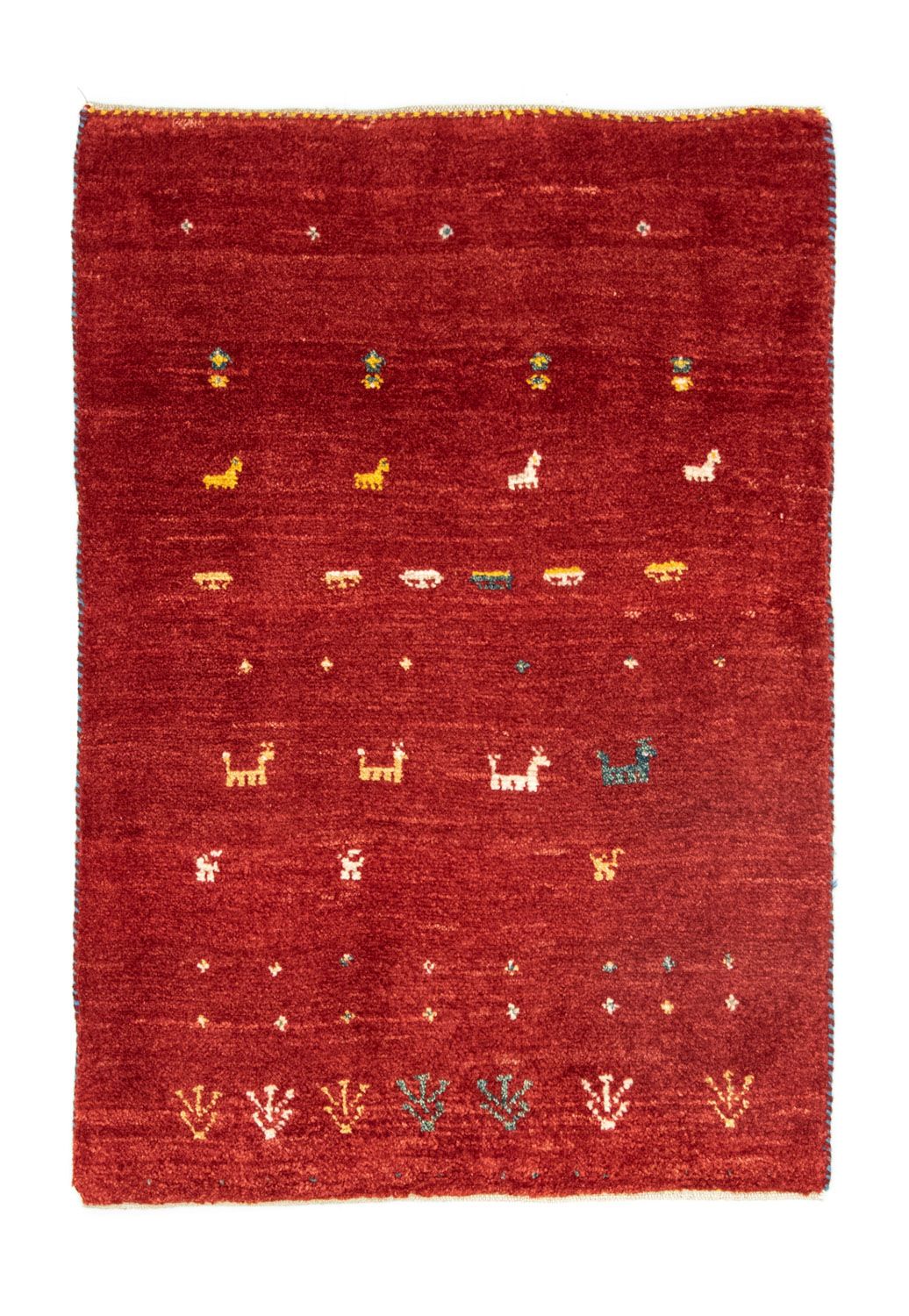
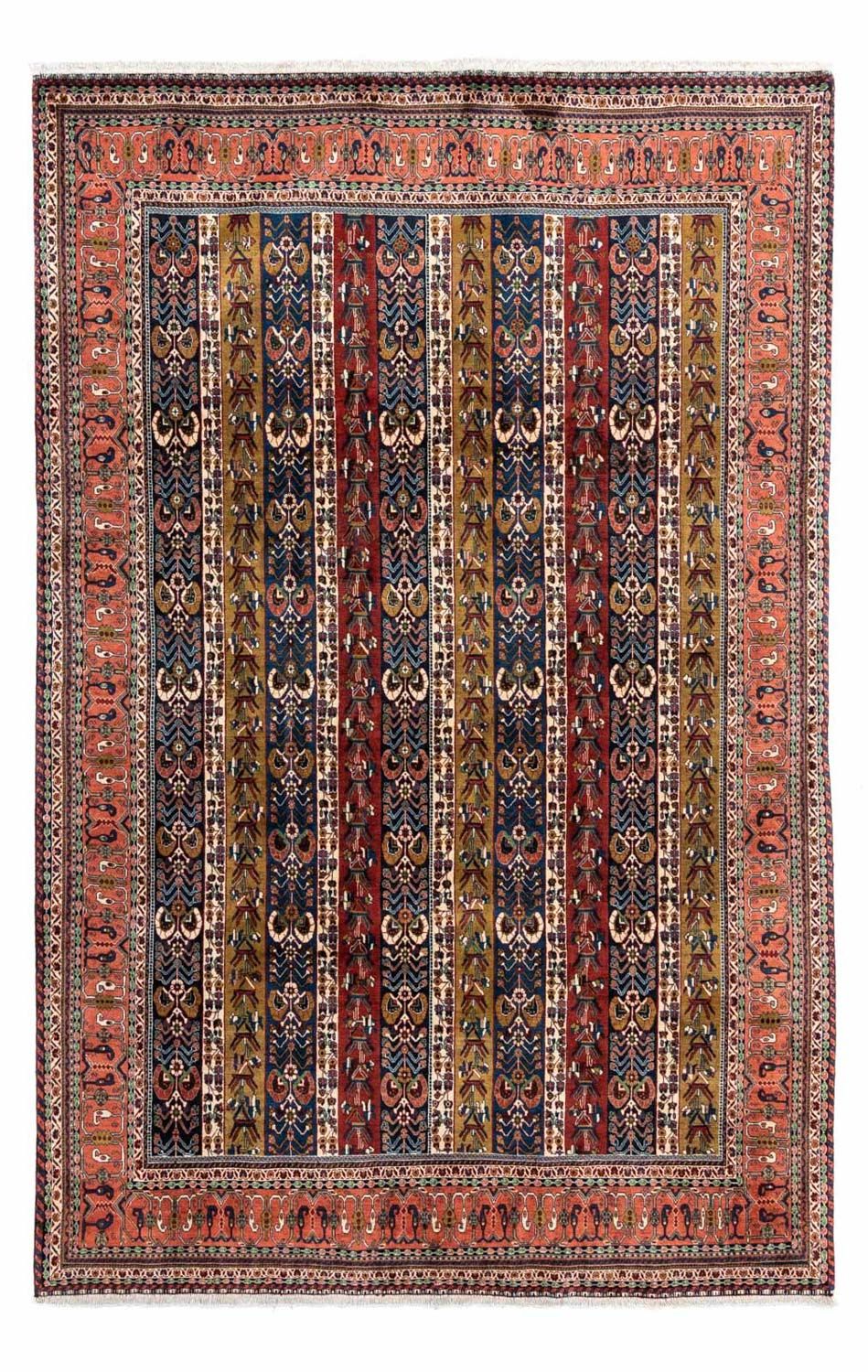
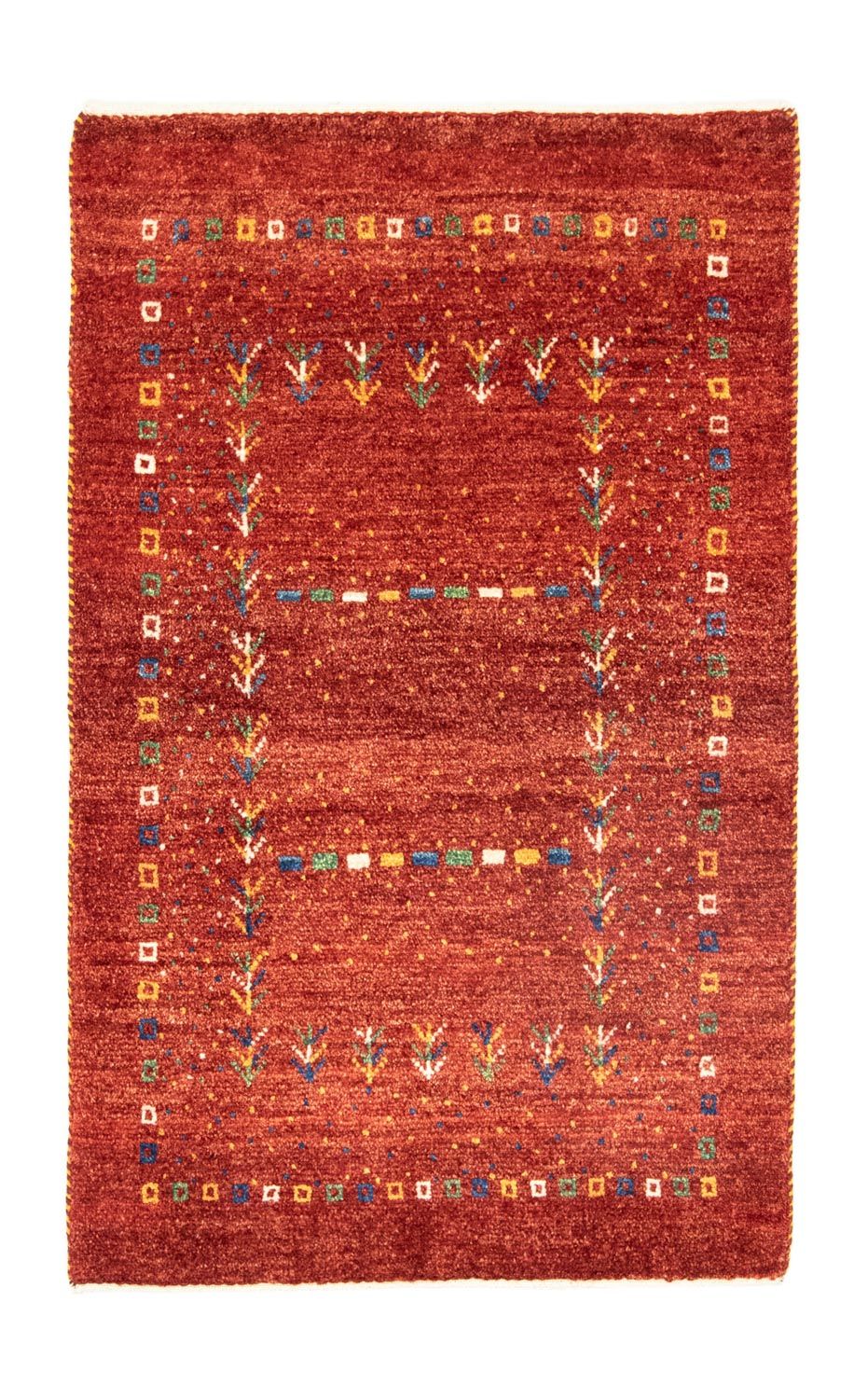
Photo: Morgenland Rugs
Kashkuli rugs are among the finest nomadic rugs of Persia. They are knotted by the Kashkuli, a subgroup of the Qashqai confederation in the southwestern Persian province of Fars around the city of Shiraz. Unlike most tribal rugs, they combine a nomadic visual language with an unusually dense, clean knotting. This places them at the top of what tribal knotting in Fars produces.
What is a Kashkuli rug?
A Kashkuli is a hand-knotted wool rug of the Qashqai subgroup of the same name. It is characterized by strictly geometric diamond medallions, strong color contrasts, and a knot density that is high for a nomadic context. The Kashkuli thus belongs to the Persian rugs, uniting nomadic origin and refined workmanship in one piece.
While many tribal rugs deliberately look coarse and free, the Kashkuli shows clear contours, precise repetitions, and a controlled composition. This refinement sets it apart from coarser relatives such as the Gabbeh and makes it the top product of Qashqai knotting.
Origin
The Kashkuli are one of the five major subgroups of the Qashqai, a Turkic-speaking tribal confederation in the province of Fars. Their territory lies in the area around Shiraz, where they traditionally migrated semi-nomadically between summer and winter pastures. Their knotting tradition reaches back generations and is closely tied to the daily life of the migrating shepherding communities.
Within the Qashqai, the Kashkuli are regarded as the group producing the finest ware. While other tribes of Fars tended to knot medium-fine everyday rugs, the Kashkuli specialized in high knot densities and carefully drawn patterns. Trade in their rugs ran, and still runs, largely through the Shiraz market, which is why some pieces formerly appeared under the umbrella name Shiraz.
Patterns and colors
The most important design feature is the diamond-shaped central medallion, often stepped multiple times and surrounded by smaller geometric motifs. Stylized animals such as goats or birds appear in the field, along with hooks, stars, and boteh shapes. The borders show jagged bands or strongly simplified floral motifs across several narrow stripes.
The color spectrum favors deep base tones, especially dark blue, rich red, and brown, contrasted by light accents in ivory, yellow, or pale blue. These clear light-dark contrasts give the Kashkuli its lively, precise look. Older pieces are dyed entirely with plant-based colors, which can lead to slight abrash.
Material and knotting technique
Knotting uses only sheep's wool on a foundation warp of wool, occasionally goat hair. The virgin wool of the mountain sheep of Fars is firm, lustrous, and takes natural dyes well. The pile is cut lower and more evenly than on a Gabbeh, which is what makes the fine drawing visible in the first place.
Knotting uses the asymmetric Persian knot, the Senneh knot, which allows the geometric motifs to be rendered precisely. The selvedges are reinforced and often wrapped in colored wool. How a rug is made on the loom is described in the production overview, and the materials used are also explained there.
Knot density and quality
The knot density of a Kashkuli typically lies between 100,000 and 250,000 knots per square meter, markedly higher than for most other nomadic rugs of Fars. This fine, dense knotting is the hallmark of the style and the reason Kashkuli rugs are regarded as the highest-quality tribal ware of the region.
How knot density influences quality and price is covered in a dedicated article. With the Kashkuli, alongside the high density, the clarity of the pattern drawing, wool quality, and purity of color all count. A good piece combines fine knotting with the lively, lustrous wool of the nomadic tradition.
Kashkuli and related Qashqai and Fars rugs at a glance
| Style | Relationship / origin | Knot density | Character |
|---|---|---|---|
| Kashkuli | Qashqai subgroup, Fars | approx. 100,000 to 250,000 knots/m² | finest nomadic knotting, diamond medallions |
| Qashqai | Qashqai confederation, Fars | approx. 80,000 to 180,000 knots/m² | medallions, animal motifs, vivid colors |
| Yalameh | Qashqai-related tribe, Fars | approx. 60,000 to 140,000 knots/m² | rows of diamond medallions |
| Shiraz | umbrella term for Fars nomadic ware | approx. 60,000 to 150,000 knots/m² | tribal motifs, trade via Shiraz |
| Gabbeh | Qashqai and Lori, Fars and Zagros | approx. 40,000 to 200,000 knots/m² | coarse, high pile, abstract |
| Afshar | Afshar tribes, Kerman | approx. 80,000 to 180,000 knots/m² | boteh and diamond motifs, vivid colors |
What is a Kashkuli rug worth?
The value of a Kashkuli depends on knot density, wool quality, dyeing, age, size, and condition. Because of the fine knotting, Kashkuli rugs sit in the upper range of nomadic ware and above comparable, coarser Fars rugs. Older, purely plant-dyed pieces with clear drawing and a fine knot are particularly sought after.
Dense, even knotting, luminous natural dyes, and a cleanly drawn medallion are value-driving features. Within the southern Persian nomadic rugs, the Kashkuli therefore ranks at the top. The rug value overview and the general buying guide provide market context.
How do you recognize a genuine Kashkuli rug?
Typical features of an authentic Kashkuli include:
- High, fine knot density: unusually dense and even knotting for a nomadic rug.
- Pure wool on a wool warp: pile and warp are usually wool, the yarn feels firm and lustrous.
- Clear diamond medallion: a precisely drawn, often stepped central motif with geometric scatter patterns.
- Strong light-dark contrasts: deep base tones meet light accents in ivory or yellow.
- Reinforced, wrapped selvedges: the sides are secured with colored wool.
- Hand-knotted back: the pattern shows clearly, slight irregularities reveal the handwork.
Machine-made imitations look too perfect and even on the back. How to test authenticity and origin is shown in the guide recognize a rug, complemented by recognize origin.
Care
The medium-high, dense wool pile of a Kashkuli is durable and easy to care for. Regular vacuuming in the pile direction is enough for daily use. Blot stains immediately with clear water, without rubbing. Professional cleaning every few years preserves luster and color. Long direct sunlight fades natural dyes. Detailed notes are in the care overview.
Frequently asked questions
What is the difference between Kashkuli and Qashqai?
The Kashkuli are a subgroup of the Qashqai confederation. Their rugs are usually more finely and densely knotted than common Qashqai ware and show a more compact, strictly geometric pattern language. A Qashqai is on average somewhat coarser and freer in drawing. Both come from the province of Fars and belong to the Persian rugs.
Why are Kashkuli rugs usually small format?
Because they come from a nomadic way of life in which a rug had to remain transportable. Traditional Kashkulis usually measure between about 1.50 x 2.00 meters and 2.50 x 3.50 meters. Larger formats only emerged with increasing settlement in the 20th century.
What does a Kashkuli rug cost?
Because of the high knot density, Kashkulis sit in the upper range of nomadic ware. Knot density, wool quality, dyeing, age, and condition determine the price. Older, purely plant-dyed pieces are particularly sought after.
How do I recognize a genuine Kashkuli?
By the unusually fine, dense knotting for a nomadic rug, the pure wool on a wool warp, the clear diamond medallion, and the strong light-dark contrasts. The hand-knotted back renders the pattern precisely but with slight irregularities.
Are Kashkuli rugs suitable for daily use?
Yes. The firm wool and dense knotting make them durable and long-lasting. They suit living spaces with normal to higher use well.
How do I care for a Kashkuli rug properly?
Vacuum regularly in the pile direction, blot stains immediately with clear water and do not rub. Professional cleaning every few years and protection from long direct sunlight preserve colors and luster.
Impressions of the origin
Places, landscapes and landmarks around the home of Kashkuli rugs. Click any image for a larger view.
Related styles
Qashqai
Qashqai rugs are knotted by the eponymous nomadic tribe in Fars Province and stand out with their distinctive medallion style.
Gabbeh
Gabbeh rugs are coarsely knotted by Qashqai nomads in the Zagros and feature long pile and abstract symbolism.
Shiraz
Shiraz rugs are produced in the famous market town of southern Iran by Qashqai and Khamseh tribes, vibrant nomadic pieces.


