Meshkin rugs: Caucasian-inflected village weave from Ardabil
Meshkin rugs from northwestern Iran show bold geometric patterns and the strong red palette typical of the Sabalan region.
- Region
- Persia / Iran
- Category
- Persian rugs
- Manufacturing
- Hand-knotted
- Knot density
- 70,000 – 150,000 knots/m²
Profile
- Manufacturing
- Hand-knotted
- Origin
- Iran — Meshkin Shahr, Ardebil Province
- Pile material
- Wool on wool or cotton
- Knot density
- 70,000 – 150,000 knots/m²
- Features
- Bold geometric patterns, strong reds, robust pile
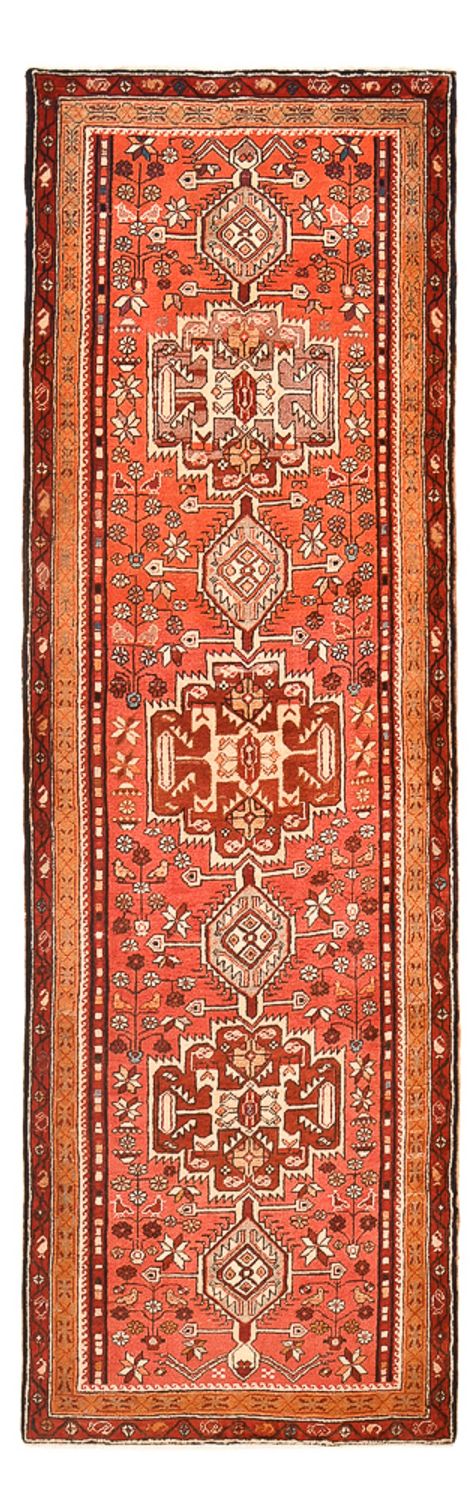
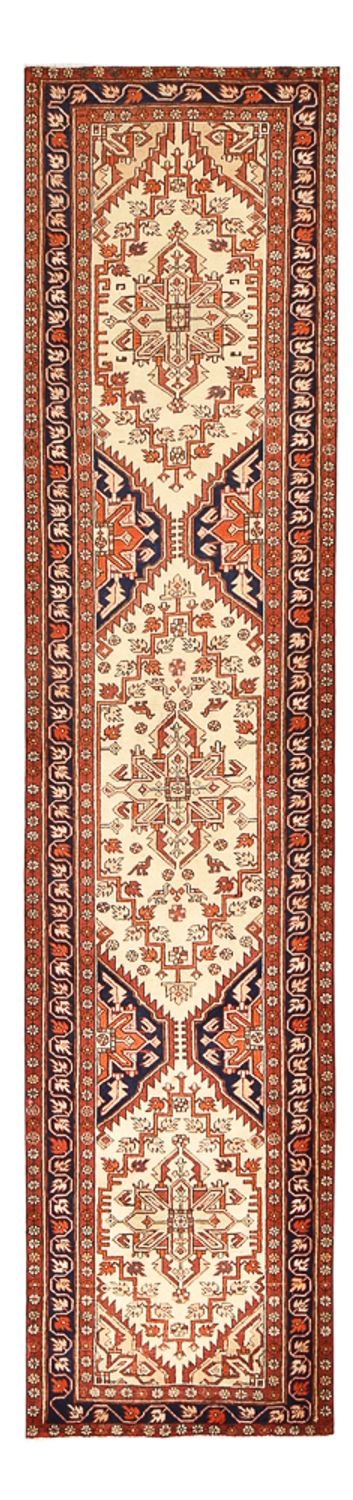
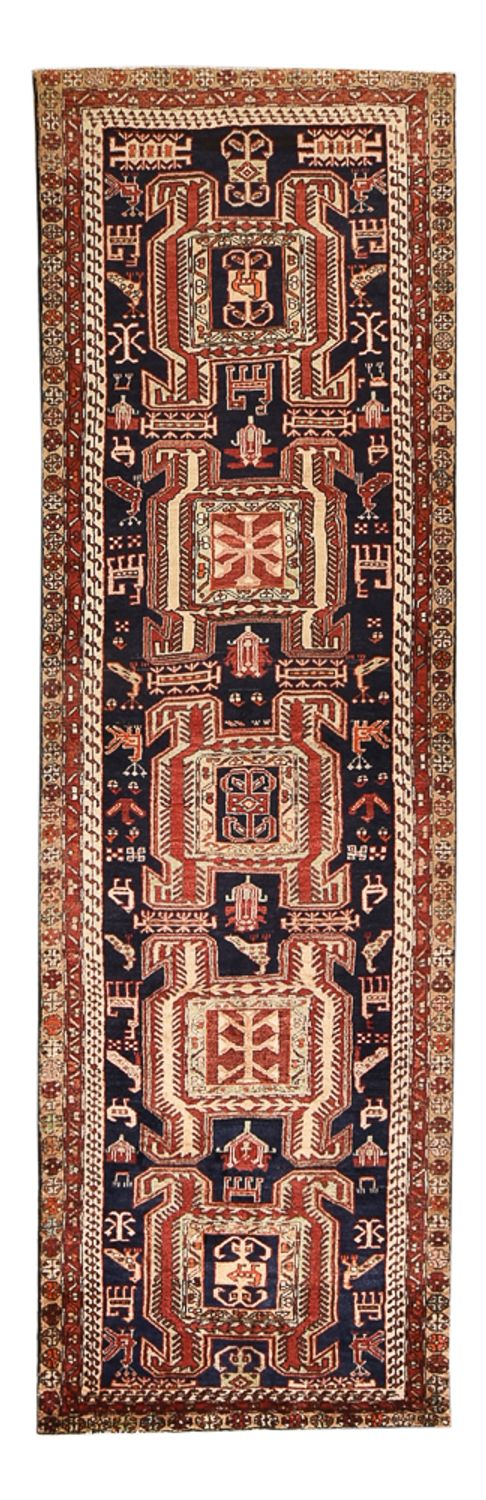
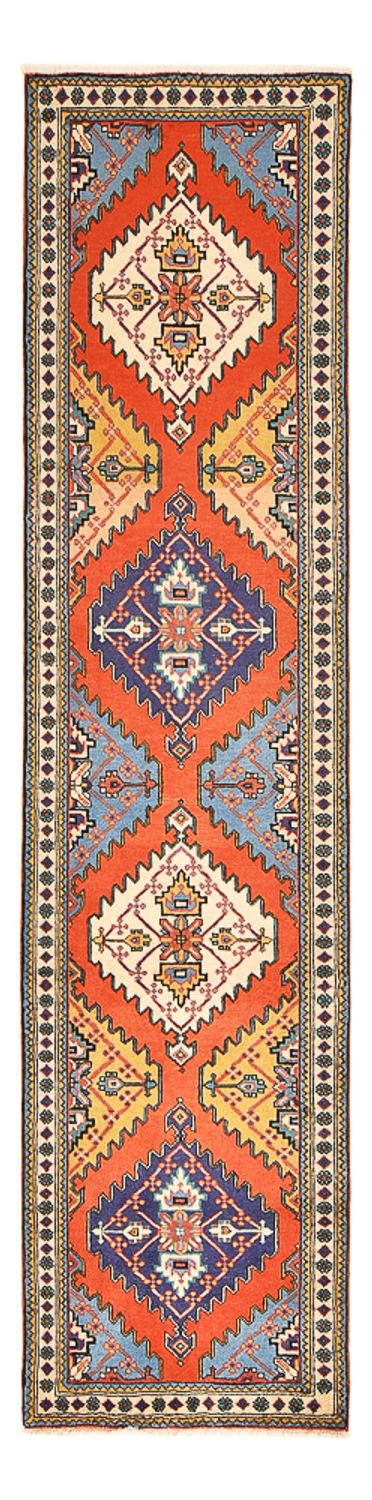
Photo: Morgenland Rugs
Meshkin rugs are sturdy hand-knotted Persian rugs from the far north-west of Iran, from the town of Meshkin Shahr in the province of Ardabil. They show bold geometric patterns with clear echoes of Caucasian weaving tradition and are counted among the distinctive, folkloric village rugs. In trade they are often grouped with Ardebil rugs but retain their own identity through their more rustic execution.
What is a Meshkin rug?
A Meshkin is a hand-knotted village rug from Meshkin Shahr and the surrounding settlements at the foot of Mount Sabalan. Characteristic features include the symmetric Turkish knot, a wool pile on a usually cotton warp, bold geometric medallions, and a folkloric, clearly articulated visual language. Meshkin rugs belong to the family of north-west Persian village rugs along the border with the Caucasus and Azerbaijan.
Origin
The town of Meshkin Shahr lies in the province of Ardabil, near the border with the Republic of Azerbaijan, on the northern slope of the Sabalan massif. The region belongs to the wider family of Persian rugs but, through its Turkic-speaking population and immediate proximity to the Caucasus, carries a strongly geometric, folkloric character. Rug knotting in Meshkin can be traced back to the 19th century and is carried on mainly by settled weavers who have passed their patterns down through generations.
Unlike the nearby provincial capital of Ardebil, which also produced fine, partly floral urban rugs, Meshkin stayed true to the village-geometric line. The borderland setting explains the close stylistic kinship with Caucasian weaving areas and the bold, high-contrast palette.
Patterns and colours
Meshkin rugs usually show a large, stylised central medallion surrounded by smaller geometric motifs, stars, and hooks. Fields with evenly distributed geometric scatter motifs are also common. The visual language is angular and high-contrast, recalling Caucasian models with their sharply drawn medallions and border bands.
The palette is bold: deep reds, saturated blue, beige, natural white, and accents in green or yellow. Contrasts are often strong, giving the rugs their lively, folkloric presence. The border is usually multi-tiered and takes up zigzag bands, diamonds, or stylised blossom motifs. Overall the designs are less fine than the classical Persian urban rugs from Isfahan and follow a clear, geometric aesthetic.
Material and knotting technique
Most Meshkin rugs are knotted from sturdy local sheep's wool, with a warp usually of cotton. Goat hair is occasionally worked in as well, especially at the edges, adding to durability. The wool often comes from regional flocks and is dyed with both natural and synthetic dyes.
Knotting uses the symmetric Turkish knot, also called the Ghiordes knot. This knot is the rule across the entire north-west Persian belt and the neighbouring Caucasus and sets the region apart from the southern Persian provenances with their asymmetric Senneh knot. The pile is sheared medium-high to high, which gives the rugs a pleasant feel and extra toughness. The individual steps are described in the overview of rug production; the materials used are covered in their own article.
Knot density and quality
The knot density of a Meshkin usually lies between 80,000 and 150,000 knots per square metre, placing it in the medium quality category. This comparatively coarse knotting suits the rustic, geometric character and the sturdy wool. How knot density affects fineness, durability, and price is explained in its own article.
For assessing quality, wool quality, cleanness of dye, and clarity of the medallion drawing matter alongside knot count. Many Meshkin rugs in trade today come from the 1960s to 1980s and show the bold, high-contrast hand of that period.
| Provenance | Relation to Meshkin | Typical features |
|---|---|---|
| Meshkin | own village provenance in Ardabil | Caucasian-influenced medallions, bold contrasts |
| Ardebil | nearby provincial capital | geometric and floral medallions, often finer |
| Sarab | neighbouring region | elongated medallions, many runners |
| Qaraja | north-west Persian neighbourhood | octagonal stacked medallions |
| Heriz | larger region of the same area | large angular single medallion |
| Shirvan | Caucasian model | fine geometric borders, sharp contrasts |
What is a Meshkin rug worth?
The value of a Meshkin depends above all on age, condition, size, knot density, wool quality, and clarity of pattern. As a comparatively rare provenance with limited production, well-preserved Meshkin rugs can hold their value and are especially sought after by lovers of rustic, geometric designs. They are not among the best-known Persian types but offer authentic handwork at mostly moderate prices.
For a grounded assessment, see the article Identifying valuable Persian rugs, the general guidance on rug value, and the buying guide.
How can you tell a genuine Meshkin rug?
Typical signs of a genuine Meshkin include:
- Bold, geometrically stylised central medallion with clearly Caucasian visual language.
- Strong colour contrasts of deep red, saturated blue, and natural white.
- Symmetric Turkish knot with an even, medium back structure.
- Wool pile on a cotton warp, sometimes with goat hair at the edges.
- Fringes woven from the warp material, not sewn on afterwards.
- Medium-high to high pile with a robust, village feel.
Since Meshkin and Ardebil are closely related and often grouped together, classification should weigh pattern, colour contrast, material, and back together. Identifying provenance and the step-by-step Is my rug genuine? provide help.
Care
Like all wool rugs, Meshkin rugs should be vacuumed regularly in the direction of the pile and professionally cleaned every few years. Long, direct sunlight should be avoided to prevent the bold colours from fading. With spills, quick action matters, best with clear water and without rubbing. Detailed guidance can be found in the care overview and in the article on cleaning a wool rug.
Frequently asked questions
What distinguishes a Meshkin from an Ardebil rug?
Both come from the province of Ardabil and are often grouped together in trade. The Meshkin is usually more coarsely knotted and purely geometric with strong Caucasian echoes, while the Ardebil shows both geometric and floral patterns and often a finer execution.
Which knot is used for a Meshkin rug?
Meshkin rugs are knotted with the symmetric Turkish knot, the Ghiordes knot. This is the rule across the north-west Persian borderland with the Caucasus.
Why do Meshkin rugs recall Caucasian rugs?
Meshkin Shahr lies immediately on the border with the Republic of Azerbaijan and thus on the edge of the Caucasian weaving area. The angular medallions, sharp contrasts, and geometric borders reflect this neighbourhood.
Are Meshkin rugs a good choice for collectors?
As a comparatively rare provenance with limited production, well-preserved Meshkin rugs are sought after by lovers of rustic, geometric designs and can hold their value, even though they are not among the best-known Persian types.
What does a Meshkin rug cost?
The price depends on age, condition, size, knot density, and wool quality. Meshkin rugs sit mostly in the moderate range, though well-preserved older pieces from the 1960s to 1980s with bold natural dyes can fetch higher prices.
How do I care for a Meshkin rug correctly?
Vacuum regularly in the direction of the pile and have the rug professionally cleaned every few years. Treat spills at once with clear water and a pH-neutral cleaner, without rubbing, and avoid long, direct sunlight so the bold colours do not fade.
Impressions of the origin
Places, landscapes and landmarks around the home of Meshkin rugs. Click any image for a larger view.


