Bidjar Takab rugs: Kurdish Bidjar variant from Takab
Bijar Takab rugs come from the Takab region and stand out with their bold colors and dense Bijar-style weave.
- Region
- Persia / Iran
- Category
- Persian rugs
- Manufacturing
- Hand-knotted
- Knot density
- 150,000 – 350,000 knots/m²
Profile
- Manufacturing
- Hand-knotted
- Origin
- Iran — Takab, West Azerbaijan Province
- Pile material
- Wool on cotton
- Knot density
- 150,000 – 350,000 knots/m²
- Features
- Dense weave, bold colors, geometric medallions
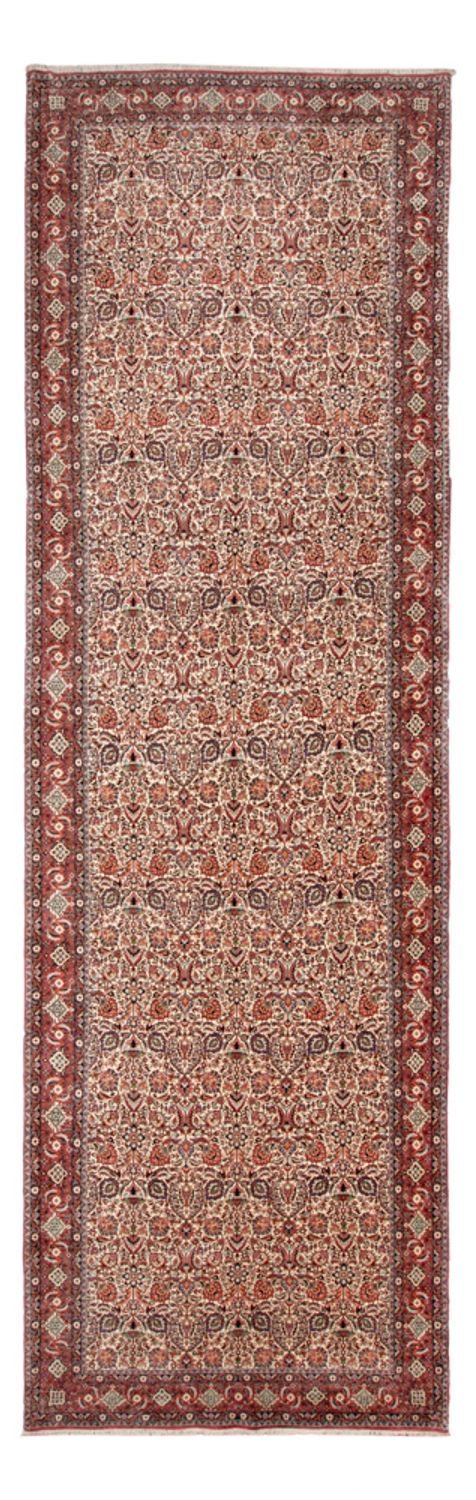
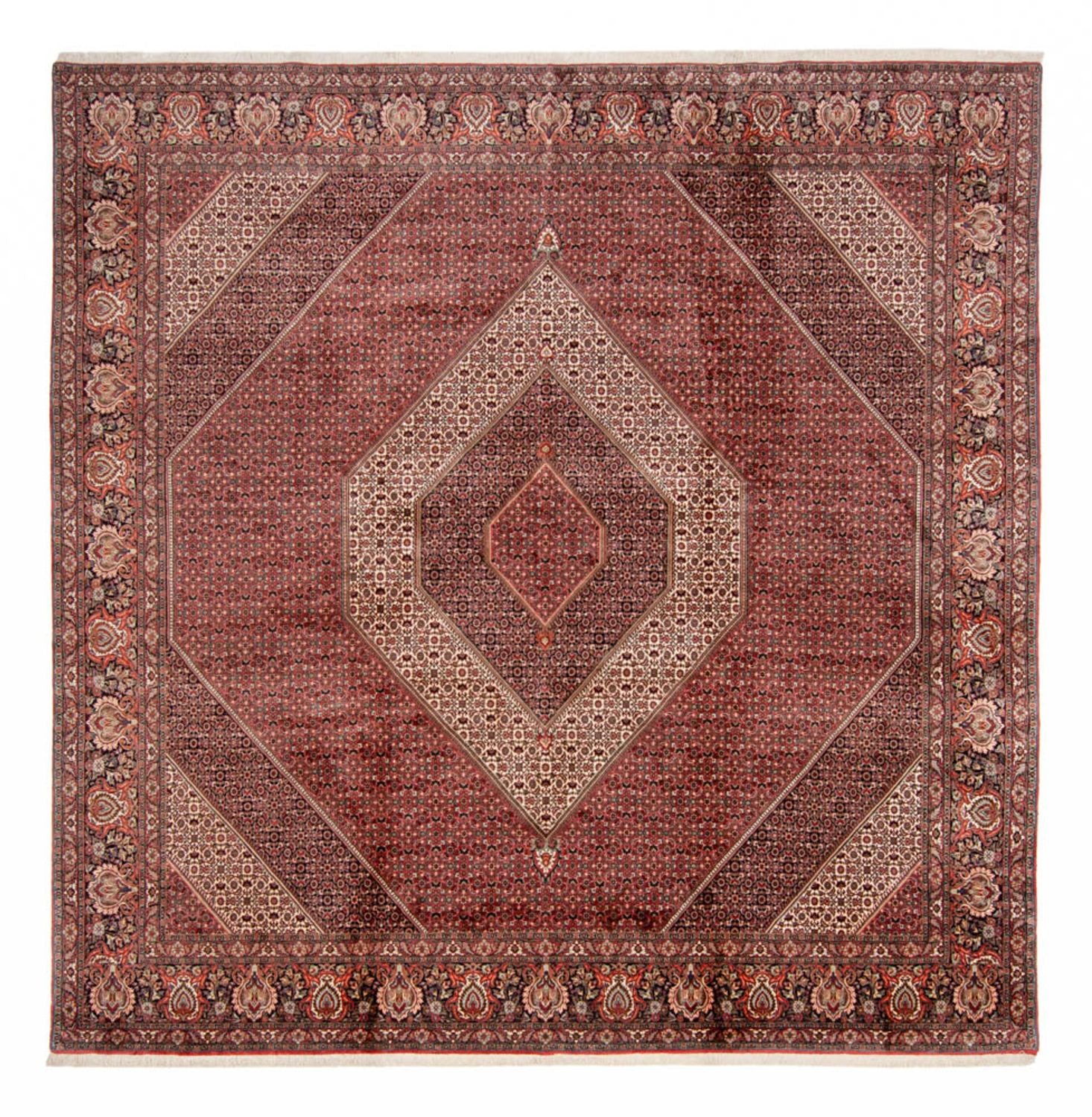
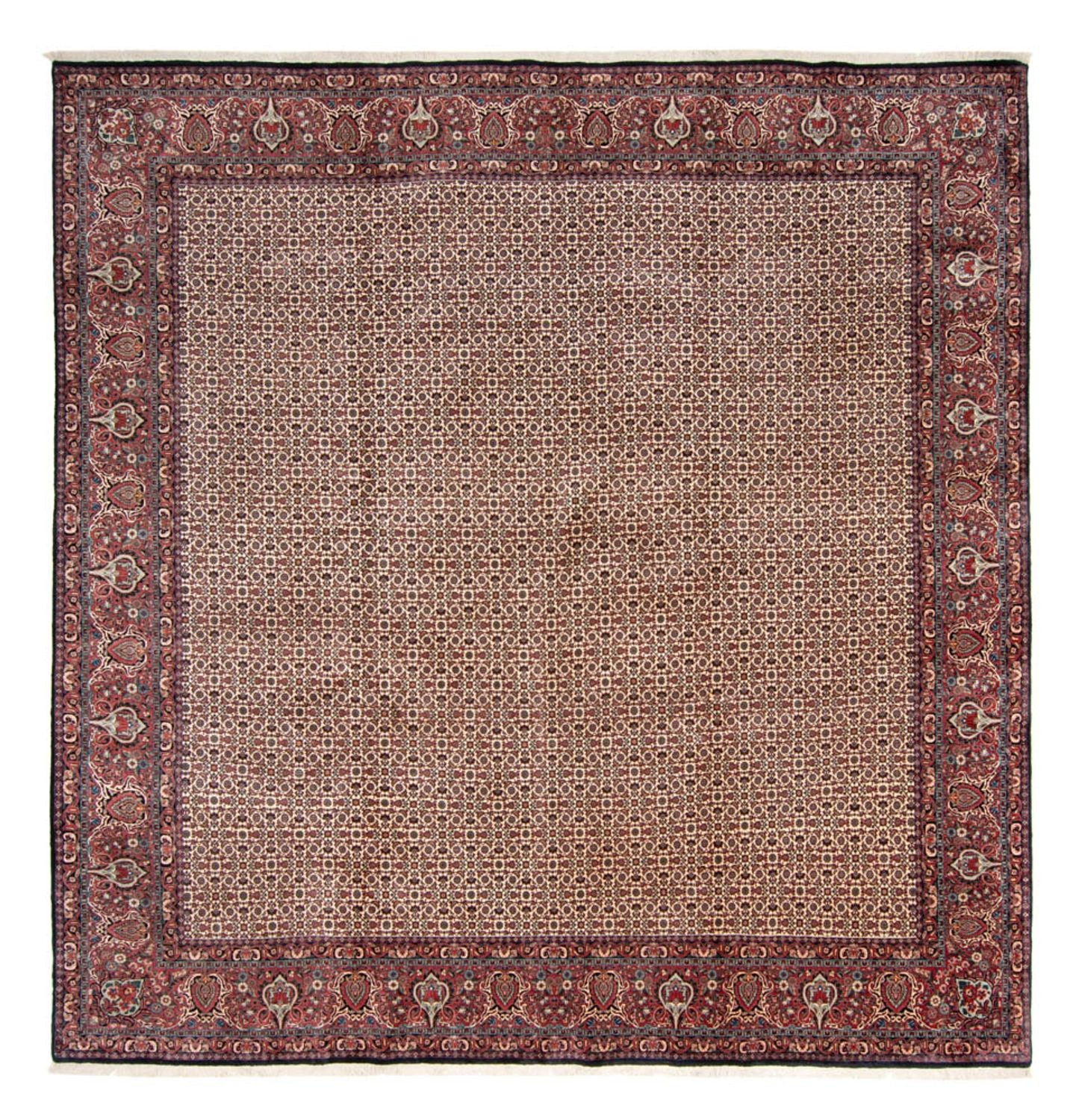
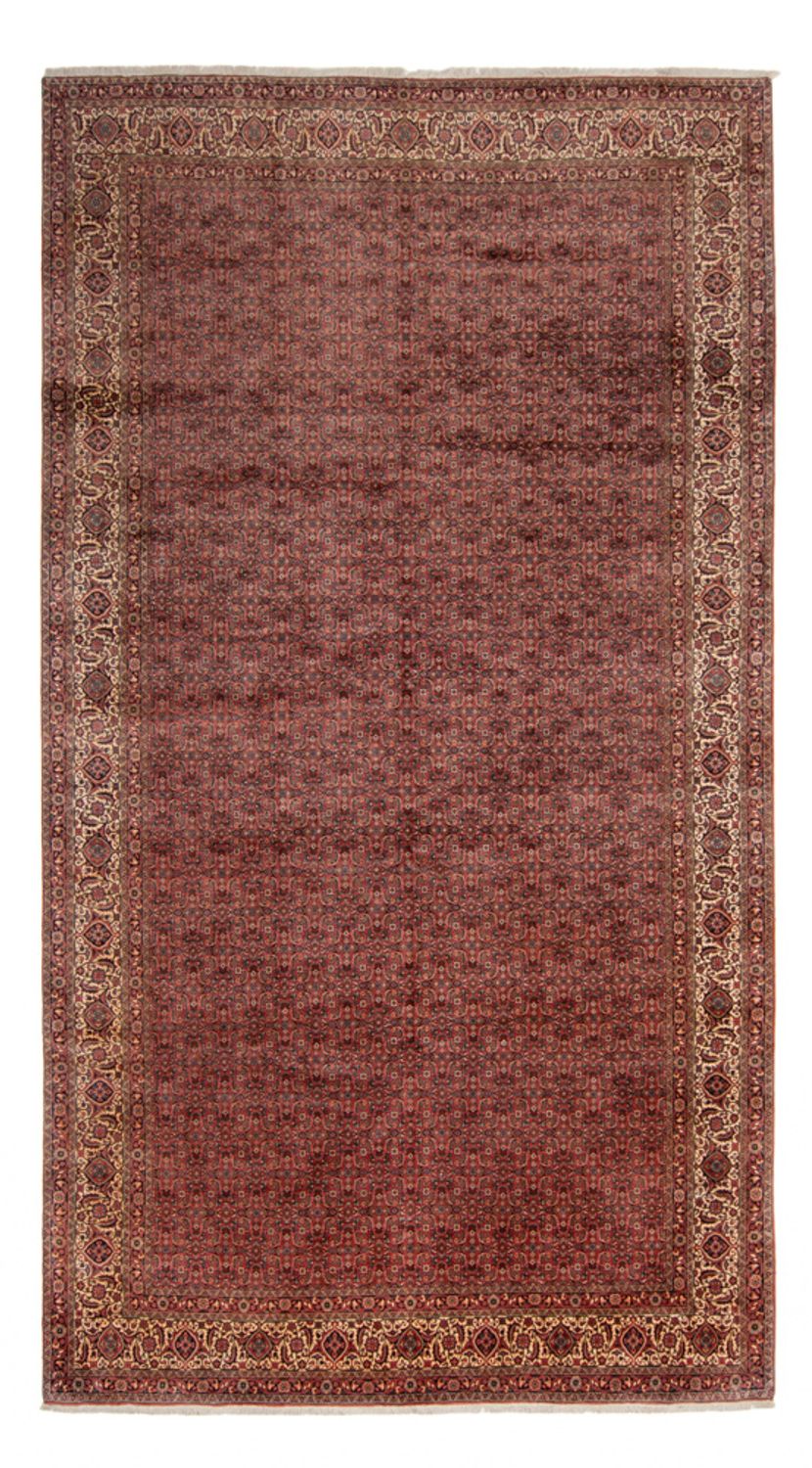
Photo: Morgenland Rugs
Bidjar Takab rugs are hand-knotted Persian rugs from the Kurdish-influenced north-west of Iran and belong to the family of Bidjar rugs. They are knotted around the town of Takab, which lies south of Lake Urmia in a rough mountain region. Like all representatives of this group, they combine an exceptionally firm, heavy weave with predominantly geometric drawing. The Bidjar Takab thus stands for the robust, long-lived side of north-west Persian knotting craft and is often traded simply under the collective name Bidjar.
What is a Bidjar Takab rug?
A Bidjar Takab is a hand-knotted rug from the town of Takab and its surroundings in the Iranian province of West Azerbaijan. It stands in the tradition of the Bidjar and adopts its most important features: the symmetric Turkish knot, a very dense knotting, a high weight and geometric patterns with a clearly drawn medallion. As with the classical Bidjar, the famous firmness arises not from the pattern but from the construction. The weft threads are drawn in under strong tension and beaten so firmly against the rows of knots that the weave becomes stiff and heavy.
Takab lies south of Lake Urmia in a high mountain region between the foothills of the Zagros and the lake basin. Knotting developed here as a branch of the established Bidjar tradition: local weavers adopted the firm construction of the region and combined it with their own pattern variants. The Bidjar Takab thus belongs to the group of western Iranian Kurdish rugs, which also includes the Senneh, the Koliai and the neighbouring Hamadan area.
Origin: the town of Takab and the province of West Azerbaijan
Takab lies in the north-west of Iran in the province of West Azerbaijan, south of Lake Urmia and close to the historical site of Takht-e Soleyman. The region is mountainous, the climate harsh, and for generations the Kurdish-influenced families here have lived from livestock keeping and knotting. The wool of the local mountain sheep is vigorous and hard-wearing and still forms the basis of the pile yarn today.
The commercial importance of the provenance grew in the wake of the Bidjar trade. When the firm, geometrically drawn rugs of the north-west reached western markets, the goods from Takab also entered the trade under the well-known name Bidjar. Within this family further provenances with their own profile have established themselves alongside Takab, among them Bidjar Bukan and Bidjar Zanjan. Geographically and stylistically the Bidjar Takab stands close to the home area around the town of Bidjar, but is set apart from the lighter village rugs of the Hamadan area by its high weight. The whole region belongs to the family of Persian rugs.
Patterns and colours
Bidjar Takab rugs are predominantly geometric. Typical is a large medallion in the centre of the field, often angular or serrated, surrounded by matching corner spandrels and stylised flower motifs. Alongside it appears the continuous Herati pattern, a repeat across the field made of a small flower rosette with four curved, fish-like leaves. These herringbone forms give the motif its Persian name Mahi, that is, fish. The border usually follows a three-part composition of a wide main border and two narrow guard borders with vines, rosettes and geometric bands.
The palette is bold and earth-bound. Deep red from madder and saturated navy blue dominate, supported by ivory and warm brown tones; green accents appear more sparingly than in some other Persian provenances. Overall the Bidjar Takab feels high in contrast and settled, with cleanly bounded colour areas rather than finely shifting shading.
Material and knotting technique
The Bidjar Takab is knotted with the symmetric Turkish knot, also called the Ghiordes knot. This firm binding wraps both warp threads completely, fits the geometric pattern language and is widespread across the Kurdish-influenced north-west of Iran. It distinguishes the Bidjar Takab from most central and eastern Persian provenances that use the asymmetric Persian knot. How the two basic knots differ is explained in the overview of knot types.
The pile yarn is hard-wearing virgin wool from regional sheep keeping; the warp is traditionally cotton; for the weft, cotton or wool is used. What really makes the difference is the weaving process from the Bidjar tradition: the weft threads are drawn in under strong tension and beaten firmly against the rows of knots with a heavy, comb-like tool, traditionally in the moist state. On drying the fibres contract further, so that an exceptionally dense, firm structure arises. The pile is sheared to medium height so that the patterns stand out clearly. How such a rug arises on the loom is described in the article on production.
Knot density and quality
The knot density of a Bidjar Takab usually lies between 150,000 and 350,000 knots per square metre. Decisive for the firmness, however, is not the sheer knot count alone but the combination of dense knotting and firmly beaten weft, which gives the rug its high weight and the typical stiffness. How knot density influences quality and price, and why it must always be read in connection with material and construction, is treated in its own article.
The quality of Bidjar Takab rugs can vary, since production takes place both in workshops and in home work. Carefully made pieces show a very firm, even back, clear pattern contours and saturated colour. Anyone judging quality looks, alongside weight, at the density of the back, the evenness of the knotting and the state of the pile and edges.
Bidjar Takab and related provenances in comparison
| Provenance | Relation to Bidjar Takab | Typical features |
|---|---|---|
| Bidjar Takab | this provenance | firm Bidjar structure, high-contrast medallions |
| Bidjar | umbrella term and home area | extremely dense and heavy, the iron rug |
| Bidjar Bukan | sister provenance | dense and heavy, clear medallions |
| Bidjar Zanjan | sister provenance | finer variant, colourful palette |
| Hamadan | neighbouring knotting region | lighter village rugs, single weft |
| Senneh | Kurdish neighbouring rug | very fine and flat, Persian knot |
| Koliai | Kurdish neighbouring rug | robust, strongly geometric |
What is a Bidjar Takab rug worth?
The value of a Bidjar Takab depends above all on age, condition, size, wool quality, dyeing, density and precise provenance. As a robust everyday rug with the firm Bidjar structure, it offers a good ratio of durability and price. Classical Bidjar rugs from the home area achieve higher prices on average, but well-preserved older Takab pieces with natural dyeing are a stable store of value and sought after.
For a grounded estimate see the overview of rug value, the guide recognising valuable Persian rugs and the general buying guide. Why older pieces with natural dyeing can gain in value is explained in the article on old rugs and their value development.
How do you recognise a genuine Bidjar Takab rug?
Reliable indicators of a genuine Bidjar Takab are:
- High weight and firmness: the piece is markedly heavier and stiffer than a rug of the same size from another origin.
- Symmetric Turkish knot: knotted with the Ghiordes knot, recognisable from the firm, even binding of the back.
- Dense, hard back: the rows of knots sit close together, and the back can hardly be pressed in.
- Geometric patterns with a serrated medallion, a three-part border or a continuous Herati motif.
- High-contrast natural colours of madder red, navy blue and brown tones.
- Fringes as extended warp threads, not sewn on afterwards.
A step-by-step guide is given in the article Is my rug genuine?, and whether the colours are natural or chemical can be judged with the accompanying article. An overview of all inspection steps is given on the recognising a rug page.
Care
Despite its hardness, the Bidjar Takab also needs care. Because of the firm structure, it should not be rolled tightly or sharply creased, since sharp folding can stress the warp. Regular vacuuming in the pile direction and the occasional professional cleaning preserve colour and substance. Dab stains immediately with clear water from the outside inwards, without rubbing. Long direct sunlight bleaches even saturated natural colours. Detailed notes are given in the care overview and in the guide to cleaning a wool rug.
Frequently asked questions
What distinguishes a Bidjar Takab from a classical Bidjar?
Both come from the Kurdish-influenced north-west of Iran, use the symmetric Turkish knot and are very firm and heavy. The Bidjar Takab comes from the town of Takab south of Lake Urmia and often shows a somewhat simpler, higher-contrast drawing. Classical Bidjar rugs from the home area generally feel more finely worked.
Why is a Bidjar Takab so heavy?
The high weight arises from the Bidjar weaving technique: the weft threads are drawn in under strong tension and beaten exceptionally firmly against the rows of knots, traditionally in the moist state. On drying the fibres contract further, so that the rug is extremely compacted.
How does Bidjar Takab differ from Bidjar Bukan and Bidjar Zanjan?
All three belong to the Bidjar family. The Bidjar Takab comes from the town of Takab south of Lake Urmia, the Bidjar Bukan from the area north of Bidjar, the Bidjar Zanjan from the province of Zanjan and counts as the often finer, more colourful variant. They share the firm basic construction.
Which sizes are common for Bidjar Takab rugs?
Bidjar Takab rugs come in many formats, from smaller pieces around 150 by 100 centimetres to large room rugs. Square formats and large sizes are also represented in production.
Is a Bidjar Takab suitable for heavily frequented areas?
Yes. Thanks to the firm structure and the Turkish knot it is very hard-wearing and well suited to living areas with normal to high use. It belongs among the more long-lived Persian rugs.
What does a Bidjar Takab rug cost?
The price depends on age, condition, size, density and wool quality. As a robust everyday rug, the Bidjar Takab usually lies below the classical Bidjar, but offers a good ratio of durability and price. Orientation is given in the buying guide.
How do I care for a Bidjar Takab rug properly?
Regular vacuuming in the pile direction and a professional cleaning every few years are enough. Because of the firm structure the rug should not be sharply creased. Dab stains immediately with clear water, without rubbing, and avoid long direct sunlight.
Impressions of the origin
Places, landscapes and landmarks around the home of Bijar Takab rugs. Click any image for a larger view.
Related styles
Bijar
Bijar rugs from Iranian Kurdistan are considered the most durable Persian rugs, densely knotted and exceptionally hard-wearing.
Bijar Bukan
Bijar Bukan rugs come from the Kurdish town of Bukan in West Azerbaijan Province and combine the famous Bijar density with finer detail work.
Bijar Zanjan
Bijar Zanjan rugs come from Zanjan Province and combine the classic Bijar density with Zanjan workshop traditions.