Sabzevar rugs: decorative Khorasan weave from Sabzevar
Sabzevar rugs come from Razavi Khorasan and are known for their Mashhad-style floral medallions at more accessible price points.
- Region
- Persia / Iran
- Category
- Persian rugs
- Manufacturing
- Hand-knotted
- Knot density
- 80,000 – 200,000 knots/m²
Profile
- Manufacturing
- Hand-knotted
- Origin
- Iran — Sabzevar, Razavi Khorasan Province
- Pile material
- Wool on cotton
- Knot density
- 80,000 – 200,000 knots/m²
- Features
- Mashhad-style medallions, accessible price, durable wool
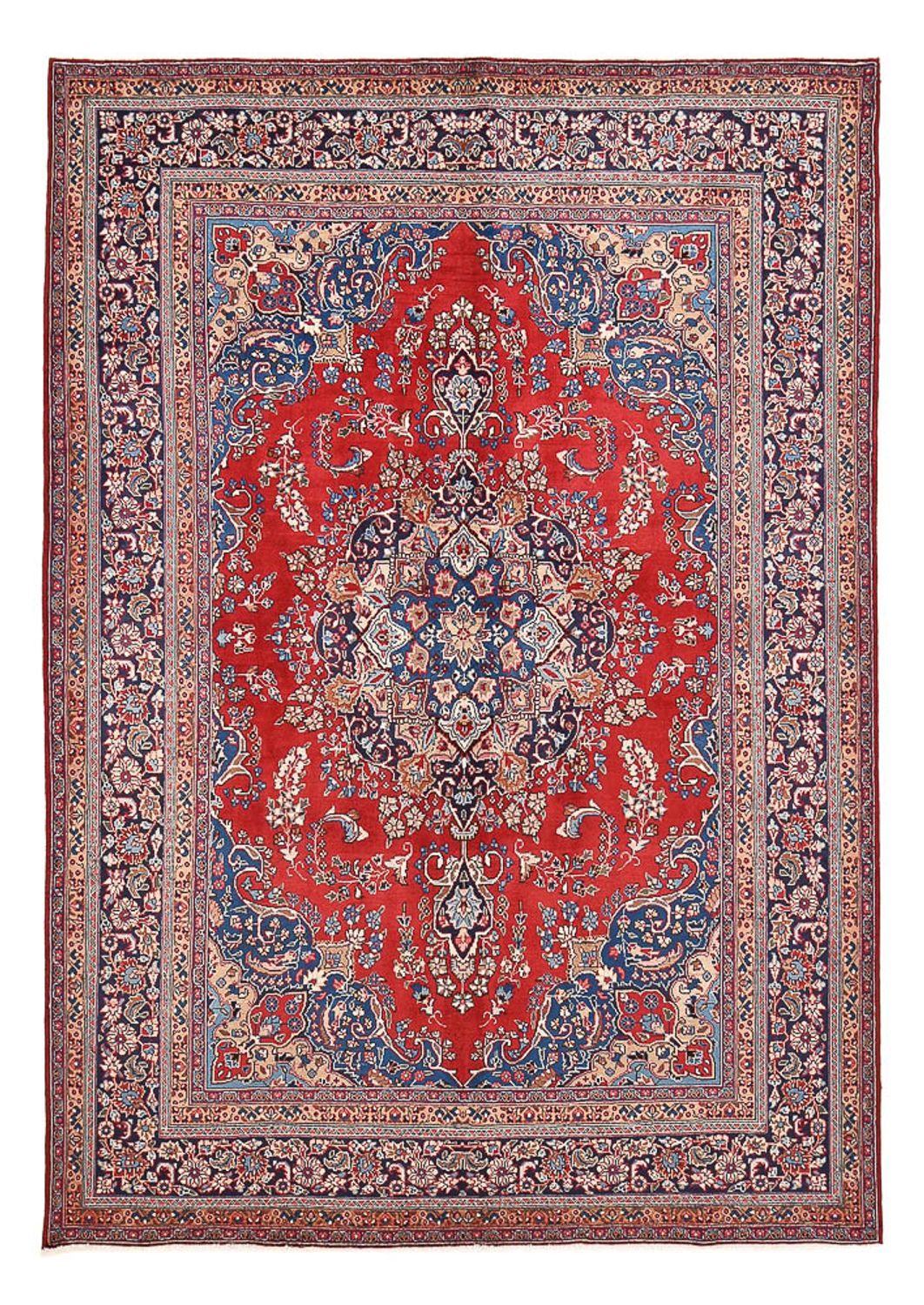
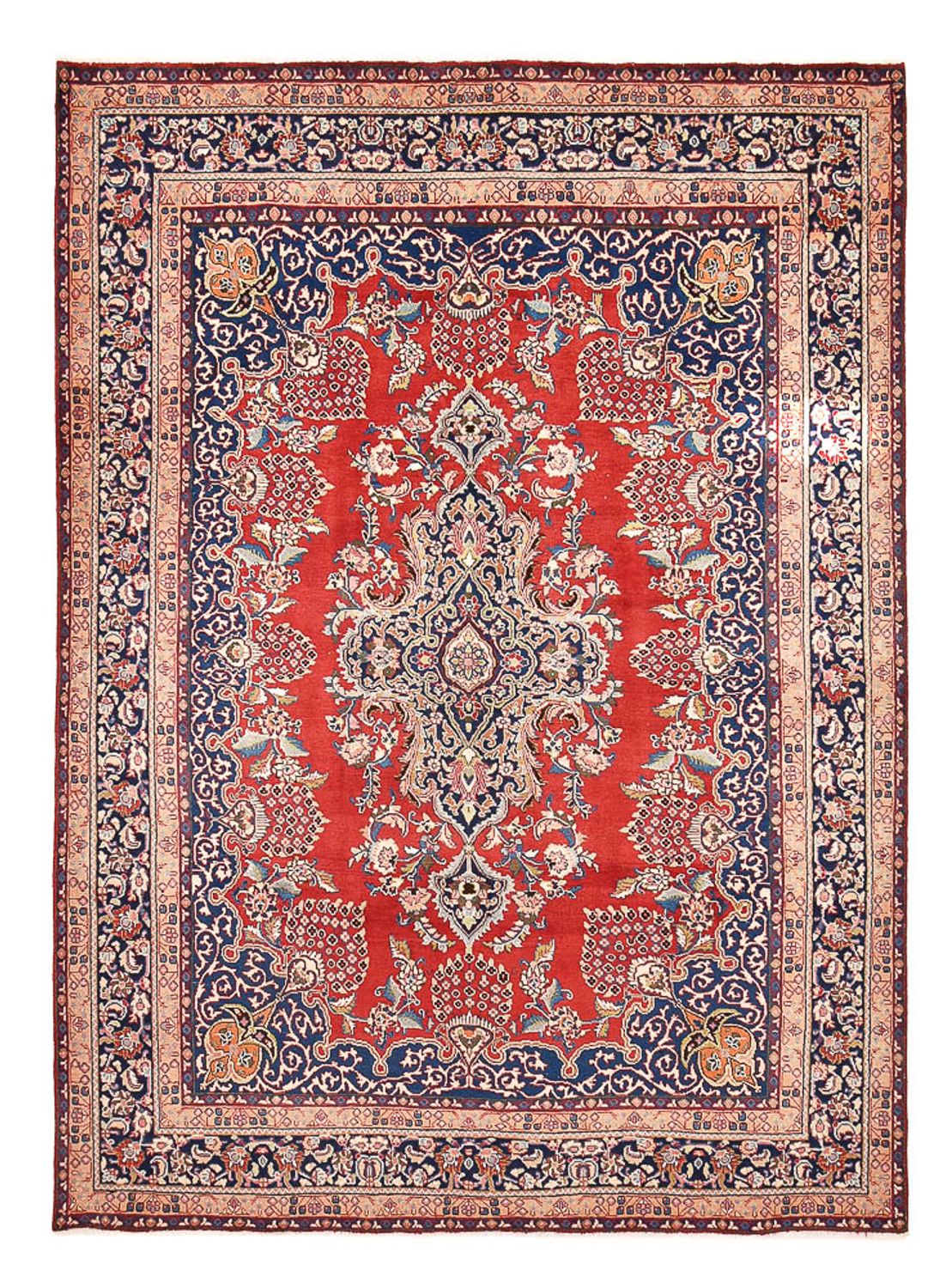
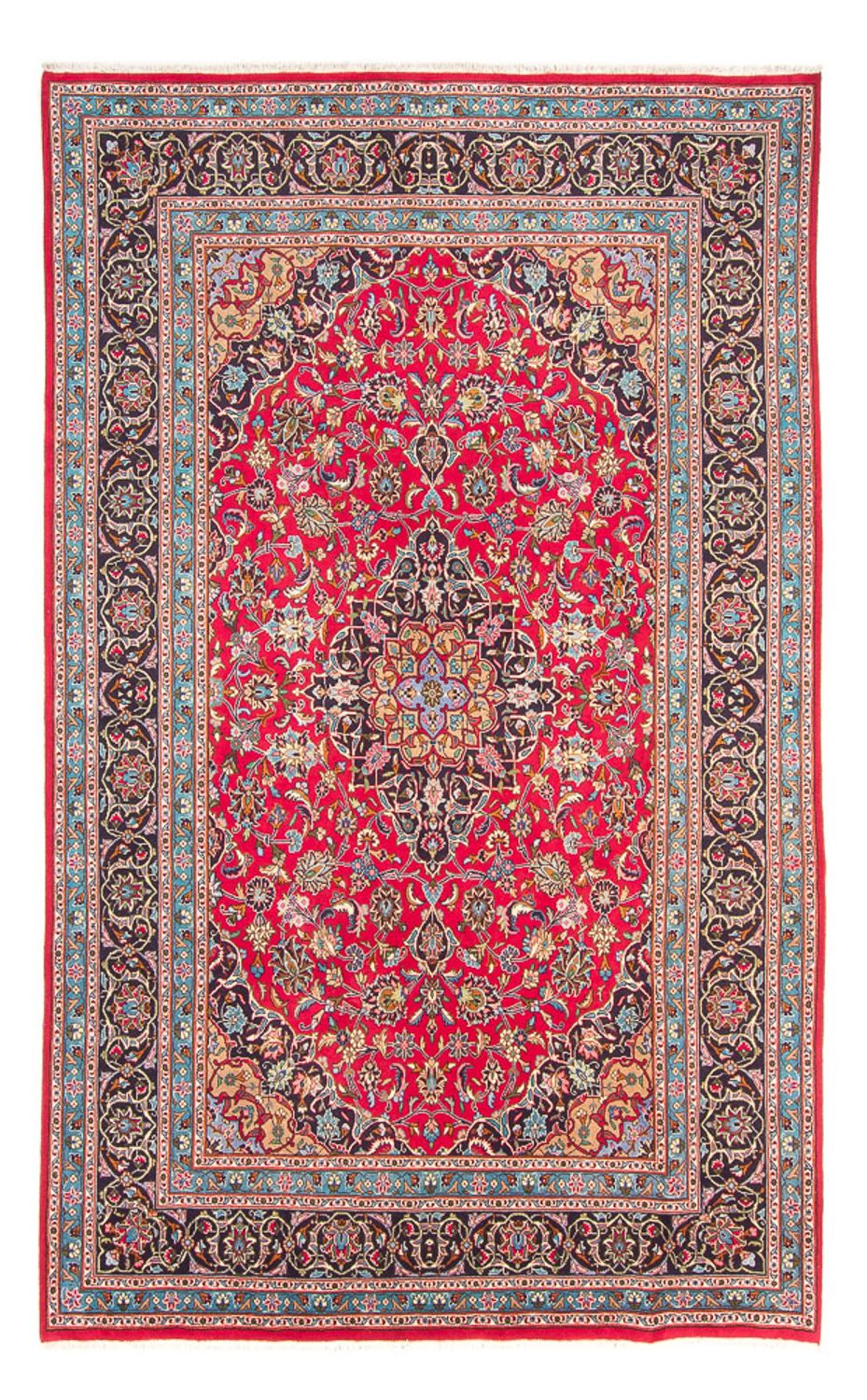
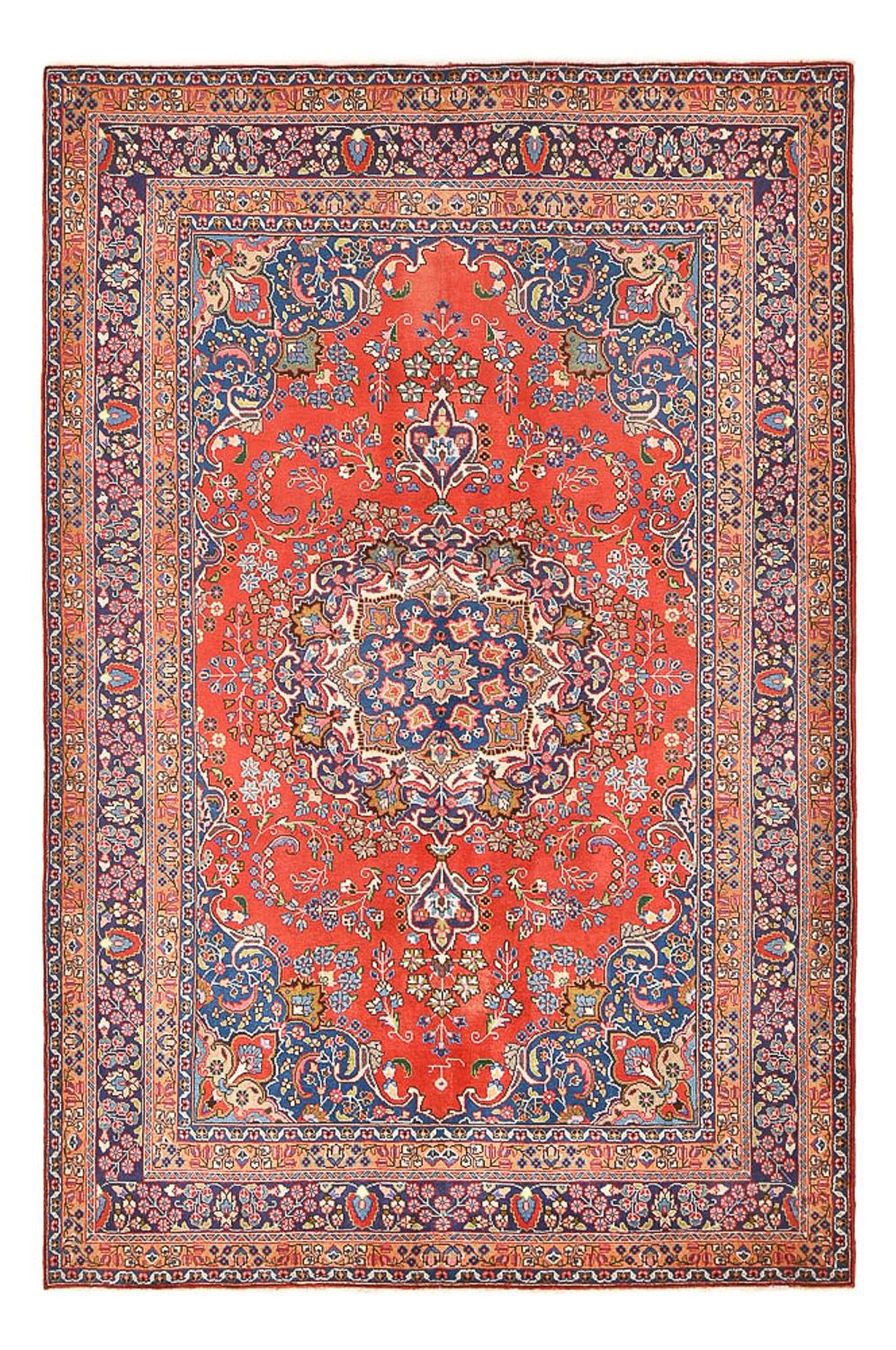
Photo: Morgenland Rugs
Sabzevar rugs are hand-knotted Persian rugs from the city of Sabzevar in north-eastern Iran, in the province of Razavi Khorasan. They belong to the family of east-Persian Khorasan ware and stand for sturdy, decorative working rugs with a warm palette and solid knotting. Many of the Sabzevars valued today as antique date from the 19th and early 20th centuries, when European demand for Persian rugs grew strongly. In the market they count as long-lived pieces with good value for money.
What is a Sabzevar rug?
A Sabzevar is a hand-knotted rug from the city of Sabzevar and the surrounding villages. Knotting uses the asymmetric Persian knot, the Senneh knot, traditionally with a wool pile; for sturdier pieces a cotton warp is used. Characteristic features are floral medallion compositions, a warm palette of reds, blues, and beiges, and a medium to low pile. The medium knot density ensures a good balance of detail and durability.
Origin
Sabzevar lies about 220 kilometres west of Mashhad, the capital of Razavi Khorasan province, on the historical link route between central Persia and the north-east. For centuries the city was a trading post on the caravan routes later summarised as the Silk Road, which favoured cultural exchange and local craft. Sabzevar is known for its ceramics and other craft traditions alongside rug knotting.
Rug production had its heyday in the 19th and early 20th centuries, when international demand for Persian rugs rose sharply. Local knotters developed their own readings of classical Persian patterns and so shaped an unmistakable regional style. Knotting takes place both in workshops and in home production, so quality varies by maker. Sabzevar shares its roots with the neighbouring Khorasan provenances Mashhad, Kaschmar, Moud, and Ghoutshan.
Patterns and colours
The typical Sabzevar design is the floral medallion composition: a central ornament in the middle of the field, surrounded by smaller floral motifs and vines. Many patterns reflect the Persian garden tradition, in which the field is read as an idealised garden. All-over patterned fields with evenly distributed blossom motifs also appear.
The palette covers warm tones such as red, blue, and beige, complemented by accents in green and gold. Frequently used natural dyes produce the characteristic warm presence that develops a fine patina over the years. The borders are usually arranged in several tiers and show recurring geometric or floral elements, such as palmettes and vine bands framing the field.
Material and knotting technique
The pile is sheep's wool, mostly sourced from the region and valued for its toughness. For higher-quality, sturdier pieces, cotton is used in the warp, which gives the rug a straight set and dimensional stability. The weft is cotton or wool depending on the workshop and is beaten down firmly after each row of knots. The selvedges are reinforced and usually finished with the same material as the rest of the rug.
Knotting uses the asymmetric Senneh knot, the typical knot of Persian rugs, which ensures an even and durable structure. The pile is sheared medium-high to low. The frequent use of natural dyes contributes to the warm palette. How knotting works in detail is described in the overview of rug production and especially under knotting.
Knot density and quality
The knot density of a Sabzevar typically lies between 100,000 and 250,000 knots per square metre. That is a medium density that creates a good balance between detail and durability and positions Sabzevar as a sturdy working rug. Within this range, wool quality, yarn fineness, dye, and care of knotting decide the merit of the individual piece.
High-quality Sabzevars show an even knotting, a saturated, warm colour picture, and clearly drawn, multi-tiered borders. How knot density affects quality and price, and why it is not a sole guarantee of merit, is covered in its own article.
| Feature | Expression on the Sabzevar |
|---|---|
| Knotting | asymmetric Senneh knot (Persian knot) |
| Warp | cotton (also wool on plainer pieces) |
| Weft | cotton or wool |
| Pile | sheep's wool, medium to low |
| Knot density | approx. 100,000 – 250,000 knots/m² |
| Pattern | floral medallion, garden motifs, multi-tiered border |
| Colours | warm red, blue, beige with green and gold accents |
What is a Sabzevar rug worth?
The value of a Sabzevar depends on age, condition, size, knot density, wool quality, rarity, and craft quality. High-quality pieces, especially well-preserved antique examples with natural dyes, can hold their value and are valued by enthusiasts. For pure use, Sabzevars offer good value for money and sit clearly below top provenances such as Isfahan or Nain.
A grounded assessment is possible with reference to the basics under What is my rug worth? and the notes on valuable Persian rugs. Before buying, the general buying guide helps to weigh quality and price realistically.
How can you tell a genuine Sabzevar rug?
Typical signs of a genuine, hand-knotted Sabzevar include:
- Hand-knotted back: the pattern is mirrored clearly, with the knots set evenly.
- Fringes as part of the warp: the fringes are the extended warp threads, not sewn on afterwards.
- Asymmetric Senneh knot as is standard at Persian provenances.
- Warm palette of red, blue, and beige; older pieces show a natural patina.
- Multi-tiered borders with floral or geometric bands.
- Wool pile on a cotton foundation with a robust, decorative presence.
Since quality varies by maker, pattern, back, material, and condition should be judged together. A step-by-step authenticity check is set out in Is my rug genuine?; general guidance on identifying handwork and provenance is in identifying rugs.
Care
Sabzevar rugs are easy to care for thanks to the robust wool and the firm construction, and well suited to daily use. Regular vacuuming in the direction of the pile and occasional professional cleaning preserve colour and structure. Spills should be blotted at once with clear water, without rubbing. Long, direct sunlight will fade the colours. Detailed guidance is in the care overview and especially under cleaning a wool rug.
Frequently asked questions
How do I recognise a genuine Sabzevar rug?
A genuine Sabzevar is hand-knotted, uses the asymmetric Persian knot, and shows characteristic floral patterns in a warm palette. The back lets the pattern come through clearly, the knots are set evenly, and typical features are the multi-tiered borders.
What does a Sabzevar rug cost?
The price depends on age, condition, size, knot density, and wool quality. As sturdy working rugs, Sabzevars are affordable. Well-preserved antique examples with natural dyes can cost considerably more and count as value-stable.
What distinguishes a Sabzevar from a Mashhad rug?
Both come from the province of Razavi Khorasan, but Mashhad rugs from the provincial capital count as finer and more formal. Sabzevars are sturdier and more decorative, with a medium knot density, and positioned as long-lived working rugs.
Are Sabzevar rugs a good store of value?
High-quality and antique Sabzevars can hold their value, depending on age, condition, rarity, and craft quality. For pure use they offer above all good value for money.
Why are many Sabzevar rugs considered antique?
The heyday of Sabzevar production was in the 19th and early 20th centuries, when European demand grew strongly. Many pieces from that time are today more than a hundred years old and are accordingly classified and valued as antique.
How do I care for a Sabzevar rug correctly?
Vacuum regularly in the direction of the pile and have the rug professionally cleaned every so often. Blot spills at once with clear water, do not rub. Avoid long, direct sunlight so the colours do not fade.
Impressions of the origin
Places, landscapes and landmarks around the home of Sabzevar rugs. Click any image for a larger view.


