Meymeh rugs: robust medallion pattern from Isfahan Province
Meymeh rugs come from a small village in Isfahan Province and are appreciated for their detailed floral medallions in small to medium sizes.
- Region
- Persia / Iran
- Category
- Persian rugs
- Manufacturing
- Hand-knotted
- Knot density
- 150,000 – 300,000 knots/m²
Profile
- Manufacturing
- Hand-knotted
- Origin
- Iran — Meymeh, Isfahan Province
- Pile material
- Wool on cotton
- Knot density
- 150,000 – 300,000 knots/m²
- Features
- Floral medallions, small-to-medium sizes, fine knotting
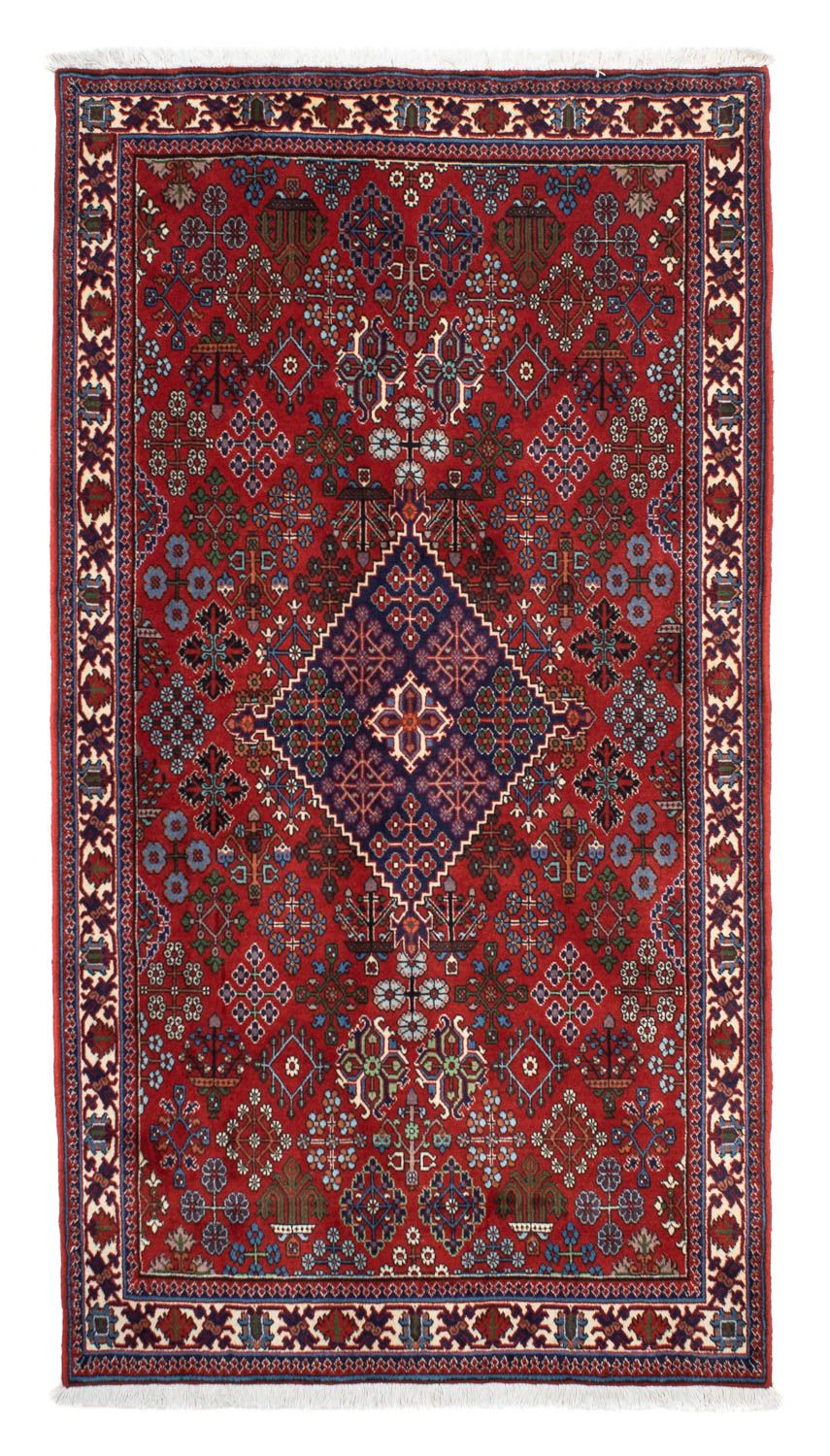
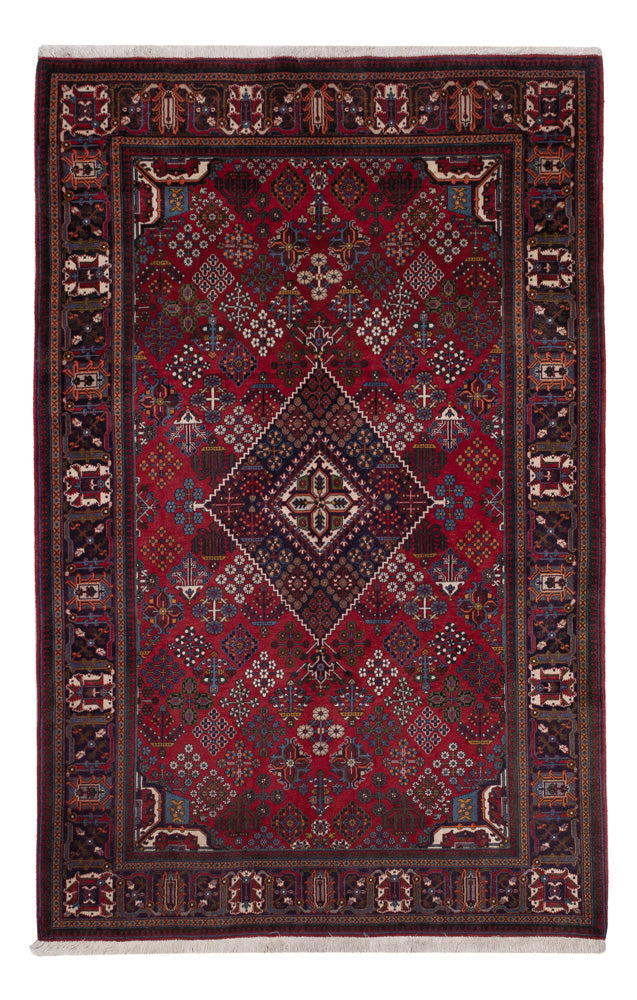
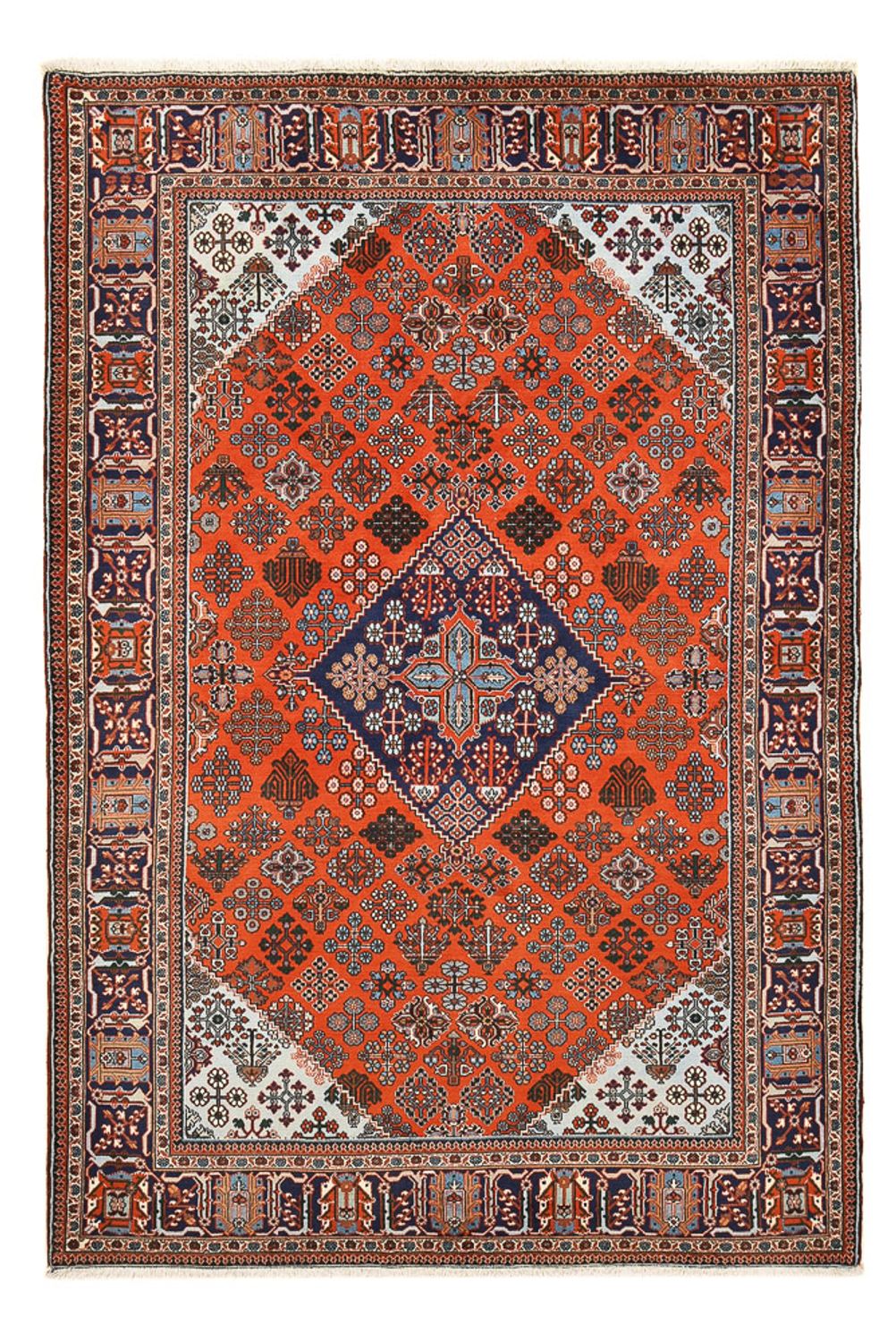
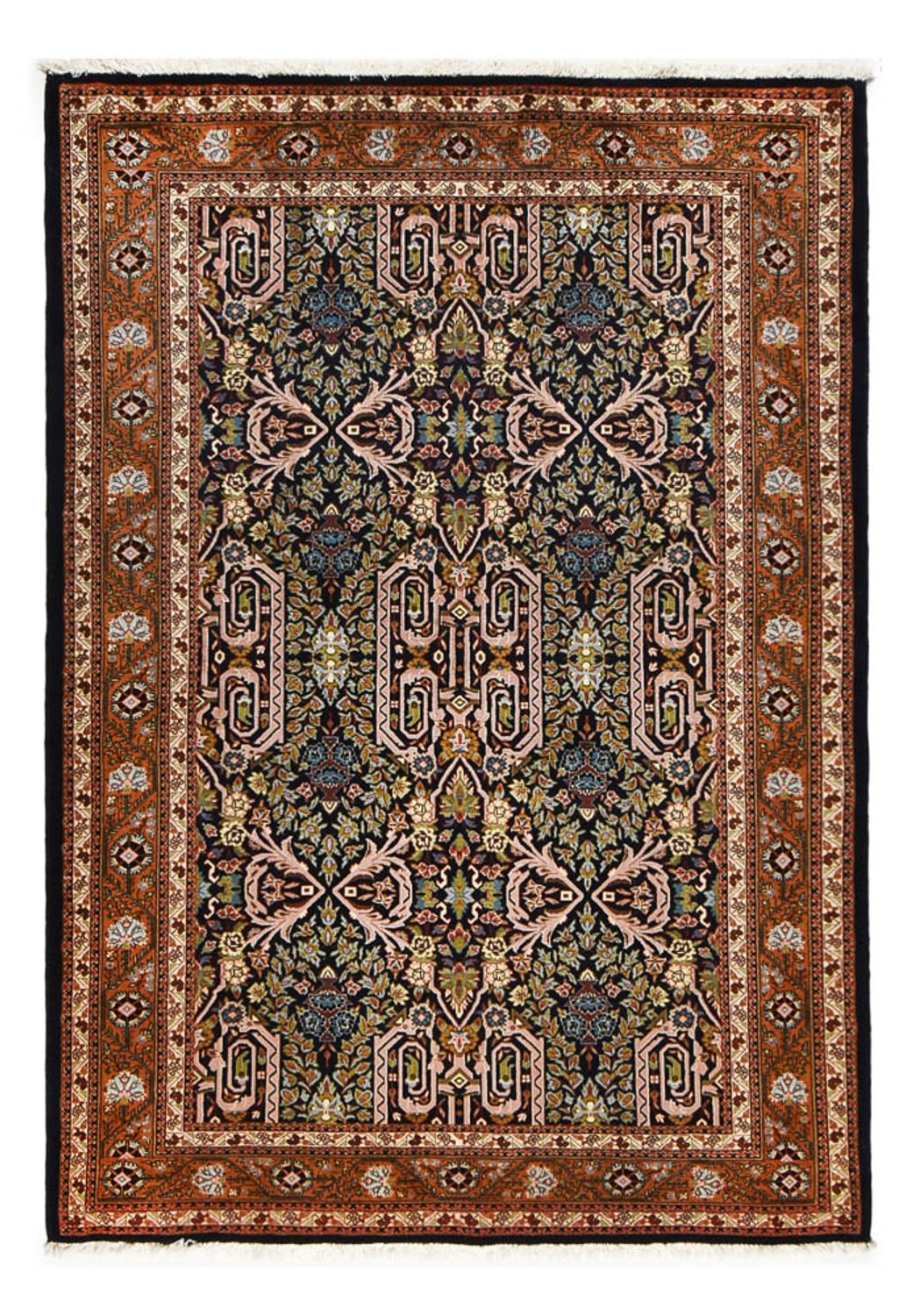
Photo: Morgenland Rugs
Meymeh rugs are hand-knotted Persian rugs from the town of Meymeh in the central Iranian province of Isfahan. They marry classical Persian medallion designs with a geometric reading and are regarded as long-lived, hard-wearing working rugs. Characteristic features include the central medallion, the restrained palette of red, blue, and beige, and a firm knotting that gives the Meymeh its toughness.
What is a Meymeh rug?
A Meymeh is a hand-knotted rug from Meymeh and the surrounding workshops in the province of Isfahan, north-west of the city of Isfahan. The pile is sheep's wool; warp and weft are usually cotton. Knotting uses the symmetric Turkish knot, also called the Ghiordes knot, which gives the Meymeh a firm, robust structure. Typical is a central medallion surrounded by smaller geometric elements that takes up classical Persian motifs in a more angular form.
Origin
Meymeh lies about 60 kilometres north-west of the historic city of Isfahan in central Iran and has been known for its rug weaving for centuries. Its position on important trade routes and immediate proximity to Isfahan, one of the leading centres of Persian rug art, shaped the development of the style decisively.
The roots of Meymeh production reach back to the Safavid era (16th to 18th century), when the entire region stood under Isfahan's artistic influence. From that proximity Meymeh took on the preference for medallion compositions and classical motifs, but translated them into an independent, more geometric visual language. Related knotting towns of the same province include Joshaghan, Najafabad, and Golpayegan. Today both traditional and more modern readings of the classical patterns are knotted in Meymeh. The weaving tradition is often passed down through the generations, with each weaving family developing its own variations. The whole tradition belongs to the wider family of Persian rugs.
Typical features
At the centre usually sits a medallion surrounded by smaller geometric elements. Stylised palmettes, rosettes, and other classical Persian ornaments often appear, rendered in a more geometric interpretation. Symmetrical, balanced compositions are characteristic.
The borders are multi-tiered and show floral or geometric ornaments framing the field in several stripes. Overall the Meymeh feels more geometric and robust than the finely drawn, curvilinear Isfahan rugs, without the purely angular severity of strict nomad rugs.
Patterns and colours
The palette is restrained and harmonious. Blues, reds, and beiges dominate, giving the Meymeh a calm, easily read appearance. What these colours mean in the Persian rug is explained separately. The motifs stand out clearly from the ground without making the overall picture restless.
The colours are traditionally drawn from plant and mineral dyes; chrome-dyed yarns are also used in modern production. Both can yield long-lived, colour-fast results. The difference between plant and chemical dyeing is explained in natural versus chemical dyes.
Material and knotting technique
Warp and weft are usually cotton; the pile is good-quality sheep's wool. Knotting uses the symmetric Turkish knot (Ghiordes knot), which gives the Meymeh its firm, robust structure. This choice sets it apart from many other central Persian provenances that use the asymmetric Senneh knot. An overview of knotting methods is in the article on knot types.
The pile is medium-length and of good quality. How a hand-knotted rug is made in general is described in the production overview. The firm knotting combined with the robust sheep's wool explains the high toughness Meymeh rugs are valued for.
Knot density and quality
The knot density of a Meymeh typically ranges between 120,000 and 250,000 knots per square metre. That places the Meymeh among the medium-fine Persian rugs: fine enough for clearly drawn medallions, but deliberately more robust than the extremely dense workshop qualities from Isfahan or Nain. How knot density affects quality, pattern sharpness, and price is covered in its own article.
For assessing quality, what matters alongside knot density is wool quality, evenness of knotting, clarity of the geometric patterns, and condition. High-quality Meymeh rugs show even knotting and clean pattern boundaries without untidy transitions.
| Variant / quality | Knot density (approx.) | Material | Character |
|---|---|---|---|
| Robust everyday quality | 120,000 to 160,000 | wool on cotton | very hard-wearing, clear drawing |
| Standard Meymeh | 160,000 to 210,000 | wool on cotton | even, good daily quality |
| Fine Meymeh | 210,000 to 250,000 | fine wool on cotton | precise medallion, saturated palette |
| Older piece with natural dyes | variable | hand-spun wool | matured patina, collector interest |
| Comparison: Isfahan | 300,000 to 700,000 | kork wool and silk | finer, curvilinear, higher price |
What is a Meymeh rug worth?
The value of a Meymeh depends on age, condition, size, knot density, wool quality, and colour. As sturdy working rugs, Meymehs are usually more affordable than the finest examples from Isfahan or Nain. Well-preserved older pieces with hand-spun wool and natural dyes, however, can sit considerably higher than plain trade ware.
In the trade Meymeh rugs count as long-lived, well-recognised working rugs with solid value for money. For a grounded assessment, see Identifying valuable Persian rugs, the general value overview, and the buying guide.
How can you tell a genuine Meymeh rug?
Typical signs of a genuine Meymeh include:
- Symmetric Turkish knot: Meymeh uses the Ghiordes knot, which explains the firm structure.
- Geometrically framed medallion: central medallion surrounded by smaller geometric elements.
- Restrained palette: blue, red, and beige in calm, balanced arrangement.
- Wool pile on a cotton foundation: medium-length sheep's-wool pile on cotton warp and weft.
- Multi-tiered borders: floral or geometric stripes framing the field.
- Hand-knotted back: clearly legible, symmetrical pattern; fringes usually cotton.
A step-by-step check is set out in Is my rug genuine?; general help with classification is in the guide to identifying rugs.
Care
Regular vacuuming in the direction of the pile and occasional professional cleaning preserve the quality of a Meymeh. Spills should be blotted at once with clear water, without rubbing. Long, direct sunlight will fade the colours and should be avoided. Thanks to the firm knotting and robust sheep's wool, the Meymeh is comparatively easy to care for and keeps its shape and colour even with regular use. Detailed guidance is in the care overview.
Frequently asked questions
How do I recognise a genuine Meymeh rug?
A genuine Meymeh is firmly knotted with the symmetric Turkish knot and made of a sheep's-wool pile on a cotton foundation. Typical features are a geometrically framed central medallion, a restrained palette of blue, red, and beige, and a back that shows the pattern clearly and symmetrically.
What does a Meymeh rug cost?
The price depends on age, condition, size, knot density, and wool quality. Plain everyday qualities are affordable and sit below many fine Persian provenances. Well-preserved older pieces with natural dyes and hand-spun wool can cost considerably more.
What is the difference between a Meymeh and an Isfahan?
Both come from the province of Isfahan, but the Isfahan is very finely knotted, curvilinear, and often worked with a silk warp. The Meymeh is read more geometrically, more coarsely knotted, and especially robust thanks to the Turkish knot. While Isfahan rugs show detailed floral patterns, the Meymeh favours stylised, geometric motifs.
Are Meymeh rugs suitable for daily use?
Yes. Thanks to the firm knotting with the Turkish knot and the robust sheep's wool, Meymeh rugs are very hard-wearing. They suit living rooms with regular use and keep their shape and colour.
Why is a Meymeh so long-lived?
The Meymeh is knotted with the symmetric Turkish knot, which yields a particularly firm, dimensionally stable structure. Combined with the robust local sheep's wool, this makes it a notably long-lived working rug.
In which sizes are Meymeh rugs made?
Meymeh rugs are knotted in various sizes, from smaller formats around 100 x 150 cm to larger pieces around 300 x 400 cm. Particularly common are medium formats between 200 x 300 cm and 250 x 350 cm.
How do I care for a Meymeh rug correctly?
Vacuum regularly in the direction of the pile and have the rug professionally cleaned every few years. Blot spills at once with clear water, without rubbing. Avoid long, direct sunlight so the colours do not fade.
Impressions of the origin
Places, landscapes and landmarks around the home of Meymeh rugs. Click any image for a larger view.


