Nahavand rugs: robust village weave from the Hamadan belt
Nahavand rugs come from the Hamadan region and show a more open weave with bold geometric medallions.
- Region
- Persia / Iran
- Category
- Persian rugs
- Manufacturing
- Hand-knotted
- Knot density
- 80,000 – 160,000 knots/m²
Profile
- Manufacturing
- Hand-knotted
- Origin
- Iran — town of Nahavand, Hamadan Province
- Pile material
- Wool on cotton
- Knot density
- 80,000 – 160,000 knots/m²
- Features
- Single-weft, geometric medallions, vivid colors
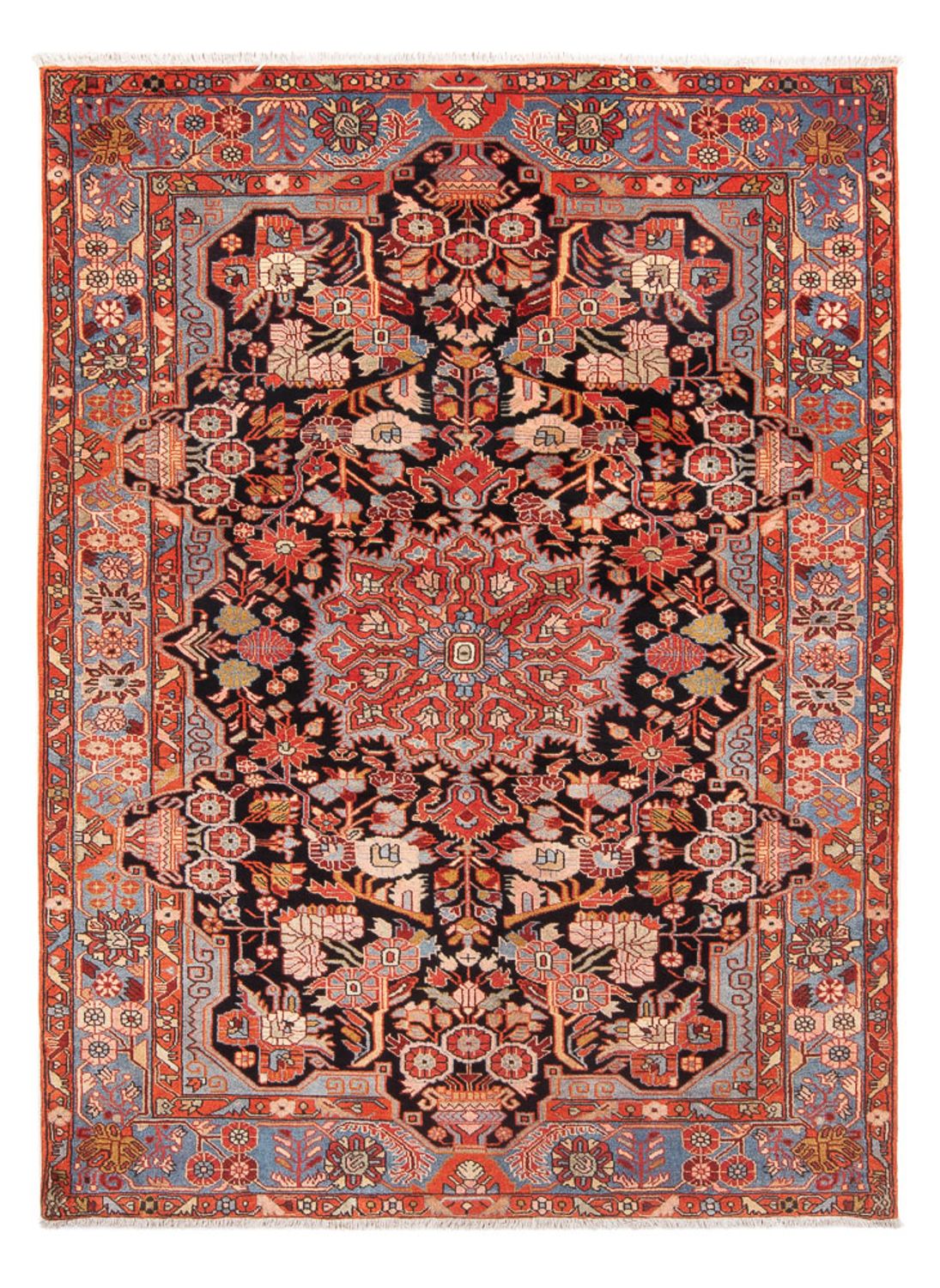
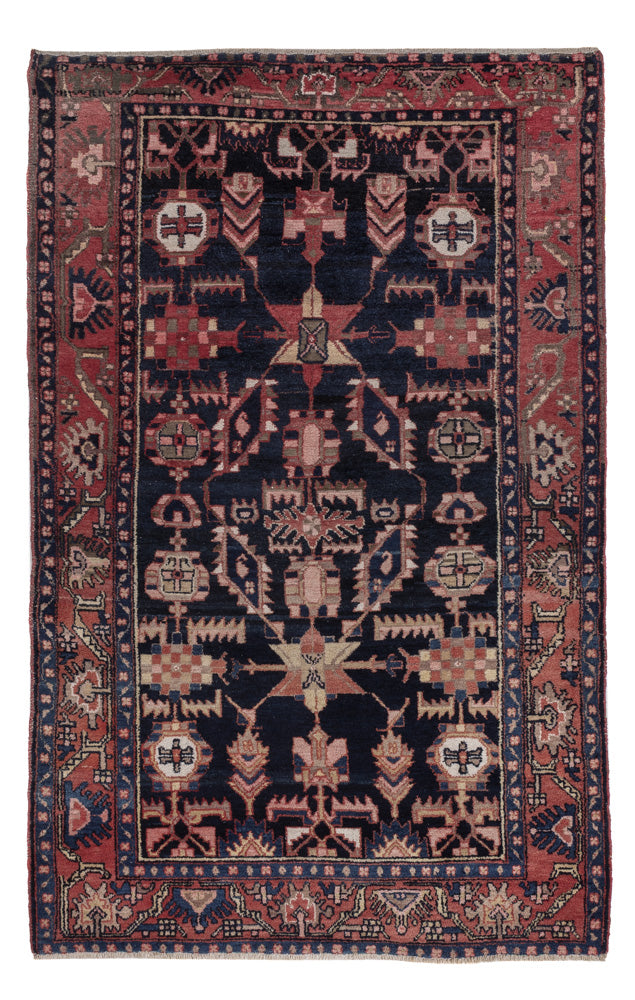
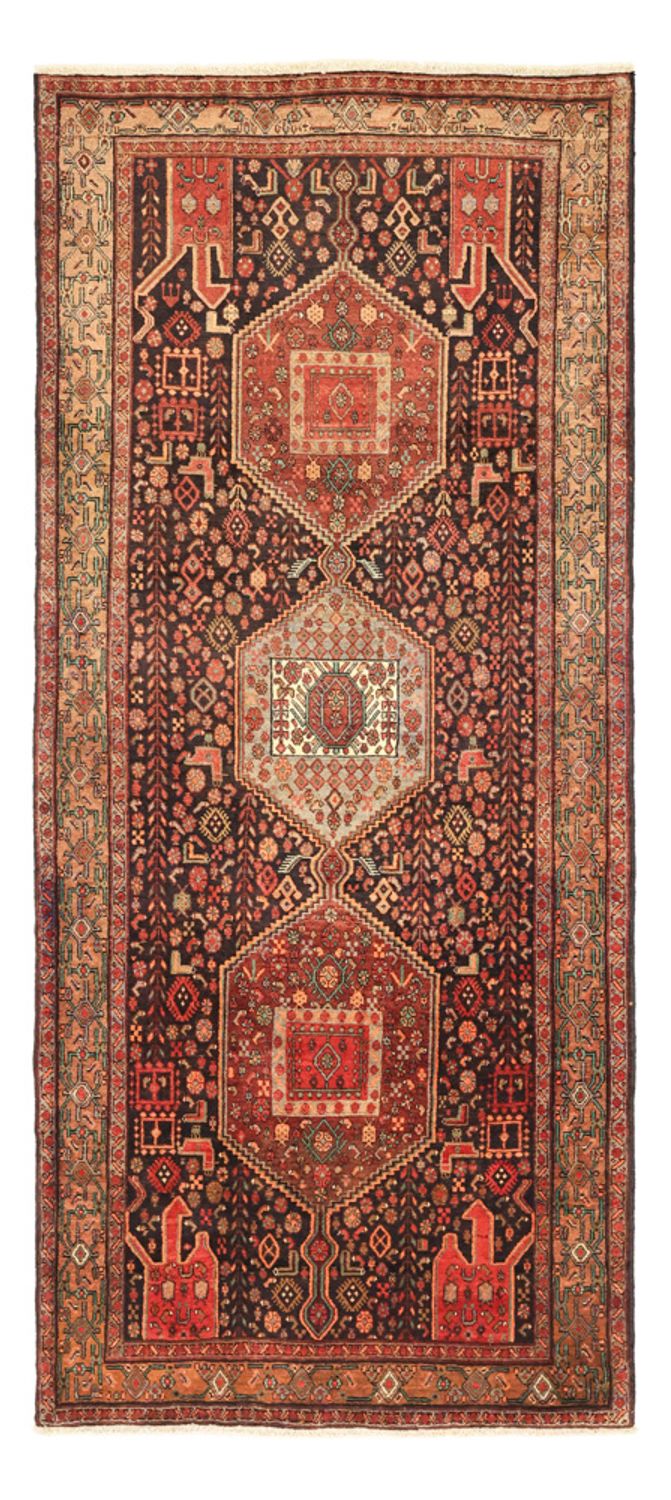
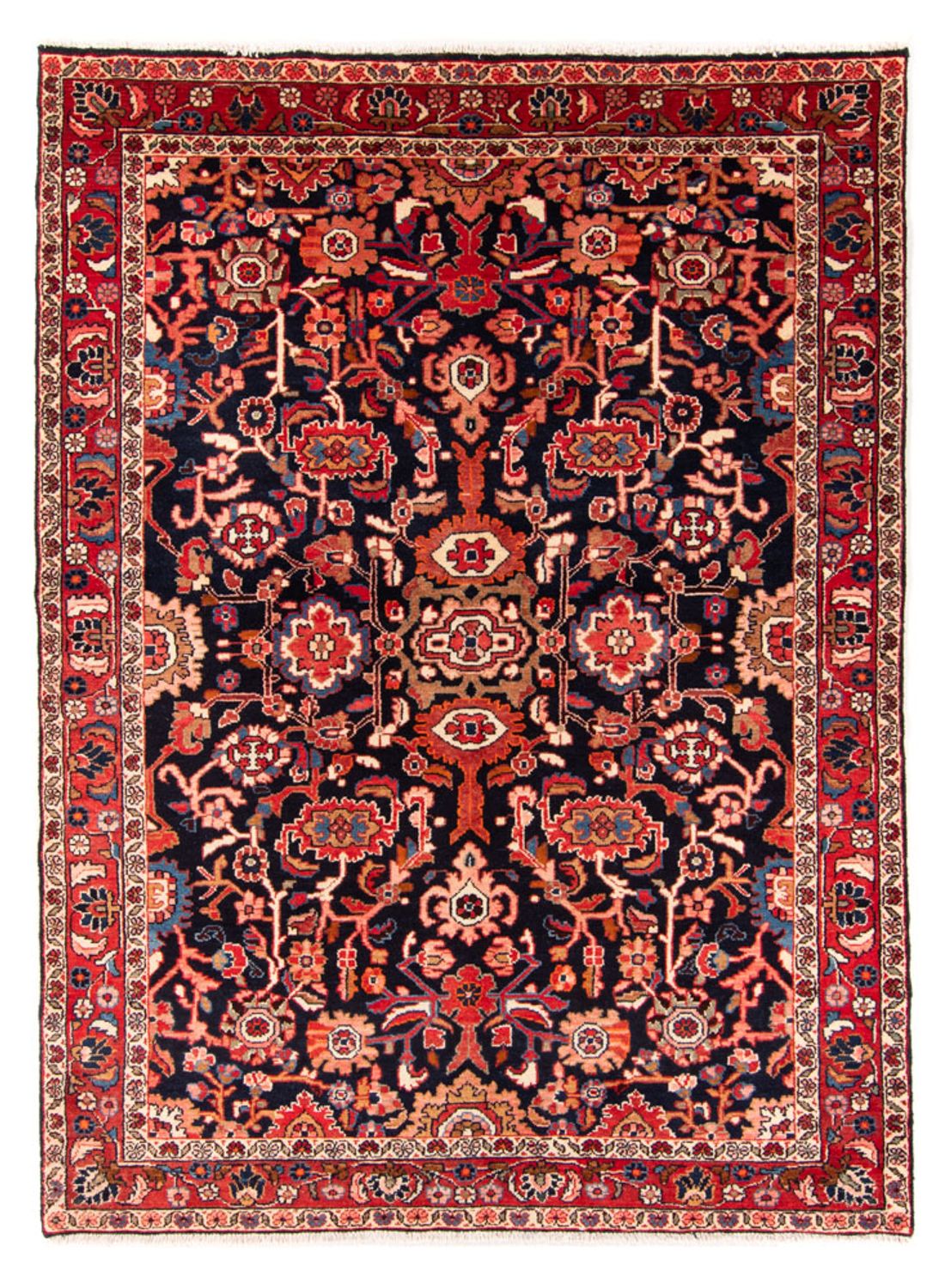
Photo: Morgenland Rugs
Nahavand rugs are sturdy hand-knotted Persian rugs from the town of Nahavand in western Iran and belong to the wider family of Hamadan rugs. They combine geometric village patterns, bold colours, and a hard-wearing wool quality with good value for money. This article explains the origin, typical patterns, materials and knotting technique, the value, and the marks of authenticity of a Nahavand rug, and sets it apart from related provenances of the region.
What is a Nahavand rug?
A Nahavand is a hand-knotted village and workshop rug from the town of Nahavand and its surrounding settlements in the Iranian province of Hamadan. Characteristic features include a central geometric medallion or an all-over Herati pattern, a wool pile, and the symmetric Turkish knot typical of the entire Hamadan region. Nahavand is among those places in the region that have made a name for themselves as their own provenance instead of selling their goods anonymously under the collective Hamadan label.
As with many west-Persian village provenances, the term is not closely defined. Pieces of varying quality are sold under the Nahavand name, from plain, boldly patterned everyday rugs to finer, more carefully drawn work. To place a piece accurately, look at pattern, knotting, and material together.
Origin
Nahavand lies about 60 kilometres south of the provincial capital of Hamadan in western Persia, in a region with a long rural knotting tradition. The town was historically a trading place on old connecting routes, which encouraged the exchange of patterns and materials and supported local craftsmanship. The entire surrounding area belongs to the great Hamadan rug belt, in which several hundred settlements knot and traditionally market their goods through the region's bazaars.
Within this belt, Nahavand has established itself as a recognised provenance. Production takes place both in small workshops and as home-based work, often with whole families involved, and the techniques are passed down through generations. Related names and neighbours from the same region include Hamadan itself, Malayer, Touiserkan, and the Kurdish-influenced Koliai.
Patterns and colours
Nahavand rugs are geometrically drawn and rural in character. Common designs include a central medallion in diamond or hexagon form, as well as the all-over Herati pattern with its fish-spine leaf motifs around a small rosette, which can be repeated across the entire surface. The borders are usually multi-tiered and take up classical Persian motifs across several narrow bands.
The palette is traditional and bold. Deep reds and dark blue dominate the field, complemented by beige, ivory, and accents in green and yellow. Despite the geometric basic structure, many Nahavands feel lively because the patterns show slight deviations and irregularities typical of grown village work. This rural, slightly irregular hand sets the Nahavand apart from the strictly composed workshop patterns of the great urban centres.
Material and knotting technique
Nahavand rugs are knotted predominantly from sheep's wool, often both for the pile and for the warp; the weft is wool, occasionally cotton. The wool comes from regional flocks and is valued for its natural lanolin content and toughness, which gives the pieces their durability. An overview of the fibres in use can be found in the materials section.
Knotting uses the symmetric Turkish knot, also called the Ghiordes knot. This is typical of the entire Hamadan region and sets Nahavand and its neighbours apart from many other Persian provenances that use the asymmetric Senneh knot. The differences between the two knot types are explained in the overview of knot types; the full sequence from warping the loom to shearing is described in the article on rug production. The rugs are made on vertical looms; dyeing is partly still done with natural dyes, complemented by high-quality synthetic colours for an even result.
Knot density and quality
The knot density of Nahavand rugs typically ranges between roughly 60,000 and 120,000 knots per square metre, placing them in the medium quality category. The pile is usually medium-long to long, which gives the pieces a pleasant, soft feel and adds to toughness. What knot density really means, and why a medium density befits a village rug, is covered in its own article.
Beyond density, quality depends above all on wool quality, the clarity of the geometric drawing, the depth of colour, and condition. Older or more carefully worked pieces often show hand-spun wool and natural colour nuances, while simpler trade qualities can be more roughly drawn.
| Provenance | Relation to Nahavand | Typical features |
|---|---|---|
| Nahavand | own provenance in the Hamadan belt | geometric medallion or Herati, Turkish knot |
| Hamadan | parent term and region | sturdy village rugs, single weft, geometric |
| Malayer | neighbouring provenance | often finer, floral and geometric motifs |
| Touiserkan | surrounding region | village knotting, traditional patterns |
| Koliai | west Iranian, Kurdish-related | very robust, strongly geometric |
| Bidjar | neighbouring knotting region | extremely dense and heavy, very durable |
What is a Nahavand rug worth?
The value of a Nahavand rug depends on age, condition, size, knot density, clarity of pattern, wool quality, and colour. As sturdy village rugs of the middle category, Nahavands are usually more affordable than fine Persian workshop production such as Nain, Isfahan, or Ghom. Well-preserved older pieces with hand-spun wool and natural dyes, however, can be worth considerably more than plain new trade qualities. Their reputation as long-lived, everyday-suitable working rugs with good value for money is well founded.
For a grounded assessment, see the overview What is my rug worth? and the article Identifying valuable Persian rugs. Practical guidance on selection and purchase is in the buying guide.
How can you tell a genuine Nahavand rug?
Typical signs of a genuine, hand-knotted Nahavand include:
- Symmetric Turkish knot: like the entire Hamadan region, Nahavand uses the Ghiordes knot, unlike many other Persian rugs.
- Hand-knotted back: the pattern is mirrored clearly, with individual knots visible.
- Real fringes: the fringes are the extended warp threads, not sewn on.
- Bold reds and blues with a geometric medallion or all-over Herati pattern.
- Medium-long to long wool pile with a robust, village feel.
- Slight irregularities in pattern and colour (abrash) point to grown handwork.
Since Nahavand belongs to the wide Hamadan area, individual pieces vary. The classification should therefore weigh pattern, back, material, and condition together. A general step-by-step check is set out in Is my rug genuine?; an overview of the marks of hand-knotted rugs can be found under Identifying hand-knotted rugs.
Care
Nahavand rugs made of robust wool are easy to care for and well suited to daily use. Regular vacuuming in the direction of the pile and occasional professional cleaning preserve colours and pile. Spills should be blotted at once with clear water, without rubbing. Long, direct sunlight will fade the colours and should be avoided. Turning the rug occasionally spreads wear evenly. Detailed guidance is in the care overview.
Frequently asked questions
Where do Nahavand rugs come from?
From the town of Nahavand and its surrounding settlements in the Iranian province of Hamadan, about 60 kilometres south of the provincial capital in the west of the country. The region belongs to the great Hamadan rug belt with its long rural knotting tradition.
What distinguishes a Nahavand from other Hamadan rugs?
Nahavand is one of the provenances within the Hamadan belt and tends towards somewhat finer knotting and a higher-contrast palette than some anonymous Hamadan trade ware. The geometric motifs, often a local variant of the Herati pattern, show specific local quirks. Technically, however, the Nahavand shares the symmetric Turkish knot with the region.
Which knot is used for a Nahavand rug?
The symmetric Turkish knot, also called the Ghiordes knot. This is characteristic of the entire Hamadan region and unusual for Persian rugs, many of which use the asymmetric Senneh knot. The differences are explained in the overview of knot types.
Are Nahavand rugs suitable for heavily used areas?
Yes. Through the robust, naturally lanolised wool and the proven knotting technique, Nahavand rugs are very resilient and well suited to living areas with normal to heavy use.
What sizes are common for Nahavand rugs?
Nahavand rugs come in many formats, from small accent rugs around 60 x 90 cm through medium and large living-room rugs up to 200 x 300 cm and beyond. Runners in various lengths for hallways are also characteristic.
How do I care for a Nahavand rug correctly?
Vacuum regularly in the direction of the pile, blot spills at once with clear water without rubbing, and have the rug professionally cleaned every few years. Avoid long, direct sunlight and turn the rug occasionally so that wear spreads evenly.
Impressions of the origin
Places, landscapes and landmarks around the home of Nahavand rugs. Click any image for a larger view.
