Materials for Oriental Rugs
Wool, silk, cotton, plant fibers, and synthetics. The fiber that defines a rug shapes its appearance, its lifespan, and its price. Here is the overview, with depth.
#Why does the material decide the rug?
Three threads make a rug: the warp runs lengthways through the loom, the weft binds it crossways, and the pile is the knots in between. These three can come from completely different fibers, and that is exactly what determines feel, lifespan, and price. The classic split is simple: wool for the pile, cotton for warp and weft, sometimes silk for the finest knots. Synthetics have joined the mix in recent decades, mainly in the lower price segment. Once you know what a rug is made of, you also know what it can do.
Materials in detail
Dedicated deep-dive pages for each fiber, its properties, and its care.
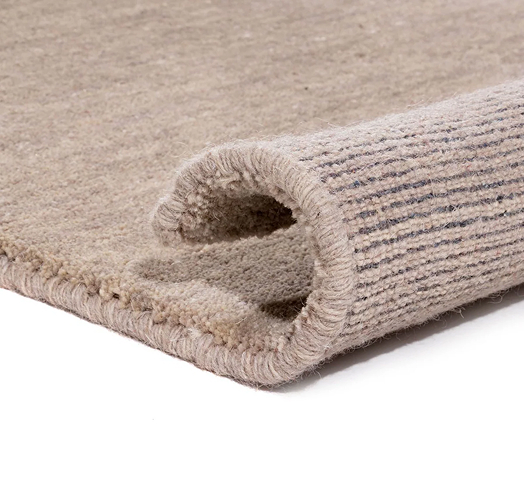
Wool
Highland wool, lambswool, [lanolin](/lanolin), and why wool is the classic choice.
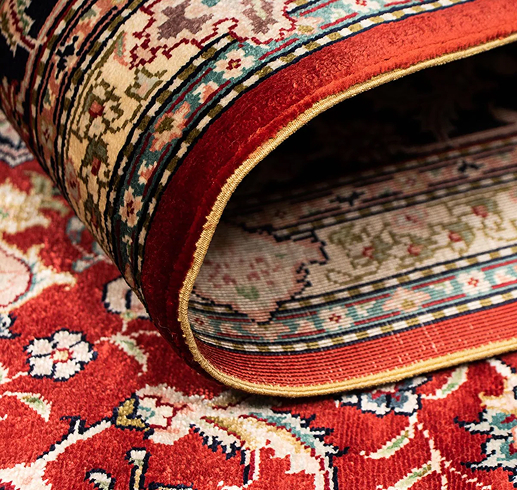
Silk
Mulberry silk, bamboo silk, the sheen, and how to care for it.
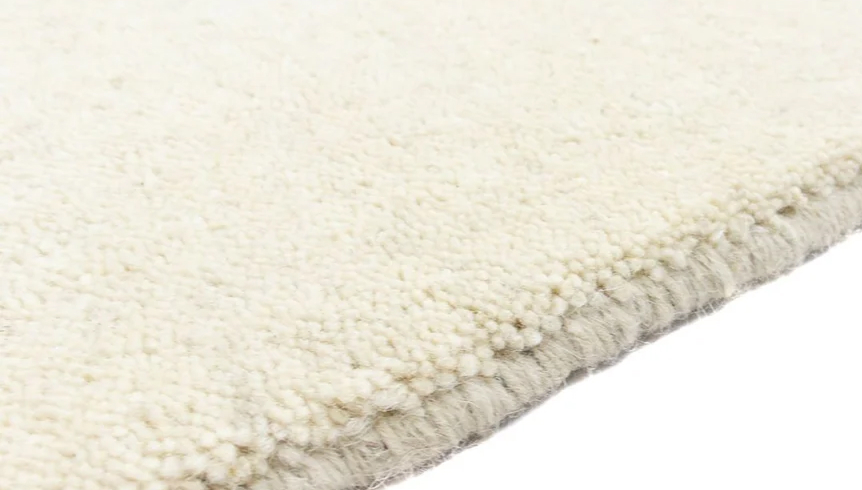
Cotton
Warp and weft, the unseen heroine of the knotting craft.
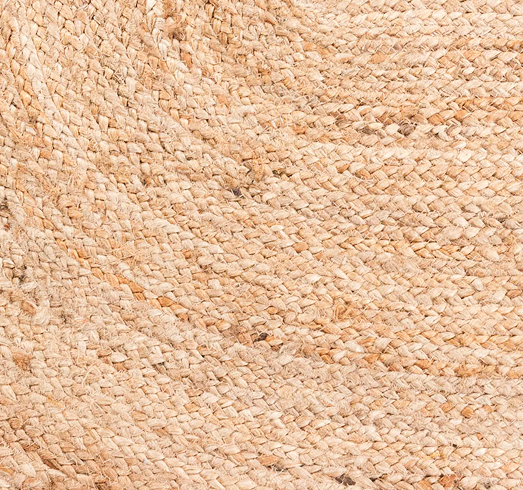
Jute & Sisal
Plant fibers as a purist natural rug.
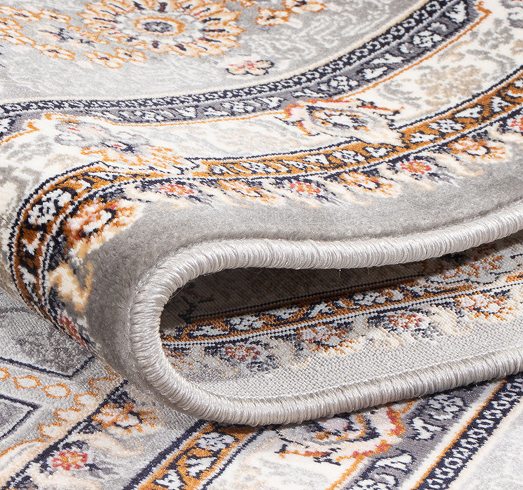
Synthetic
Polypropylene, polyester, [viscose](/viskose), and what they can do.
Polypropylene rugs
Pros, cons, use cases, quality markers, and care for the most-sold synthetic fibre.
Which natural fibers are used for rugs?
Five natural fibers dominate the picture: wool, silk, cotton, jute, and sisal. Each plays its own role.
- Wool
- The classic for the pile. Warm, resilient, dirt-repellent thanks to lanolin, and durable across generations.
- Silk
- Brings the sheen and the finest knots. Refined and delicate at the same time.
- Cotton
- The quiet heroine on the inside. As warp and weft it holds nearly every knotted rug in shape, without ever being seen.
- Jute & Sisal
- Plant rather than animal. Laid bare and undyed, rough and honest, at home in modern interiors.
Which synthetic fibers are used for rugs?
Four synthetic fibers dominate the lower and middle price segments. They are inexpensive, light-fast, and available in any color. What they lack is character.
Polypropylene
The most common synthetic fiber. Insensitive to water, dirt-repellent, and very inexpensive.
Polyester
Often used for high-pile rugs. Color-intense, plush, light-fast.
Viscose
Also known as "art silk" or "bamboo silk". Imitates the sheen of real silk but behaves quite differently.
Acrylic
Wool-like in look and warmth, but less resilient and flammable at high temperatures.
Natural fiber or synthetic?
Both have their strengths, both have their limits. A direct comparison helps more than a blanket answer.
| Property | Natural fiber | Synthetic |
|---|---|---|
| Feel | warm, soft, lively | smooth, uniform, cooler |
| Lifespan | 30 to 100 years and more | 5 to 15 years |
| Care | careful, dry where possible | easy, washes clean |
| Climate regulation | absorbs and releases moisture | largely neutral |
| Price | higher entry point | noticeably cheaper |
| Value over time | stable to rising | drops with time |
The decision rarely comes out dogmatic. For a dining room with kids and a dog, synthetic is often the honest choice. For a living room where a rug is meant to lie for decades, the step up to natural fiber is worth it.
Which fiber for which use?
The right rug starts with the question of where it will lie. Five rooms, five recommendations.
Living room
Here the rug is in view for hours. Wool, or a wool-and-silk blend, hits the right note: warm underfoot, visually alive, long-lasting.
Bedroom
Softness counts more than ruggedness. Pure wool with a higher pile takes the chill off the floor and makes the first step in the morning quieter.
Kitchen and hallway
Robustness and easy cleaning matter here. A flat-woven kilim in wool handles sand and footfall well. If you want to wash the rug often, a synthetic flatweave is the more honest choice.
Reception area
Little traffic, plenty of impact. A silk rug or a fine wool-and-silk knotted rug shows its strength here without suffering in everyday use.
Modern rooms with a natural look
Scandinavian, mid-century, period flat with floorboards: jute and sisal belong in spaces where the raw, honest material aesthetic is part of the point.
Keep reading
How oriental rugs are made
How wool, silk, and natural dyes become a hand-knotted work of art, explained step by step.
ReadRug seals & certifications
GoodWeave, Care & Fair, Öko-Tex: what each rug certification guarantees, and how to spot a genuine label.
ReadCare and cleaning
Vacuuming, stains, moth protection, storage: how to keep your rug beautiful for generations.
Read