Sharbabak rugs: Afshar workshop weave from Kerman
Shahr-e Babak rugs come from the cave village of Meymand area and combine Afshar tribal motifs with fine craftsmanship.
- Region
- Persia / Iran
- Category
- Persian rugs
- Manufacturing
- Hand-knotted
- Knot density
- 80,000 – 200,000 knots/m²
Profile
- Manufacturing
- Hand-knotted
- Origin
- Iran — Shahr-e Babak, Kerman Province
- Pile material
- Wool on cotton or wool
- Knot density
- 80,000 – 200,000 knots/m²
- Features
- Afshar tribal motifs, fine quality, distinctive medallions
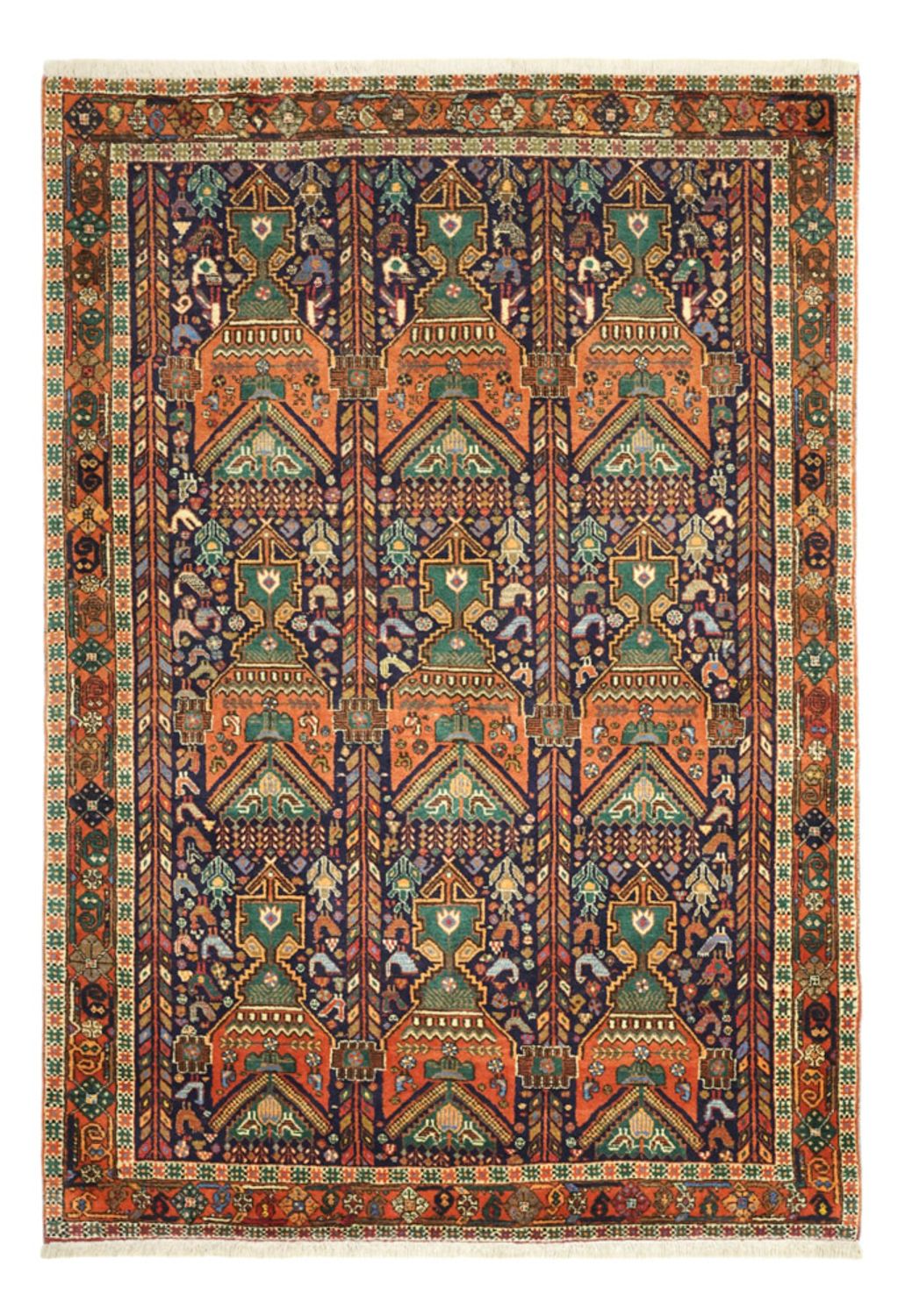
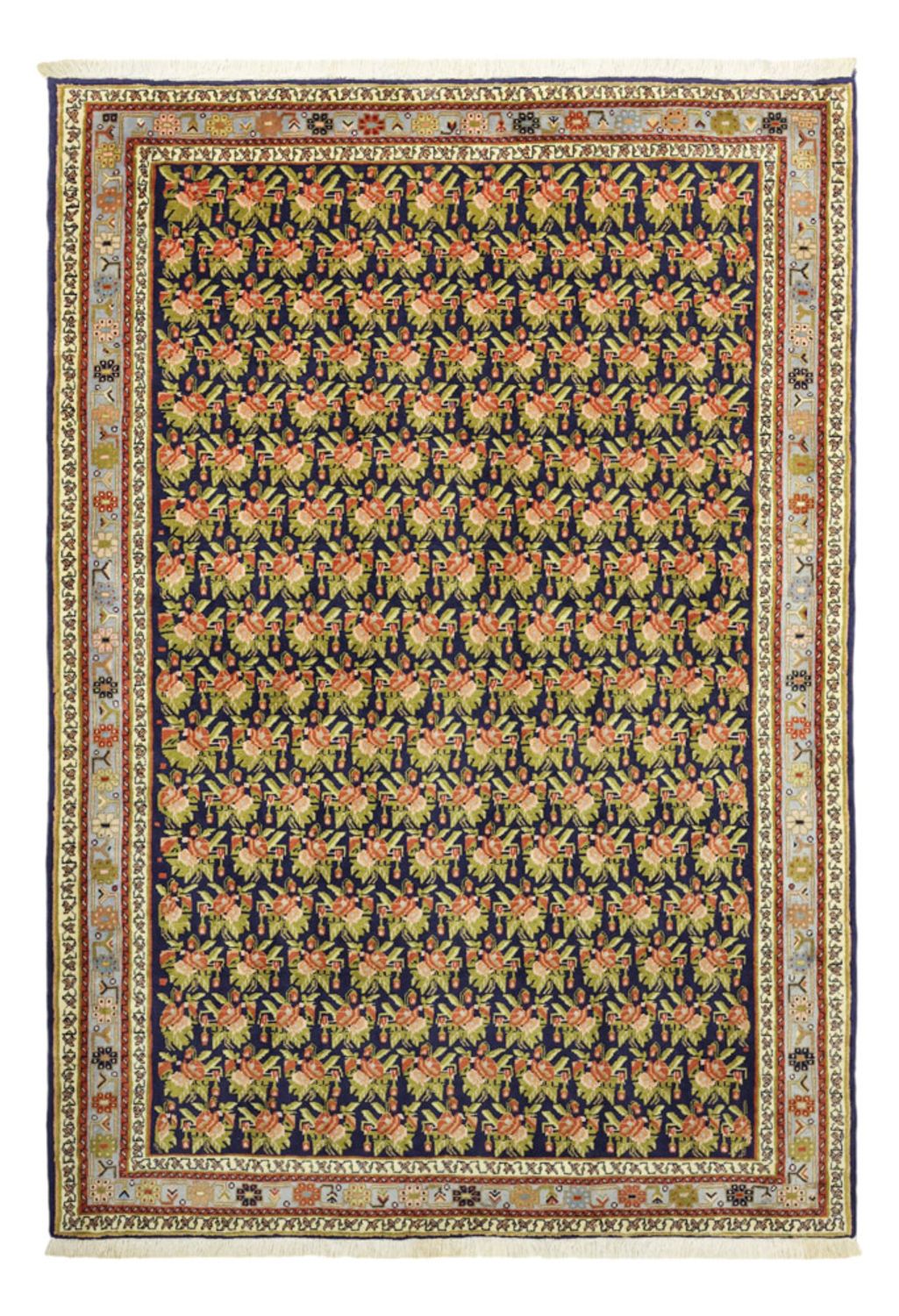
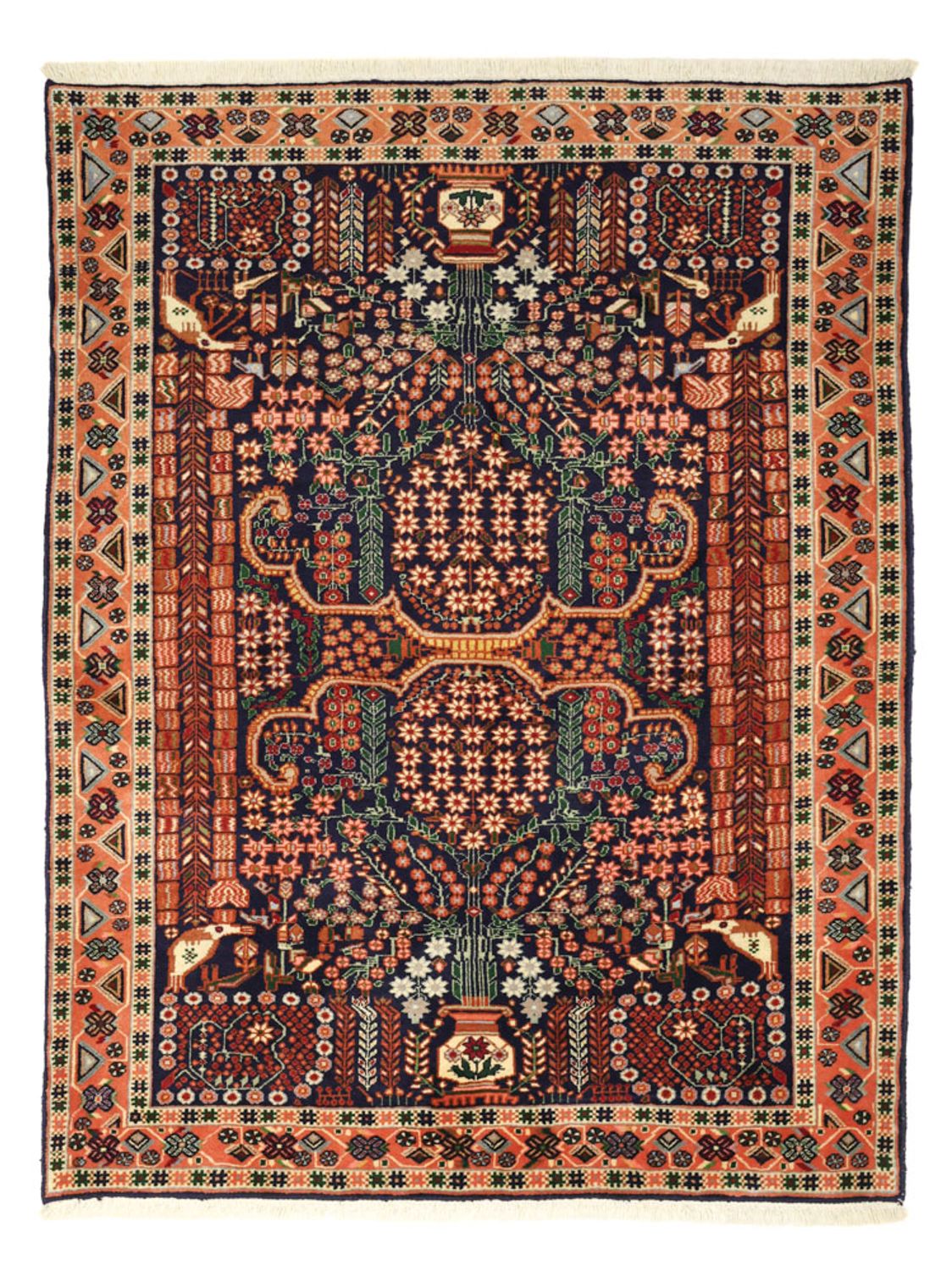
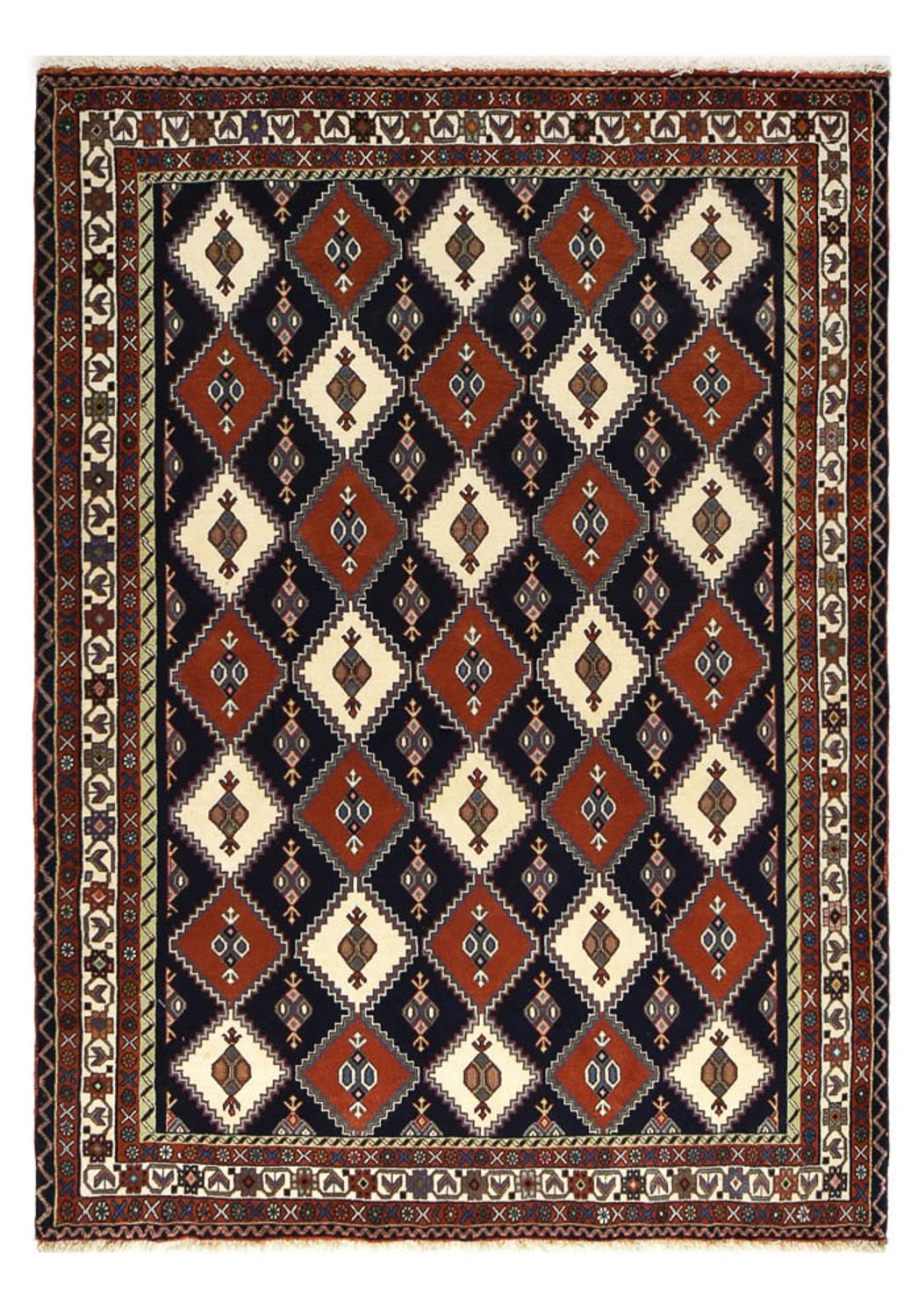
Photo: Morgenland Rugs
Sharbabak rugs are hand-knotted Persian rugs from the region around Shahr-e Babak in the north-west of the south-east Persian province of Kerman. They are closely shaped by the knotting craft of the neighbouring Afshar tribes and combine their geometric tribal motifs with careful workshop execution. Characteristic features are the central medallion, earthy natural dyes, and a solid, long-lived structure.
What is a Sharbabak rug?
A Sharbabak is a hand-knotted rug from the town of Shahr-e Babak and the surrounding villages, north-west of the provincial capital of Kerman. Characteristic features are a sheep's-wool pile on a cotton warp, the asymmetric Persian knot, and geometrically drawn patterns that take up Afshar diamonds and boteh motifs. The name goes back to the place of origin; in trade the rug appears partly as an independent provenance, partly in the orbit of the Afshar rugs of the Kerman region. The pieces count as solid, individually drawn workshop rugs.
Origin
Shahr-e Babak lies in the north-west of Kerman province, on the edge of the central Iranian desert and on an old connection towards Yazd and Fars. The region has been settled by Turkic-origin groups for centuries, including parts of the Afshar, who were resettled to south-eastern Persia under the Safavids from the 16th century. From this neighbourhood comes the close stylistic kinship of Sharbabak rugs with the Afshar tradition.
The area is also known for the nearby cave village of Meymand, one of the oldest continuously inhabited settlements in Iran and part of the UNESCO World Heritage list. Rug knotting around Shahr-e Babak is anchored mostly in smaller workshops and with local knotters who pass patterns down through generations. Each family thereby develops its own variations, which leads to a notable diversity within the Sharbabak style.
Patterns and colours
Sharbabak rugs usually show a central medallion surrounded by smaller, repeating ornaments in the field. The drawing is geometrically marked and takes up Afshar motifs such as the diamond medallion and the boteh motif, complemented by stylised blossom and leaf motifs in symmetrical arrangement. Both medallion rugs and all-over patterned variants are common.
The palette moves in warm, earthy tones: red, indigo blue, beige, brown, and ivory, often drawn from plant dyes. That gives the rugs their characteristic colour depth and a calm, warm presence. The borders are usually built up in several stripes, with the main stripe carrying a more complex pattern than the narrow secondary stripes.
Material and knotting technique
The pile is regionally sourced sheep's wool, valued for its toughness. The warp is usually cotton, which gives the rug stability and dimensional steadiness; the pile is high-quality wool. The pile is sheared medium-high.
The Sharbabak is knotted with the asymmetric Persian knot, also called the Senneh knot. Dyeing is often still done with natural dyes from plant and mineral sources, which favours colour depth and lightfastness. After knotting the rugs are sheared and washed using traditional methods. How a rug arises from setting the warp to shearing is explained in the overview of production; the yarns used are covered in material studies.
Knot density and quality
The knotting density of a Sharbabak is in the medium range, typically between 100,000 and 250,000 knots per square metre. This range follows from the workshop structure: finer pieces from careful work reach clearly drawn medallions and borders, while plainer qualities stay coarser. A higher density allows more detail, but wool quality, natural dyeing, and evenness of knotting matter just as much. What knot density says about quality and price is covered in its own article.
A reliable mark of quality is the wool. Strong yarn with good spring-back and saturated, clearly separated natural colours point to a high-quality piece, while dry, dull wool suggests plainer ware.
Sharbabak compared
| Provenance / type | Relation to Sharbabak | Typical features |
|---|---|---|
| Sharbabak | independent workshop provenance | central medallion, Afshar motifs, earthy colours |
| Afshar | defining tribal tradition | diamond and boteh motifs, tribal character |
| Afshar Sirjan | neighbouring Afshar variant | clear diamond medallion, finer, symmetric knot |
| Kerman | urban rug of the same province | curvilinear floral, fine workshop ware |
| Rafsanjan | neighbouring town in the Kerman region | floral, finer workshop quality |
| pure tribal Afshar | freely migrating variant | coarser, freer drawing, often wool warp |
What is a Sharbabak rug worth?
The value of a Sharbabak depends above all on age, condition, size, knot density, wool quality, and dye. As solid workshop rugs of the Kerman region, they sit mostly in the affordable to middle range, below the fine urban rugs from Kerman. Well-preserved older pieces with clear natural dyes and a cleanly drawn medallion are sought after by lovers of south-east Persian tribal rugs.
Orientation for value can be found in the rug value overview, the article Identifying valuable Persian rugs, and the buying guide.
How can you tell a genuine Sharbabak rug?
Typical signs of a genuine Sharbabak include:
- Central medallion with smaller, repeating ornaments in the field.
- Geometric Afshar motifs such as diamonds and boteh, complemented by stylised blossoms.
- Earthy natural colours in red, indigo, beige, and brown with warm colour depth.
- Asymmetric Persian knot: the back shows the pattern clearly.
- Sheep's-wool pile on a cotton warp with a solid, firm structure.
- Fringes as part of the warp, not sewn on afterwards.
A machine imitation has a uniform, glued-on back and flat, dull yarn. The detailed check is described in Is my rug genuine?; a general introduction is in the guide to identifying rugs.
Care
Sharbabak rugs are robust and easy to care for. Regular vacuuming in the direction of the pile and occasional professional cleaning are enough. Spills should be taken up quickly with clear water, without rubbing; aggressive cleaning agents should be avoided to spare the natural dyes. Long, direct sunlight will fade the colours. Detailed guidance is in the care overview.
Frequently asked questions
Where is the region of origin of Sharbabak rugs?
Sharbabak rugs come from the town of Shahr-e Babak and its surroundings in the north-west of the south-east Persian province of Kerman, not from western Iran. The region borders the settlement area of the Afshar tribes.
What is the difference between Sharbabak and Afshar?
Both come from the Kerman region and share geometric motifs such as diamonds and boteh. The Afshar is the tribal rug of the eponymous confederation, while the Sharbabak is a workshop rug shaped by this tradition from the surroundings of Shahr-e Babak, with a central medallion and individual family drawing.
Which knot do Sharbabak rugs use?
Sharbabak rugs are knotted with the asymmetric Persian knot, also called the Senneh knot. The neighbouring Afshar Sirjan variant, by contrast, usually uses the symmetric Turkish knot.
How do I recognise a genuine Sharbabak rug?
Look for a central medallion with Afshar motifs, earthy natural colours, a sheep's-wool pile on a cotton warp, and the asymmetric Persian knot. The back shows the pattern clearly; the fringes are part of the warp.
Are Sharbabak rugs suitable for daily use?
Yes. The robust wool and the firm knotting make them hard-wearing and long-lived, so they suit normal household use well in both traditional and modern living spaces.
In which sizes are Sharbabak rugs made?
They are knotted in various sizes, from small formats around 100 x 150 cm to larger pieces of 300 x 400 cm, depending on intended use and the workshop's commission.
How do I care for a Sharbabak rug correctly?
Vacuum regularly in the direction of the pile and have the rug professionally cleaned occasionally. Take up spills quickly with clear water, without rubbing, and do not use aggressive cleaning agents, to spare the natural dyes.
Impressions of the origin
Places, landscapes and landmarks around the home of Sharbabak rugs. Click any image for a larger view.
Related styles
Kerman
Kerman rugs from southeastern Iran are renowned for their elegant floral designs and refined color palette.
Rafsanjan
Rafsanjan rugs come from the Kerman pistachio town and show floral compositions related to Kerman pieces but in coarser knotting.
Afshar
Afshar rugs are knotted by semi-nomadic tribes in southeastern Iran, blending nomadic motifs with refined craftsmanship.


