Touiserkan rugs: Hamadan village weave from the south of the province
Tuyserkan rugs come from a small town in Hamadan Province and combine Hamadan single-weft weave with classic Herati patterns.
- Region
- Persia / Iran
- Category
- Persian rugs
- Manufacturing
- Hand-knotted
- Knot density
- 60,000 – 150,000 knots/m²
Profile
- Manufacturing
- Hand-knotted
- Origin
- Iran — Tuyserkan, Hamadan Province
- Pile material
- Wool on cotton
- Knot density
- 60,000 – 150,000 knots/m²
- Features
- Herati pattern, single-weft, ivory and red palette
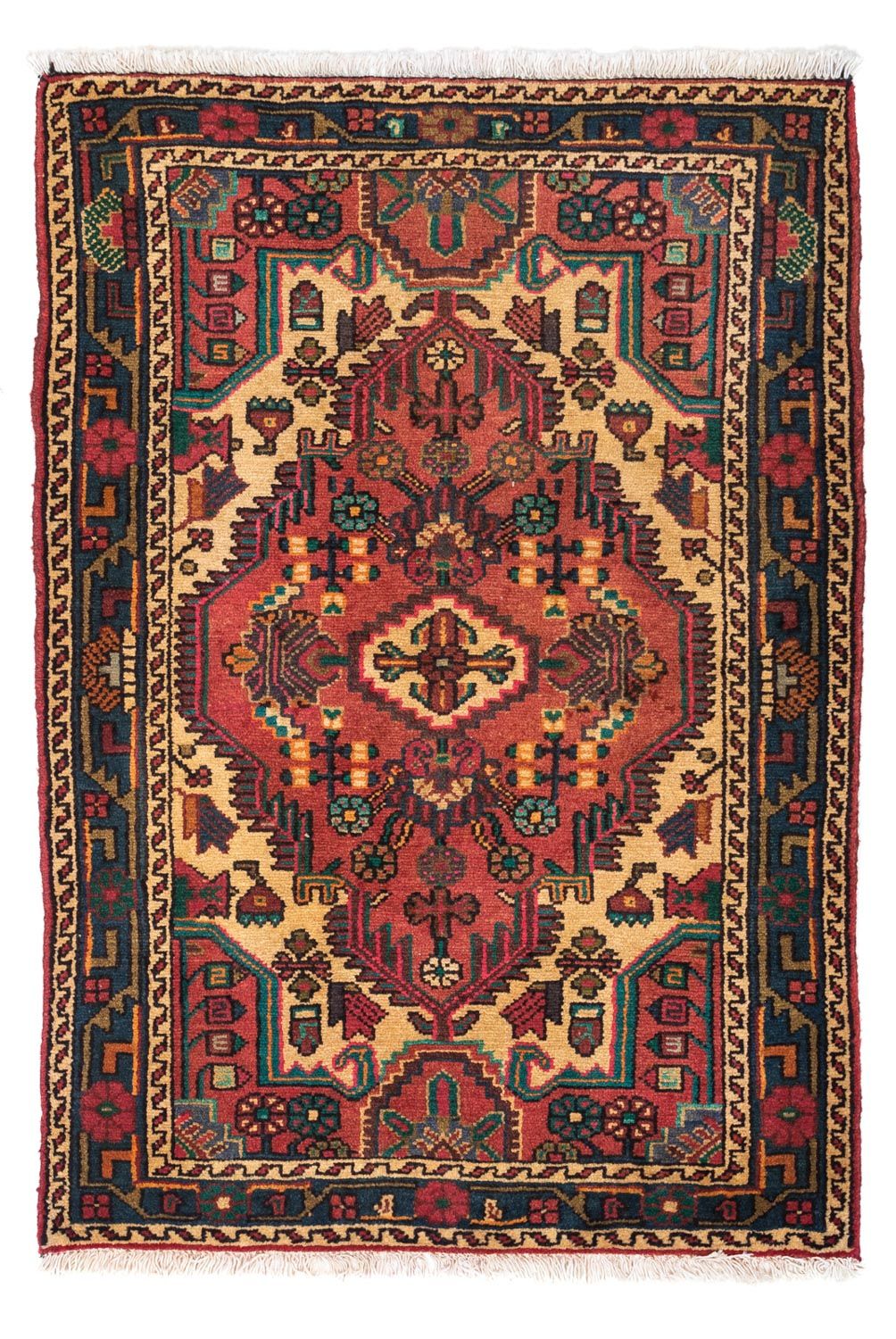
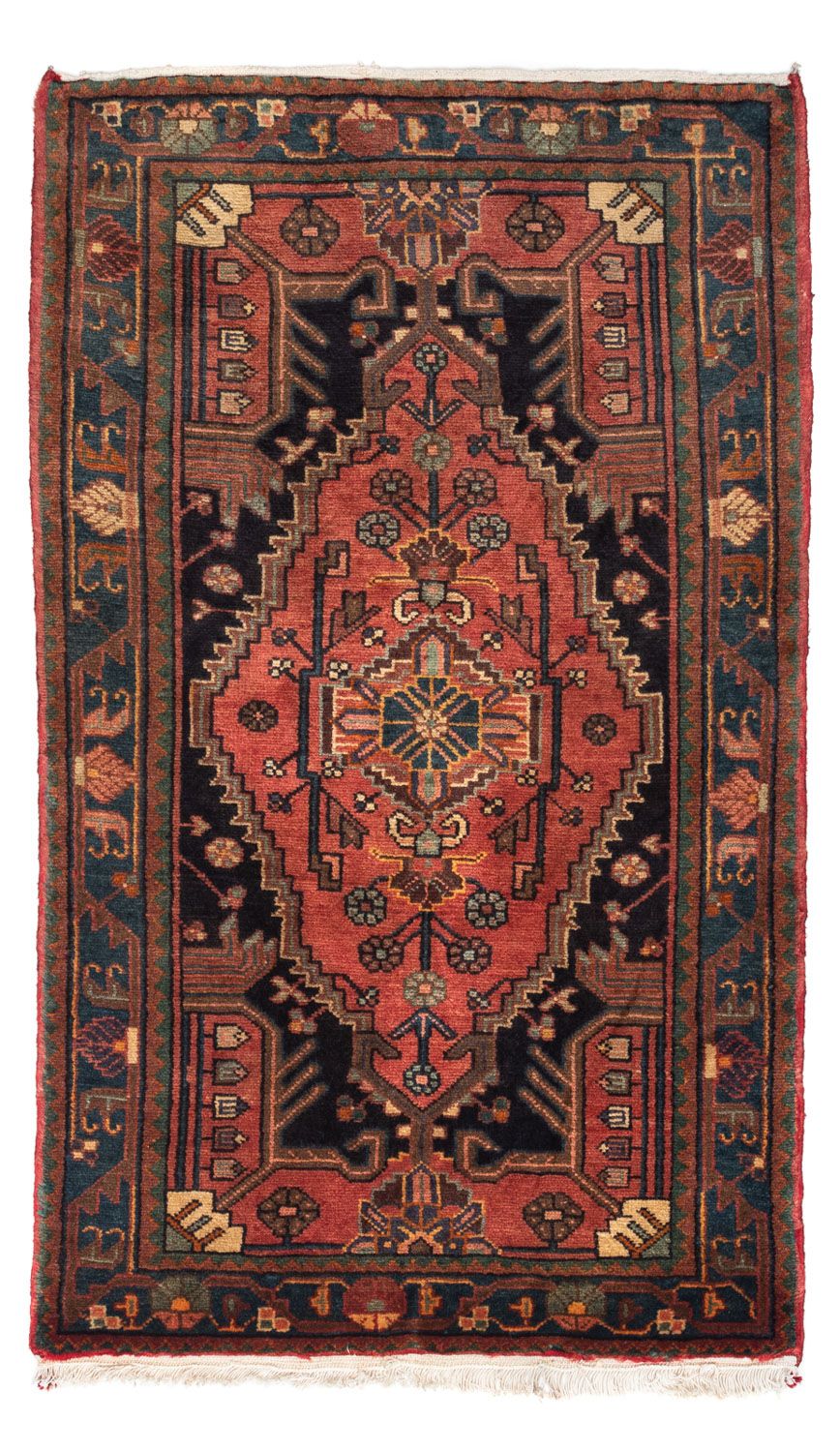
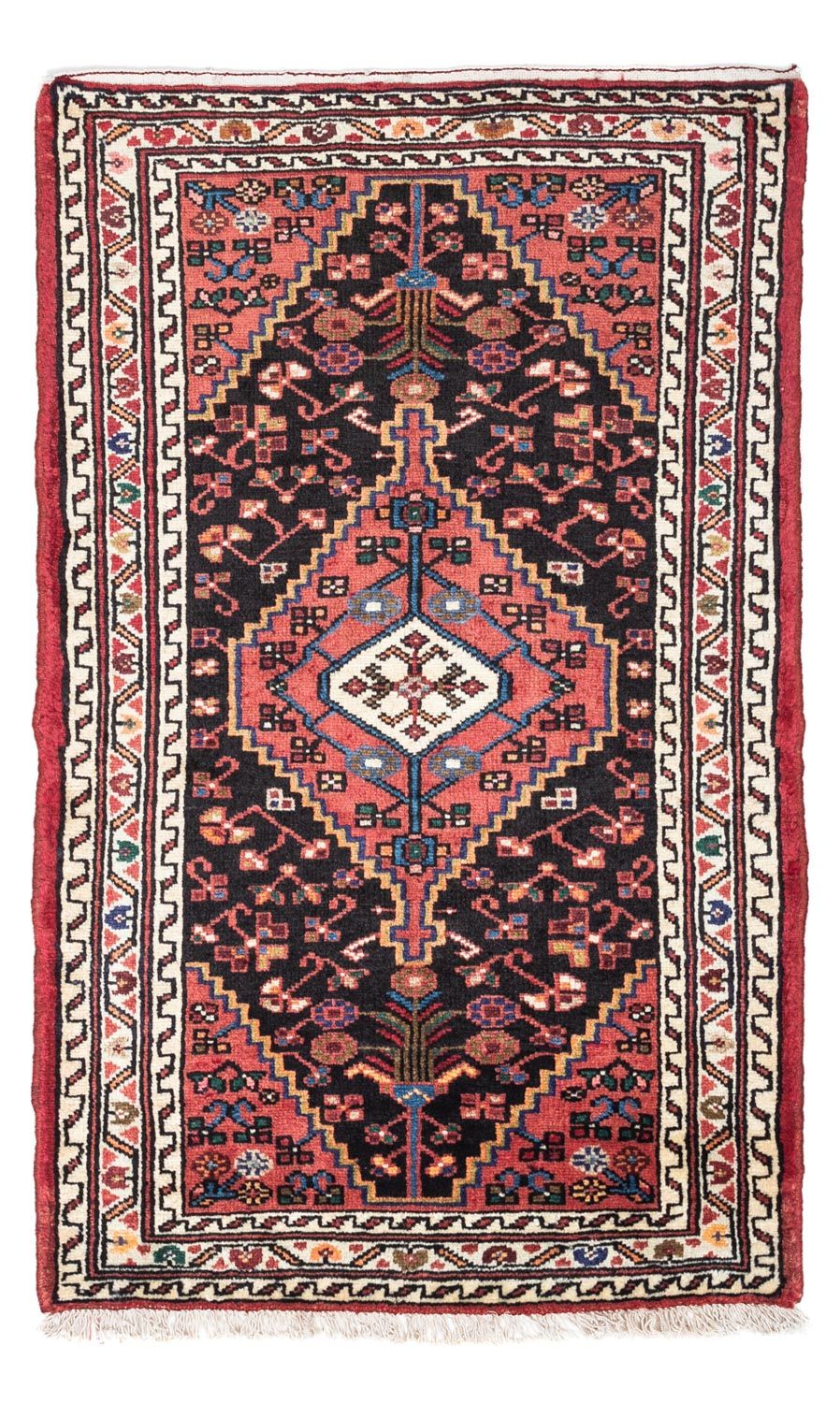
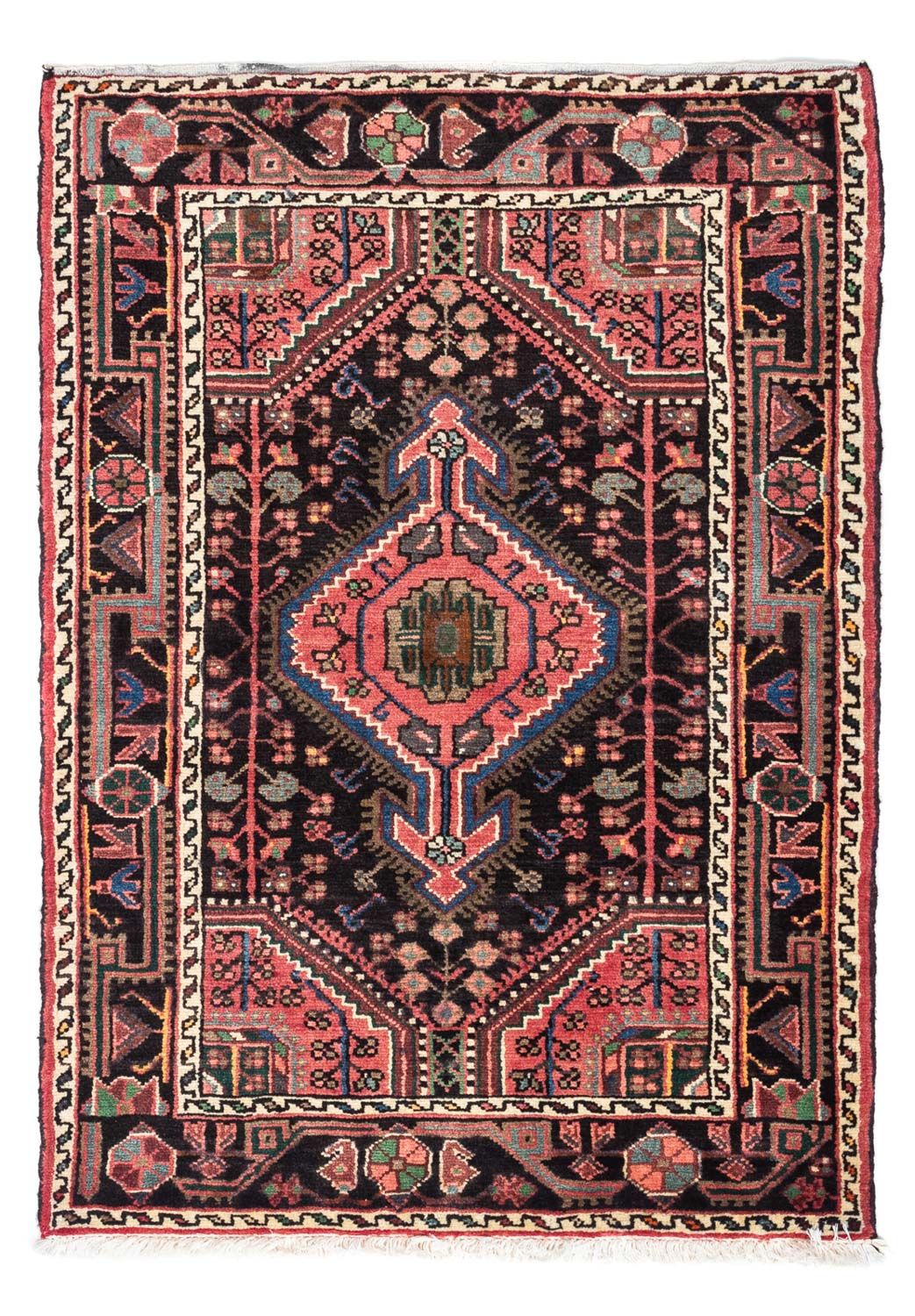
Photo: Morgenland Rugs
Touiserkan rugs are sturdy hand-knotted Persian rugs from the small town of Touiserkan in the south of Hamadan province in western Iran. They belong to the wider family of Hamadan rugs and show their geometric, Kurdish-influenced village drawing in bold red and navy blue. As long-lived working rugs with good value for money, they are especially well suited to heavily used rooms. This article explains the origin, patterns, materials and knotting technique, the value, and the marks of authenticity of a Touiserkan rug.
What is a Touiserkan rug?
A Touiserkan, also spelled Tuyserkan, is a hand-knotted village and workshop rug from the eponymous small town on the south-western slope of the Alvand highlands in Hamadan province. Characteristic features are a central, often stepped medallion in diamond or hexagonal form with matching corner spandrels, a cotton warp, a wool pile, and the single-weft construction typical of the region, in which only one weft thread runs between two rows of knots. Knotting uses the symmetric Turkish knot, which defines the whole Hamadan group.
Touiserkan is among the places in the Hamadan belt that have established themselves on the market under their own name. As with many west-Persian village provenances, the term is not closely defined: pieces of varying quality are sold under the name, from plain, boldly patterned everyday rugs to more carefully drawn work.
Origin
Touiserkan lies about 300 kilometres west of Tehran on the south-western slope of the Alvand range, in the south of Hamadan province in western Persia. The region belongs to the oldest continuously settled knotting areas of the country and is part of the great Hamadan rug belt, in which several hundred settlements knot and traditionally market their goods through the region's bazaars. The population is partly Kurdish in character, which shows in the geometric pattern language.
Rug production in Touiserkan grew above all in the 20th century, with the knotters drawing on centuries-old Persian and Kurdish traditions. The setting on old trade routes favoured the exchange of patterns and materials. Production takes place as home work and in small workshops. Related and neighbouring provenances include Hamadan itself, Nahavand, Malayer, and the Kurdish-influenced Koliai.
Patterns and colours
Touiserkan rugs are geometrically drawn and rural in character. Common is a central medallion in diamond or hexagonal form, often built up in steps and surrounded by smaller geometric motifs and matching corner spandrels. Alongside come all-over patterns and the Herati pattern. The borders show traditional Persian elements such as stylised blossoms or zigzag bands in several stripes.
The palette is bold and balanced. Reds and blues in various shades dominate, complemented by beige, cream, and occasionally green. Madder historically supplied the red, indigo the blue. The patterns are less fine than urban productions but show a clear structure and harmonious proportions, often with slightly softer colour transitions than some other Hamadan ware.
Material and knotting technique
The warp of Touiserkan rugs is cotton; the weft is cotton or wool. The pile is sheep's wool from local flocks, valued for its toughness and natural lanolin content. An overview of the fibres in use can be found in the materials section.
Knotting uses the symmetric Turkish knot, also called the Ghiordes knot. This is characteristic of the entire Hamadan region and sets Touiserkan apart from many other Persian provenances that use the asymmetric Senneh knot. The defining technical feature is the single weft: only one weft thread runs between two rows of knots, producing the firm character that can be read on the back. Dyeing uses partly natural and partly high-quality synthetic dyes. The full sequence from warping the loom to shearing is described in the article on rug production.
Knot density and quality
Knot density on Touiserkan rugs typically ranges between roughly 60,000 and 150,000 knots per square metre, placing them in the medium quality category. What knot density really says about fineness and price, and why a medium density befits a village rug, is covered in its own article.
Beyond density, quality depends above all on wool quality, the clarity of the geometric drawing, the depth of colour, and condition. In the last few decades the workmanship of many Touiserkans has steadily improved, so newer pieces often show clean, even knotting. Older or finer work often shows hand-spun wool and natural colour nuances.
| Provenance | Relation to Touiserkan | Typical features |
|---|---|---|
| Touiserkan | own provenance in the Hamadan belt | stepped medallion, Turkish knot, single weft |
| Hamadan | parent term and region | sturdy village rugs, single weft, geometric |
| Nahavand | nearby region, related style | geometric medallion or Herati, bold colours |
| Malayer | neighbouring provenance | often finer, floral and geometric motifs |
| Koliai | western Iranian, Kurdish-related | very robust, strongly geometric |
| Bidjar | neighbouring knotting region | extremely dense and heavy, very durable |
What is a Touiserkan rug worth?
The value of a Touiserkan rug depends on age, condition, size, knot density, clarity of pattern, wool quality, and dye. As sturdy village rugs of the middle category, Touiserkans are usually more affordable than fine Persian workshop production such as Nain, Isfahan, or Ghom. Well-preserved older pieces with hand-spun wool and natural dyes, however, can be worth considerably more than plain new trade qualities.
Their reputation as long-lived, everyday-suitable working rugs with good value for money is well founded. For a grounded assessment, see the overview What is my rug worth? and the article Identifying valuable Persian rugs. Practical guidance on selection and purchase is in the buying guide.
How can you tell a genuine Touiserkan rug?
Typical signs of a genuine, hand-knotted Touiserkan include:
- Symmetric Turkish knot: like the entire Hamadan region, Touiserkan uses the Ghiordes knot, unlike many other Persian rugs.
- Single-weft structure: only one weft thread runs between rows of knots, visible on the back.
- Hand-knotted back: the pattern is mirrored clearly, with individual knots visible.
- Real fringes: the fringes are the extended cotton warp threads, not sewn on afterwards.
- Stepped geometric medallion with corner spandrels in bold red and navy blue.
- Wool pile on a cotton foundation with a robust, village feel.
Since Touiserkan belongs to the wide Hamadan area and is often sold simply as Hamadan, the classification should weigh pattern, back, material, and condition together. A general step-by-step check is set out in Is my rug genuine?; an overview of the marks of hand-knotted rugs can be found under identifying hand-knotted rugs.
Care
Touiserkan rugs made of robust wool are easy to care for and well suited to daily use. Regular vacuuming on medium suction in the direction of the pile and occasional professional cleaning preserve colours and pile. Spills should be blotted at once with clear water, without rubbing. Professional cleaning is recommended every three to five years depending on use. Long, direct sunlight will fade the colours and should be avoided. Detailed guidance is in the care overview.
Frequently asked questions
Where do Touiserkan rugs come from?
From the small town of Touiserkan, also spelled Tuyserkan, on the south-western slope of the Alvand range in Hamadan province in western Iran. The region belongs to the great Hamadan rug belt and is partly Kurdish in character.
What distinguishes a Touiserkan from other Hamadan rugs?
Touiserkan rugs often show a particularly clearly stepped geometric medallion and a balanced palette with slightly softer transitions. Technically they share the symmetric Turkish knot and the single-weft structure with the region.
Which knot is used for a Touiserkan rug?
The symmetric Turkish knot, also called the Ghiordes knot. This is characteristic of the entire Hamadan region and unusual for Persian rugs, many of which use the asymmetric Senneh knot. The differences are explained in the overview of knot types.
What does a Touiserkan rug cost?
The price depends on age, condition, size, knot density, wool quality, and dye. Plain new village qualities are affordable; well-preserved older pieces with hand-spun wool and a clear drawing can cost considerably more.
Are Touiserkan rugs suitable for heavily used areas?
Yes. Through the flat single-weft structure and the robust, naturally lanolised wool, Touiserkan rugs are very resilient and well suited to living rooms with normal to heavy use.
What sizes are common for Touiserkan rugs?
Common are standard sizes such as 150 x 225 cm, 200 x 300 cm, and 250 x 350 cm, as well as runners around 80 x 300 cm for hallways. Square formats are rarer.
How do I care for a Touiserkan rug correctly?
Vacuum regularly on medium suction in the direction of the pile, blot spills at once with clear water without rubbing, and have the rug professionally cleaned every three to five years depending on use. Avoid long, direct sunlight and turn the rug occasionally.
Impressions of the origin
Places, landscapes and landmarks around the home of Tuyserkan rugs. Click any image for a larger view.
Related styles
Hamadan
Hamadan rugs come from western Iran and are produced in countless village workshops, robust, affordable, and highly varied.
Nahavand
Nahavand rugs come from the Hamadan region and show a more open weave with bold geometric medallions.
Koliai
Koliai rugs are knotted by Kurdish tribes in western Iran and combine geometric motifs with a robust pile.


