Afshar Sirjan rugs: fine Afshar knotting from Kerman
Afshar Sirjan rugs are knotted by Afshar tribes around Sirjan and combine nomadic motifs with refined craftsmanship.
- Region
- Persia / Iran
- Category
- Nomad rugs
- Manufacturing
- Hand-knotted
- Knot density
- 100,000 – 200,000 knots/m²
Profile
- Manufacturing
- Hand-knotted
- Origin
- Iran — Sirjan, Kerman Province
- Pile material
- Wool on cotton
- Knot density
- 100,000 – 200,000 knots/m²
- Features
- Nomadic motifs, fine craftsmanship, vivid red-and-blue palette
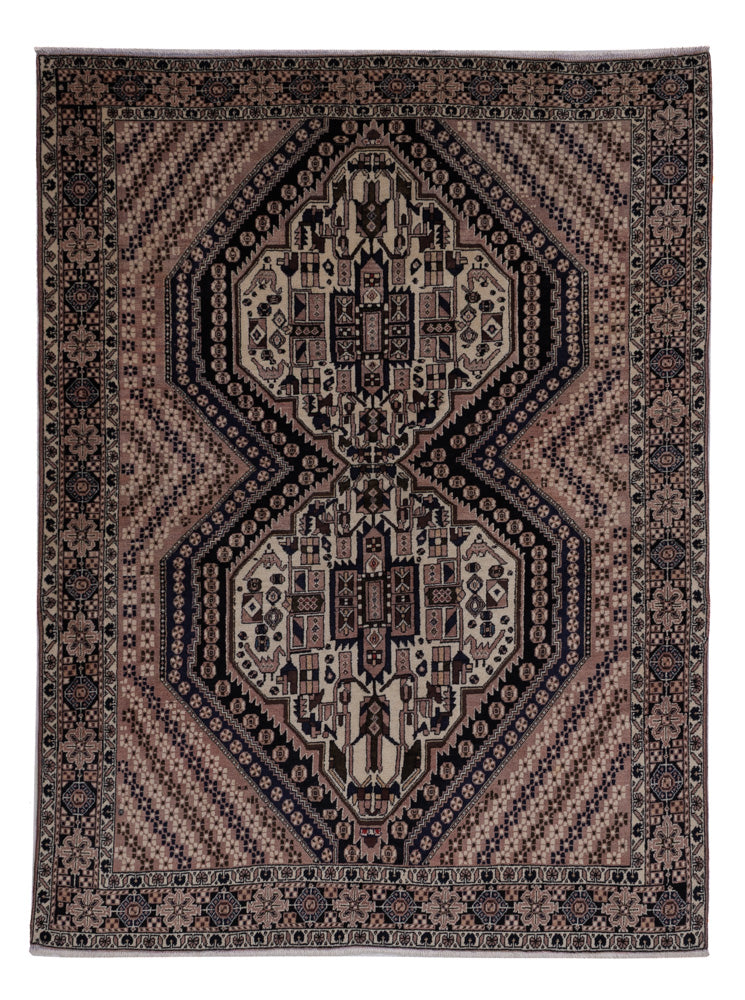
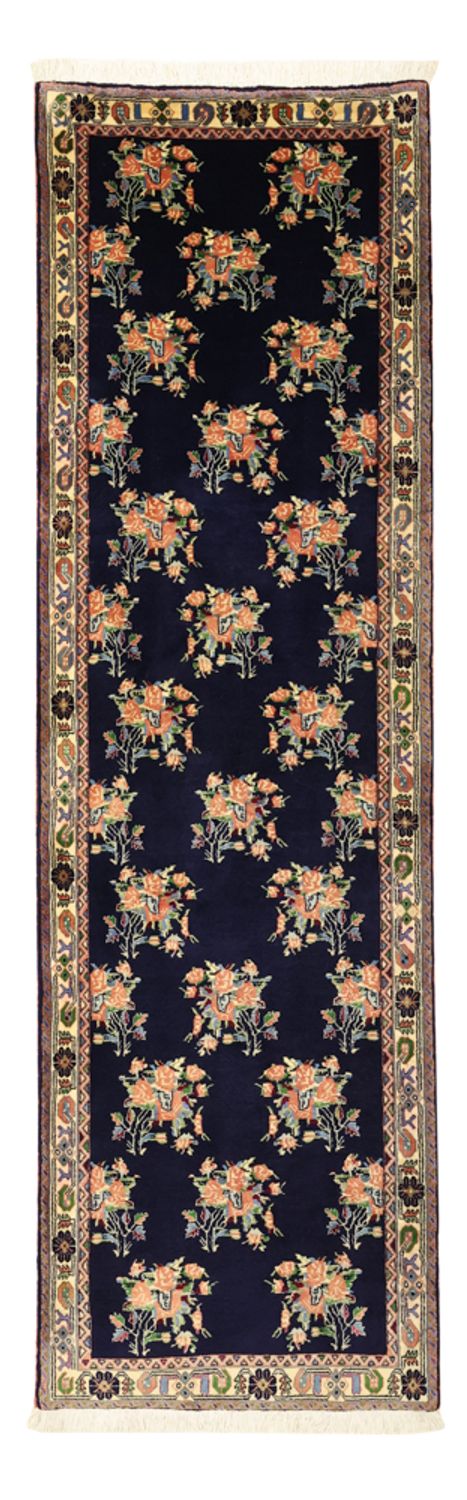
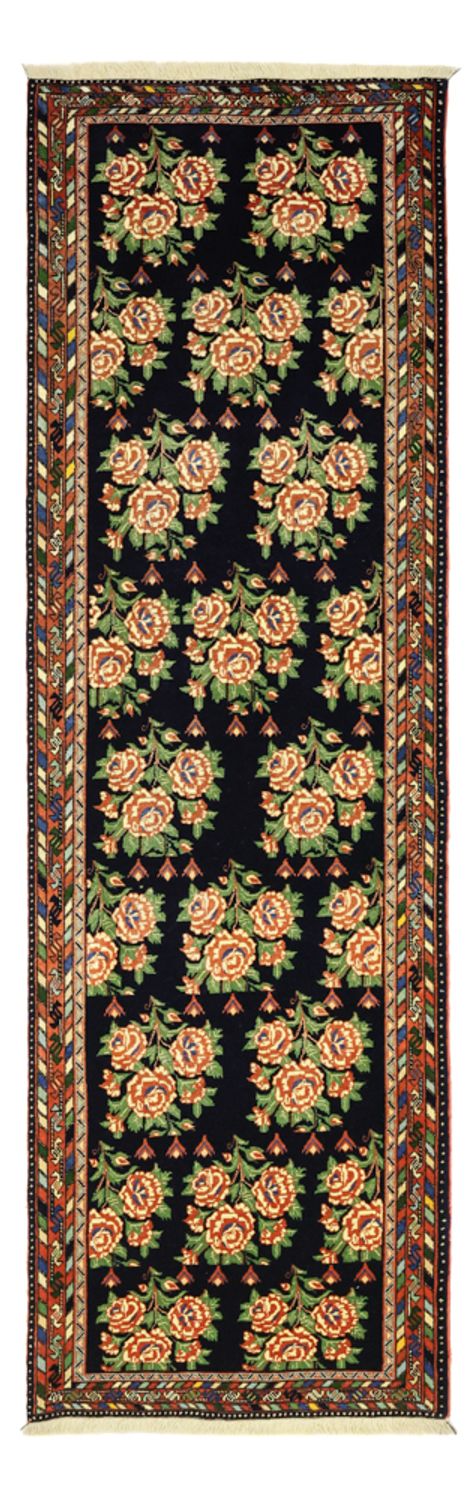
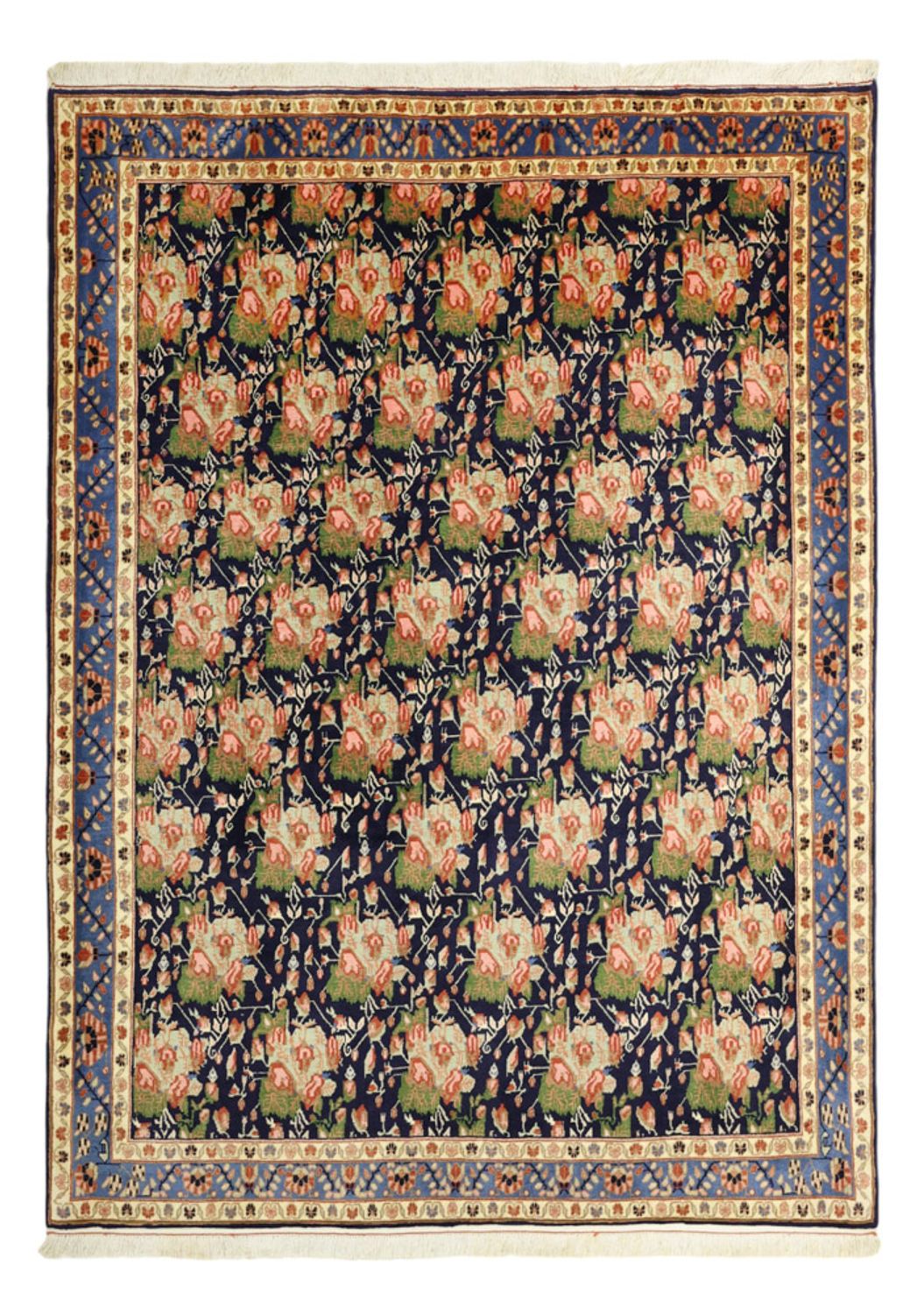
Photo: Morgenland Rugs
Afshar Sirjan rugs are hand-knotted Persian rugs made by the Afshar tribes in the region around the town of Sirjan in the south-eastern Persian province of Kerman. They belong to the finer variants of the large Afshar family and combine geometric tribal motifs with the more careful execution of settled workshops. Defining traits are the clear diamond medallion, vivid natural dyes and a dense, firm structure.
What is an Afshar Sirjan rug?
An Afshar Sirjan is a hand-knotted rug of the Afshar, knotted in the area around Sirjan between Kerman and Shiraz. Characteristic are the symmetric Turkish knot, a vigorous virgin wool pile usually on a cotton warp, and geometric patterns with diamond medallions, boteh and animal motifs. The qualifier Sirjan distinguishes these pieces from the freer pure-tribal Afshar and refers to the market town through which the goods of the region entered the trade. Within the Persian knotting tradition the Afshar Sirjan counts as a village-workshop tribal rug.
Origin
The Afshar are an old Turkic tribal confederation whose knotting tradition reaches back to the 16th century. Originally settled in north-western Persia and the Caucasian foothills, parts of the Afshar were resettled to south-eastern Persia under the Safavids from the 16th century onwards, where they established themselves in the Kerman region. Over generations many of these groups became sedentary.
The town of Sirjan lies about 180 kilometres north-west of the provincial capital Kerman, on an old trade route between Kerman and Shiraz. It was the central market at which the rugs of the surrounding Afshar villages came together and entered the trade under the name Afshar Sirjan. The fertile plain and the settled way of life allowed for fixed knotting frames and thereby a more refined, more regular knotting in comparison with freely migrating nomadic pieces.
Patterns and colours
Afshar Sirjan rugs usually show a clear, geometrically drawn diamond medallion at the centre, often tiered or accompanied by angular pendants. The field is filled with stylised flowers, the boteh motif and, occasionally, animal and bird motifs from the tribal tradition. All-over variants with a small-scale boteh or flower grid are also widespread.
The colour palette is bold and high-contrast: deep indigo blue, saturated madder red, ivory, golden yellow and occasionally green. The plant dyes are clearly set against one another, which gives the patterns their lively, sharp drawing. Characteristic are the serrated, densely filled borders with repeating geometric elements. Overall the Afshar Sirjan feels compact and dense, with clear lines rather than flowing floral curves.
Material and knotting technique
The pile consists of vigorous, often slightly glossy virgin wool from local flocks, which is valued for its quality. The warp is mostly cotton; in older pure-tribal pieces it is also wool, and the weft is predominantly cotton.
The Afshar Sirjan is knotted with the symmetric Turkish knot, also called the Ghiordes knot, which is traditionally widespread among the Afshar tribes and favours the firm, geometric drawing. Dyeing was traditionally done with natural dyes from plant and mineral sources; today high-quality synthetic colours are also used. How a rug is made from the setting of the warp to the shearing of the pile is explained in the production overview.
Knot density and quality
The knot density of an Afshar Sirjan typically lies between 100,000 and 200,000 knots per square metre. That makes these rugs more finely knotted than many freely migrating nomadic pieces, which is what makes the clear contours of the diamond medallion and the boteh motifs possible in the first place. A higher density allows for sharper drawing, but wool grade, natural dyeing and evenness of knotting are just as decisive for quality. What knot density says about quality and price is treated in its own article.
A good indicator of quality is the wool: a vigorous, slightly glossy yarn with good spring suggests a high-quality piece. Clearly separated, saturated natural dyes without garish tones are a further sign of careful work.
Afshar Sirjan in comparison
| Provenance / type | Relation to Afshar Sirjan | Typical features |
|---|---|---|
| Afshar | umbrella term and tribal group | collective name for Afshar rugs, diamond and boteh motifs |
| Afshar Sirjan | settled variant around Sirjan | clear diamond medallion, finer, symmetric knot |
| Sharbabak | neighbouring town, Afshar-influenced | workshop quality, Afshar diamonds, Kerman region |
| Kerman | urban rug from the same province | curvilinear-floral, fine manufactory goods |
| Shiraz | tribal rug from the neighbouring Fars region | more loosely knotted, nomadic, Qashqai tradition |
| pure tribal Afshar | freely migrating variant | coarser, freer drawing, often woollen warp |
What is an Afshar Sirjan rug worth?
The value of an Afshar Sirjan depends above all on age, condition, size, knot density, wool quality and dyeing. As the finer Afshar variant with workshop character these rugs often lie slightly above the very simple nomadic qualities, but generally remain more affordable than the fine urban rugs from Kerman or Isfahan. Well-preserved older pieces with clear natural dyes and a clean diamond medallion are sought after by collectors of tribal rugs.
Orientation for value assessment is given by the value overview, the article on recognising valuable Persian rugs and the buying guide.
How do you recognise a genuine Afshar Sirjan rug?
Reliable indicators of a genuine Afshar Sirjan are:
- Clear, geometric diamond medallion with angular pendants, often tiered.
- Boteh and animal motifs from the tribal tradition in the field.
- Symmetric Turkish knot: the back shows the geometric pattern clearly.
- Vivid, high-contrast natural dyes in indigo, madder, ivory and yellow.
- Dense, compact structure with firm knotting and slightly glossy wool.
- Fringes as part of the warp, usually firmly knotted in, not sewn on afterwards.
A machine imitation betrays itself by a uniform, glued-on back and by flat, lifeless yarn. The detailed inspection is described in Is my rug genuine?; a general introduction is given in the recognising overview.
Care
Thanks to the robust wool and the dense knotting the Afshar Sirjan is easy to care for and hard-wearing. Regular vacuuming in the pile direction and the occasional professional cleaning preserve the quality. Lift stains immediately with clear water, without rubbing, and avoid aggressive cleaning agents in order to spare the natural dyes. Long direct sunlight bleaches the colours. Detailed notes are given in the care overview.
Frequently asked questions
What is the difference between Afshar and Afshar Sirjan?
Afshar is the umbrella term for the rugs of the Afshar tribes in the Kerman region. Afshar Sirjan denotes the settled variant from the area around the town of Sirjan, which thanks to the fixed knotting frames turns out finer and more regular and shows a clearer diamond medallion than the free tribal pieces.
Where do Afshar Sirjan rugs come from?
They come from the Afshar villages around the town of Sirjan in the south-eastern Persian province of Kerman, about 180 kilometres north-west of the city of Kerman on the old route to Shiraz.
Which knot do Afshar Sirjan rugs use?
Afshar Sirjan rugs are knotted with the symmetric Turkish knot, also called the Ghiordes knot. This knot type, traditionally widespread among the Afshar, favours the firm, geometric drawing.
How do I recognise a genuine Afshar Sirjan rug?
Look for the clear geometric diamond medallion, boteh and animal motifs, vivid natural dyes and a dense, firm knotting with a symmetric knot. The back shows the pattern clearly, and the fringes are usually firmly knotted in.
In which sizes are Afshar Sirjan rugs made?
They are predominantly knotted in small to medium formats between roughly 120 × 180 cm and 200 × 300 cm. Runners are widespread; very large formats by contrast are rare.
Are Afshar Sirjan rugs suitable for daily use?
Yes. The robust wool and the dense, firm knotting make them very hard-wearing and long-lived, so that they are well suited to daily use in living rooms.
How do I care for an Afshar Sirjan rug properly?
Vacuum regularly in the pile direction and have it professionally cleaned every few years. Lift stains immediately with clear water, without rubbing, and do not use aggressive cleaning agents. Avoid long direct sunlight.
Impressions of the origin
Places, landscapes and landmarks around the home of Afshar Sirjan rugs. Click any image for a larger view.
Related styles
Afshar
Afshar rugs are knotted by semi-nomadic tribes in southeastern Iran, blending nomadic motifs with refined craftsmanship.
Kerman
Kerman rugs from southeastern Iran are renowned for their elegant floral designs and refined color palette.
Qashqai
Qashqai rugs are knotted by the eponymous nomadic tribe in Fars Province and stand out with their distinctive medallion style.


