Varamin rugs: Mina Khani allover from south of Tehran
Varamin rugs are produced near Tehran and are appreciated for their fine all-over patterns and balanced colors.
- Region
- Persia / Iran
- Category
- Persian rugs
- Manufacturing
- Hand-knotted
- Knot density
- 80,000 – 200,000 knots/m²
Profile
- Manufacturing
- Hand-knotted
- Origin
- Iran — Varamin, Tehran Province
- Pile material
- Wool on cotton
- Knot density
- 80,000 – 200,000 knots/m²
- Features
- Fine all-over patterns, balanced palette, classic medallions
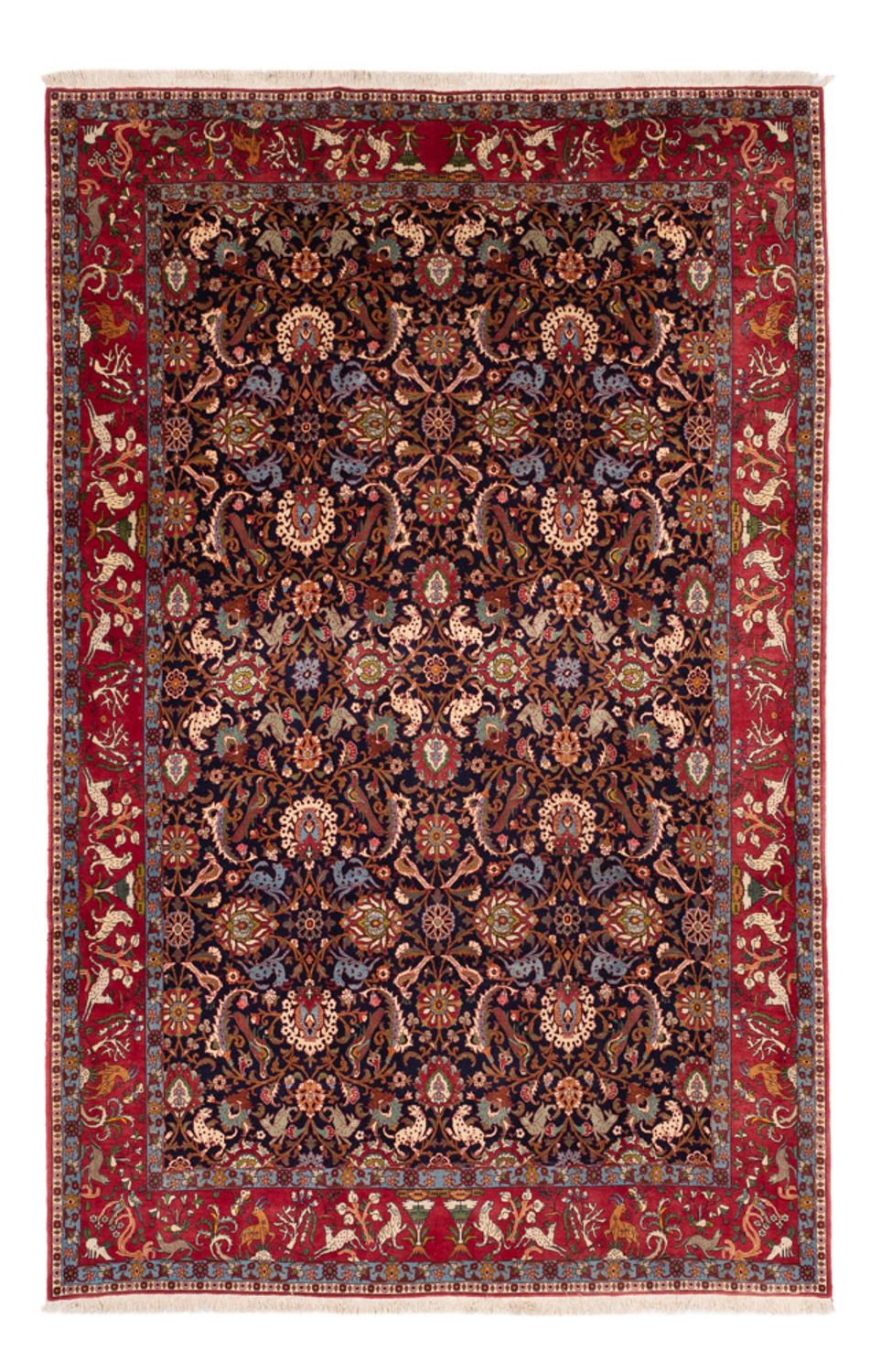
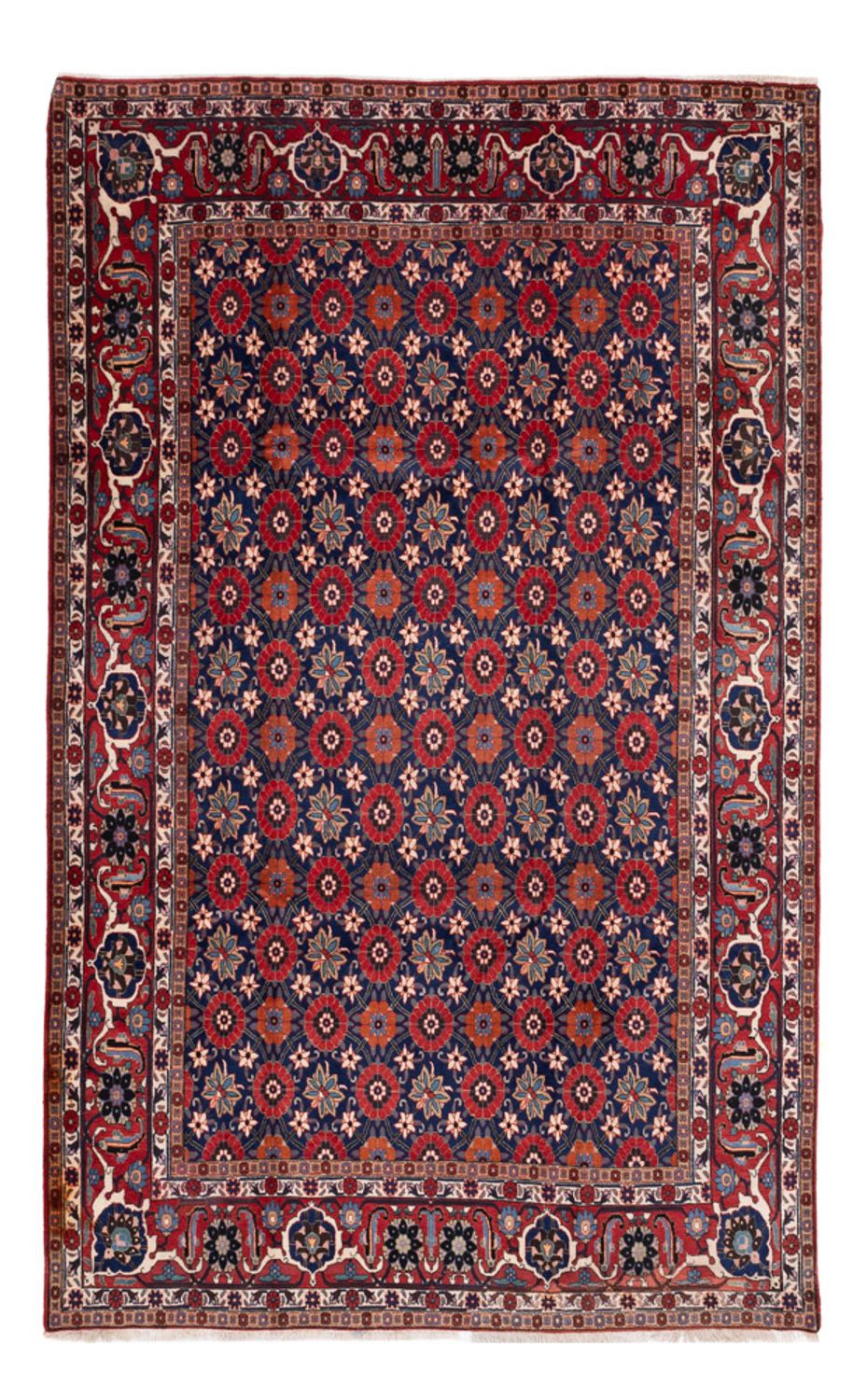
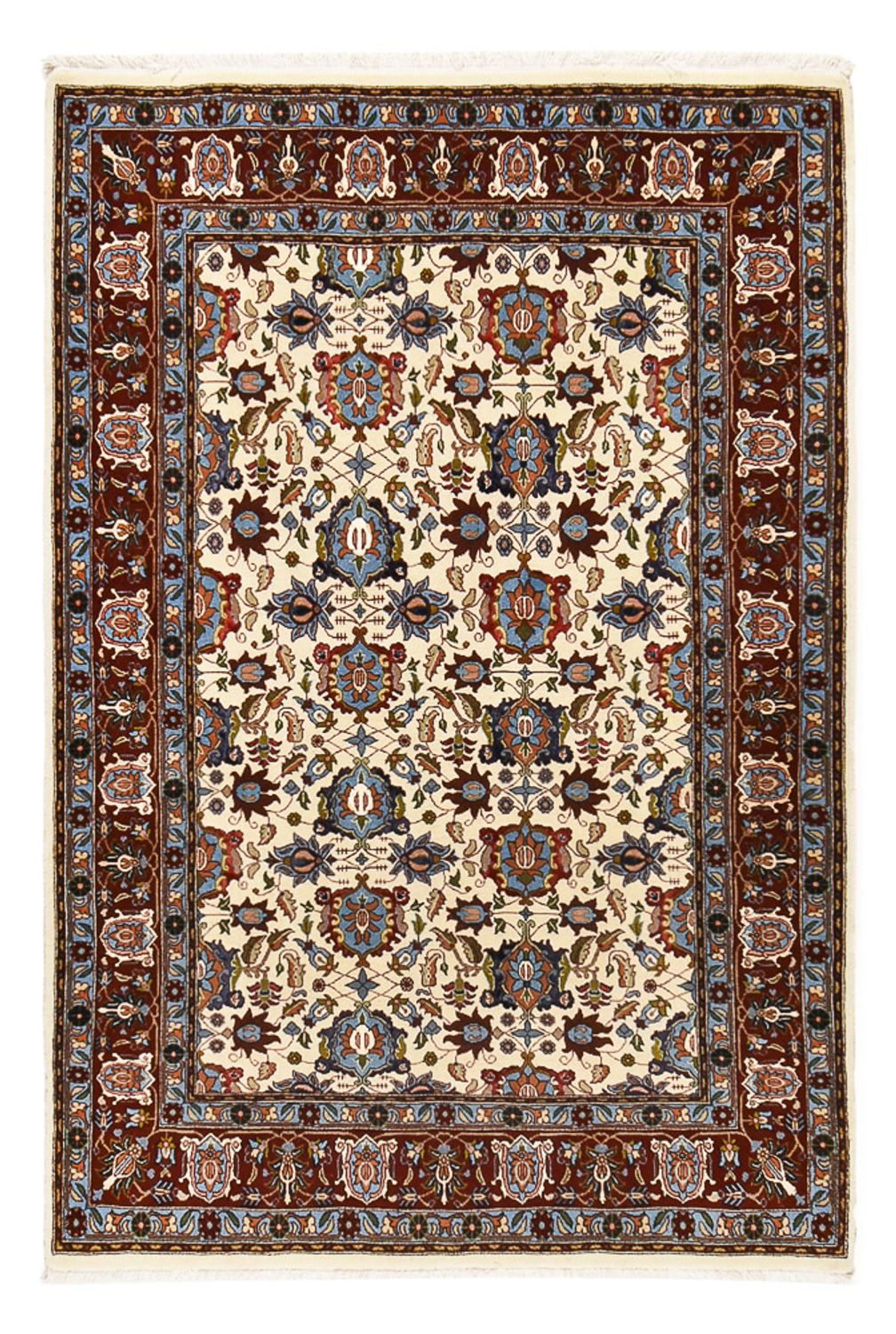
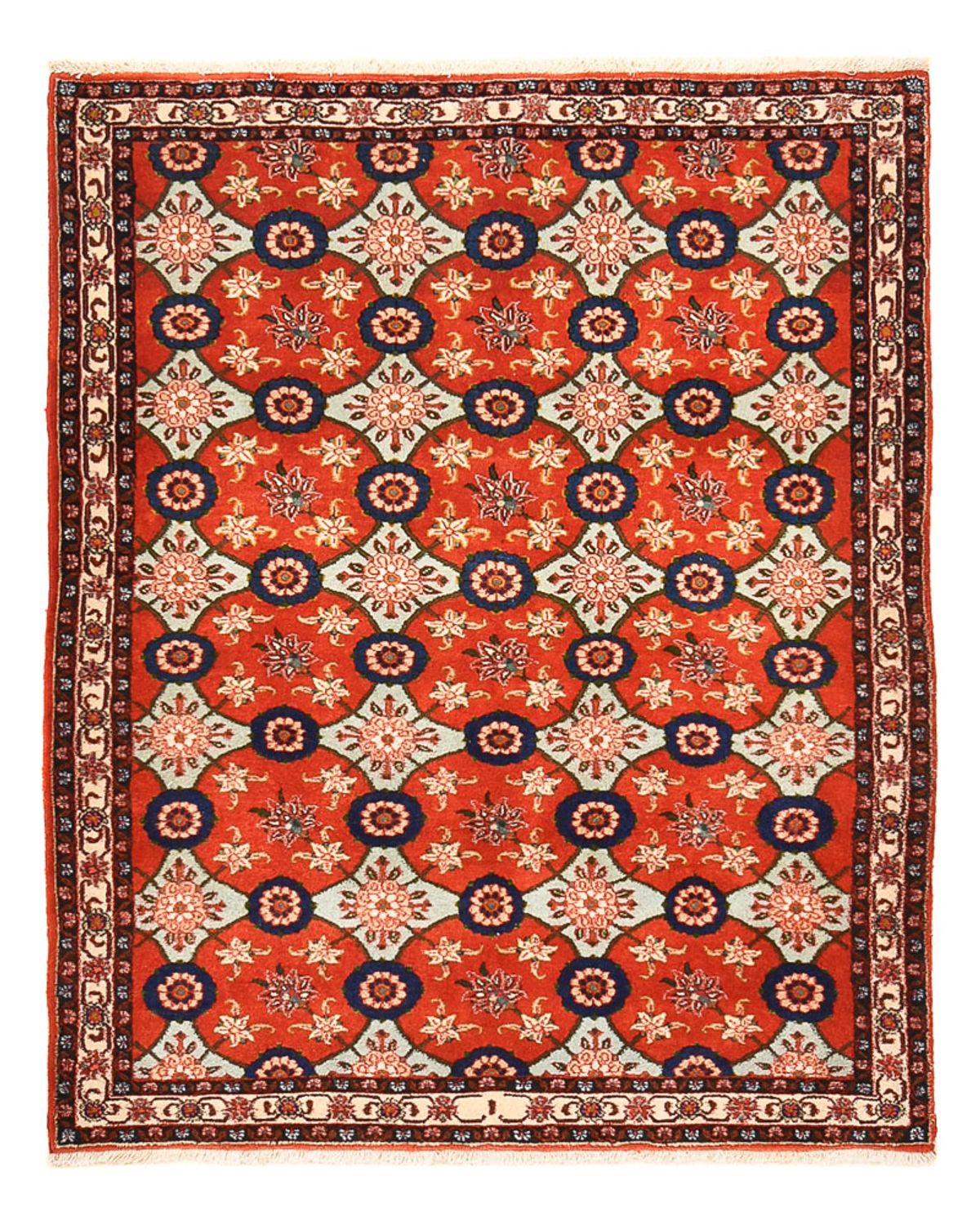
Photo: Morgenland Rugs
Varamin rugs are hand-knotted Persian rugs from the city of Varamin south-east of Tehran. They are known above all for a single pattern: the all-over Mina Khani grid, a net of stylised blossoms distributed across the whole field. This strict, endlessly repeating composition on a dark ground has secured the Varamin a fixed place among the geometric urban rugs of central Persia and makes it interesting for collectors and lovers of well-recognised, calm all-over patterns.
What is a Varamin rug?
A Varamin is a hand-knotted rug from the city of Varamin, also spelled Waramin, and its surroundings in Tehran province in central Iran. Characteristic are the all-over Mina Khani pattern, a dark palette of navy blue and deep red, a firm wool weave on a cotton warp, and the asymmetric Persian knot. Unlike the Kurdish-influenced provenances of the north-west, which mostly use the Turkish knot, the Varamin follows the knotting method common in central Persia.
Varamin lies in the fertile plain south-east of Tehran, an old settlement region with a long craft tradition. The city's rugs combine the geometric strictness of village and nomad models with the solid workshop production of the capital region. Stylistically the Varamin stands close to the geometric rugs of western Iran, such as the Hamadan, but differs from them through its typical Mina Khani all-over and the Persian knot.
Origin: Varamin and Tehran province
Varamin lies about 40 kilometres south-east of Tehran in a fertile plain on the edge of the central Iranian desert. The region has been settled since the Middle Ages and is known for its historical architecture, including the Friday Mosque of Varamin from the Ilkhanate period. The city's knotting tradition is closely tied to the rural surroundings and to tribes that settled in the plain and brought their pattern traditions into workshop production.
In the 19th century, rugs from the region were valued by European collectors and reached western markets regularly via the capital. Production experienced another upswing in the 20th century, when interest in the dark, strictly patterned pieces grew. Today the Varamin is knotted both in family workshops and in larger ateliers, with the traditional patterns and the characteristic palette largely preserved. The entire region belongs to the wider family of Persian rugs.
Patterns and colours
The defining feature of the Varamin is the all-over Mina Khani pattern. It consists of stylised blossoms connected by a diamond-shaped grid of vines and smaller blossom heads that runs evenly across the entire field. This composition knows no centre and no edge but feels like an endless, calm repeat. Alongside come the all-over Herati pattern with its fish-like leaves and palmettes and boteh motifs. The border usually consists of several narrow bands with floral or geometric ornaments.
The palette is dark and settled. Navy blue and deep red form the ground, joined by dark browns and occasionally black, while lighter accents in ivory, beige, and pink draw the grid. This contrast between dark ground and bright blossom net gives the Varamin its unmistakable, calm appearance and sets it clearly apart from the luminous floral workshop rugs of central Persia.
Material and knotting technique
The Varamin is knotted with the asymmetric Persian knot, also called the Senneh knot. This binding loops around only one of the two warp threads and allows a somewhat finer, more flowing drawing, which suits the dense blossom net of the Mina Khani pattern. The Varamin therefore follows the knotting method common in central Persia and differs from the Kurdish-influenced provenances of the north-west such as the Bidjar, which use the symmetric Turkish knot. How the two basic knots differ is explained in the overview of knot types.
Sheep's wool from the region serves as pile yarn; the warp is cotton, and cotton or wool is used for the weft. The weavers in Varamin are known for their even tension and clean work, which benefits the dense all-over pattern. After completion the rugs are sheared and washed. The pile is cut to medium height, which yields a pleasant hand and a clear pattern picture. How such a rug arises on the loom is described in the article on production.
Knot density and quality
The knot density of a Varamin usually lies between 80,000 and 200,000 knots per square metre. This medium to upmarket density contributes to the clarity of the dense Mina Khani grid without the rug losing its firm, village-influenced character. How knot density influences quality and price, and why it must always be read together with material and construction, is covered in its own article.
Because of the firm weave and the robust wool, Varamin rugs are hard-wearing and long-lived. To judge quality, look for an even back, a clearly drawn blossom grid, a saturated colour picture of dark ground and bright accents, and the condition of pile and edges. Older pieces with natural dyeing often show especially harmonious, deep tones.
Varamin and related provenances compared
| Provenance | Relation to Varamin | Typical features |
|---|---|---|
| Varamin | this provenance | Mina Khani all-over, dark ground, Persian knot |
| Hamadan | western Persian neighbour | geometric village rugs, Turkish knot |
| Bidjar | north-west knotting region | extremely dense and heavy, Turkish knot |
| Senneh | Kurdish provenance | very fine and flat, Herati and boteh all-over |
| Koliai | western Iranian, Kurdish | robust, strongly geometric |
| Nahavand | western Persian provenance | bold patterns, geometric medallion |
What is a Varamin rug worth?
The value of a Varamin depends above all on age, condition, size, knot density, wool quality, dye, and clarity of pattern. As a solid urban and workshop rug with high recognisability, the Varamin is usually more affordable than the fine workshop rugs from Isfahan or Ghom, while well-preserved older pieces with natural dyeing and a clear Mina Khani grid are certainly sought after and fetch higher prices.
For a grounded assessment, see the rug value overview, the guide Identifying valuable Persian rugs, and the general buying guide. Why older pieces with natural dyeing can gain in value is explained in the article on old rugs and their value development.
How can you tell a genuine Varamin rug?
Typical signs of a genuine Varamin include:
- All-over Mina Khani pattern: a grid of stylised blossoms distributed across the whole field, without an emphasised centre.
- Dark palette: navy blue and deep red as ground, with bright accents in ivory, beige, or pink.
- Asymmetric Persian knot: knotted with the Senneh knot, recognisable by the somewhat finer, flowing drawing.
- Firm wool weave on a cotton warp with an even, clean back.
- Hand-knotted back: the pattern is mirrored clearly; individual knots are visible.
- Fringes as extended warp, not sewn on afterwards.
A step-by-step guide is in Is my rug genuine?; whether the colours are natural or synthetic can be judged with the corresponding article. An overview of all the checks is on the page identifying rugs.
Care
Regular vacuuming in the direction of the pile and occasional professional cleaning preserve colour and substance. Blot spills at once with clear water from the outside inward, without rubbing. Thanks to the dark base colours, the Varamin shows light soiling less clearly than bright rugs, but long, direct sunlight will fade even deep natural colours over time. Detailed guidance is in the care overview and the guide on cleaning a wool rug.
Frequently asked questions
What is the Mina Khani pattern?
The Mina Khani pattern is an all-over blossom grid: stylised blossoms are connected by a diamond-shaped net of vines and smaller blossom heads and run evenly across the entire field. It is the defining pattern of the Varamin and feels like an endless, calm repeat without an emphasised centre.
Which knot does a Varamin use?
The Varamin is knotted with the asymmetric Persian knot, also called the Senneh knot. It thereby follows the knotting method common in central Persia and differs from the Kurdish-influenced provenances of the north-west, which mostly use the symmetric Turkish knot.
What distinguishes a Varamin from a Hamadan?
Both are geometrically marked working rugs from the middle to western Iran, but the Varamin is set on the dark Mina Khani all-over and the Persian knot, while the Hamadan covers a whole group of west-Persian village rugs with medallion or Herati patterns, the Turkish knot, and a single-weft structure.
Are Varamin rugs long-lived?
Yes. Through the firm weave, the robust wool, and the solid workshop knotting, Varamin rugs are very hard-wearing and last for generations with good care. They suit living areas with normal to heavier use.
What sizes are common for Varamin rugs?
Varamin rugs are knotted in many formats, from runners and smaller pieces to large room rugs. Especially common are medium to large sizes, since the all-over Mina Khani pattern comes into its own particularly well on larger surfaces.
What does a Varamin rug cost?
The price depends on age, condition, size, knot density, wool quality, and dye. As a solid urban rug, the Varamin is usually more affordable than fine workshop ware; well-preserved older pieces with natural dyeing and a clear grid can cost considerably more. Orientation is given in the buying guide.
How do I care for a Varamin rug correctly?
Regular vacuuming in the direction of the pile and professional cleaning every few years are enough. Blot spills at once with clear water, do not rub. The dark base colours are easy to care for in daily use, but long, direct sunlight should still be avoided.
Impressions of the origin
Places, landscapes and landmarks around the home of Varamin rugs. Click any image for a larger view.


