Afshar rugs: Persian tribal weave from the Kerman region
Afshar rugs are knotted by semi-nomadic tribes in southeastern Iran, blending nomadic motifs with refined craftsmanship.
- Region
- Persia / Iran
- Category
- Persian rugs
- Manufacturing
- Hand-knotted
- Knot density
- 80,000 – 180,000 knots/m²
Profile
- Manufacturing
- Hand-knotted
- Origin
- Iran — Kerman region, Afshar tribes
- Pile material
- Wool on cotton or wool
- Knot density
- 80,000 – 180,000 knots/m²
- Features
- Nomadic motifs, fine craftsmanship, bold red tones
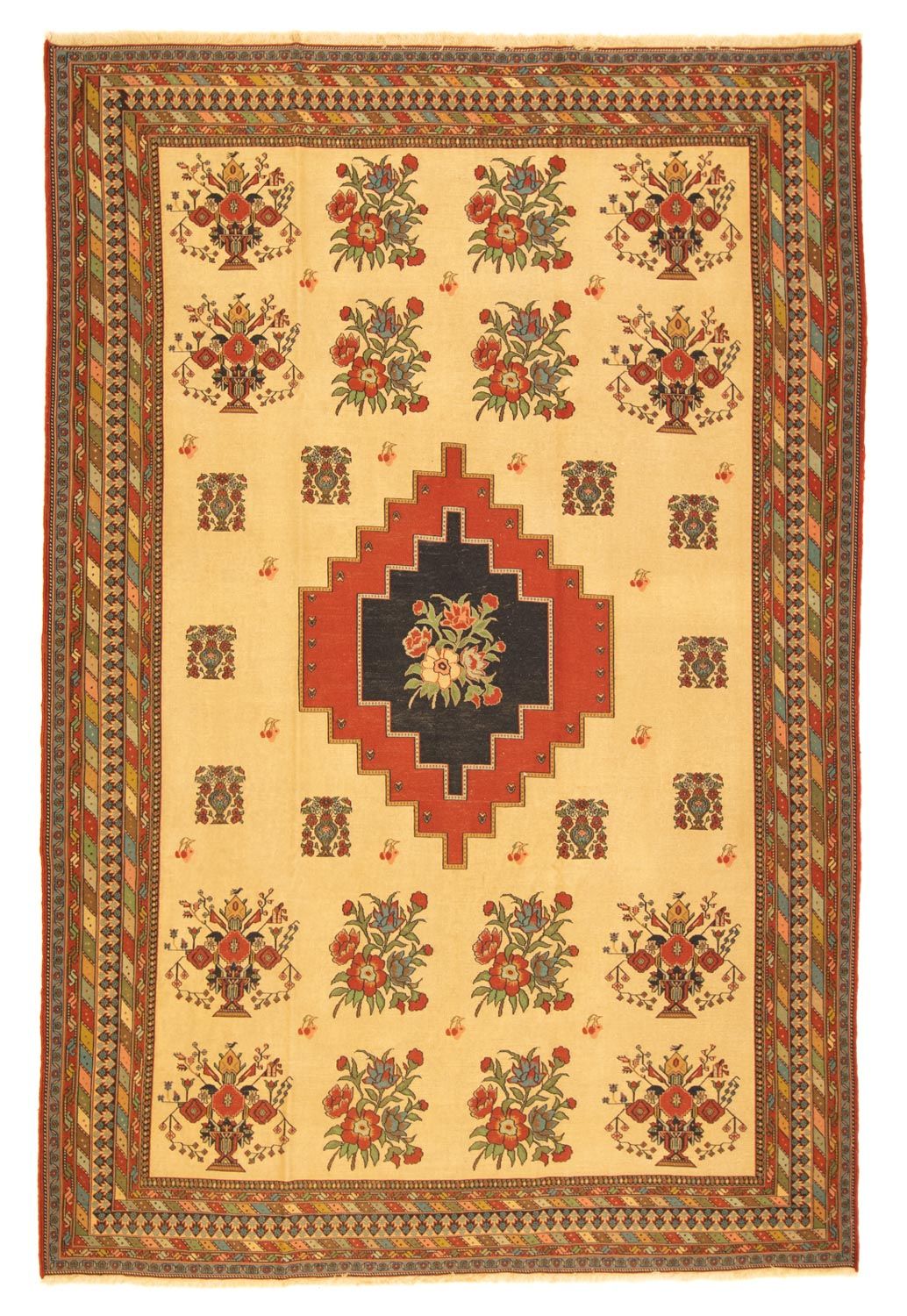
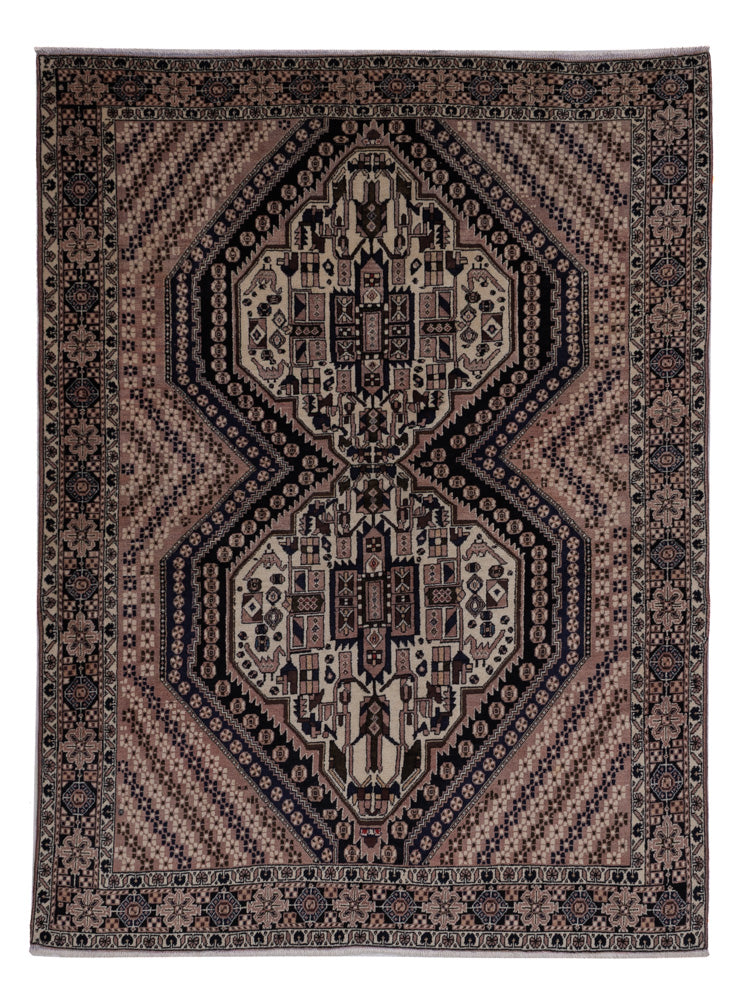
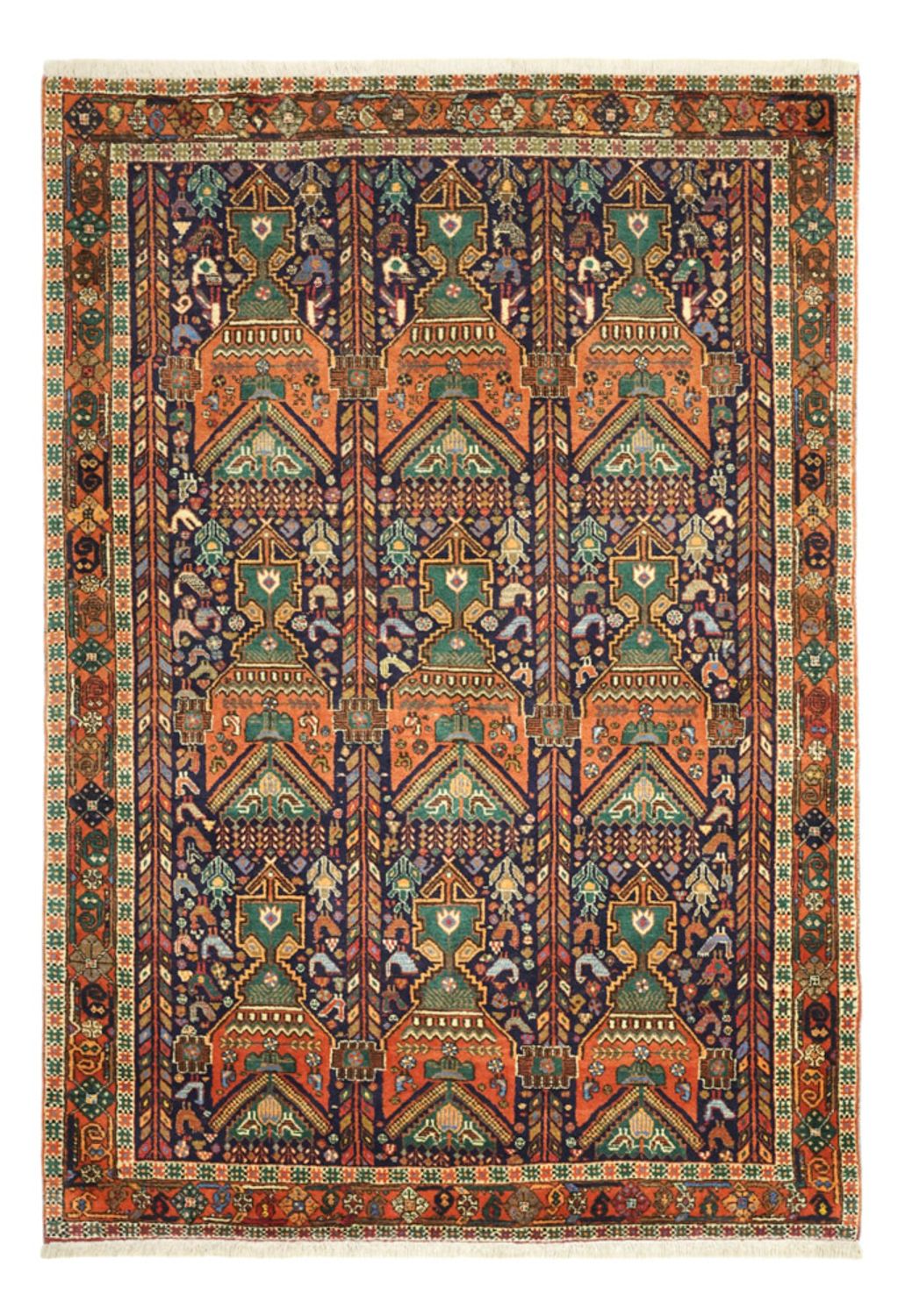
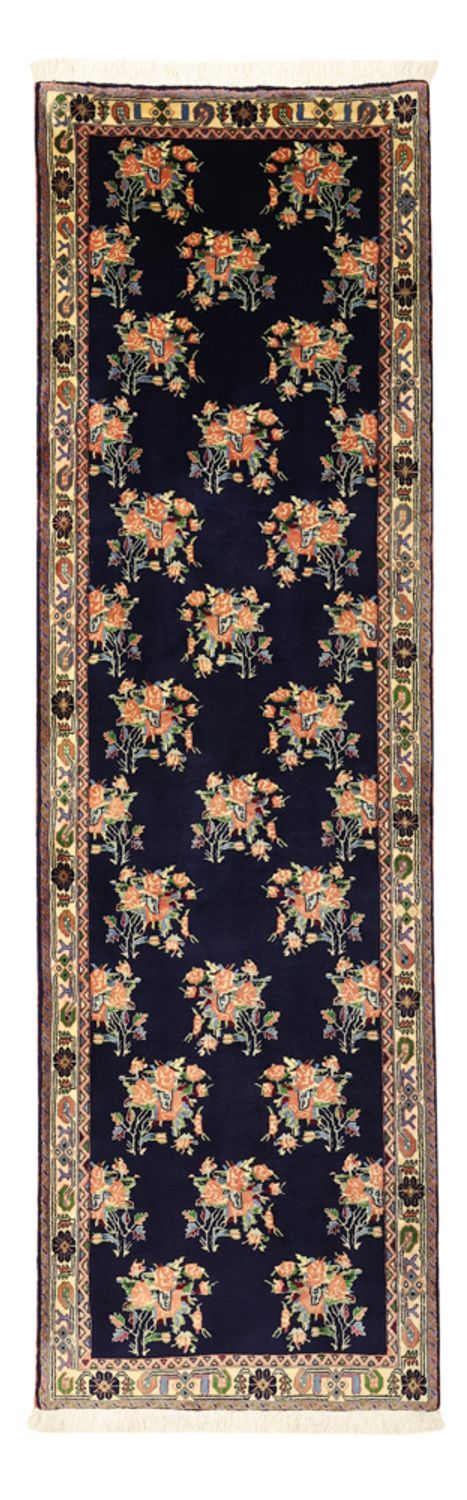
Photo: Morgenland Rugs
Afshar rugs are among the most expressive nomadic and tribal rugs of Persia. They come from the Afshar tribe, who live south and east of the city of Kerman in the south-east of Iran. Characteristic are bold geometric patterns, the widespread boteh motif, warm earth colours and a firm, long-lived knotting. As a link between pure tribal work and workshop-style production, Afshar rugs combine a nomadic pattern tradition with solid craftsmanship and count among the sought-after representatives of Persian tribal knotting.
What is an Afshar rug?
An Afshar rug is a hand-knotted piece by the Afshar tribe from the Kerman region in the south-east of Iran. As with other tribal rugs, the pattern follows handed-down schemes rather than a detailed manufactory cartoon, which gives the pieces a lively, slightly irregular character. The traditional ground is wool, and the format is often small to medium. Within the Persian provenances the Afshar stands for a geometric, earth-bound pattern language that clearly sets it apart from the fine floral manufactory rugs of the nearby city of Kerman.
The term denotes both the knottings of the tribe and a style family with regional sub-types. Finer pieces from the area around Sirjan are treated separately under Afshar Sirjan.
Origin
The Afshar are a Turkic-speaking tribe originally from the area of present-day Azerbaijan in the north-west. In the 16th century the Safavids resettled parts of the tribe to southern and eastern Persia, among other things to secure border regions and to break up restless tribal confederations. From this historical resettlement comes the fact that a Turkic-speaking tribe is today rooted deep in the south of Iran. Most Afshar live in the province of Kerman and in parts of Fars and Khorasan.
The most important knotting areas lie south and east of Kerman, above all around Sirjan, Rafsanjan and Baft. For centuries the Afshar knotted first for their own use and later increasingly for trade through Kerman, which served as a manufactory and trading centre. Antique Afshar pieces from the 19th and early 20th centuries are particularly prized. With the increasing settlement of many families, production has shifted in part into fixed workshops, without the handed-down pattern tradition being lost. Related tribal rugs of the region include Shiraz and Qashqai from the neighbouring province of Fars.
Patterns and colours
Afshar rugs show a characteristically geometric pattern language. Very widespread is the curved boteh, which is scattered in rows across the field, as well as the Harshang motif, a stylised crab-like flower design. Alongside these stand stepped diamond and star medallions, often arranged in one or several fields, as well as the Herati repeat in the borders. Floral vase and flower patterns also occur, but always in geometric stylisation. The formats range from small prayer and saddle rugs to medium-sized home rugs.
The colour palette is warm and earth-bound. A deep madder red and a saturated indigo blue dominate, supported by brown, ivory, rust and accents in yellow and green. Traditionally dyeing was done with natural dyes, which explains the harmonious overall impression. A typical tribal trait is the slight abrash, a colour shift from changing batches of wool, as well as an often slightly trapezoidal shape that follows from the simple knotting on the nomadic loom.
Material and knotting technique
Afshar rugs are traditionally knotted from sheep's wool, with warp and weft usually also wool. In workshop-style and younger pieces cotton is occasionally used for the warp. The wool of the region is firm and hard-wearing and is hand-spun. More on the fibres is given under materials and virgin wool.
In knotting technique the Afshar are a distinctive case among the Persian tribes: they predominantly use the symmetric Turkish knot, also called the Ghiordes knot, which fits with their Turkic-speaking origin. Alongside it the asymmetric knot also occurs, depending on group and period. Within a single piece the knot type remains uniform. How the knot types differ is explained in the article on knot types; the whole sequence from spinning to shearing is set out under production. The pile is medium-long and robust, the lateral edges are wrapped in wool, and the fringes consist of the natural extension of the warp threads, often with a kilim finish.
Knot density and quality
The knot density of an Afshar typically lies between 80,000 and 200,000 knots per square metre. Finer pieces, for example from the area around Sirjan, also reach higher values, while coarser tribal qualities begin below this. With geometric tribal rugs, however, density alone says little. Wool quality, the cleanness of the dyeing, the clarity of the drawing and the overall craft impression are decisive. How knot density influences quality and price is treated in its own article.
A good Afshar shows firm, glossy wool, saturated natural dyes and a powerful, well-proportioned drawing. Antique pieces from the 19th and early 20th centuries with preserved natural dyeing count among the finest and most sought-after representatives.
Afshar and related tribal rugs in comparison
| Provenance | Region / tribe | Typical features |
|---|---|---|
| Afshar | Kerman, Afshar tribe | geometric, boteh and Harshang, warm earth colours |
| Afshar Sirjan | area around Sirjan | often finer, clearer drawing, higher density |
| Kerman | city of Kerman | fine floral manufactory patterns, curvilinear |
| Qashqai | Fars, confederation | dense scatter motifs, oily wool, Persian knot |
| Shiraz | Fars | rustic, geometric, related tribal motifs |
| Baluch | eastern Iran / border area | dark colours, fine tribal patterns, prayer formats |
What is an Afshar rug worth?
The value of an Afshar depends on age, condition, size, knot density, wool quality, dyeing and sub-type. Antique pieces with natural dyeing and a clear drawing as well as finer Sirjan qualities count as a stable store of value and are in demand with collectors. Younger tribal and workshop qualities are more affordable, but as hand-knotted nomadic rugs they hold their value better than industrial goods. The limited supply of authentic old tribal rugs supports demand.
For a grounded assessment see recognising valuable Persian rugs, the value overview and the buying guide.
How do you recognise a genuine Afshar rug?
Reliable indicators of a genuine Afshar are:
- Wool on wool: warp, weft and pile classically consist of hand-spun sheep's wool; only in younger pieces is the warp cotton.
- Symmetric Turkish knot: the Afshar usually uses the Ghiordes knot, readable on the back, which distinguishes it among the Persian rugs.
- Geometric tribal motifs: boteh rows, Harshang and stepped diamond medallions rather than fine floral vines.
- Warm natural dyes with abrash: madder red, indigo and brown with slight colour shifts speak for a handcraft origin.
- Slightly irregular shape: a faintly trapezoidal contour is typical of tribal work and not a defect.
- Fringes from the warp, often with a kilim finish, not sewn on afterwards.
Because the Afshar varies regionally and is also re-knotted in workshops, pattern, material, back and condition should be judged together. A step-by-step guide is given in Is my rug genuine?; for regional attribution see identifying origin.
Care
Thanks to the firm, robust wool, Afshar rugs are easy to care for and suited to heavily used rooms. Regular vacuuming in the pile direction and occasional professional cleaning preserve the quality. Lift stains immediately with clear water, without rubbing. Long direct sunlight bleaches the colours and should be avoided. Detailed notes are given in the care overview.
Frequently asked questions
Where does an Afshar rug come from?
Afshar rugs come from the areas south and east of Kerman in the south-east of Iran, above all around Sirjan, Rafsanjan and Baft. The Afshar are a Turkic-speaking tribe who were resettled by the Safavids from the north-west to southern Persia in the 16th century.
Which knot does an Afshar rug use?
The Afshar is predominantly knotted with the symmetric Turkish knot, which fits with its Turkic-speaking origin and distinguishes it among the Persian provenances. Depending on the group the asymmetric knot also occurs. More on this under knot types.
What do the patterns on an Afshar rug mean?
Widespread are the curved boteh, the stylised Harshang motif and stepped diamond medallions. They go back to handed-down tribal signs and follow no detailed template, which is why each piece turns out individually. An interpretation of widespread symbols is offered in the symbols overview.
How does an Afshar differ from a Kerman rug?
Both come from the same region, but are very different. The Afshar is a geometric tribal rug with warm earth colours and usually the Turkish knot. The Kerman is a fine manufactory rug with curvilinear floral patterns and a higher density. The Afshar feels more rustic and authentic, the Kerman more elegant and refined.
Do Afshar rugs hold their value?
Quality Afshar rugs, especially older and antique pieces as well as finer Sirjan qualities, count as a stable store of value. Their popularity with collectors and the limited supply of authentic old nomadic rugs support this tendency. An orientation is given in the value overview.
What does an Afshar rug cost?
The price depends on age, condition, size, fineness and sub-type. Younger tribal qualities are affordable; antique pieces with natural dyeing and finer Sirjan Afshars achieve significantly higher prices. Orientation is given in the buying guide.
How do I care for an Afshar rug properly?
Regular vacuuming in the pile direction and professional cleaning every few years are enough. Lift stains immediately with clear water, without rubbing. The robust wool copes well with heavy use, but long direct sunlight should nevertheless be avoided.
Impressions of the origin
Places, landscapes and landmarks around the home of Afshar rugs. Click any image for a larger view.


