//
Afghan rugs are known for their deep reds and bold geometric patterns, shaped by centuries of nomadic tradition.
Afghanistan is one of the most important knotting regions of Central Asia and stands for an immediately recognizable rug world of its own: deep red to rust-brown ground colors, octagonal tribal medallions in strict rows, and a heavy, very durable wool. Afghan knotting is rooted deeply in the country's tribal culture, above all among the Turkmen and Uzbek groups in the north and the Baluchi in the west and south. The work has traditionally been done by women, who pass patterns and technique down through the generations.
The best-known Afghan rugs carry the names of their market towns or tribes: Khal Mohammadi, Akhche, Andkhoy, Maimana. They belong to the great family of Turkmen gul rugs, but they are stronger in color and more robust in build than their relations north of the border. This page sets the region in geographic order and describes its knotting centers and tribes.
Afghanistan lies at the heart of Central Asia and borders Iran, Pakistan, Uzbekistan, Tajikistan, Turkmenistan, and China. The historic Silk Road ran straight through the country, which shaped patterns and trade for centuries. The most important rug districts lie in the north, on the plain around Mazar-i-Sharif, Andkhoy, and Aqcha along the Turkmen border, and in the west around Herat, the traditional collection and trading center for Baluchi goods. The harsh climate of the mountain regions yields a particularly firm, lanolin-rich highland wool, which gives Afghan rugs their proverbial durability.
Afghan knotting works overwhelmingly with the symmetric knot, also called the Turkish or Ghiordes knot, which loops the pile yarn around both warp threads and produces a firm, abrasion-resistant pile. The looms are usually horizontal and portable, suited to a semi-nomadic life. Knot density varies by tribal tradition between around 80,000 and 160,000 knots per square meter; finer workshop pieces reach more. The difference between knot types is covered on Knot types, the full production path on Production.
The pile is almost exclusively local virgin wool, dyed with plant colors: madder for the dominant reds, indigo for blue, plus walnut and various plants for browns and yellows. The red ground color is the trademark of Afghan rugs and runs from luminous brick red through deep bordeaux to warm rust brown. How natural dyes differ from synthetic dyestuffs is explained under Recognizing natural dyes.
Afghan rugs are usually named after a market town, tribe, or quality grade. The overview below sorts the best-known types.
| Center / type | Known for | Typical traits |
|---|---|---|
| Khal Mohammadi | best standard quality | deep red-brown, dense guls, heavy wool, firmly knotted |
| Akhche | market town in the north | classical gul rows, strong red, robust everyday goods |
| Ariana | finer workshop goods | denser knotting, crisp guls, careful palette |
| Andkhoy | trading center | typical Afghan guls, medium density, export quality |
| Maimana kilim | flatweave | striped and diamond kilims, strong colors, very hardwearing |
| Bukhara | Turkmen guls | octagonal elephant-foot medallions in rows, deep red |
| Turkaman | Turkmen tradition | geometric tribal patterns, dense rows, warm reds |
| Baluchi | Baluchi tribes, west | dark fields, archaic patterns, prayer formats |
The most common quality name is Khal Mohammadi, after the knotter who shaped the type: a deep red gul rug from heavy wool, regarded as the robust top of the Afghan standard. Akhche and Andkhoy stand for the classical market goods with gul rows, Ariana for a more finely knotted workshop line. The Maimana kilim from the northwest is the best-known Afghan flatweave. All registered types sit in the Style overview.
Afghan knotting has no courtly manufactory tradition like Persia or the Ottoman Empire; it is rooted in tribal culture. Its formative push came in the late nineteenth and through the twentieth century, when Turkmen groups, above all the Ersari and related tribes, moved from the area of today's Turkmenistan across the border into northern Afghanistan and brought their gul patterns with them. From this fusion emerged the classical Afghan rug as traded today: Turkmen in pattern, Afghan in color and wool quality.
In the west of the country, around Herat, the goods of the Baluchi tribes have long been collected; these tribes move between Afghanistan, Iran, and Pakistan. A second major phase came in the late twentieth century: during the war years many Afghan knotters fled to Pakistan, where an extensive export production grew up in the camps around Peshawar, including the Western-oriented Ziegler designs in muted colors. The longer line of knotting technique as a whole is traced on Origin of knotting; the Turkmen origin of the guls in the region Turkmenistan.
The defining motif of Afghan rugs is the gul, an octagonal or diamond-shaped tribal medallion arranged in regular rows across the whole field. In common parlance the large guls in rows are also called elephant feet. Alongside them sit prayer formats with mihrab, above all in the Baluchi tradition, and strictly geometric borders with meanders, palmettes, and hook bands. The palette is organized around red, supplemented by navy blue, black, and accents of ivory, orange, and brown.
The work uses the symmetric Turkish knot on a firm wool foundation, which explains the characteristic weight and density of the pieces. Alongside the knotted rug, Afghanistan has a strong kilim tradition, led by the Maimana kilim, an especially hardwearing flatweave with strong stripe and diamond patterns. Anyone who wants to see Afghan rugs in the wider context of tribal work will find the frame under Nomadic rugs.
The Afghan types listed in Rug Wiki include Khal Mohammadi, Akhche, Ariana, and the Maimana kilim, along with the Turkmen-influenced Bukhara and Turkaman pieces and the Baluchi rugs of the western tribes. Added to these are modern Ziegler lines, which combine Afghan knotting with a muted, Western-facing palette. The finest Baluchi goods from Afghanistan are also treated in the region Balochistan.
Afghan rugs are regarded as robust, long-lasting everyday and collector goods at mostly moderate prices, with Khal Mohammadi and fine workshop goods at the upper end. Value is set by knot density, wool quality, age, the purity of the natural dyes, and condition. Before buying, the Buying guide and the article Why genuine rugs are expensive help. How to check origin and authenticity sits under Recognizing oriental rugs and Recognizing origin. The right routine is described in the Care overview.
Afghan rugs come predominantly from the north of the country, from the plain around Mazar-i-Sharif, Andkhoy, and Aqcha along the Turkmen border, and from the west around Herat. They are knotted by Turkmen, Uzbek, and Baluchi tribes. The Turkmen pattern lineage is described in the region Turkmenistan.
Afghan rugs are defined by deep red to rust-brown ground colors, octagonal gul medallions in strict rows, and a heavy, very durable wool. They are firmly knotted with the symmetric knot and belong to the most robust oriental rugs there are.
In Afghanistan the symmetric knot dominates, also called the Turkish or Ghiordes knot. It loops both warp threads and gives the rug its characteristic firmness. The comparison with the Persian knot is shown on Knot types.
Khal Mohammadi is the common name for a deep red Afghan top quality made from heavy wool with dense gul medallions. The type is named after the knotter who shaped it and is regarded as the robust standard peak of Afghan knotting.
Elephant feet is the colloquial name for the large octagonal gul medallions arranged in regular rows on Afghan and Turkmen rugs. They are tribal signs originally assigned to individual Turkmen groups.
Yes. Afghan rugs are considered extraordinarily durable. The combination of firm highland wool, the symmetric knot, and dense knotting makes them very resilient, so that with good care they last across generations. How long a rug lasts is covered on How long does a rug last.
A genuine Afghan rug shows the typical heavy wool, firm knotting with symmetric knots, and the characteristic dark red palette with gul medallions. The back reflects the pattern clearly, and the fringes are bound into the foundation. The authenticity check is described in Is my rug genuine?.
Both use the gul pattern, but Afghan rugs are usually stronger and darker in color and more robust in build, while classical Turkmen work is finer and, in antique pieces, more precious. Historically Turkmen tribes brought the gul pattern into northern Afghanistan, where it became a tradition of its own.
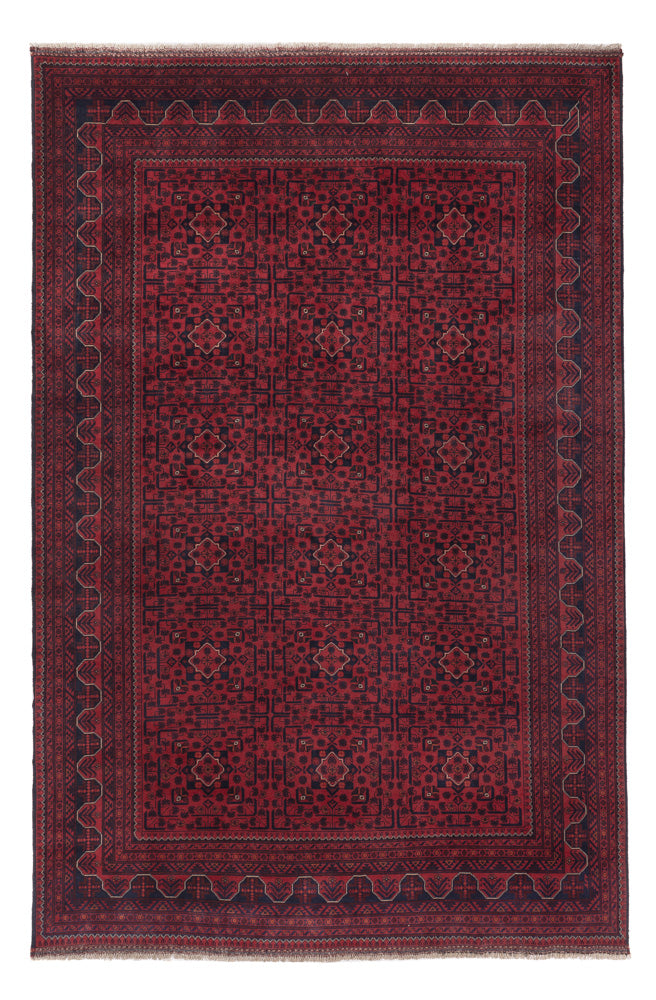
Khal Mohammadi rugs are produced in northern Afghanistan and stand out with their deep red tones and characteristic gül medallions.
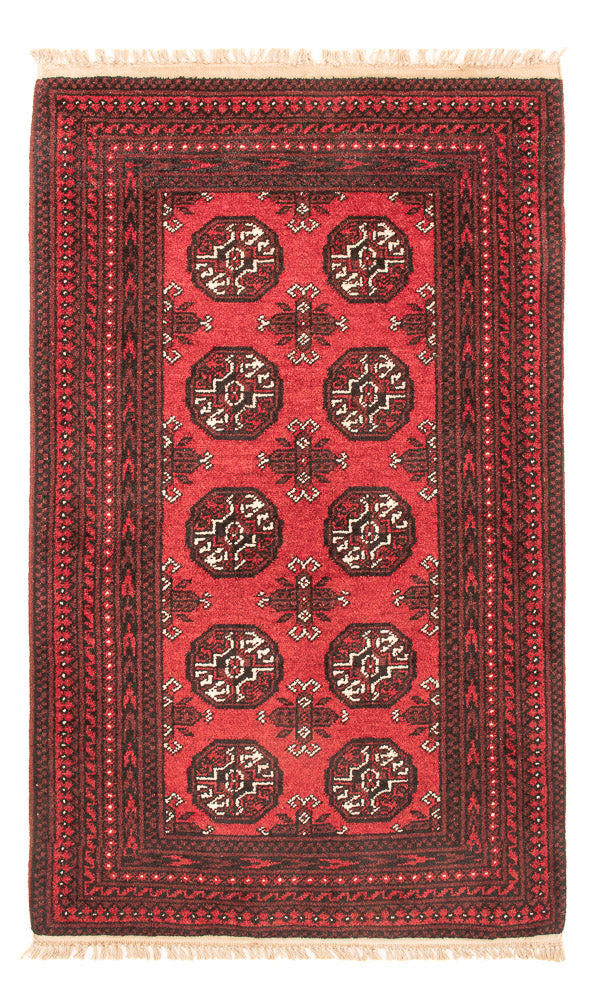
Akcha rugs are produced in northern Afghanistan and show typical Turkmen gül medallions on a deep red ground.
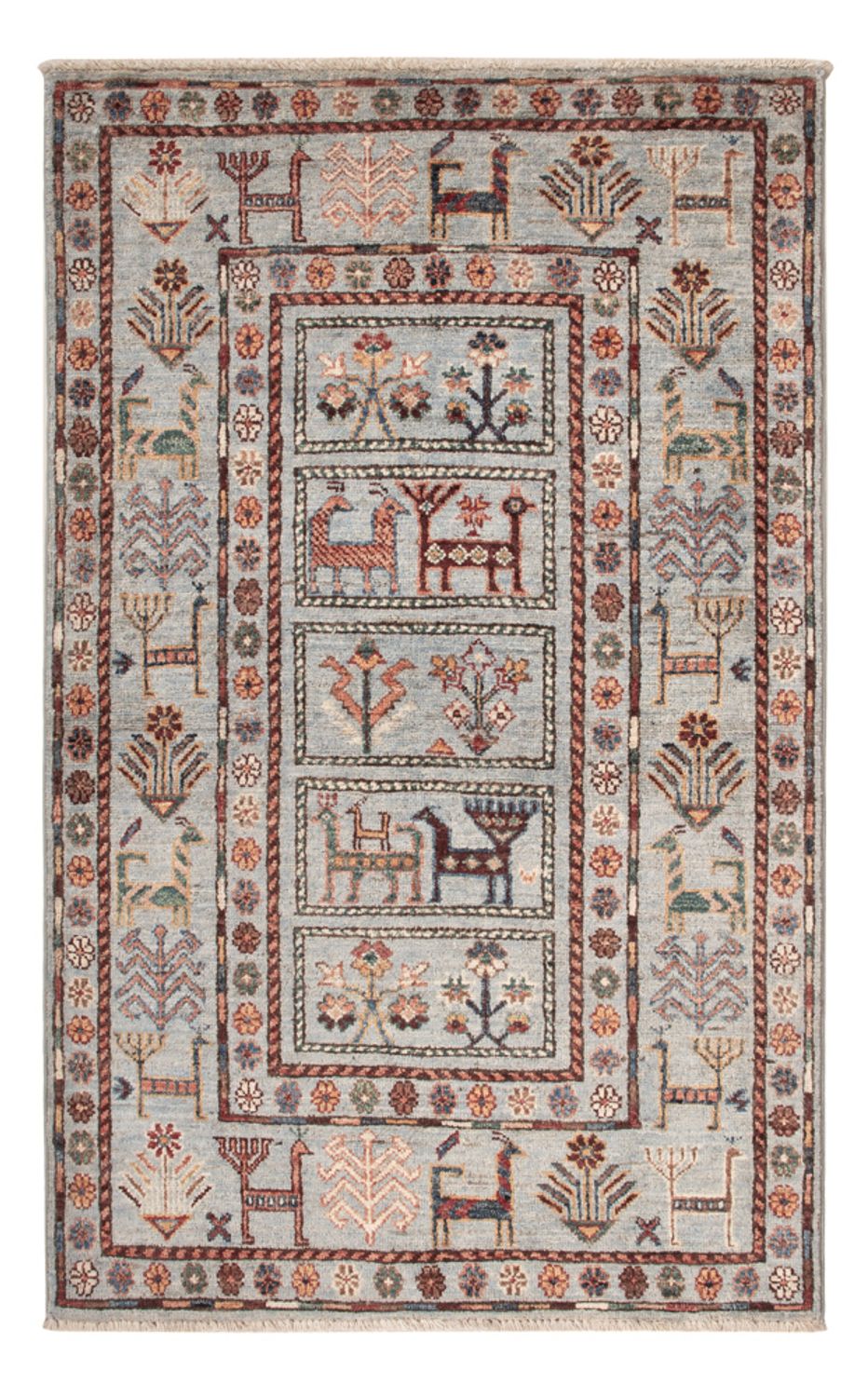
Ariana rugs are produced in northwestern Afghanistan and combine traditional Persian designs with Afghan craftsmanship.
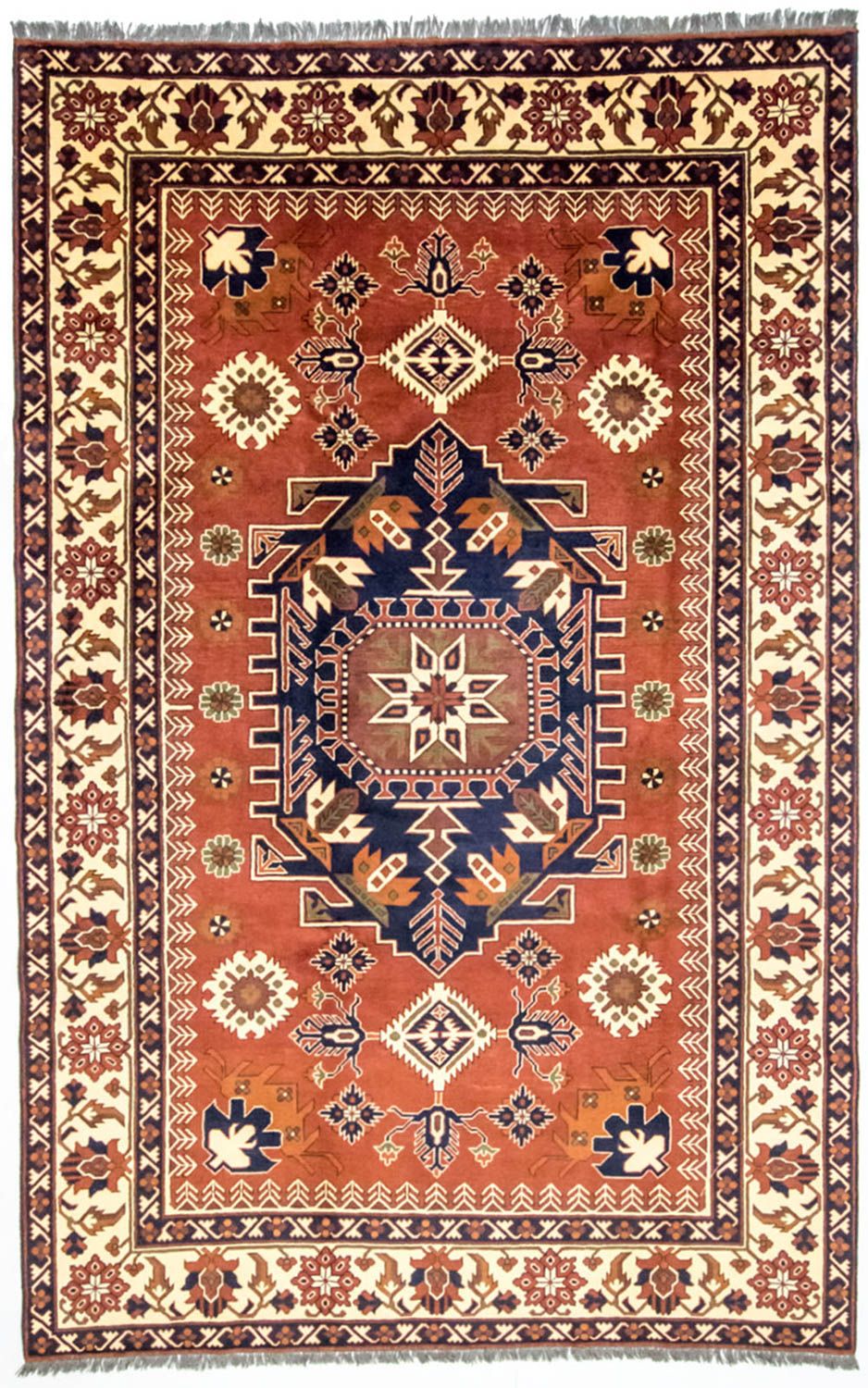
Hatchlu rugs are knotted by Turkmen tribes and show the typical four-field cross pattern of nomadic prayer rugs.
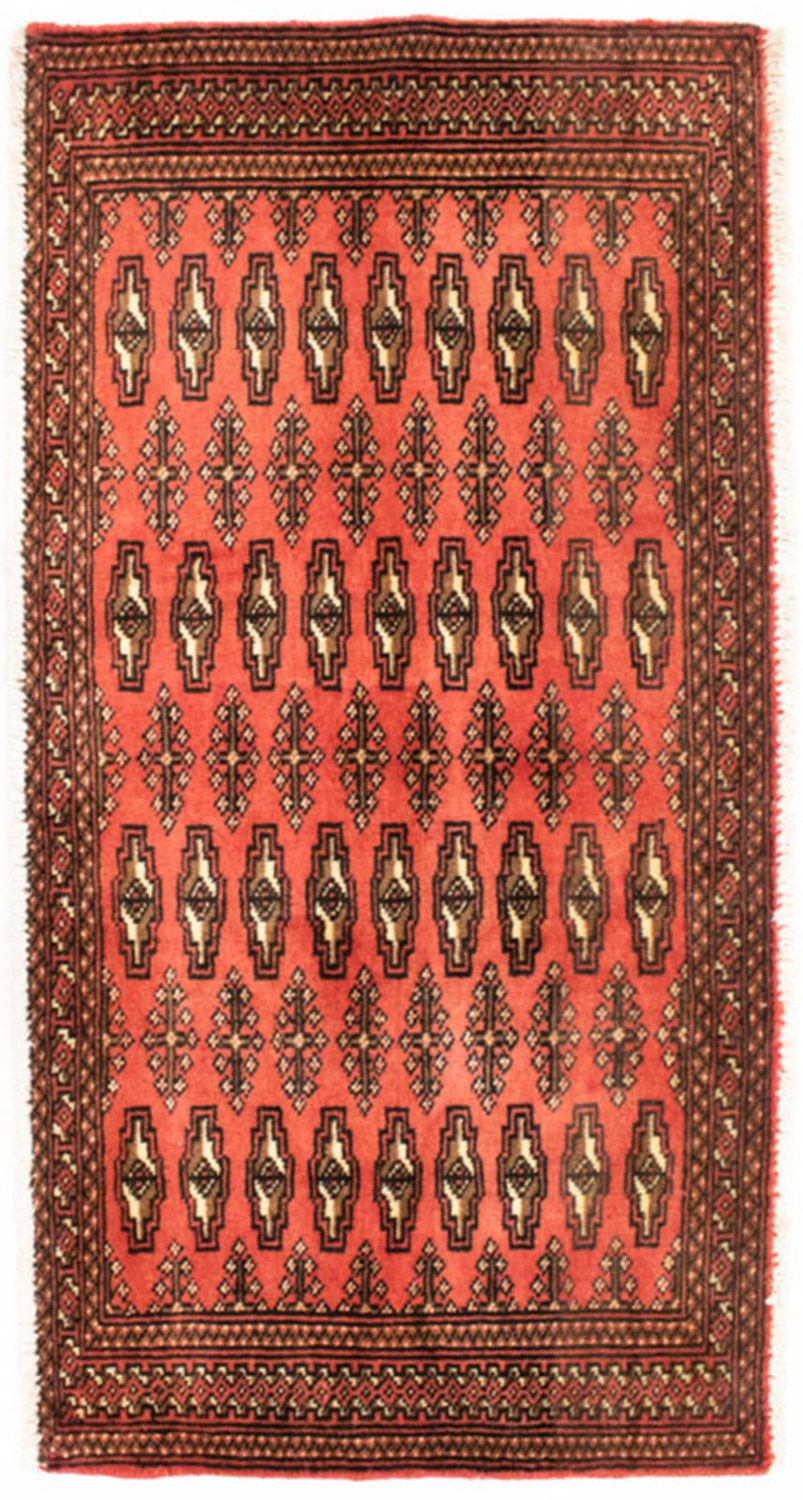
Turkmen rugs come from the Central Asian steppes and are world-famous for their characteristic gül medallions in deep red.
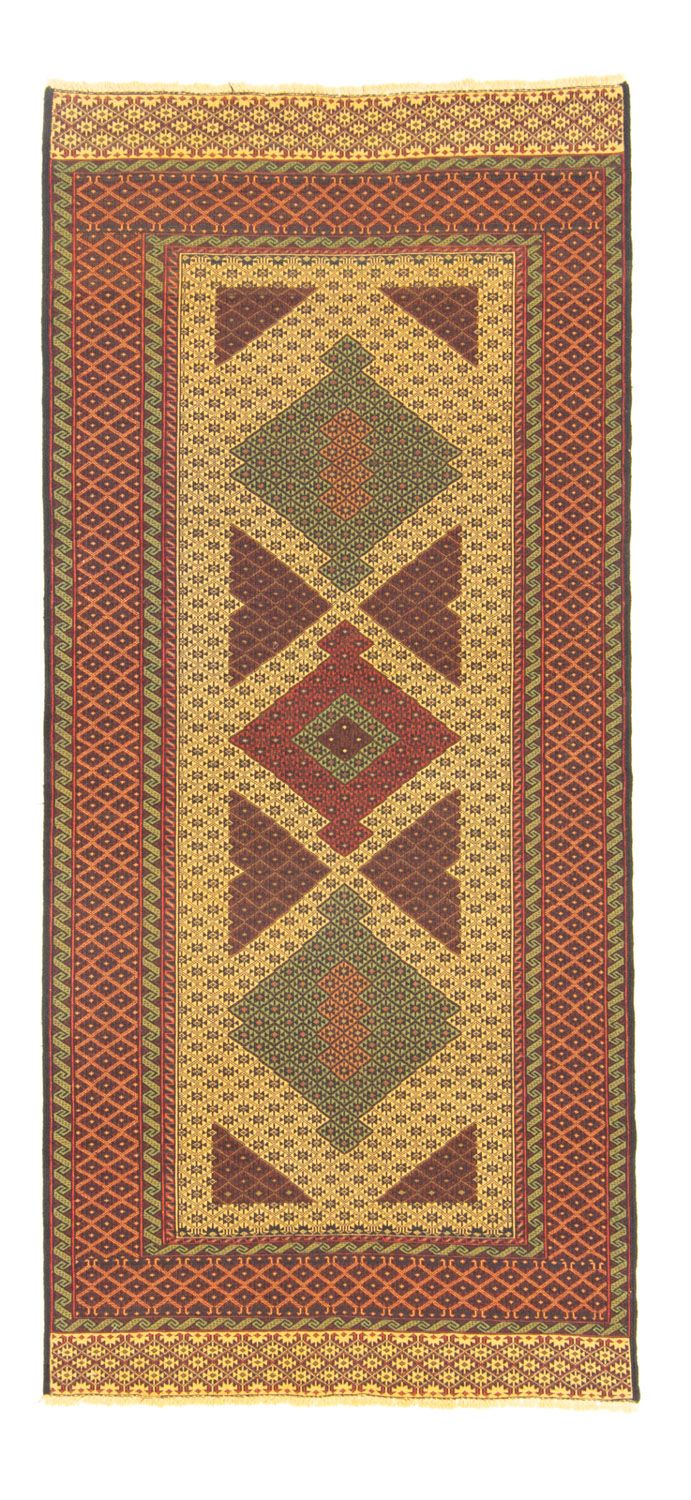
Afghan kilims are flat-woven by Turkmen and Uzbek weavers in northern Afghanistan and stand out with their geometric stripes.
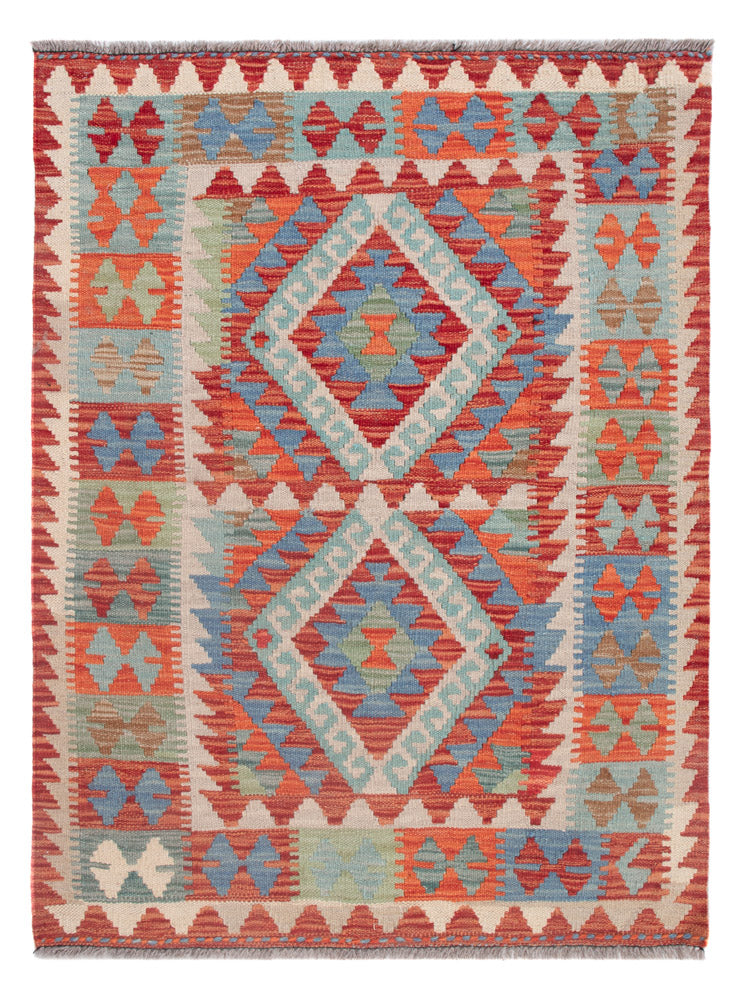
Maimana kilims are flat-woven in northern Afghanistan and are known for their bold red, blue, and ivory stripes.
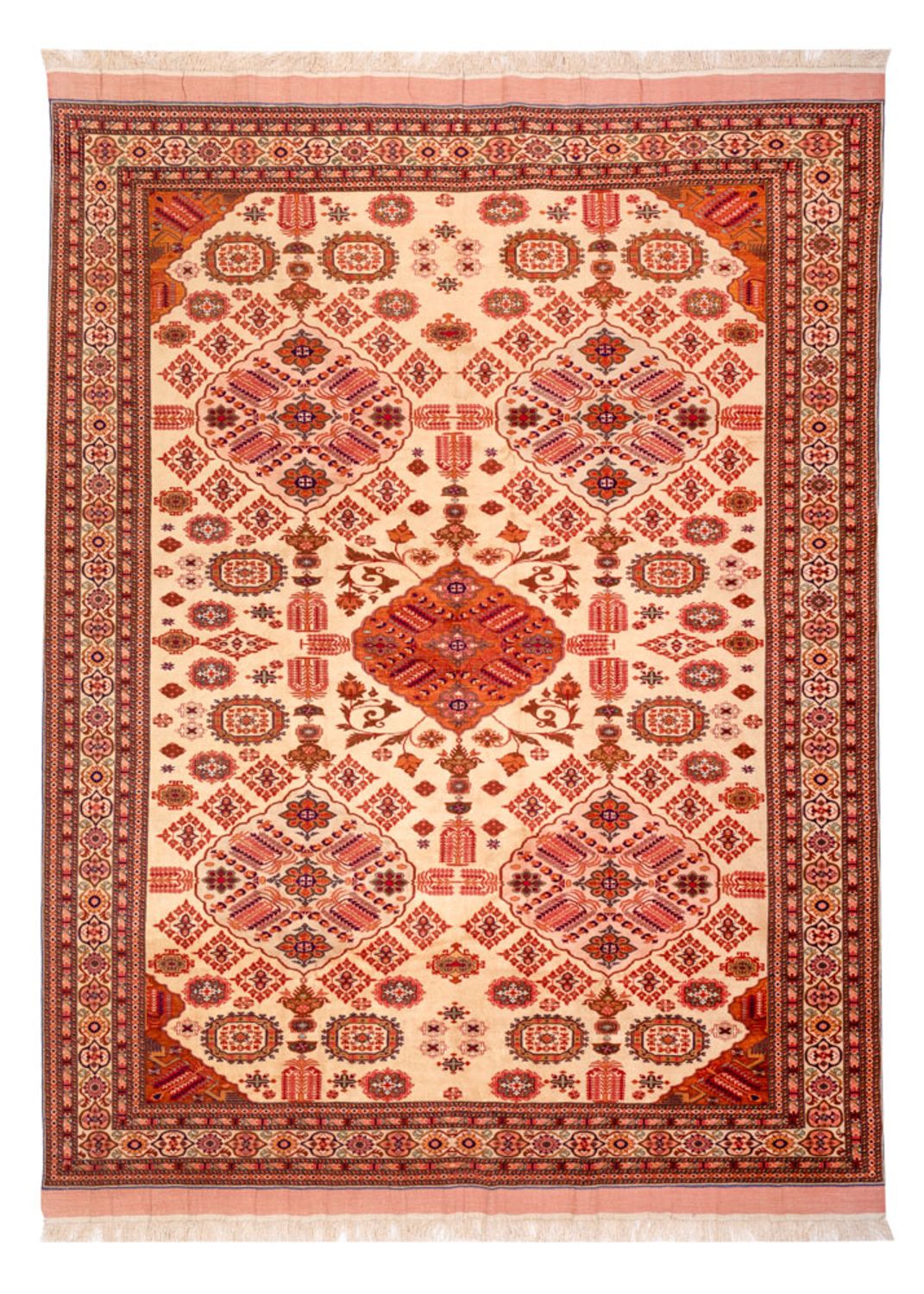
Afghan silk rugs are produced in western Afghanistan and combine traditional Persian designs with luminous silk fibers.