Ariana rugs: washed Ziegler style from Mazar-e-Sharif
Ariana rugs are produced in northwestern Afghanistan and combine traditional Persian designs with Afghan craftsmanship.
- Region
- Afghanistan
- Category
- Designer
- Manufacturing
- Hand-knotted
- Knot density
- 80,000 – 180,000 knots/m²
Profile
- Manufacturing
- Hand-knotted
- Origin
- Afghanistan — northern and western provinces
- Pile material
- Wool on wool
- Knot density
- 80,000 – 180,000 knots/m²
- Features
- Persian-inspired designs, Afghan craftsmanship, durable wool
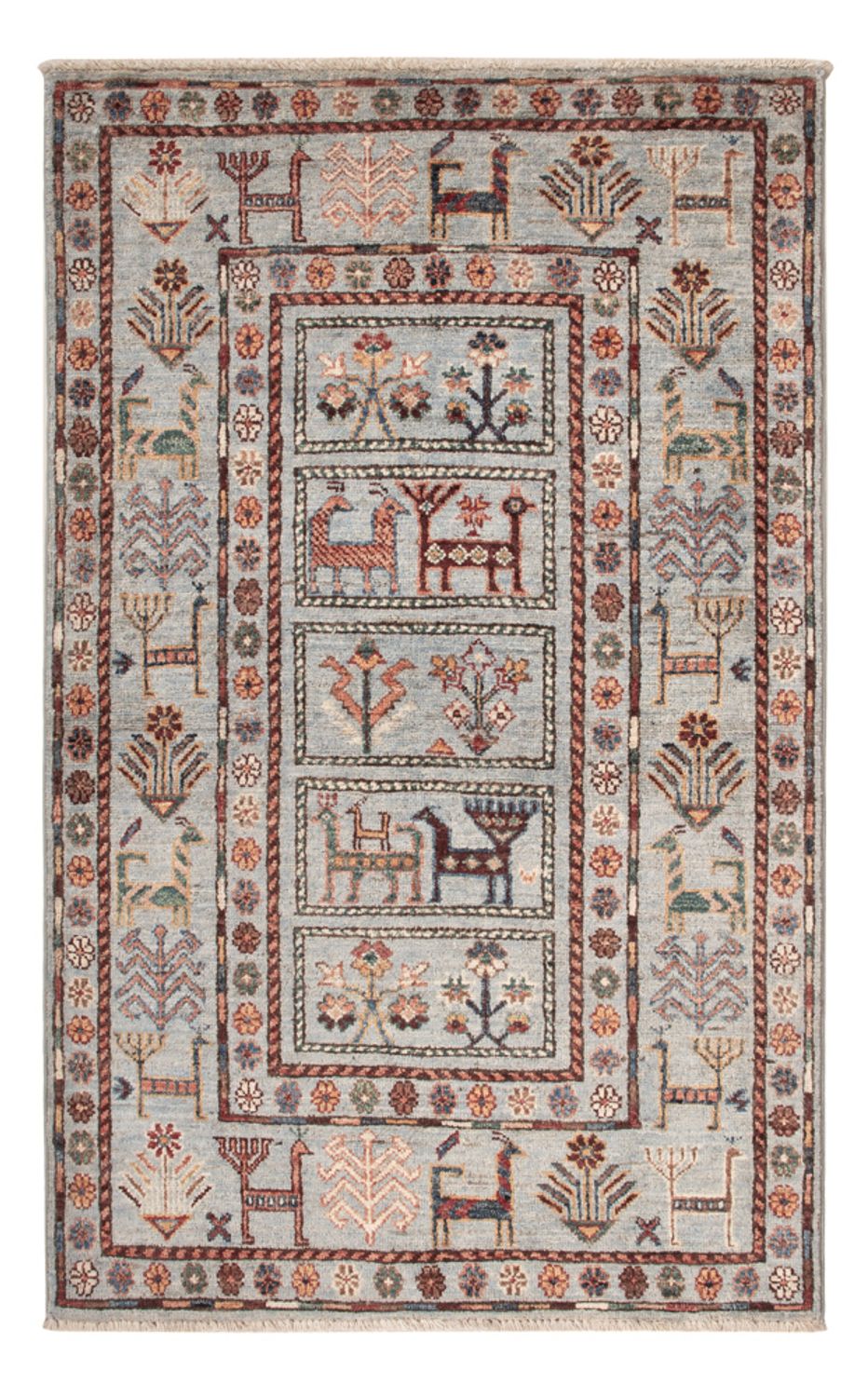
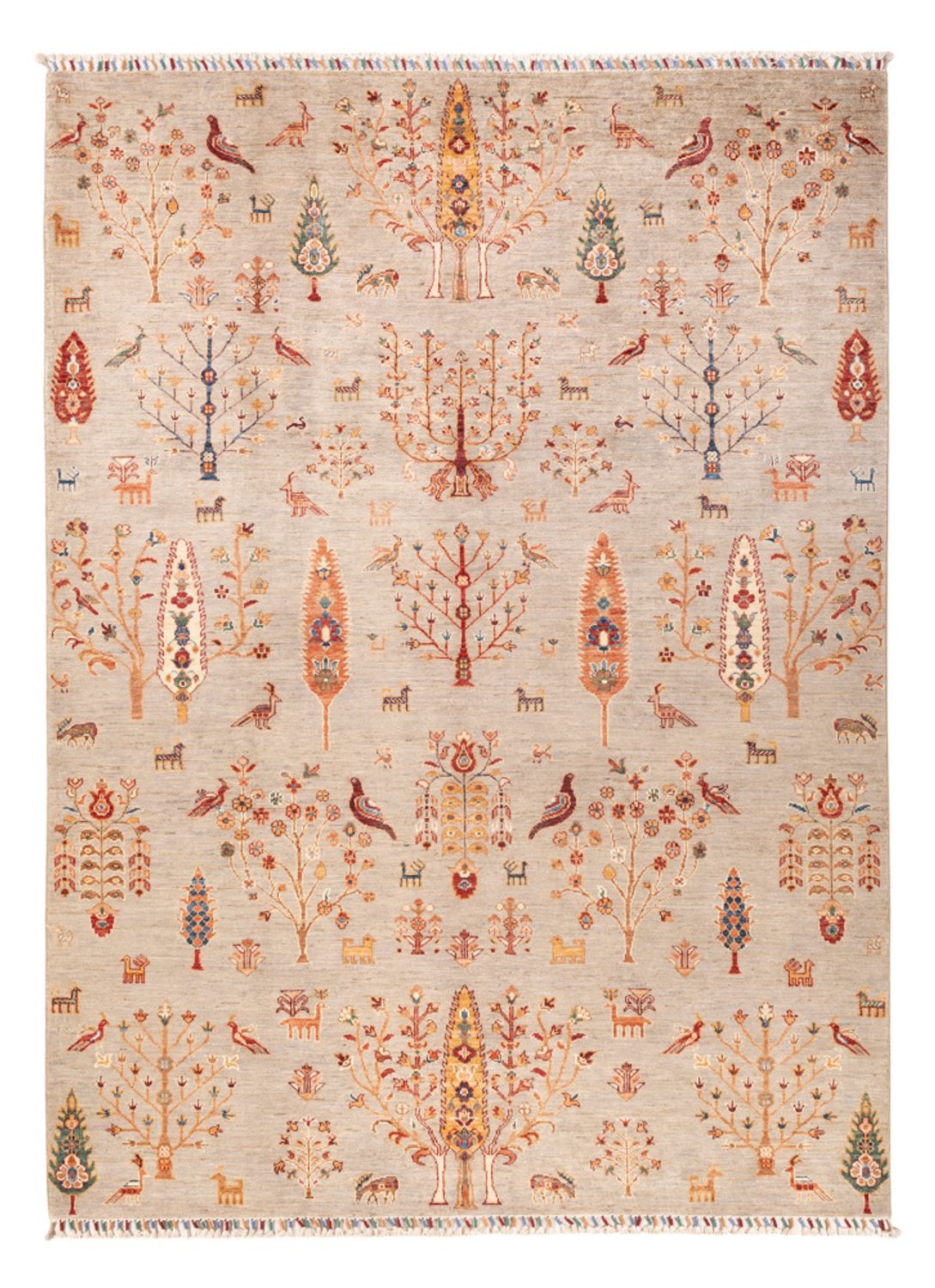
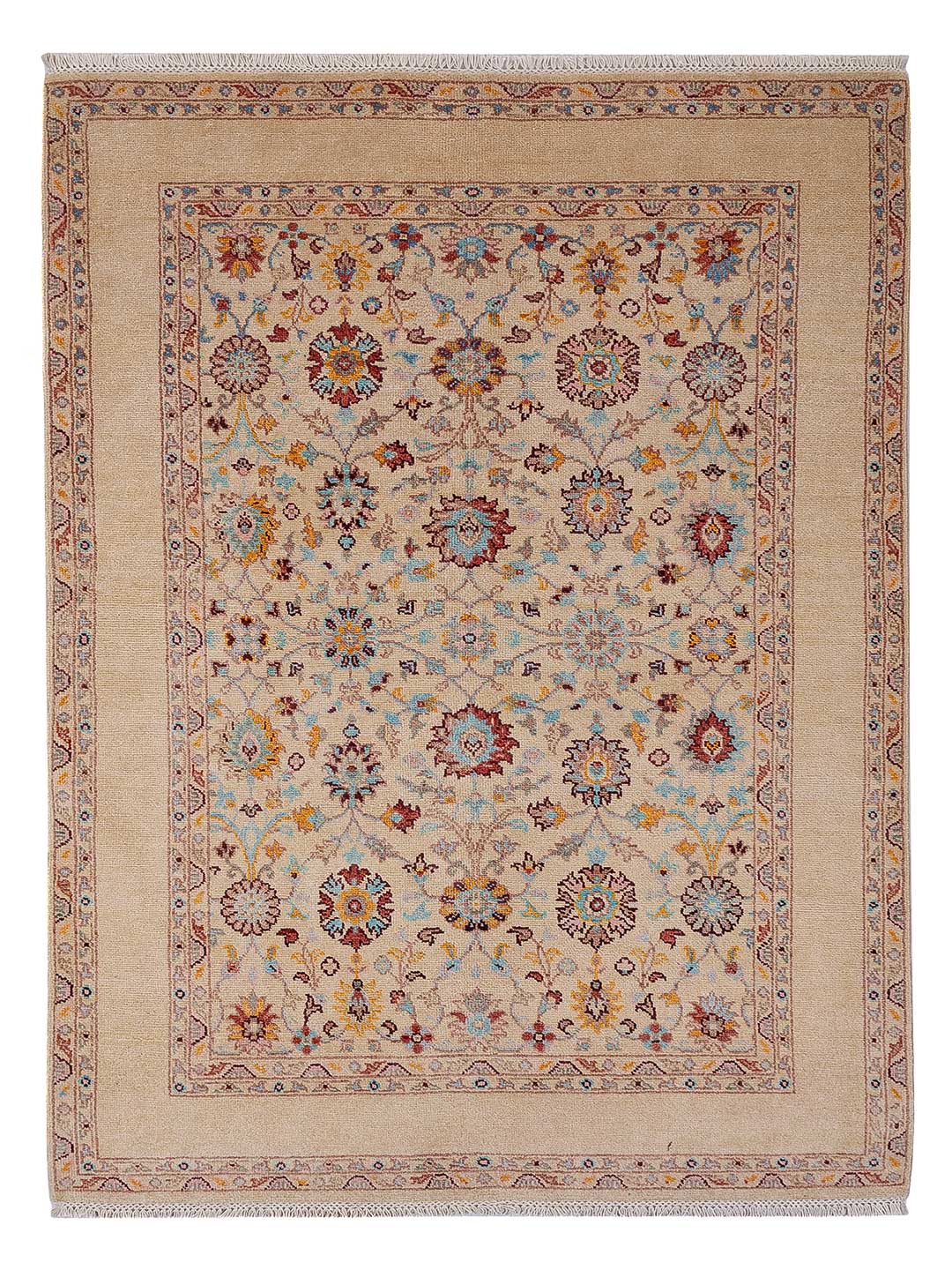
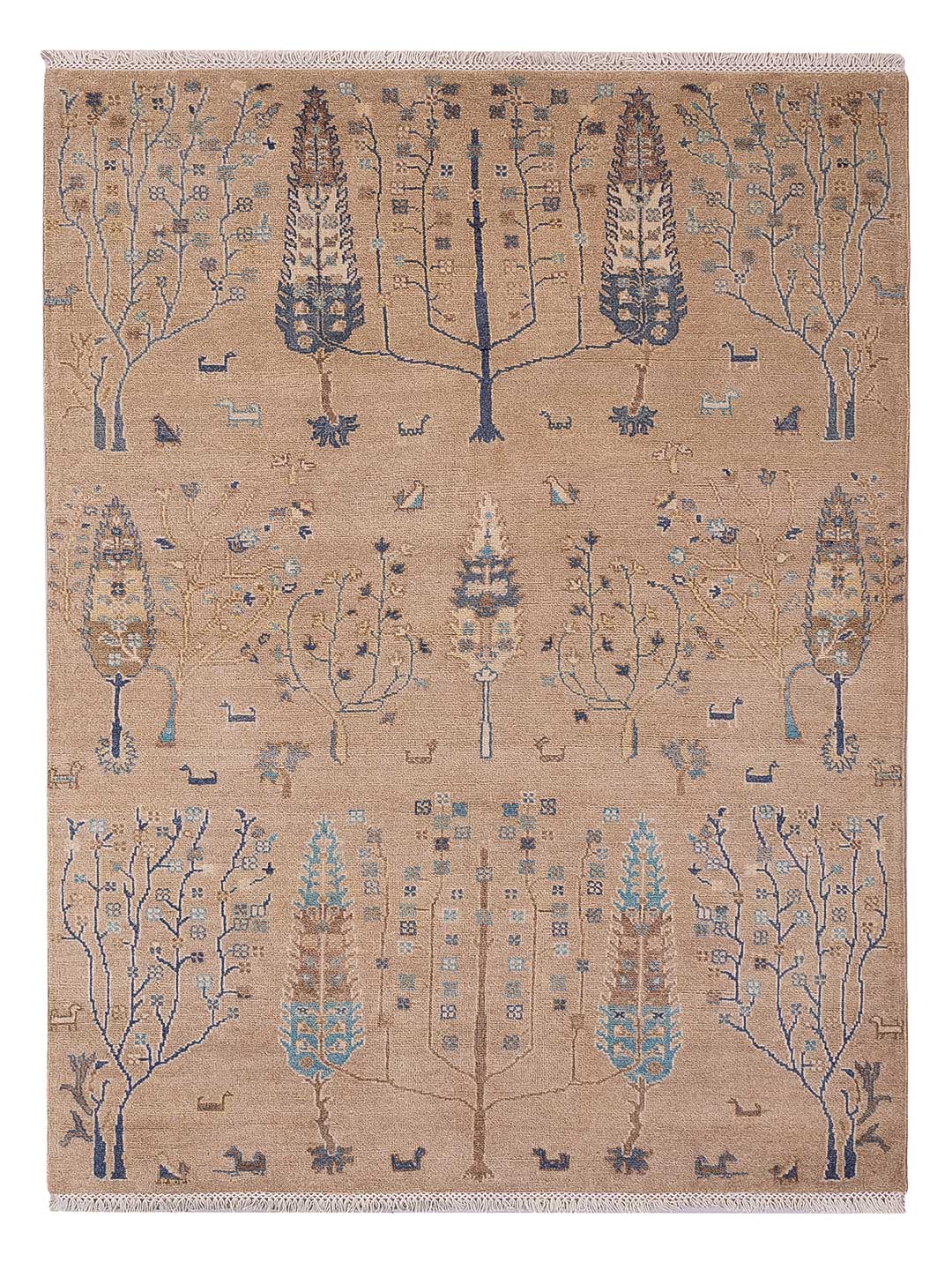
Photo: Morgenland Rugs
Ariana rugs are modern hand-knotted wool rugs from northern Afghanistan, above all from the greater Mazar-i-Sharif area. They translate the classical Ziegler style into a restrained, washed colour palette and are aimed deliberately at the European home market. Characteristic are large-scale floral all-over patterns, a softly variegated colour shift after the post-wash, and a robust wool pile on a cotton or wool ground. Technically, most Ariana workshops work in the Turkmen tradition with the asymmetric Persian knot.
What is an Ariana rug?
Ariana is not an old tribal designation but a modern trade name. It comes from the ancient term Ariana, used by Greek geographers for the area of present-day Iran and Afghanistan, and has been used since the 2000s by Afghan manufactories and exporters for a particular Ziegler variant. An Ariana is therefore a Ziegler rug of Afghan production: hand-knotted, of pure virgin wool, worked with plant dyes and subsequently subjected to a post-wash that makes the colours and pile feel softer.
Unlike the nomadically shaped Baluch or Khal Mohammadi pieces, Ariana rugs address an international market that wants to combine contemporary living spaces with muted natural colours and classical knotting craft. The pieces thus belong to the category of modern Ziegler rugs and are usually offered in the trade in the standard formats between 200 × 140 cm and 350 × 250 cm.
Origin: Mazar-i-Sharif and northern Afghanistan
Most Ariana rugs are made in workshops around Mazar-i-Sharif in the northern province of Balkh, as well as in the neighbouring regions of Jowzjan and Faryab. This area has counted among the most important knotting centres of Central Asia for centuries. Turkmen groups such as the Tekke and Ersari brought their knotting vocabulary with them, which was later supplemented by Persian models. More on the regional knotting tradition is given in the main article on Afghanistan.
Ariana production is relatively young. It developed in the wake of the international revival of the Ziegler style that began in the 1980s in Pakistani-Afghan workshops. From the early 2000s, manufactories in Mazar-i-Sharif began to produce their own Ziegler lines under names such as Ariana, Khalmohammadi or Chobi, and so made the step from pure contract manufacturer to brand. Today Ariana is an established trade designation for washed Afghan Ziegler goods in muted colours.
Typical features
Ariana rugs show large-scale floral all-over patterns directly derived from the historic 19th-century Ziegler style. Common are intertwined palmettes, vines and stylised boteh teardrops that cover the entire main field. A central medallion is generally avoided. The border usually consists of two or three bands with continuous vine work.
The handling of colour is the most important distinguishing feature compared to classical tribal goods. Ariana rugs are designed specifically to fit into European homes with light walls and natural wood. Beige, sand, ivory, muted terracotta, sage and taupe dominate, supported by delicate rosé, anthracite or ice-blue accents. Through the final post-wash the colours appear softer and slightly patinated, without the rugs being genuine vintage pieces.
Patterns and colours
The pattern vocabulary follows the Ziegler canon: palmettes, vines, lotus blossoms and fine buds lie in several layers over one another. Unlike classical Turkmen pieces, no compartmented guls stand at the centre; instead a continuous floral rhythm lets the surface breathe. The contours are usually softly drawn rather than sharply outlined, which reinforces the calm, modern impression.
Colour development begins with the plant dyeing of the hand-spun wool: madder for reds, indigo for blues, weld and skins for yellow and brown. After knotting comes the post-wash, often with mild alkaline solutions and long drying in the sun. It reduces the intensity of the colour, brings out the structure of the wool and produces the typical slightly variegated shift known as abrash. For criteria on distinguishing natural dyes from aniline dyeing see natural versus chemical dyes and identifying natural dyes.
Material and knotting technique
The pile consists entirely of pure virgin wool, often from the famous Ghazni wool, which is valued for its sheen and lanolin reserves. The warp is, depending on the workshop, cotton or wool; the weft is usually cotton, and in pure-wool constructions also wool. More on the fibres is given in the materials overview.
In the Turkmen-influenced workshops of northern Afghanistan, knotting is done with the asymmetric Persian knot, also called the open or Senneh knot. This choice sets the Ariana apart from many other Turkmen-rooted pieces that historically preferred the symmetric knot. A survey of the bindings is given in knot types; the steps of production are described in knotting and the whole process in production.
The construction is usually double-wefted: two weft threads lie between two rows of knots, which makes the rug more compact and heavier than the single-weft build of Hamadan or Wiss. The pieces therefore stand well and are suited to rooms where furniture moves or chairs are pushed back.
Knot density and quality
The knot density of an Ariana typically lies between 80,000 and 180,000 knots per square metre. The style thus belongs to the medium density class within the Ziegler family. How density, wool quality and dyeing condition one another is treated in the article knot density explained.
High-quality Ariana rugs show clear pattern management despite the soft contours, an even knotting across the whole surface and a wool that feels glossy, slightly oily and elastic. The comparison table places Ariana in its immediate context.
| Provenance | Relation to Ariana | Knot density | Typical features |
|---|---|---|---|
| Ariana | modern Afghan Ziegler variant | 80,000 – 180,000 / m² | washed natural colours, floral all-over, Mazar-i-Sharif |
| Ziegler | overarching style and model | 100,000 – 250,000 / m² | historical Tabriz export, later Pakistani-shaped |
| Khal Mohammadi | neighbouring Afghan line | 80,000 – 160,000 / m² | deeper red, Turkmen gul patterns, less washed |
| Akhche | northern Afghan manufactory goods | 100,000 – 180,000 / m² | double-weft construction, Turkmen lineage |
| Baluch | tribal neighbourhood | 60,000 – 140,000 / m² | dark earth tones, small-format, prayer-rug formats |
| Bukhara | classical Turkmen predecessor | 100,000 – 250,000 / m² | symmetric gul rows, deep red-brown |
What is an Ariana rug worth?
The price depends on size, knot density, wool quality, cleanness of the dyeing and finishing of the edges. As a modern production, Ariana rugs are cheaper than well-preserved antique Zieglers from the 19th century, but lie above the level of simple tribal goods. Medium-sized living-room formats move in the mid four-figure range; larger sizes and particularly finely knotted pieces lie correspondingly higher.
Anyone comparing Ariana with other hand-knotted wool rugs should factor in the post-wash and the choice of wool. Helpful here are recognising valuable Persian rugs, the value overview and why real rugs are expensive. Before buying, the buying guide offers concrete decision aids.
How do you recognise a genuine Ariana rug?
Reliable indicators of a genuine Ariana:
- Hand-knotted back: the floral all-over pattern is clearly mirrored on the reverse, and individual knots show as fine points.
- Fringes as part of the warp: the fringes are the extended warp threads, not sewn on afterwards.
- Asymmetric Persian knot: visible at the slightly offset knot face, unlike the symmetric knot of classically Turkmen pieces.
- Double-weft build: two weft threads lie between two rows of knots, and the rug feels heavier and more compact than a Hamadan.
- Washed colour palette: sand, beige, muted terracotta, sage, light sheen after the post-wash.
- Floral all-over without a central medallion, with soft contours rather than sharp lines.
- Wool pile with sheen and elastic handle, Ghazni wool is typical.
A step-by-step inspection is given in Is my rug genuine?. Notes on determining origin through construction and pattern are given in identifying origin. Further information on natural dyes and age is gathered in the recognising overview and in how old is my rug?.
Care
Ariana rugs are everyday-suitable utility rugs with a particularly soft handle through the post-wash. Regular vacuuming in the pile direction with reduced brush action preserves sheen and stance. Every three to five years a professional wash is advisable that cleans the pile from within and refreshes the colour. Dab fresh stains immediately from the outside inwards with clear water and a light cloth, never rub. Long direct sunlight over time can further bleach the already muted colours. More in the care overview and in cleaning a wool rug, generally in cleaning a rug.
Frequently asked questions
What is the difference between Ariana and Ziegler?
Ziegler is the overarching style designation that arose in the 19th century in Tabriz for the western export market and was later carried on above all in Pakistani-Afghan workshops. Ariana is a modern Afghan variant of this style, produced mainly in Mazar-i-Sharif, with a particularly soft, washed colour palette for the European home market.
Which knot is used in Ariana rugs?
Most Ariana workshops work with the asymmetric Persian knot, also called the open or Senneh knot. This choice yields a supple binding that fits the modern character and the soft look after the post-wash.
Are Ariana rugs really hand-knotted?
Yes. Authentic Ariana rugs are knotted knot for knot on traditional vertical looms. Machine-made goods with a similar look exist but can be told apart immediately by the back: the hand-knotted back mirrors the pattern clearly, the fringes are part of the warp, and individual knots are visible.
Why do the colours look so muted?
The palette comes about in two steps. First the hand-spun wool is dyed with plant colours; then a post-wash follows that reduces the intensity and produces a slightly patinated impression. The result is the typical calm sand, beige and sage tones, without the rugs being genuine vintage pieces.
What does an Ariana rug cost?
The price depends on size, knot density and wool quality. Medium-sized living-room formats lie in the mid four-figure range; large pieces lie significantly above, smaller sizes correspondingly cheaper. Compared with antique Zieglers, Ariana is more affordable; against simple tribal goods from the region, however, it is to be classed as higher quality.
Is an Ariana suited to rooms with underfloor heating?
Yes. The double-weft wool construction conducts heat well and is not sensitive to underfloor heating. A step-by-step warming phase and a moderate flow temperature are important so that the wool pile retains its elasticity.
How do I care for an Ariana rug properly?
Vacuum regularly in the pile direction, dab fresh stains immediately with clear water, and have a professional wash carried out every three to five years. Avoid long direct sunlight. Described in detail in the care overview.
Impressions of the origin
Places, landscapes and landmarks around the home of Ariana rugs. Click any image for a larger view.


