Akhche rugs: Turkmen gül rows from northern Afghanistan
Akcha rugs are produced in northern Afghanistan and show typical Turkmen gül medallions on a deep red ground.
- Region
- Afghanistan
- Category
- Nomad rugs
- Manufacturing
- Hand-knotted
- Knot density
- 80,000 – 180,000 knots/m²
Profile
- Manufacturing
- Hand-knotted
- Origin
- Afghanistan — Aqcha, Jowzjan Province
- Pile material
- Wool on wool
- Knot density
- 80,000 – 180,000 knots/m²
- Features
- Turkmen gül medallions, deep red ground, robust quality
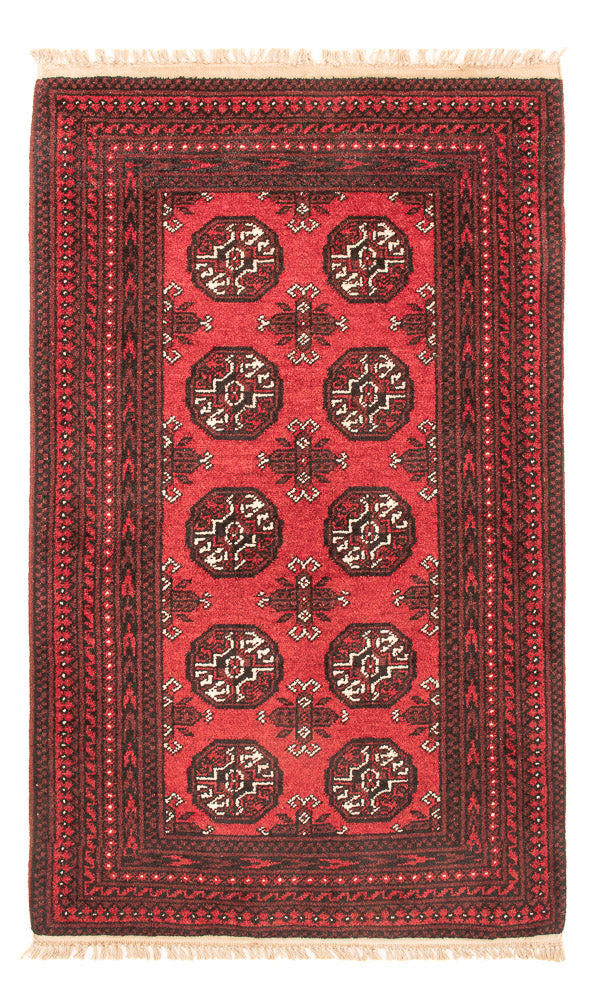
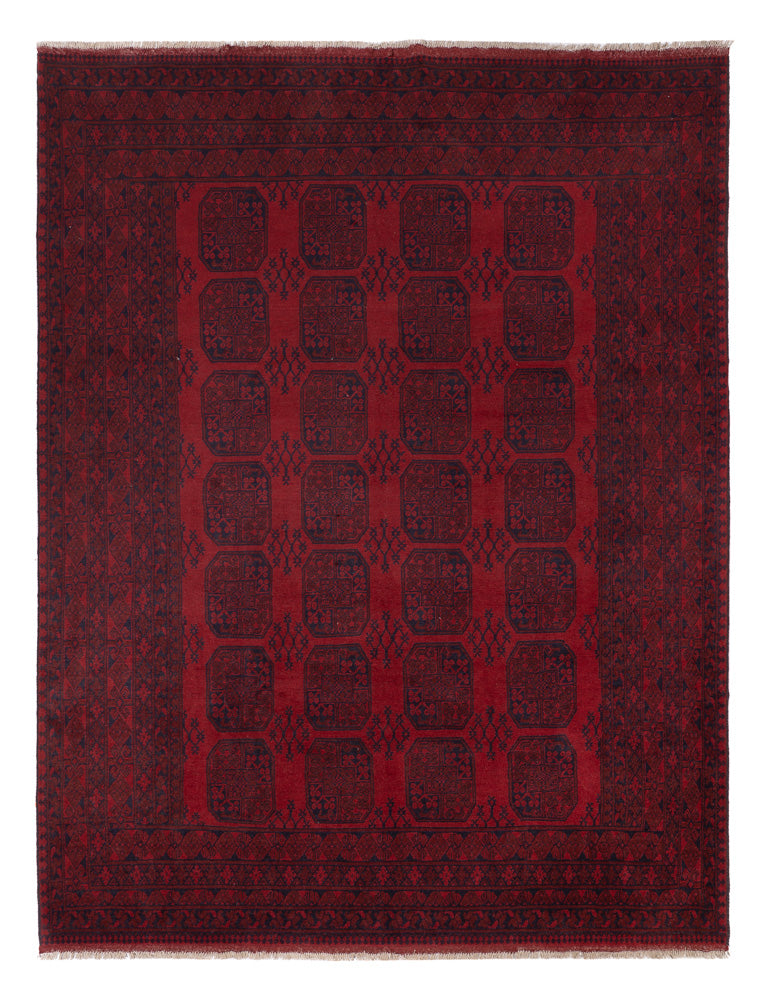
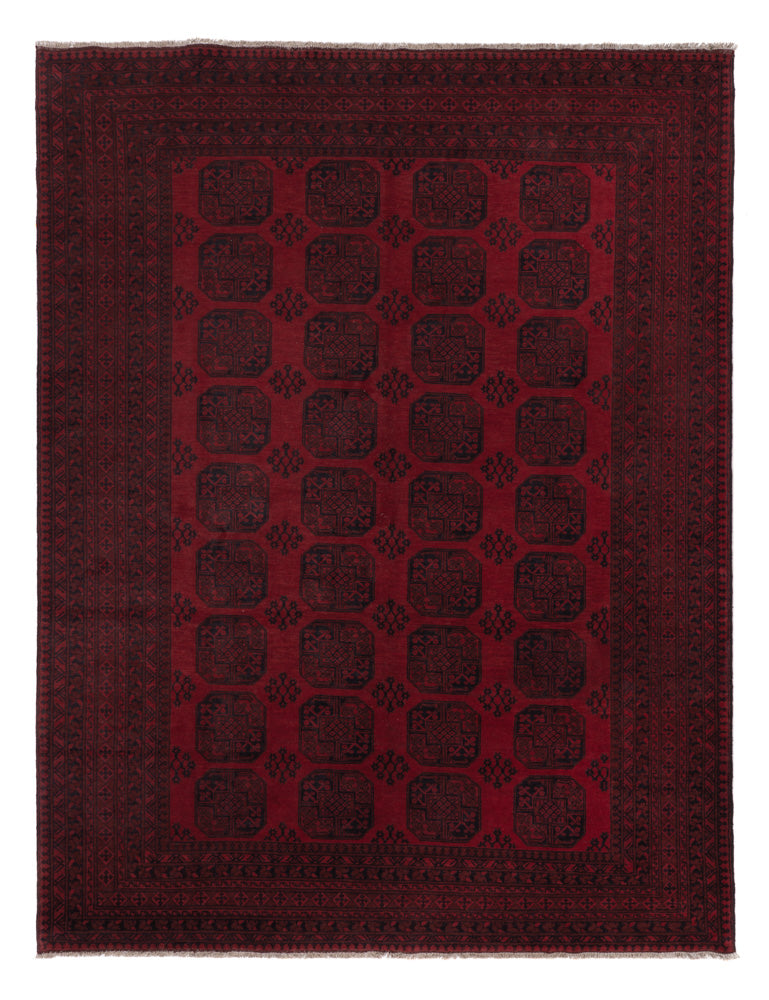
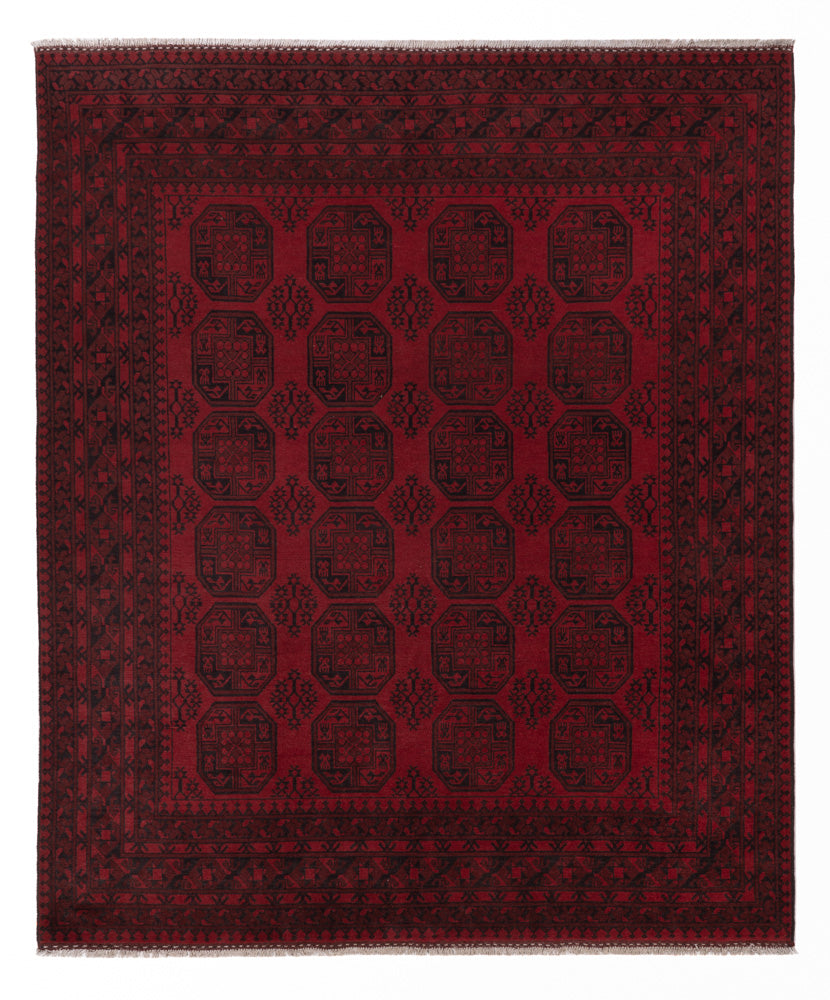
Photo: Morgenland Rugs
Akhche rugs are robust, deep-red knottings in the Turkmen tradition from the north of Afghanistan. The name comes from the town of Akhche, also spelled Aqcha, in the province of Jowzjan north of the Hindu Kush. Here Turkmen tribes knot the characteristic gul rows that define the look of these rugs. Within the nomadic rugs, the Akhche belongs to the large family of Afghan Turkmen rugs, which also includes the Khal Mohammadi and the washed Ariana.
What is an Akhche rug?
An Akhche is a hand-knotted Afghan rug with a Turkmen pattern language, whose field is structured by regular rows of octagonal gul medallions. Akhche is above all a provenance and trade name, taken from the market town through which the goods of the region enter the trade. Characteristic are the deep red to red-brown ground field, a medium-long, firm wool pile, and a quality suited to daily use. The Akhche thus stands in direct kinship with the Turkaman and, named after its trading place, with the Bukhara.
The region north of the Hindu Kush was shaped over centuries by Turkmen and Uzbek weaving traditions. From this comes the strict gul order that the Akhche shares with the classical Turkmen pieces, while the format and the character of the wool reveal the Afghan origin.
Origin
The town of Akhche lies in the northern Afghan province of Jowzjan, in the fertile plain north of the Hindu Kush and close to the border with Turkmenistan. It sits favourably on old trade routes between Central Asia and the Indian subcontinent, which is why it became a gathering point and marketplace for the rugs of the surrounding tribes. The Turkmen and Uzbek communities of the region have passed on their patterns and techniques for generations.
The history of the region is closely tied to the migration of Turkmen tribes. After the Russian conquest of Central Asia in the 19th century, many families, above all Ersari, settled south of the Amu Darya in northern Afghanistan. They brought with them the Turkmen knotting tradition that to this day forms the basis of the Akhche. The political upheavals of the 20th century temporarily shifted part of production into workshops and refugee camps in Pakistan, where Afghan weavers continued their tradition.
Patterns and colours
The defining element of the Akhche is the gul, an octagonal medallion arranged in regular rows across the entire field. The guls are linked by a fine grid of lines and supplemented by smaller geometric secondary motifs. This strict repeat order gives the Akhche its calm, ordered character and follows Turkmen design principles. The borders show several narrow bands with geometric and stylised floral motifs. More on the meaning of the motifs is given in the symbols overview.
The palette is dominated by a powerful red to burgundy that gives the Akhche its warm overall impression. Alongside stand dark blue, ivory and sparing accents of white, occasionally yellow or orange. In naturally dyed pieces the shifting play of colour, the abrash, produces a lively surface. Background on the dyes is given under rug colours and identifying natural dyes.
Material and knotting technique
Akhche rugs consist predominantly of sheep's wool, both in the pile and in the warp and weft. The wool comes from local flocks and is robust, lanolin-rich and long-lived. More on the fibres is given under materials and virgin wool. The fringes consist of the extended warp threads; the selvedges are often reinforced with goat hair, which contributes to durability.
The Akhche is predominantly knotted with the asymmetric knot, also called the Persian or open knot, which continues the Turkmen construction of this region. How the knot types differ is explained in the article on knot types; the whole sequence from spinning to shearing is set out under production. The pile is sheared medium-long and gives the Akhche its firm, dense feel.
Knot density and quality
Akhche rugs belong among the medium-knotted, very robust nomadic rugs. The knot density typically lies between about 80,000 and 180,000 knots per square metre, which yields a firm, daily-suitable, but not excessively fine structure. How knot density bears on quality and price is treated in its own guide.
A good piece is recognised by evenly aligned, clearly drawn guls, a saturated, not garish red and a dense, firmly sheared wool. The following overview places the Akhche within the related Afghan and Turkmen types.
| Type | Region / tribe | Typical features |
|---|---|---|
| Akhche | Aqcha, Jowzjan, northern Afghanistan | Turkmen gul rows, deep red, very robust |
| Khal Mohammadi | Kunduz, Baghlan, northern Afghanistan | denser gul rows, especially deep red-brown |
| Turkaman | Turkmen (collective term) | umbrella term for the Turkmen knottings |
| Bukhara | Turkmen, trade name | finer gul rows, short pile |
| Ariana | northern Afghanistan, modern production | floral all-over instead of gul, washed colours |
| Baluch | border region Iran/Afghanistan | dark earth tones, small-format prayer rugs |
What is an Akhche rug worth?
The value of an Akhche depends on age, condition, size, knot density, wool quality and dyeing. Naturally dyed older pieces with fine knotting have become rarer and are valued by connoisseurs, while modern commercial qualities are traded as affordable, robust everyday rugs. Larger formats are more common than very small pieces or runners. Why genuine knottings have their price is explained in the article why real rugs are expensive.
For a grounded assessment, recognising valuable Persian rugs helps as methodical orientation, alongside the value overview and the buying guide.
How do you recognise a genuine Akhche rug?
Reliable indicators of a genuine Akhche are:
- Wool on wool: warp, weft and pile consist of sheep's wool with a firm, slightly oily handle.
- Octagonal gul rows: evenly arranged medallions on a deep red ground, linked by a fine grid of lines.
- Asymmetric knot: the Akhche predominantly uses the Persian, open knot of the Turkmen tradition.
- Medium-long, firm pile with a robust, daily-suitable presence.
- Powerful red to burgundy as the ground colour, supported by blue, ivory and white.
- Selvedges reinforced with goat hair, fringes from the extended warp threads.
Because Turkmen gul patterns are often re-knotted, gul shape, material, back and dyeing should be judged together. A step-by-step guide is given in Is my rug genuine?; for regional attribution see identifying origin.
Care
Thanks to the dense, robust wool the Akhche is easy to care for and hard-wearing. Regular vacuuming in the pile direction and the occasional professional cleaning preserve colour and structure. Lift stains immediately with clear water, without rubbing, since naturally dyed pieces can otherwise bleed. Long direct sunlight bleaches the red and should be avoided. Detailed notes are given in the care overview and under cleaning a wool rug.
Frequently asked questions
Where does an Akhche rug come from?
The Akhche comes from the town of Akhche, also spelled Aqcha, in the northern Afghan province of Jowzjan. It is knotted by Turkmen and Uzbek tribes of the region north of the Hindu Kush. Part of production temporarily shifted into workshops in Pakistan.
How does an Akhche differ from a Khal Mohammadi?
Both are Turkmen-influenced rugs from northern Afghanistan with gul rows on a red ground. The Khal Mohammadi comes from the Kunduz and Baghlan region and shows a particularly deep, dark red-brown with dense gul rows. The Akhche from Jowzjan often turns out somewhat lighter and more robust.
Which knot does an Akhche rug use?
The Akhche is predominantly knotted with the asymmetric knot, also called the Persian or open knot, which continues the Turkmen construction of the region. More on this under knot types.
Are Akhche rugs suitable for daily use?
Yes. The robust wool, the firm knotting and the medium-long pile make the Akhche very hard-wearing. It suits living areas with normal to elevated use and, thanks to the dark colours, is little prone to showing dirt.
Which sizes are common for Akhche rugs?
Traditionally Akhches are knotted in medium to large formats, often between 200 × 300 cm and larger living-room sizes. Very small pieces and narrow runners are less commonly found.
How do I care for an Akhche rug properly?
Regular vacuuming in the pile direction and professional cleaning every few years are enough. Lift stains immediately with clear water, without rubbing. Long direct sunlight should be avoided so that the red does not fade.
Impressions of the origin
Places, landscapes and landmarks around the home of Akcha rugs. Click any image for a larger view.
Related styles
Khal Mohammadi
Khal Mohammadi rugs are produced in northern Afghanistan and stand out with their deep red tones and characteristic gül medallions.
Bukhara
Bukhara rugs are world-famous for their typical octagonal gül medallions on a deep red ground.
Turkmen
Turkmen rugs come from the Central Asian steppes and are world-famous for their characteristic gül medallions in deep red.


