Wiss rugs: single-weft Hamadan variant from Malayer
Viss rugs come from the Alvand mountains near Hamadan and combine simple geometric motifs with a robust pile.
- Region
- Persia / Iran
- Category
- Persian rugs
- Manufacturing
- Hand-knotted
- Knot density
- 80,000 – 180,000 knots/m²
Profile
- Manufacturing
- Hand-knotted
- Origin
- Iran — Alvand mountains, Hamadan Province
- Pile material
- Wool on cotton
- Knot density
- 80,000 – 180,000 knots/m²
- Features
- Simple geometric motifs, robust pile, single-weft
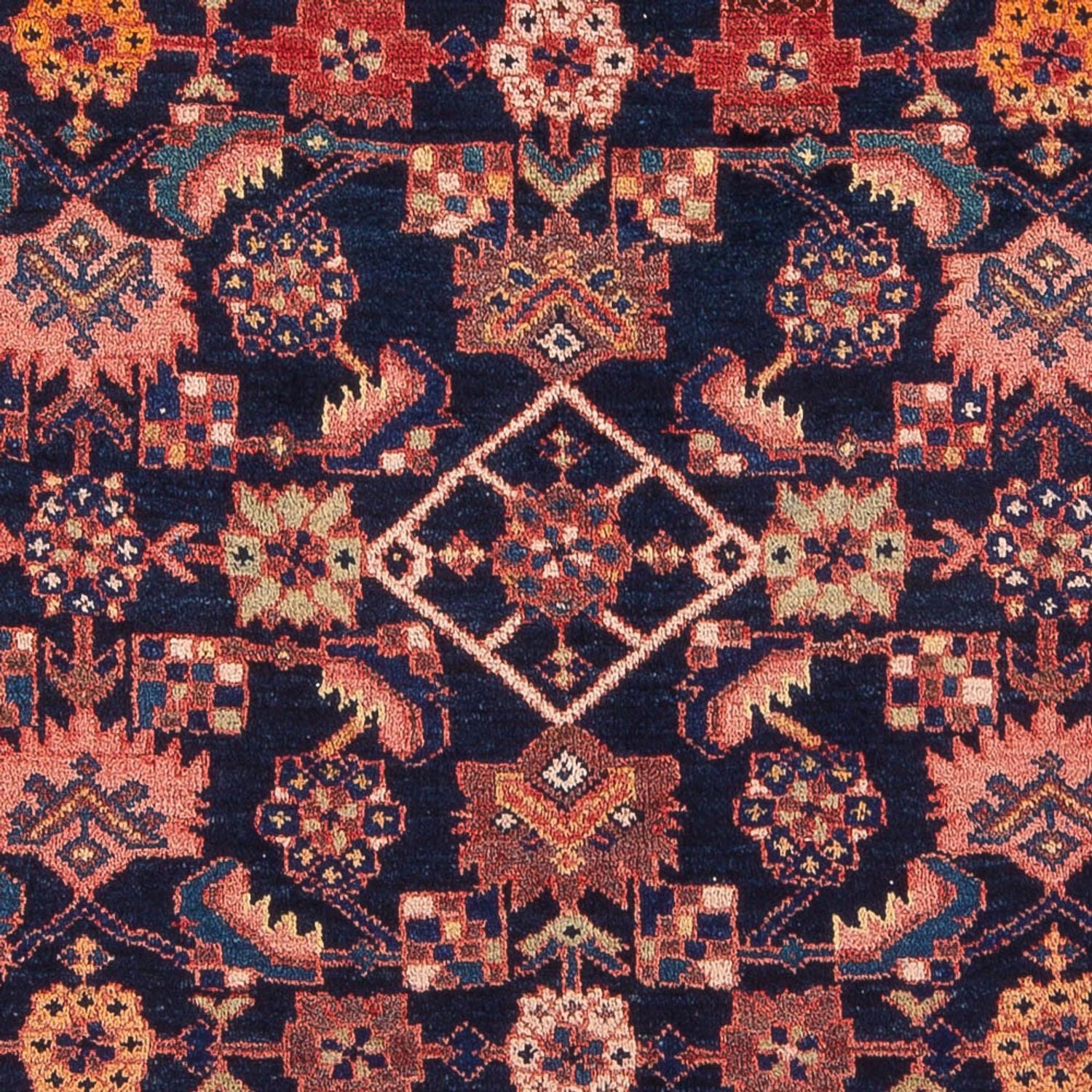
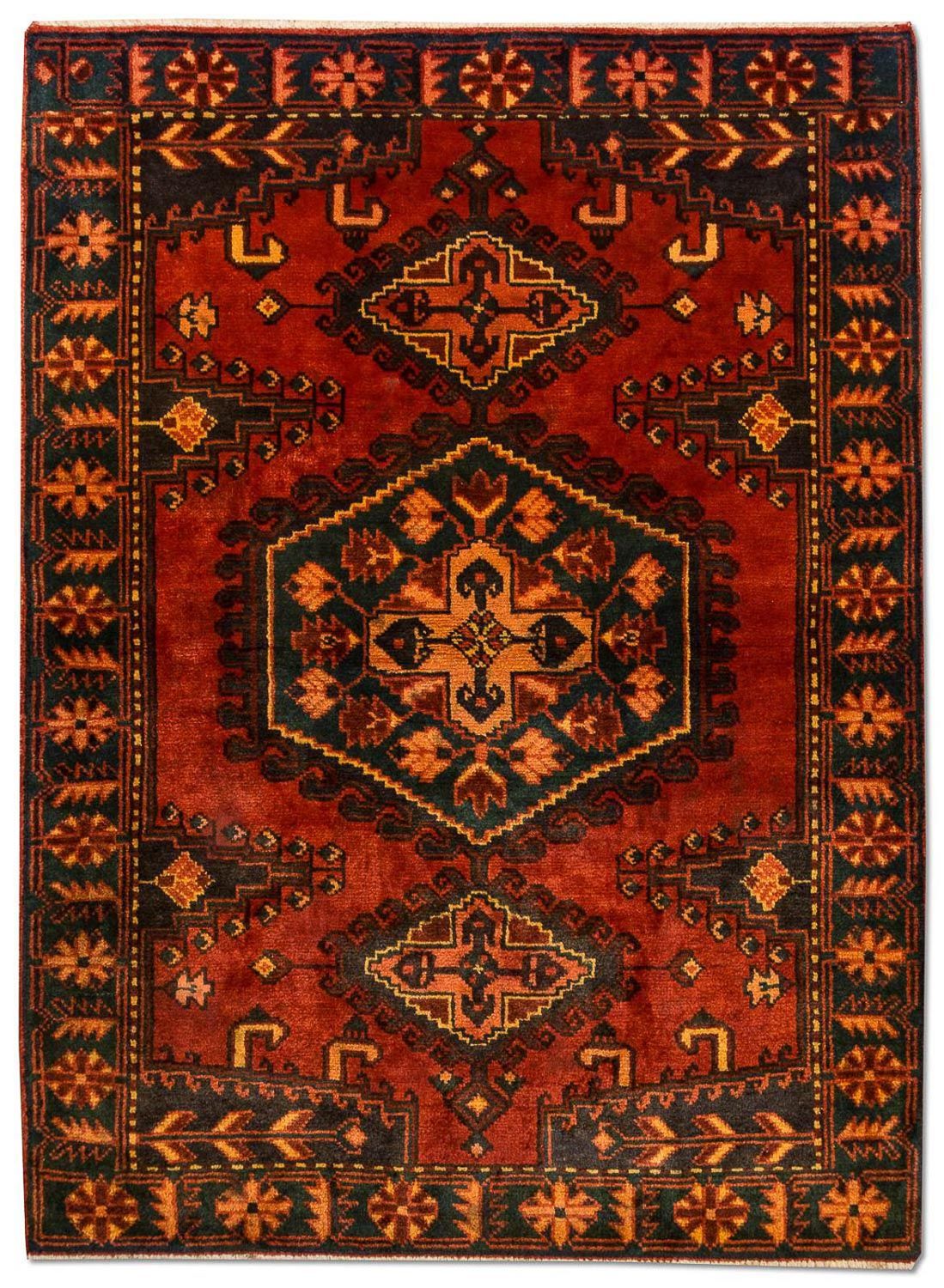
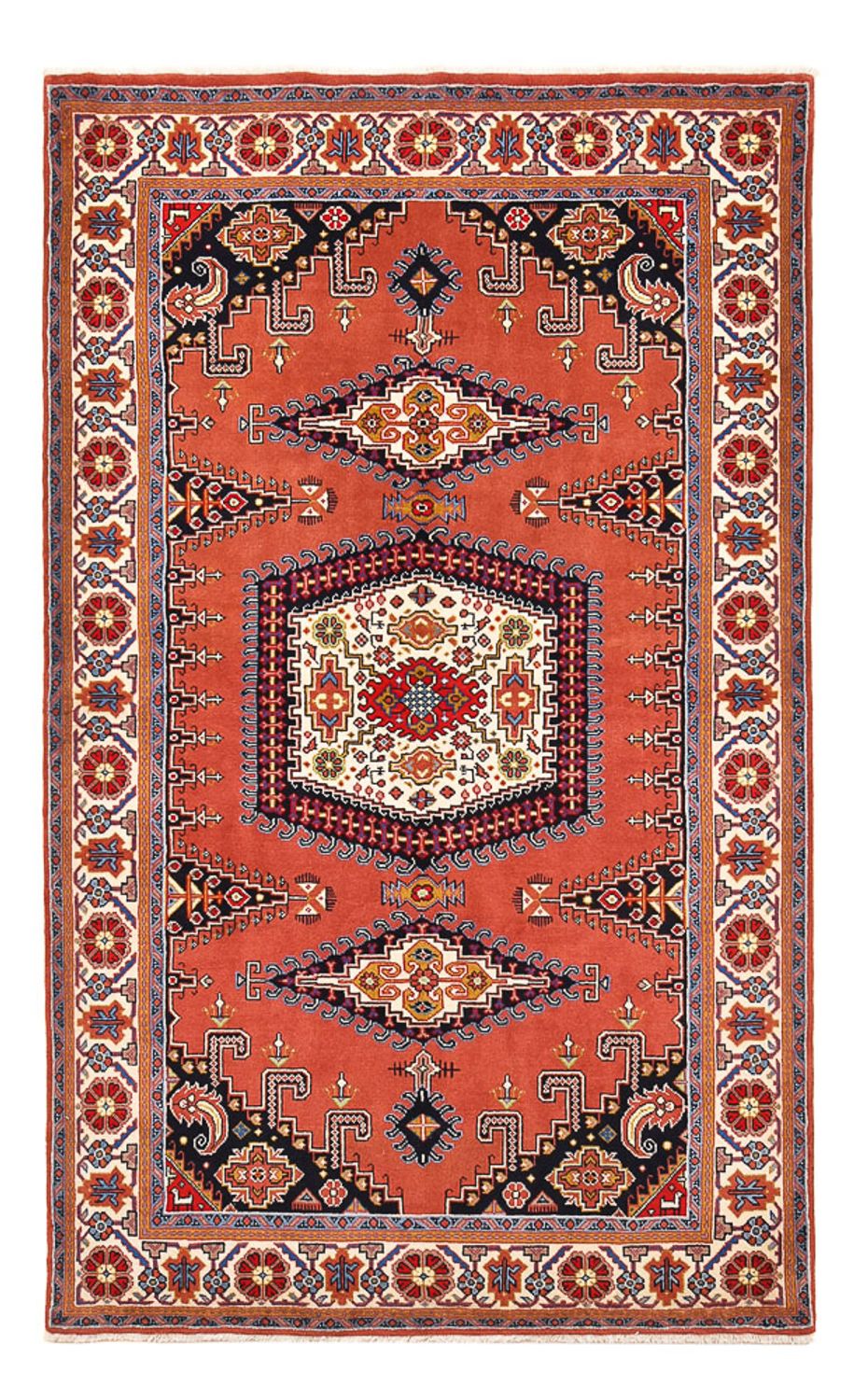
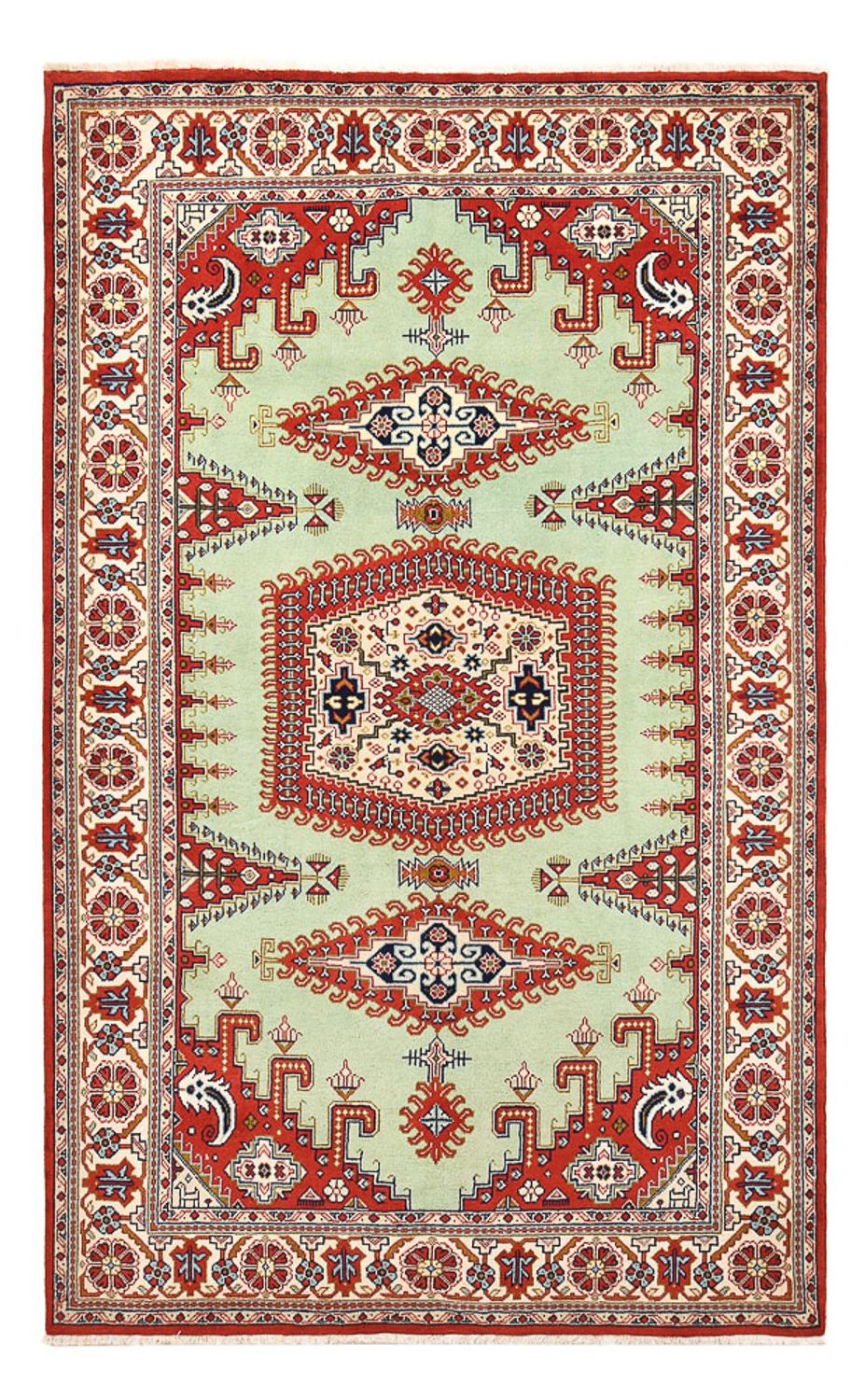
Photo: Morgenland Rugs
Wiss rugs, also spelled Viss in trade, are hand-knotted Persian rugs from the village of Wiss in the Malayer district, south of the city of Hamadan in western Persia. They belong to the wider family of west-Persian village rugs and in trade are grouped under the collective label Hamadan. Characteristic are a central geometric medallion, a flat, firm construction with a single weft, and the symmetric Turkish knot. Wiss stands for robust, everyday-suitable knotting quality with a clear pattern and bold colours.
What is a Wiss rug?
A Wiss is a hand-knotted village rug from the place of Wiss and the surrounding workshops in the western Iranian Hamadan belt. The piece is built up on a cotton warp, carries a wool pile, and is worked in the Hamadan construction with a single weft: only one weft thread runs between two rows of knots. From this arises a flat, firm rug that lies stably and suits heavily used living rooms.
In trade the name appears in two spellings, Wiss and Viss; the same provenance is meant. Both variants refer to the same village and the same knotting style. The name should not be confused with the collective label Hamadan: Wiss is a specific local provenance within that collective name and describes a particular, recognisable pattern vocabulary.
Origin: village of Wiss in the Hamadan area
The knotting village lies in the Malayer district, about 90 kilometres south of the provincial capital of Hamadan, at the transition between the Alvand range and the west Iranian highlands. The region belongs to the oldest continuously settled areas of the world: Hamadan, the ancient Ecbatana, was the capital of the Median Empire and later an important seat of the Persian Achaemenid Empire. This history shapes the entire knotting culture of the Hamadan belt to which Wiss belongs.
Wiss rugs have arisen since the 19th century in village workshops and family operations. The knotters use vertical looms set up in the living room and work from orally inherited templates. The wool comes from the region; dyeing is traditionally done with madder, indigo, and walnut shells. With the rise of the city of Hamadan as the central trading market in the late 19th century, Wiss production was also drawn into world trade. To this day, pieces from the villages converge in Hamadan and are exported from there. More on the region is in the main article Persian rugs.
Typical features
Wiss rugs show a clearly defined central medallion, usually in the form of an elongated diamond or a hexagon with jagged contours. Around the medallion lie corner spandrels with floral or geometricised vine work, so that the main field feels clearly articulated. The background is often filled with small blossom motifs, boteh drops, or the Herati pattern. The border consists of three to five bands; the main border is dominated by palmettes or interlaced vines.
The palette is warm and high-contrast. The ground is formed by deep red in madder tones or a dark navy blue; medallion and border stand out in ivory, rose, mustard yellow, or muted green. Black is used sparingly as a contour colour. The patterns feel more geometric and more rural than the curvilinear workshop patterns from Isfahan or Nain, while remaining clearly legible from a distance.
Patterns and colours
The elongated diamond medallion is the signature of a Wiss. The knotters vary it in countless variants: with feathered pendants, with small star motifs added on top, or with a double contour line in light and dark. In the corner spandrels stylised vases, blossom calyxes, or animal ideograms often appear, going back to ancient Persian symbol worlds.
The colour guidance follows a clear principle: three or four main colours carry the picture, further tones set accents. Madder red, indigo blue, and ivory belong to the basic kit of every Wiss workshop. Natural wools round out the palette in beige, light brown, and anthracite. On older pieces a slight abrash often shows: horizontal colour shadings that arise when differently dyed wool batches were processed. They count as a mark of authenticity, not as a flaw.
Material and knotting technique
Wiss rugs are knotted on a cotton warp; the weft is also cotton, rarely wool. The pile is sheep's wool from local flocks, valued for its sheen and toughness. More on the fibres processed is in the materials overview.
Knotting uses the symmetric Turkish knot, also called the Ghiordes knot. Wiss rugs therefore follow the Hamadan tradition and differ from the asymmetric Senneh knot common in most other Persian provenances. An overview of the knot types and their effects on binding and look is in knot types.
The technically most important feature is the single weft. Only one weft thread runs between two rows of knots, which makes the Wiss flat and firm. This construction it shares with the classical Hamadan and related Hamadan-belt provenances such as Nahavand, Malayer, and Touiserkan. To understand the production process as a whole, the steps are described in knotting and the overview production.
Knot density and quality
The knot density of a Wiss typically lies between 80,000 and 180,000 knots per square metre. Plain village qualities sit at the lower end; finer pieces from experienced workshops reach the upper limit. How density influences binding, pattern clarity, and price is covered in its own article knot density explained.
High-quality Wiss rugs are recognised less by a record density than by clear pattern guidance, saturated natural colours, and an even wool quality. The overview below places Wiss within its west-Persian neighbourhood.
| Provenance | Relation to Wiss | Knot density | Typical features |
|---|---|---|---|
| Wiss | local provenance in the Hamadan belt | 80,000 – 180,000 / m² | elongated diamond medallion, single weft, bold red and navy blue |
| Hamadan | overarching collective term | 60,000 – 150,000 / m² | village rugs from several hundred places, single weft, geometric |
| Malayer | neighbouring district | 100,000 – 250,000 / m² | finer knotting, floral and geometric medallions |
| Nahavand | related Hamadan-belt region | 70,000 – 140,000 / m² | robust village rugs, geometric medallion |
| Touiserkan | surrounding knotting place | 80,000 – 150,000 / m² | village knotting, traditional pattern templates |
| Bidjar | neighbouring knotting region | 150,000 – 350,000 / m² | extremely dense and heavy, double weft, very durable |
What is a Wiss rug worth?
The value of a Wiss rug depends on age, condition, size, knot density, wool quality, clarity of pattern, and dye. Plain village qualities in medium formats belong to the more affordable Persian rugs and often sit in the lower four-figure range. Well-preserved older pieces with plant-dyed wool, a precise medallion, and clean edges fetch considerably higher prices.
Compared with workshop ware from Isfahan, Nain, or Ghom, the Wiss is classed more cheaply and is therefore a classical entry into finer Persian village rugs. For the price assessment, see Identifying valuable Persian rugs and the overview value. Why good hand-knotted pieces hold their price is explained in why genuine rugs are expensive. Before buying, the buying guide helps.
How can you tell a genuine Wiss rug?
Reliable signs of a genuine Wiss:
- Hand-knotted back: the pattern is mirrored clearly; individual knots are visible.
- Fringes as part of the warp: the fringes are the extended warp threads, not sewn on afterwards.
- Symmetric Turkish knot: like the whole Hamadan belt, Wiss uses the Ghiordes knot.
- Single-weft structure: only one weft thread runs between rows of knots, easy to read on the back.
- Elongated diamond medallion with floral corner spandrels and a multi-tiered border.
- Bold madder red or navy blue as the base tone, complemented by ivory and accent colours.
- Wool pile on a cotton foundation with a flat, firm construction.
A step-by-step authenticity check is in Is my rug genuine?. How the provenance can be placed by construction and pattern is covered in identifying provenance. Further guidance on determining age, natural colours, and signatures is in the identifying overview, in identifying natural dyes, and in how old is my rug?.
Care
Wiss rugs are everyday-suitable working rugs. Regular vacuuming in the direction of the pile with reduced brush action preserves the pile. Every three to five years a professional wash is recommended that pulls dust out of the deep binding and refreshes the colours. Spills should be blotted at once from the outside inward with clear water and a light cloth, without rubbing. Long, direct sunlight will fade reds above all. Detailed guidance is in the care overview and the guide cleaning a wool rug. For general cleaning there is also cleaning a rug.
Frequently asked questions
What does Wiss mean for a rug?
Wiss is the label for a hand-knotted village rug from the place of Wiss in the Malayer district, south of Hamadan in the west Iranian highlands. The alternative spelling Viss means the same style. Wiss rugs belong to the Hamadan-belt tradition and show a central diamond medallion, a single-weft construction, and the symmetric Turkish knot.
How does a Wiss differ from a Hamadan?
Hamadan is a collective term for the village rugs from the city of Hamadan and several hundred surrounding places. Wiss is a specific local provenance within this collective term. Both share construction and knot; the Wiss, however, shows a clearly defined pattern vocabulary with an elongated diamond medallion and floral corner spandrels that lifts it out of the larger Hamadan group.
How does Wiss differ from Malayer?
Wiss lies in the Malayer district, which is why both provenances are closely related. Malayer rugs are on average more finely knotted and show floral all-over patterns more frequently, while Wiss pieces consistently place the central medallion at the centre. Both use a single weft and the Turkish knot.
What does a Wiss rug cost?
The price depends on age, condition, size, knot density, and wool quality. Plain village qualities in standard formats are affordable; well-preserved older pieces with plant-dyed wool and fine knotting reach considerably higher prices. A placement is in the buying guide.
Are Wiss rugs suitable for heavily used rooms?
Yes. The flat single-weft construction and the robust wool make the Wiss a classical working rug. Living rooms, dining rooms, and hallways are fitting locations. It is no more sensitive than Hamadan-belt wool.
What sizes are common for Wiss rugs?
Widespread are smaller home formats of about 150 x 100 cm up to medium sizes around 250 x 150 cm. Runners and more generous pieces up to 300 x 200 cm also appear, but are rarer than the typical living-room formats.
How do I care for a Wiss rug correctly?
Vacuum regularly in the direction of the pile, blot spills at once with clear water, and have a professional wash done every few years. Long, direct sunlight should be avoided. More on this in the care overview.
Impressions of the origin
Places, landscapes and landmarks around the home of Viss rugs. Click any image for a larger view.
Related styles
Hamadan
Hamadan rugs come from western Iran and are produced in countless village workshops, robust, affordable, and highly varied.
Malayer
Malayer rugs come from the eponymous town in Hamadan Province and are appreciated for their classic Herati patterns and good value.
Hosseinabad
Hosseinabad rugs come from a village in Hamadan Province and show classic Herati patterns in the typical Hamadan single-weft weave.


