Ghoutshan rugs: fine Khorasan weave from northeast Iran
Quchan rugs come from the city of the same name in northern Khorasan and are known for their rich Kurdish tribal patterns.
- Region
- Persia / Iran
- Category
- Persian rugs
- Manufacturing
- Hand-knotted
- Knot density
- 80,000 – 180,000 knots/m²
Profile
- Manufacturing
- Hand-knotted
- Origin
- Iran — Quchan, North Khorasan Province
- Pile material
- Wool on wool or cotton
- Knot density
- 80,000 – 180,000 knots/m²
- Features
- Kurdish tribal motifs, deep reds, robust quality
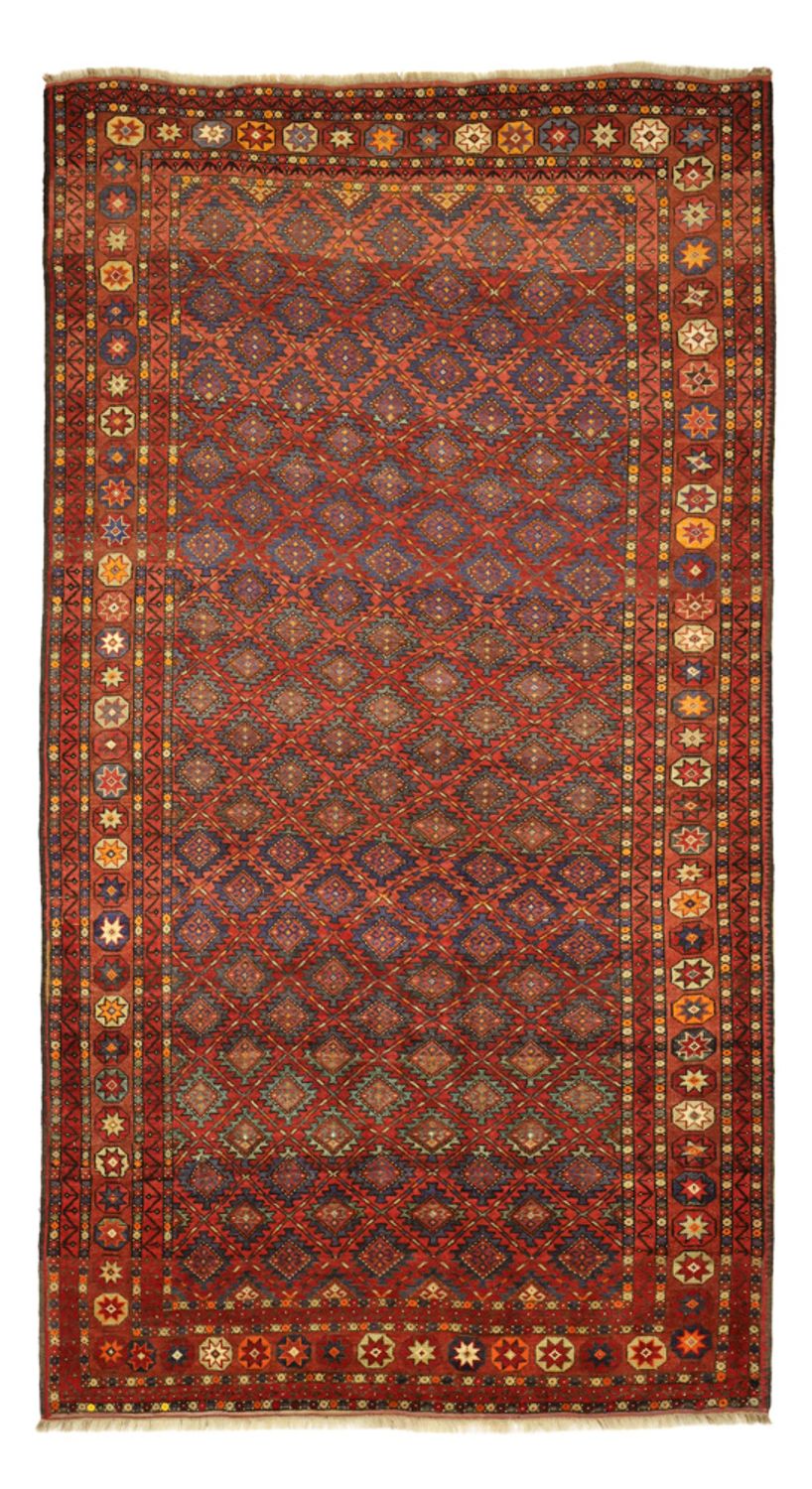
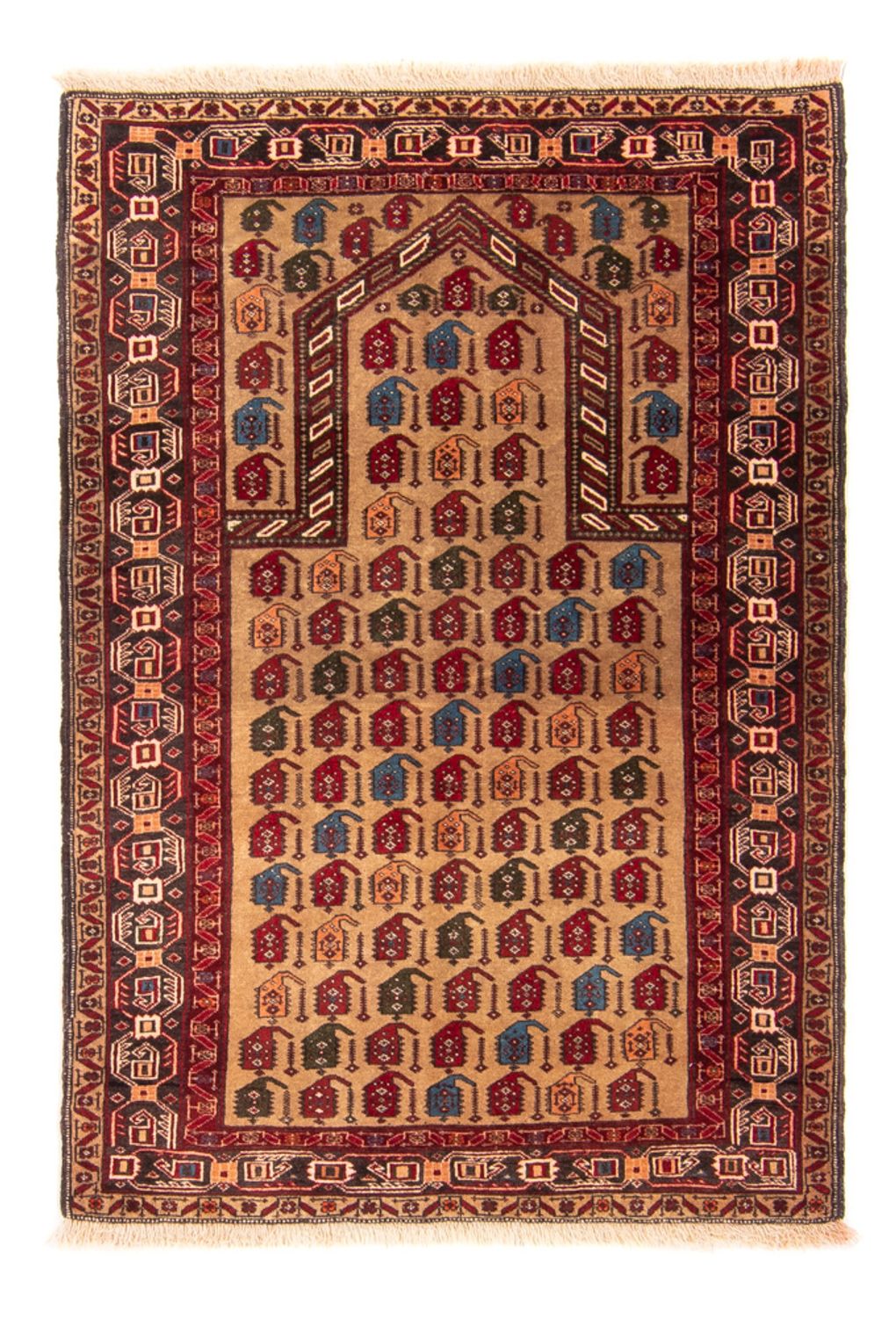
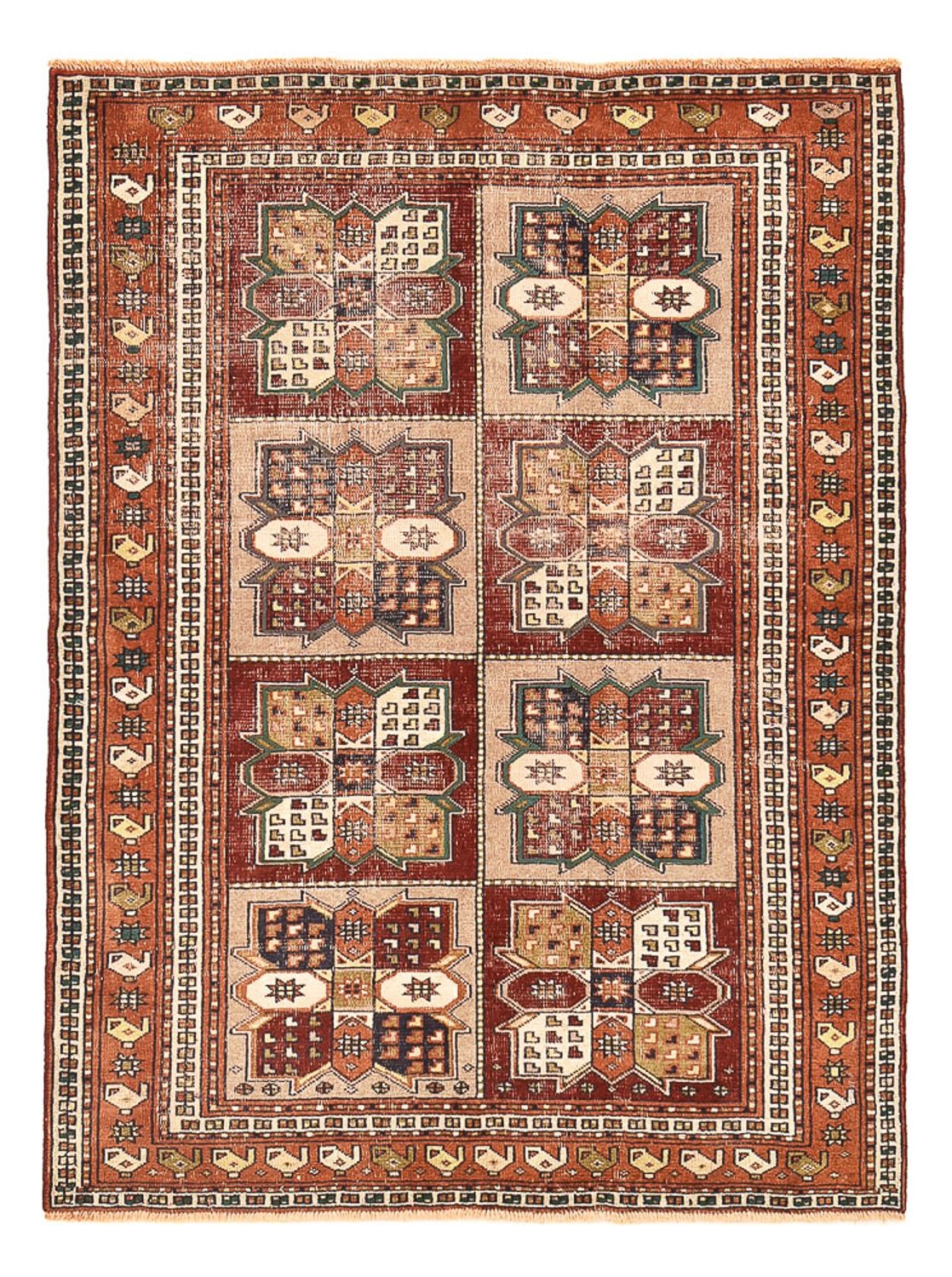
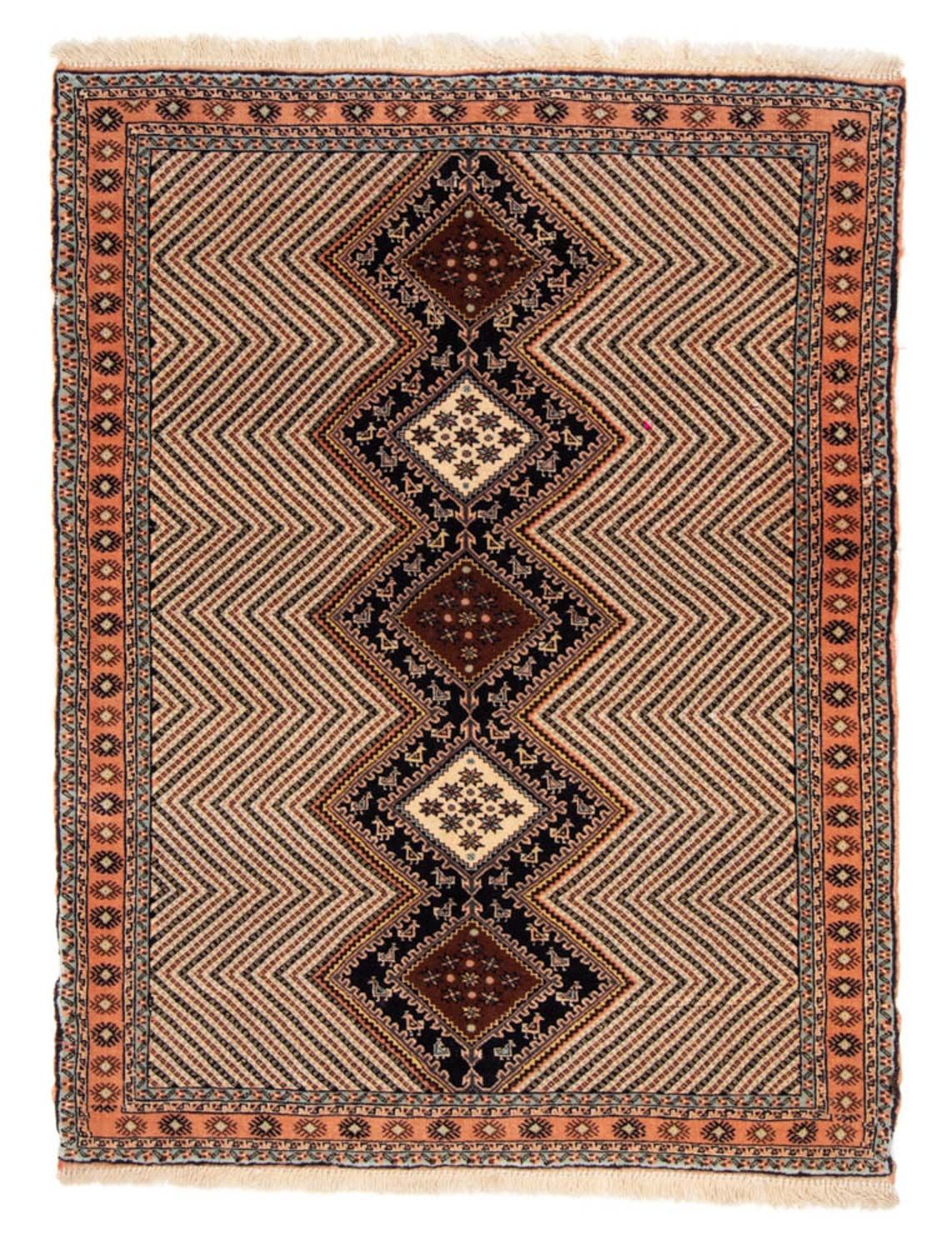
Photo: Morgenland Rugs
Ghoutshan rugs are finely knotted Persian rugs from the north-east of Iran, from the region around the town of Ghoutshan in the province of Razavi Khorasan. They belong to the family of eastern Persian Khorasan goods and stand out through a restrained, harmonious colour scheme and a careful, often fine knotting. Because of the comparatively small production, Ghoutshans are less well known than the great provenances of the region, but among connoisseurs they count as fine and independent Persian rugs.
What is a Ghoutshan rug?
A Ghoutshan is a hand-knotted rug from the town of Ghoutshan (also Quchan, Kuchan) and its surrounding villages in the north of Khorasan. Knotting is done with the asymmetric Persian knot, the Senneh knot, usually on a cotton warp with a wool pile. Characteristic are floral medallion compositions, an elegant, muted palette of blues, reds and beiges, and a rather fine knotting with a low to medium pile that allows for clear contours.
Origin
Ghoutshan lies in the north of the province of Razavi Khorasan, in a high valley north-west of Mashhad, near the border with Turkmenistan. The region is shaped by mountains and pasturelands, which favours a tradition-rich wool production. Historically the area was a settlement region for Kurdish tribes who were resettled here in the 16th and 17th centuries to secure the north-east border, as well as for Turkmen groups. This mixed population shaped the local knotting tradition.
Ghoutshan's rug production is markedly smaller than that of the great Khorasan centres and is mainly carried by family businesses and smaller workshops. As a result, handed-down patterns and techniques have remained comparatively authentic. Ghoutshan shares its roots with the neighbouring provenances Mashhad, Moud, Kashmar and Sabsewar, but is distinguished by its specific handling of colour and its finer pattern drawing.
Patterns and colours
The typical Ghoutshan design is the floral medallion composition: a central medallion surrounded by floral vines and palmettes, supplemented by matching corner fills. Alongside are patterned fields with evenly distributed flower motifs. The pattern is usually symmetrical and follows classical Persian compositional principles, but feels finer and calmer than the vigorous village patterns of the region.
The palette is the most striking sign of recognition: restrained and harmonious, dominated by muted blues, reds and beiges, accented with discreet green or gold. This calm colour world distinguishes the Ghoutshan from the more saturated, high-contrast reds of many Khorasan manufactories. The borders are usually multiply tiered and pick up floral or geometric bands that frame the field harmoniously.
Material and knotting technique
The pile consists of high-quality virgin wool, which brings with it valued properties in the mountainous region: it is hard-wearing, has a good handle and takes natural dyes well. For special pieces silk is used as an accent material for the contouring of individual motifs. Warp and weft are usually cotton, which gives the rug a straight stance and dimensional stability.
Knotting is done with the asymmetric Senneh knot, the knot typical of Persian rugs, which allows for fine curvilinear patterns. The pile is sheared medium-high to low, which gives the patterns clear contours. The frequent use of natural dyes contributes to the characteristic, harmoniously muted colour tones. How the knotting proceeds in detail is described in the overview of rug production and especially under knotting.
Knot density and quality
The knot density of a Ghoutshan typically lies between 250,000 and 400,000 knots per square metre. That is an elevated density that allows for fine floral detail and clear line work and lifts the Ghoutshan above the more robust village qualities of the region. Within this span, quality varies considerably depending on workshop, wool quality and care in knotting.
High-quality Ghoutshans show an even, dense knotting, natural dyeing and a calm, balanced composition. How knot density bears on quality and price, and why it must always be read in connection with material and pattern clarity, is treated in its own article.
| Feature | Expression in the Ghoutshan |
|---|---|
| Knotting | asymmetric Senneh knot (Persian knot) |
| Warp | cotton |
| Weft | cotton |
| Pile | virgin wool, low to medium-high, occasionally silk contours |
| Knot density | approx. 250,000 – 400,000 knots/m² |
| Pattern | floral medallion, fine vines and palmettes |
| Colours | muted blue, red, beige with discreet green and gold accents |
What is a Ghoutshan rug worth?
The value of a Ghoutshan depends on age, condition, size, knot density, wool quality and dyeing. Because of the small production and the handcraft quality, well-preserved Ghoutshans can be a stable store of value, especially older pieces with natural dyeing and a high knot density that are valued by collectors. They generally do not reach the price levels of the top manufactories from Isfahan or Nain, but offer fine knotting quality at moderate prices.
A grounded classification is helped by a look at the basics under what is my rug worth? and at the notes on valuable Persian rugs. Before buying, the general buying guide helps to estimate quality and price realistically.
How do you recognise a genuine Ghoutshan rug?
Reliable indicators of a genuine, hand-knotted Ghoutshan are:
- Hand-knotted back: the fine floral pattern is clearly mirrored on the reverse; the knots form a dense, even grid.
- Fringes as part of the warp: the fringes are the extended warp threads, not sewn on afterwards.
- Asymmetric Senneh knot as usual for Persian provenances.
- Muted, harmonious palette of blue, red and beige, calmer than in many other Khorasan rugs.
- Low to medium-high wool pile on cotton ground with clear contour drawing.
Because Ghoutshans are easily confused with other north-east Persian provenances, the handling of colour, the fineness of the pattern, the back and the material should be judged together. A step-by-step guide for authentication is given in Is my rug genuine?; general notes on recognising handwork and origin are given under recognising a rug.
Care
Ghoutshan rugs are easy to care for thanks to the robust mountain wool. Regular vacuuming in the pile direction and the occasional professional cleaning preserve colour and structure. Dab stains immediately with clear water, without rubbing or using aggressive cleaning agents. Long direct sunlight bleaches the colours. Detailed notes are given in the care overview and especially under cleaning a wool rug.
Frequently asked questions
How do I recognise a genuine Ghoutshan rug?
A genuine Ghoutshan is hand-knotted, uses the asymmetric Persian knot and has a cotton warp with a wool pile. The back shows a fine, even pattern, the fringes are part of the warp, and typical is the muted, harmonious palette of blue, red and beige.
What distinguishes a Ghoutshan from a Mashhad rug?
Both come from the province of Razavi Khorasan, but Ghoutshan shows a calmer, more muted handling of colour and comes from a markedly smaller production. Mashhad rugs from the provincial capital are more widespread and often more formal in composition. Ghoutshans are valued by collectors because of their rarity.
Are Ghoutshan rugs a good investment?
Because of the small production and the fine handwork, well-preserved Ghoutshans can be a stable store of value. Especially older pieces with natural colours and a high knot density are in demand with collectors. Value development depends on quality, age and state of preservation.
Which sizes are common for Ghoutshan rugs?
Most common are medium formats from about 150 × 100 cm to 300 × 200 cm. Larger examples over 350 × 250 cm are rarer and correspondingly more valuable. Small formats are also knotted.
Why is the colour scheme of the Ghoutshan so characteristic?
The restrained, muted colour world arises from the frequent use of natural dyes and is a hallmark of the provenance. It distinguishes the Ghoutshan from the more saturated, high-contrast reds of many other Khorasan manufactories.
How do I care for a Ghoutshan rug properly?
Vacuum regularly in the pile direction and have it professionally cleaned occasionally. Dab stains immediately with clear water, without aggressive cleaning agents. Avoid long direct sunlight so that the colours do not bleach.
Impressions of the origin
Places, landscapes and landmarks around the home of Quchan rugs. Click any image for a larger view.


