Shiraz rugs: Fars tribal weave traded via the Shiraz market
Shiraz rugs are produced in the famous market town of southern Iran by Qashqai and Khamseh tribes, vibrant nomadic pieces.
- Region
- Persia / Iran
- Category
- Persian rugs
- Manufacturing
- Hand-knotted
- Knot density
- 60,000 – 150,000 knots/m²
Profile
- Manufacturing
- Hand-knotted
- Origin
- Iran — Shiraz, Fars Province
- Pile material
- Wool on wool or cotton
- Knot density
- 60,000 – 150,000 knots/m²
- Features
- Tribal motifs, lively reds and blues, medium-fine pile
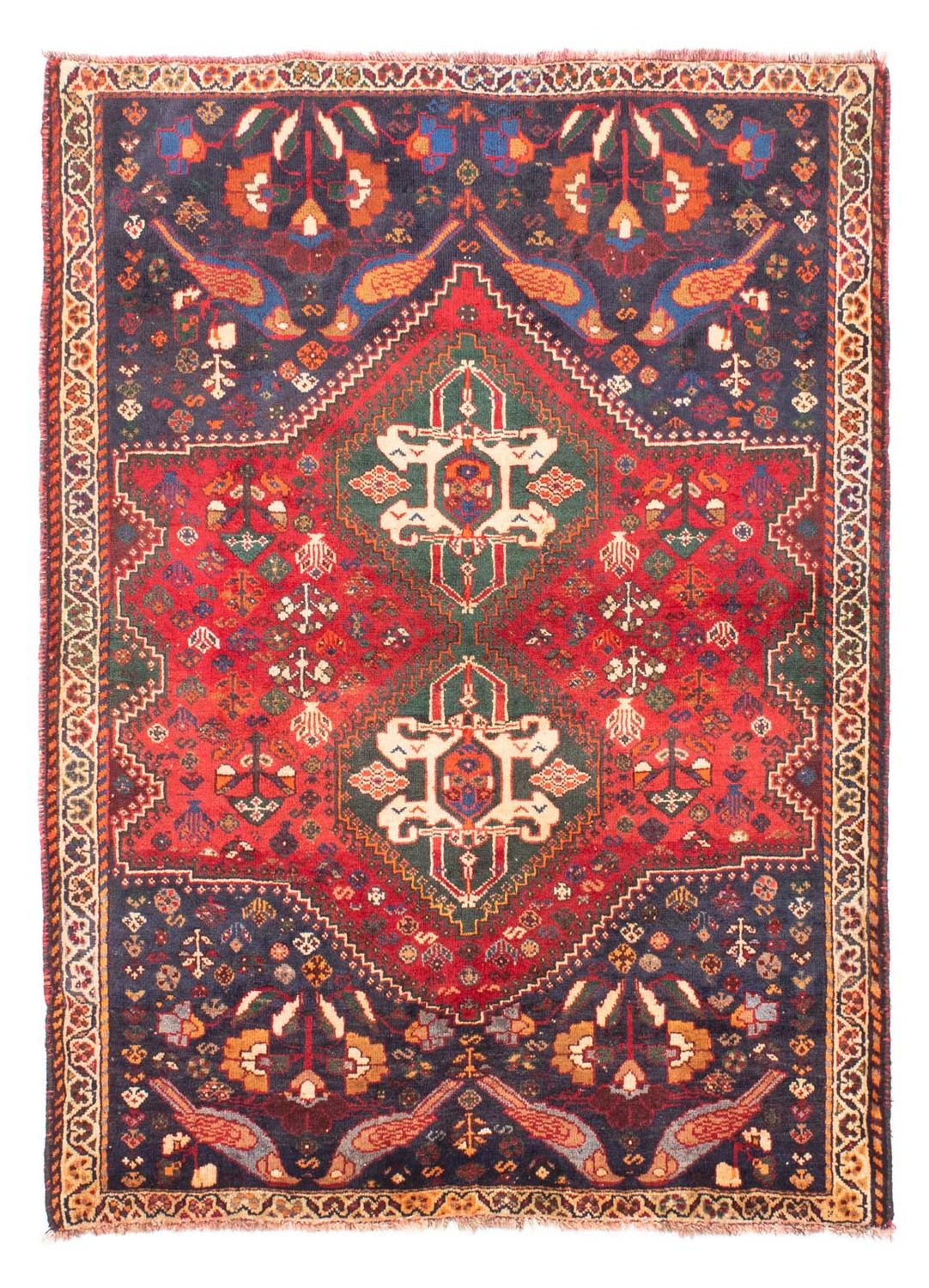
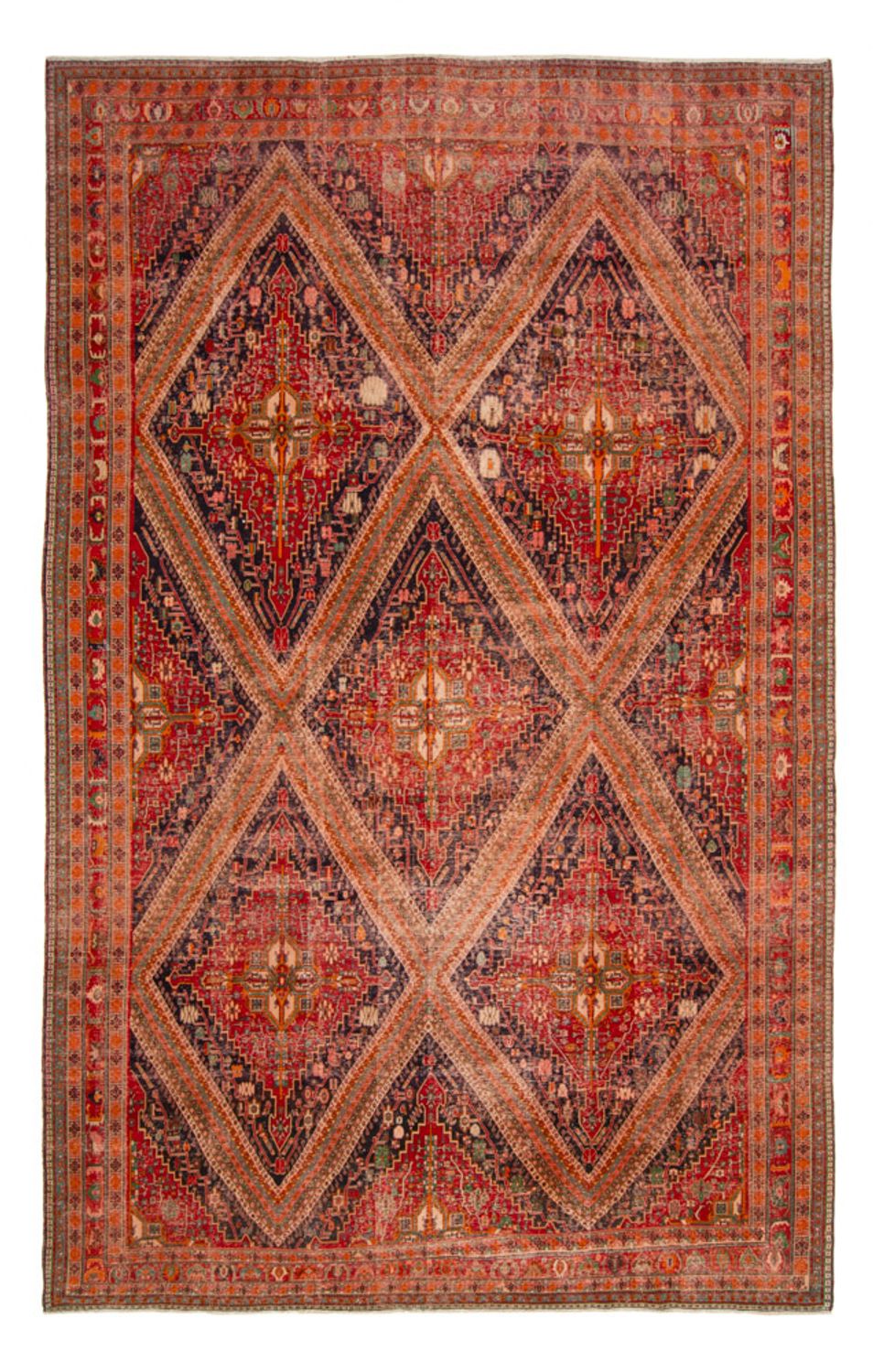
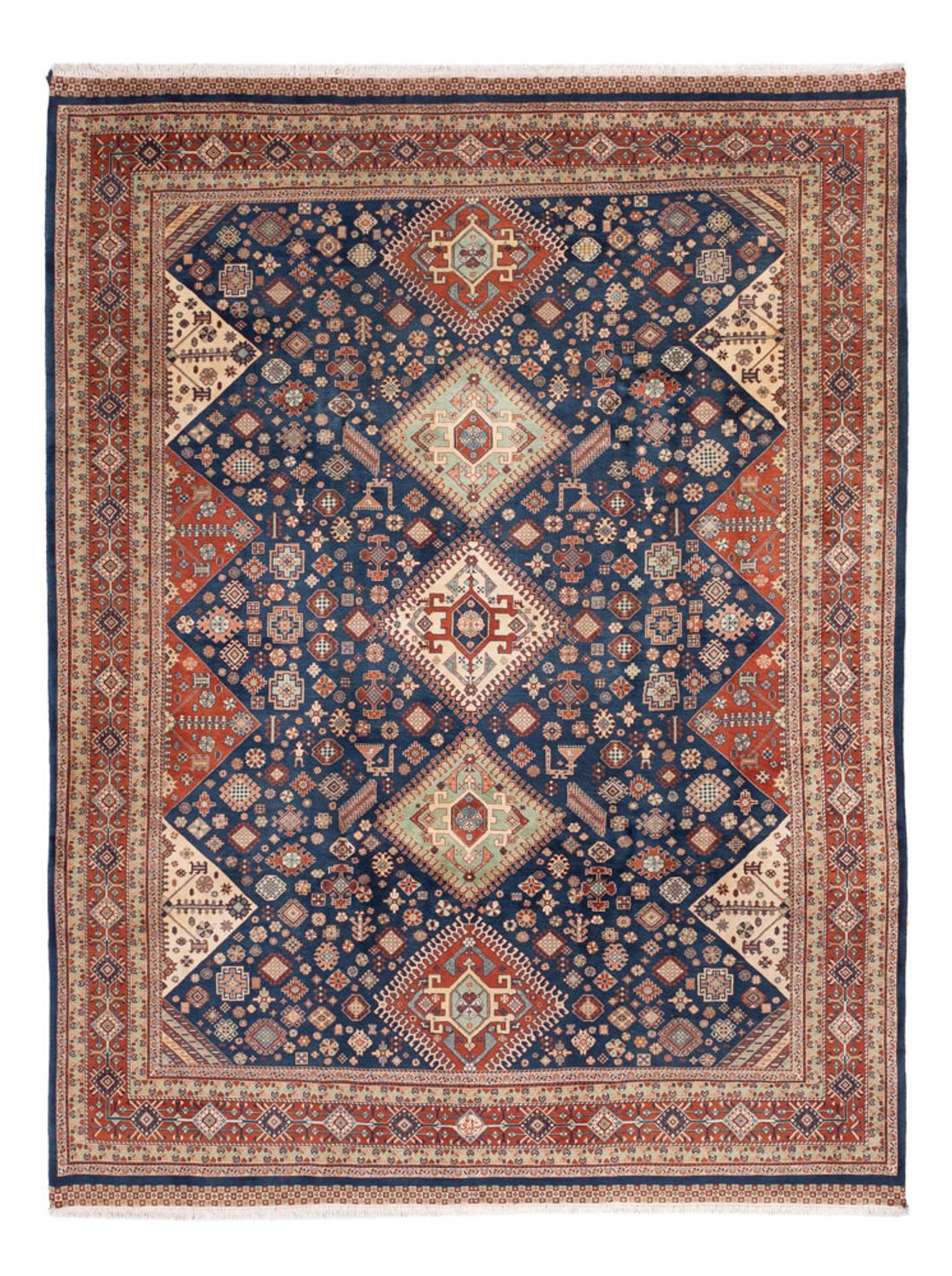
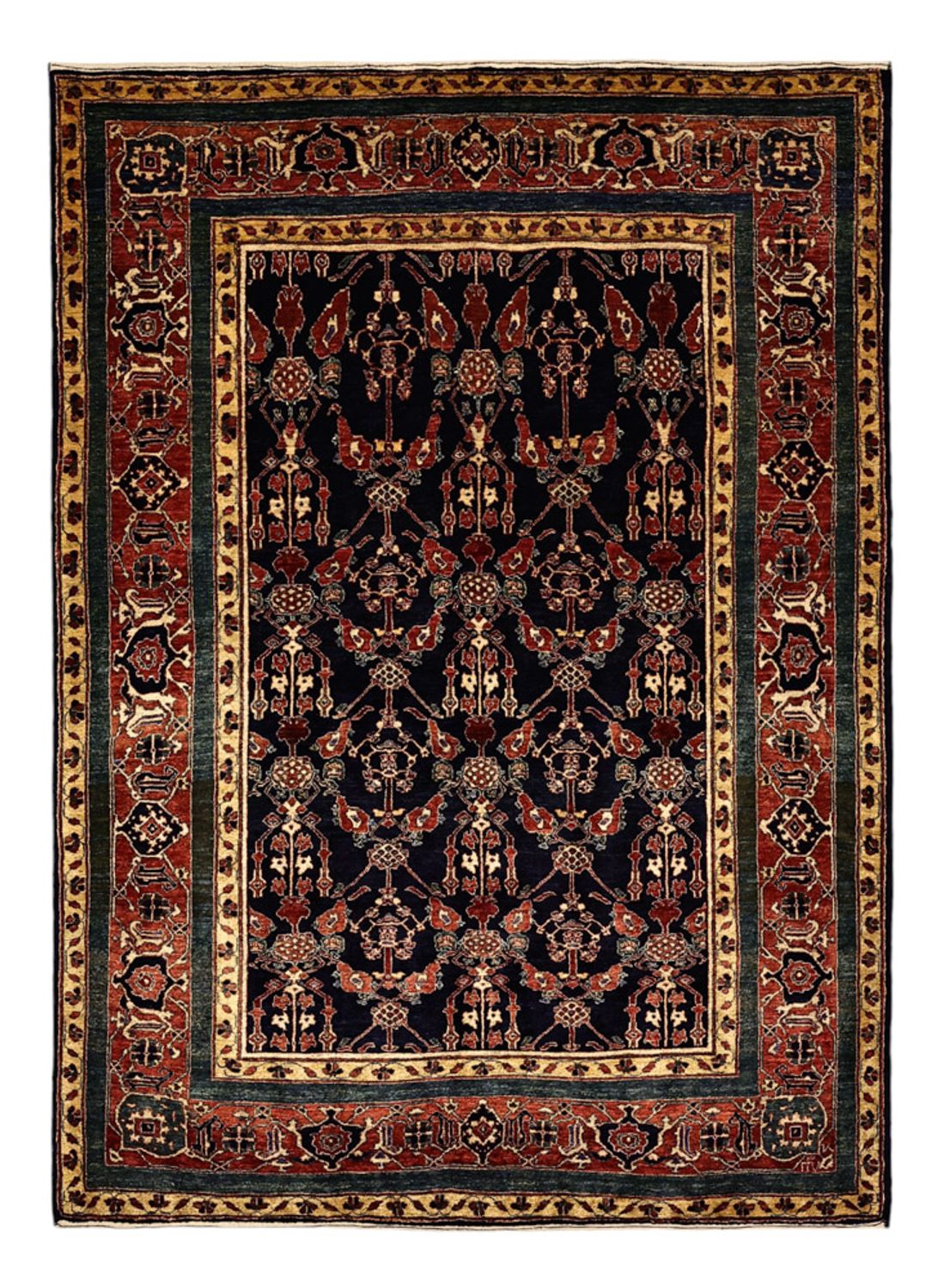
Photo: Morgenland Rugs
Shiraz rugs are hand-knotted nomad rugs of the tribes from the Fars province in southern Persia. The name stands not for a single tribe but for the tribal ware of the region that traditionally went into trade via the market of the city of Shiraz. These rugs are knotted above all by the Qashqai and the Khamseh confederation. Characteristic are geometric medallions, bold reds and blues, and a sturdy, serviceable construction.
What is a Shiraz rug?
A Shiraz, strictly speaking, is not an urban rug but a collective term for the nomadic and semi-nomadic knotting of the Fars tribes traded via Shiraz. The city was a trading place and gathering market on which the goods of the surrounding tribes converged and were resold under the name Shiraz. Many pieces labelled Shiraz therefore arise in smaller villages and camps of Fars.
The Shiraz thus belongs to the tribal Persian rugs. It shares its origin with the Qashqai, the Kashkuli, and the Gabbeh, but as a trade term it is broader and covers a larger range of quality.
Origin
Shiraz is the capital of the Fars province and lies about 900 kilometres south of Tehran. The region has been home for centuries to nomadic and semi-nomadic tribes, above all the Turkic-speaking Qashqai and the mixed Khamseh confederation, which united Arab, Turkic, and Persian groups. Both traditionally followed seasonal migration routes between winter and summer pastures.
Rug production is adapted to this way of life and often took place in the winter months. Shiraz itself served less as a knotting place than as a trading hub. This role as a market explains why the name Shiraz became a parent label for all the Fars tribal ware, similar to how Hamadan in western Iran stands as a collective label for village rugs.
Patterns and colours
Shiraz rugs usually show one or several central medallions in diamond form, surrounded by smaller geometric elements. Stylised animal motifs such as birds, deer, or dogs as well as strongly abstracted plant forms are common. A recurring feature are zigzag lines and stepped contours that come from the nomadic weaving tradition and give the field rhythm.
The palette is dominated by warm reds and deep blues, complemented by white, black, and occasionally yellow or green. The borders usually consist of several narrow stripes with repeating geometric patterns. With naturally dyed pieces, hand-dyed wool produces lively colour gradients, the abrash.
Material and knotting technique
Shiraz rugs are knotted predominantly from sheep's wool. The pile is sheep's wool from local flocks, while warp and weft are wool or cotton depending on the piece. The wool is traditionally dyed with natural colours; today synthetic dyes also appear. The edges are often given characteristic braids or colourfully wrapped selvedges and fringes.
Knotting uses the asymmetric Persian knot, the Senneh knot. Weave density varies by origin and knotter: ware from the closer surroundings of the city tends to be finer, pure nomad pieces coarser. The robust construction reflects the original purpose as a working rug of nomadic life. How a rug is made on the loom is described in the overview of production, where the materials used are also explained.
Knot density and quality
The knot density of a Shiraz typically lies between 60,000 and 150,000 knots per square metre, with a medium-long to long pile. Because Shiraz is a collective term, quality varies noticeably: from plain, coarse nomad ware to carefully worked pieces from the city's surroundings.
How knot density influences quality and price is covered in its own article. With the Shiraz it is worth judging the specific piece rather than only the name: wool quality, purity of dyes, cleanness of pattern guidance, and preservation are more telling than the label alone.
Shiraz and related Fars nomad rugs compared
| Style | Relation / origin | Knot density | Character |
|---|---|---|---|
| Shiraz | collective label for Fars tribal ware | approx. 60,000 – 150,000 / m² | trade term, geometric medallions |
| Qashqai | Qashqai confederation, Fars | approx. 80,000 – 180,000 / m² | medallions, animal motifs, lively colours |
| Kashkuli | Qashqai subgroup, Fars | approx. 100,000 – 250,000 / m² | finest nomadic knotting |
| Yalameh | Qashqai-related tribe, Fars | approx. 60,000 – 140,000 / m² | rows of diamond medallions |
| Gabbeh | Qashqai and Lori, Fars and Zagros | approx. 40,000 – 200,000 / m² | coarse, high-piled, abstract |
| Abadeh | town of Abadeh, Fars | approx. 100,000 – 200,000 / m² | clear medallion, Herati scatter |
What is a Shiraz rug worth?
The value of a Shiraz depends on age, condition, size, knot density, wool quality, dye, and the precise origin within Fars. Plain nomad pieces are affordable and count among the lower-priced hand-knotted Persian rugs. Older, finely worked examples dyed purely with natural dyes, especially those that can be assigned to a known tribal group, sit considerably higher.
Hand-spun wool, natural colours with lively abrash, and a clearly drawn medallion all build value. A market-value placement is in the rug value overview and the general buying guide.
How can you tell a genuine Shiraz rug?
Typical features of an authentic Shiraz include:
- Geometric medallions: one or several diamond medallions with geometric scatter motifs.
- Zigzag and stepped patterns: stepped contours and zigzag lines point to the nomadic tradition.
- Wool pile with bold red and blue: warm, saturated base tones with bright accents.
- Wrapped selvedges and braids: the edges are often secured or plaited with coloured wool.
- Hand-knotted back: the pattern stands out clearly; small irregularities betray the handwork.
- Fringes as part of the warp: the fringes are extended warp threads, not sewn on.
Since Shiraz is a collective label, individual pieces vary widely. How authenticity and origin can be tested is shown in the identifying rugs guide, supplemented by identifying provenance.
Care
The robust wool construction of a Shiraz is suited to daily use and easy to care for. Regular vacuuming in the direction of the pile is enough; with a longer pile, without a rotary brush. Blot spills at once with clear water, do not rub. Professional cleaning every few years preserves the wool. Long, direct sunlight will fade natural dyes. Detailed guidance is in the care overview.
Frequently asked questions
What is the difference between Shiraz and Qashqai?
Shiraz is a trade and collective term for the tribal ware of the Fars province traded via the city of Shiraz. The Qashqai specifically denotes the rugs of the Qashqai confederation. Many Shiraz rugs are Qashqai work, but the term Shiraz also covers other tribes of the region such as the Khamseh.
Why are rugs from Fars often called Shiraz?
Because the city of Shiraz was the central trading market of the region for centuries. The goods of the surrounding tribes converged there and went into trade under the name Shiraz, similar to how Hamadan serves as a collective label in western Iran.
What does a Shiraz rug cost?
Plain nomad pieces are affordable; older and finely worked examples sit considerably higher. Price is set by age, condition, size, knot density, wool quality, and dye.
Are Shiraz rugs suitable for daily use?
Yes. The robust construction and the medium knot density make them hard-wearing. They were originally knotted as working rugs for nomadic life and suit heavily used rooms well.
How do I recognise a genuine Shiraz?
By the geometric diamond medallions, the zigzag and stepped patterns, the wool pile with bold red and blue, and the wrapped selvedges. The hand-knotted back shows the pattern clearly; the fringes are part of the warp.
How do I care for a Shiraz rug correctly?
Vacuum regularly in the direction of the pile, blot spills at once with clear water and do not rub. Professional cleaning every few years and protection from long, direct sunlight preserve wool and colours.
Impressions of the origin
Places, landscapes and landmarks around the home of Shiraz rugs. Click any image for a larger view.
Related styles
Qashqai
Qashqai rugs are knotted by the eponymous nomadic tribe in Fars Province and stand out with their distinctive medallion style.
Abadeh
Abadeh rugs come from the eponymous town between Isfahan and Shiraz and stand out with their clean geometric medallions.
Gabbeh
Gabbeh rugs are coarsely knotted by Qashqai nomads in the Zagros and feature long pile and abstract symbolism.


