Kerman rugs: floral palmettes from southeast Iran
Kerman rugs from southeastern Iran are renowned for their elegant floral designs and refined color palette.
- Region
- Persia / Iran
- Category
- Persian rugs
- Manufacturing
- Hand-knotted
- Knot density
- 150,000 – 500,000 knots/m²
Profile
- Manufacturing
- Hand-knotted
- Origin
- Iran — city of Kerman, Kerman Province
- Pile material
- Wool on cotton
- Knot density
- 150,000 – 500,000 knots/m²
- Features
- Floral designs, elegant colors, fine knotting
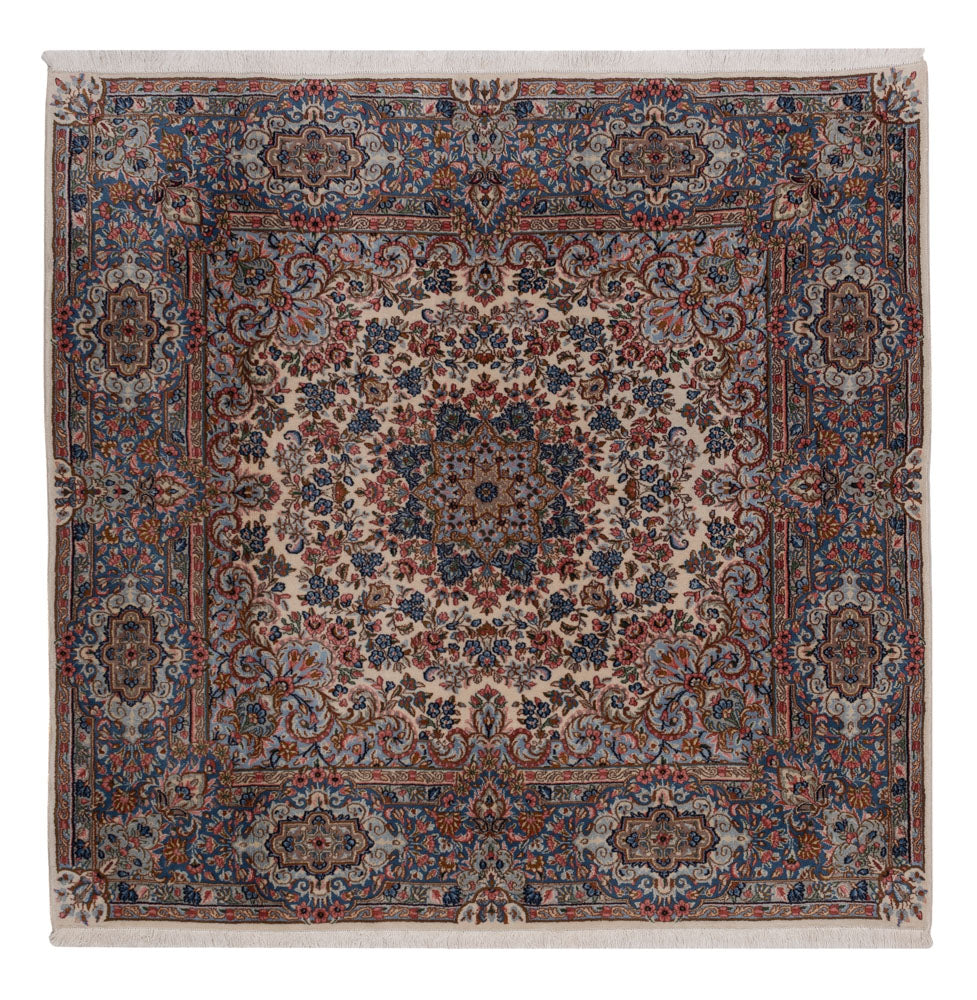
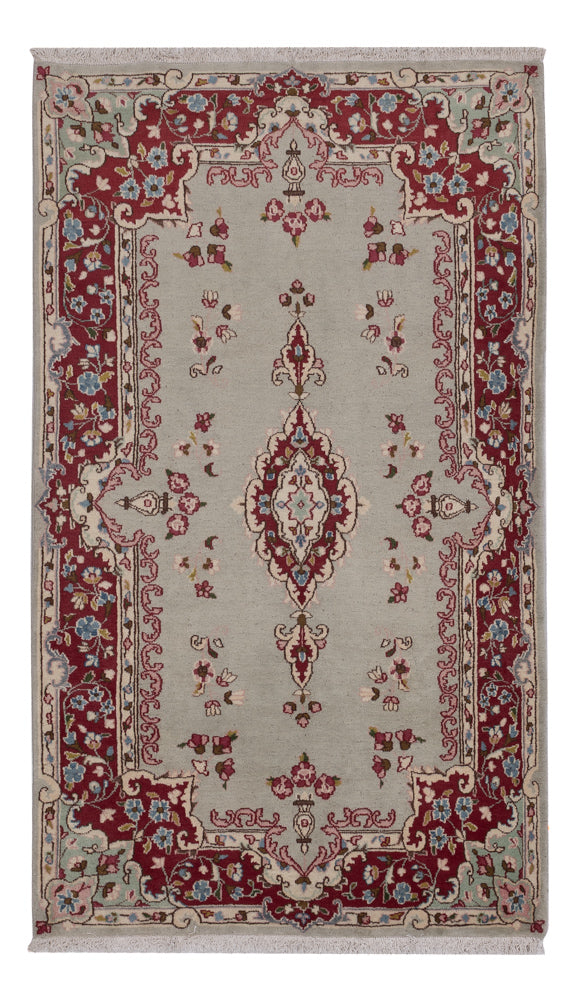
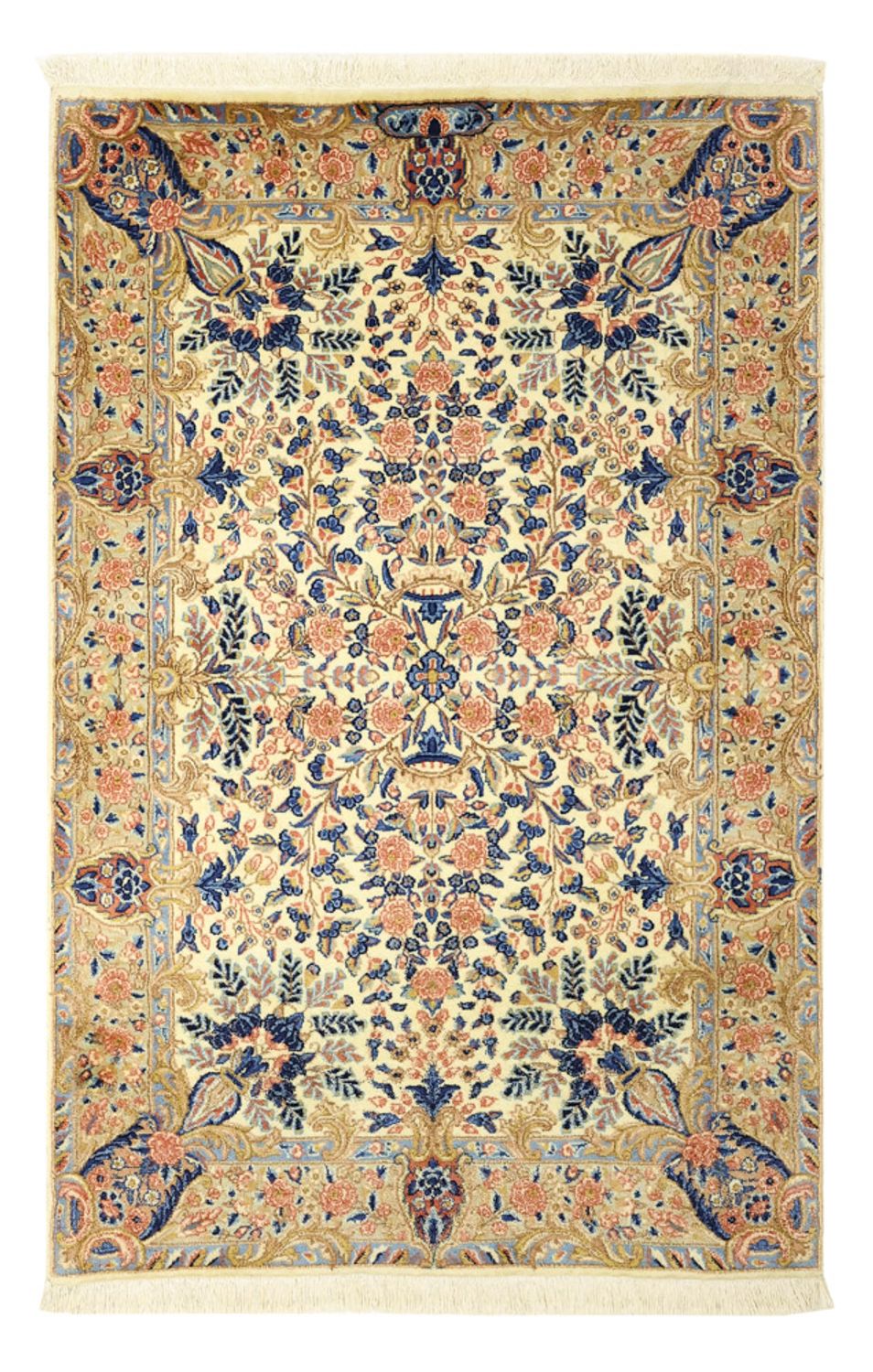
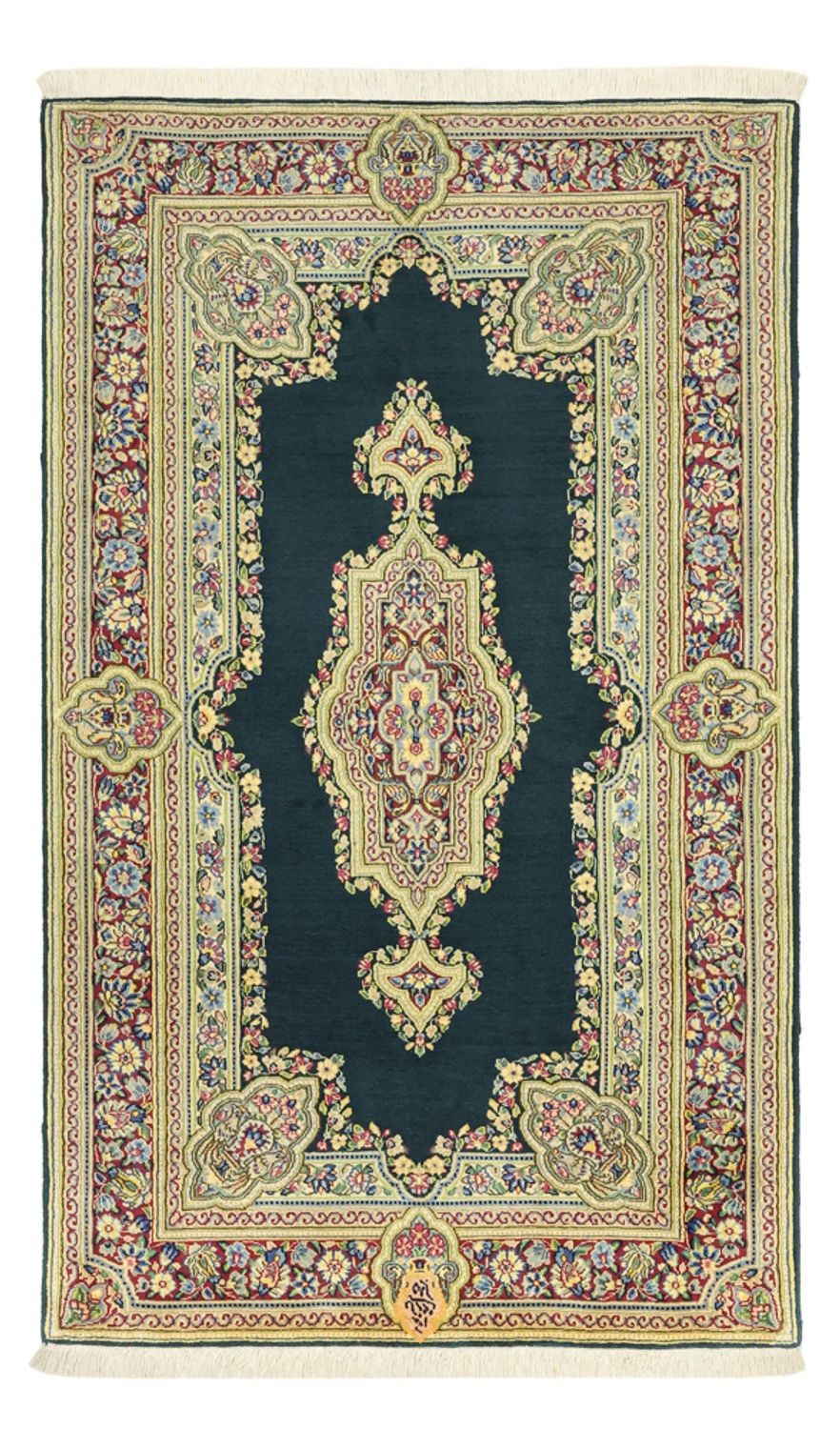
Photo: Morgenland Rugs
Kerman rugs are fine hand-knotted Persian rugs from the city of Kerman in southeast Iran, known for their richly detailed floral patterns and their soft, harmonious palette. The region looks back on a knotting tradition reaching to the Safavid era and experienced a second bloom around 1900 through the American market. Characteristic are complex palmette and vine patterns, often on an ivory ground, and the fine asymmetric knotting.
What is a Kerman rug?
A Kerman is a hand-knotted rug from the city of Kerman and the province of the same name in southeast Iran. It is knotted with the asymmetric Persian knot on a warp of cotton; the pile is traditionally made of high-quality virgin wool, in top qualities also with silk accents or entirely of silk. Knot density ranges from around 300,000 to over 1,000,000 knots per square meter. Characteristic are the low-cut pile and the fine, curvilinear floral patterns.
Origin: city and province of Kerman
Kerman lies at about 1,750 meters elevation in the southeast of Iran and has been a major center of Persian rug knotting for centuries. Historically the city was an important trading point on the Silk Road, which is reflected in the variety of patterns. Knotting saw its first major bloom in the 16th and 17th centuries under the Safavid dynasty, when elaborate vase and garden rugs emerged in Kerman that today are among the most sought-after antique Persian rugs.
A second bloom followed in the late 19th and early 20th centuries, when American dealers in particular strongly drove demand for Kerman rugs. During this period the so-called American Kerman variant emerged with larger, more open patterns tailored to Western taste. In the 1920s and 1930s, Kerman even produced rugs with European motifs such as flower bouquets or portraits. Production was interrupted several times by political upheaval and economic sanctions, which makes authentic older Kermans sought-after collector items.
Typical characteristics
Kerman rugs are distinguished by exceptionally fine and richly detailed patterns. Characteristic are complex floral designs with palmettes, rosettes, and arabesque vines. A medallion pattern with a central motif, surrounded by symmetric ornaments and richly filled corner spandrels, is often found. Many Kermans have a cream or beige ground that emphasizes the elaborate patterns. Alongside this stand all-over compositions without a medallion, such as the continuous boteh or blossom pattern. The selvedges are usually reinforced and kept in contrasting colors. A special chapter is the American Kerman variant with its more generous, more open patterns.
Patterns and colors
The palette of a Kerman is typically rich but harmonious and softly graded. Dominant tones are red, blue, beige, and ivory, often complemented by delicate rose, green, and gold nuances. Characteristic is the flowing, painterly effect of the floral patterns, which sets Kerman apart from the more strictly drawn northern Persian provenances such as Tabriz. While a Nain relies on the light beige-blue play, the Kerman feels warmer and more colorful, with a leaning toward floral abundance. In this floral tradition, Kashan and Sarouk stand close to it, even if their palette is usually stronger.
Material and knotting technique
Kerman rugs are traditionally knotted from high-quality sheep's wool, with the warp usually cotton. The wool of the region is considered soft and well-suited to dyeing, which favors the finely graded colors. Premium examples can contain silk threads for special accents or be made entirely of silk. The pile is sheared relatively low, which emphasizes the precision of the patterns. The fiber knowledge is covered in the materials area.
Only the asymmetric Senneh knot, the Persian knot, is used. It allows the fine, curvilinear pattern resolution Kerman is known for and is the prerequisite for the high knot densities of the best qualities. The complete production process is described in the production area.
Knot density and quality
Knot density is one of the most important quality markers of a Kerman. It ranges from around 300,000 knots per square meter in good standard qualities to over 1,000,000 knots in the finest pieces. The finer the knotting, the more detailed the floral pattern and the higher the workload. Kerman uses no own fineness measure such as the Raj system of Tabriz or the La grades of Nain, but is placed via the pure knot count and the origin of the sub-style. What knot density says is explained in the essay knot density explained; the fineness measures of other provenances are covered in the essay La grades explained.
| Variant / quality | Knots/m² (approx.) | Material | Features |
|---|---|---|---|
| Standard Kerman | 300,000 to 450,000 | wool on cotton | floral patterns, good utility quality |
| American Kerman | 250,000 to 500,000 | wool on cotton | larger, open patterns, light ground |
| Fine Kerman | 500,000 to 800,000 | fine wool, silk accents | detailed vines, low pile |
| Ravar Kerman | 600,000 to over 1,000,000 | finest wool, often silk | top quality, very fine drawing |
| Antique Kerman | variable | wool, natural dyes | Safavid heritage, collector piece |
Particularly fine are the Ravar Kerman (also Lavar Kerman) from a village north of the city, whose drawing and knotting are among the highest quality of the region.
What is a Kerman rug worth?
The value of a Kerman depends on knot density, material, size, age, condition, and sub-style. Standard qualities sit within the range of good Persian rugs, while fine Ravar Kermans and antique pieces from the Safavid era or early trading period reach markedly higher prices. Authentic older Kermans have become rare due to repeated production interruptions and are accordingly sought after. A single fine Kerman can take several years to produce, which explains the price of high-quality pieces.
Whether a Kerman is an investment depends on rarity, condition, and provenance; there is no guarantee of appreciation. For placement, identify valuable Persian rugs, the value overview, and the general buying guide help.
How do you recognize a genuine Kerman rug?
Typical signs of a genuine Kerman include:
- Very high knot density and low pile: the fine floral pattern shows clearly on the back.
- Asymmetric Senneh knot: Kerman is knotted exclusively with the Persian knot.
- Soft, harmonious palette with a cream or beige ground and finely graded tones.
- Reinforced, contrasting selvedges as a regionally typical detail.
- Considerable weight from the dense knotting, a sign of good quality.
- Fringes as part of the fabric: the fringes are the extended warp threads, not sewn on afterwards.
The Kerman should be distinguished from rugs made in India in the Kerman or Kashan style, marketed in the trade as Indo-Kashan, which do not reach the fineness of the originals. A step-by-step guide is given in Is my rug genuine?; the basics are in recognize oriental rug.
Care
Kerman rugs should be vacuumed regularly but gently in the pile direction. Professional cleaning is advisable every three to five years. Direct sunlight bleaches the fine natural dyes over the years and should be avoided. With stains, quick action is important, while harsh cleaners should be avoided. Blot stains carefully with clear water, without rubbing. With silk-containing pieces, a specialized firm should always be involved. Detailed notes are in the care overview.
Frequently asked questions
What does a Kerman rug cost?
The price depends on knot density, material, size, age, condition, and sub-style. Standard qualities are more affordable, fine Ravar Kermans and antique pieces markedly more expensive. Authentic older Kermans are rare and accordingly sought after.
How do I recognize a genuine Kerman?
By the high knot density with low pile, the asymmetric Senneh knot, and the soft, harmonious palette on a mostly light ground. Typical are the reinforced, contrasting selvedges and a weight that is considerable due to the dense knotting.
What is a Ravar Kerman?
Ravar Kerman, also called Lavar Kerman, are particularly fine Kermans from a village north of the city. They are considered the highest-quality variant of the region, with very fine drawing, high knot density, and often silk accents.
Why are Kerman rugs so expensive?
The prices come from the elaborate handwork, the high knot density, and the long production time. A single fine Kerman can take several years. Antique and rare pieces are additionally in demand due to repeated production interruptions.
What is the difference between Kerman and Tabriz?
Kerman comes from the southeast of Iran and stands for soft, lush floral patterns in a harmonious palette. Tabriz comes from the northwest, is more versatile in motif, often more strictly drawn, and classified in Raj. Both use the Persian knot.
What is an American Kerman?
This is the name for Kerman rugs knotted in the early 20th century for the American market. They show larger, more open patterns and often a light ground, tailored to the Western taste of the time.
How do I care for a Kerman rug properly?
Vacuum regularly and gently in the pile direction and have it professionally cleaned every three to five years. Avoid direct sun, blot stains immediately and carefully with clear water, without rubbing. Silk-containing pieces belong in the hand of a specialized firm.
Impressions of the origin
Places, landscapes and landmarks around the home of Kerman rugs. Click any image for a larger view.


