Koliai rugs: Kurdish village knotting west of Hamadan
Koliai rugs are knotted by Kurdish tribes in western Iran and combine geometric motifs with a robust pile.
- Region
- Persia / Iran
- Category
- Persian rugs
- Manufacturing
- Hand-knotted
- Knot density
- 80,000 – 160,000 knots/m²
Profile
- Manufacturing
- Hand-knotted
- Origin
- Iran — Kermanshah region, Kurdish tribes
- Pile material
- Wool on cotton
- Knot density
- 80,000 – 160,000 knots/m²
- Features
- Tribal Kurdish motifs, robust pile, geometric medallions
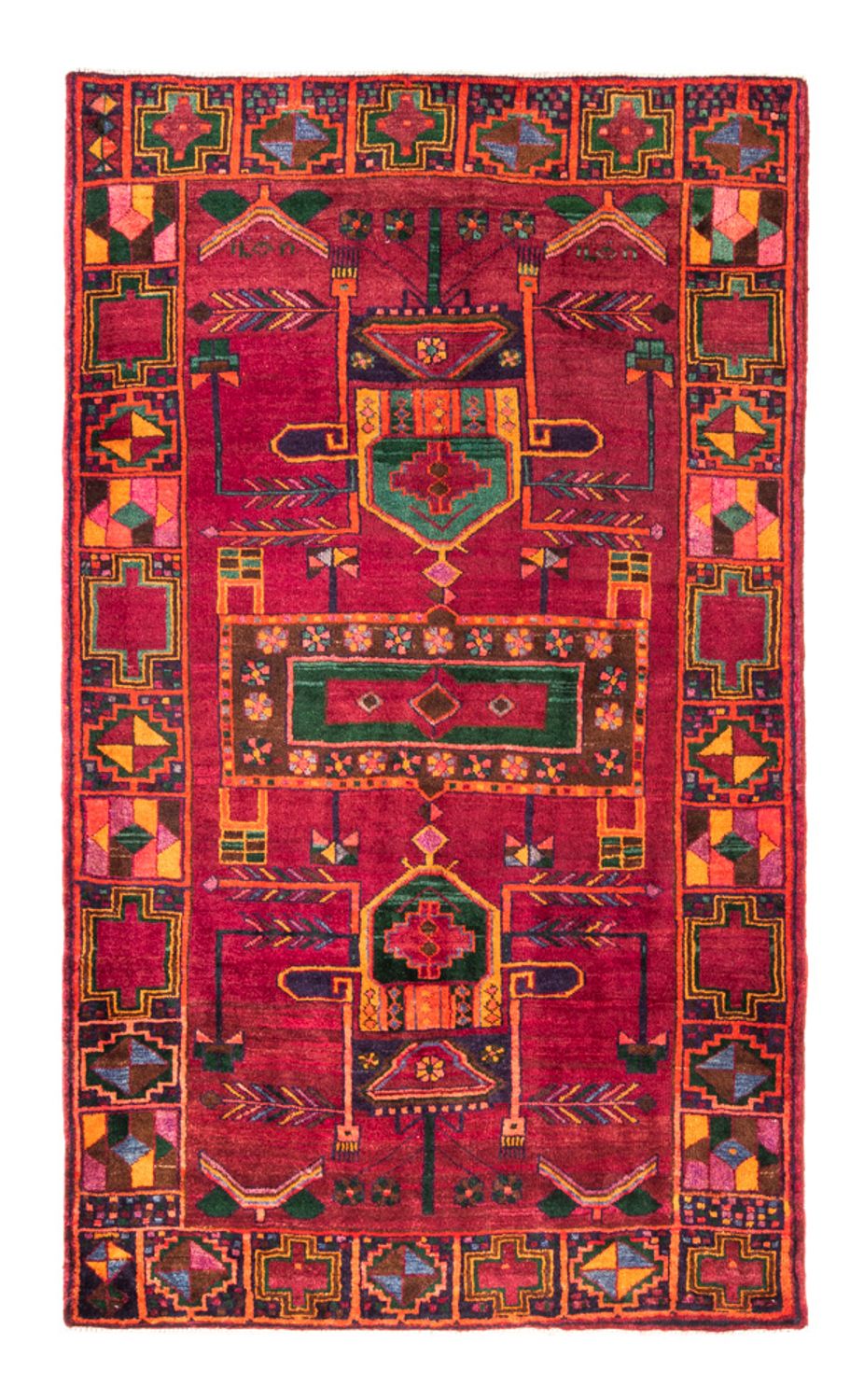
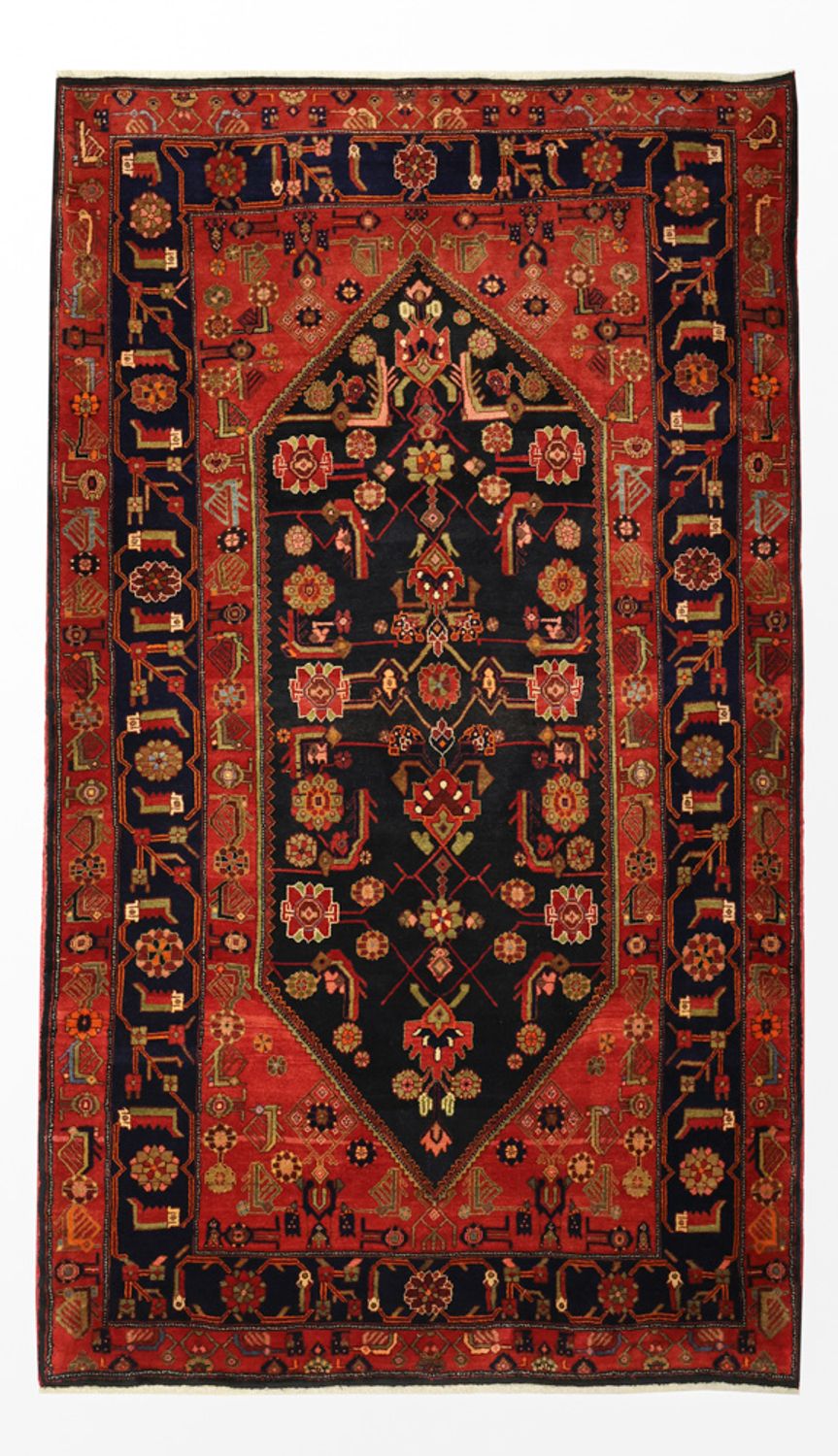
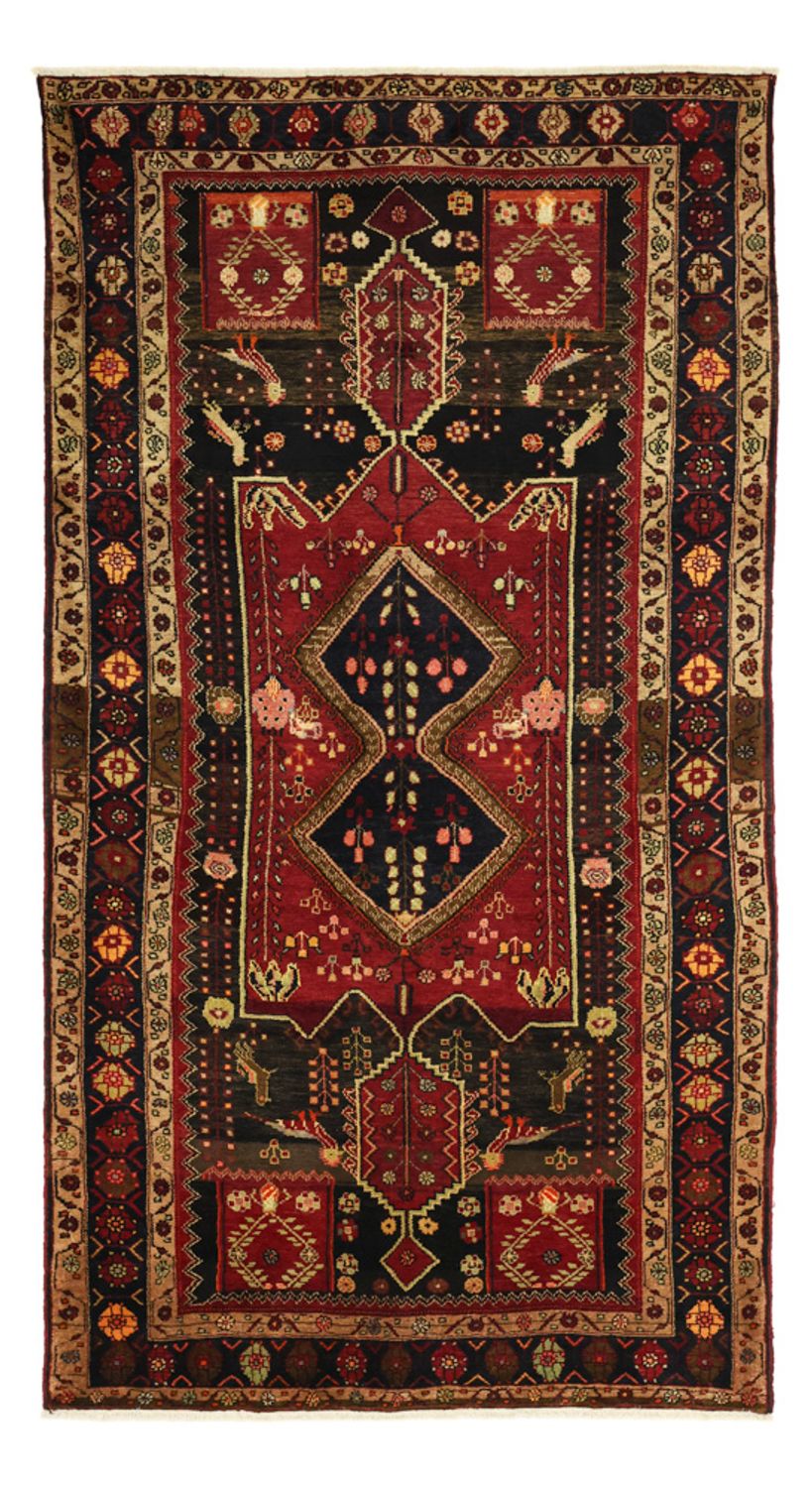
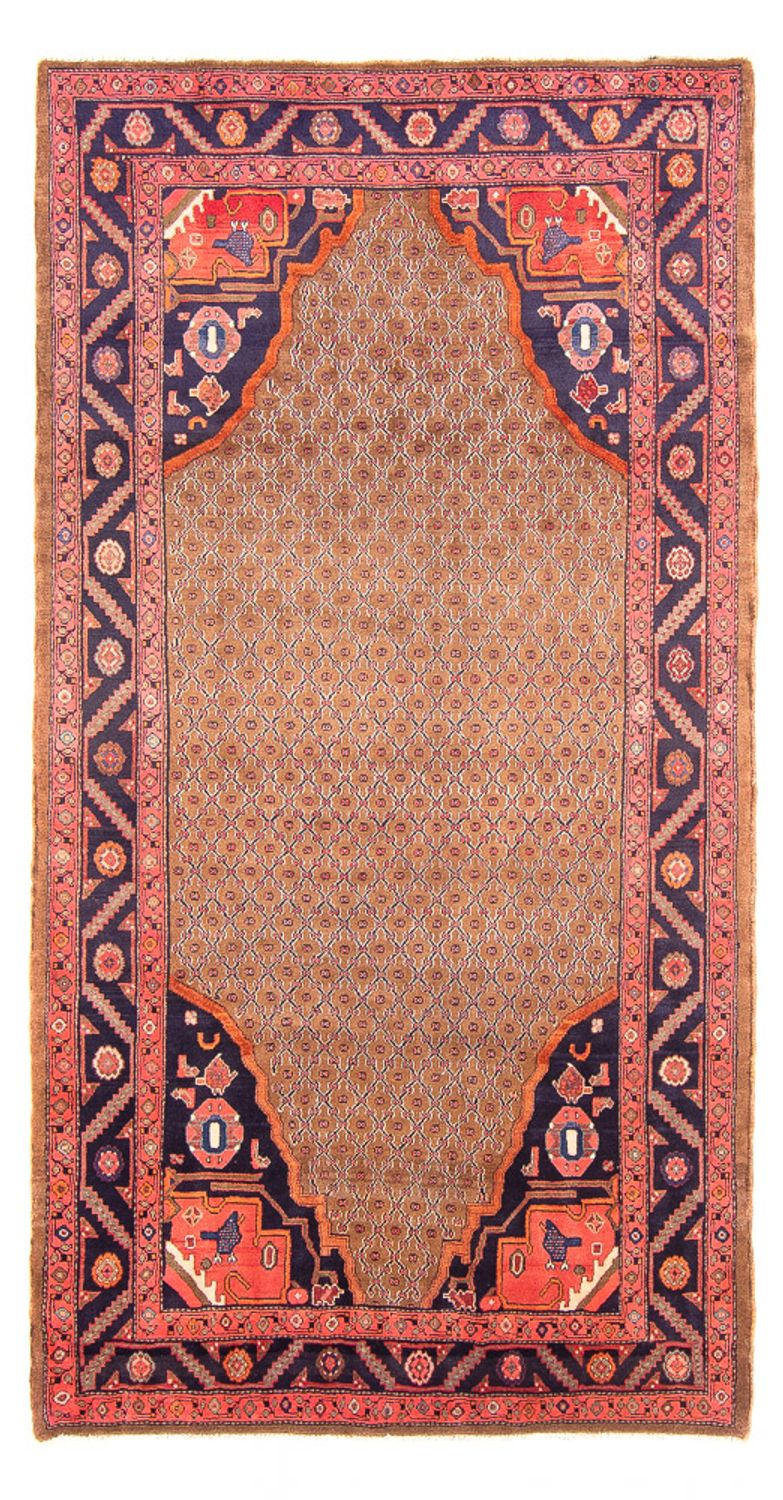
Photo: Morgenland Rugs
Koliai rugs are robust hand-knotted Persian rugs of the Kurdish Koliai tribe west of the city of Hamadan in western Iran. They count to the wide family of Hamadan rugs but carry the unmistakably Kurdish, boldly geometric hand of the region. With their heavy wool and the firm knotting they belong to the most long-lived western Persian village rugs. This article explains origin, pattern, material and knotting technique, value and authenticity markers of a Koliai rug.
What is a Koliai rug?
A Koliai is a hand-knotted village and tribal rug made by the Kurdish Koliai tribe in the mountains west of Hamadan. Characteristic are a bold geometric central medallion, a colour scheme of red, anthracite and ivory, a cotton warp and a heavy wool pile knotted with the symmetrical Turkish knot. This geometric, tribal-near drawing links the Koliai with the wider Kurdish knotting tradition of western Persia.
Koliai rugs are often run in the trade simply as Hamadan, since they belong to the same widely defined region. As with many tribal and village provenances, the term is not narrowly bounded: under the name run pieces of varying quality, from the plain, boldly patterned utility work to more carefully drawn pieces.
Origin
The Koliai area lies west of the city of Hamadan in the mountains of western Persia, on the border between Hamadan province and Kurdish-inhabited western Iran. The Koliai are a Kurdish tribe with a long knotting tradition, mainly practised by the women and passed on across generations. Knotting was traditionally done on simple horizontal looms that transport well, which corresponded to the partly semi-nomadic way of life.
The whole region belongs to the wide Hamadan rug belt, in which several hundred settlements knot and traditionally sell their work through the markets. Through the Kurdish shaping, the Koliai at the same time shows references to the neighbouring Kurdish knotting tradition around Senneh and Bidjar. In recent decades many Koliai families have settled, which is also mirrored in larger available formats. Related and neighbouring provenances include Hamadan itself, Nahavand, Touiserkan and Bidjar.
Pattern and colour
Koliai rugs are boldly geometrically drawn, often with reference to nature. Widespread is a central, stepped central medallion; alongside this occur allover arrangements with stylised blossoms, trees and occasionally animal motifs. The drawing shows clear influences of the Kurdish Senneh tradition but is more coarsely and tribally executed. The borders are multi-tiered and take up traditional Persian and Kurdish motifs.
The colour palette is warm and bold. Reds, anthracite and deep blue frequently form the ground field, complemented by ivory, brown and accents in green. Characteristic is the combination of bold earth tones with clear contrasts. For red the historical dye was madder, for blue indigo. Slight colour deviations (abrash) are usual with hand-dyed tribal wool and speak for grown handwork.
Material and knotting technique
Koliai rugs are knotted on a warp of cotton; the weft consists of cotton or wool. The pile is of strong virgin wool, frequently from the tribe's own herds, valued for its robustness, good felting and natural lanolin content. An overview of the fibres used is offered by the survey of materials.
It is knotted with the symmetrical Turkish knot, also called the Ghiordes knot, as typical of the entire Hamadan region. This distinguishes the Koliai from many other Persian provenances that use the asymmetrical Senneh knot, and is not to be confused with the place Senneh, which gave the knot its name. The differences of both knot types are explained in the overview of knot types; the whole process from warping to shearing is described in the article on rug manufacture. The pile is medium-long and gives the Koliai its firm, heavy feel.
Knot density and quality
The knot density of Koliai rugs typically lies between around 80,000 and 160,000 knots per square metre, placing them in the medium quality category. This density enables the robust, heavy quality that tribal use demands. What knot density says about fineness and price in detail is covered in its own article.
Quality is decided, besides density, above all by wool quality, the clarity of the geometric drawing, the saturation of the colours and the condition. Older Koliais often show hand-spun wool and natural colour nuances, while plainer trade qualities can be more coarsely worked. Koliais count as particularly durable and are gladly used as long-lived utility rugs.
| Provenance | Relation to Koliai | Typical features |
|---|---|---|
| Koliai | Kurdish provenance in the Hamadan belt | geometric central medallion, Turkish knot, heavy wool |
| Hamadan | umbrella term and region | robust village rugs, single weft, geometric |
| Senneh | Kurdish neighbour tradition | very fine, geometric, name-giving for the Persian knot |
| Bidjar | neighbouring Kurdish knotting region | extremely dense and heavy, very lasting |
| Nahavand | nearby region, related style | geometric medallion or Herati |
| Touiserkan | surrounding region, partly Kurdish | village knotting, traditional patterns |
What is a Koliai rug worth?
The value of a Koliai rug depends on age, condition, size, knot density, pattern clarity, wool quality and dyeing. As robust tribal and village rugs of the medium category, Koliais are mostly more affordable than fine Persian manufactory work such as Nain, Isfahan or Ghom. Well-preserved older pieces with hand-spun wool, natural colours and bold geometric drawing can however be worth considerably more than plain new trade qualities and are sought after among lovers of Kurdish rugs.
For a grounded assessment a look at the overview what is my rug worth? and at the article recognising valuable Persian rugs is worthwhile. Practical guidance on selection and purchase is given in the buying guide.
How do you recognise a genuine Koliai rug?
Typical indicators of a genuine, hand-knotted Koliai include:
- Symmetrical Turkish knot: Koliai, like the whole Hamadan region, uses the Ghiordes knot, unlike many other Persian rugs.
- Bold geometric central medallion in red, anthracite and ivory with Kurdish hand.
- Hand-knotted back: The pattern is clearly recognisable in mirror image; individual knots are visible.
- Genuine fringes: The fringes are the extended warp threads, firmly connected with the ground weave, not sewn on afterwards.
- Heavy, firm wool pile with a robust, tribal-near presence.
- Slight abrash speaks for hand-dyed wool and grown handwork.
Since Koliais are often traded as Hamadan or generally as Kurdish rug, a look at medallion, back, material and condition helps with placement. A general step-by-step check is offered by is my rug genuine?; an overview of the features of hand-knotted rugs is found under recognising hand-knotted.
Care
Koliai rugs of heavy, strong wool are particularly easy to maintain and everyday-capable. Regular vacuuming in the direction of the pile and an occasional professional cleaning preserve colours and pile. Stains should be blotted immediately with clear water, without rubbing. Long direct sunlight fades the colours and should be avoided. An occasional rotation distributes wear evenly. Detailed guidance is set out in the care overview.
Frequently asked questions
Where does a Koliai rug come from?
From the Kurdish Koliai tribe in the mountains west of the city of Hamadan in western Iran, on the border between Hamadan province and Kurdish-inhabited western Iran. The region belongs to the wide Hamadan rug belt.
What distinguishes a Koliai from other Hamadan rugs?
Koliai rugs carry the Kurdish, boldly geometric hand with a striking stepped central medallion and a colour scheme of red, anthracite and ivory. They are often heavier and more tribal-near than the anonymous Hamadan work but share with the region the symmetrical Turkish knot.
Which knot is a Koliai rug made with?
With the symmetrical Turkish knot, also called the Ghiordes knot. This is characteristic of the whole Hamadan region and not to be confused with the neighbouring place Senneh, after which the asymmetrical Persian knot is named. The differences are explained in the overview of knot types.
What does a Koliai rug cost?
The price depends on age, condition, size, knot density, wool quality and dyeing. Plain new pieces are affordable; well-preserved older Koliais with hand-spun wool and bold drawing can cost considerably more among lovers of Kurdish rugs.
Are Koliai rugs suitable for daily use?
Yes. Through the heavy, strong wool and the firm knotting, Koliai rugs are very hard-wearing and ideal for living spaces with normal to high use.
Which sizes are usual for Koliai rugs?
Traditionally smaller to medium formats up to about 2 x 3 metres predominate, since the transportable looms were dimensioned accordingly. Through the increasing settlement of the knotters, larger formats up to about 3 x 4 metres are also available today.
How do I care for a Koliai rug properly?
Vacuum regularly in the direction of the pile, blot stains immediately with clear water without rubbing, and have it professionally cleaned every few years. Avoid long direct sun and rotate the rug occasionally so that wear is distributed evenly.
Impressions of the origin
Places, landscapes and landmarks around the home of Koliai rugs. Click any image for a larger view.


