Golpayegan rugs: floral medallions from Isfahan Province
Golpayegan rugs come from the eponymous town in Isfahan Province and resemble Hamadan pieces but with finer knotting.
- Region
- Persia / Iran
- Category
- Persian rugs
- Manufacturing
- Hand-knotted
- Knot density
- 100,000 – 250,000 knots/m²
Profile
- Manufacturing
- Hand-knotted
- Origin
- Iran — Golpayegan, Isfahan Province
- Pile material
- Wool on cotton
- Knot density
- 100,000 – 250,000 knots/m²
- Features
- Fine knotting, geometric medallions, durable wool
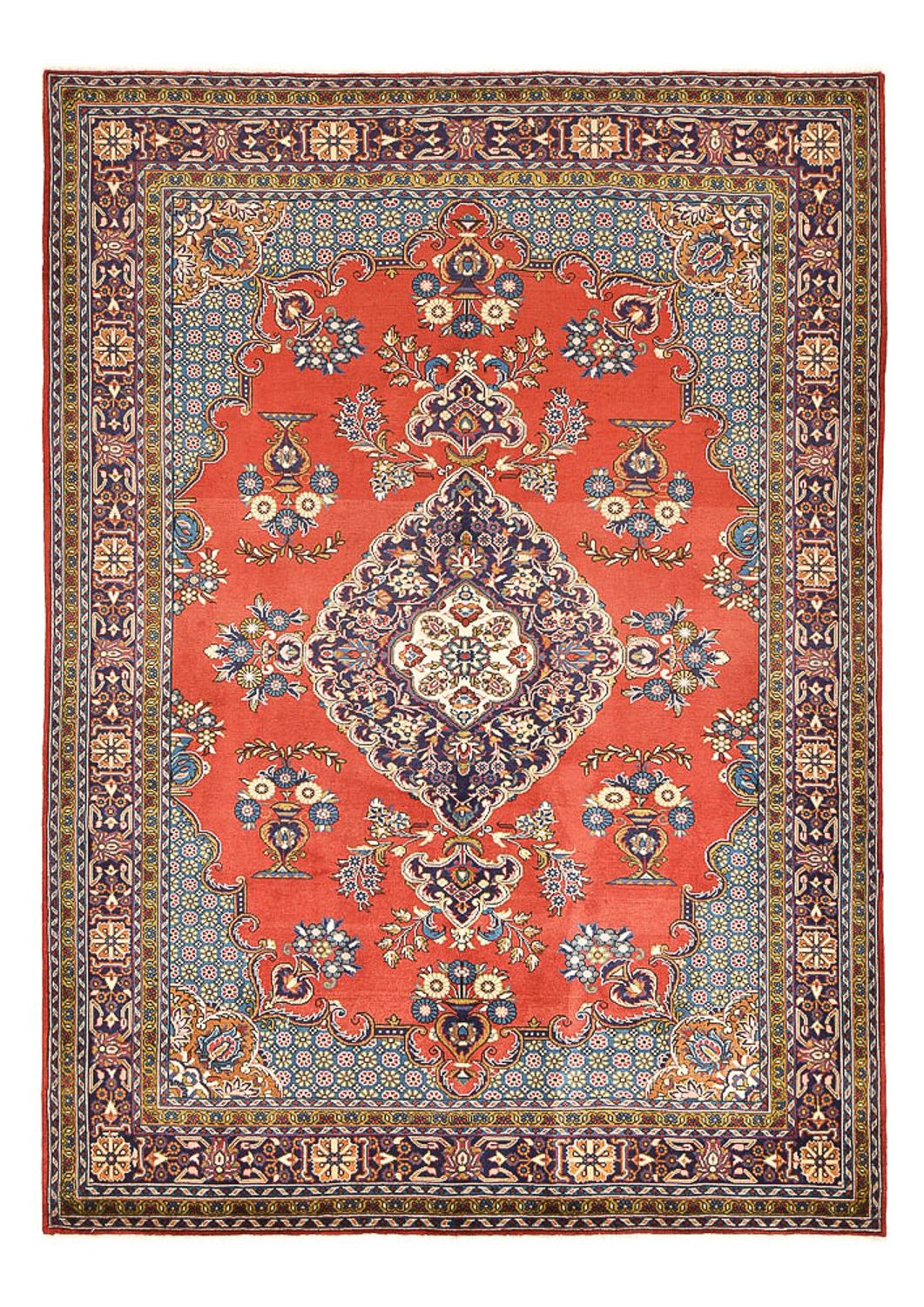
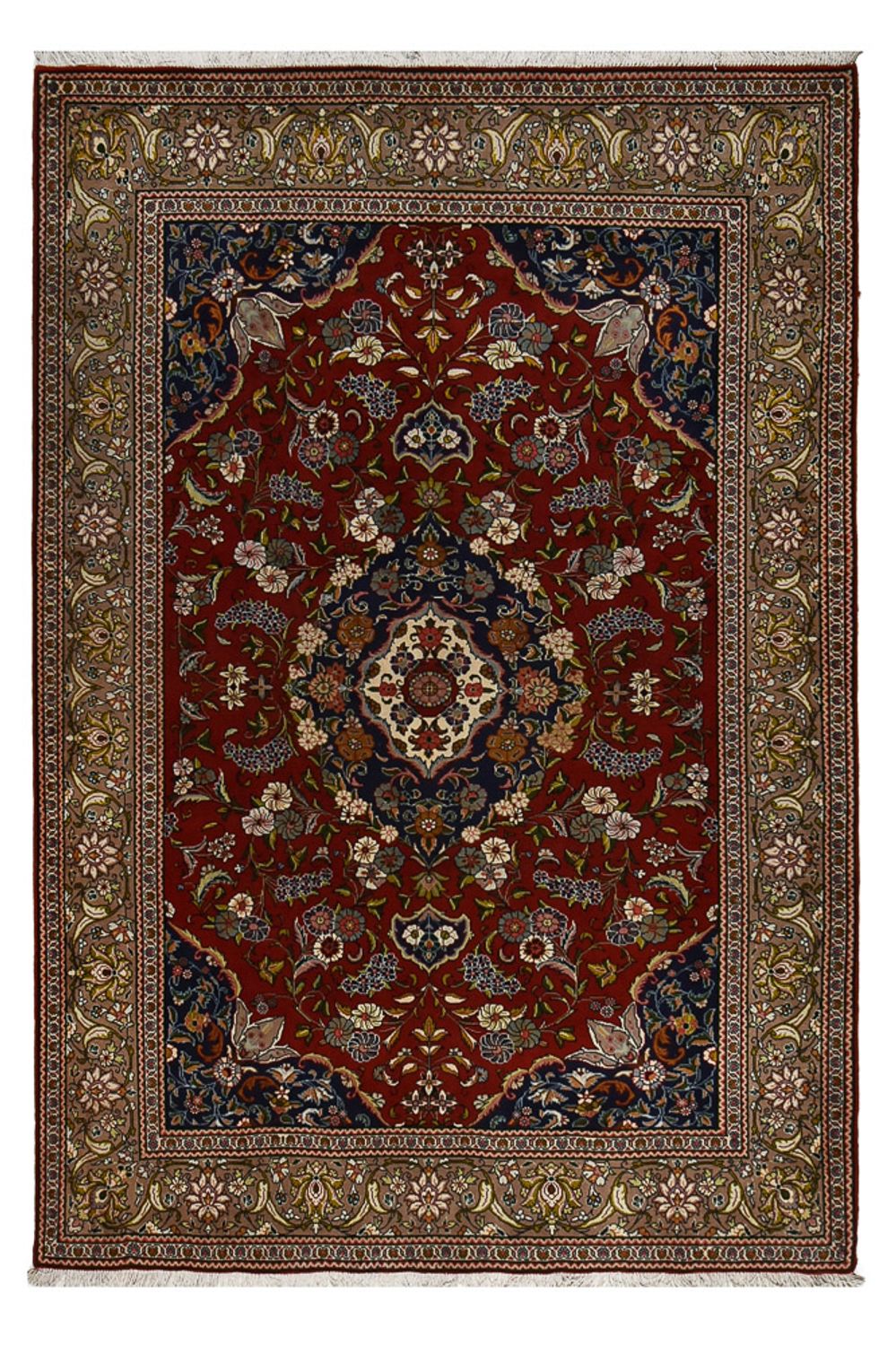
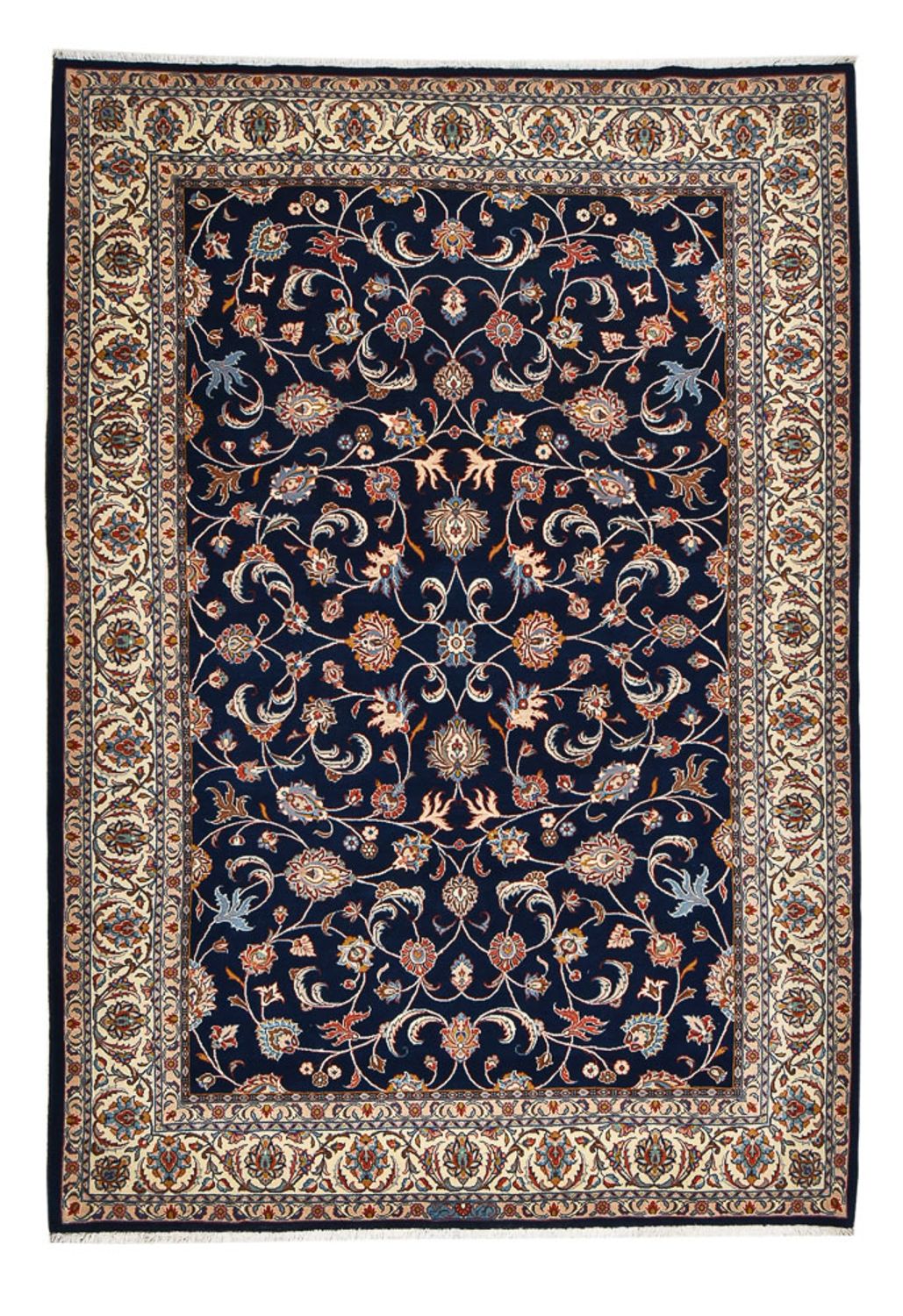
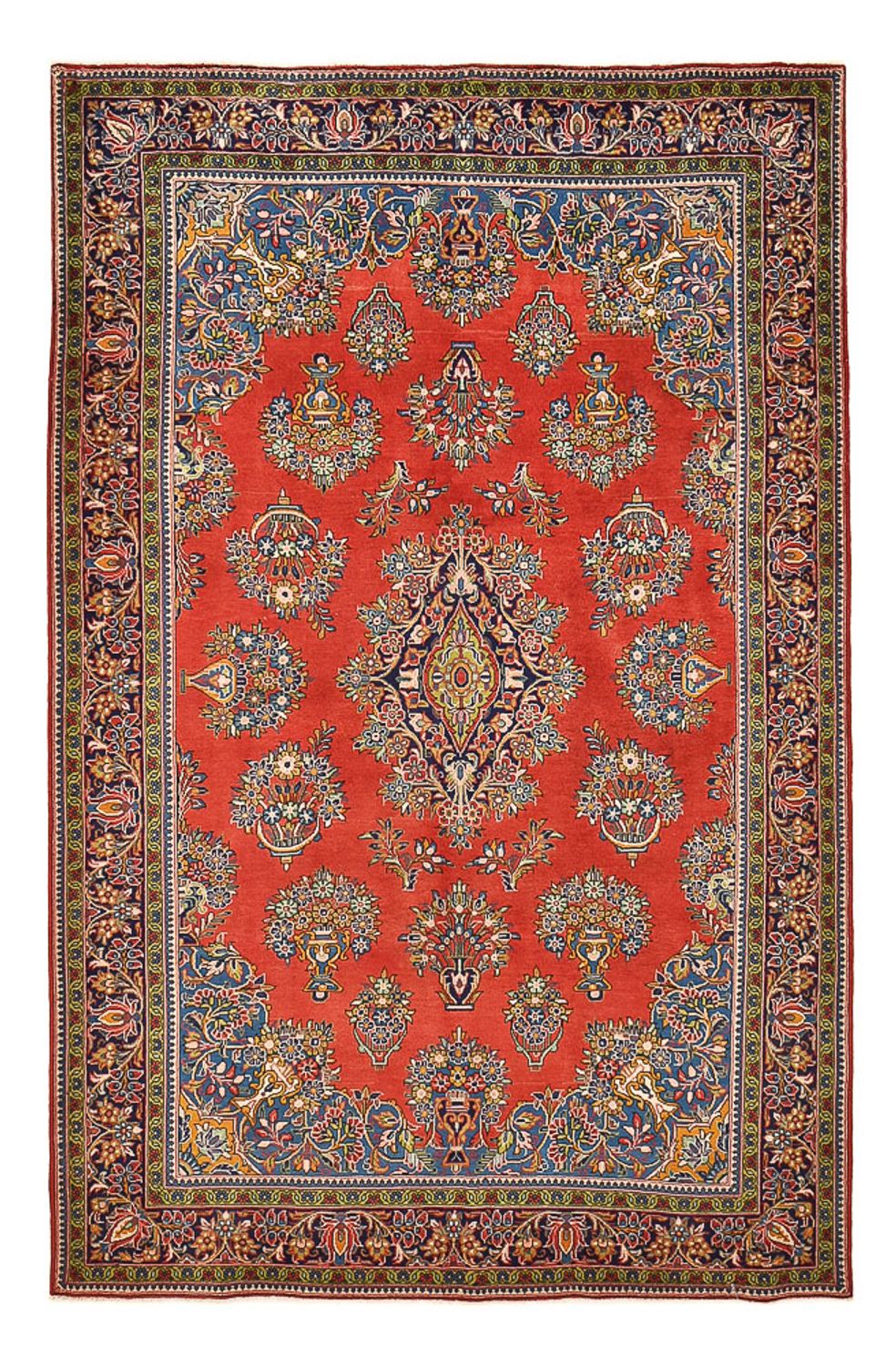
Photo: Morgenland Rugs
Golpayegan rugs are hand-knotted Persian rugs from the town of Golpayegan in the central Iranian province of Isfahan. They combine classical Persian medallion patterns with a balanced, warm palette and count as solid quality rugs with excellent value for money. Characteristic is their position between the great knotting traditions of Isfahan and Hamadan, from which Golpayegan has taken over both floral urban motifs and village robustness.
What is a Golpayegan rug?
A Golpayegan is a hand-knotted rug from Golpayegan and the surrounding workshops in the province of Isfahan. Warp and weft consist of cotton; the pile is high-quality wool from the region. Knotting is done predominantly with the asymmetric Persian knot, also called the Senneh knot. Typical is a central medallion framed by floral and geometric elements, in warm reds, blues and beiges. High-quality pieces can carry silk portions in the pile that emphasise individual pattern elements.
Origin
Golpayegan lies about 180 kilometres north-west of the provincial capital Isfahan in the central highlands of Persia. The town looks back on a centuries-long tradition of rug knotting and was historically an important trading place on one of the connections through which silk and textiles reached the West. This position favoured the early development of the local crafts.
Defining is its position between two great knotting worlds: from nearby Isfahan Golpayegan took over the preference for floral medallion patterns; from the direction of Hamadan, the more robust village construction. There are also stylistic ties to central Persian neighbours such as Najafabad and Mehraban. Thus a style arose that combines urban and village knotting traditions. Many workshops are family-run, and the craft is passed on across generations. The whole tradition belongs to the wider family of Persian rugs.
Typical features
At the centre stands, in most cases, a medallion framed by floral motifs and geometric elements. The motifs combine palmettes, rosettes and stylised flowering branches into a harmonious composition distributed evenly across the field. The borders show classical Persian designs with vine and flower motifs that frame the main field elegantly.
Overall the Golpayegan feels somewhat more traditional and less complex than the finest Isfahan rugs, but retains their Persian elegance. Against the more strongly geometric western Persian village rugs it feels more floral and more balanced.
Patterns and colours
The handling of colour moves mostly in warm reds, blues and beiges, supported by discreet accents in green or gold. The meaning these colours carry in the Persian rug is treated separately. This balanced palette gives the Golpayegan a calm, elegant presence that fits well into a variety of living environments.
Traditionally the yarns are dyed with natural colours; in modern production, synthetic dyes are also used. Both routes can deliver long-lived, colourfast results. The difference is explained in natural versus chemical dyes.
Material and knotting technique
The rugs are knotted on cotton warps; for the pile, high-quality wool from the region is used. Knotting is done predominantly with the asymmetric Persian knot (Senneh knot), which allows for a good rendering of detail in the floral patterns. A survey of the knotting techniques is given in the article on knot types.
The pile height moves in the medium range, which gives the Golpayegan a pleasant feel. Occasionally portions of silk are worked into the pile in order to highlight particular pattern elements and create additional sheen. How a hand-knotted rug is generally made is described in the production overview.
Knot density and quality
The knot density of a Golpayegan typically lies between 150,000 and 300,000 knots per square metre, which allows for a good rendering of detail in the patterns. The Golpayegan thus lies somewhat below the finest Isfahan examples but offers comparable Persian elegance in a solid, daily-suitable execution. How knot density bears on quality, pattern sharpness and price is treated in its own article.
For judging quality, alongside knot density, wool quality, evenness of knotting, clarity of contours and a possible silk content count above all. Finer Golpayegan rugs with a high knot count and silk accents count as the highest grade of this provenance.
| Variant / quality | Knot density (approx.) | Material | Character |
|---|---|---|---|
| Robust everyday quality | 150,000 to 200,000 | wool on cotton | hard-wearing, clear medallion drawing |
| Standard Golpayegan | 200,000 to 260,000 | wool on cotton | even, good depth of detail |
| Fine Golpayegan | 260,000 to 300,000 | fine wool on cotton | precise floral drawing |
| Golpayegan with silk accents | 250,000 to 300,000 | wool and silk on cotton | sheen in individual motifs, high quality |
| Comparison Isfahan | 300,000 to 700,000 | kork wool and silk | finer, more complex, higher price |
What is a Golpayegan rug worth?
The value of a Golpayegan depends on age, condition, size, knot density, wool quality, any silk content and the dyeing. As a solid quality rug, Golpayegans are usually cheaper than the finest examples from Isfahan, but offer comparable Persian elegance. Finer pieces with a high knot density and silk accents lie significantly above simple commercial goods.
In the trade, Golpayegan rugs count as reliable all-rounders with excellent value for money, suited both to daily use and as decorative pieces. For a grounded estimate see recognising valuable Persian rugs, the general value overview and the buying guide.
How do you recognise a genuine Golpayegan rug?
Reliable indicators of a genuine Golpayegan are:
- Asymmetric Persian knot: Golpayegan predominantly uses the Senneh knot, in keeping with the central Persian tradition.
- Central medallion: florally framed medallion with a harmonious, even field filling.
- Warm, balanced palette: red, blue and beige with discreet accents in green or gold.
- Wool pile on cotton ground: medium-high wool pile, with silk accents in fine pieces.
- Classical Persian borders: vine and flower motifs that frame the field in several stripes.
- Hand-knotted back: clearly readable pattern, fringes as extended warp threads.
A step-by-step authentication walk-through is given in Is my rug genuine?; a general orientation can be found in the recognising rugs guide.
Care
Regular vacuuming in the pile direction and the occasional professional cleaning preserve the quality of a Golpayegan. Lift stains immediately with clear water, without rubbing. Long direct sunlight bleaches the colours and should be avoided. Pieces with silk accents should be handled especially gently. Detailed notes are given in the care overview.
Frequently asked questions
How do I recognise a genuine Golpayegan rug?
A genuine Golpayegan is hand-knotted, worked predominantly with the asymmetric Persian knot and made of a wool pile on a cotton warp. Typical are a central florally framed medallion, a warm palette of red, blue and beige, and fringes that are part of the warp.
What does a Golpayegan rug cost?
The price depends on age, condition, size, knot density, wool quality and any silk content. Simple everyday qualities are affordable; finer pieces with a high knot count and silk accents cost more. Overall, Golpayegan rugs usually lie below the finest Isfahan examples.
What is the difference between a Golpayegan and an Isfahan?
Both come from the province of Isfahan and use the Persian knot. The Isfahan is, however, more finely knotted, with more complex curvilinear patterns and often a high silk content. The Golpayegan shows a somewhat coarser knot density and more traditional, less complex patterns, but is more affordable.
Are Golpayegan rugs suitable for daily use?
Yes. The solid workmanship and the medium knot density make Golpayegan rugs hard-wearing pieces well suited to living rooms with normal use. Pieces with silk accents should however be handled more gently.
Do Golpayegan rugs suit modern interiors?
Because of the warm, balanced palette, Golpayegan rugs fit well into modern as well as classical living rooms. They feel calm and elegant without dominating the room visually.
Which sizes are common for Golpayegan rugs?
Golpayegan rugs are knotted in various standard sizes, from smaller formats from about 100 × 150 cm to larger pieces around 300 × 400 cm and above. Medium-sized living-room formats are especially widespread.
How do I care for a Golpayegan rug properly?
Vacuum regularly in the pile direction and have it professionally cleaned every few years. Lift stains immediately with clear water, without rubbing. Avoid long direct sun and handle pieces with silk content especially carefully.
Impressions of the origin
Places, landscapes and landmarks around the home of Golpayegan rugs. Click any image for a larger view.