Joshaghan rugs: unchanged diamond pattern from central Persia
Joshaghan rugs come from a village near Kashan and stand out with their distinctive diamond lattice in finely knotted compartments.
- Region
- Persia / Iran
- Category
- Persian rugs
- Manufacturing
- Hand-knotted
- Knot density
- 120,000 – 250,000 knots/m²
Profile
- Manufacturing
- Hand-knotted
- Origin
- Iran — Joshaghan village, Isfahan Province
- Pile material
- Wool on cotton
- Knot density
- 120,000 – 250,000 knots/m²
- Features
- Diamond lattice, finely knotted compartments, deep reds
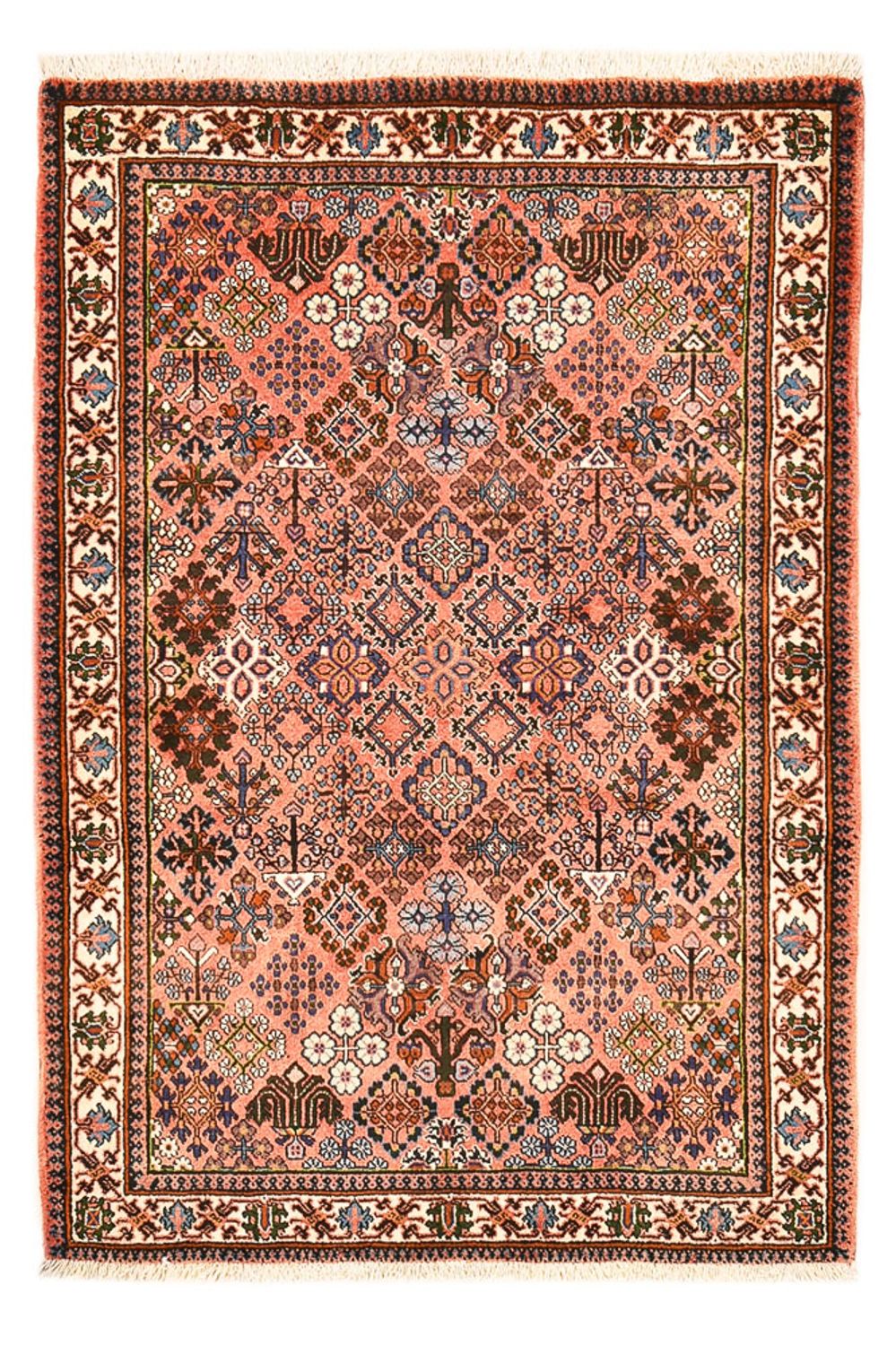
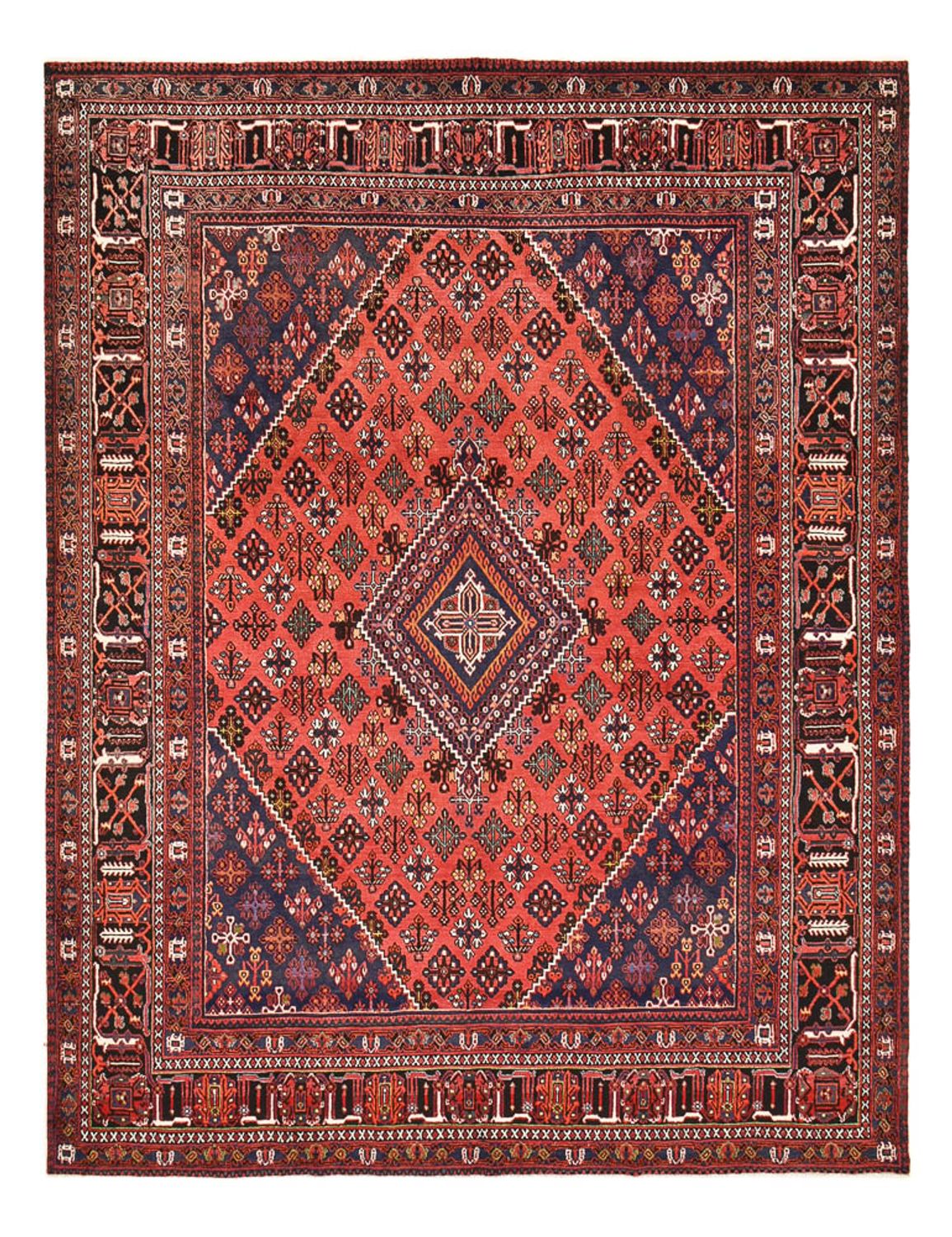
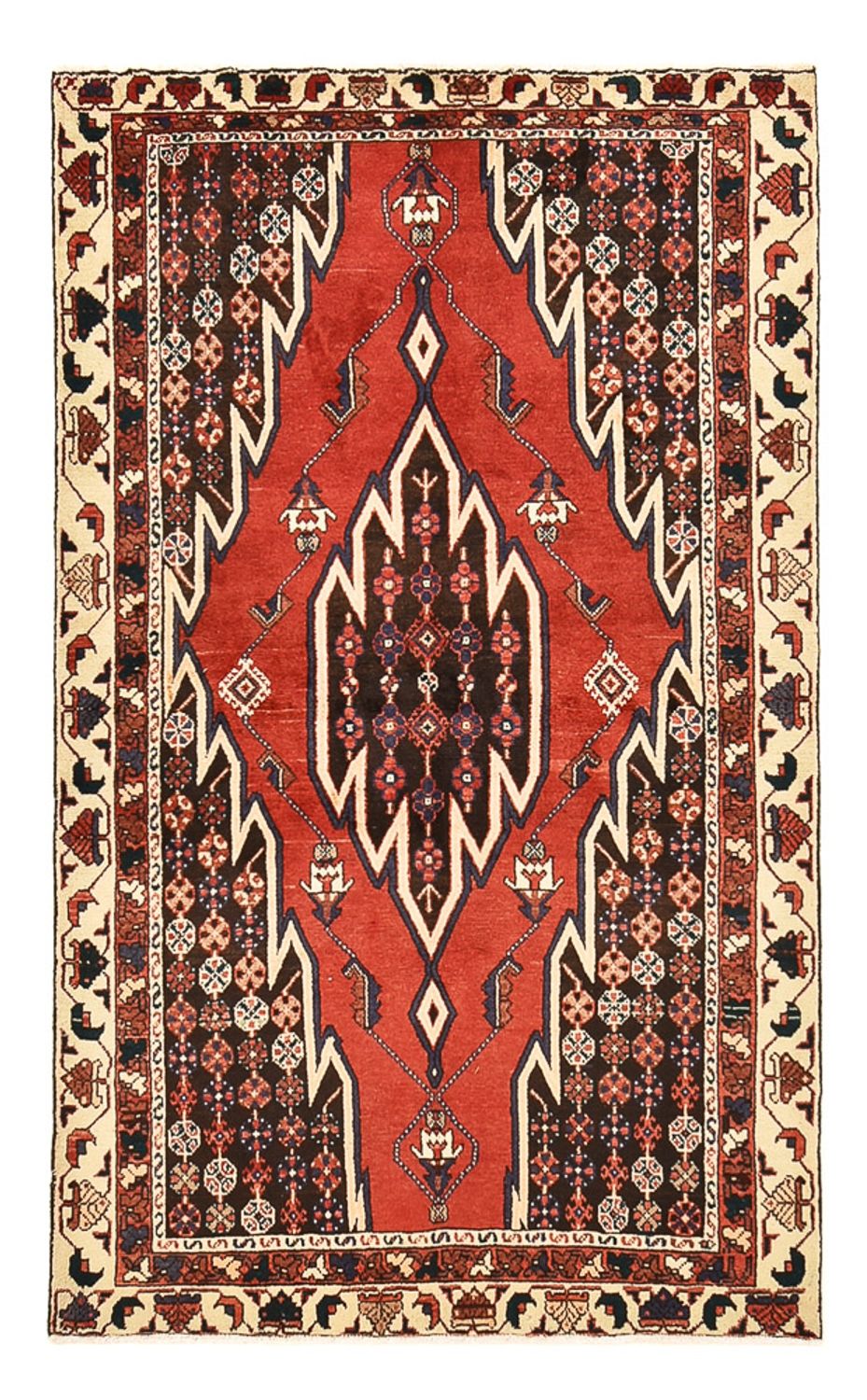
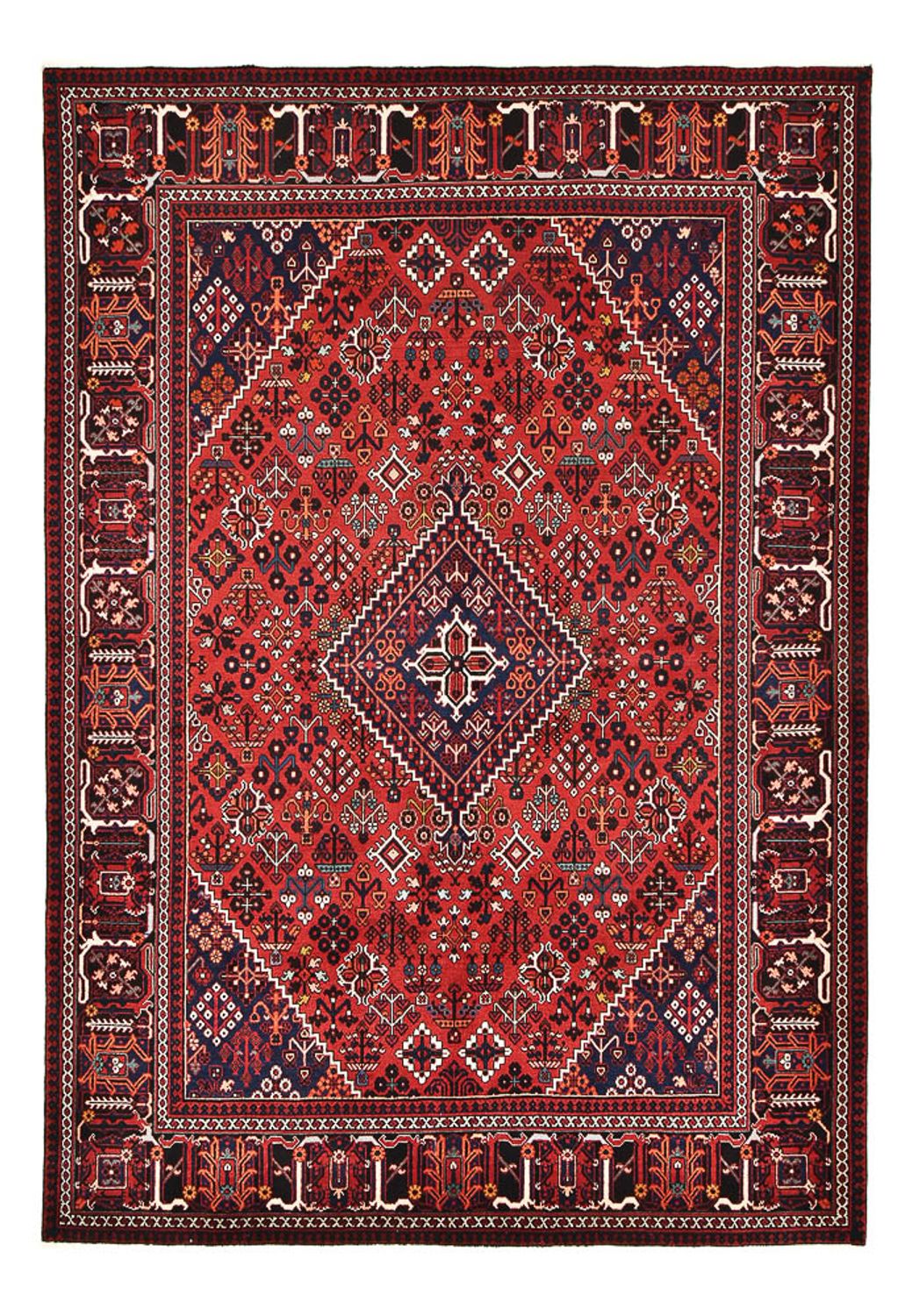
Photo: Morgenland Rugs
Joshaghan rugs are hand-knotted Persian rugs from the town of Joshaghan in the central Iranian province of Isfahan. They are known for an unmistakable diamond pattern that has barely changed for centuries: a regular field of lozenge-shaped medallions filled with stylized blossoms. Joshaghan is considered one of the oldest continuously practiced village and town styles of central Persia, combining geometric order with floral depth of detail.
What is a Joshaghan rug?
A Joshaghan is a hand-knotted rug from Joshaghan (also spelled Dschoschaghun) and the surrounding villages northwest of Isfahan. Warp and weft are made of cotton, the pile of high-quality wool, often fine kork wool. Knotting uses the asymmetric Persian knot, also known as the Senneh knot. The defining feature is the diamond-and-flower pattern (Persian: Toranj-o-Gol): an even grid of lozenge-shaped medallions with floral filling that covers the entire rug.
Origin
Joshaghan lies about 60 kilometers northwest of Isfahan in the central Iranian highlands and belongs to the heartland of Persian rug art. The region benefits from its proximity to the major knotting centers of Isfahan and Nain, yet has preserved its own remarkably consistent pattern tradition.
Joshaghan was already a known knotting center in the 16th and 17th centuries during the Safavid era. Historical pieces from this period are among the prized museum and collector rugs of today. What stands out is the continuity of the style: the characteristic diamond pattern has barely changed across the centuries and has become a fixed hallmark of the region. Other knotting villages in the wider area, such as Meymeh and neighboring Najafabad, share this central Persian tradition. The full tradition belongs to the broader family of Persian rugs.
Typical characteristics
The defining feature is the diamond-and-flower pattern: lozenge-shaped medallions arranged in regular rows across the entire field. Each diamond is filled with stylized floral motifs, with smaller floral elements between them. The strict grid combined with the floral filling creates a tense mix of geometric order and lively detail.
The borders usually carry classical Persian motifs such as the Herati pattern or palmette vines. Overall, the Joshaghan feels more geometrically structured than the curvilinear workshop rugs from Isfahan, without the strictly angular look of pure village rugs.
Patterns and colors
The palette is typically Persian and warm. The ground usually carries a strong red, complemented by dark blue, cream, and occasionally green. This balance gives the diamond pattern depth and contrast, so the individual medallions stand clearly apart.
Traditionally, the yarns are dyed with natural colors: madder for the reds, indigo for the blues. These plant-based dyes give Joshaghan its characteristic color depth and age particularly well. The difference between plant-based and chemical dyeing is explained in natural dyes versus chemical dyes.
Material and knotting technique
Joshaghan rugs are knotted on a cotton warp and weft, with the pile made of high-quality wool, often the soft kork wool. Knotting uses the asymmetric Persian knot (Senneh knot), which renders the floral detail inside the diamonds cleanly. An overview of knotting techniques is found in the article on knot types.
The pile is sheared medium-long, striking a good balance between pattern clarity and durability. Natural dyeing and a firm knot construction give the rug a long life. How a hand-knotted rug is made in general is described in the production overview.
Knot density and quality
The knot density of a Joshaghan usually lies between 160,000 and 300,000 knots per square meter. This places the Joshaghan among the medium-fine to fine Persian rugs: dense enough for the floral filling of the diamonds, yet robust enough for daily use. How knot density affects quality, pattern sharpness, and price is covered in a dedicated article.
For quality assessment, the harmony of the color balance, the precision of the diamond grid, the wool quality, and the condition matter as much as knot density. Original Joshaghan rugs stand out for their particularly balanced colors and an exact geometric arrangement.
| Variant / piece | Period | Knots / material | Character |
|---|---|---|---|
| Antique Joshaghan | 16th to 18th c. | fine, natural dyes | collector piece, historical importance |
| Classic Joshaghan | 19th to 20th c. | 200,000 to 300,000, kork wool | exact diamond grid, deep red |
| Standard quality | modern | 160,000 to 220,000 | good everyday quality, clear drawing |
| Joshaghan adaptation | modern, other region | variable | diamond pattern with regional variations |
| Comparison: Isfahan | modern | 300,000 to 700,000 | curvilinear, finer, higher price |
What is a Joshaghan rug worth?
The value of a Joshaghan depends on age, condition, size, knot density, wool quality, and dyeing. Classic pieces with a strong, naturally dyed red, an exact diamond grid, and fine kork wool are particularly prized. Historical Joshaghan rugs from the Safavid era have collector and museum rank, while modern adaptations from other regions are more affordable.
In the trade the Joshaghan is regarded as a clearly recognizable, enduring classic whose pattern has held up across generations. Anyone weighing the style against finer city rugs will most often compare it with Nain or Kashan. For a sound assessment, see identify valuable Persian rugs, the general value overview, and the buying guide.
How do you recognize a genuine Joshaghan rug?
Typical signs of a genuine Joshaghan include:
- Diamond-and-flower pattern: an even grid of lozenge-shaped medallions with floral filling across the entire field.
- Asymmetric Persian knot: Joshaghan uses the Senneh knot, in line with the central Persian tradition.
- Warm, naturally dyed palette: strong red with dark blue, cream, and occasionally green.
- Kork wool pile on a cotton foundation: medium-long, high-quality wool pile with clear drawing.
- Exact geometric arrangement: even rows of diamonds without messy transitions.
- Hand-knotted back: clearly legible pattern, fringes as extensions of the warp threads.
A step-by-step inspection guide is given in Is my rug genuine?, with general identification help in the recognition guide.
Care
Regular vacuuming in the pile direction and occasional professional cleaning preserve the quality of a Joshaghan. Stains should be blotted immediately with clear water, without rubbing. Long direct sunlight fades the naturally dyed tones and should be avoided. Older and historical pieces deserve particularly gentle, expert cleaning. Detailed notes are in the care overview.
Frequently asked questions
How do I recognize a genuine Joshaghan rug?
A genuine Joshaghan shows the characteristic diamond-and-flower pattern: an even grid of lozenge-shaped medallions with floral filling. It is hand-knotted with the Persian knot, has a kork wool pile on a cotton foundation, and a warm, mostly naturally dyed palette with a strong red.
What does the Joshaghan pattern mean?
The Joshaghan pattern, Persian Toranj-o-Gol or diamond-and-flower pattern, consists of lozenge-shaped medallions arranged evenly across the entire field and filled with stylized blossoms. It has remained nearly unchanged for centuries and is the most important identifying feature of the style.
What does a Joshaghan rug cost?
The price depends on age, condition, size, knot density, and dyeing. Classic pieces with a naturally dyed red and fine kork wool sit above plain standard ware, historical examples from the Safavid era have collector rank. Modern adaptations from other regions are more affordable.
What is the difference between a Joshaghan and an Isfahan?
Both come from the province of Isfahan and use the Persian knot, but the Isfahan is curvilinear, very finely knotted, and often worked with a silk warp. The Joshaghan is built more geometrically, somewhat more robust, and instantly recognizable by its even diamond grid.
Are Joshaghan rugs hard-wearing?
Yes. The medium-fine to fine knot density and the high-quality kork wool make Joshaghan rugs durable and suitable for everyday use. They combine clear drawing with good longevity.
Has the Joshaghan design changed over time?
The basic pattern has been nearly unchanged for centuries. Over time there have been only color variations and minor detail adjustments, but the geometric character of the diamond grid has been preserved. This consistency is a hallmark of the style.
How do I care for a Joshaghan rug properly?
Vacuum regularly in the pile direction and blot stains immediately with clear water, without rubbing. Avoid long direct sunlight so the natural dyes do not fade. Older and historical pieces should be cleaned gently and by an expert.
Impressions of the origin
Places, landscapes and landmarks around the home of Joshaghan rugs. Click any image for a larger view.


