Ardebil rugs: Caucasian-inflected geometry from NW Iran
Ardebil rugs come from northwestern Iran and often show geometric patterns with Caucasian influence.
- Region
- Persia / Iran
- Category
- Persian rugs
- Manufacturing
- Hand-knotted
- Knot density
- 80,000 – 200,000 knots/m²
Profile
- Manufacturing
- Hand-knotted
- Origin
- Iran — Ardebil Province
- Pile material
- Wool on cotton
- Knot density
- 80,000 – 200,000 knots/m²
- Features
- Caucasian influence, geometric patterns, bold colors
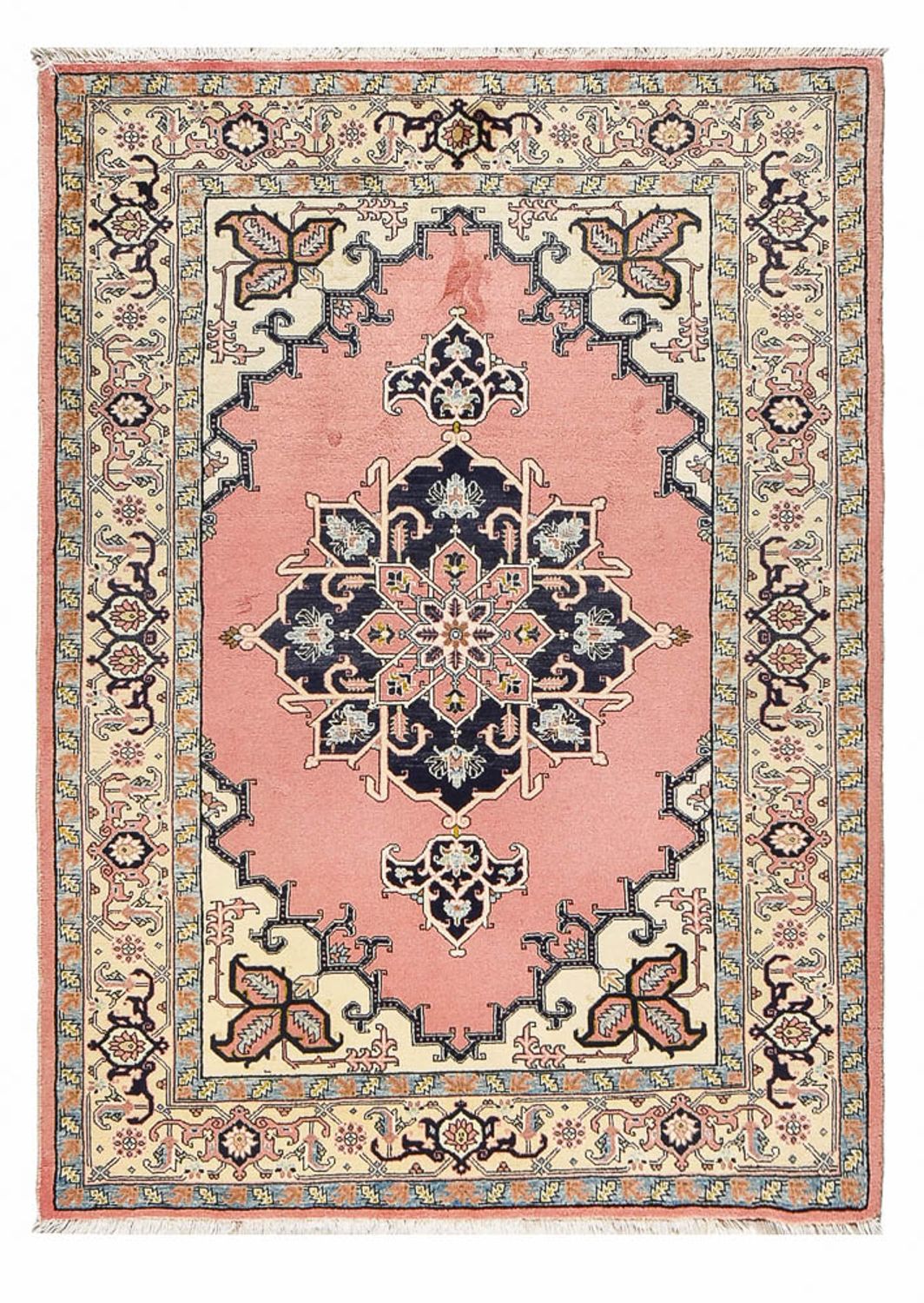
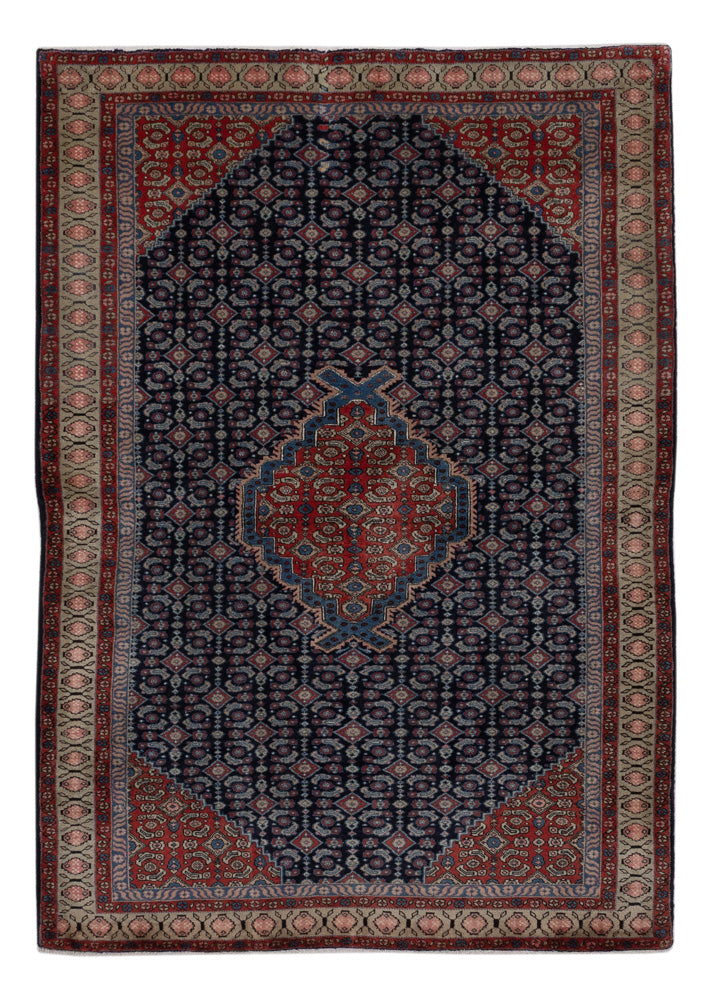
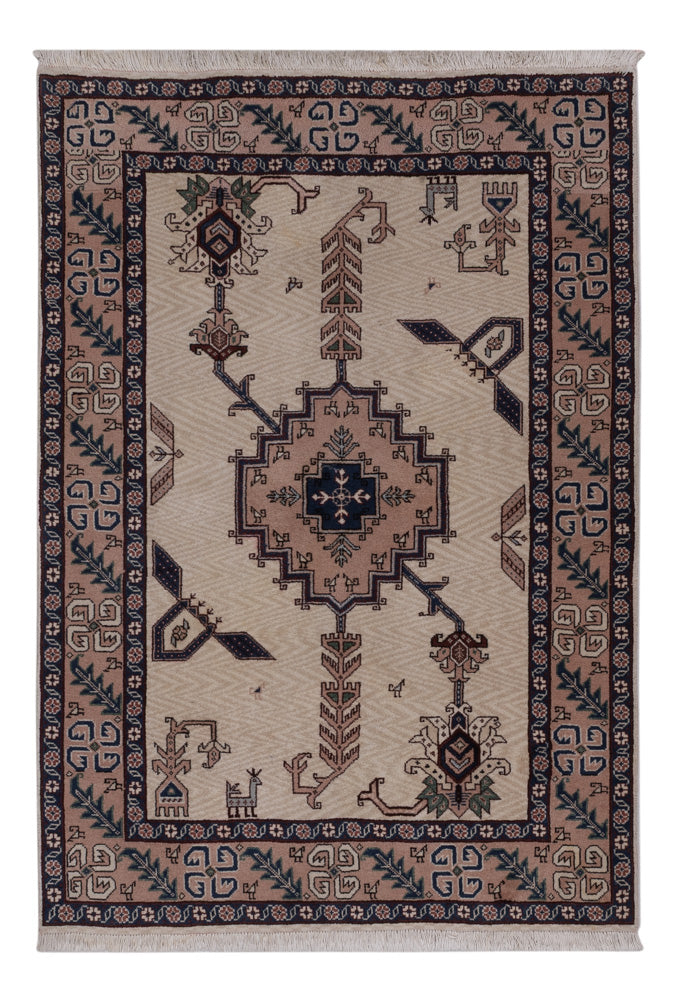
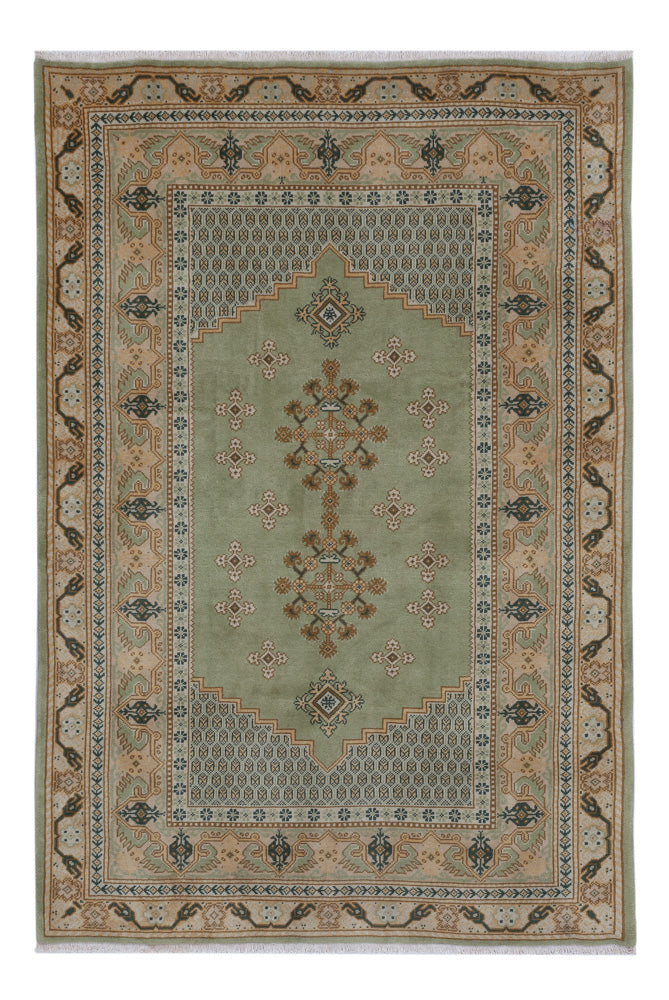
Photo: Morgenland Rugs
Ardebil rugs are hand-knotted Persian rugs from the north-west of Iran, near the border with Azerbaijan. They combine geometric, often Caucasian-influenced patterns with muted colours and a solid to fine knotting. The name also calls to mind one of the most famous rugs in the world, the historic 16th-century Ardabil rug. This article explains the origin, typical patterns, material and knotting technique, value and authentication features of an Ardebil rug, and places the famous museum piece in its proper context.
What is an Ardebil rug?
An Ardebil rug is a hand-knotted rug from the town of Ardebil (Ardabil) and its surrounding villages in the province of the same name in the north-west of Iran. Characteristic are geometric patterns with a central medallion, a rather muted colour world and the symmetric Turkish knot typical of the north-west Iranian region. Through their proximity to the Caucasus, many pieces show a geometric, angular vocabulary that recalls Caucasian rugs such as Kazak or Shirvan.
The distinction between today's commercial rug and the historical Ardabil rug is important. The modern Ardebil provenance denotes the current production of the town and its villages. The famous Ardabil rug, by contrast, is a single 16th-century masterpiece that shares only the place name with today's village and workshop goods.
Origin
Ardebil lies at the foot of Mount Sabalan in the north-west of Persia, near the Azerbaijani border, and has been a centre of rug knotting for centuries. Its location in the border area towards the Caucasus shapes the character of the rugs to this day, since the cultural exchange with the knotting areas to the north is reflected in the geometric patterns. The region was historically a trading post on important transport routes, which favoured the development of the local rug art.
The town became famous through the Ardabil rug, which dates from the Safavid period in the 16th century and is today among the most important surviving knotted rugs in the world. The principal example is kept in the Victoria and Albert Museum in London; a second, smaller piece is in the Los Angeles County Museum of Art. These rugs were originally made for the shrine of Shaykh Safi in Ardebil and show a finely drawn medallion with lamps and a floral inner field at the highest courtly level. Today's production in Ardebil ties into the town's tradition but orients itself to village and geometric patterns rather than to the courtly fineness of the historical piece.
Patterns and colours
Ardebil rugs are predominantly geometric. Typical are octagonal or diamond-shaped central medallions, surrounded by smaller geometric elements, hooks, stars and stylised plant motifs. The composition is usually balanced and symmetrical, with clear lines and well-defined contours. In many pieces the Caucasian influence shows in angular, formulaic motifs that recall the rugs of the northern neighbouring regions.
The palette is rather muted and calm. Blues, reds and beiges predominate, often on a dark ground, supported by ivory and occasional accents. The borders are layered and show floral or geometric band patterns in several stripes. Overall, Ardebil rugs feel more restrained and angular than the curvilinear manufactory patterns of the major Persian urban centres.
Material and knotting technique
Ardebil rugs are traditionally knotted with virgin wool for the pile, while warp and weft are usually cotton. The wool is robust and gives the pieces their solid feel. An overview of the fibres used is given in the materials overview.
Knotting is done with the symmetric Turkish knot, also known as the Ghiordes knot, which is characteristic of the north-west Iranian region and the adjacent Caucasus. This technique fits the geometric patterns, since it favours angular, clear lines. The differences between symmetric and asymmetric knot are explained in the overview of knot types; the whole sequence from setting the warp to shearing is described in the article on rug production. The pile is sheared medium-high; dyeing uses both natural and high-quality synthetic dyes, which yields good lightfastness.
Knot density and quality
The knot density of Ardebil rugs typically lies between around 120,000 and 250,000 knots per square metre and so sits in the solid to upper range for geometric provenances. That is usually finer than the simple Hamadan village qualities but remains below the density of fine floral manufactory goods. What knot density says, and why it is not the sole measure of quality, is treated in its own article.
The quality of an Ardebil is decided, alongside density, above all by the wool quality, by the clarity and symmetry of the geometric drawing, by the harmony of the muted colours and by the state of preservation. A good piece keeps the composition cleanly in balance, with cleanly placed medallion and border motifs.
| Style | Relation to Ardebil | Typical features |
|---|---|---|
| Ardebil | north-west Iran, near the Caucasus border | geometric medallion, muted colours, Turkish knot |
| Meshkin | neighbouring provenance, same province | coarsely geometric, vivid village patterns |
| Sarab | neighbouring region, north-west Iran | often camel-coloured ground, runners, geometric |
| Heriz | north-west Iran, lying to the south-west | large angular medallion, very robust |
| Kazak | Caucasian, immediately to the north | strongly geometric, vivid colours |
| Shirvan | Caucasian, immediately to the north | fine geometric patterns, small-scale |
What is an Ardebil rug worth?
The value of an Ardebil rug depends on age, condition, size, knot density, pattern clarity, wool quality and dyeing. Through their solid to higher-quality knotting, Ardebil rugs often lie above simple village qualities but usually remain below the fine floral urban rugs. Well-preserved older pieces with natural dyes and a clean geometric drawing are more sought after and valued accordingly higher. The historical Ardabil rug must be kept strictly apart from this; it is unsaleable museum property and no benchmark for the market value of today's pieces.
For a grounded estimate, see the overview what is my rug worth? and the article on recognising valuable Persian rugs. Practical notes on selection and purchase are given in the buying guide.
How do you recognise a genuine Ardebil rug?
Reliable indicators of a genuine, hand-knotted Ardebil are:
- Symmetric Turkish knot: Ardebil, like the north-west Iranian region, uses the Ghiordes knot.
- Geometric medallion: an octagonal or diamond-shaped central motif with angular, often Caucasian-influenced accompanying motifs.
- Muted colour world in blue, red and beige, often on a dark ground.
- Hand-knotted back: the pattern is clearly mirrored on the reverse, and individual knots are visible as a grid.
- Real fringes: the fringes are the extended warp threads, not sewn on.
- Slight irregularities in pattern and colour speak for grown handcraft from a village or workshop.
A general step-by-step authentication walk-through is given in Is my rug genuine?; an overview of the features of hand-knotted rugs is gathered under recognising hand-knotted rugs. For valuable or supposedly old pieces a professional appraisal is advisable.
Care
Ardebil rugs made of robust wool are easy to care for and suited to daily use. Regular vacuuming in the pile direction and the occasional professional cleaning preserve colours and pile. Lift stains immediately with clear water, without rubbing. Long direct sunlight bleaches the colours and should be avoided. Occasional turning distributes wear evenly. Detailed notes are given in the care overview.
Frequently asked questions
Where does an Ardebil rug come from?
From the town of Ardebil (Ardabil) and its surrounding villages in the province of the same name in the north-west of Iran, at the foot of Mount Sabalan near the Azerbaijani border. Proximity to the Caucasus shapes the geometric patterns of the region.
What does the Ardebil rug have to do with the famous museum rug?
They share only the place name. The famous Ardabil rug is a courtly masterpiece from the 16th century, originally made for the shrine of Shaykh Safi and today kept in the Victoria and Albert Museum in London. Today's commercial Ardebil rugs are village-geometric pieces of current production and no benchmark for that museum piece.
Why do Ardebil rugs look Caucasian?
With which knot is an Ardebil rug knotted?
With the symmetric Turkish knot, also called the Ghiordes knot, which is characteristic of the north-west Iranian region and the adjacent Caucasus. It fits the angular, geometric patterns. The differences of knot types are explained in the overview of knot types.
Are Ardebil rugs suitable for daily use?
Yes. Thanks to the solid to high knot density and the robust wool, Ardebil rugs are hard-wearing and well suited to normal household use. The medium-high pile and the geometric pattern conceal traces of wear.
How do I care for an Ardebil rug properly?
Vacuum regularly in the pile direction, lift stains immediately with clear water, without rubbing, and have it professionally cleaned every few years. Avoid long direct sunlight and turn the rug occasionally so that wear is distributed evenly.
Impressions of the origin
Places, landscapes and landmarks around the home of Ardabil rugs. Click any image for a larger view.


