Jozan rugs: dense Sarouk variant from the Arak region
Jozan rugs come from the Malayer district of Hamadan Province and combine classic Sarouk-style medallions with sturdy village quality.
- Region
- Persia / Iran
- Category
- Persian rugs
- Manufacturing
- Hand-knotted
- Knot density
- 120,000 – 250,000 knots/m²
Profile
- Manufacturing
- Hand-knotted
- Origin
- Iran — Jozan, Malayer region, Hamadan Province
- Pile material
- Wool on cotton
- Knot density
- 120,000 – 250,000 knots/m²
- Features
- Sarouk-style medallions, sturdy quality, classic palette
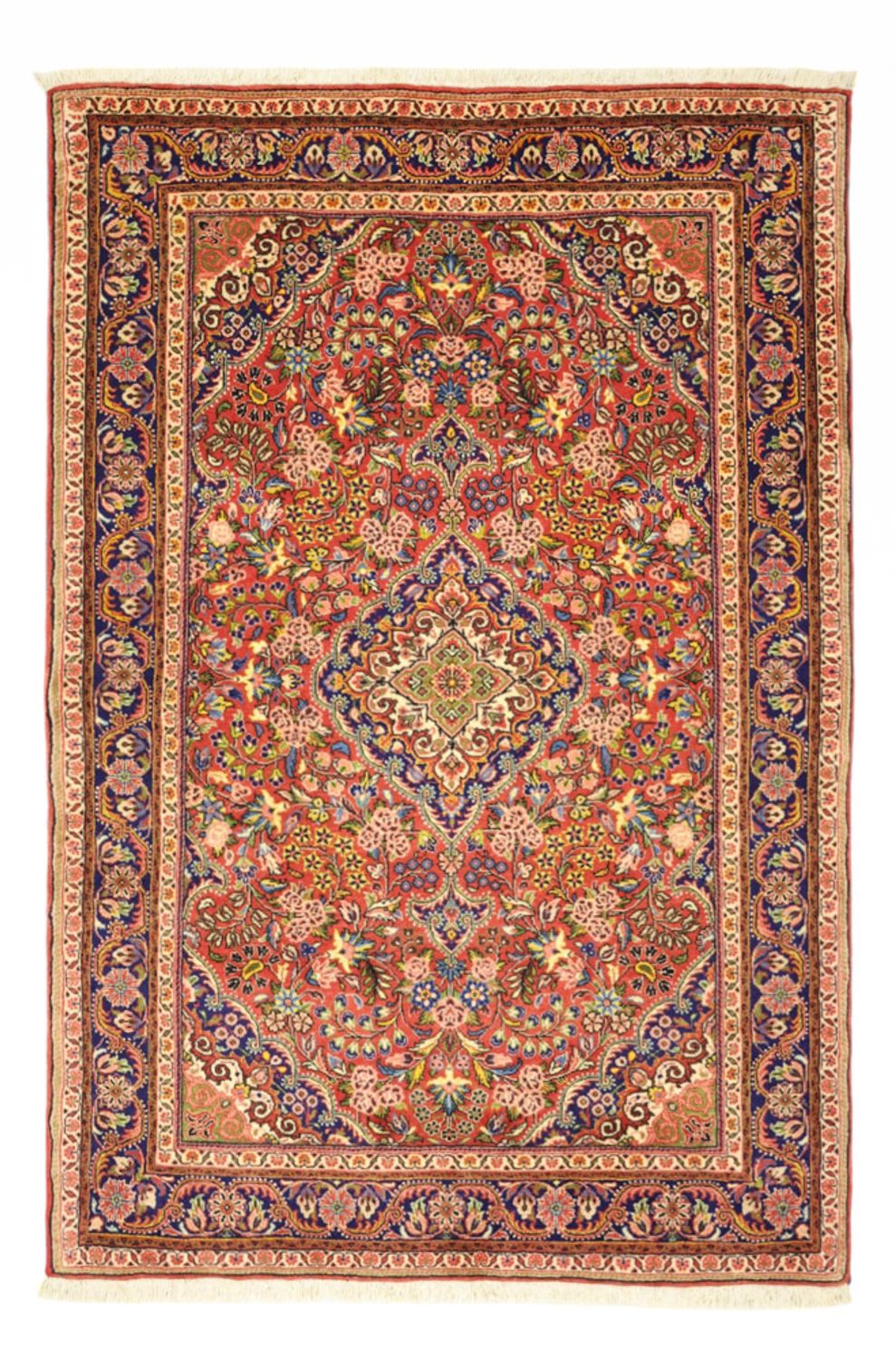
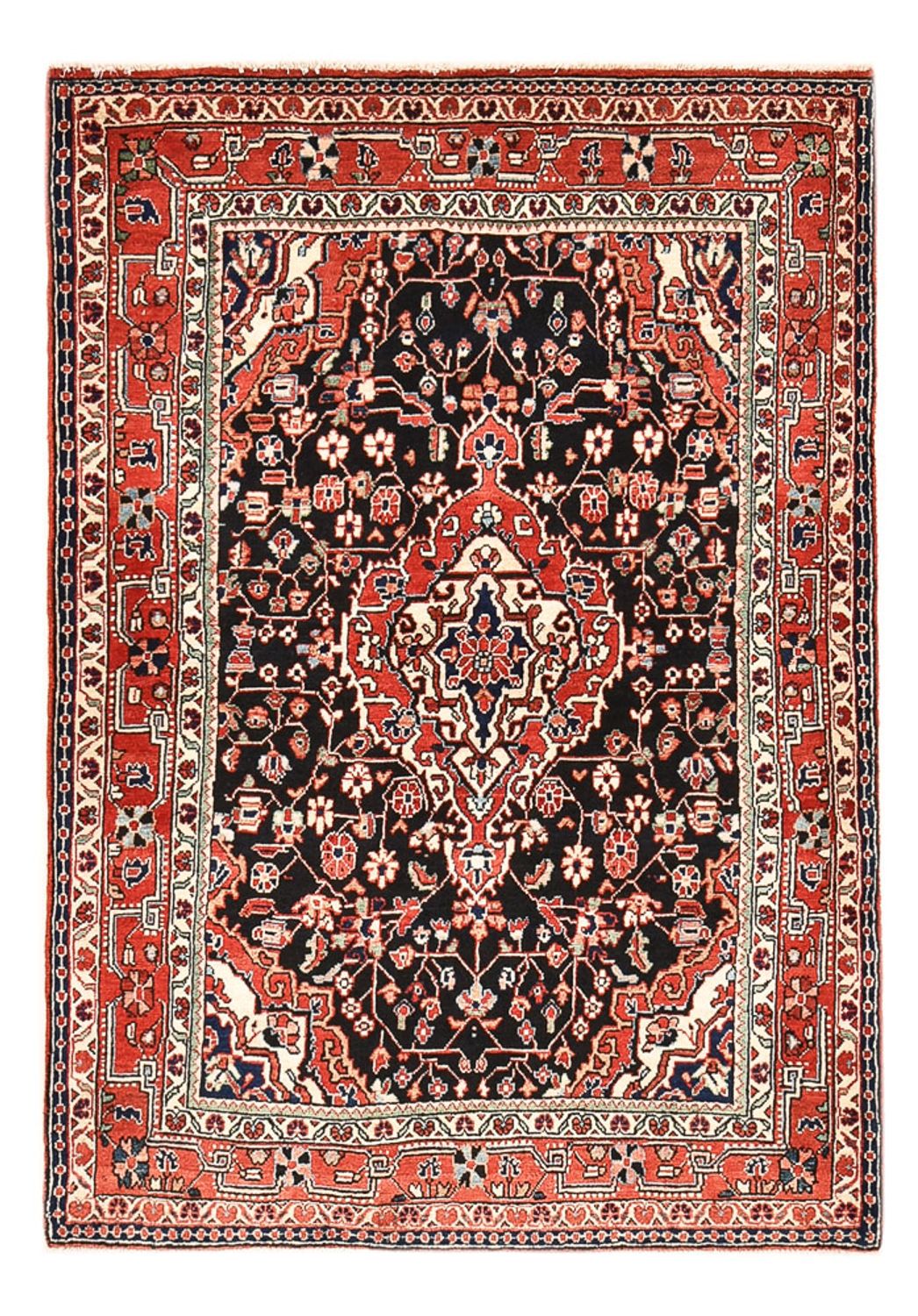
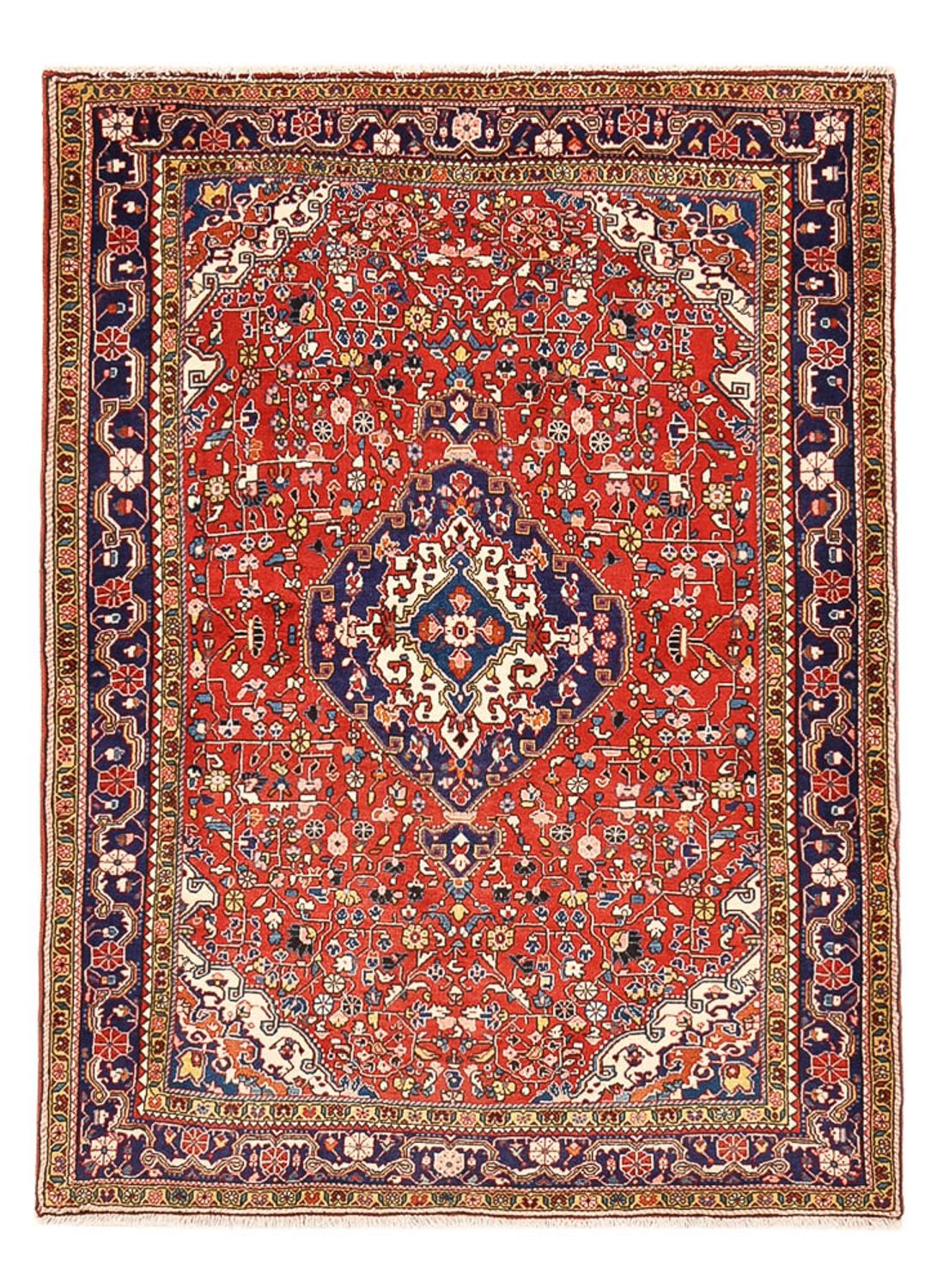
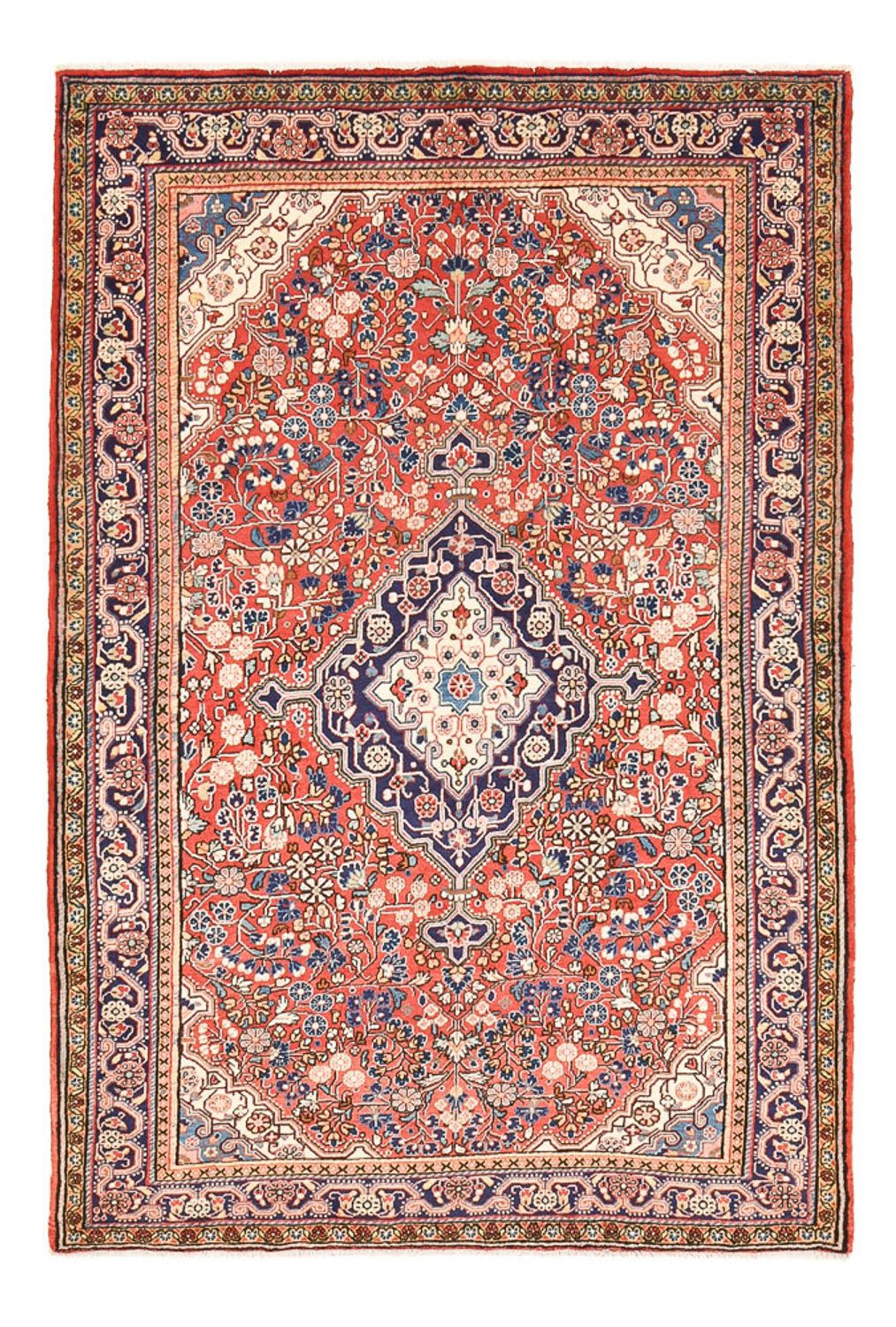
Photo: Morgenland Rugs
Jozan rugs are hand-knotted Persian rugs from the town of Jozan in the central Iranian province of Markazi, in the hinterland of Arak. They are known for a strong red, precisely worked geometric medallions, and an especially firm knotting. As part of the Sarouk region, the Jozan belongs to the robust, long-lasting city rugs of central Persia; well-preserved pieces from the first half of the 20th century are sought-after vintage and collector rugs today.
What is a Jozan rug?
A Jozan is a hand-knotted rug from Jozan and the surrounding villages in Markazi province. The pile is made of virgin wool, warp and weft are usually cotton. Knotting uses the symmetric Turkish knot, also known as the Ghiordes knot, which gives the Jozan its particularly firm, dense structure. In the trade the style is closely associated with the Sarouk and often referred to as Jozan-Sarouk, since both come from the same region and resemble each other in construction and color language.
Origin
Jozan lies about 80 kilometers southwest of Arak in the central Persian highlands and belongs to the larger Arak and Sarouk region in Markazi province. The knotting tradition developed in the 19th century and peaked in the first half of the 20th century. During this period production was closely tied to the trading center of Arak, which gave the knotters access to high-quality materials and to export markets.
Despite its proximity to Arak and Sarouk production, Jozan developed a distinct signature shown especially in the particularly firm knotting and the clearly drawn geometric medallions. Related provenances from the same region include Mahal, Lilian, Mir, and neighboring Malayer. The town was also known for its repair workshops, where rugs from across the region were restored. The full tradition belongs to the broader family of Persian rugs.
Typical characteristics
Jozan rugs usually show a clearly outlined geometric medallion on a dark, often deep-red ground. The pattern repertoire covers stylized palmettes, rosettes, and symmetrically arranged floral motifs. Characteristic is the precise, almost regular execution of the geometric forms, owed to the firm knotting with the Turkish knot.
The borders carry classical Persian motifs such as vines or stylized blossoms and frame the field in several stripes. The color combinations are traditionally conservative, with warm earth tones as the basic mood. Overall, the Jozan feels stronger and stricter than the floral all-over Sarouks, without the strictly angular look of pure village rugs.
Patterns and colors
The palette is led by a deep red, complemented by navy, beige, and occasionally green. The rich ground red is a hallmark of the entire Sarouk region and gives the Jozan its warm, vigorous presence. The meaning of individual colors in Persian rugs is explained separately. The motifs stand out clearly from the dark ground through light outlines.
While older pieces were dyed with natural colors, more recent productions also use modern dyes. Both can be durable and colorfast if cleanly processed. The difference between plant-based and chemical dyeing is explained in natural dyes versus chemical dyes.
Material and knotting technique
Warp and weft are usually cotton, the pile is virgin wool, mostly from local production. Knotting uses the symmetric Turkish knot (Ghiordes knot), which gives the Jozan its particularly firm and robust structure. This choice distinguishes it from many other central Persian provenances that use the asymmetric Senneh knot. An overview of knotting techniques is found in the article on knot types.
The pile is sheared medium-long, which gives the Jozan its characteristic firm texture. Traditionally, weaving takes place on horizontal looms. How a hand-knotted rug is made in general is described in the production overview.
Knot density and quality
The knot density of a Jozan typically lies between 200,000 and 400,000 knots per square meter. Combined with the firm Turkish knot, this results in a particularly dense, dimensionally stable structure known for its longevity. How knot density affects quality, pattern sharpness, and price is covered in a dedicated article.
For quality assessment, the evenness of the knotting, the precision of the geometric patterns, color brilliance, and condition matter as much as knot density. High-quality Jozan rugs show dense, even knotting and clear pattern boundaries without messy transitions.
| Variant / piece | Period | Knots / material | Character |
|---|---|---|---|
| Antique Jozan-Sarouk | around 1900 to 1940 | dense, natural dyes | sought-after collector piece, deep red |
| Vintage Jozan | first half of 20th c. | 250,000 to 400,000 | firm knotting, clear medallion |
| Modern production | from mid-20th c. | 200,000 to 300,000 | solid, in line with old patterns |
| Large format | variable | variable | over 4 m rare, correspondingly more valuable |
| Comparison: Sarouk | broad | 200,000 to 500,000 | more floral, more all-over patterning |
What is a Jozan rug worth?
The value of a Jozan depends on age, condition, size, knot density, wool quality, and dyeing. Since traditional production has declined sharply, authentic old Jozan rugs from the first half of the 20th century are sought-after vintage and collector pieces. Such examples with a rich, naturally dyed red and firm knotting can sit clearly above more recent ware.
In the trade, well-preserved old Jozan-Sarouks with clear medallion and strong color are particularly prized. The Indian adaptation Indo-Mir also shows how much the formal vocabulary of the Arak region is in demand. Very large formats are rarer and accordingly more valuable. For a sound assessment, see identify valuable Persian rugs, the overview of vintage rugs as investment, the general value overview, and the buying guide.
How do you recognize a genuine Jozan rug?
Typical signs of a genuine Jozan include:
- Symmetric Turkish knot: Jozan uses the Ghiordes knot, which explains its particularly firm structure.
- Strong red with clear medallion: deep red ground with a precisely outlined geometric medallion.
- Firm, dense knotting: dimensionally stable structure underpinning the robustness of these rugs.
- Geometrically framed motifs: stylized palmettes and rosettes with clear boundaries.
- Wool pile on a cotton foundation: medium-long virgin wool pile on cotton warp and weft.
- Hand-knotted back: clearly legible pattern, fringes as extensions of the warp threads.
A step-by-step inspection guide is given in Is my rug genuine?, with general identification help in the recognition guide.
Care
Regular vacuuming in the pile direction and occasional professional cleaning preserve the quality of a Jozan. Stains should be blotted immediately with clear water, without rubbing. Long direct sunlight fades the colors and should be avoided. Thanks to the firm knotting and robust wool, the Jozan is comparatively resilient; for old collector pieces, however, gentle expert cleaning is still recommended. Detailed notes are in the care overview.
Frequently asked questions
How do I recognize a genuine Jozan rug?
A genuine Jozan is particularly firmly knotted with the symmetric Turkish knot and shows a clearly outlined geometric medallion on a deep red ground. It consists of a virgin wool pile on a cotton foundation, the back renders the pattern clearly, and the fringes are part of the warp.
What is the difference between a Jozan and a Sarouk?
Both come from the Arak region and share the strong red. The Sarouk is mostly more floral with an expansive all-over pattern, while the Jozan is more strongly geometric, shows a clear medallion, and is particularly firmly knotted thanks to the Turkish knot. In the trade it is therefore often called Jozan-Sarouk.
What does a Jozan rug cost?
The price depends on age, condition, size, and knot density. Authentic old Jozan-Sarouks from the first half of the 20th century are sought-after vintage pieces and sit above more recent ware. Very large formats are rarer and accordingly more valuable.
Are Jozan rugs still in production?
Traditional production has declined sharply. Today, only a few authentic Jozan rugs are knotted, mostly in small family operations. Most pieces available on the market are vintage from the first half of the 20th century.
Why is a Jozan so robust?
The Jozan is knotted with the symmetric Turkish knot at high density, producing a particularly firm, dimensionally stable structure. Combined with the robust local virgin wool, this makes it an outstandingly long-lasting everyday rug.
What sizes are common for Jozan rugs?
Jozan rugs have traditionally been knotted in various sizes, from small formats around 150 x 100 cm to larger pieces around 300 x 200 cm. Very large formats over 4 meters in length are rarer and accordingly more valuable.
How do I care for a Jozan rug properly?
Vacuum regularly in the pile direction and blot stains immediately with clear water, without rubbing. Avoid long direct sunlight so the colors do not fade. Old collector pieces should be cleaned gently and by an expert.
Impressions of the origin
Places, landscapes and landmarks around the home of Jozan rugs. Click any image for a larger view.
Related styles
Hamadan
Hamadan rugs come from western Iran and are produced in countless village workshops, robust, affordable, and highly varied.
Malayer
Malayer rugs come from the eponymous town in Hamadan Province and are appreciated for their classic Herati patterns and good value.
Sarouk
Sarouk rugs come from the Arak area and are classic floral Persian rugs with dense knotting and a deep red ground.


