Borchalou rugs: medallion village rugs from Hamadan
Borchalou rugs come from the Hamadan region and show finely worked floral medallions on an ivory ground.
- Region
- Persia / Iran
- Category
- Persian rugs
- Manufacturing
- Hand-knotted
- Knot density
- 80,000 – 160,000 knots/m²
Profile
- Manufacturing
- Hand-knotted
- Origin
- Iran — Hamadan Province, Borchalou village
- Pile material
- Wool on cotton
- Knot density
- 80,000 – 160,000 knots/m²
- Features
- Floral medallions, ivory ground, single-weft
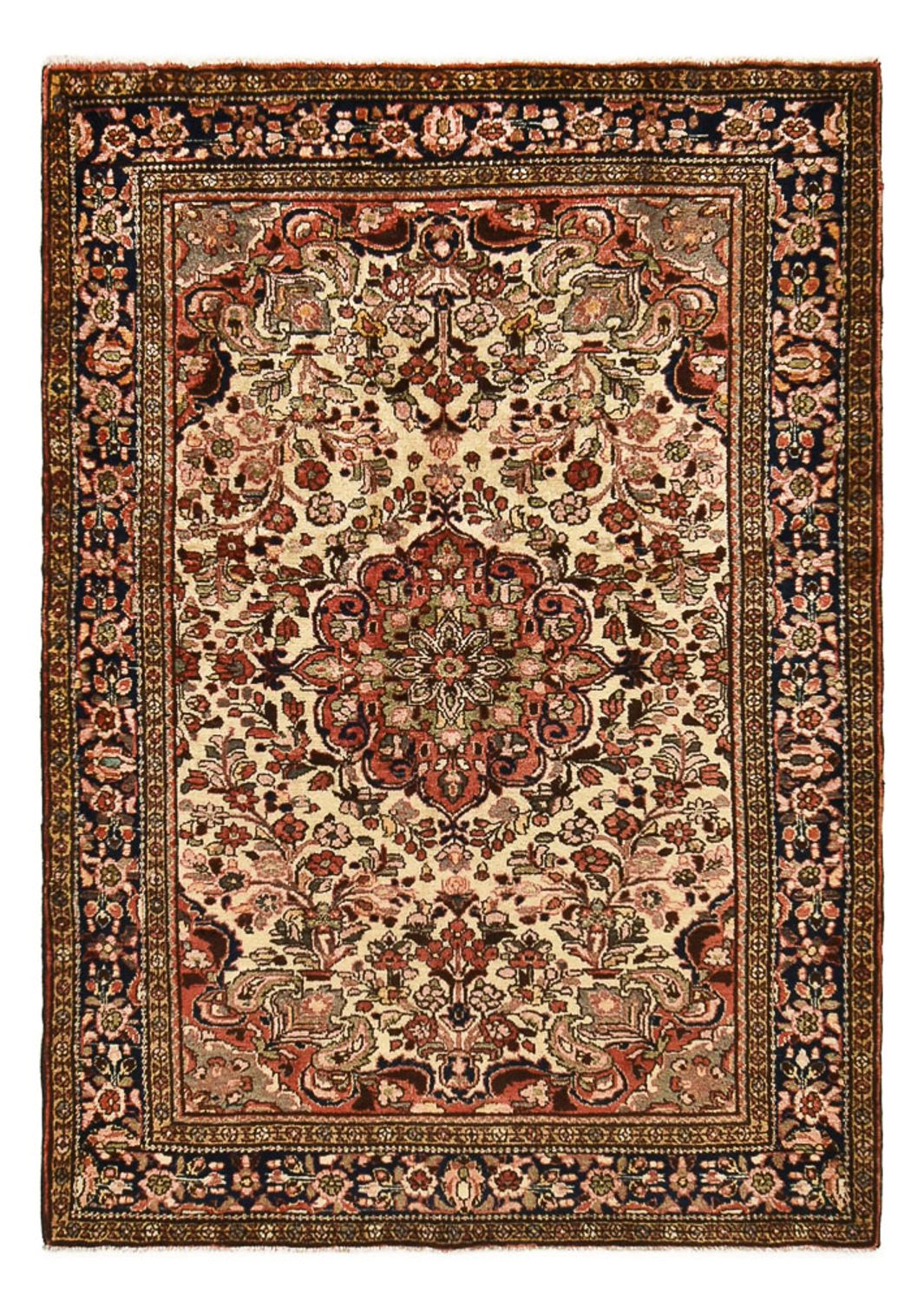
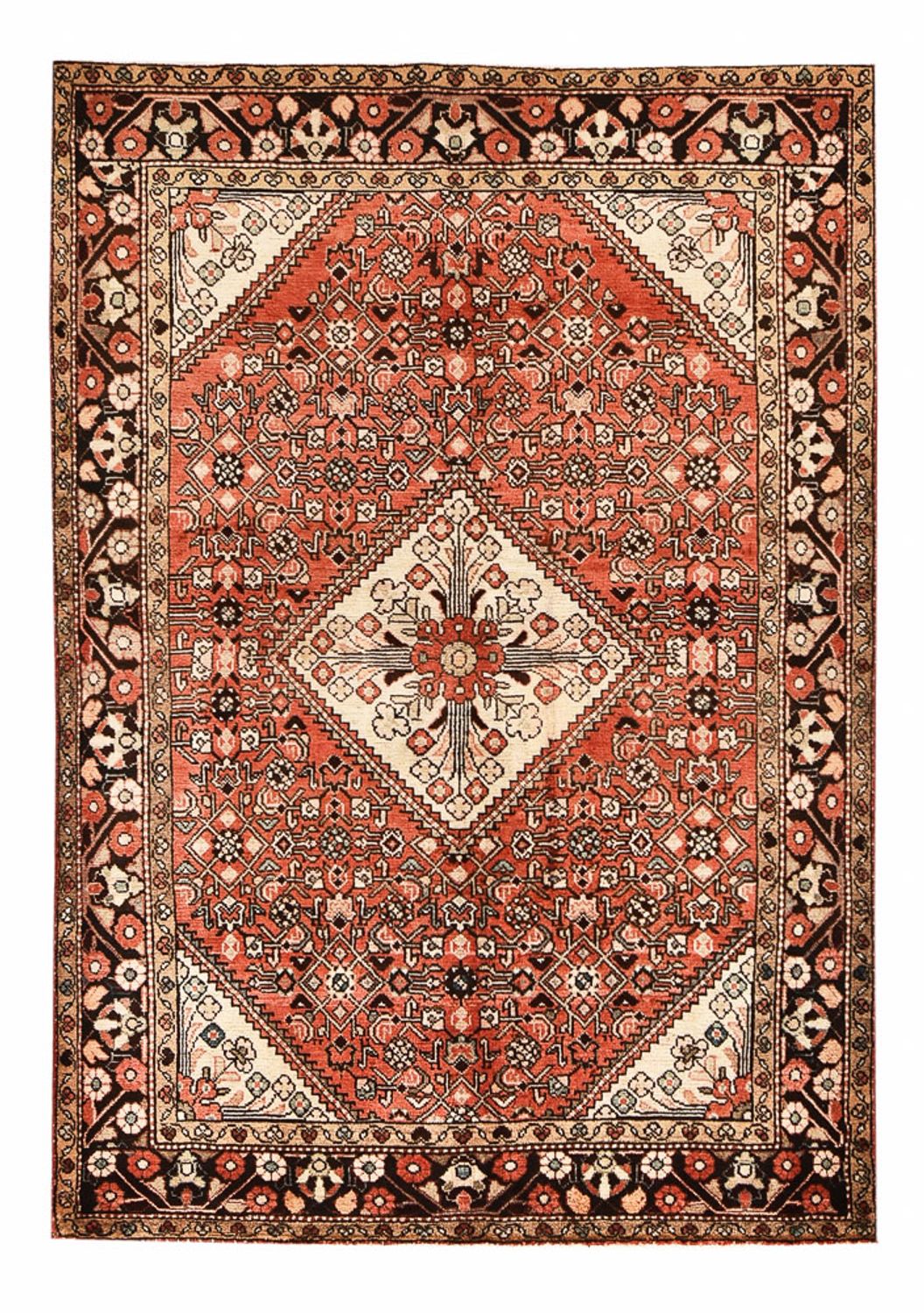
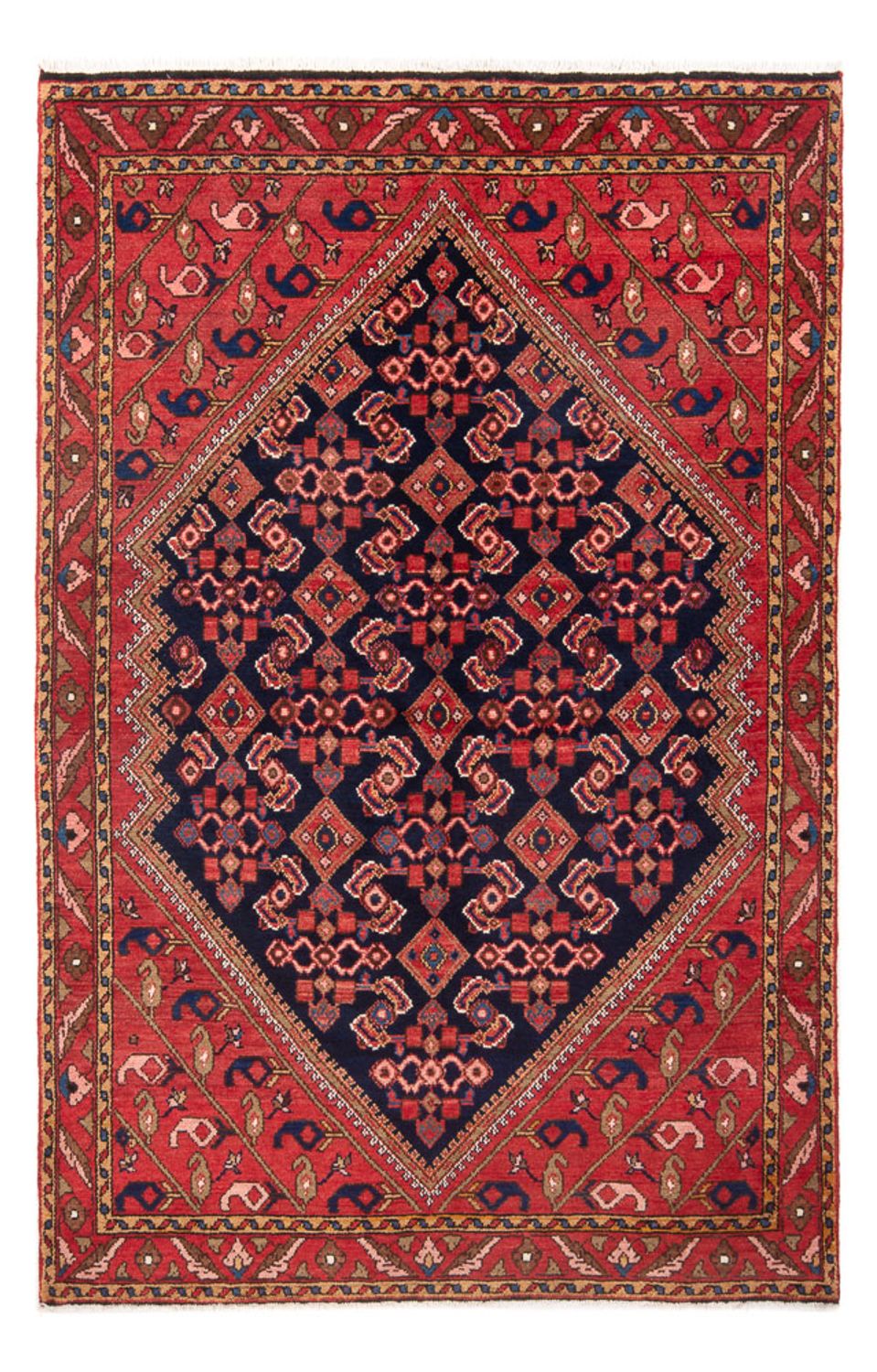
Photo: Morgenland Rugs
Borchalou rugs are hand-knotted Persian rugs from the north of the Hamadan province in western Iran. They belong to the large family of Hamadan rugs but stand apart from the simple village goods of the region through a usually carefully drawn central medallion and a high-contrast colour image. Anyone looking for a robust, decorative Persian rug with a clear geometric hand will find in the Borchalou one of the more decorative provenances of the large Hamadan belt. This article explains the origin, patterns, material and knotting technique, the value and the authentication features of a Borchalou rug.
What is a Borchalou rug?
A Borchalou is a hand-knotted village and workshop rug from the Borchalou district north of the provincial capital Hamadan. Characteristic are a large, often multiply outlined central medallion, vivid red and blue tones, a cotton warp and a wool pile knotted with the symmetric Turkish knot. Like the whole Hamadan region the Borchalou follows the single-weft construction, in which only a single weft thread lies between two rows of knots. That makes it flat, firm and hard-wearing.
Borchalou is among the towns of the Hamadan belt that have made a name for themselves as their own provenance rather than placing their goods only anonymously under the collective term Hamadan. Within this family the Borchalou counts as relatively decorative in drawing, because many pieces show a clearly composed medallion and tiered borders.
Origin
The Borchalou district lies north of the town of Hamadan, in one of the oldest continuously settled knotting regions of Persia. The Hamadan province extends at the foot of the Alvand mountains and comprises several hundred knotting villages whose goods came together over centuries on the market of the provincial capital. Borchalou belongs to this dense fabric of villages and small towns that has shaped the globally familiar term Hamadan rug.
The knotting tradition here is closely tied to rural life and has been passed on through generations in home work and small workshops. Its economic peak came in the early 20th century, when demand for Persian rugs rose strongly in Europe and North America. Pieces from this period are today especially sought after on the market for used and old rugs. Related provenances from the same region include Malayer, Nahavand, Touiserkan and the Kurdish-influenced Koliai.
Patterns and colours
The defining design element of many Borchalou rugs is a large central medallion, usually diamond-shaped or lobed and surrounded by smaller geometric motifs. Often matching corner spandrels frame the medallion, so that a clear, balanced composition arises. Alongside it appear floral elements in stylised, angular form, as well as the continuous Herati pattern with its herringbone-like leaf vines around a small rosette.
The palette is traditional and high in contrast. Deep reds and dark blues form the base field, supported by beige, ivory and sparing accents in green or yellow. For red, madder was historically used; for blue, indigo. The borders are usually multiply tiered and take up geometric or stylised flower motifs in several narrow bands. Overall the Borchalou feels village-like and geometric, often somewhat more clearly composed than the simple anonymous Hamadan commercial goods.
Material and knotting technique
Borchalou rugs are knotted on a warp of cotton; the weft is cotton or wool. The pile is virgin wool from local flocks, valued for its natural lanolin content and robustness. An overview of the fibres used is given in the materials overview.
Knotting is done with the symmetric Turkish knot, also called the Ghiordes knot. This is typical for the whole Hamadan region and distinguishes the Borchalou and its neighbours from many other Persian provenances, which use the asymmetric Senneh knot. The most important technical feature is the single weft: between two rows of knots lies only one weft thread, which produces the flat, firm structure and is readable on the back. The whole sequence from setting the warp to shearing is described in the article on rug production.
Knot density and quality
The knot density of Borchalou rugs typically lies between around 80,000 and 160,000 knots per square metre and so sits in the medium range, with carefully worked pieces reaching the upper span. What knot density says in detail about fineness and price, and why a medium density suits a village rug well, is treated in its own article.
The quality is decided, alongside density, above all by wool quality, by the clarity of the geometric drawing, by the saturation of the colours and by the state of preservation. Older or finer Borchalous often show hand-spun wool and natural colour nuances, while simpler commercial qualities can be more coarsely drawn and partly use machine-spun yarn.
| Provenance | Relation to Borchalou | Typical features |
|---|---|---|
| Borchalou | own provenance in the Hamadan belt | clearly drawn central medallion, Turkish knot |
| Hamadan | umbrella term and region | robust village rugs, single weft, geometric |
| Malayer | neighbouring provenance | often finer, floral and geometric motifs |
| Nahavand | nearby region, related style | geometric medallion or Herati, vivid colours |
| Touiserkan | surrounding region | village knotting, traditional patterns |
| Koliai | western Iranian, Kurdish-related | very robust, strongly geometric |
What is a Borchalou rug worth?
The value of a Borchalou rug depends on age, condition, size, knot density, pattern clarity, wool quality and dyeing. As robust village rugs in the medium category, Borchalous are usually more affordable than fine Persian manufactory goods such as Nain, Isfahan or Qom. Well-preserved older pieces with hand-spun wool, natural dyes and a clearly drawn medallion can however be worth significantly more than simple new commercial qualities.
Their reputation as long-lived, decorative everyday rugs with strong value for money is well founded; many pieces are passed on for generations. For a grounded estimate see the overview what is my rug worth? and the article recognising valuable Persian rugs. Practical notes on selection and purchase are given in the buying guide.
How do you recognise a genuine Borchalou rug?
Reliable indicators of a genuine, hand-knotted Borchalou are:
- Symmetric Turkish knot: Borchalou, like the whole Hamadan region, uses the Ghiordes knot, unlike many other Persian rugs.
- Single-weft structure: only one weft thread lies between the rows of knots, which is readable on the back.
- Hand-knotted back: the pattern is clearly mirrored on the reverse, and individual knots are visible.
- Real fringes: the fringes are the extended cotton warp threads, not sewn on afterwards.
- Clearly drawn central medallion with tiered borders in vivid red and blue.
- Wool pile on cotton ground with a robust, village-like presence.
Because Borchalou belongs to the wider Hamadan environment, individual pieces vary. The classification should therefore consider pattern, back, material and condition together. A general step-by-step inspection is given in Is my rug genuine?; an overview of the features of hand-knotted rugs is gathered under recognising hand-knotted rugs.
Care
Borchalou rugs made of robust wool are easy to care for and suited to daily use. Regular vacuuming in the pile direction and the occasional professional cleaning preserve colours and pile. Lift stains immediately with clear water, without rubbing. Long direct sunlight bleaches the colours and should be avoided. Occasional turning distributes wear evenly. Detailed notes are given in the care overview.
Frequently asked questions
Where does a Borchalou rug come from?
From the Borchalou district north of the provincial capital Hamadan in western Iran. The region belongs to the large Hamadan rug belt with a long village knotting tradition at the foot of the Alvand mountains.
What distinguishes a Borchalou from other Hamadan rugs?
Borchalou rugs usually show a particularly clearly drawn central medallion with matching corner spandrels and a high-contrast colour image, which is why they count as one of the more decorative provenances of the Hamadan belt. Technically they share with the region the symmetric Turkish knot and the single-weft structure.
With which knot is a Borchalou rug knotted?
With the symmetric Turkish knot, also called the Ghiordes knot. This is characteristic of the whole Hamadan region and unusual for Persian rugs, many of which use the asymmetric Senneh knot. The differences are explained in the overview of knot types.
What does a Borchalou rug cost?
The price depends on age, condition, size, knot density, wool quality and dyeing. Simple new village qualities are affordable; well-preserved older pieces with hand-spun wool and a clear drawing can cost significantly more.
Are Borchalou rugs suitable for heavily frequented areas?
Yes. Through the flat single-weft structure and the robust, naturally lanolin-rich wool, Borchalou rugs are very resistant and well suited to living spaces with normal to heavy use.
Which sizes are common for Borchalou rugs?
Borchalou rugs come in many formats, from small mats through medium-sized living-room rugs to large room formats around 300 × 200 cm. Runners for hallways and corridors are also widespread.
How do I care for a Borchalou rug properly?
Vacuum regularly in the pile direction, lift stains immediately with clear water, without rubbing, and have it professionally cleaned every few years. Avoid long direct sunlight and turn the rug occasionally so that wear is distributed evenly.
Impressions of the origin
Places, landscapes and landmarks around the home of Borchalou rugs. Click any image for a larger view.


