Bidjar rugs: the "Iron Persian" from the Kurdish highlands
Bijar rugs from Iranian Kurdistan are considered the most durable Persian rugs, densely knotted and exceptionally hard-wearing.
- Region
- Persia / Iran
- Category
- Persian rugs
- Manufacturing
- Hand-knotted
- Knot density
- 150,000 – 400,000 knots/m²
Profile
- Manufacturing
- Hand-knotted
- Origin
- Iran — town of Bijar, Kurdistan Province
- Pile material
- Wool on cotton
- Knot density
- 150,000 – 400,000 knots/m²
- Features
- Extremely durable, dense knotting, geometric medallions
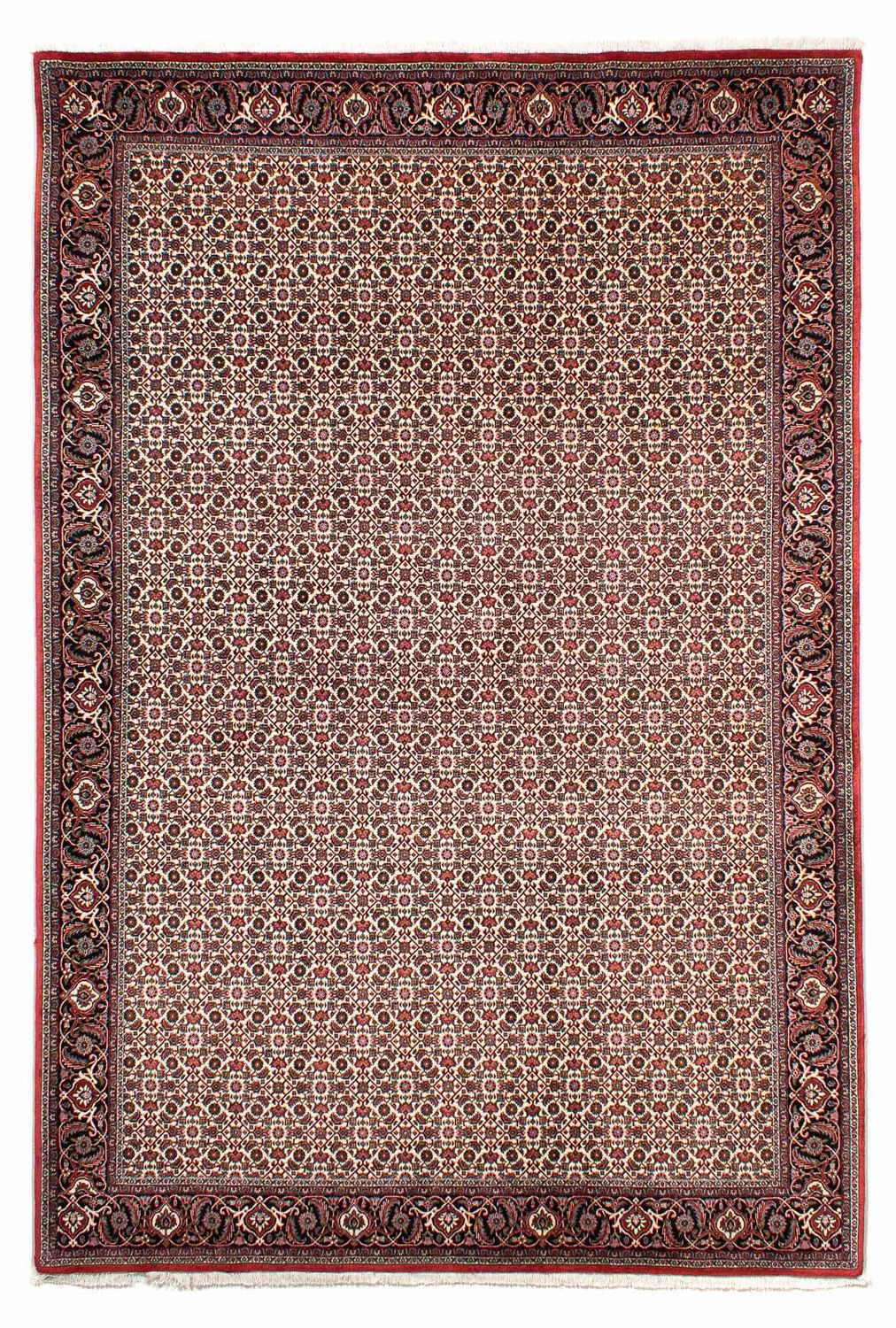
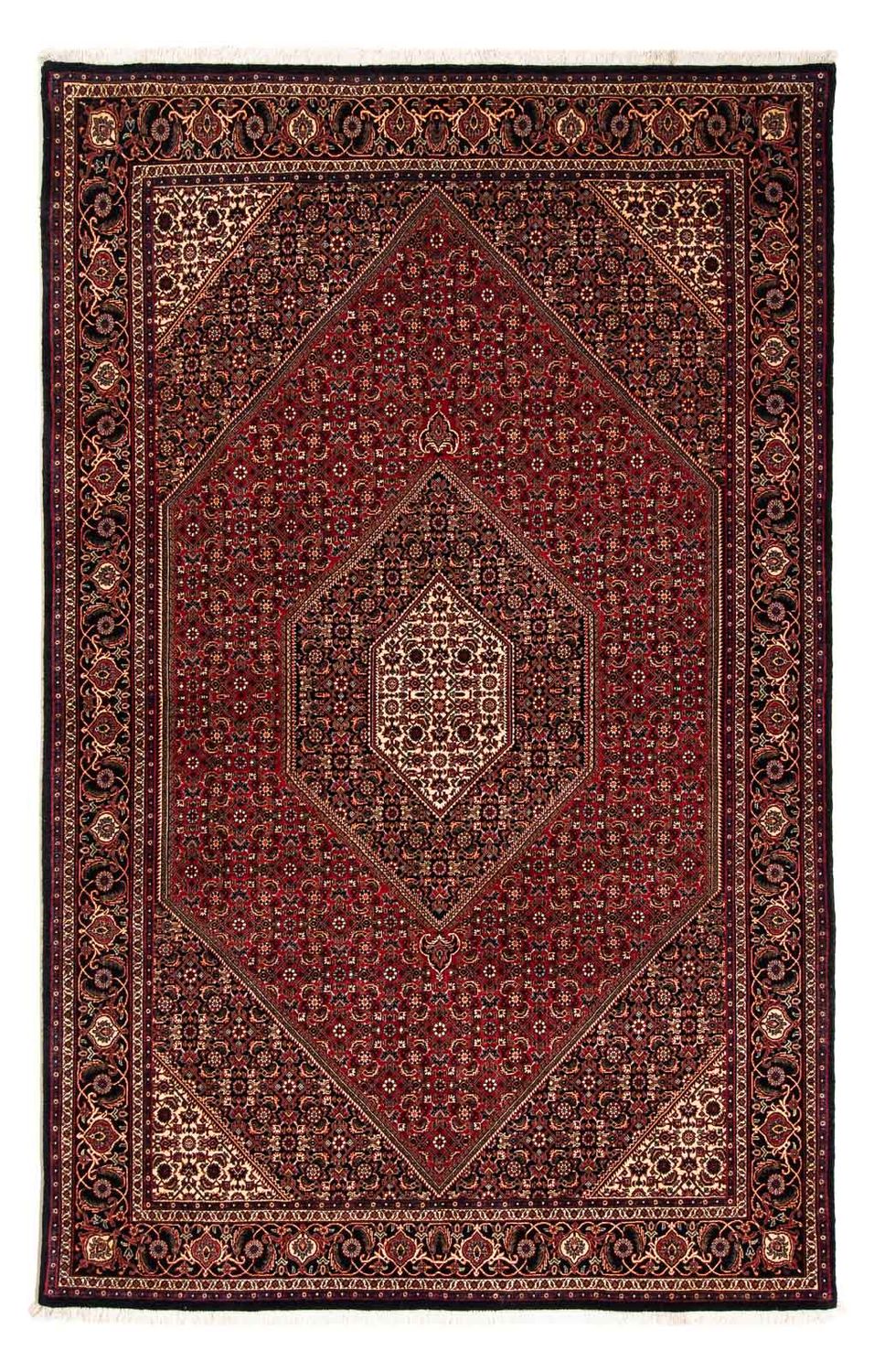
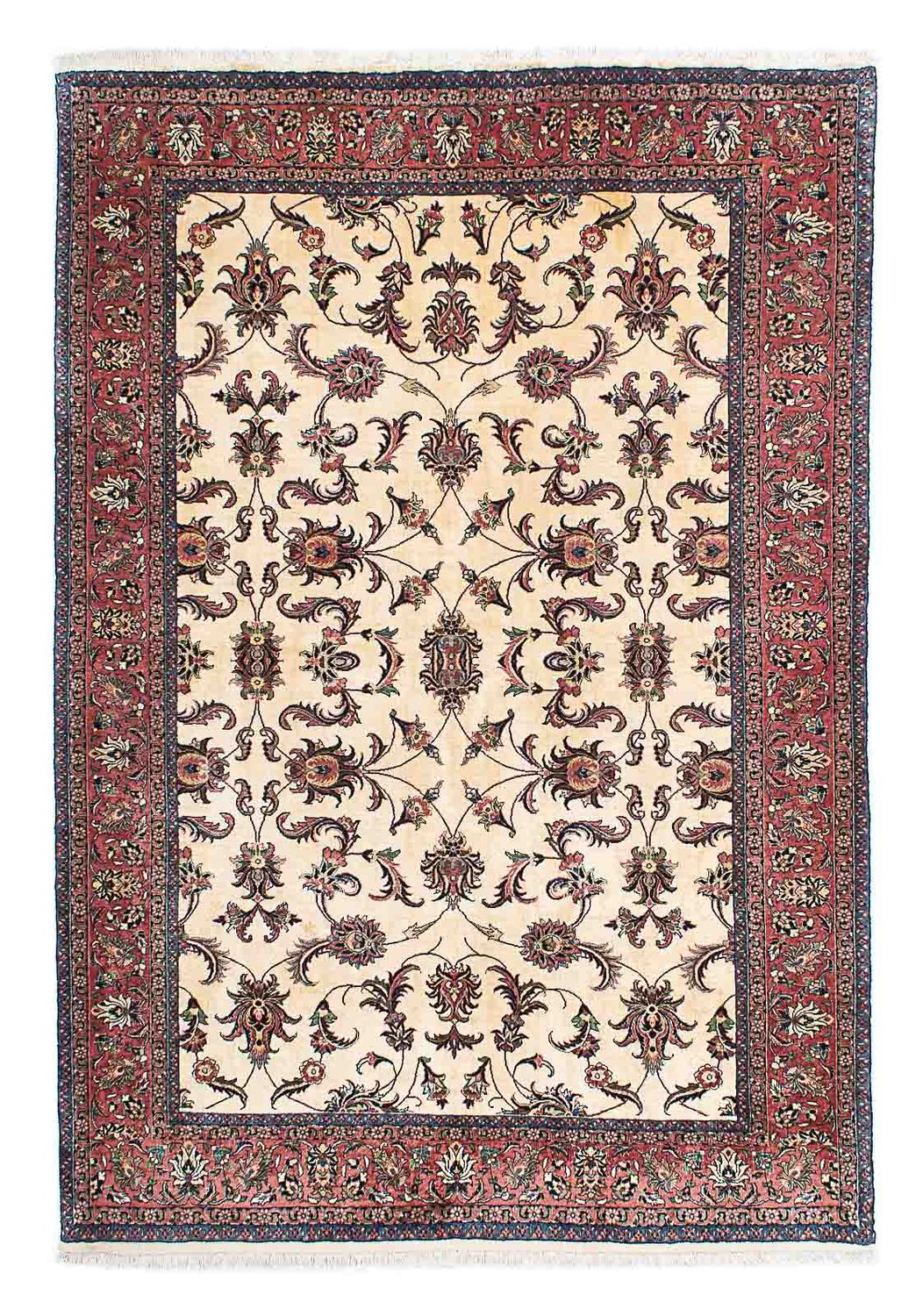
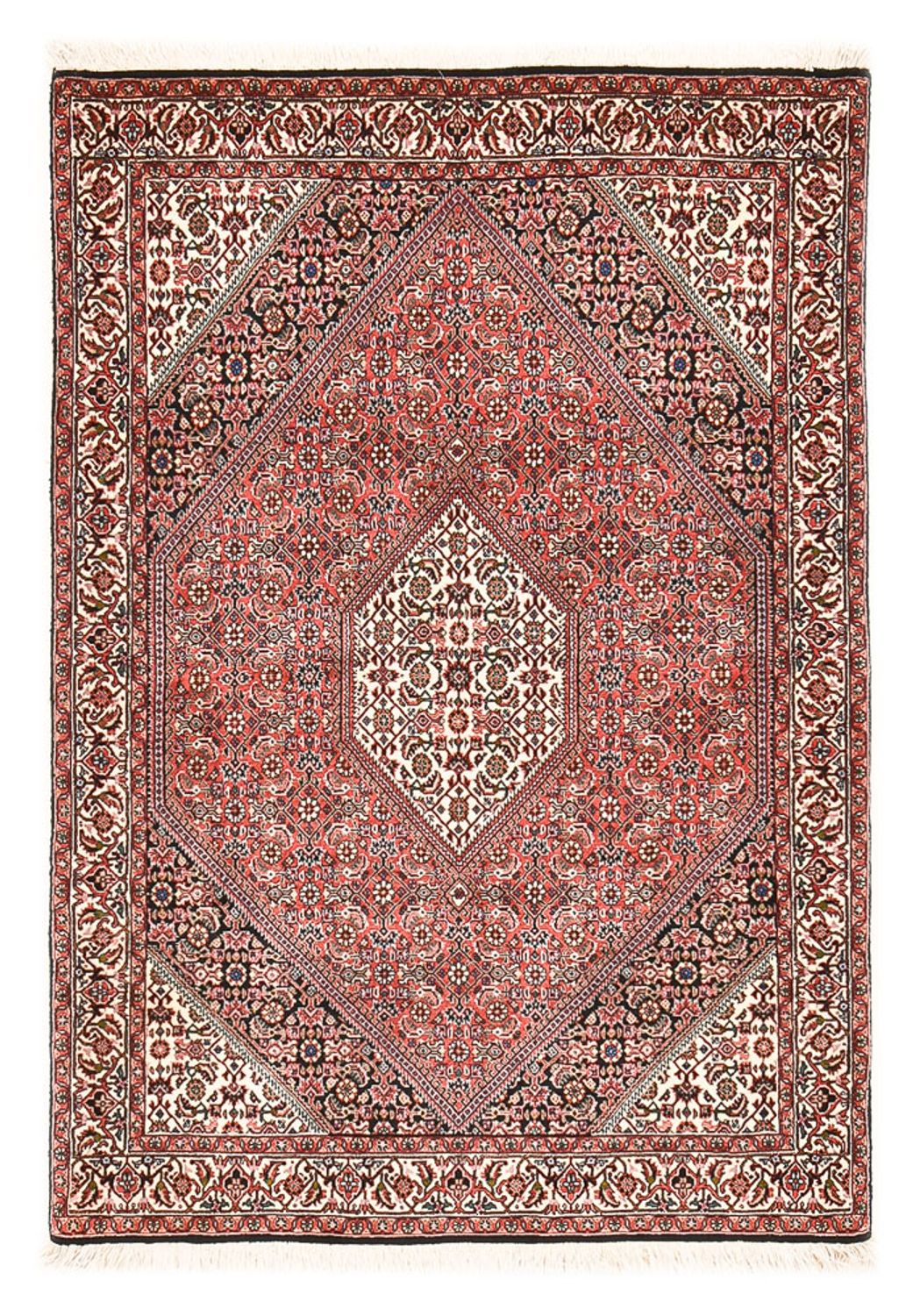
Photo: Morgenland Rugs
Bidjar rugs are hand-knotted Persian rugs from the Kurdish-influenced north-west of Iran that count as the firmest and heaviest oriental rugs of all. In the trade they therefore carry the byname iron rug. They owe their extreme density to an idiosyncratic weaving technique that in this form is applied nowhere else in Persia. Anyone looking for a rug that will outlast generations and yields hardly at all under the hardest use will find in the Bidjar perhaps the most durable piece of knotting craft the Orient has produced.
What is a Bidjar rug?
A Bidjar is a hand-knotted rug from the town of Bidjar and its surrounding villages in the Iranian province of Kurdistan. Characteristic are the exceptional firmness, the high weight, geometrically marked patterns such as the continuous Herati motif and the symmetric Turkish knot on a usually cotton warp. The true unique selling point, however, is not the pattern but the construction: Bidjar rugs are beaten so densely and woven under such strong tension that a piece turns out markedly heavier than a rug of the same size from another provenance.
Bidjar rugs are knotted by Kurdish weavers whose craft tradition has shaped the geometric vocabulary and the robust construction over generations. The Bidjar thus belongs to the family of western Iranian Kurdish rugs, which also includes provenances such as the Koliai and the Senneh.
Origin: the town of Bidjar and the province of Kurdistan
Bidjar lies in the north-west of Iran in the province of Kurdistan, in a high-lying, rough mountain region near the border with Iraq. The town has been a significant centre of rug knotting for centuries and has made its name above all through its particularly robust and long-lived rugs. The surrounding knotting area is inhabited by Kurdish tribes whose craft traditions have shaped the characteristic features of the Bidjar.
The commercial importance of the Bidjar grew above all in the 19th century, when the firm, geometrically drawn rugs of the region also reached western markets via the north-west Persian trade routes. Within the area several provenances with their own profile have established themselves, among them Bidjar Bukan, Bidjar Takab and Bidjar Zanjan, each standing for slightly differing patterns, formats and grades of quality. Stylistically and geographically the Bidjar stands close to the neighbouring Kurdish-influenced Hamadan area, but is clearly set apart from its lighter village rugs by its extreme density.
Patterns and colours
Bidjar rugs are predominantly geometric. Most widespread is the continuous Herati pattern, a motif repeated across the entire field made of a small flower rosette framed by four curved, fish-like leaves. These characteristic herringbone forms give the pattern its Persian name Mahi, that is, fish. Alongside it appear medallion compositions, palmettes, rosettes and occasionally stylised animal figures. The central field, depending on the design, is kept plain or densely filled with a repeating pattern, and the border usually consists of several narrow bands with geometric ornaments.
The palette is rather muted and earth-bound. Deep indigo blue, a saturated red from madder and warm brown tones dominate, supported by accents in ivory, green or gold. Older Bidjar rugs show the calm, harmonious effect of plant-based natural dyeing, often with fine colour shifts. Overall the Bidjar thus feels more serious and restrained than the bright floral manufactory rugs from Kashan or Qom.
Material and knotting technique
The Bidjar is knotted with the symmetric Turkish knot, also called the Ghiordes knot. This firm binding, which wraps both warp threads completely, fits the geometric pattern language and is widespread across the Kurdish-influenced north-west of Iran. With it the Bidjar differs from most central and eastern Persian provenances such as Sarouk or Mashhad, which use the asymmetric Senneh knot. How the two basic knots differ is explained in the article on knot types.
The pile yarn is high-quality, hard-wearing virgin wool from the region. Noticeably, in the Bidjar the weft threads are also frequently made of wool, while the warp is traditionally cotton and, more rarely, also wool. What really makes the difference, however, is the weaving process: the weft threads are drawn in under strong tension and beaten exceptionally firmly against the rows of knots with a heavy, comb-like tool. Traditionally the rug was kept moist during this, so that the fibres swelled on drying and contracted even more tightly. This wet beating is the secret behind the enormous compaction and so behind the characteristic stiffness and high weight of the Bidjar.
Knot density and quality
The knot density of a Bidjar usually lies between 160,000 and 400,000 knots per square metre. Decisive for the famous firmness, however, is not the sheer knot count alone but the combination of dense knotting and extremely firmly beaten weft. A Bidjar can weigh several times as much per area as a comparable village rug, and precisely this weight is in the trade an important authenticity and quality marker. How knot density influences quality and price, and why it must always be read in connection with material and construction, is treated in its own article.
Because of the dense, firm structure, Bidjar rugs can hardly be folded or rolled tightly. A genuine Bidjar feels board-stiff and springs back visibly after being rolled up. This property is intentional and makes the rug almost indestructible. Anyone judging quality looks, alongside weight, for an even, very firm back, a saturated colour image from natural dyeing and the state of the pile and edges.
Bidjar and related provenances in comparison
| Provenance | Relation to Bidjar | Typical features |
|---|---|---|
| Bidjar | umbrella term and main town | extremely dense and heavy, geometric, iron rug |
| Bidjar Bukan | provenance in the area | finer drawing, Kurdish tradition |
| Bidjar Takab | provenance in the area | robust quality, geometric patterns |
| Bidjar Zanjan | neighbouring area | related style, often somewhat lighter |
| Hamadan | neighbouring knotting region | lighter village rugs, single weft |
| Senneh | Kurdish neighbouring rug | very fine, flat, fine Senneh knot |
| Indo Bidjar | Indian reproduction | same design, lower weight, less firm |
What is a Bidjar rug worth?
The value of a Bidjar depends above all on age, condition, size, wool quality, dyeing, density and precise provenance. Because of their enormous durability, well-preserved Bidjar rugs count as a stable store of value, and many examples from the 19th and early 20th centuries are still in excellent condition today. Production of genuine Bidjar rugs in the original, very elaborate technique has declined in recent decades, which makes authentic older pieces increasingly sought after.
Indian reproductions such as the Indo Bidjar take over the design but rarely reach the same density and firmness and lie correspondingly lower in price. For a grounded estimate see the overview of rug value, the guide recognising valuable Persian rugs and the general buying guide. Why natural dyeing plays a big role here is explained in the article on old rugs and their value development.
How do you recognise a genuine Bidjar rug?
Reliable indicators of a genuine Bidjar are:
- High weight and stiffness: a genuine Bidjar feels board-firm and is markedly heavier than a rug of the same size from another origin.
- Symmetric Turkish knot: knotted with the Ghiordes knot, which shows in the very firm, even binding of the back.
- Extremely dense, hard back: the rows of knots sit exceptionally close, and the back can hardly be pressed in.
- Geometric patterns, often the continuous Herati or Mahi motif with its herringbone leaves.
- Muted, earth-bound natural colours of indigo blue, madder red and brown tones rather than garish-colourful shades.
- Woollen weft threads in many older pieces, which adds further to the firmness.
- Fringes as extended warp threads, not sewn on afterwards.
A step-by-step guide for inspection is given in the article Is my rug genuine?. Whether the colours are natural or chemical can be judged with the accompanying article. Anyone checking a piece in the Bidjar style should remember that reproductions from India take over the pattern but usually do not reach the characteristic weight.
Care
Despite its hardness, the Bidjar also needs care. Because of the firm structure, it should not be rolled tightly or sharply creased, since the dense binding tolerates pressure well but sharp folding can stress the warp. Regular vacuuming in the pile direction and the occasional professional cleaning preserve colour and substance. Dab stains immediately with clear water from the outside inwards, without rubbing. Long direct sunlight bleaches even saturated natural colours. Detailed notes are given in the care overview and in the guide to cleaning a wool rug.
Frequently asked questions
Why is a Bidjar so heavy?
The high weight arises from the particular weaving technique: the weft threads are drawn in under strong tension and beaten exceptionally firmly against the rows of knots, traditionally in the moist state. On drying the fibres contract further, so that the rug is extremely compacted. A Bidjar therefore weighs markedly more per area than other Persian rugs.
Why is the Bidjar called the iron rug?
The byname iron rug refers to the exceptional firmness and the high weight. Through the strongly tensioned weft threads and the dense knotting a weave arises so stiff that it feels almost board-like and can only be rolled with difficulty. This hardness makes the Bidjar one of the most durable oriental rugs of all.
What is the difference between Bidjar and Hamadan?
Both come from the Kurdish-influenced north-west of Iran and use the Turkish knot, but the Bidjar is considerably denser, firmer and heavier. The Hamadan is a lighter village rug with a single-weft structure, while the Bidjar acquires its famous stiffness through its elaborate wet beating and turns out markedly more robust.
Are all Bidjar rugs equally robust?
Genuine Bidjar rugs from the original region are throughout very firm and heavy. Indian reproductions such as the Indo Bidjar take over the design but usually do not reach the same density and firmness, because the traditional wet-beating technique is hard to reproduce. Weight is therefore a good distinguishing feature.
Is a Bidjar suitable for heavily frequented areas?
Yes, especially so. Because of its extreme hard-wearingness the Bidjar is ideal for heavily used areas such as entrance halls, living rooms, dining rooms or business premises. It belongs among the most long-lived Persian rugs and survives decades of daily use.
How do I care for a Bidjar rug properly?
Regular vacuuming in the pile direction and a professional cleaning every few years are enough. Because of the firm structure the rug should not be sharply creased. Dab stains immediately with clear water, without rubbing, and avoid long direct sunlight. The robust construction makes the Bidjar especially uncomplicated in daily use.
Impressions of the origin
Places, landscapes and landmarks around the home of Bijar rugs. Click any image for a larger view.