Indo Bidjar rugs: Bidjar interpretation from northern India
Indo Bijar rugs are produced in India in the style of the original Bijar pieces, densely knotted and very durable.
- Region
- India
- Category
- Persian rugs
- Manufacturing
- Hand-knotted in India
- Knot density
- 120,000 – 300,000 knots/m²
Profile
- Manufacturing
- Hand-knotted in India
- Origin
- India — produced after the Persian Bidjar model
- Pile material
- Wool on cotton
- Knot density
- 120,000 – 300,000 knots/m²
- Features
- Dense knotting, geometric medallions, very durable
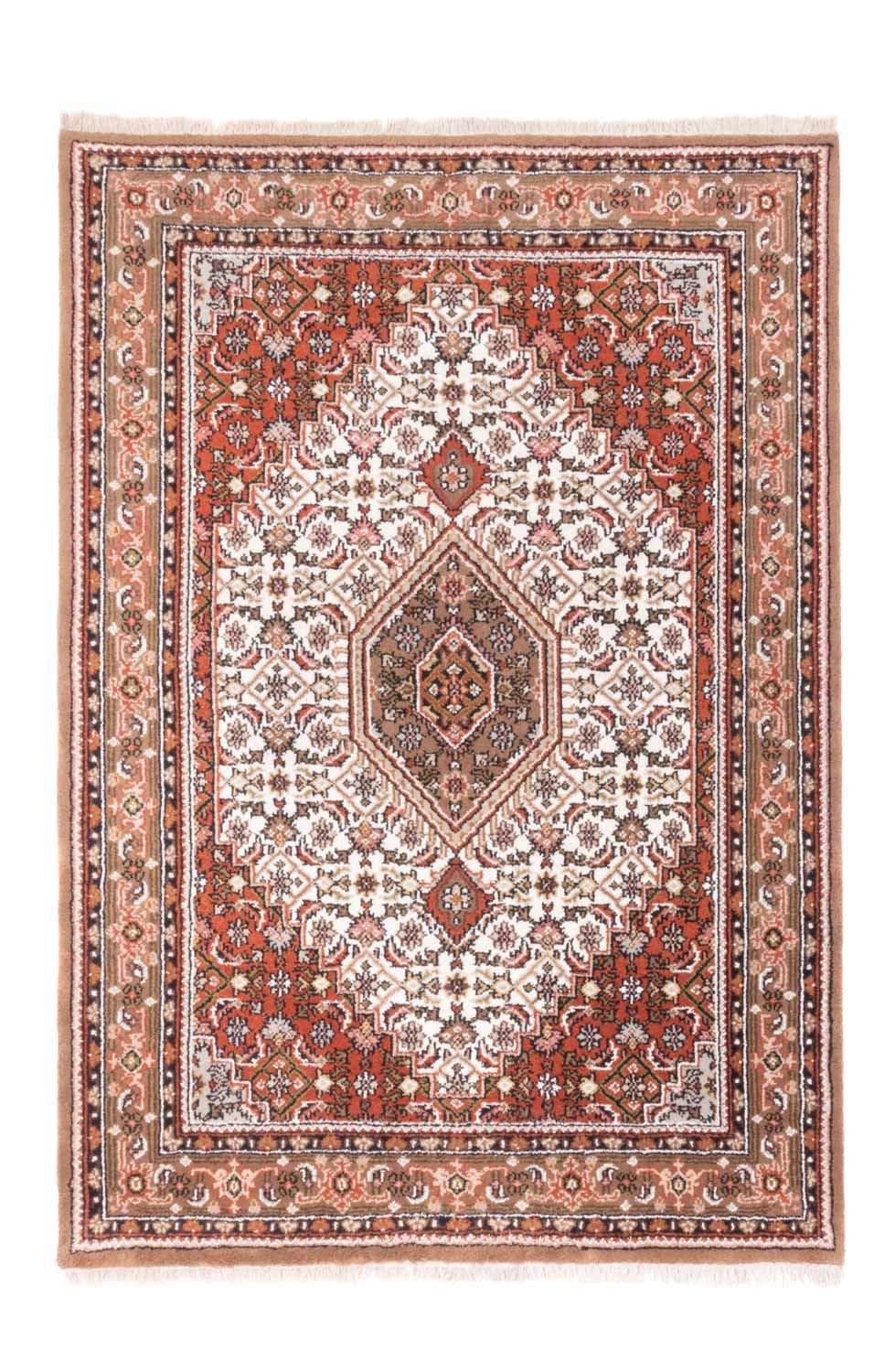
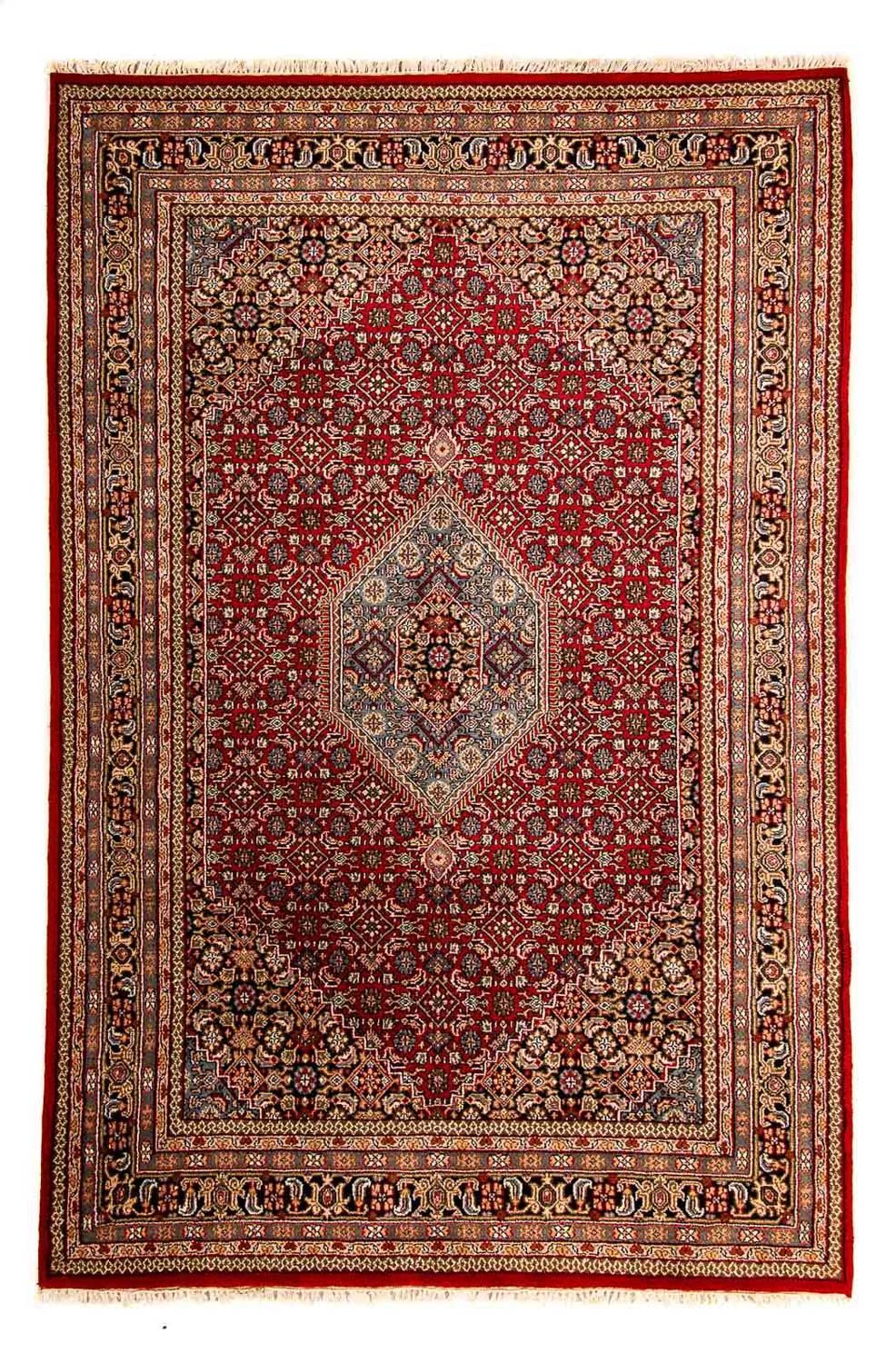
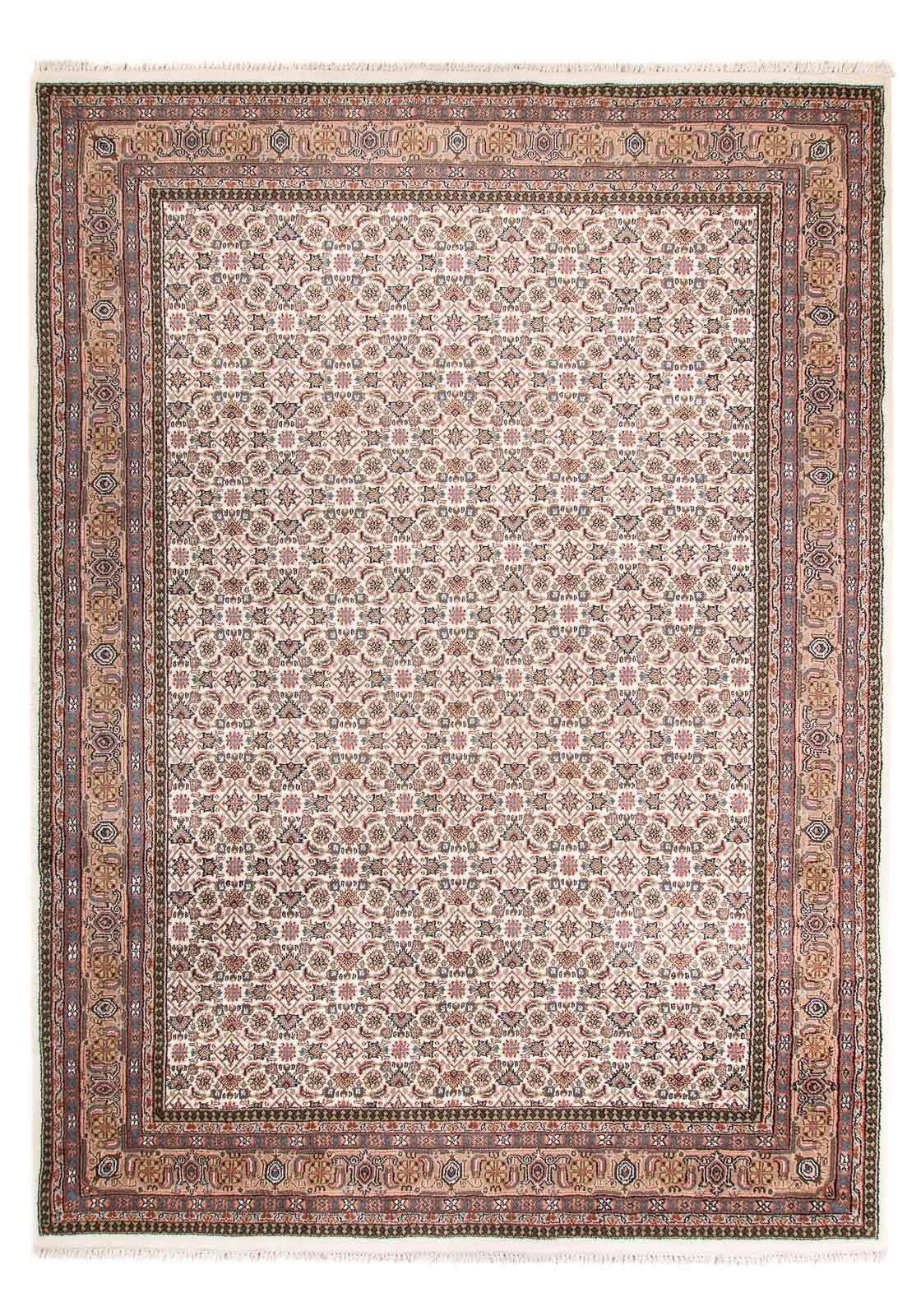
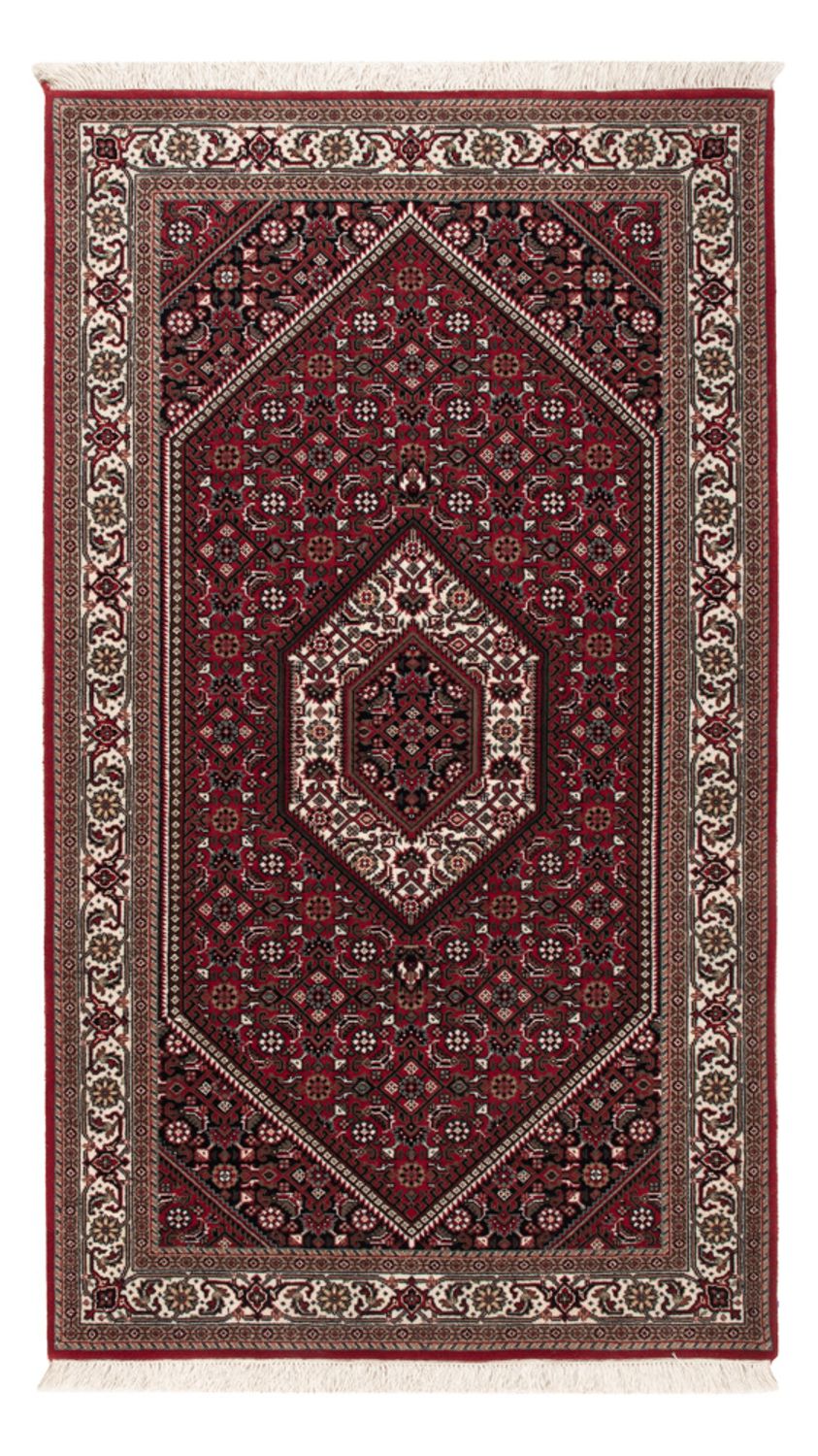
Photo: Morgenland Rugs
Indo-Bidjar rugs are hand-knotted Indian rugs that take up the model of the Persian Bidjar: the dense, heavy weave and the all-over Herati pattern. They are knotted in the major weaving centers of northern India, not in Iranian Kurdistan. Buyers who understand the distinction get a very sturdy everyday rug in the style of the famous original at a significantly lower price. This guide explains what defines the Indo-Bidjar, how it differs from a genuine Bidjar, and what to look for when buying.
What is an Indo-Bidjar rug?
An Indo-Bidjar is the Indian reproduction of a Persian Bidjar. The genuine Bidjar comes from the town of Bidjar in Iran's Kordestan Province and is known as the heaviest and densest of all Persian rugs, often called the "iron of Persia." Indian workshops have adopted this appearance, the tight weave, the deep red and navy, the Herati all-over, and produce it in large numbers for export.
The Indo-Bidjar therefore reflects the style, not the origin. Honestly seen, it is an Indian rug after a Persian pattern, not a Persian from Bidjar. This distinction is decisive for value and classification and runs through the entire article.
Origin
Indo-Bidjar rugs are made in the weaving regions of northern India, primarily in the so-called rug belt around Bhadohi and Mirzapur in Uttar Pradesh state, as well as in Agra and partly in Kashmir. Bhadohi is considered the largest rug-knotting center in Asia and specializes in hand-knotted goods for the world market.
Indo-Persian rug production has a long history. Under the Mughals in the 16th century, court rugs after Persian models were already being made in Agra and Lahore. Today's export industry for Indo-Bidjars, however, only took shape in the second half of the 20th century. After Indian independence in 1947, and especially from the 1970s onward, dealers expanded the knotting centers in a targeted way to serve international demand for classical designs such as Bidjar, Sarough, or Keshan. The genuine Bidjar, by contrast, has its roots among the Kurds of the Iranian region of Persia.
Pattern and color
The Indo-Bidjar reproduces the classical Bidjar repertoire. Defining is the all-over Herati pattern, also called Mahi (fish in the pond): a small rosette in a diamond, flanked by curved leaves that look like fish. Bold central medallions with floral corner spandrels also occur.
The palette follows the original: deep red and navy as base tones, with ivory, beige, and muted green as contrasts. Indian workshops mostly realize the colors with high-quality, lightfast chrome dyes, producing a very even, saturated color picture. The patterns often look somewhat more regular and less idiosyncratic than in an organically grown Kurdish village or city rug, because they are worked from a fixed knotting template.
Material and knotting technique
The pile is virgin wool, warp and weft are cotton. This combination delivers the stability that a Bidjar-style rug needs. Knotting uses the asymmetric Persian knot, also called the Senneh knot, the same knot the Iranian original uses.
The defining feature of the Bidjar is the wet-stuffing technique with an extremely firm beat-down: the weft threads are driven in so forcefully that a particularly dense, hard, and heavy weave results. Good Indo-Bidjars take up this principle and are correspondingly firm and durable, but rarely reach the hardness and weight of a genuine Bidjar. After knotting, the rugs are sheared and washed, often with a luster wash that gives the wool a sheen. More on the process is given under Production and Knotting.
Knot density and quality
The knot density of Indo-Bidjars usually lies between 120,000 and 300,000 knots per square meter. That is solid, but stays below the top values of genuine Bidjars, which can be considerably denser and heavier. Density alone, however, tells little: wool quality, yarn spinning, cleanness of the knotting, and pattern clarity matter alongside. How knot density shapes quality and price is covered in a dedicated guide.
| Feature | Indo-Bidjar | Genuine Bidjar (Persia) |
|---|---|---|
| Origin | India (Bhadohi, Mirzapur, Agra) | Bidjar, Kordestan Province, Iran |
| Knot | asymmetric Persian knot | asymmetric Persian knot |
| Weave | dense and firm, medium-heavy | extremely dense, hard, very heavy |
| Wool | Indian virgin wool, often luster-washed | sturdy highland wool of the region |
| Knot density | approx. 120,000 to 300,000/m² | often higher, very firmly stuffed |
| Price | inexpensive to mid-range | clearly higher, some collector value |
What is an Indo-Bidjar rug worth?
Indo-Bidjars are inexpensive to mid-range everyday rugs. They typically cost a fraction of a comparable genuine Bidjar and offer good value in return: plenty of sturdy area in the classical style for modest outlay. Value is determined by size, knot density, wool quality, condition, and pattern clarity.
An increase in value as with old Persian pieces is not to be expected. Indo-Bidjars are not an investment but durable rugs for everyday use. Anyone planning to invest in a genuine Persian will find guidance under Rug value and in the buying guide. For setting valuable originals apart, see Recognizing valuable Persian rugs.
How to recognize an authentic Indo-Bidjar
With a few checks an Indo-Bidjar can be classified and set apart from the Persian original:
- Check the back: Hand-knotted, the back shows the pattern clearly in mirror image; individual knots are visible. Machine-made goods have an evened-out, often glued back.
- Weigh the weave: An Indo-Bidjar is firm and heavy, but usually somewhat lighter and more flexible than a genuine Bidjar, which feels unusually hard and stiff.
- Regularity of knotting: Very even knots and a flawlessly symmetric Herati pattern point to Indian workshop production from a template.
- Wool and sheen: Luster-washed, very uniformly dyed wool is typical of Indian production.
- Fringes: Genuine hand-knotted rugs carry the fringes as extended warp threads, not sewn on.
A systematic instruction is offered in Recognizing origin. Basics for authenticity checks are given in the overview Recognizing a rug and Is my rug authentic?.
Care
Indo-Bidjars are low-maintenance thanks to their firm weave and sturdy wool, and suitable for heavily used rooms. Regular vacuuming in the pile direction, immediate blotting of stains with clear water without rubbing, and occasional professional cleaning maintain quality. Long direct sun exposure fades the colors. Detailed guidance is given in the care overview and under Cleaning a wool rug.
Frequently asked questions
What is the difference between an Indo-Bidjar and a genuine Bidjar?
The genuine Bidjar comes from the town of Bidjar in Iranian Kordestan and is known as the heaviest, densest Persian rug. The Indo-Bidjar is knotted in India after this model. Both use the asymmetric Persian knot, but the Indian piece is usually somewhat less dense and lighter, in return considerably less expensive.
Are Indo-Bidjar rugs genuine Persian rugs?
No. A Persian rug must be knotted in Iran. Indo-Bidjars reproduce the Persian Bidjar style but are Indian rugs. They are hand-knotted and qualitatively solid, but must not be sold as Persians.
What does an Indo-Bidjar rug cost?
Indo-Bidjars sit in the affordable to mid-range segment and usually cost only a fraction of a genuine Bidjar. The exact price depends on size, knot density, wool quality, and condition.
Are Indo-Bidjar rugs suitable for heavily used rooms?
Yes. The firm, dense weave and the hard-wearing wool make Indo-Bidjars very suitable for everyday life. They work well in living rooms, hallways, and dining areas with high use.
How do I assess the quality of an Indo-Bidjar?
Look for even, dense knotting, a saturated color picture without garish tones, a clean back, and firm edges. Higher knot density and handspun wool point to better quality.
What sizes are common for Indo-Bidjar?
Indo-Bidjars are made mainly in common living-room formats, such as 200 x 300 cm, 250 x 350 cm, and 300 x 400 cm. Runners and smaller formats also occur.
How do I properly care for an Indo-Bidjar?
Vacuum regularly in the pile direction, blot stains immediately with clear water without rubbing, and have the rug professionally cleaned every few years. Long direct sun exposure should be avoided to prevent fading.
Impressions of the origin
Places, landscapes and landmarks around the home of Indo Bijar rugs. Click any image for a larger view.
Related styles
Bijar
Bijar rugs from Iranian Kurdistan are considered the most durable Persian rugs, densely knotted and exceptionally hard-wearing.
Indo Qom
Indo Qom rugs are produced in India in the style of the Persian Qom, fine craftsmanship at more accessible prices.
Indo Tabriz
Indo Tabriz rugs are produced in India after the famous Tabriz model, diverse designs and refined craftsmanship.