Sarab rugs: camel-hair runners from the Heriz region
Sarab rugs come from East Azerbaijan and are typical for their long runner formats with camel-colored grounds.
- Region
- Persia / Iran
- Category
- Persian rugs
- Manufacturing
- Hand-knotted
- Knot density
- 80,000 – 180,000 knots/m²
Profile
- Manufacturing
- Hand-knotted
- Origin
- Iran — Sarab, East Azerbaijan Province
- Pile material
- Wool on cotton
- Knot density
- 80,000 – 180,000 knots/m²
- Features
- Camel-colored ground, runner formats, geometric medallions
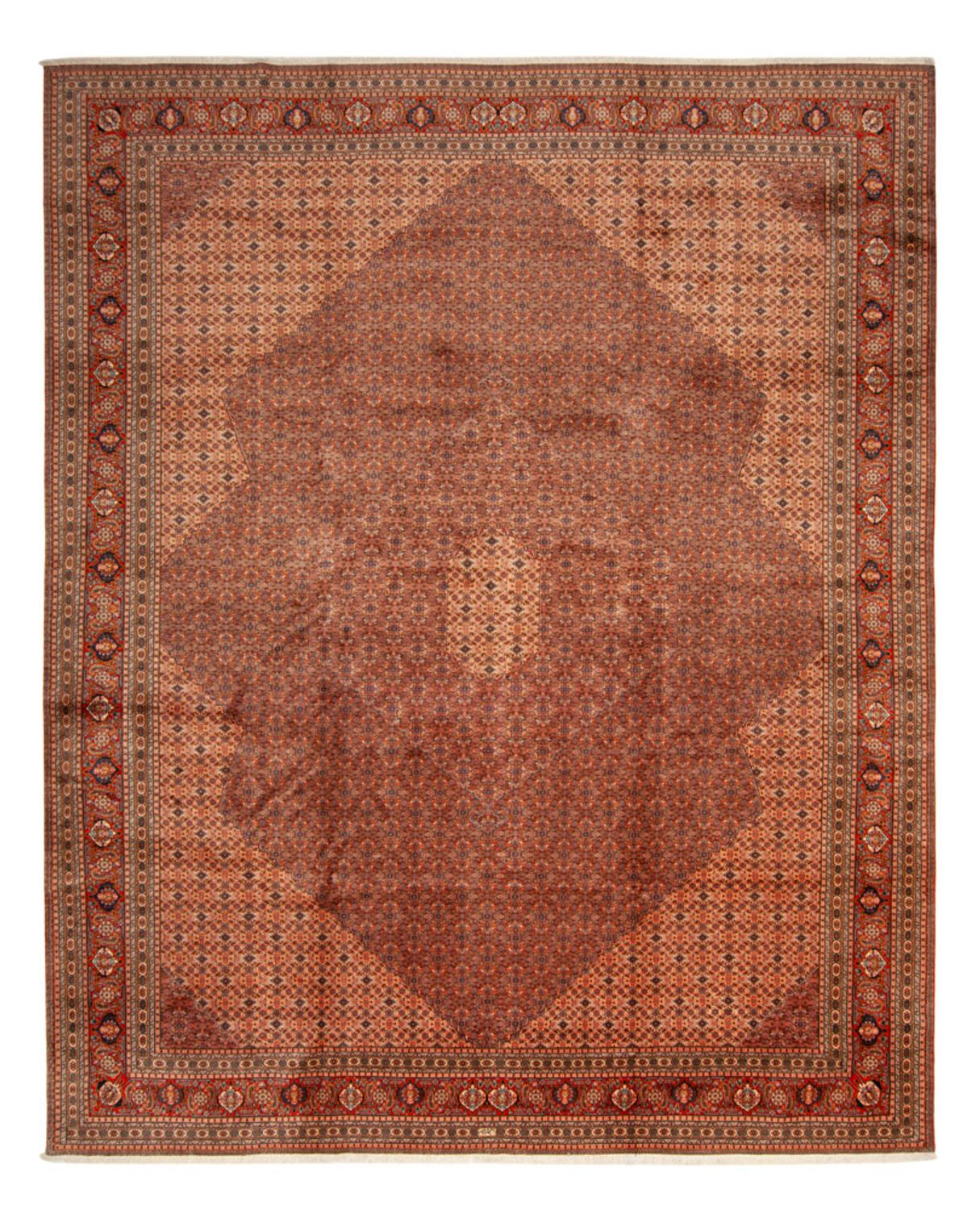
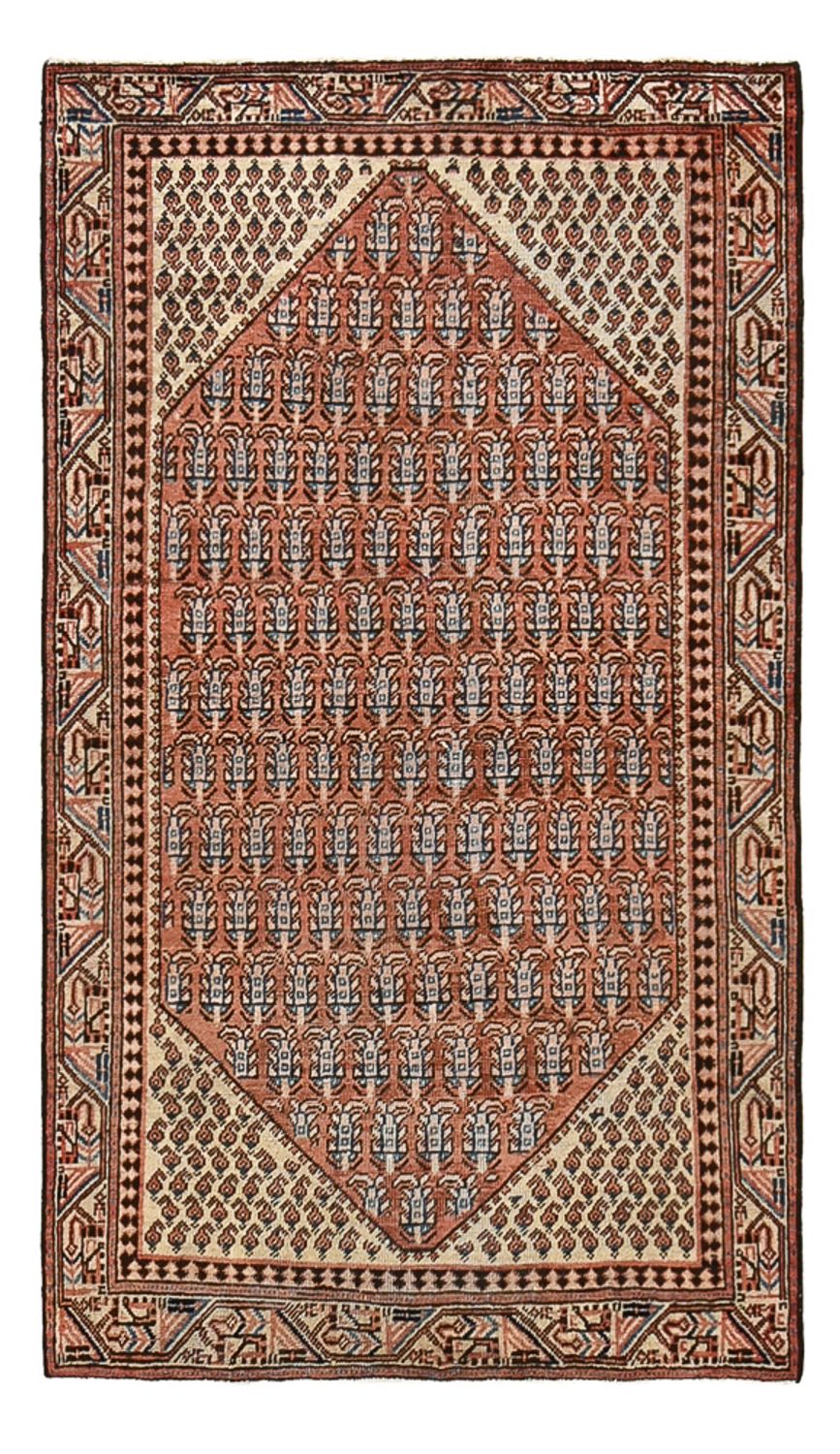
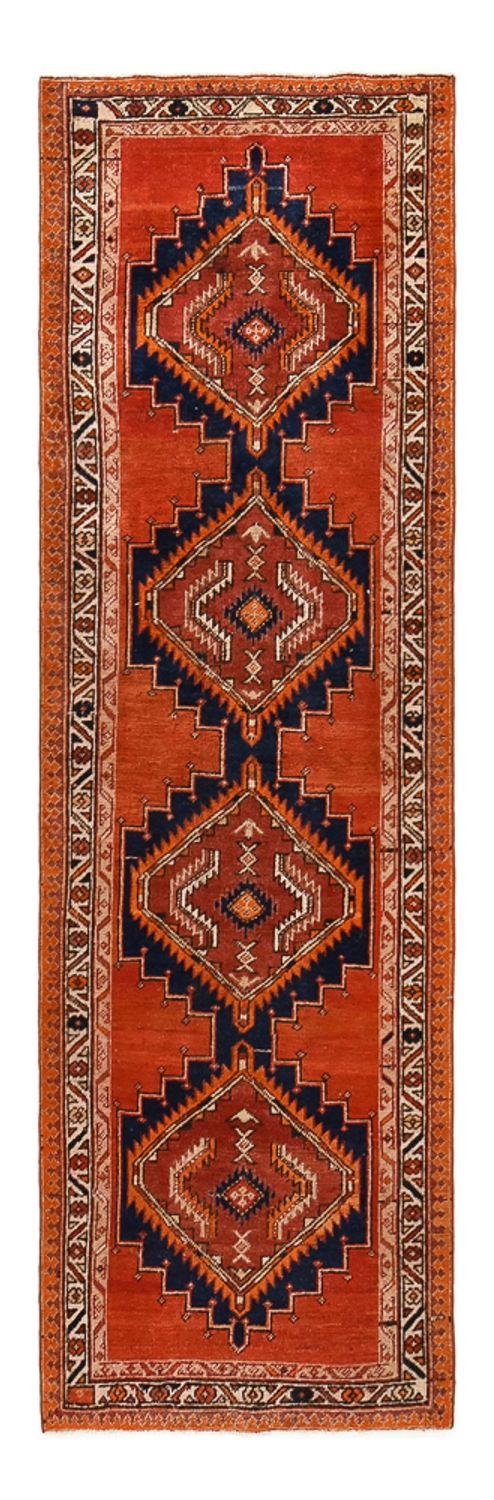
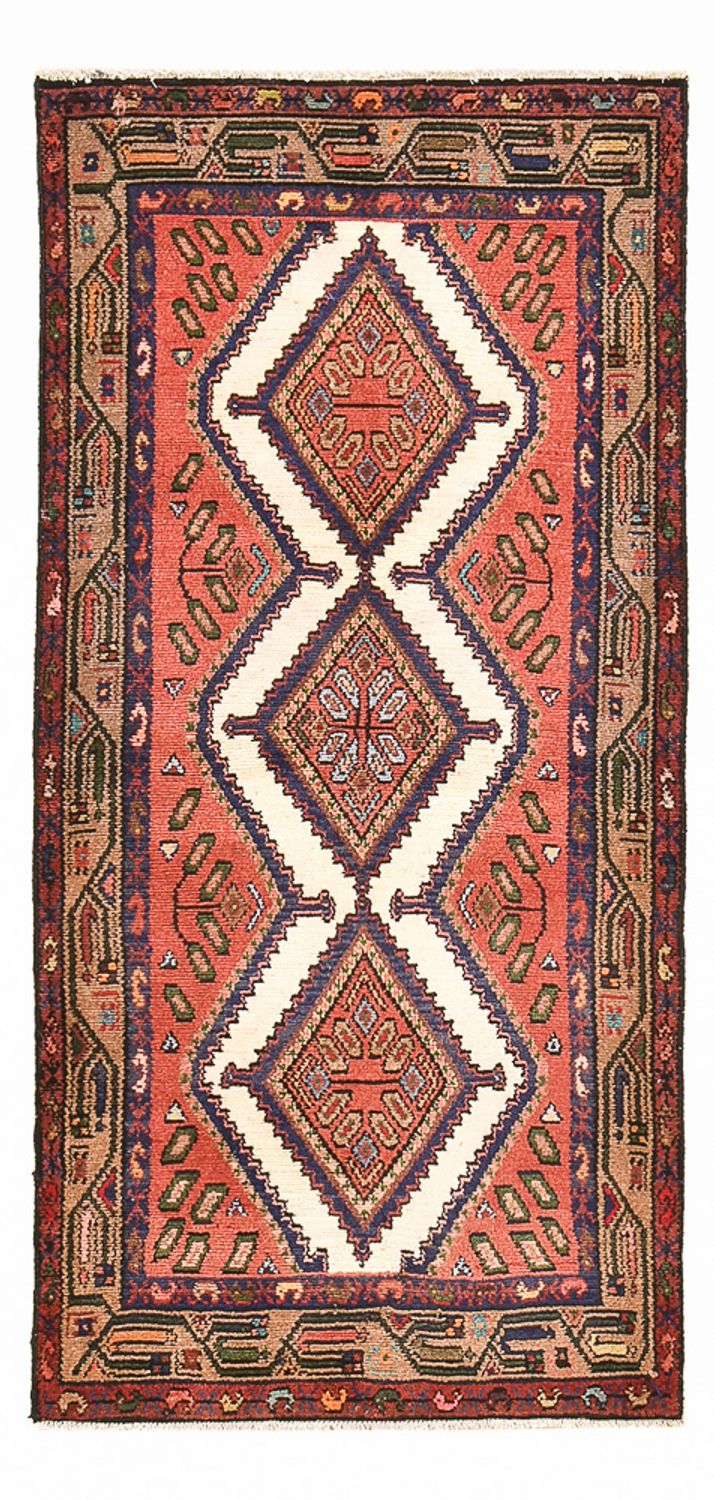
Photo: Morgenland Rugs
Sarab rugs are sturdy hand-knotted Persian rugs from north-western Iran, from the eponymous town in the Heriz area of East Azerbaijan province. They are known above all for their elongated runner formats and their warm, earthy, often camel-coloured appearance. As part of the larger Heriz region, the Sarab shares many features of the north-west Persian village rugs but has developed its own identity through its long medallion compositions.
What is a Sarab rug?
A Sarab is a hand-knotted village rug from the town of Sarab and the surrounding settlements. Characteristic features include the symmetric Turkish knot, a sturdy wool pile, elongated geometric medallions, and the frequent use of natural, camel-coloured wool tones. Sarab rugs are knotted as runners far more often than average, that is, in narrow, long formats that were traditionally much in demand in Persian houses and hallways.
Origin
The town of Sarab lies about 140 kilometres south-east of Tabriz, on the way to the provincial capital Ardebil, at the foot of the Sabalan massif. The region belongs to the wider family of Persian rugs and has been known for its village knotting for centuries. Through the Turkic-speaking population and the proximity to the Caucasus, the knotting carries its own, geometrically shaped signature.
Sarab lay on an important trade route between Tabriz and the Caspian area, historically part of the Silk Road network. This through-traffic favoured the exchange of patterns and materials and helped carry the region's goods into supra-regional trade. The location within the Heriz region explains the close stylistic kinship with Heriz, Garawan, and Qaraja.
Patterns and colours
Sarab rugs usually show one or several elongated, angularly outlined medallions that follow the long shape of the runners. Often several smaller medallions or diamond-shaped fields are lined up along the central axis. The motifs are geometrically resolved, with stylised blossoms, hooks, and vine fragments in the inner field.
The palette is dominated by warm tones: a muted red or terracotta, with dark blue, green, and above all the typical camel-coloured beige and sand tones that give many Sarabs their characteristic, restrained warm presence. The border usually consists of several narrow bands with geometric patterns framing the elongated central field. Overall a Sarab feels calm, earthy, and distinctly more geometric than the curvilinear workshop patterns from Isfahan.
Material and knotting technique
Sarab rugs are made predominantly of wool. The pile is sturdy local sheep's wool, often complemented by natural, camel-coloured tones. On classical pieces warp and weft are often also wool, while other examples use a cotton warp. The wool traditionally comes from regional flocks and is classically dyed with natural dyes.
Knotting uses the symmetric Turkish knot, also called the Ghiordes knot. This knot is the rule across the entire north-west Persian belt and shapes the characteristic back structure. The pile is usually sheared medium-long to long, which gives the rugs a pleasant, soft feel. How the individual steps from shearing to finished knotting work is described in the overview of rug production; the materials used are covered in their own article.
Knot density and quality
The knot density of a Sarab usually lies between 80,000 and 200,000 knots per square metre, which makes it a rug of medium fineness. This range covers sturdy village ware as well as more carefully worked runners with a clearer medallion drawing. How knot density affects fineness, durability, and price is explained in its own article.
For assessing quality, wool quality, the soft hand of the pile, and the naturalness of the colours matter alongside knot count. Older Sarab rugs with hand-spun wool and natural dyes develop a fine, velvety patina over the years.
| Provenance | Relation to Sarab | Typical features |
|---|---|---|
| Sarab | own village provenance, Heriz area | elongated medallions, many runners, camel-hair tones |
| Heriz | neighbouring main provenance | large angular single medallion |
| Garawan | coarser Heriz tier | robust medallion, double weft |
| Qaraja | neighbouring region | octagonal stacked medallions |
| Ardebil | nearby provincial capital | geometric and floral medallions |
| Tabriz | nearby urban centre | fine workshop ware, curvilinear patterns |
What is a Sarab rug worth?
The value of a Sarab depends above all on age, condition, size, format, knot density, and wool quality. Well-preserved old runners with fine, soft wool and natural camel-hair tones are particularly sought after and can sit clearly above plain trade ware. As a north-west Persian village rug, the Sarab as a whole moves below the fine urban rugs from Tabriz, but through its toughness and warm character offers good value for money.
For a grounded assessment, see the article Identifying valuable Persian rugs, the general guidance on rug value, and the buying guide.
How can you tell a genuine Sarab rug?
Typical signs of a genuine Sarab include:
- Elongated format, often knotted as a long, narrow runner.
- Long, angularly outlined medallions along the central axis, often several in succession.
- Camel-coloured beige and sand tones as the defining warm base mood.
- Symmetric Turkish knot with an even back structure.
- Predominant wool construction, with classical pieces also showing wool warp and weft.
- Fringes as extended warp threads, not sewn on afterwards.
Since Sarab and the neighbouring provenances of the Heriz family are related, the classification should weigh format, pattern, material, and back together. Identifying provenance and the step-by-step Is my rug genuine? provide help.
Care
The robust wool quality makes Sarab rugs easy to care for. Regular vacuuming in the direction of the pile and occasional professional cleaning preserve quality. Spills should be treated at once with clear water, without rubbing. The rug should be protected from long, direct sunlight to keep the warm tones from fading. For runners in heavily used hallways, turning the rug occasionally is recommended for even wear. Detailed guidance is in the care overview and in the article on cleaning a wool rug.
Frequently asked questions
What distinguishes a Sarab from a Heriz?
The Sarab is often knotted as a long, narrow runner and shows elongated medallions along the central axis, often in warm camel-hair tones. The Heriz is usually a larger area format with a single large central medallion. Both come from the same north-west Persian knotting area.
Which knot is used for a Sarab rug?
Sarab rugs are knotted with the symmetric Turkish knot, the Ghiordes knot. This is the rule across the north-west Persian belt around Heriz and Tabriz.
Why are there so many Sarab runners?
Long, narrow runners were traditionally much in demand in Persian houses and hallways. The knotters in Sarab specialised in this format, which is why the Sarab appears especially often as a runner in trade.
Are Sarab rugs suitable for heavily used areas?
Yes. The robust wool construction and the solid Turkish knotting make Sarab rugs very hard-wearing. The runner formats in particular are well suited to hallways, entryways, and other heavily used paths.
What does a Sarab rug cost?
The price depends on age, condition, size, format, and wool quality. Well-preserved old runners with soft wool and natural camel-hair tones are particularly sought after and sit above plain trade ware.
How do I care for a Sarab rug correctly?
Vacuum regularly in the direction of the pile and have the rug professionally cleaned every few years. Blot spills at once with clear water without rubbing, and avoid long, direct sunlight. Turn runners in hallways occasionally so they wear evenly.
Impressions of the origin
Places, landscapes and landmarks around the home of Sarab rugs. Click any image for a larger view.
Related styles
Heriz
Heriz rugs from northwestern Iran are known for their bold geometric medallions and exceptional durability.
Mehraban
Mehraban rugs come from a village in East Azerbaijan and show robust geometric medallions related to Heriz pieces.
Karaja
Karaja rugs come from the Arasbaran forests of East Azerbaijan and show simple geometric medallions in long runner formats.


