Tabatabai rugs: fine manufactory weave from the Isfahan area
Tabatabai rugs are named after the renowned house in Kashan and represent the highest level of Kashan workshop quality.
- Region
- Persia / Iran
- Category
- Persian rugs
- Manufacturing
- Hand-knotted
- Knot density
- 400,000 – 1,000,000+ knots/m²
Profile
- Manufacturing
- Hand-knotted
- Origin
- Iran — Kashan, Isfahan Province
- Pile material
- Kurk wool and silk on cotton
- Knot density
- 400,000 – 1,000,000+ knots/m²
- Features
- Workshop-grade fine knotting, classic Kashan medallions, silk highlights
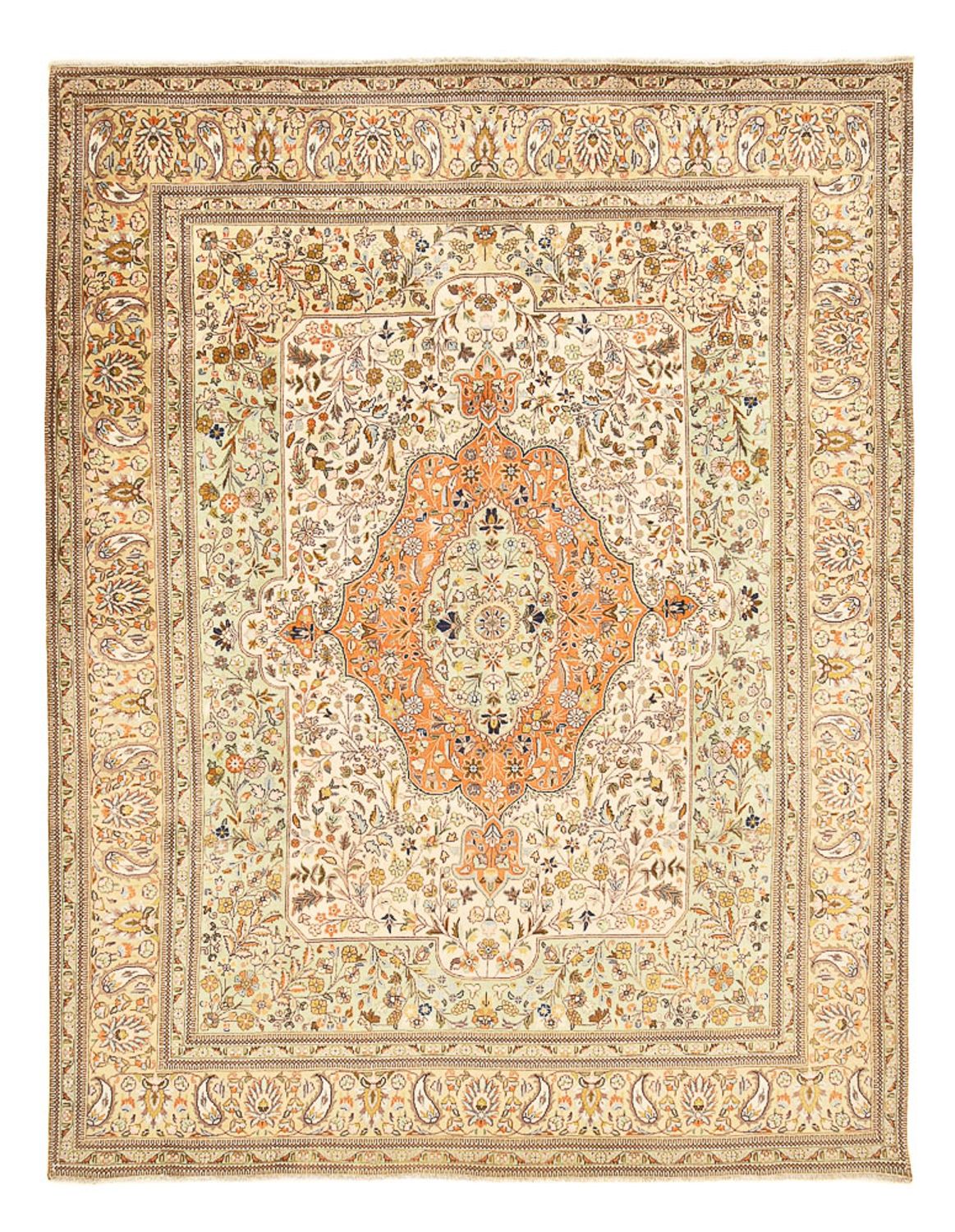
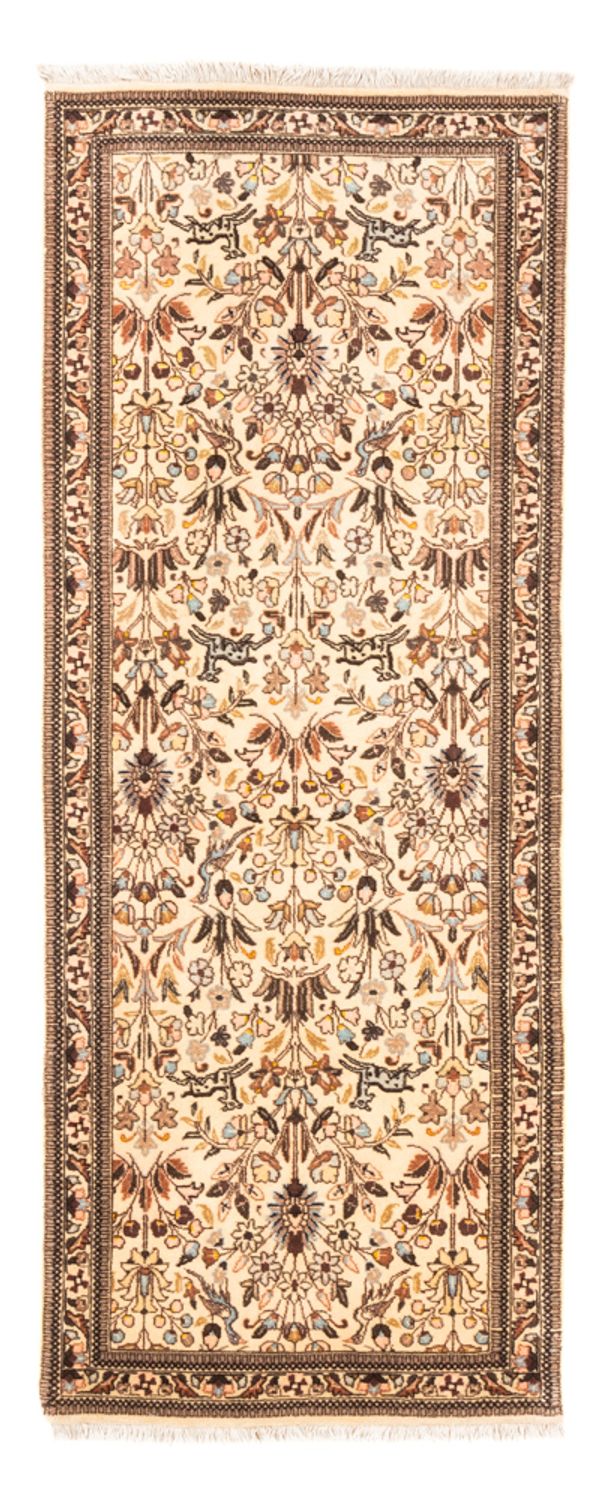
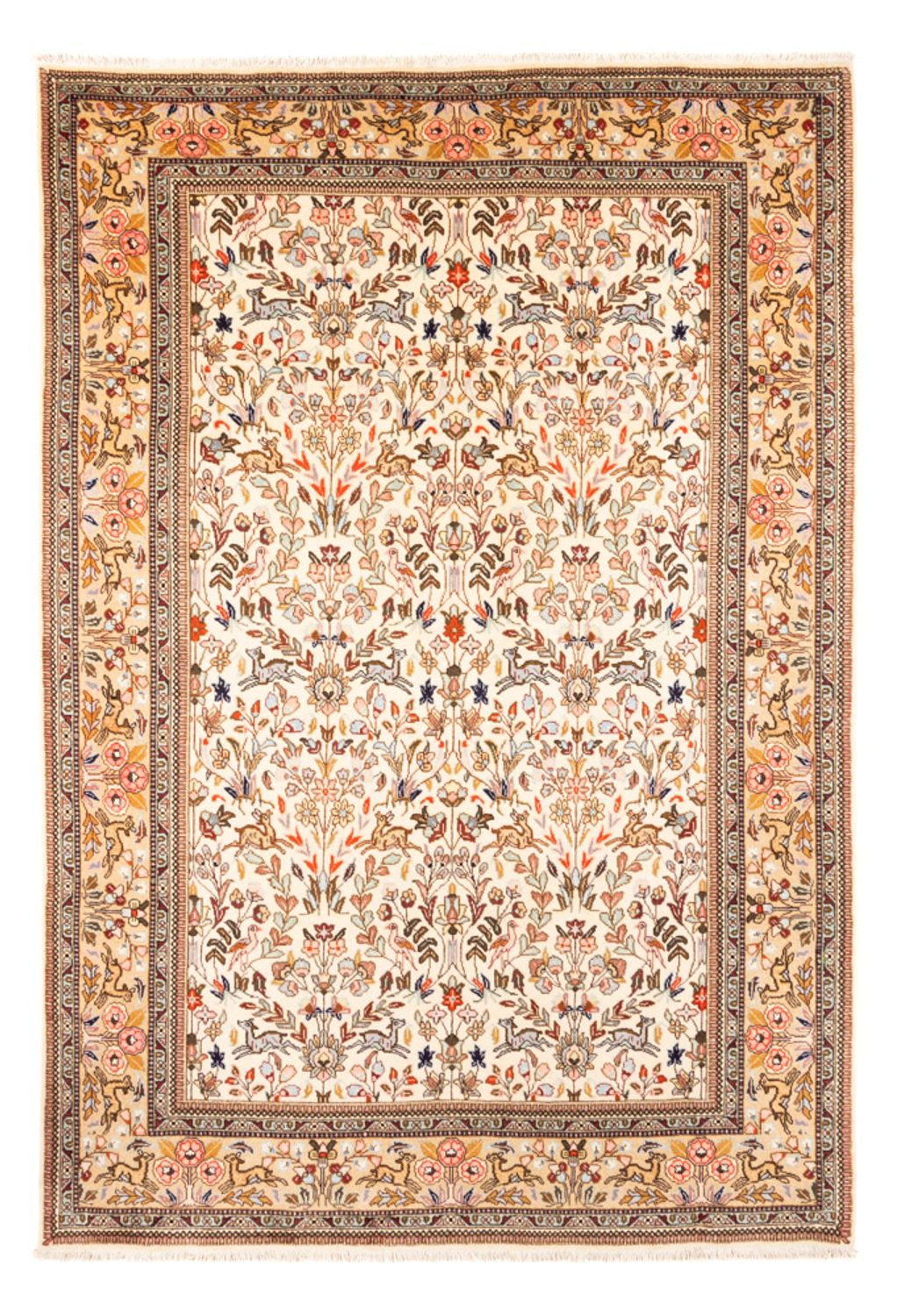
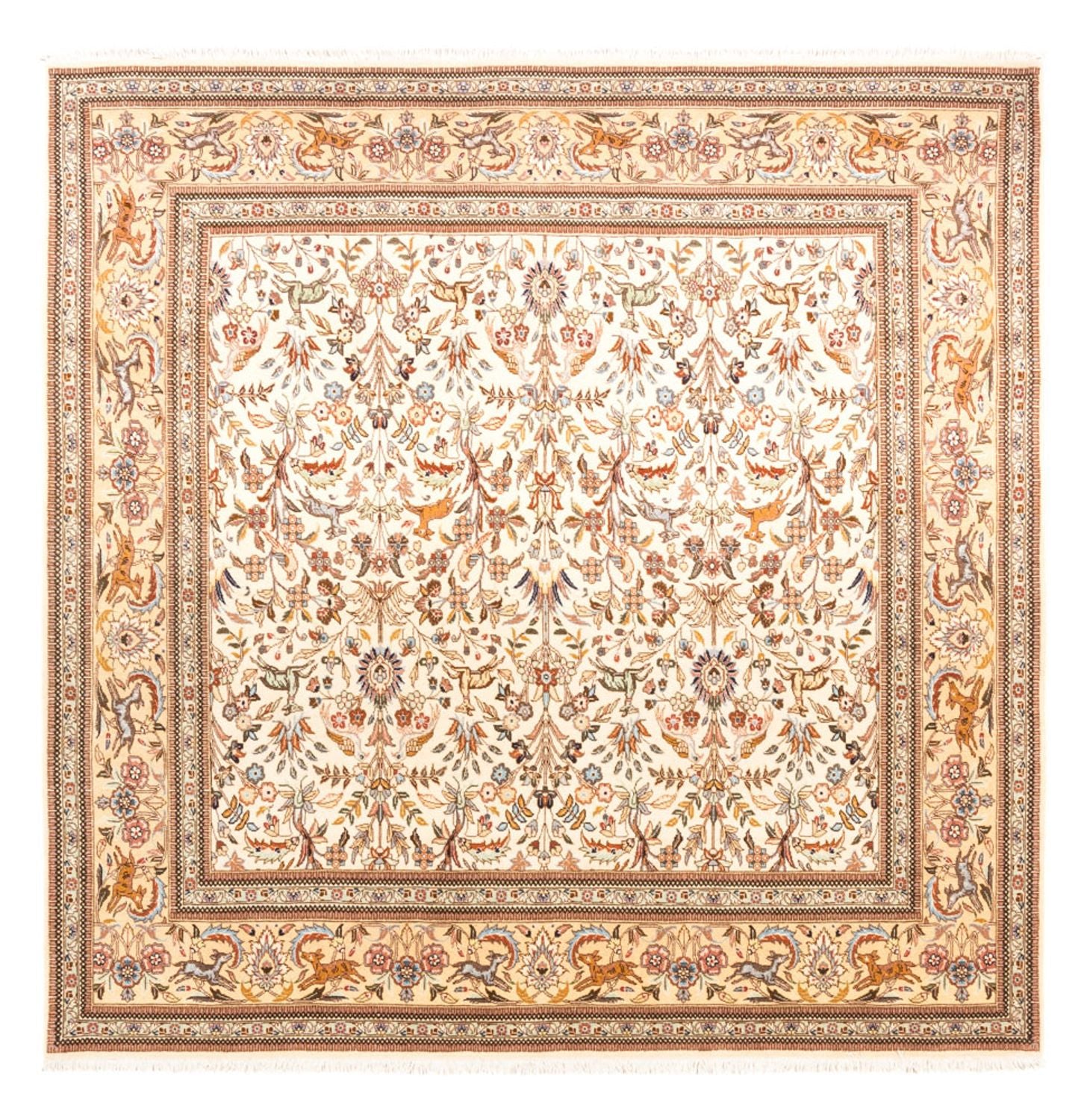
Photo: Morgenland Rugs
Tabatabai rugs are finely knotted Persian rugs from the central Persian workshop tradition, above all from the region around Isfahan and neighbouring knotting centres. The name goes back to the influential Tabatabai family, known as patrons and commissioners of high-quality rugs. Tabatabai stands for classical floral designs with a central medallion, precise detail drawing, and high knot densities, and so belongs to the demanding representatives of Persian rugs.
What is a Tabatabai rug?
A Tabatabai is a hand-knotted workshop rug in the classical central Persian style. Knotting uses the asymmetric Persian knot, the Senneh knot, on a cotton warp with a fine wool pile; particularly fine pieces use silk for details or for the entire pile. Characteristic features are symmetrically arranged floral ornaments with a central medallion, a balanced palette of deep red, blue, ivory, and beige, and a high knot density that allows the finest pattern drawing. The name points to a design tradition and workshop line, not exclusively to a single place.
Origin
Tabatabai rugs are rooted in the court workshop art of central Persia, whose centre since the Safavid period in the 16th and 17th centuries has been the metropolis of Isfahan. In this era arose the classical floral court patterns with medallion, arabesques, and Shah Abbas palmettes that still shape the central Persian style today. The Tabatabai family appeared in this and in later times as patron and commissioner of particularly high-quality rugs, mainly made in workshops for wealthy families and for export.
Over the centuries the name established itself as a label for a particular design tradition and quality line of central Persian rug art. Tabatabai rugs are made both by tradition-rich workshops and by contemporary knotters who interpret and develop the classical patterns further. Stylistically they stand close to the provenances Isfahan, Najafabad, and Nain, with which they share visual language and workshop ambition.
Patterns and colours
The defining Tabatabai design is the floral medallion composition: a central medallion surrounded by symmetrically arranged vines, arabesques, and blossom ornaments, complemented by matching corner fillings. Characteristic is the precise, finely articulated execution of the patterns, which presupposes a high knot density. The composition feels formal and curvilinear, in the tradition of the court Isfahan workshops.
The palette covers traditional tones such as deep red, blue, ivory, and beige, complemented by accent colours in green and gold. This balanced colour world underscores the formal, classical character. The borders usually show several bands with floral or geometric motifs framing the dense field in harmony.
Material and knotting technique
The pile is traditionally knotted from high-quality sheep's wool; for particularly fine examples silk is used for the contouring of details or for the entire pile, which sharpens the pattern drawing and brings sheen to the surface. The warp is usually cotton and gives the rug stability and a straight set; on silk pieces silk can also serve as the foundation weave.
Knotting uses the asymmetric Senneh knot, the typical knot of Persian rugs, which allows a particularly dense and even surface and so the finest detail drawing. The colours used come from both natural and high-quality synthetic dyes. How knotting works in detail is described in the overview of rug production and especially under knotting.
Knot density and quality
The knot density of a Tabatabai typically lies between 300,000 and 600,000 knots per square metre, on the finest pieces even higher. This high density is the precondition for the precise, finely articulated pattern drawing that distinguishes the style. Within this range, wool quality, silk share, yarn fineness, and care of knotting decide the merit of the individual piece.
Making a medium-sized Tabatabai can take between half a year and two years, depending on complexity and knot density. High-quality Tabatabais show an even, very dense knotting, precisely executed patterns, and a balanced colour picture. How knot density affects quality and price, and why it must always be read together with material and pattern clarity, is covered in its own article.
| Feature | Expression on the Tabatabai |
|---|---|
| Knotting | asymmetric Senneh knot (Persian knot) |
| Warp | cotton; silk on silk pieces |
| Weft | cotton |
| Pile | fine sheep's wool; silk on top pieces |
| Knot density | approx. 300,000 – 600,000 knots/m² |
| Pattern | floral medallion, arabesques, Shah Abbas palmettes |
| Colours | deep red, blue, ivory, beige with green and gold accents |
What is a Tabatabai rug worth?
The value of a Tabatabai depends on age, condition, size, knot density, material, and clarity of pattern. As ambitious workshop ware with a high knot density and fine drawing, Tabatabais fetch higher prices than sturdy working rugs; pieces with a high silk share sit accordingly higher. With good care they hold their value for decades and are valued as collector pieces.
A grounded assessment is possible with reference to the basics under What is my rug worth? and the notes on valuable Persian rugs. Before buying, the general buying guide helps to weigh quality and price realistically.
How can you tell a genuine Tabatabai rug?
Typical signs of a genuine, hand-knotted Tabatabai include:
- Very fine, hand-knotted back: the pattern is mirrored razor-sharp; the knots form a very dense, even grid.
- Fringes as part of the warp: the fringes are the extended warp threads, not sewn on afterwards.
- Asymmetric Senneh knot as is standard at Persian provenances.
- Floral medallion with precise detail drawing in deep red, blue, ivory, and beige.
- Fine wool pile, with silk on top pieces, with a formal, classical presence.
Since fine central Persian provenances are easily confused, knotting density, materiality, back, and pattern fineness should be judged together. A step-by-step authenticity check is set out in Is my rug genuine?; general guidance on identifying handwork and provenance is in identifying rugs.
Care
Tabatabai rugs are robust through their dense knotting but, as fine pieces, should be handled gently. Regular vacuuming and professional cleaning preserve colour and structure. Blot spills at once with clear water, without rubbing. Examples with a silk share belong in less heavily used areas and need particular caution. Long, direct sunlight will fade the colours. Detailed guidance is in the care overview and especially under cleaning a wool rug.
Frequently asked questions
How do I recognise a genuine Tabatabai rug?
A genuine Tabatabai is very finely hand-knotted, uses the asymmetric Persian knot, and shows precisely executed floral patterns with a central medallion. The back shows a very dense, clear knot grid, the fringes are part of the warp, and high-quality pieces use silk for details or for the whole pile.
Are Tabatabai rugs always from Isfahan?
No. Many come from the Isfahan region, but rugs in the Tabatabai style are also made in other central Persian knotting centres. The name points to a design tradition and workshop line going back to the Tabatabai family, not exclusively to a single place of production.
What distinguishes a Tabatabai from an Isfahan rug?
Both share the floral visual language and the high workshop ambition of the central Persian tradition. Tabatabai denotes a specific design line and quality tradition, while Isfahan names a city and its provenance. In pattern, knotting density, and materiality, the two stand very close together.
Are Tabatabai rugs suitable for daily use?
Pure wool pieces, through their dense knotting and high material quality, are certainly suited to daily use. Particularly fine examples with a silk share, by contrast, should sit in less heavily used areas, since silk reacts more sensitively to abrasion and moisture.
Why are Tabatabai rugs comparatively expensive?
The high knot density, the fine detail drawing, and the possible silk share require great knotting effort. A medium-sized piece can be in work between half a year and two years, which is reflected in the price.
How do I care for a Tabatabai rug correctly?
Vacuum regularly and have the rug professionally cleaned. Blot spills at once with clear water, do not rub. Handle pieces with a silk share gently and place them in less heavily used areas. Avoid long, direct sunlight so the colours do not fade.
Impressions of the origin
Places, landscapes and landmarks around the home of Tabatabai rugs. Click any image for a larger view.
Related styles
Nain
Nain rugs from the desert town between Isfahan and Yazd are exceptionally fine and known for their cool ivory-and-blue palette.
Isfahan
Isfahan rugs from the former Safavid capital are considered the pinnacle of Persian rug knotting, exceptionally fine and elegant.
Qom
Qom rugs from the holy city are among the finest Persian rugs and are particularly prized in pure-silk versions.


