Shal rugs: Kurdish stripe composition from Kermanshah
Shal rugs come from the Qazvin region and combine Kurdish tribal motifs with a finer workshop weave.
- Region
- Persia / Iran
- Category
- Nomad rugs
- Manufacturing
- Hand-knotted
- Knot density
- 60,000 – 140,000 knots/m²
Profile
- Manufacturing
- Hand-knotted
- Origin
- Iran — Qazvin region, Kurdish tradition
- Pile material
- Wool on wool or cotton
- Knot density
- 60,000 – 140,000 knots/m²
- Features
- Kurdish tribal motifs, finer workshop weave, deep reds
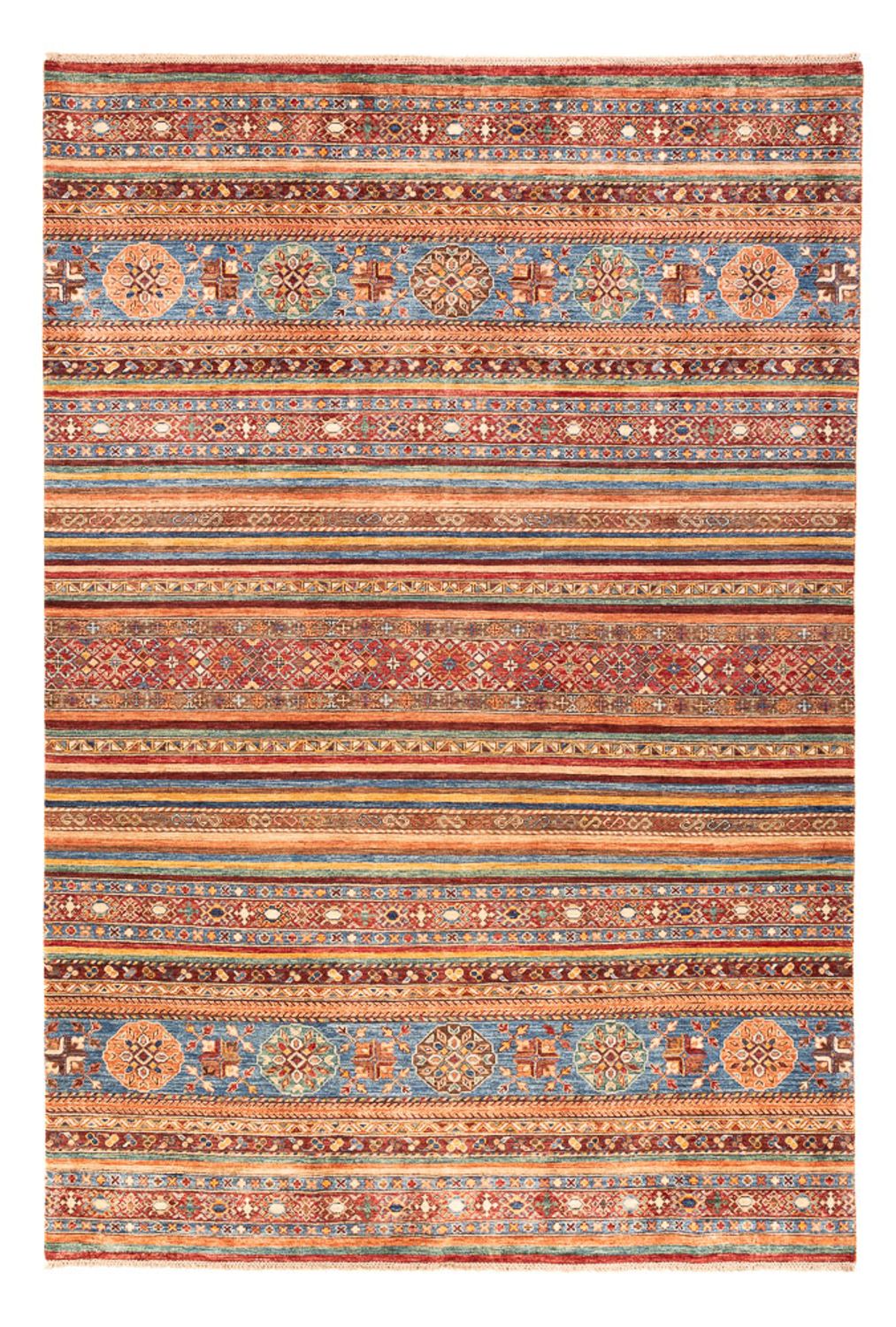
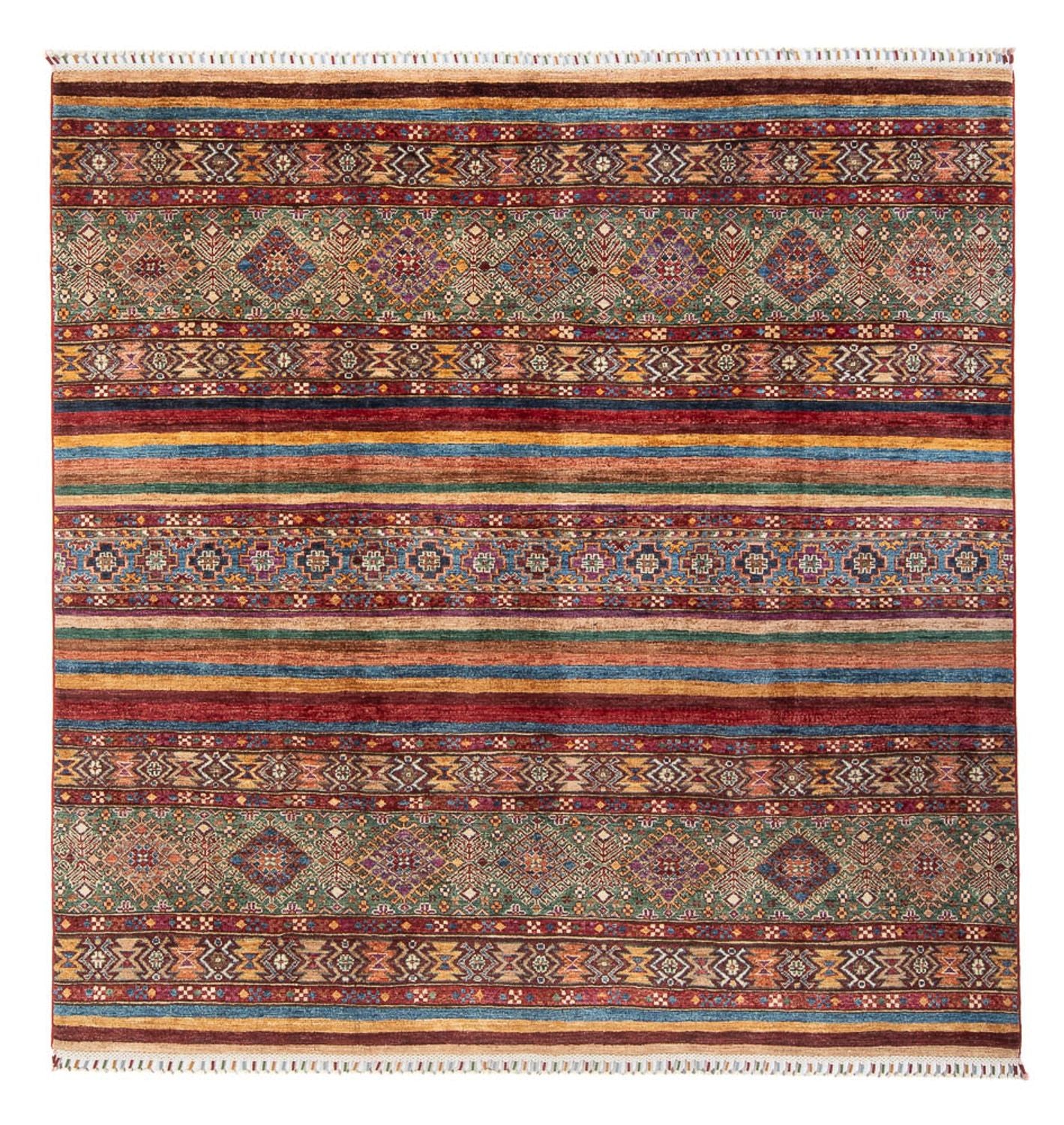
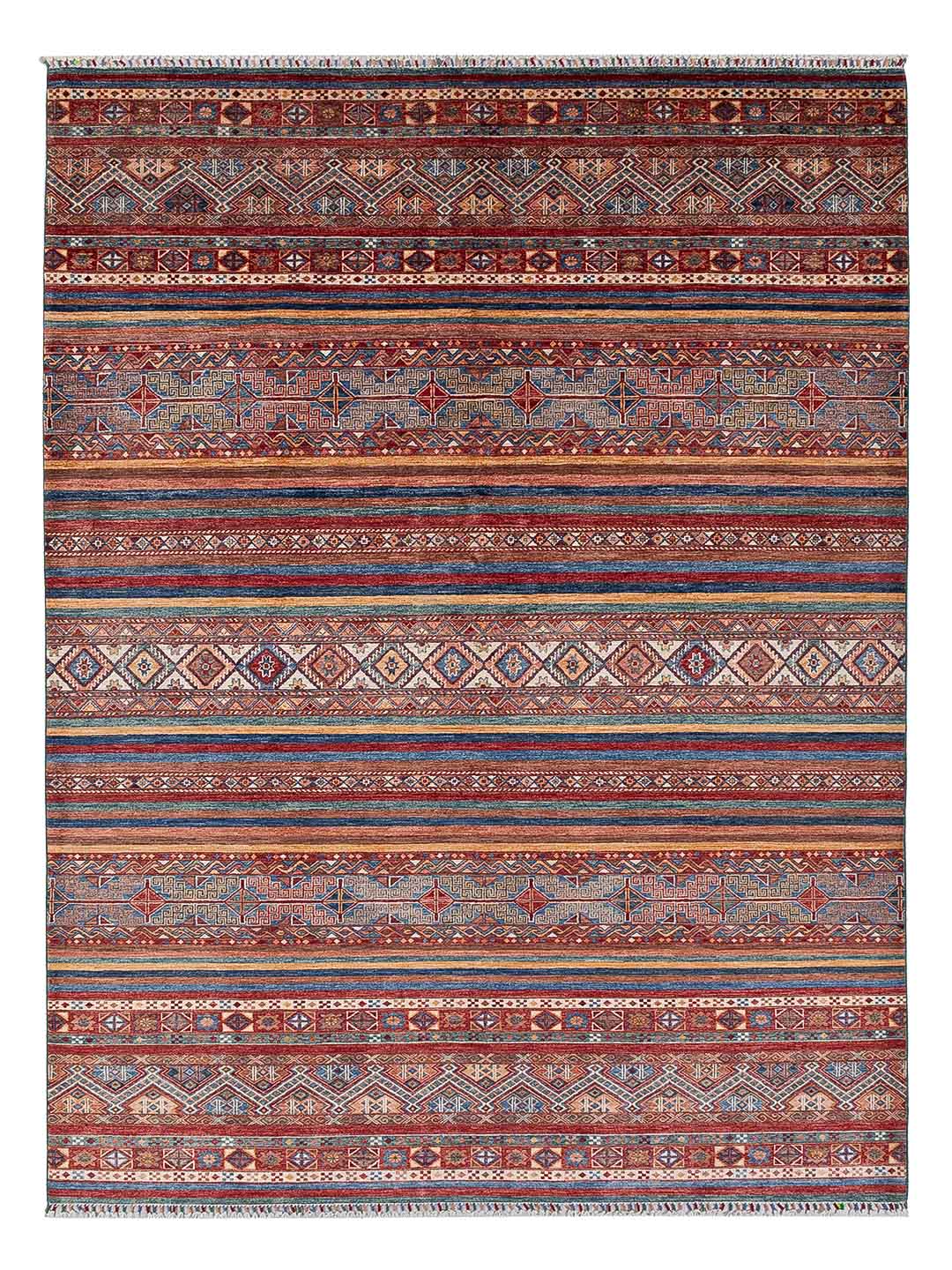
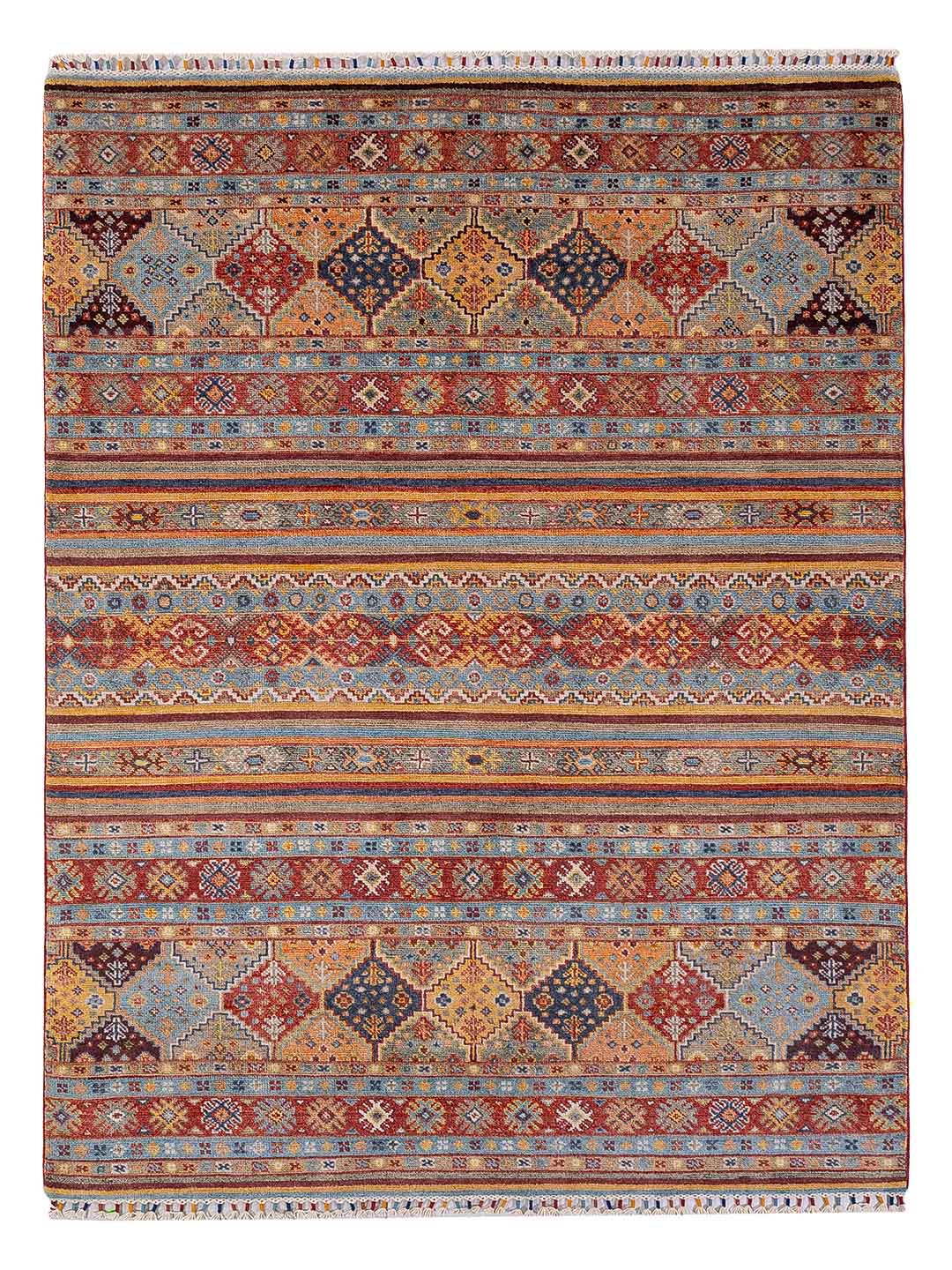
Photo: Morgenland Rugs
Shal rugs are Kurdish-influenced nomad rugs from western Persia, traditionally from the region around Kermanshah. Characteristic are bold stripe patterns and coloured bands that give the rug a calm, directed effect. The name points to the striped shawl that the composition resembles. The Shal therefore belongs to the western Iranian tribal and village rugs with a Kurdish tradition.
What is a Shal rug?
A Shal is a hand-knotted wool rug whose field is set by continuous stripes or bands rather than by a single central medallion. These bands are often filled with small geometric motifs, boteh forms, or stylised blossoms. The structure recalls a patterned shawl, from which the Persian name derives.
The Shal therefore differs from the medallion-focused Persian rugs of the urban workshops. It belongs to the Kurdish knotting tradition of western Persia and so stands in the neighbourhood of styles such as Senneh, Koliai, and the also Kurdish-influenced Ilam.
Origin
The Shal comes from western Iran, above all from the region around Kermanshah, an old centre of Kurdish knotting on the edge of the Zagros Mountains. The region is shaped by Kurdish tribes that lived partly nomadically, partly in villages, and at first made their rugs for their own use. From this tradition comes the robust, directed character of the stripe composition.
Older trade literature partly assigned the Shal to the south and the Fars province, because the label was used inconsistently in trade. More reliable is the attribution to the Kurdish tradition of western Iran, from which the typical band structure comes. Knotting took place in smaller workshops and family weaving operations, in which the patterns were passed down through generations.
Patterns and colours
The defining feature of the Shal is the stripe or band division. Several parallel bands run across the field, each filled with its own small motifs: boteh, hooks, stars, stylised blossoms, or geometric diamonds. This row order gives the rug a calm, almost textile effect that sets it apart from medallion-focused patterns. The borders are usually multi-tiered and take up geometric or floral-stylised motifs.
The colour world is bold and earthy: deep reds, saturated indigo blue, brown, and beige form the bands; light dividers in ivory or yellow set them apart. The deep reds and blues from madder and indigo are particularly valued. With naturally dyed wool, a lively colour gradient, the abrash, arises and gives the bands depth.
Material and knotting technique
Traditional Shal rugs are knotted entirely from sheep's wool, both the pile and the warp and weft. The wool comes from local sheep breeds of the western Iranian highlands and is traditionally dyed with natural dyes. The pure wool construction gives the rug flexibility and a warm feel underfoot.
Knotting uses the asymmetric Persian knot, the Senneh knot, as is widespread in the Kurdish tradition of western Iran. The pile is sheared medium-high. The short sides bear carefully worked fringes. How a rug is made on the loom is described in the overview of production, where the materials used are also explained.
Knot density and quality
The knot density of a Shal typically lies between 60,000 and 140,000 knots per square metre, in the solid middle range of village-tribal ware. This density ensures good durability and is enough to render the clearly articulated band structure cleanly without over-refining the rug.
How knot density influences quality and price is covered in its own article. With the Shal what matters alongside density is wool quality, the purity of the natural dyes, and the clean guidance of the bands. Older pieces with plant dyeing count as the most valuable.
Shal and related west-Persian rugs compared
| Style | Origin / tradition | Knot density | Character |
|---|---|---|---|
| Shal | Kermanshah region, Kurdish | approx. 60,000 – 140,000 / m² | stripe and band patterns |
| Ilam | Ilam province, Kurdish | approx. 60,000 – 140,000 / m² | geometric medallions, robust |
| Senneh | Sanandaj, Kurdish | approx. 120,000 – 300,000 / m² | very fine, Herati pattern, flat pile |
| Koliai | western Iran, Kurdish | approx. 60,000 – 120,000 / m² | coarse, strongly geometric, robust |
| Bidjar | western Iran, Kurdish | approx. 120,000 – 300,000 / m² | extremely dense and heavy, very durable |
| Hamadan | Hamadan province | approx. 60,000 – 150,000 / m² | village rugs, single weft, geometric |
What is a Shal rug worth?
The value of a Shal depends on age, condition, size, knot density, wool quality, and dye. As a Kurdish village and tribal rug, it sits in the affordable to middle range of Persian wool rugs. Older examples with pure plant dyeing and cleanly articulated bands are more sought after because the style is comparatively rarely traded under its own name.
Hand-spun wool, natural colours with lively abrash, and a clear, balanced band structure all build value. A market-value placement is in the rug value overview and the general buying guide.
How can you tell a genuine Shal rug?
Typical features of an authentic Shal include:
- Stripe and band pattern: parallel, motif-filled bands set the field rather than a central medallion.
- Pure wool structure: pile, warp, and weft are wool; the yarn feels hand-spun.
- Deep reds and blues: madder red and indigo blue with light dividers are characteristic.
- Kurdish motif language: boteh, hooks, and small geometric forms in the bands.
- Hand-knotted back: the pattern stands out clearly; the fringes are part of the warp.
- Multi-tiered border: geometric or floral-stylised stripes frame the field.
How material, knotting, and origin can be tested is described in the identifying rugs guide, supplemented by identifying provenance.
Care
The robust wool construction of a Shal is suited to daily use and easy to care for. Regular vacuuming in the direction of the pile is enough day to day. Blot spills at once with clear water, do not rub. Professional cleaning every few years preserves the wool and the depth of colour. Long, direct sunlight will fade natural dyes. Detailed guidance is in the care overview.
Frequently asked questions
What distinguishes a Shal from a medallion-focused Persian rug?
The Shal does without a central medallion and instead divides the field into parallel, motif-filled bands. This stripe composition gives it a calm, almost textile effect and places it in the Kurdish tradition of western Iran, unlike the medallion-focused urban rugs.
Is the Shal a Kurdish rug?
What is the difference between Shal and Ilam?
Both are Kurdish-influenced rugs from western Iran. The Shal is marked by its stripe and band pattern, while the Ilam tends to show geometric medallion patterns. Both use pure wool and the Persian knot and sit in a similar density range.
What does a Shal rug cost?
As a Kurdish village and tribal rug, the Shal sits in the affordable to middle range. The price is set by age, condition, size, knot density, wool quality, and dye. Older, naturally dyed pieces are more sought after.
How do I recognise a genuine Shal?
By the characteristic stripe and band pattern, the pure wool structure, the deep reds and blues, and the Kurdish motif language with boteh and hooks. The hand-knotted back shows the pattern clearly; the fringes are part of the warp.
Are Shal rugs suitable for daily use?
Yes. The robust wool construction and the solid knot density make them hard-wearing. They suit living rooms with normal to higher use.
How do I care for a Shal rug correctly?
Vacuum regularly in the direction of the pile, blot spills at once with clear water and do not rub. Professional cleaning every few years and protection from long, direct sunlight preserve wool and depth of colour.
Impressions of the origin
Places, landscapes and landmarks around the home of Shal rugs. Click any image for a larger view.
Related styles
Senneh
Senneh rugs from Sanandaj in Iranian Kurdistan are some of the finest tribal rugs, known for their thin, almost flat pile.
Koliai
Koliai rugs are knotted by Kurdish tribes in western Iran and combine geometric motifs with a robust pile.
Ilam
Ilam rugs come from the Zagros highlands of western Iran and combine Kurdish tribal motifs with a robust nomadic character.


