Rafsanjan rugs: fine Kerman variant from southeast Iran
Rafsanjan rugs come from the Kerman pistachio town and show floral compositions related to Kerman pieces but in coarser knotting.
- Region
- Persia / Iran
- Category
- Persian rugs
- Manufacturing
- Hand-knotted
- Knot density
- 150,000 – 350,000 knots/m²
Profile
- Manufacturing
- Hand-knotted
- Origin
- Iran — Rafsanjan, Kerman Province
- Pile material
- Wool on cotton
- Knot density
- 150,000 – 350,000 knots/m²
- Features
- Floral compositions, related to Kerman style, coarser knotting
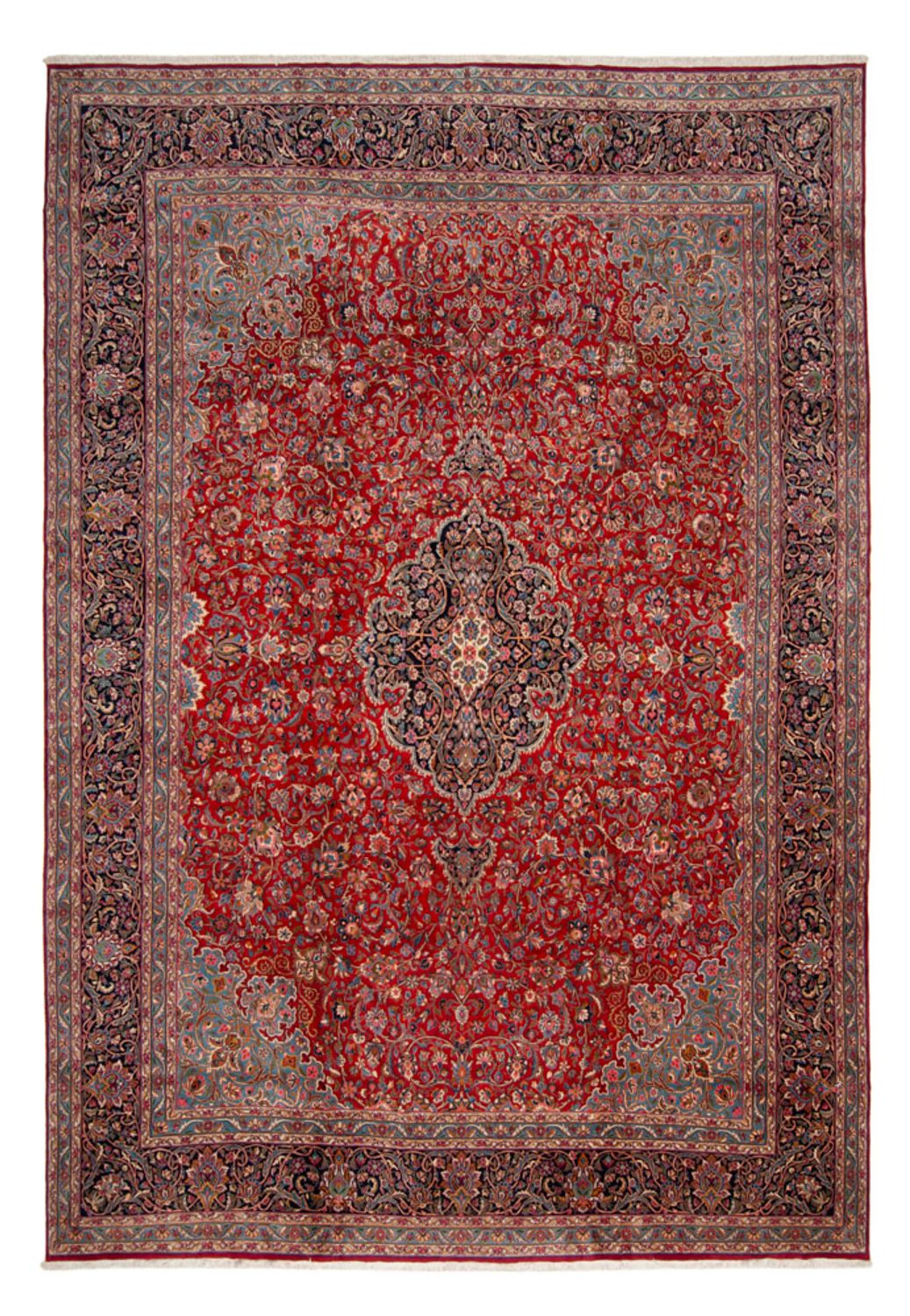
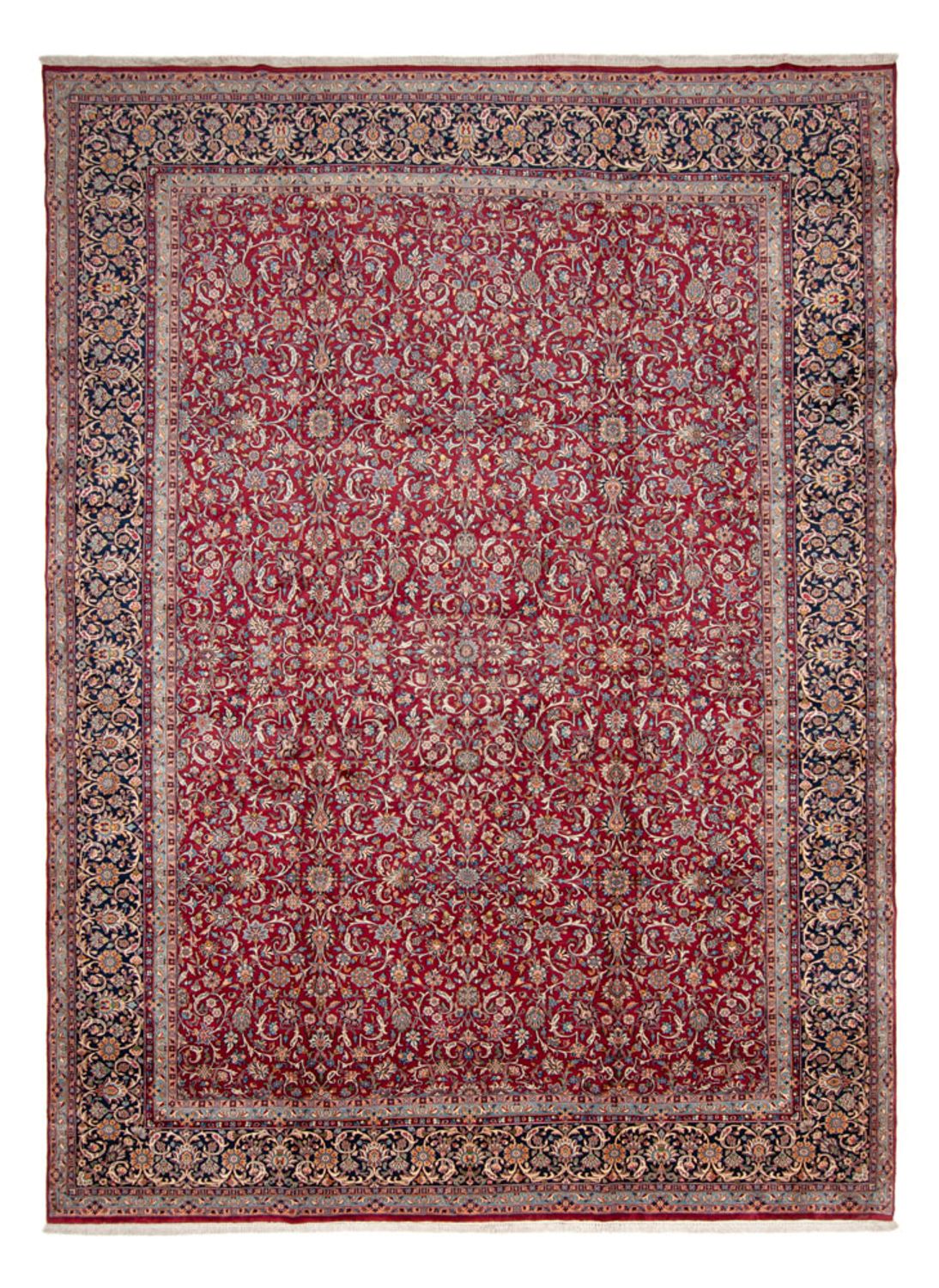
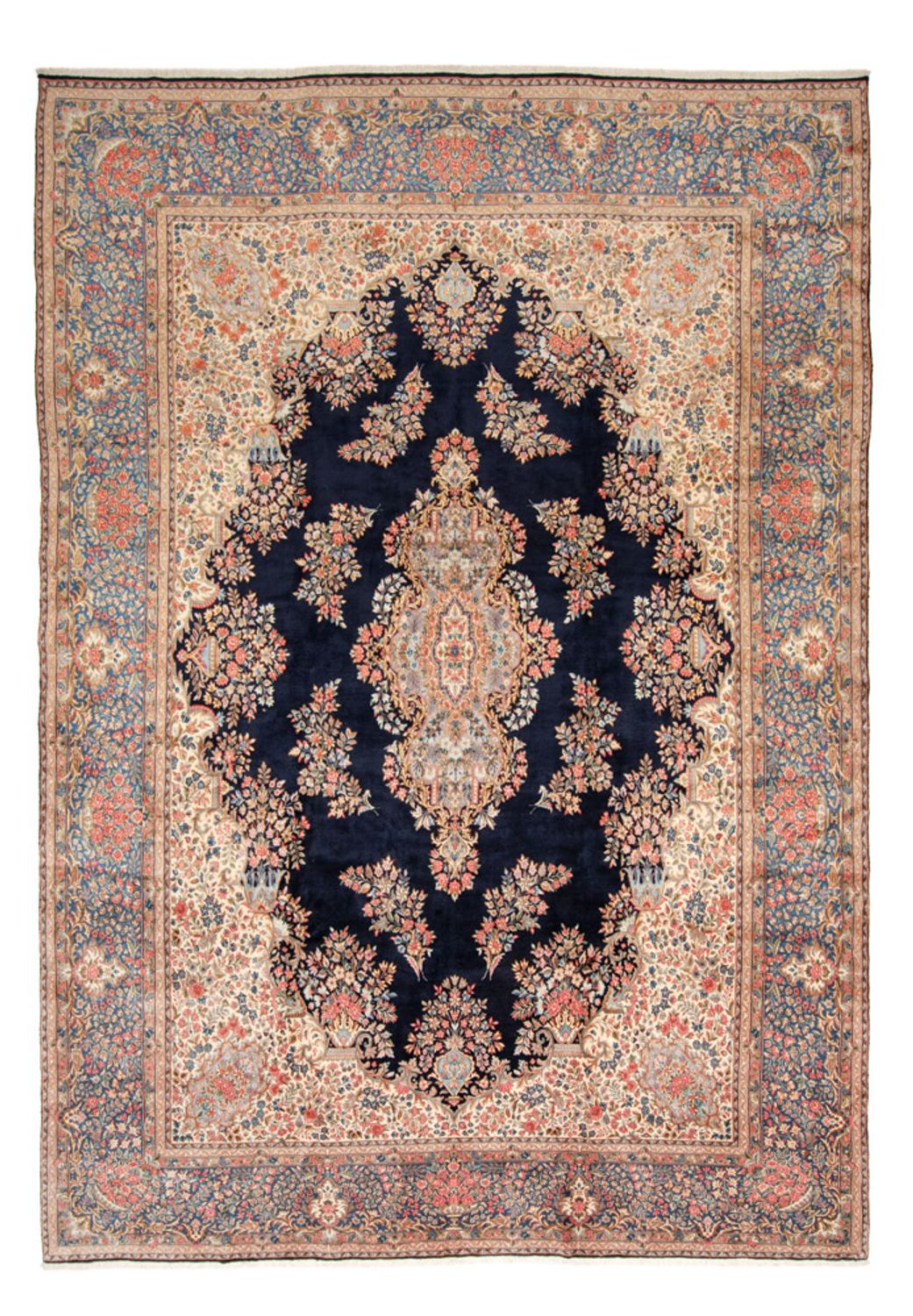
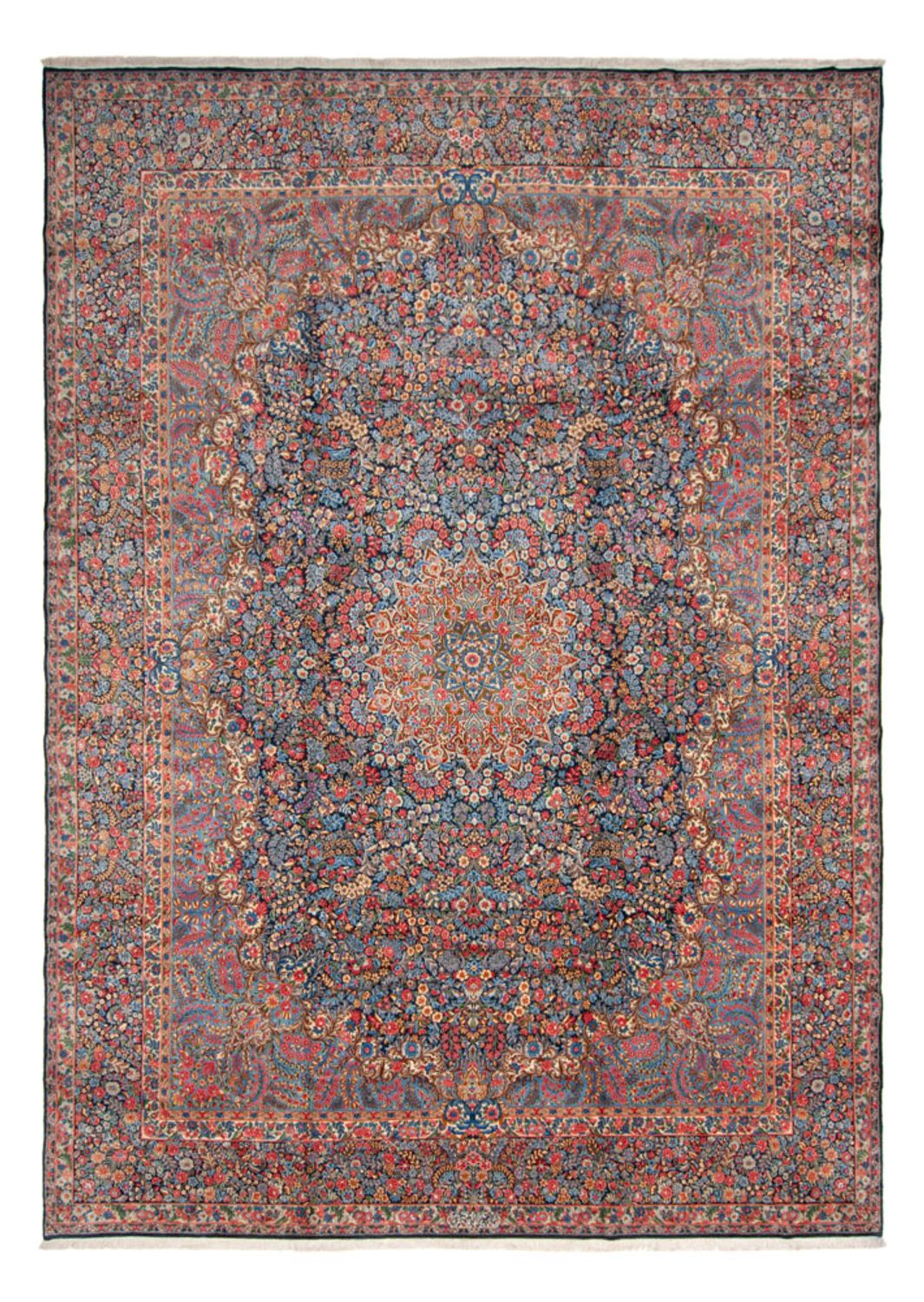
Photo: Morgenland Rugs
Rafsanjan rugs are hand-knotted Persian rugs from the town of Rafsanjan in the south-east Iranian province of Kerman. They belong to the Kerman family of Persian rugs and stand for fine knotting, floral designs with a central medallion, and a silken sheen. Stylistically they are closely related to the famous Kerman rugs but tend to be a touch sturdier, and they count as value-stable representatives of south-eastern Persian rug art.
What is a Rafsanjan rug?
A Rafsanjan is a hand-knotted rug from the town of Rafsanjan and its surroundings. Knotting uses the asymmetric Persian knot, the Senneh knot, on a cotton warp with a wool pile. Characteristic features are floral patterns with central medallions, elaborately designed corner fields, Shah Abbas palmettes, and arabesques, held in warm reds with blue, beige, and cream. A final gloss treatment lends the pile a silken sheen.
Origin
Rafsanjan lies about 160 kilometres north-west of Kerman, the capital of the eponymous province in south-eastern Iran, on a dry plateau on the edge of the central Persian deserts. The town has been a centre of rug knotting for centuries and is at the same time known as the heart of Iranian pistachio cultivation, which gives the local economy a second supporting pillar alongside rug production.
The province of Kerman counts among the great names of Persian rug art, whose floral visual language has been in international demand since the 19th century. Rug knotting in Rafsanjan had its heyday in the 1960s and 1970s, when production was strongly oriented to export. Knotting takes place both in the town and in the surrounding villages, with the craft passed from generation to generation. Because Rafsanjan shares the same province and a similar visual language, its rugs are often traded under the better-known Kerman label.
Patterns and colours
The defining Rafsanjan design is the floral medallion composition: a central medallion surrounded by elaborately designed corner fields and a dense field of Shah Abbas palmettes, arabesques, and stylised blossom motifs. This visual language goes back to the classical Safavid court patterns particularly cultivated in the Kerman region. The composition is usually formal and symmetrically arranged.
The palette is traditionally dominated by warm reds, complemented by blue, beige, and cream. Modern Rafsanjans often also show more restrained colours in beiges and browns that fit well in bright interiors. The borders are usually multi-tiered and take up classical Persian ornaments such as palmettes and vine bands framing the field in harmony.
Material and knotting technique
The warp is usually cotton, while both cotton and wool are used for the weft. The pile is knotted from high-quality sheep's wool from the Kerman region, valued for its good hand and capacity for sheen. This construction gives the rug a straight set and dimensional stability.
Knotting uses the asymmetric Senneh knot, the typical knot of Persian rugs, which allows fine curvilinear patterns. The rugs are made on horizontal looms and, once completed, are sheared and washed. The characteristic gloss treatment lends the pile a silken sheen. How knotting works in detail is described in the overview of rug production and especially under knotting.
Knot density and quality
The knot density of a Rafsanjan typically lies between 160,000 and 350,000 knots per square metre, with finer examples reaching higher values. That is a medium to upmarket density that allows clean floral details. Within this range, wool quality, yarn fineness, dye, and pattern clarity decide the merit of the individual piece.
High-quality Rafsanjan rugs show an even, dense knotting, a balanced colour picture, and clearly drawn floral details. Compared with the finest Kerman rugs, the knotting is usually a touch coarser. How knot density affects quality and price, and why it is not a sole guarantee of merit, is covered in its own article.
| Feature | Expression on the Rafsanjan |
|---|---|
| Knotting | asymmetric Senneh knot (Persian knot) |
| Warp | cotton |
| Weft | cotton or wool |
| Pile | sheep's wool, gloss-treated, medium height |
| Knot density | approx. 160,000 – 350,000 knots/m² |
| Pattern | floral medallion, Shah Abbas palmettes, arabesques |
| Colours | warm red, blue, beige, cream; modern also beige and brown |
What is a Rafsanjan rug worth?
The value of a Rafsanjan depends on age, condition, size, knot density, wool quality, and clarity of pattern. High-quality Rafsanjans with fine knotting and traditional patterns count as value-stable. They do not, however, reach the prices of the best Kerman or Isfahan rugs. Value development depends strongly on quality, age, and condition.
A grounded assessment is possible with reference to the basics under What is my rug worth? and the notes on valuable Persian rugs. Before buying, the general buying guide helps to weigh quality and price realistically.
How can you tell a genuine Rafsanjan rug?
Typical signs of a genuine, hand-knotted Rafsanjan include:
- Hand-knotted back: the floral pattern is mirrored clearly; the knots form an even grid.
- Fringes as part of the warp: the fringes are the extended cotton warp threads, not sewn on afterwards.
- Asymmetric Senneh knot as is standard at Persian provenances.
- Floral medallion with Shah Abbas palmettes in warm reds with blue and cream.
- Silken-lustrous wool pile on a cotton foundation thanks to the typical gloss treatment.
Since Rafsanjans resemble Kerman rugs in pattern and colour, knotting density, fineness, back, and material should be judged together. A step-by-step authenticity check is set out in Is my rug genuine?; general guidance on identifying handwork and provenance is in identifying rugs.
Care
Rafsanjan rugs are easy to care for thanks to the robust wool and the firm cotton base. Regular vacuuming against the direction of the pile and professional cleaning every three to five years preserve colour and sheen. Spills should be blotted at once with clear water, without rubbing. Direct sunlight and high humidity should be avoided. Detailed guidance is in the care overview and especially under cleaning a wool rug.
Frequently asked questions
How do I recognise a genuine Rafsanjan rug?
A genuine Rafsanjan is hand-knotted, uses the asymmetric Persian knot, and has a cotton warp with a wool pile. The back shows the floral pattern clearly, the fringes are part of the warp, and typical features are Shah Abbas palmettes and a central medallion in warm reds with a silken pile sheen.
What distinguishes a Rafsanjan from a Kerman rug?
Both come from the province of Kerman and share the floral visual language. Kerman rugs from the provincial capital count as finer and more formal, often with a higher knot density. Rafsanjans tend to be a touch coarser, feel less formal, and occasionally show slight deviations in symmetry.
What does a Rafsanjan rug cost?
The price depends on age, condition, size, knot density, and wool quality. As value-stable representatives of the Kerman family, Rafsanjans sit below the prices of the finest Kerman or Isfahan rugs but offer good value for money.
What sizes are common for Rafsanjan rugs?
Typical formats are 200 x 300 cm and 300 x 400 cm. Smaller sizes such as 150 x 200 cm and runners are also made. Very large formats over 400 x 600 cm are rarer and mostly custom orders.
Why are Rafsanjan rugs often called Kerman?
Rafsanjan lies in the province of Kerman and shares material, knotting tradition, and floral visual language with Kerman rugs. Many Rafsanjans are therefore traded under the better-known Kerman name. The distinction is usually made via the slightly coarser knotting and the specific colour combinations.
How do I care for a Rafsanjan rug correctly?
Vacuum regularly against the direction of the pile and have the rug professionally cleaned every three to five years. Blot spills at once with clear water, do not rub. Avoid direct sunlight and high humidity so colour and sheen are preserved.
Impressions of the origin
Places, landscapes and landmarks around the home of Rafsanjan rugs. Click any image for a larger view.


