Najafabad rugs: robust Isfahan variant
Najafabad rugs come from the Isfahan area and offer Isfahan-style floral compositions at more accessible quality grades.
- Region
- Persia / Iran
- Category
- Persian rugs
- Manufacturing
- Hand-knotted
- Knot density
- 150,000 – 350,000 knots/m²
Profile
- Manufacturing
- Hand-knotted
- Origin
- Iran — Najafabad, Isfahan Province
- Pile material
- Wool on cotton
- Knot density
- 150,000 – 350,000 knots/m²
- Features
- Isfahan-style floral compositions, accessible quality, large formats
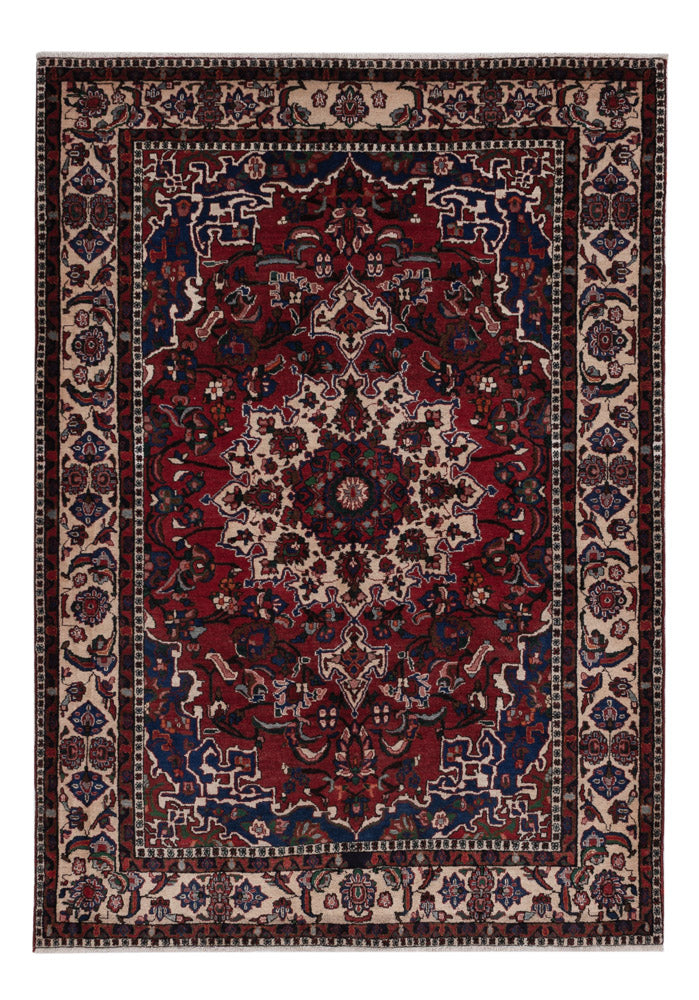
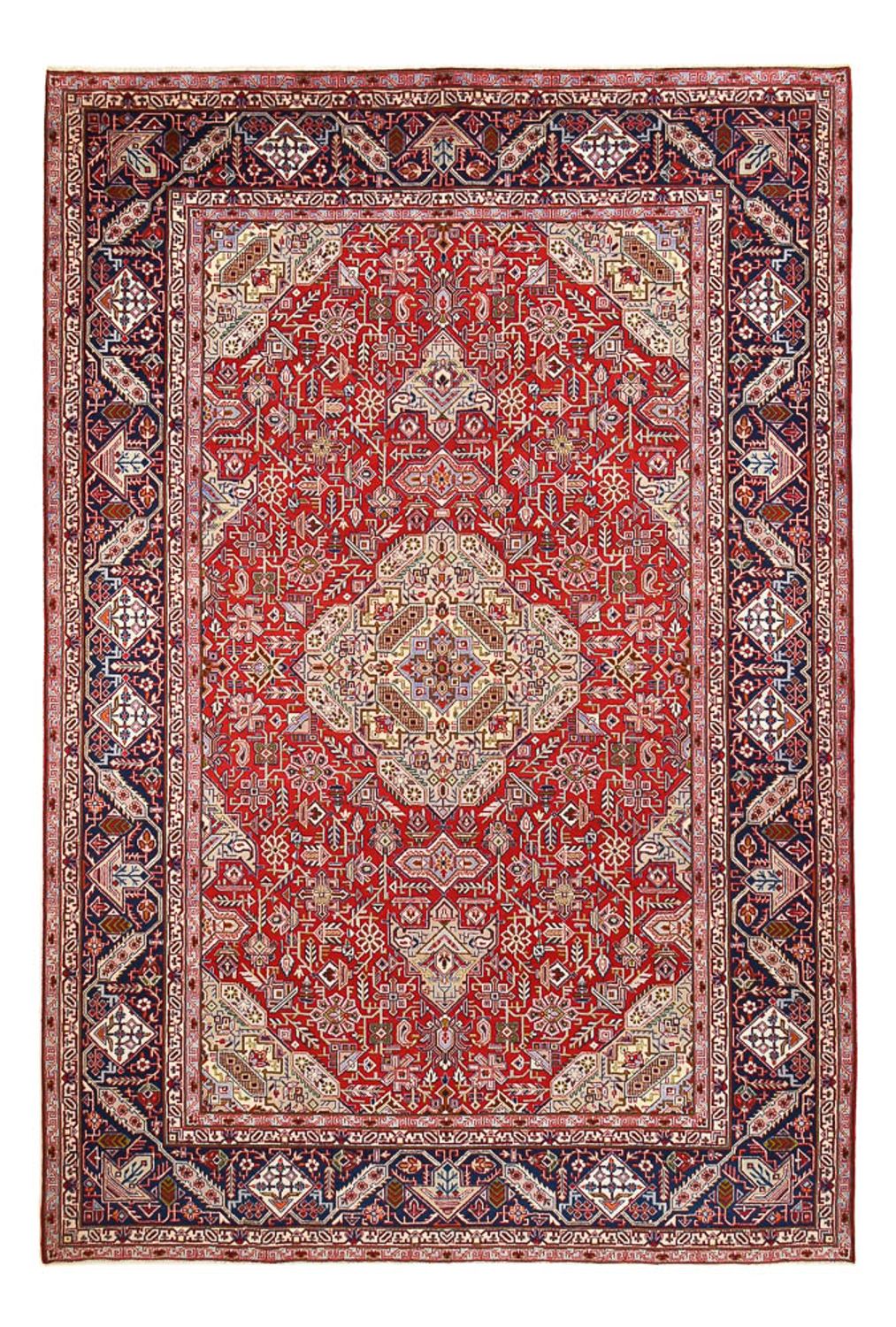
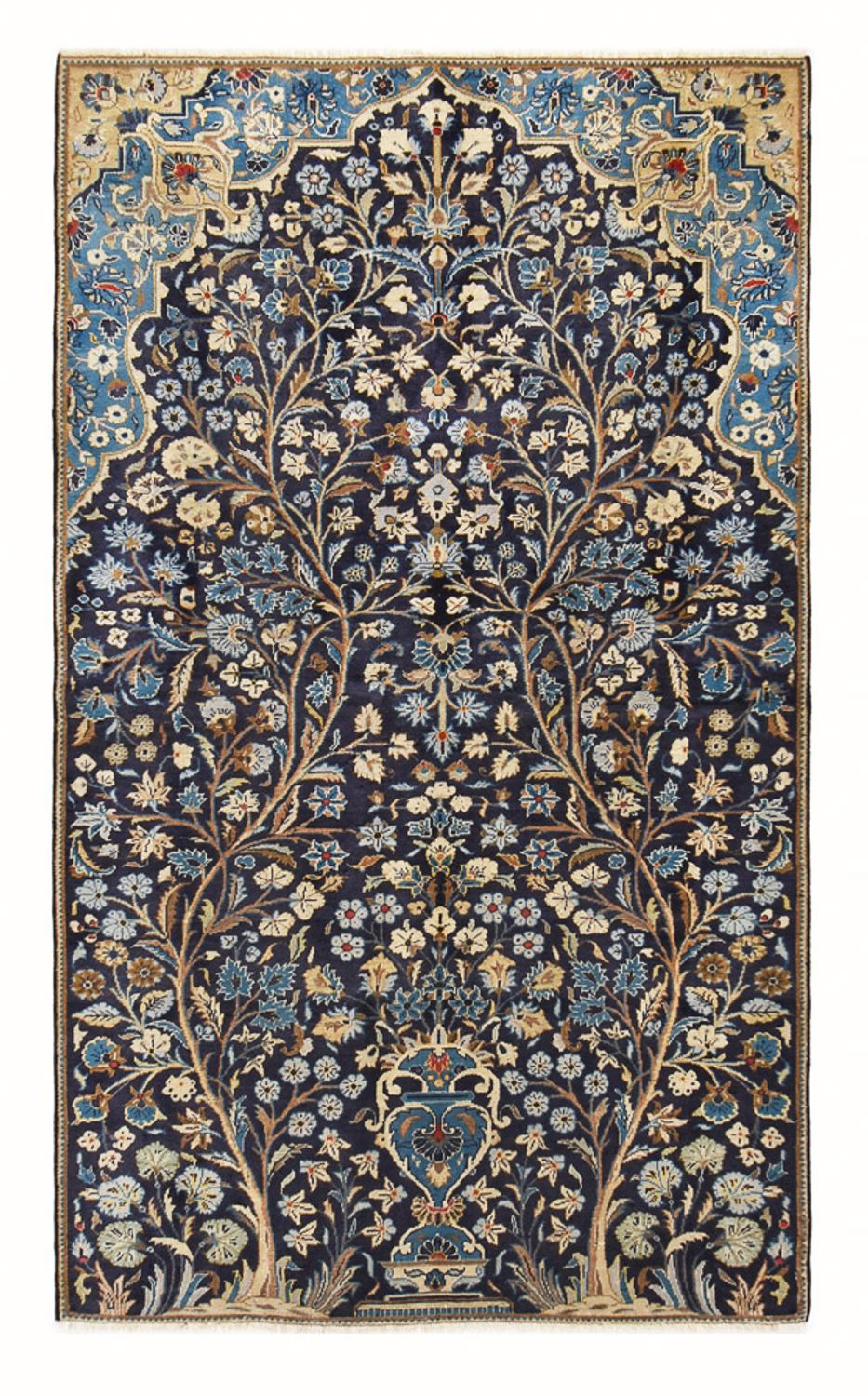
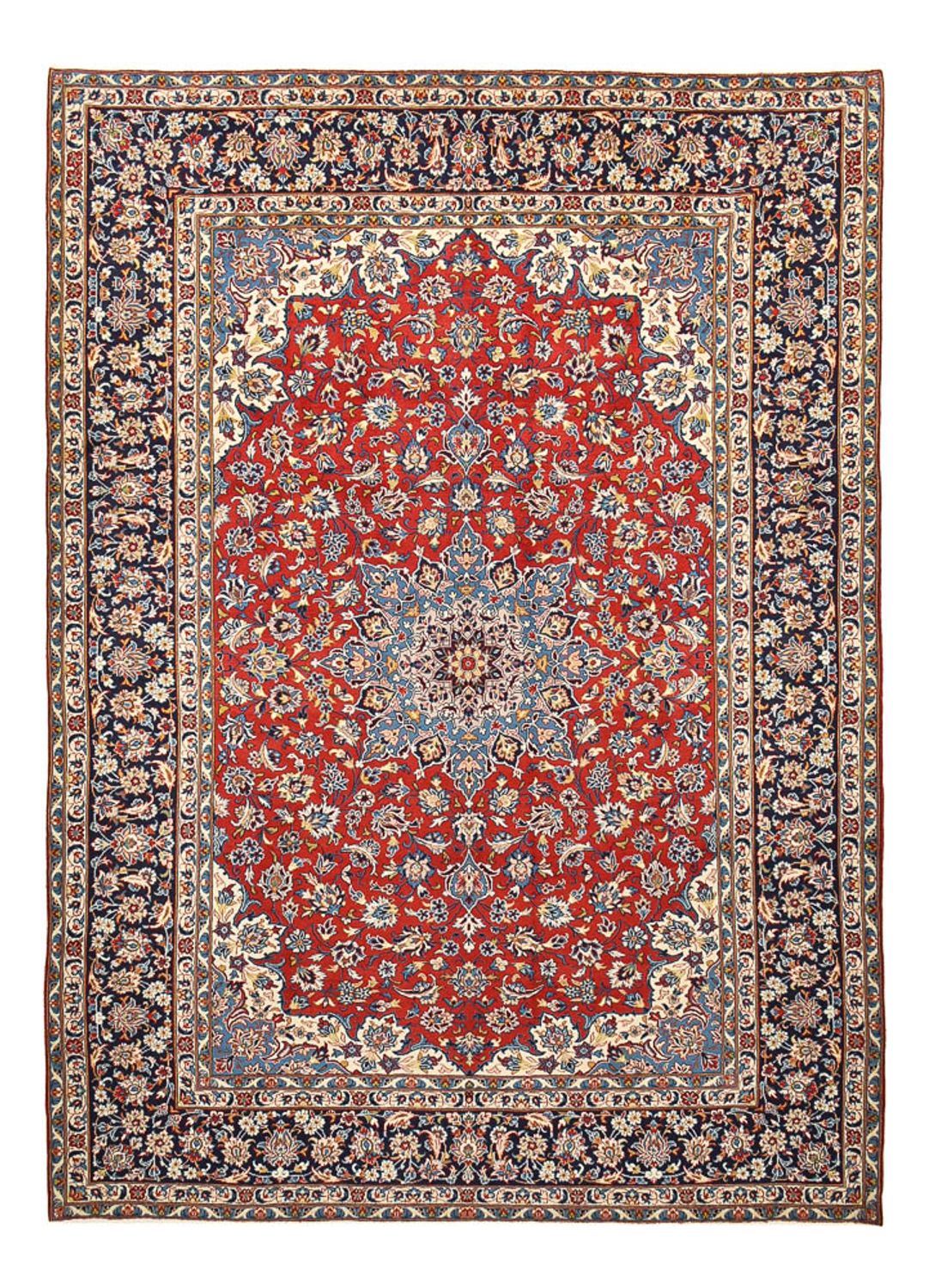
Photo: Morgenland Rugs
Najafabad rugs are hand-knotted Persian rugs from the town of Najafabad in the central Iranian province of Isfahan. They stand for classical floral workshop patterns in the tradition of the great Isfahan ateliers, in a sturdier and mostly more affordable execution. With their fine vines, central medallions, and harmonious colour combinations, they belong to the decorative representatives of central Persian rug art and offer a reliable middle path between workshop ambition and everyday suitability.
What is a Najafabad rug?
A Najafabad is a hand-knotted rug from the town of Najafabad and its surroundings. Knotting uses the asymmetric Persian knot, the Senneh knot, on a cotton warp with a wool pile. Characteristic features are elegant floral fields with a central medallion, elaborate vines and palmettes, and a harmonious palette of reds, blues, creams, and beiges. In pattern and composition, Najafabads stand close to the fine Isfahan designs but are usually a touch coarser and more robust.
Origin
Najafabad lies about 30 kilometres west of the metropolis of Isfahan, in the fertile basin of the Zayandeh Rud, one of the historical core regions of Persian rug art. The province of Isfahan has been a centre of court workshop art since the Safavid period in the 16th and 17th centuries, and its floral visual language still shapes the central-Persian style today. Najafabad picks up this tradition and developed into its own knotting and trading centre on the metropolis's outskirts.
Local knotters take their cue from the classical Isfahan compositions as well as from the floral Sarough patterns of the wider region. The rug industry employs a large share of the population and contributes substantially to the local economy. Many rugs knotted in Najafabad are sold under the better-known collective label Isfahan, even though they come from Najafabad. Related central-Persian provenances include, besides Isfahan and Sarough, Nain and the workshop styles Joshaghan and Meymeh.
Patterns and colours
The defining Najafabad design is the floral medallion composition: a central medallion surrounded by elaborate vines and blossom motifs, complemented by matching corner fillings. Particularly characteristic is the fine detail work in the floral elements, often shaped by stylised palmettes and rosettes. The patterns show a symmetrical arrangement with balanced proportions. All-over patterned fields without a dominant centre also appear.
The palette ranges from warm reds and deep blues to cream and beige grounds, complemented by accents in green and gold. The composition feels formal and curvilinear, distinctly more floral and more finely drawn than the geometric village rugs from Hamadan. The borders are usually multi-tiered and show classical Persian ornaments framing the field in harmony.
Material and knotting technique
The foundation is a cotton warp and weft, which gives the rug firmness, dimensional stability, and a straight set. The pile is knotted from high-quality sheep's wool; occasional silk accents are used for the contouring of special details, which sharpens the pattern drawing. The pile height is medium.
Knotting uses the asymmetric Senneh knot, the typical knot of Persian rugs, which ensures fine floral drawing and firmness. The rugs are made by hand on traditional looms, with the knotters often applying patterns and techniques passed down through generations. How knotting works in detail is described in the overview of rug production and especially under knotting.
Knot density and quality
The knot density of a Najafabad typically lies between 200,000 and 400,000 knots per square metre. That is an upmarket density that allows good detail rendering of the floral patterns without reaching the top values of the finest Isfahan pieces. Within this range, wool quality, yarn fineness, dye, and pattern clarity decide the merit of the individual piece.
High-quality Najafabad rugs show an even, dense knotting, a balanced colour picture, and clearly drawn floral details. How knot density affects quality and price, and why it must always be read together with material and pattern clarity, is covered in its own article.
| Feature | Expression on the Najafabad |
|---|---|
| Knotting | asymmetric Senneh knot (Persian knot) |
| Warp | cotton |
| Weft | cotton |
| Pile | sheep's wool, medium height, occasional silk contours |
| Knot density | approx. 200,000 – 400,000 knots/m² |
| Pattern | floral medallion, fine vines and palmettes |
| Colours | red, blue, cream, beige with green and gold accents |
What is a Najafabad rug worth?
The value of a Najafabad depends on age, condition, size, knot density, wool quality, and clarity of pattern. High-quality Najafabads hold their value well and, with appropriate care, preserve their quality for decades. As a sturdier and mostly more affordable alternative to fine Isfahan pieces, they offer a good ratio of knotting effort to price, but do not reach the top level of pure Isfahan or Nain workshops.
A grounded assessment is possible with reference to the basics under What is my rug worth? and the notes on valuable Persian rugs. Before buying, the general buying guide helps to weigh quality and price realistically.
How can you tell a genuine Najafabad rug?
Typical signs of a genuine, hand-knotted Najafabad include:
- Hand-knotted back: the floral pattern is mirrored clearly; the knots form an even grid.
- Fringes as part of the warp: the fringes are the extended cotton warp threads, not sewn on afterwards.
- Asymmetric Senneh knot as is standard at Persian provenances.
- Floral medallion with fine vines in harmonious reds, blues, and creams.
- Wool pile on a cotton foundation with a medium-fine, formal presence.
Since Najafabads resemble Isfahan rugs in pattern and composition, knotting density, fineness, back, and material should be judged together. A step-by-step authenticity check is set out in Is my rug genuine?; general guidance on identifying handwork and provenance is in identifying rugs.
Care
Najafabad rugs are easy to care for thanks to the robust wool and the firm cotton base. Regular vacuuming in the direction of the pile and professional cleaning every three to five years preserve colour and structure. Spills should be blotted at once with clear water, without rubbing. Long, direct sunlight will fade the colours. Detailed guidance is in the care overview and especially under cleaning a wool rug.
Frequently asked questions
How do I recognise a genuine Najafabad rug?
A genuine Najafabad is hand-knotted, uses the asymmetric Persian knot, and has a cotton warp with a wool pile. The back shows the floral pattern clearly, the fringes are part of the warp, and typical features are fine vines and a central medallion in harmonious reds and blues.
What distinguishes a Najafabad from an Isfahan rug?
Najafabads come from the surrounding area and are often a touch coarser than the finest Isfahan pieces and use less silk. The patterns are similar, but Najafabads usually show sturdier executions of the classical floral designs. Many Najafabads are traded under the collective label Isfahan.
What does a Najafabad rug cost?
The price depends on age, condition, size, knot density, and wool quality. As a sturdier alternative to fine Isfahan rugs, Najafabads are usually more affordable. Well-preserved, finely knotted pieces fetch higher prices.
What sizes are common for Najafabad rugs?
Najafabads are knotted in many formats, from smaller sizes around 150 x 100 cm to large examples of 400 x 300 cm. Particularly common are medium sizes between roughly 200 x 150 cm and 300 x 200 cm.
Are Najafabad rugs a good store of value?
High-quality Najafabads hold their value well and, with appropriate care, preserve their quality for decades. Value stability depends on knot density, condition, and age. As a rule they do not reach the top prices of pure Isfahan rugs.
How do I care for a Najafabad rug correctly?
Vacuum regularly in the direction of the pile and have the rug professionally cleaned every three to five years. Blot spills at once with clear water, do not rub. Avoid long, direct sunlight so the colours do not fade.
Impressions of the origin
Places, landscapes and landmarks around the home of Najafabad rugs. Click any image for a larger view.


