Mashhad rugs: floral medallions from Khorasan Province
Mashhad rugs from the holy city in northeastern Iran show intricate floral compositions in deep wine-red tones.
- Region
- Persia / Iran
- Category
- Persian rugs
- Manufacturing
- Hand-knotted
- Knot density
- 100,000 – 300,000 knots/m²
Profile
- Manufacturing
- Hand-knotted
- Origin
- Iran — Mashhad, Razavi Khorasan Province
- Pile material
- Wool on cotton
- Knot density
- 100,000 – 300,000 knots/m²
- Features
- Floral compositions, deep wine red, large formats
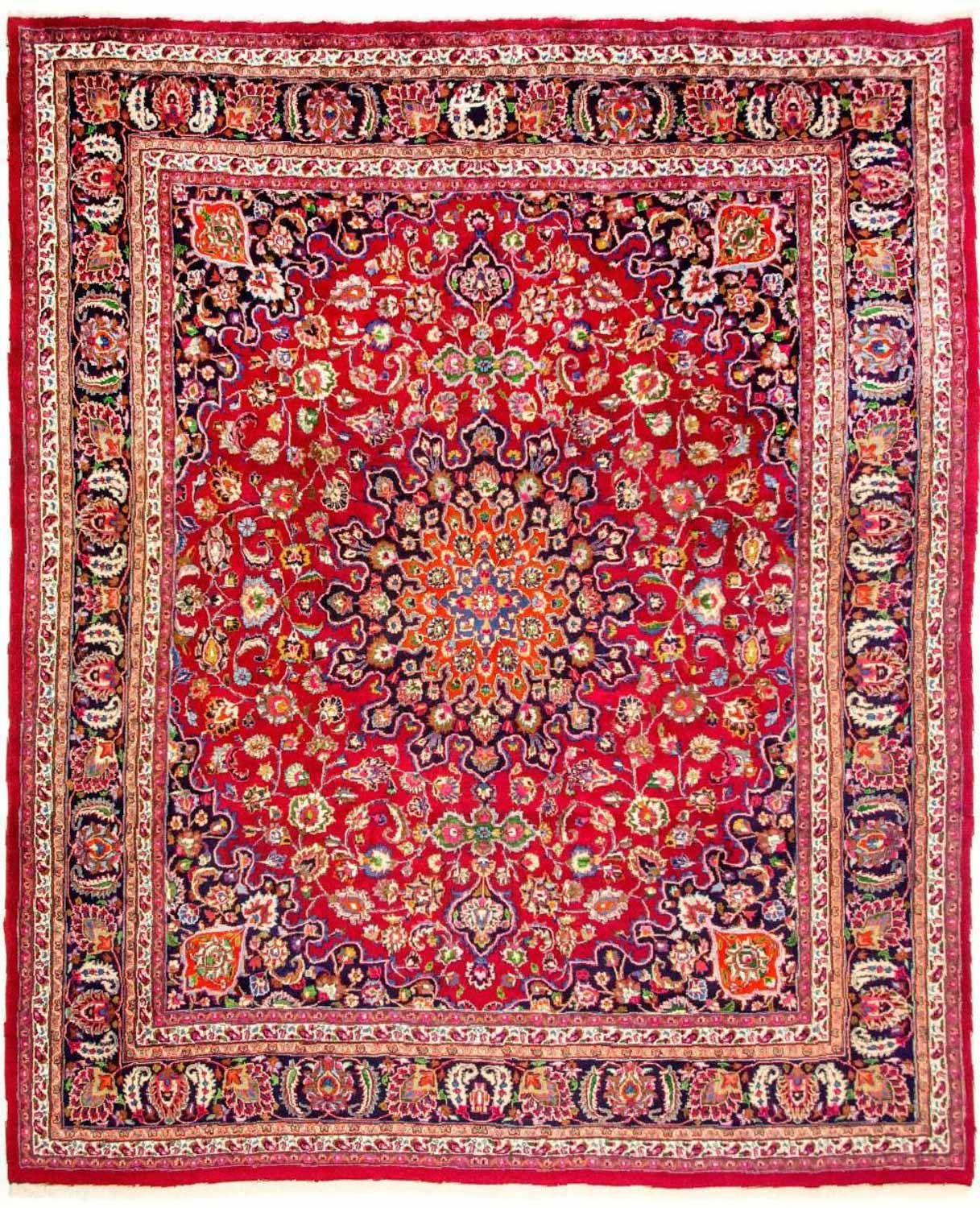
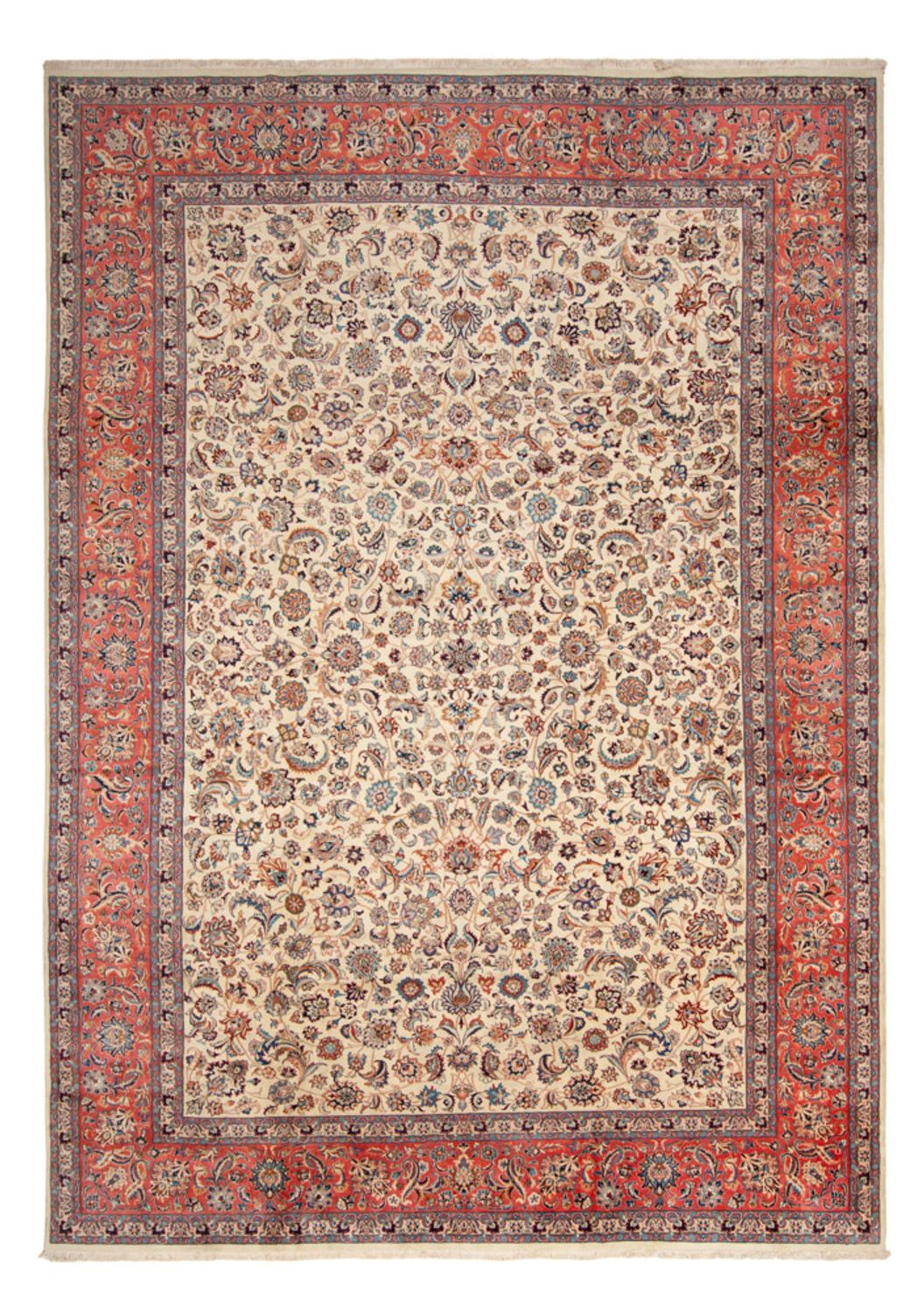
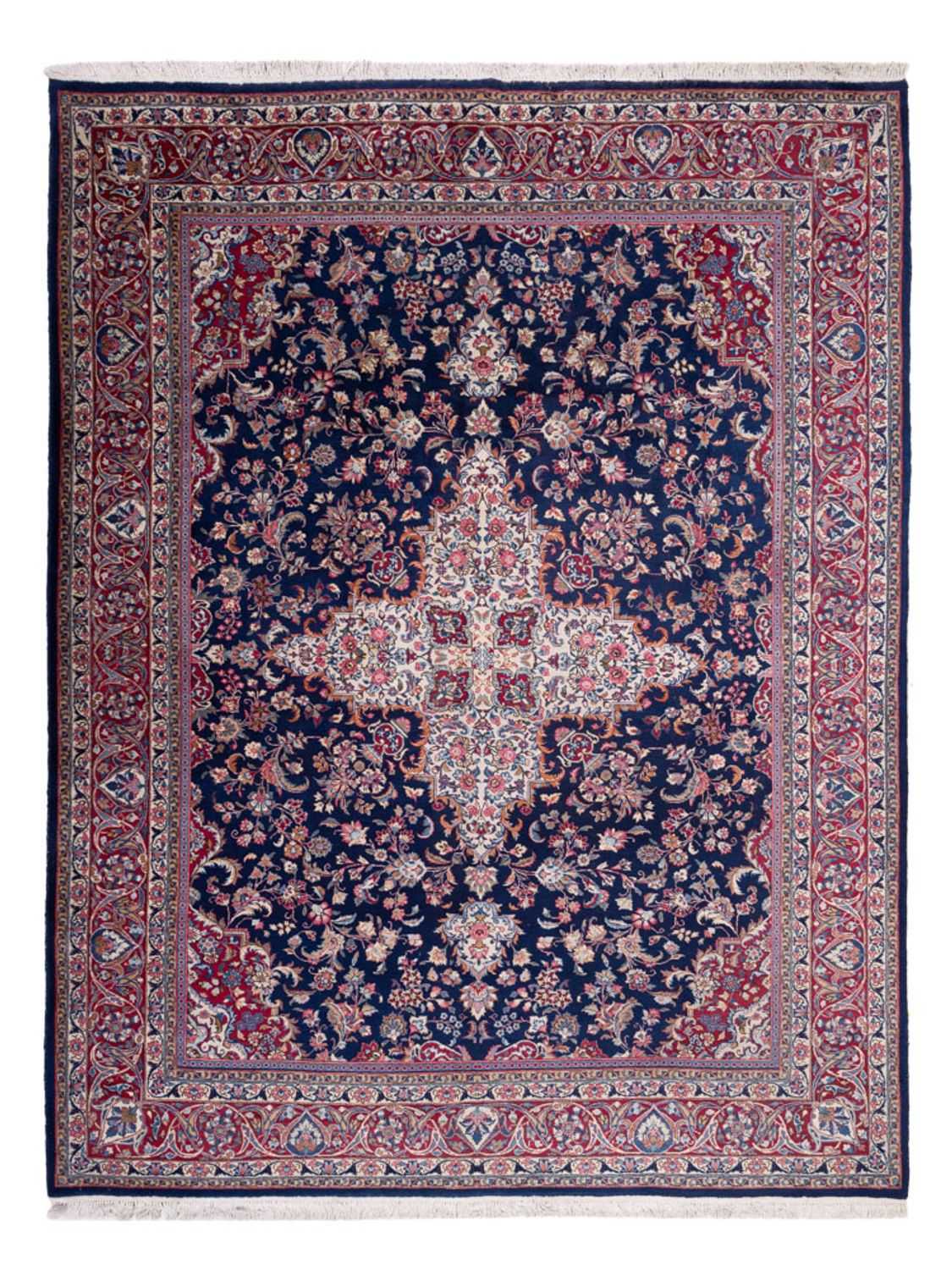
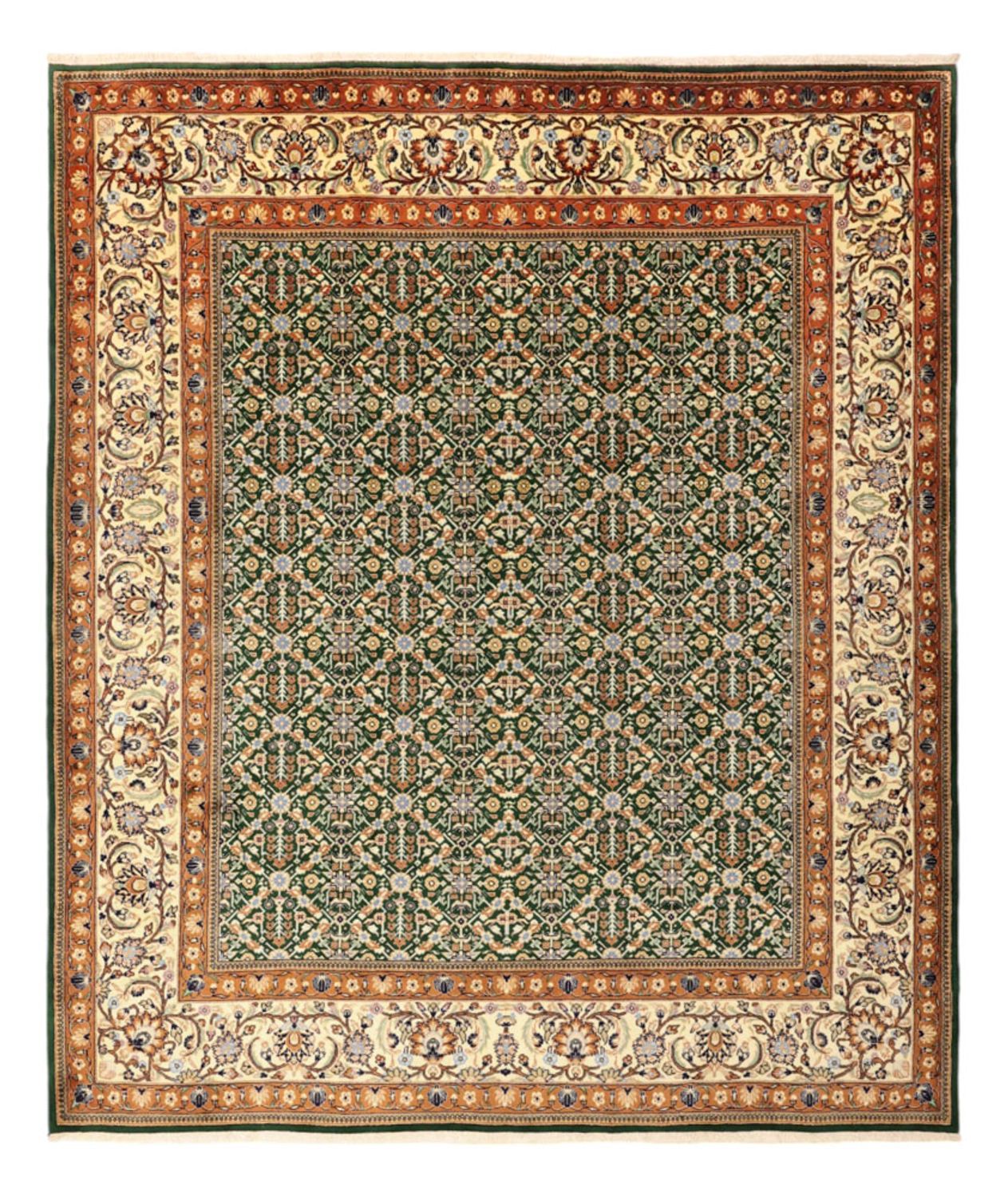
Photo: Morgenland Rugs
Mashhad rugs are hand-knotted Persian rugs from north-eastern Iran, the historical province of Khorasan. They are known for large-scale floral medallion designs, the distinctive Mahi fish pattern, and a deep, warm palette. As the foremost knotting centre of the entire Khorasan region, Mashhad stands for an independent east-Persian tradition that differs as much from the central-Persian rugs as it does from the geometric village rugs of the north-west. Many of the finest pieces carry the signature of their workshop, making Mashhad one of the most renowned provenances in Persia.
What is a Mashhad rug?
A Mashhad is a hand-knotted rug from the city of Mashhad, the capital of the Razavi Khorasan province in north-eastern Iran. Characteristic features include a large-scale floral central medallion on a mostly single-colour ground, the widespread Mahi pattern, a cotton warp, a wool pile, and the fine asymmetric Persian knot. Mashhad rugs are made in many sizes, from small formats to room-filling salon pieces, and usually show aspect ratios of 3:2 or 2:1.
The name Mashhad denotes both the city itself and a level of quality that shapes the entire Khorasan knotting region. This east-Persian family also includes provenances such as Moud, Kaschmar, Sabsewar, and Ghoutshan, which traditionally sold their goods through the Mashhad trading hub.
Origin: the city of Mashhad and the Khorasan region
Mashhad lies in north-eastern Iran near the borders with Turkmenistan and Afghanistan, and is the capital of Razavi Khorasan province. The city is the most important religious centre in Iran and houses the shrine of the eighth Shia Imam, Reza, a pilgrimage site of supra-regional importance. This religious standing also shaped the knotting craft: many particularly high-quality rugs were knotted as endowments for the Imam Reza shrine, which fostered ambitious workshop production.
Rug knotting in Mashhad developed into a significant industry above all in the 19th and early 20th centuries. The Amoghli family played a decisive role: their workshop produced rugs of the highest quality in the early 20th century that are still regarded as the benchmark for fine Mashhad work. In the 1960s and 1970s production enjoyed a boom before political changes affected export options. Proximity to Turkmenistan and Afghanistan shaped both the trade routes and individual design influences of the region.
Patterns and colours
The defining feature of many Mashhad rugs is the large-scale floral central medallion, often a star or blossom medallion on a calm, monochrome ground, complemented by matching corner ornaments. Equally characteristic is the Mahi pattern, also called the Herati pattern: a motif gridded across the field, with a small blossom rosette framed by four curved, fish-like leaves. The Persian word mahi means fish and refers to these curving leaf shapes. The Mahi pattern is among the trademarks of Khorasan rugs.
The palette is dominated by warm reds, deep blue, and cream as base colours, often with the aubergine-leaning red so typical of Khorasan. The border usually shows floral or geometricised blossom motifs across several bands. High-quality pieces add fine silk accents in the details of the drawing. The medium-cropped pile gives the patterns clear definition without losing the floral softness.
Material and knotting technique
The warp of a Mashhad is traditionally cotton, while sheep's wool is used for the pile. The Khorasan region is known for its soft, lustrous wool, which gives Mashhad rugs their full, supple hand. High-quality pieces may carry silk accents in individual pattern details, and there are also fine Mashhad rugs with a silk warp.
The Mashhad is knotted with the asymmetric Persian knot, also called the Senneh knot. This binding loops around only one of the two warp threads and allows the fine, curvilinear drawing of floral patterns with soft contours. The Mashhad thus belongs to the great majority of central and east-Persian provenances that use the Persian knot, in contrast with the Turkish knot of north-western village rugs such as Heriz or Bidjar. The differences between the two basic knots are covered in the article on knot types and on production.
The pile is sheared to a medium height, which gives the patterns clear definition. The selvedges are reinforced and often finished with multi-coloured threads, a clean detail of solid Mashhad work.
Knot density and quality
The knot density of a Mashhad typically lies between 160,000 and 400,000 knots per square metre; the finest workshop qualities reach considerably higher values. The historical Amoghli rugs rank among the densest and finest works ever made in Khorasan. A high knot count suits the detailed floral drawing of a Mashhad well but should never be read in isolation. How knot density influences quality and price, and why it must always be read together with material and craftsmanship, is explained in its own article.
Beyond density, what matters for Mashhad quality is the soft Khorasan wool, the depth of dye, and the precision of drawing. An important mark of authenticity and quality are signatures: many fine Mashhad rugs carry the name of the knotter or workshop in a small cartouche. To assess quality, look for a soft, lustrous hand, sharply drawn pattern contours, a deep and harmonious colour picture, and an even, legible back.
Mashhad and related provenances compared
| Provenance | Relation to Mashhad | Typical features |
|---|---|---|
| Mashhad | parent term and capital city | floral medallion, Mahi pattern, warm aubergine red |
| Amoghli Mashhad | finest workshop quality | very high density, often signed, collector pieces |
| Moud | Khorasan provenance | fine Mahi pattern, muted colours |
| Kaschmar | Khorasan provenance | pictorial and medallion rugs, decorative |
| Sabsewar | Khorasan provenance | sturdy everyday quality, medallion patterns |
| Ghoutshan | Khorasan provenance | Kurdish-influenced, bold patterns |
| Keschan | central-Persian comparison | finer, shorter pile, dark ground |
What is a Mashhad rug worth?
The value of a Mashhad depends above all on age, condition, size, knot density, wool quality, dye, any signature, and the precise provenance. Newer pieces of average quality sit in the middle of the price range, while fine antique examples are considerably higher. The absolute peak is occupied by signed Amoghli Mashhads, traded as collector pieces and fetching high prices at auction.
For a grounded assessment, see the rug value overview, the guide Identifying valuable Persian rugs, and the general buying guide. How a signature affects value and what to look for is covered in the article on identifying signatures.
How can you tell a genuine Mashhad rug?
Typical signs of a genuine Mashhad include:
- Fine asymmetric Persian knot: the back shows an even, fine knot pattern with the Senneh knot on a cotton warp.
- Large-scale floral medallion on a calm ground or an all-over Mahi pattern with the characteristic fish-spine leaves.
- Warm, deep colours, often the aubergine-leaning red typical of Khorasan.
- Soft, lustrous Khorasan wool with a full, supple hand.
- Possible signature in a small cartouche at the upper or lower edge, especially on fine workshop work.
- Cleanly reinforced selvedges, often finished with multi-coloured threads.
- Fringes as extended warp, not sewn on afterwards.
A step-by-step check is set out in Is my rug genuine?. How to read signatures and whether the colours are natural or synthetic is covered in the matching articles. Since Khorasan is a large region with many provenances, pattern, wool, dyes, and any signature should always be read together.
Care
Thanks to their sturdy wool quality and dense knotting, Mashhad rugs are well manageable in daily use. Regular vacuuming in the direction of the pile and professional cleaning every three to five years preserve sheen and depth of colour. Spills should be blotted at once with clear water from the outside inward, without rubbing. Long, direct sunlight will fade the colours and should be avoided. Particularly fine or old pieces belong in less heavily used areas. Detailed guidance can be found in the care overview and the guide on cleaning a wool rug.
Frequently asked questions
What is the Mahi pattern?
The Mahi pattern, also called the Herati pattern, is a motif gridded across the entire field, with a small blossom rosette framed by four curved, fish-like leaves. The Persian word mahi means fish and refers to these curving leaf shapes. It is among the trademarks of Mashhad and Khorasan rugs and appears in both the field and the border.
What does a Mashhad rug cost?
Prices vary widely with age, size, quality, and signature. Newer pieces of average quality sit in the middle of the price range, while fine antique examples are considerably higher. Signed Amoghli Mashhads belong among the sought-after collector pieces and accordingly fetch high prices at auction.
Why do many Mashhad rugs carry a signature?
Mashhad was a significant workshop centre with renowned masters such as the Amoghli family. Ambitious workshop pieces were often signed with the name of the knotter or workshop in a small cartouche, similar to an artist's signature. A genuine, coherent signature can raise the value of a Mashhad, but should be examined together with quality and age.
What is the difference between Mashhad and Keschan?
Both are floral workshop rugs with the Persian knot, but come from different regions. The Mashhad comes from north-eastern Khorasan, often shows the Mahi pattern, and a warm aubergine red with a medium pile. The Keschan comes from central Iran, is usually finer and shorter-sheared, and shows a darker ground with a classical medallion.
Are Mashhad rugs suitable for heavily used areas?
Yes, thanks to their sturdy wool quality and dense knotting, Mashhad rugs are well able to withstand normal household use. Particularly fine or old pieces, however, are better placed in less heavily used areas to spare the fine pile and the signature.
How do I care for a Mashhad rug correctly?
Regular vacuuming in the direction of the pile and professional cleaning every three to five years are recommended. Blot spills at once with clear water without rubbing, and avoid long, direct sunlight to prevent colour change. The sturdy Khorasan wool makes the Mashhad comparatively straightforward in daily use.
Impressions of the origin
Places, landscapes and landmarks around the home of Mashhad rugs. Click any image for a larger view.


