Klardasht rugs: Caucasian-inflected mountain weave from Mazandaran
Klardasht rugs are produced in the Caspian highlands and are characterized by warm earth tones and tribal medallions.
- Region
- Persia / Iran
- Category
- Nomad rugs
- Manufacturing
- Hand-knotted
- Knot density
- 60,000 – 120,000 knots/m²
Profile
- Manufacturing
- Hand-knotted
- Origin
- Iran — Kelardasht, Mazandaran Province
- Pile material
- Wool on wool
- Knot density
- 60,000 – 120,000 knots/m²
- Features
- Warm earth tones, tribal medallions, robust pile
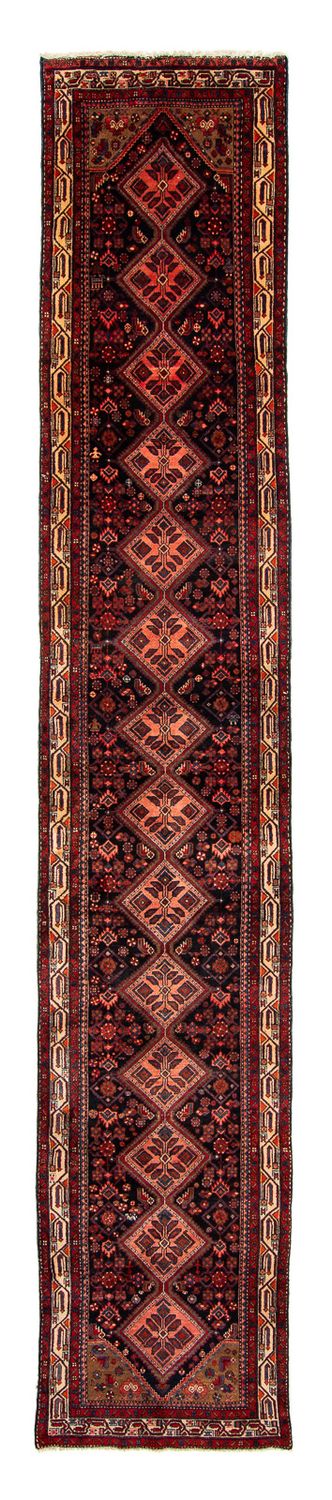
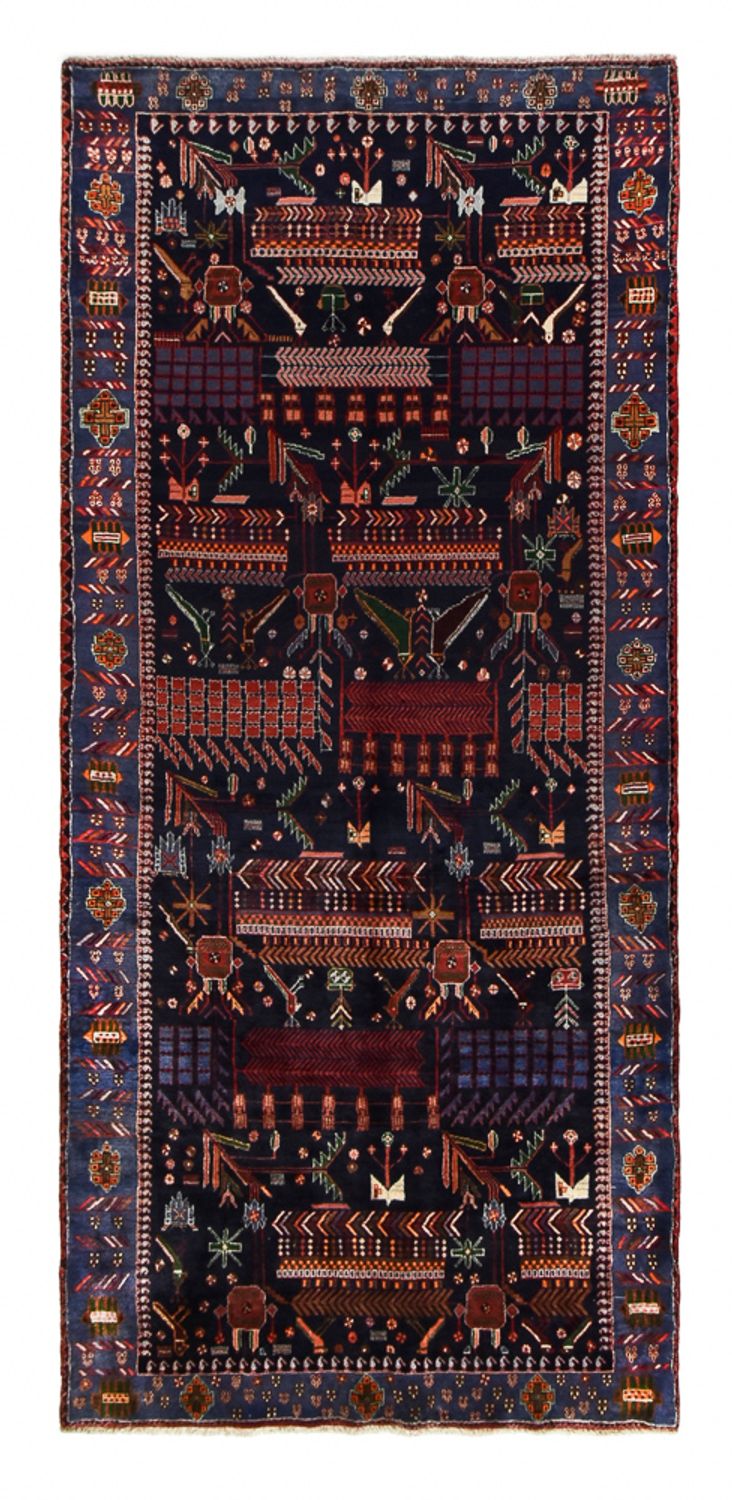
Photo: Morgenland Rugs
Klardasht rugs are robust hand-knotted Persian rugs from northern Iran, from the high valley of the same name in the province of Mazandaran on the southern shore of the Caspian Sea. They show strong geometric medallion patterns with clear echoes of the Caucasian weaving tradition and count as solid, everyday-capable utility rugs. Also spelled Kelardasht in the trade, they belong to the less well-known but characterful provenances of the Caspian highlands.
What is a Klardasht rug?
A Klardasht is a hand-knotted village rug from the high valley of Klardasht in the Elburz mountains. Characteristic are the symmetric Turkish knot, a wool pile on a cotton warp, angular medallion patterns, and a restrained, earthy coloring. The knotting of the region goes back to weaver families who immigrated with a Caucasian and Azerbaijani tradition, which explains the geometric, clearly structured pattern language.
Origin
Klardasht lies as a high valley in western Mazandaran, in the northern foothills of the Elburz mountains, not far from the Caspian Sea. Unlike older trade designations might suggest, the place does not belong to the northwest Persian border area but to the Caspian highlands in the north of the country. The region belongs to the broader family of Persian rugs. The knotting there was substantially shaped by weaver families who came into the area from the Caucasus and from Azerbaijan and brought their geometric formal language with them.
This origin of the knotting tradition explains why Klardasht rugs, despite their Caspian location, stylistically resemble the northwest Persian and Caucasian village rugs more than the floral city patterns of central Persia. Production has long been oriented to local and regional needs and is comparatively little represented in international trade.
Patterns and colors
Klardasht rugs usually show an angularly outlined central medallion, frequently flanked by four matching corner ornaments. The motifs are resolved geometrically: palmettes, rosettes, and vine work are rendered in symmetrical, angular form. Continuous fields with evenly distributed geometric motifs are also common.
The palette is usually restrained and earthy, with brown, beige, and warm reds as leading colors, complemented by subtle accents in blue or green. This muted color mood distinguishes the Klardasht from the more contrasting Caucasian models. The border usually consists of several narrow borders with simple geometric motifs that clearly frame the central field. Overall, a Klardasht feels calm, geometric, and markedly less floral than the workshop patterns from Isfahan.
Material and knotting technique
Klardasht rugs are traditionally knotted from robust local virgin wool on a cotton warp. The wool mostly comes from the region and is frequently hand-spun and dyed. Knotting uses predominantly the symmetric Turkish knot, also called the Ghiordes knot, which is the standard among the Caucasian-shaped knotters of the region.
The pile is sheared medium-long, which gives the rugs a pleasant texture and good durability. Dyeing is traditionally done with natural dyes, while more recent examples may also use synthetic colors, whose colorfastness is usually good. How the individual work steps from shearing to the finished knotting proceed is described in the overview of rug production, and the materials used are covered in a dedicated article.
Knot density and quality
The knot density of a Klardasht usually lies in the medium range, often between 100,000 and 200,000 knots per square meter, with individual finer pieces possibly higher. This ensures solid, everyday-capable quality. How knot density affects fineness, durability, and price is explained in a dedicated article.
Since Klardasht rugs are made both in smaller workshops and in larger operations, quality can vary. For assessment, wool quality, evenness of the knotting, and clarity of the drawing matter as much as knot count. The finer examples can indeed compete with other northern Persian village rugs.
| Provenance | Relationship to Klardasht | Typical features |
|---|---|---|
| Klardasht | Caspian mountain provenance | angular medallion, earthy colors, Turkish knot |
| Rudbar | nearby Caspian region (Gilan) | geometric scatter pattern, earthy tones |
| Heriz | northwest Persian model | large angular single medallion |
| Qaraja | northwest Persian knotting environment | octagonal row medallions |
| Shirvan | Caucasian model | fine geometric borders, sharp contrasts |
| Tabriz | fine city center of NW Persia | curvilinear workshop patterns |
What is a Klardasht rug worth?
The value of a Klardasht depends above all on age, condition, size, knot density, and wool quality. Thanks to mostly moderate prices and the robust character, the Klardasht is well-suited for beginners looking for solid quality at a sensible price-quality ratio. Finer older pieces with hand-spun wool and natural dyes sit above the simple trade ware.
For a sound estimate, see the article identify valuable Persian rugs, the notes on rug value in general, and the buying guide.
How do you recognize a genuine Klardasht rug?
Typical signs of a genuine Klardasht include:
- Angularly outlined central medallion with matching corner ornaments, Caucasian-influenced.
- Restrained earthy colors of brown, beige, and warm red instead of garish contrasts.
- Symmetric Turkish knot with an even back structure.
- Wool pile on a cotton warp, often with hand-spun wool in older pieces.
- Fringes as extended warp threads, not sewn on afterwards.
- Medium-long pile with a robust, village look.
Since the Klardasht stylistically stands between its Caspian home and Caucasian tradition, the placement should consider pattern, color mood, material, and back together. Help is offered by recognize origin and the step-by-step guide Is my rug genuine?.
Care
Regular vacuuming in the pile direction and occasional turning preserve the quality of a Klardasht. For heavier soiling, professional rug cleaning is recommended. Stains should be treated immediately with clear water, without rubbing. Long direct sunlight fades the earthy colors. The robust construction makes these rugs relatively easy to care for. Detailed notes are in the care overview and in the article on cleaning wool rugs.
Frequently asked questions
Where exactly do Klardasht rugs come from?
Klardasht is a high valley in the northern Iranian province of Mazandaran, on the southern shore of the Caspian Sea in the Elburz mountains. The geometric pattern language goes back to weaver families who immigrated with a Caucasian and Azerbaijani tradition.
Which knot does a Klardasht rug use?
Klardasht rugs are knotted predominantly with the symmetric Turkish knot, the Ghiordes knot. This corresponds to the Caucasian-shaped knotting tradition of the region.
How does a Klardasht differ from a Caucasian rug?
Both share the angular, geometric formal language. The Klardasht, however, is usually more earthy and restrainedly colored than the contrasting Caucasian rugs and comes from the Caspian highlands of northern Persia, not from the Caucasus itself.
Are Klardasht rugs suitable for beginners?
Yes. Thanks to the robust character, the solid medium knot density, and the mostly moderate prices, Klardasht rugs are well-suited for beginners and offer a sensible price-quality ratio.
What does a Klardasht rug cost?
The price depends on size, age, condition, knot density, and wool quality. Klardasht rugs mostly move in the moderate segment, but finer older pieces with natural dyes can fetch higher prices.
How do I care for a Klardasht rug properly?
Vacuum regularly in the pile direction, turn occasionally, and have it professionally cleaned for heavier soiling. Blot stains immediately with clear water, without rubbing, and avoid long direct sunlight.
Impressions of the origin
Places, landscapes and landmarks around the home of Klardasht rugs. Click any image for a larger view.
