Silk Kelim: finest slit-tapestry weave from Persia and Turkey
Silk kilims are flat-woven from pure silk and are among the most refined flat weaves, luminous and finely detailed.
- Region
- Persia / Iran
- Category
- Silk rugs
- Manufacturing
- Hand-woven
- Knot density
- Flat weave (finest structure)
Profile
- Manufacturing
- Hand-woven
- Origin
- Iran / Turkey — silk-producing centers
- Pile material
- Silk
- Knot density
- Flat weave (finest structure)
- Features
- Pure silk, luminous colors, very fine flat weave
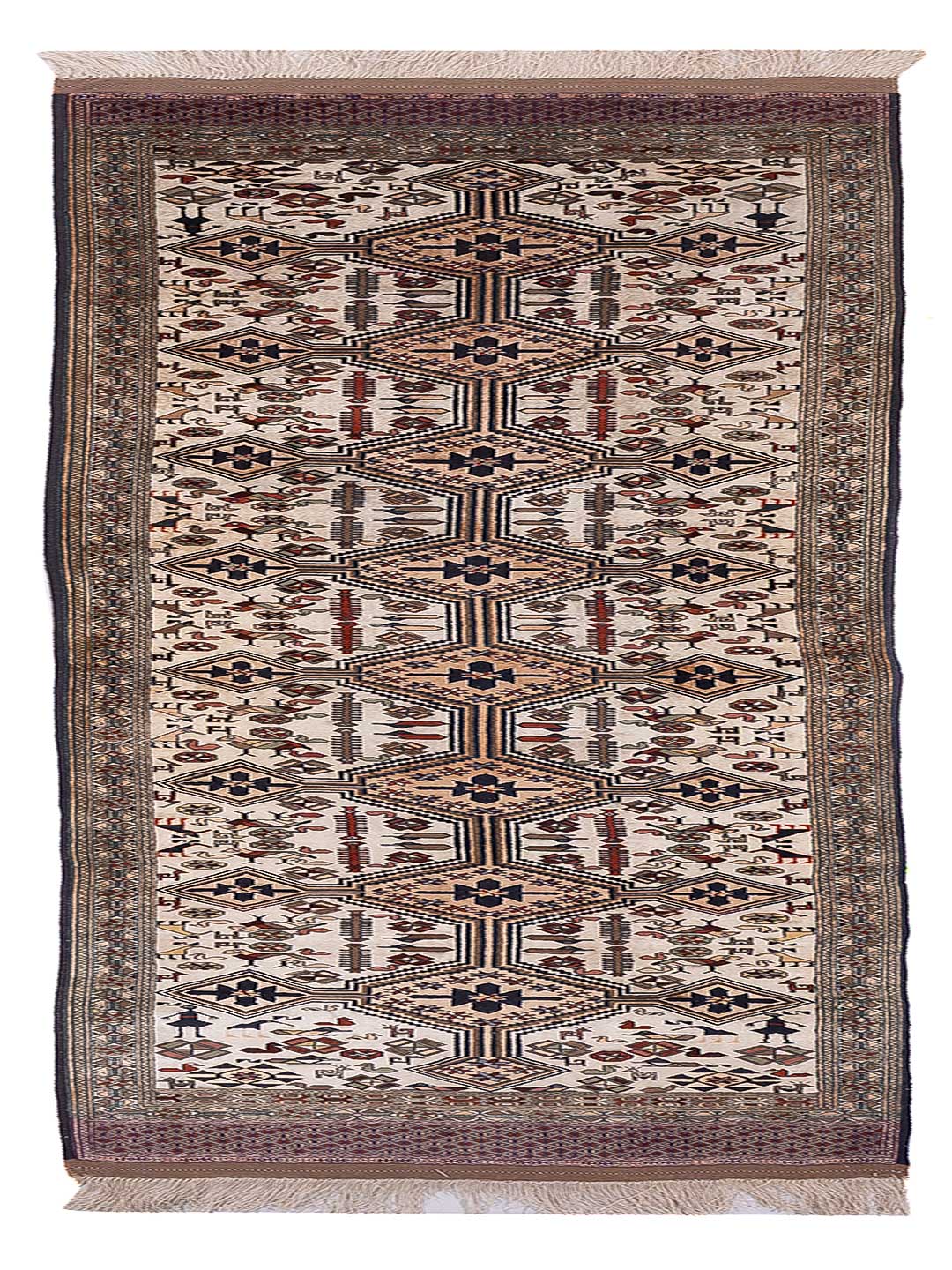
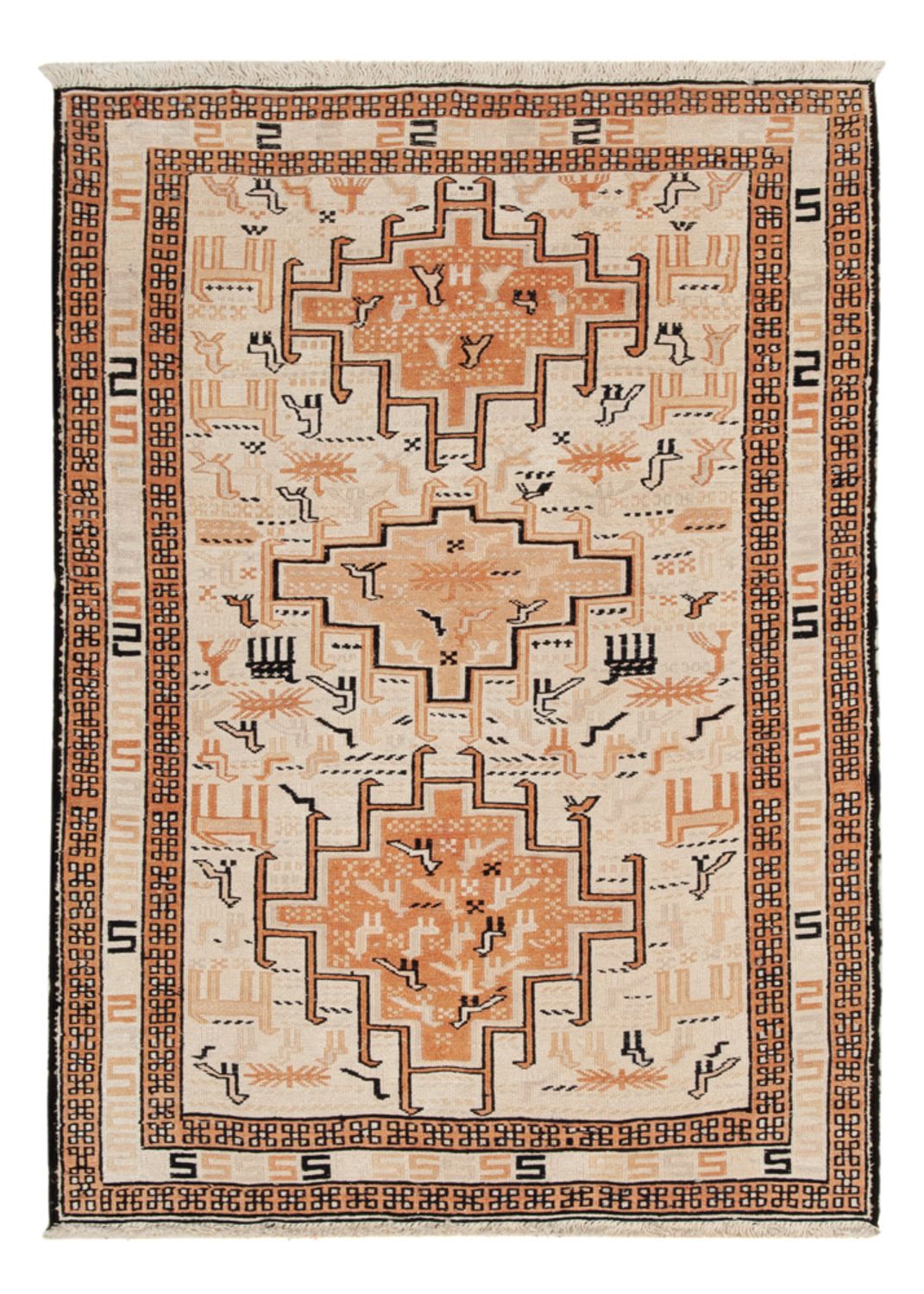
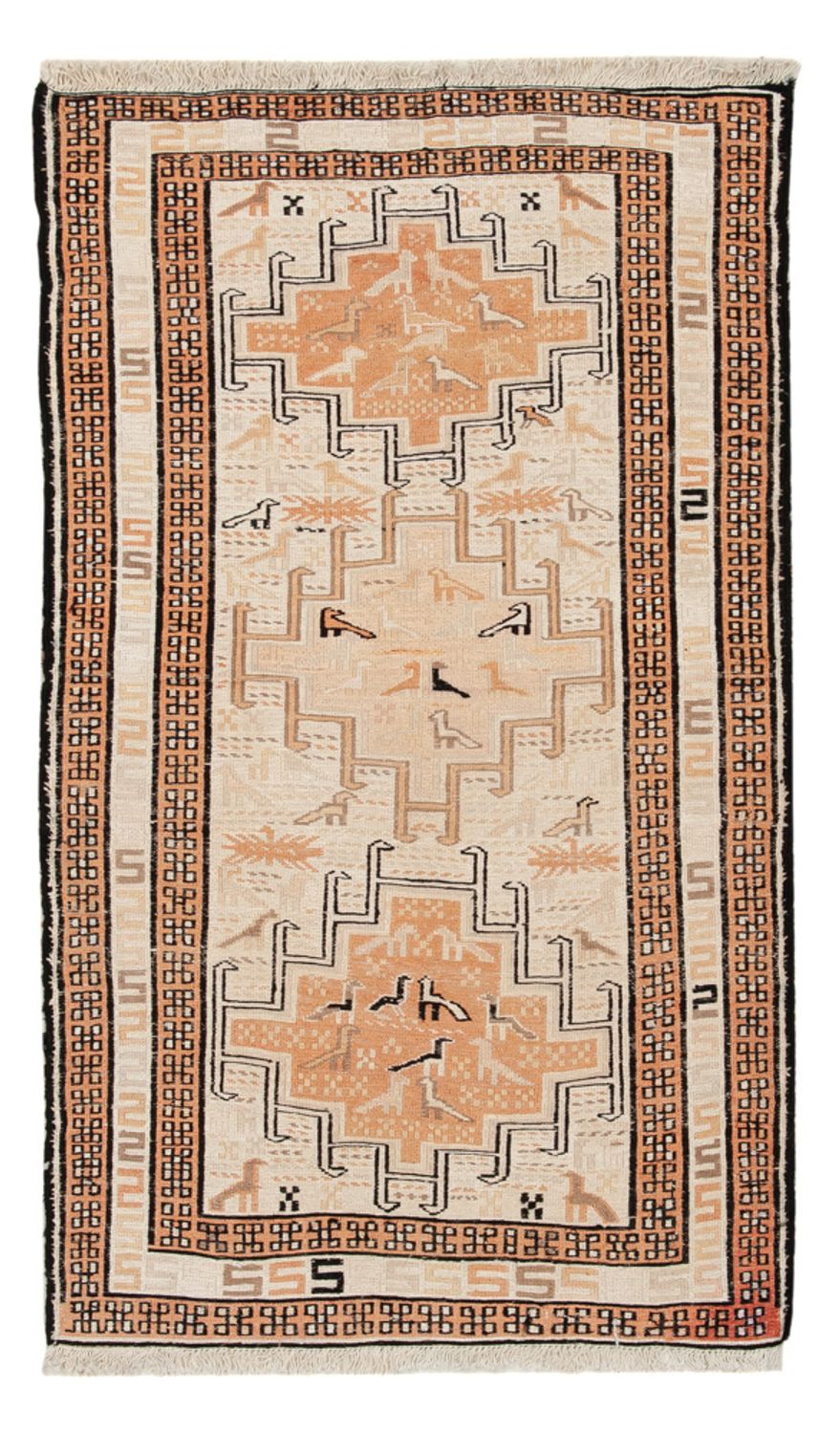
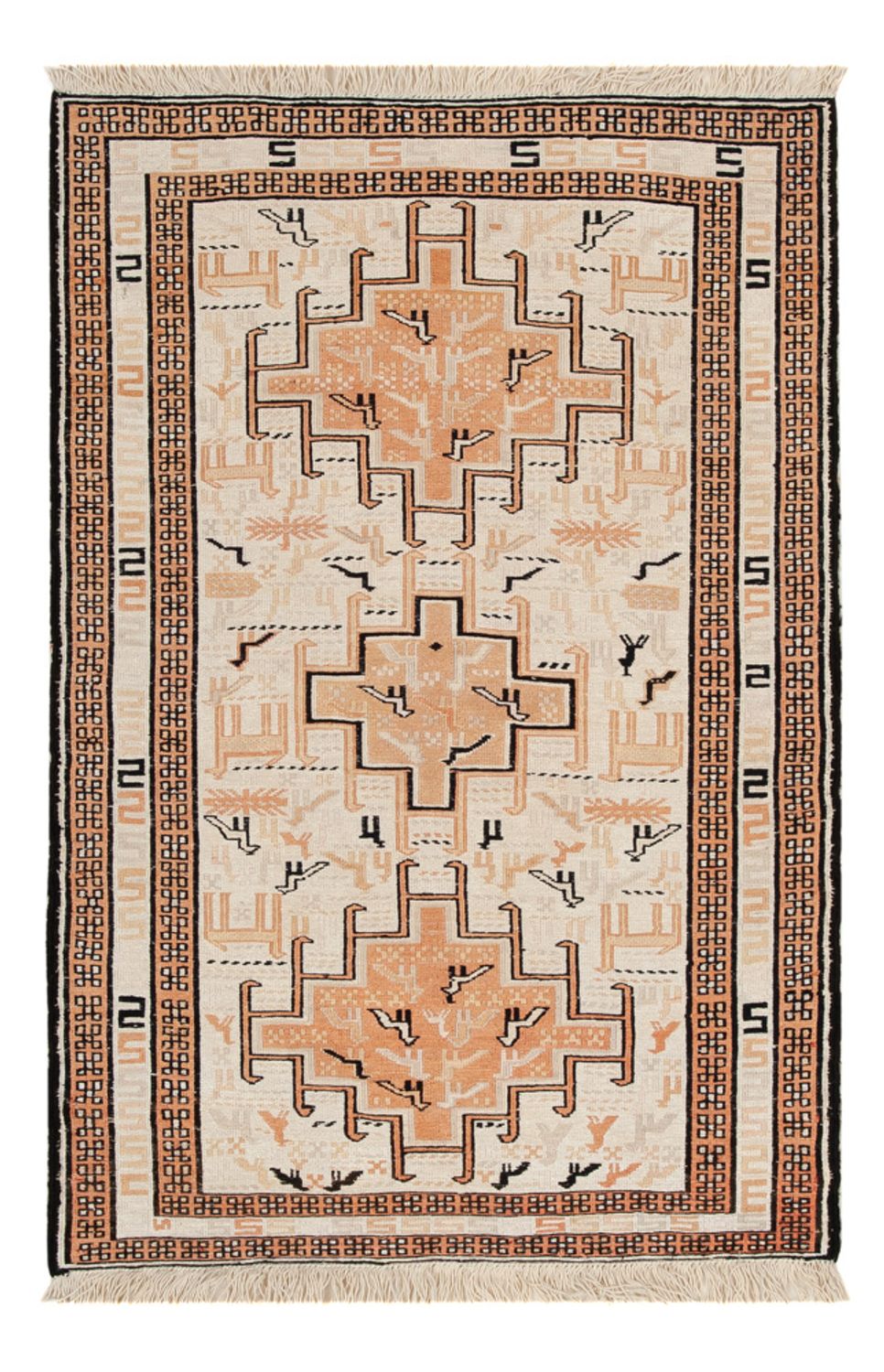
Photo: Morgenland Rugs
A silk kelim is the most luxurious variant of slit-weave: a flat-woven, pile-free rug whose pattern-forming weft consists entirely or predominantly of silk. It is made in workshops of Persia and Turkey, reaches an unusually fine weave density, shimmers depending on the angle of light, and belongs to the top of the silk rugs. At the same time, no other kelim type is so often accompanied by viscose imitations. Anyone wanting to buy one needs a clear eye for material and origin.
What is a silk kelim?
A silk kelim is a hand-woven flat rug without pile and without knots, whose pattern is formed by colored silk wefts in slit-weave. Unlike the knotted silk rug, it has no pole: the surface stays completely flat. Like all kelims it is fully reversible, because front and back are patterned almost identically.
The difference from the classic wool kelim does not lie in the technique but in the material. The fine silk yarns allow markedly more weft threads per centimeter than the highland wool of a Maimana kelim or Kelim Fars. Patterns can thus be woven that are unreachable for a wool flatweave: fine boteh, narrow border bands, dense scatter motifs. Add to that the silk sheen, which changes the colors depending on the viewing angle.
Origin: workshops in Persia and Anatolia
Classical centers lie in the Persian workshops around Qum, Kashan, and Isfahan, as well as in the Anatolian workshops around Hereke and Kayseri. Unlike the tribal kelims of northern Afghanistan or southern Persia, the silk kelim is not a product of nomadic home economy but urban workshop ware. The tradition developed mainly in the 19th and 20th centuries, when silk production in Persia and Anatolia reached a peak.
Alongside this, silk kelims are made today in Indian and Kashmiri workshops, mainly for export. These pieces often imitate Persian patterns but differ in yarn thickness and dyeing. The silk rug overview places the production landscape in the overall context.
Typical patterns and colors
Silk kelims orient themselves on the Persian and Ottoman workshop traditions. In the central field appear small medallions, boteh scatter fillings, or fine vine patterns, framed by multi-part borders with palmettes and cloud bands. Since slit-weave does not allow a curving line, the workshops break floral motifs into the finest steps, which the eye perceives at a distance as a round form.
The palette uses the silk sheen deliberately. Common are light grounds in ivory, champagne, and beige, complemented by accents in turquoise, aubergine, rose, gold, coral red, and sage green. Silk absorbs dyes intensely, so the tones look cooler and more brilliant than with wool. Some workshops work with natural dyes, many commercial productions with acid-resistant synthetic dyes.
Material and weaving technique
The defining material is mulberry silk. In classic workshop ware, warp, weft, and pattern-forming thread consist entirely of silk. In some productions the warp is spun from fine cotton or wool yarn, but the pattern-forming weft remains silk. Before weaving, the silk is degummed, reeled, plied, and dyed.
The weaving technique is classic slit-weave like every kelim: on the workshop loom, each colored weft is passed back and forth in its field and beaten in densely with the comb. The typical kelim slit emerges at vertical color boundaries. Unlike with a knotted rug, there is no pole and no knots. A silk kelim therefore has no knot density either; it is a flatweave and is assessed, like all kelims, by weft density. The overall process of flat weaving is explained on the page weaving in the production area.
Since silk is thinner than virgin wool, the weft threads are very fine. This makes the fabric light and more sensitive to pressure and moisture than a wool kelim. The surface stays flat but, through the fiber structure, has a visible lengthwise sheen.
Weave density and quality
Instead of knot density, experts assess silk kelims by weft density. High-quality pieces from Qum or Kashan reach 20 to 40 weft threads per centimeter, a multiple of an average wool kelim. This fineness allows the painterly wealth of detail. Other important quality markers are the evenness of the weave, the clarity of the borders, and the purity of the dyeing.
For the silk itself the rule is: the longer the fiber, the more stable and lustrous the fabric. High-quality mulberry silk is long-fibered and reflects light warmly. Short-fibered schappe silk looks duller and goes flat faster. Collectors therefore ask about the fiber quality, not just about the weave density.
Silk kelim at a glance
In the trade, very different products meet under the slogan silk. The following table places the silk kelim alongside the most important comparison pieces.
| Type | Construction | Material | Typical features |
|---|---|---|---|
| Silk Kelim | flatweave, slit-weave | mulberry silk, no pile | flat, reversible, very fine weft density, shimmering |
| Qum silk | knotted, with pile | pure silk on silk warp | very fine knot density, soft silk pile, workshop ware |
| Hereke silk | knotted, with pile | pure silk, workshop | Ottoman designs, highest knot densities in the world |
| Wool kelim (e.g. Maimene Kelim) | flatweave, slit-weave | virgin wool | tribal-geometric, robust, coarser weave density |
| Viscose imitation | flatweave or knotted | viscose, polyester | luminous sheen, cheap, very absorbent, statically charged |
The most important comparison is the contrast with viscose. In the trade, viscose, a chemical fiber produced from wood cellulose, is gladly marketed as art silk or bamboo silk. It shines as intensely as genuine silk but is structurally a different material: less tear-resistant, hardly lightfast, extremely absorbent, and unstable when wet. A detailed guide on how to distinguish genuine silk from viscose and other fiber imitations is in the article recognize silk.
What is a silk kelim worth?
Genuine silk kelims from Persian or Anatolian workshops belong to the most expensive flatweaves on the market. The price is determined by fiber quality, weft density, age, purity of dyeing, and workshop provenance. A fine kelim from Qum or Hereke can fetch four- to five-figure sums depending on format and condition. Indian and Kashmiri silk kelims are cheaper because their workshops produce less specialized.
An important value factor is the honesty of the material statement. Pieces offered as silk that show a plastic smell in the burn test are viscose imitations and belong to a far lower price class. Mixed fabrics of wool and silk or cotton and silk are also partly marketed as silk but are not pure silk kelims. Placement is offered by What is a rug worth?, and for dealer selection the buying guide.
How do you recognize a genuine silk kelim?
A genuine silk kelim combines the features of a kelim with those of genuine silk. The most important test points:
- Flatweave, no pile: the surface is flat. A velvety pole belongs to a knotted silk rug such as the Qum silk, not to the kelim.
- Vertical slits at color boundaries: small in fine workshop pieces, but present.
- Almost identical pattern on both sides: the kelim is reversible.
- Lengthwise sheen and color play: mulberry silk reflects warmly and changes the colors depending on the viewing angle. Viscose shines coldly and evenly.
- Handfeel: genuine silk feels cool and warms up quickly in the hand. Viscose stays lukewarm and feels softer.
- Burn test: silk smells like burnt hair and leaves crumbly ash. Viscose smells of paper, polyester melts into beads. Details in recognize silk.
- Fringes as extended warp: part of the fabric, not sewn on, with the same sheen as the central field.
The full authenticity check is offered by recognize oriental rug and Is my rug genuine?.
Care
Silk kelims are the most delicate pieces of the kelim family. Direct sun fades the colors, water and friction damage the fibers permanently. In daily life, careful vacuuming with the upholstery nozzle is enough, without brush roll and with reduced suction power, only in the direction of the weave. Never clean wet, never use harsh cleaners.
Blot stains with a soft, damp cloth, do not rub. Heavier soiling or water damage belongs exclusively in a specialized silk cleaning. Storage loosely rolled in acid-free paper, in a dry, dark place. A non-slip underlay on smooth floors protects the fine fringes. Full routines are in the care overview.
Frequently asked questions
What is the difference between a silk kelim and a knotted silk rug?
A silk kelim is a flatweave without pile, with the pattern formed in slit-weave. A knotted silk rug such as the Qum silk or Hereke silk, by contrast, has a pile of silk knots. The silk kelim is flatter, lighter, reversible, and usually cheaper than a comparable knotted silk rug.
Does a silk kelim have a knot density?
No. A kelim fundamentally has no knots, so no knot density either. It is assessed by weft density, that is, the number of weft threads per centimeter. Fine silk kelims from Qum or Kashan reach 20 to 40 wefts per centimeter, which makes the characteristic wealth of detail possible in the first place.
How do I recognize genuine silk in a kelim?
Mulberry silk is cool in the hand, warms up quickly, and reflects light warmly. The burn test on a fringe yields a smell of burnt hair and crumbly ash. Viscose smells of paper and is the most common imitation. Step by step, the article recognize silk explains this.
What is the difference between a silk kelim and a viscose kelim?
Viscose is a chemical fiber made from wood cellulose, often marketed as art or bamboo silk. It shines as intensely as silk but is less tear-resistant, hardly lightfast, and unstable when wet. A viscose kelim feels warmer and softer, shines coldly instead of warmly, and reacts in the burn test like paper or plastic.
Are silk kelims suitable for daily use?
Only to a limited extent. For heavily used surfaces or rooms with sunlight they are poorly suited, since friction, pressure, and light damage the fibers. Their place is in representative areas, gladly as a wall hanging or as a decorative piece on a wool rug.
What does a genuine silk kelim cost?
A high-quality silk kelim from a Persian or Anatolian workshop starts in the high three- to four-figure range. The finest pieces from Qum, Hereke, or Kashan can reach five-figure sums. Indian and Kashmiri workshop ware sits below that. Viscose imitations cost only a fraction and are not a comparable material.
How do I care for a silk kelim properly?
Only dry care: vacuum with the upholstery nozzle, without brush roll. Avoid direct sun, never clean wet, never use harsh cleaners. Blot stains with a damp cloth, send heavier soiling to specialized silk cleaning. Storage loosely rolled in acid-free paper, dark and dry.
Impressions of the origin
Places, landscapes and landmarks around the home of Silk Kilim rugs. Click any image for a larger view.


