Hereke rugs: finest Ottoman court manufactory on the Sea of Marmara
Hereke rugs come from the Ottoman court manufactory in Hereke, Turkey, and are among the world’s finest hand-knotted rugs.
Profile
- Manufacturing
- Hand-knotted
- Origin
- Turkey — Hereke, Kocaeli Province
- Pile material
- Silk on silk or wool on cotton
- Knot density
- 500,000 – 1,500.000+ knots/m²
- Features
- Court-quality fine knotting, often pure silk, elegant designs
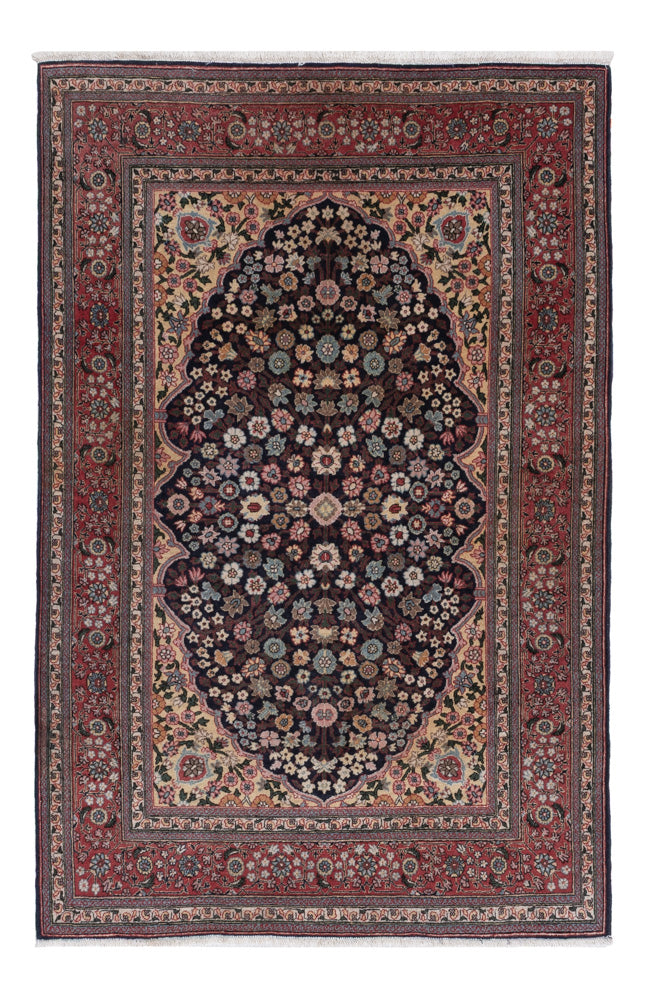
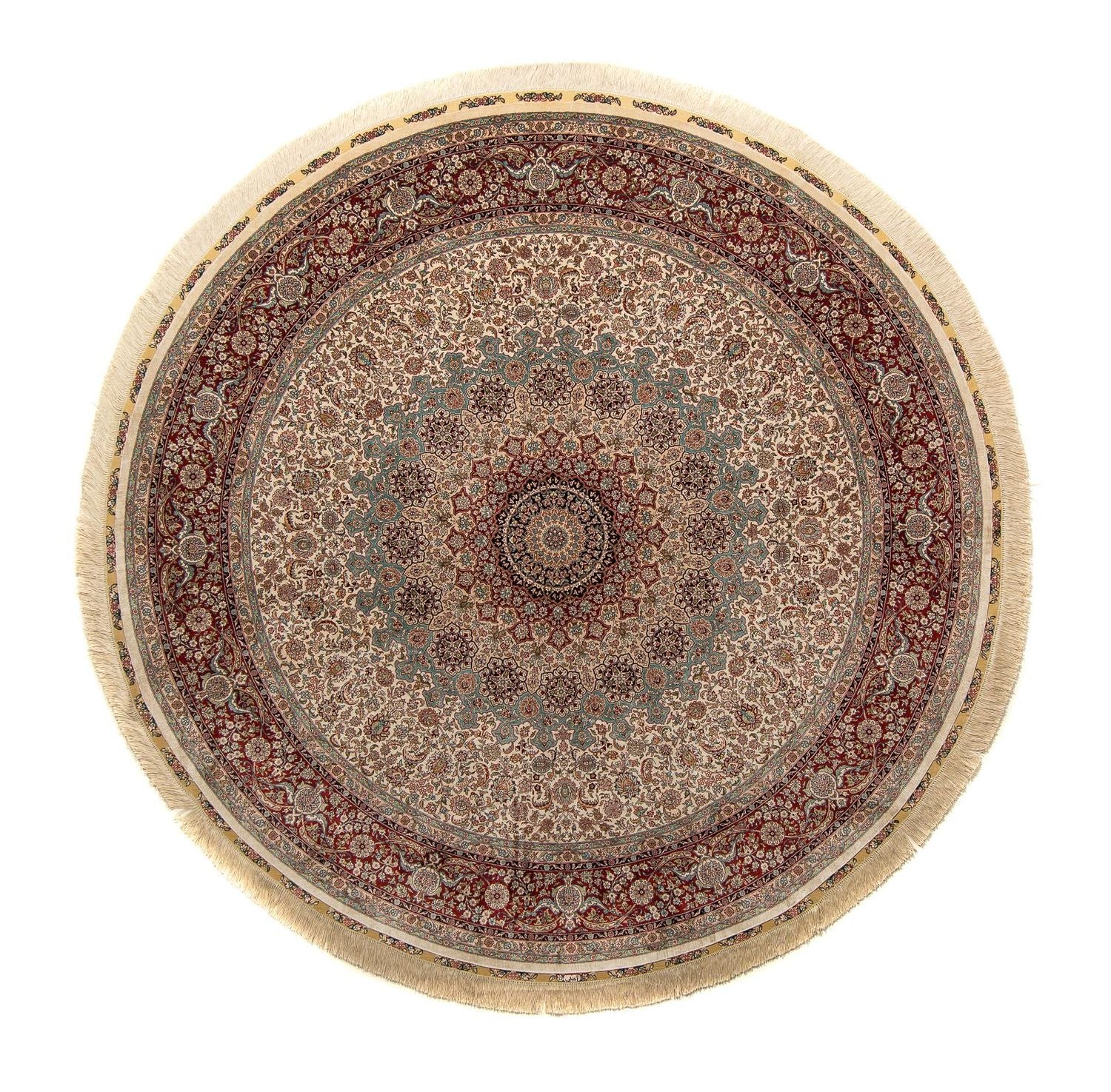
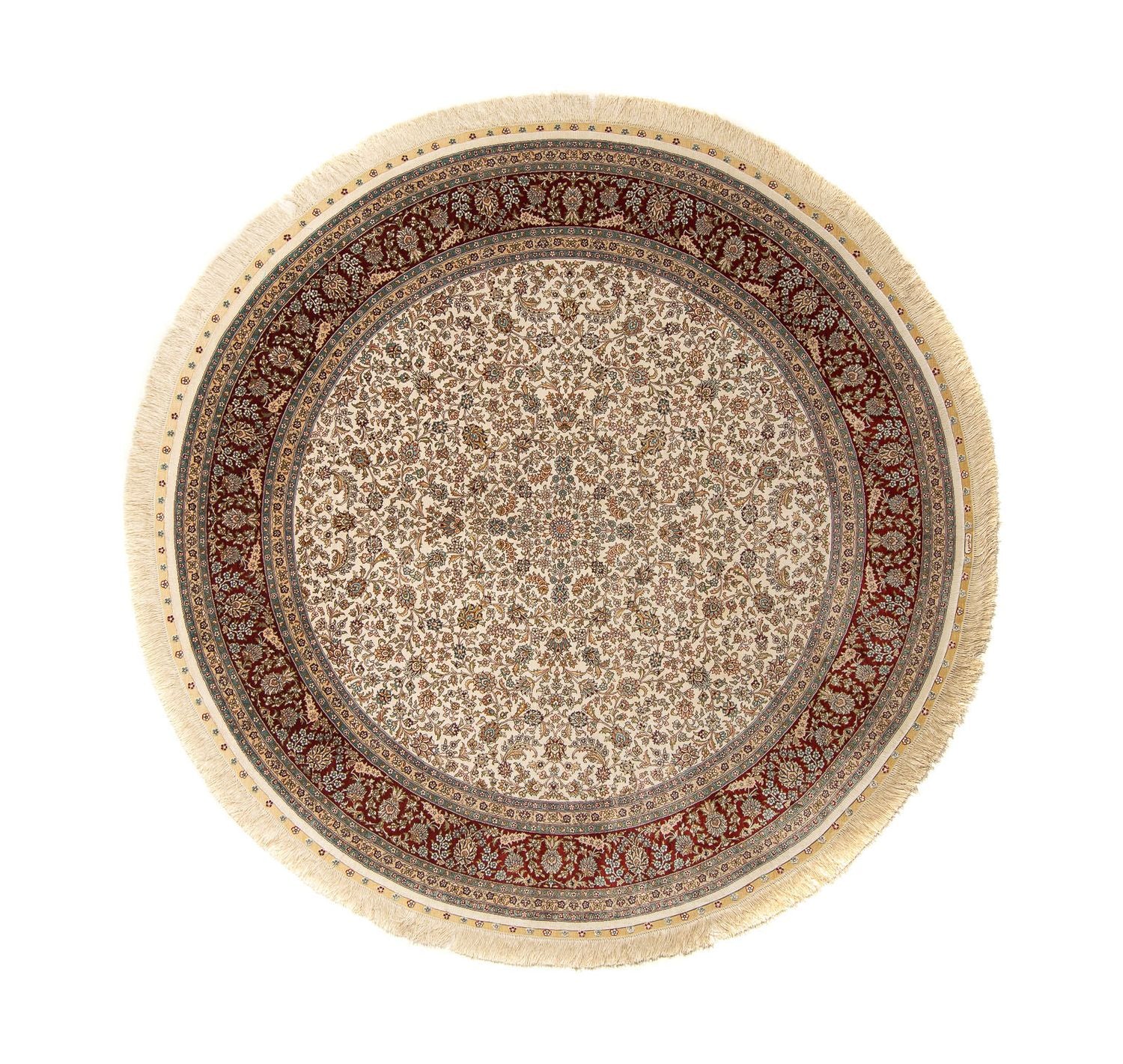
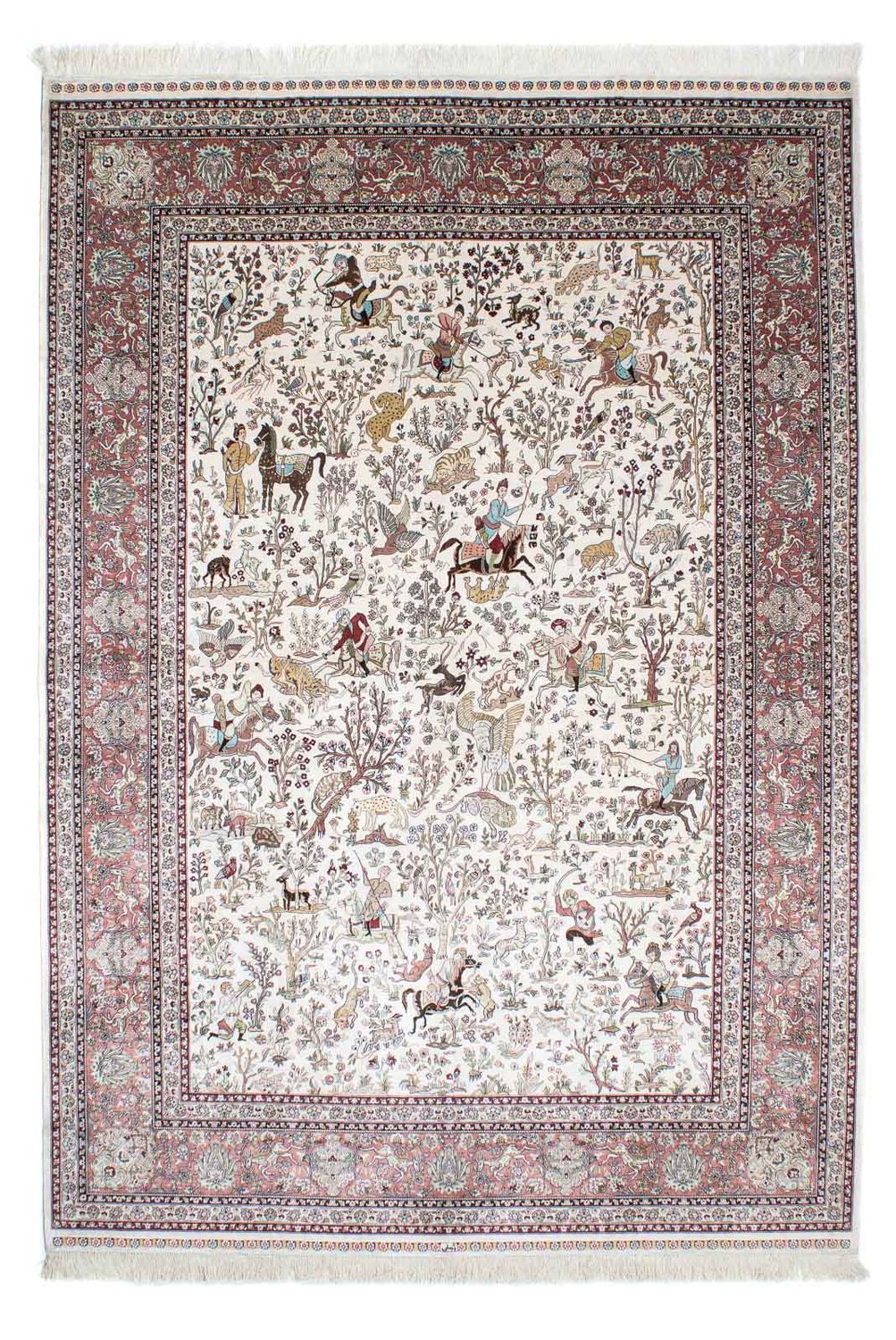
Photo: Morgenland Rugs
Hereke rugs count as the finest knotted work of Turkey and belong among the most high-quality oriental rugs of all. They come from the town of Hereke on the Sea of Marmara, where in 1843 an imperial manufactory of the Ottoman sultan was established to make rugs for the palaces and as state gifts. Characteristic are an exceptionally high knot density, finely drawn floral court patterns and a silky sheen. Especially the silk rugs from Hereke embody a craft pre-eminence that still sets the benchmark today.
What is a Hereke rug?
A Hereke is a hand-knotted rug from the town of the same name in the Turkish province of Kocaeli that stands for the highest knotting fineness. The name denotes at the same time a quality term: Hereke rugs belong among the most densely knotted rugs in the world and are made in the finest wool or in silk. They are knotted with the symmetric Turkish knot. The patterns are curving and floral and go back to the court art of the Ottoman empire, which clearly distinguishes the Hereke from the geometric village and nomadic rugs of Anatolia.
Unlike collective terms such as Hamadan, Hereke denotes a narrowly defined provenance with a clearly documented manufactory history. The pure silk pieces are treated separately under Hereke silk, since they reach the highest fineness and prices.
Origin
Hereke lies in the Turkish province of Kocaeli, about 60 kilometres east of Istanbul on the Sea of Marmara. Rug production began in the mid-19th century under Sultan Abdülmecid I, who had an imperial manufactory established in 1843. It was part of the court workshops and was to make exclusive rugs for the Ottoman palaces and for diplomatic gifts. Hereke was thus from the outset no grown village knotting area but a state luxury manufactory.
In its heyday the manufactory employed more than a thousand weavers and supplied rugs for famous buildings such as the Dolmabahçe Palace in Istanbul and for European royal houses. Here the finest yarns and dyeings were processed, often on the basis of Persian and Ottoman court templates. After the end of the Ottoman empire production was privatised but remained at the top level. To this day Hereke is the most prestigious knotting centre of Turkey, and the town houses a rug museum on the local knotting history. Related fine Turkish manufactory goods are also made in Kayseri in central Anatolia.
Patterns and colours
Hereke rugs show predominantly floral court patterns of great fineness. Widespread are central medallion designs, continuous palmette and arabesque vines, stylised flower fields and prayer rugs with a finely drawn mihrab niche. Well known too is the four-seasons or garden motif, which divides the field into panels with flowers, birds and cypresses. The extremely high knot density allows curving contours and the finest details that would not be representable in coarser rugs.
The palette is harmoniously and restrainedly coordinated. Deep red and blue tones, beige, ivory and delicate pastel nuances dominate, often supported by gold and silver accents that shimmer especially in silk pieces. The borders are usually multiply tiered and richly ornamented with palmettes and vines. Characteristic is the shifting sheen: depending on the angle of view and incidence of light, the effect of the colours changes, which is especially pronounced in silk rugs.
Material and knotting technique
Hereke rugs are made in two main qualities: from fine wool and from pure silk. In wool rugs, high-quality wool is used, often with portions of particularly fine sorts; the warp is cotton or silk. The most prized pieces are the pure silk rugs, in which warp, weft and pile consist of silk. They reach the highest fineness and the most pronounced sheen. Some pieces also use metal threads. More on the fibres is given under materials and in the silk study.
The Hereke is knotted exclusively with the symmetric Turkish knot, also called the Ghiordes knot. Despite the symmetric knot, the extreme fineness of the yarns allows highly detailed, curving pattern representation. How the individual steps from spinning through knotting to shearing proceed is described in the article on production. After knotting the rugs are finely sheared and washed in order to work out the characteristic sheen. The whole production process can take several years for the finest silk pieces, since only a few square centimetres are made per day.
Knot density and quality
Hereke rugs belong among the most densely knotted rugs in the world. The knot density begins in fine wool qualities and reaches, in silk pieces, often from 400,000 to more than one million knots per square metre, in exceptional cases above. This extreme density is the precondition for the filigree drawing and distinguishes genuine Hereke from coarser manufactory goods. How knot density bears on quality and price is treated in detail in its own article.
Quality features of a Hereke are an exceptionally even knotting, precisely drawn contours, a deep, shifting sheen and a balanced colour composition. Because of their renown, many genuine Herekes carry a knotted-in signature of the master or the manufactory, as well as a certificate, since the market knows numerous imitations. How such signatures can be read is explained in its own article.
Hereke qualities in comparison
| Variant | Material | Typical features |
|---|---|---|
| Hereke wool | wool pile, cotton or silk warp | fine floral patterns, matte wool sheen, more robust |
| Hereke silk | pure silk | highest fineness, strong sheen, very light |
| Hereke with metal threads | silk and gold/silver thread | representative prestige pieces, shimmering accents |
| Kayseri | wool or silk | central Anatolian manufactory, often more affordable |
| Isfahan | wool or silk | Persian comparable style, finest court patterns |
| Qom | wool or silk | Persian silk rug, very fine, floral |
What is a Hereke rug worth?
Hereke rugs belong among the most valuable hand-knotted rugs. The value depends on material, size, knot density, age, condition and signature. Fine wool qualities move in the upper range; small silk rugs already reach four-figure prices, and large or antique silk pieces can achieve five- to six-figure sums. Pure silk, very high knot density and a documented origin significantly raise the value.
Because the name Hereke is often misused for inferior imitations, authenticity and material are decisive. Anyone wanting to buy or appraise will find orientation under why real rugs are expensive, in the value overview and in the buying guide.
How do you recognise a genuine Hereke rug?
Reliable indicators of a genuine Hereke are:
- Extremely high knot density: the back shows very fine, densely set knots and the pattern down to the detail in mirror.
- Symmetric Turkish knot: Hereke uses exclusively the Ghiordes knot.
- Silk sheen and shifting colours: genuine silk pieces shimmer depending on the angle of light and feel cool and smooth.
- Fine floral court patterns: curving palmettes, arabesques and medallions rather than coarse geometry.
- Signature and certificate: many genuine Herekes carry a knotted-in master's signature, verifiable via the signatures guide.
- Authenticity of the silk: a burn test on a fibre distinguishes real silk from art silk; notes on this under identifying silk.
Because imitations of art silk or of machine manufacture are in circulation, density, material, pattern and signature should be checked together. A step-by-step guide is given in Is my rug genuine?.
Care
Because of their fine structure, especially in silk, Hereke rugs should be handled gently and, in case of doubt, cleaned professionally. Careful vacuuming without a rotating brush, best with a nozzle attachment, and protection from direct sunlight preserve sheen and colours. Silk pieces do not tolerate heavy use and do not belong in heavily walked areas or damp rooms. Stains should only be removed by a specialist. Detailed notes are given in the care overview.
Frequently asked questions
What does a Hereke silk rug cost?
Prices vary strongly with size, knot density, age and authenticity. Small Hereke silk rugs begin in the four-figure range, while large or antique pieces can achieve five- to six-figure sums. Pure silk and very high knot density drive the value upwards.
Where does a Hereke rug come from?
Hereke rugs come from the town of Hereke in the Turkish province of Kocaeli on the Sea of Marmara, east of Istanbul. There Sultan Abdülmecid I established an imperial manufactory in 1843, which made exclusive rugs for the Ottoman palaces. The town lies in Turkey.
Are Hereke rugs made of silk or wool?
Both. Hereke rugs are made in fine wool and in pure silk. The silk pieces are especially fine and reach the highest knot density and the strongest sheen, which is why they count as the most valuable variant.
Which knot does a Hereke rug use?
The Hereke is knotted exclusively with the symmetric Turkish knot, also called the Ghiordes knot. Despite this knot type, the fine yarns make possible very detailed, curving court patterns. More on this under knot types.
How does a Hereke differ from a Kayseri rug?
Both are fine Turkish manufactory rugs. Hereke counts as the finest and most prestigious provenance with the highest knot density and often a knotted-in signature. Kayseri from central Anatolia picks up similar floral patterns, is usually somewhat coarser and thus more affordable.
Are all Hereke rugs hand-knotted?
Yes, genuine Hereke rugs are exclusively hand-knotted. Machine-made rugs in the Hereke style are imitations and reach neither the knot density, the sheen, nor the value retention of the originals. Notes on distinguishing them are given in Is my rug genuine?.
How do I care for a Hereke silk rug properly?
Silk Hereke rugs are delicate and should be handled gently. Careful vacuuming without a brush, no use in damp or heavily walked rooms and protection from direct sun are important. Stains and thorough cleaning belong in the hands of a specialist cleaner.
Impressions of the origin
Places, landscapes and landmarks around the home of Hereke rugs. Click any image for a larger view.
Related styles
Kayseri
Kayseri rugs come from Cappadocia and offer classical Anatolian patterns in a wide range of qualities and sizes.
Qom
Qom rugs from the holy city are among the finest Persian rugs and are particularly prized in pure-silk versions.
Isfahan
Isfahan rugs from the former Safavid capital are considered the pinnacle of Persian rug knotting, exceptionally fine and elegant.


