Kashmar rugs: decorative manufactory weave from Khorasan
Kashmar rugs come from northeastern Iran and are popular for their floral garden designs and balanced palette.
- Region
- Persia / Iran
- Category
- Persian rugs
- Manufacturing
- Hand-knotted
- Knot density
- 120,000 – 300,000 knots/m²
Profile
- Manufacturing
- Hand-knotted
- Origin
- Iran — Kashmar, Razavi Khorasan Province
- Pile material
- Wool on cotton
- Knot density
- 120,000 – 300,000 knots/m²
- Features
- Floral garden designs, balanced palette, durable wool
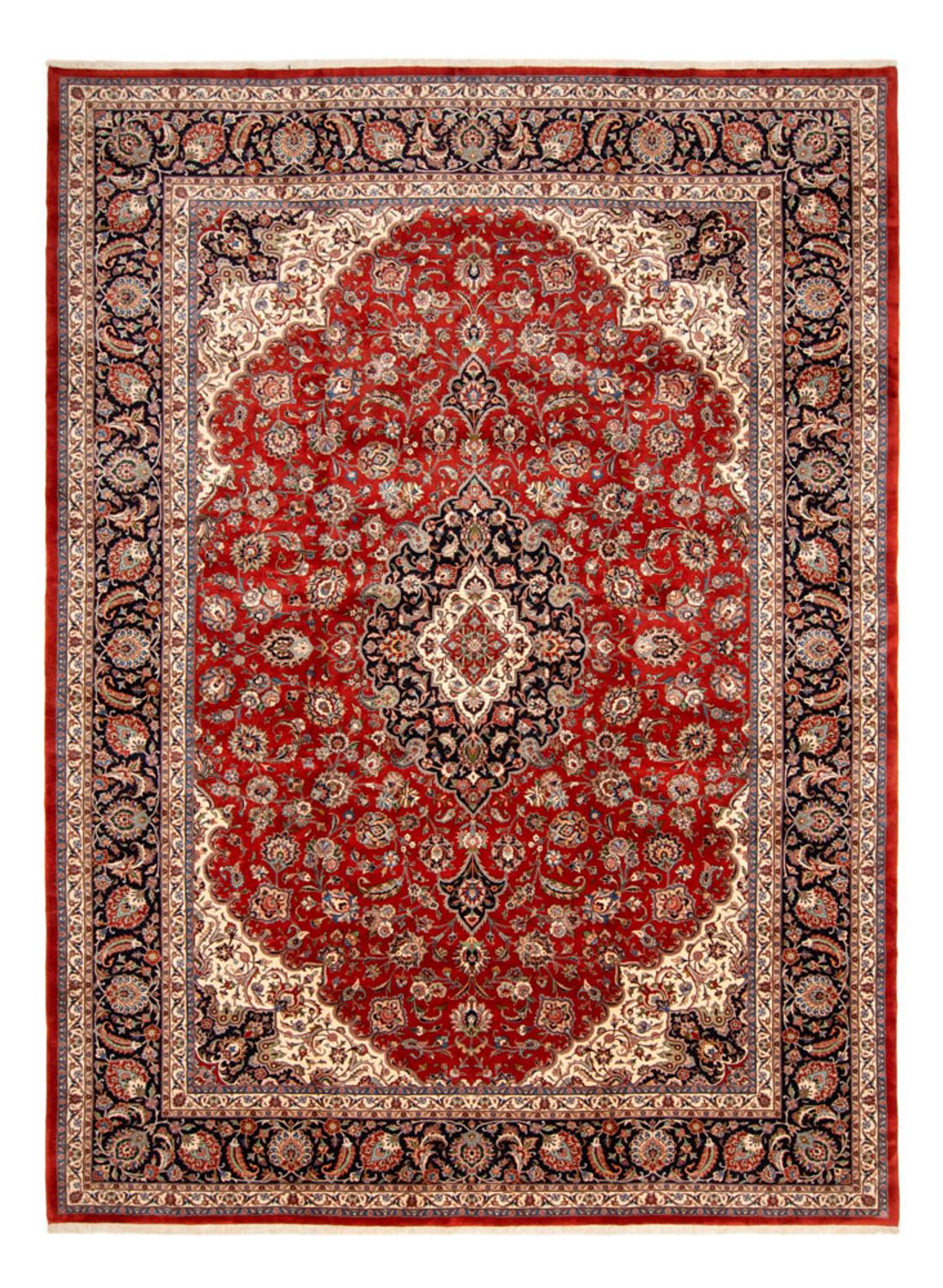
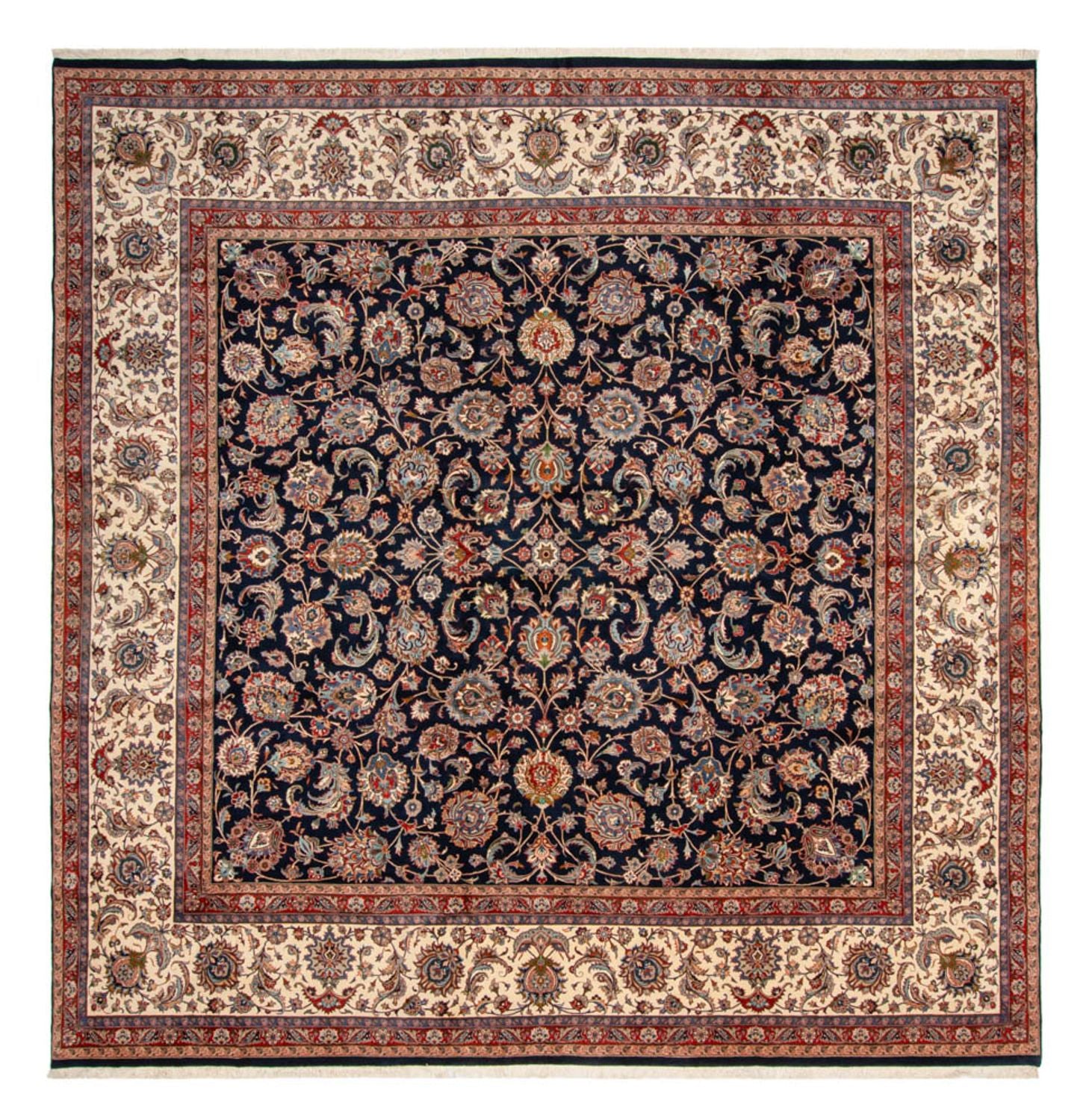
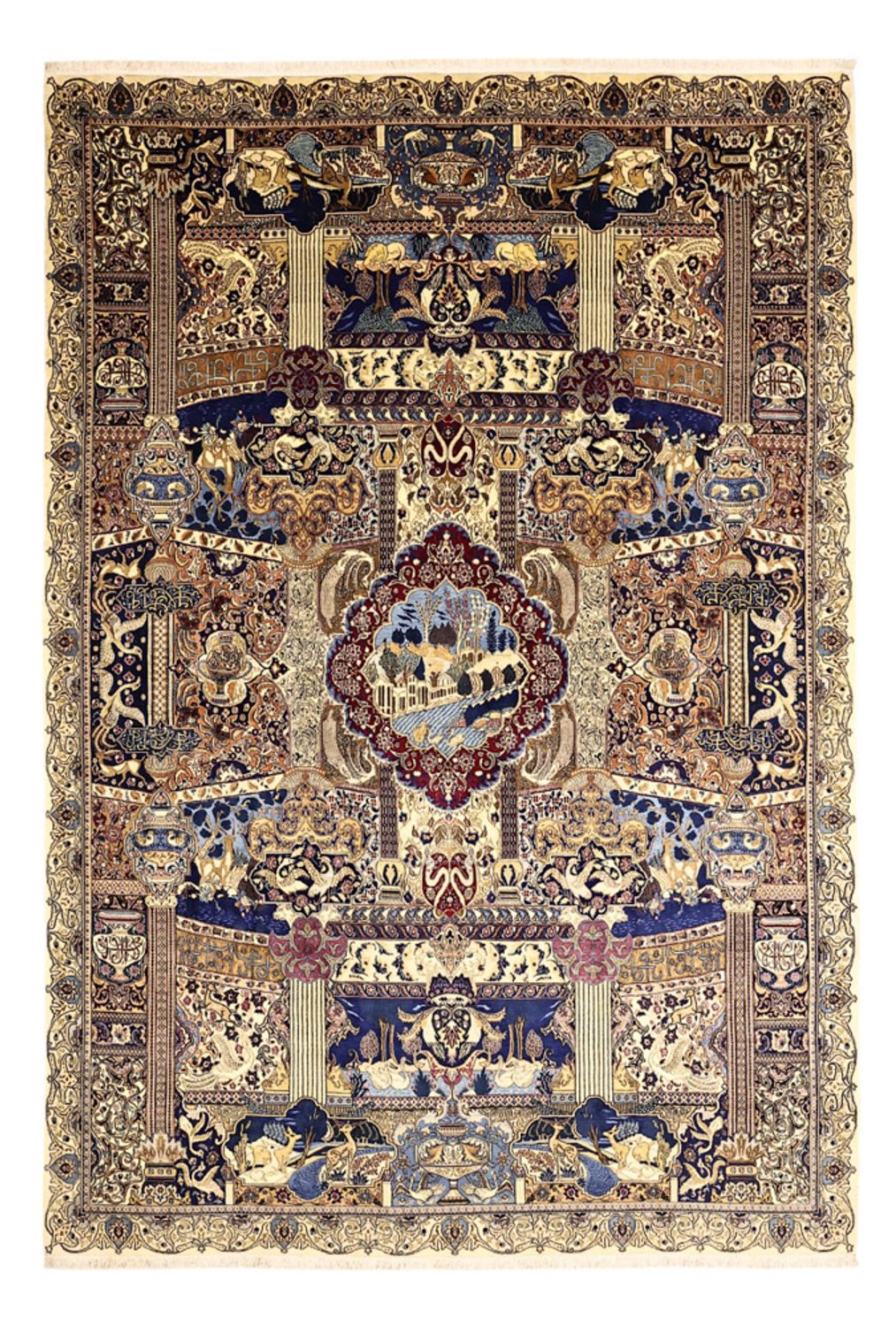
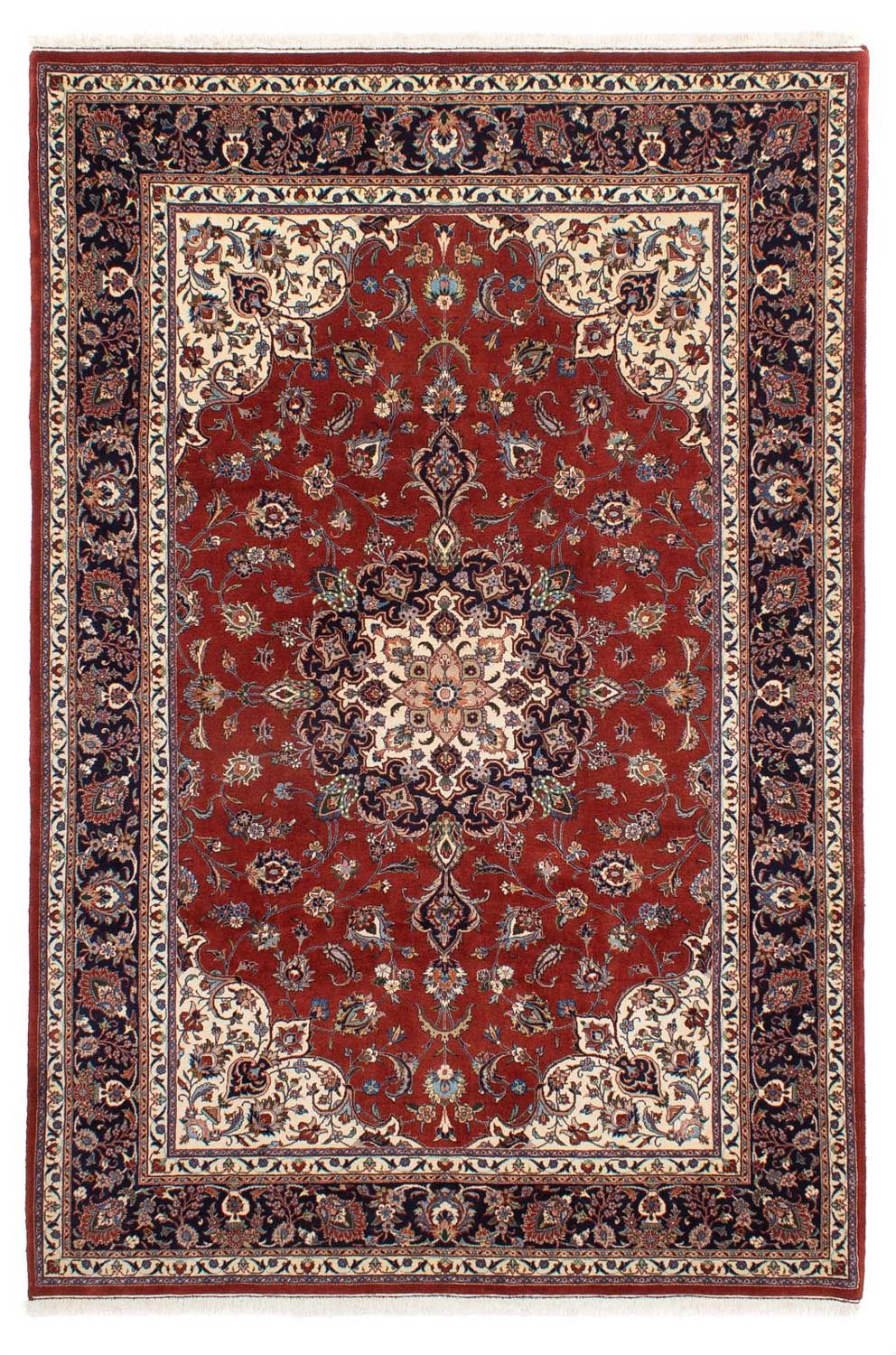
Photo: Morgenland Rugs
Kashmar rugs are hand-knotted Persian rugs from the city of Kashmar in northeastern Iran, in the province of Razavi Khorasan. They belong to the large family of eastern Persian knotting work and stand for solid manufactory quality in the mid price range: decorative floral patterns, saturated reds and an everyday-capable construction of wool on cotton. On the market, Kashmars count as typical interior rugs with a good ratio of effort to price, without claiming the manufactory standard of the top provenances Isfahan or Nain.
What is a Kashmar rug?
A Kashmar is a hand-knotted rug from the city of Kashmar and its surroundings. It is knotted with the asymmetrical Persian knot, the Senneh knot, on a cotton warp with wool pile. Characteristic are generously filled floral fields, frequently with medallion and continuous scroll, in a warm palette of red, blue, beige and cream. Kashmar rugs lie in knot density between the coarse village qualities and the fine city manufactories and so cover a broad middle field of the Persian rugs.
Origin
Kashmar (also Kashmar, formerly Turshiz) lies about 200 kilometres south of Mashhad, the provincial capital of Razavi Khorasan, in a fertile plain on the edge of the eastern Iranian deserts. The city was for centuries a hub on the trade roads that linked Khorasan with central Persia and benefited from access to water and the wool production of the surrounding pasture areas.
As an organised knotting region, Kashmar came to the fore above all in the 20th century, when international demand for Persian rugs grew strongly and manufactories arose in many eastern Persian cities. Kashmar developed thereby into a centre for mid-priced work, made in large numbers for export. Many patterns orient themselves to classical central Persian models, such as floral medallion compositions, and were adapted to the taste of Western buyers. The region borders on the finer Khorasan provenances Mashhad, Moud and Ghoutshan, with which Kashmar shares material and knotting tradition.
Pattern and colour
The most widespread Kashmar design is the floral medallion composition: a central, often almond-shaped medallion with matching corner fillings, embedded in a field of stylised blossoms, scrolls and palmettes. Alongside this stand allover-patterned fields in which flower motifs spread evenly across the entire surface, without a dominant centre.
The colour palette is dominated by saturated reds and blues, complemented by beige, cream and ivory as ground and contrast colours. Accents in green, gold or delicate rosé set off the floral details. The borders are mostly multi-tiered: a wide main border with palmette or scroll band, flanked by narrower guard bands. Overall, a Kashmar reads as decorative and curvilinear, distinctly more floral than the geometric village rugs from Hamadan and less strict than the northwestern Persian Heriz patterns.
Material and knotting technique
The warp consists of cotton, which gives the rug dimensional stability and a straight stance. The weft is cotton or wool, depending on the workshop. The pile is knotted from virgin wool of local and regional herds; it is hard-wearing and takes dyes well. Higher-quality Kashmar pieces occasionally use silk for contouring individual motifs, which sharpens the pattern drawing and gives single passages lustre.
It is knotted with the asymmetrical Senneh knot, the knot typical of Persian rugs, which allows fine curvilinear patterns. After knotting the pile is sheared and the rug washed; the pile height mostly lies in the medium range around 8 to 12 millimetres. How the knotting runs in detail is described in the overview of rug manufacture and specifically of knotting.
Knot density and quality
The knot density of a Kashmar typically lies between 100,000 and 300,000 knots per square metre. This is a medium to upper density that allows clean floral detail without reaching the effort of the finest city manufactories. Within this span, wool quality, yarn fineness, colour handling and pattern clarity decide the quality of the individual piece.
High-quality Kashmars show even knotting, a saturated colour image without garish tones and clearly drawn borders. Plainer export qualities can be more coarsely worked and use machine-spun yarn. How knot density affects quality and price and why it alone is no mark of quality is covered in its own article.
| Feature | Expression on the Kashmar |
|---|---|
| Knotting | Asymmetrical Senneh knot (Persian knot) |
| Warp | Cotton |
| Weft | Cotton or wool |
| Pile | Virgin wool, medium height, occasional silk contours |
| Knot density | approx. 100,000 to 300,000 knots/m² |
| Pattern | Floral medallion or allover |
| Colours | Red, blue, beige, cream with green and gold accents |
What is a Kashmar rug worth?
The value of a Kashmar depends on age, condition, size, knot density, wool quality, dyeing and pattern clarity. As mid-priced manufactory work, Kashmars are as a rule more affordable than fine provenances such as Isfahan, Nain or Ghom, but offer a good ratio of knotting effort to price. Especially well-preserved older pieces with natural dyeing and fine knotting fetch higher prices than plain export qualities.
A grounded placement succeeds with a view to the foundations under what is my rug worth? and the guidance on valuable Persian rugs. Before purchase the general buying guide helps to estimate quality and price realistically.
How do you recognise a genuine Kashmar rug?
Typical indicators of a genuine, hand-knotted Kashmar include:
- Hand-knotted back: The floral pattern is clearly recognisable in mirror image; individual knots are visible as a fine grid.
- Fringes as part of the warp: The fringes are the extended cotton warp threads, not sewn on afterwards.
- Asymmetrical Senneh knot: As usual for Persian provenances, unlike the symmetrical knot of the Hamadan village rugs.
- Floral medallion or allover in warm reds and blues with a multi-tiered border.
- Wool pile on cotton ground with a decorative, medium-fine presence.
Since Kashmar is produced in various qualities, pattern, back, material and condition should always be assessed together. A step-by-step guide for the authenticity check is given in is my rug genuine?; general guidance on recognising handwork and origin is set out under recognising a rug.
Care
Kashmar rugs are easy to maintain and everyday-capable through the robust wool and the firm cotton warp. Regular vacuuming in the direction of the pile and an occasional professional cleaning preserve colour and structure. Stains should be blotted immediately with clear water, without rubbing. Long direct sunlight fades the colours. Detailed guidance is set out in the care overview and specifically under cleaning a wool rug.
Frequently asked questions
How do I recognise a genuine Kashmar rug?
A genuine Kashmar is hand-knotted, uses the asymmetrical Persian knot and has a cotton warp with wool pile. The back shows the floral pattern clearly, the fringes are part of the warp, and typical are warm reds and blues with floral medallion or allover field.
What does a Kashmar rug cost?
The price depends on age, condition, size, knot density and wool quality. As mid-priced manufactory work, Kashmars are cheaper than top provenances such as Isfahan or Nain. Well-preserved older pieces with fine knotting cost more than plain export qualities.
What distinguishes a Kashmar from a Mashhad rug?
Both come from Razavi Khorasan province and share material and knotting tradition. Mashhad rugs from the provincial capital count as finer and more formal, often with higher knot density. Kashmars sit in the middle range and are positioned as more robust, decorative interior work.
Are Kashmar rugs suitable for heavily used rooms?
Yes. The hard-wearing virgin wool and the medium to firm knot density make Kashmars well suited to living and dining rooms as well as commercial spaces with normal to elevated use. They are easy to care for and long-lived.
Which sizes are usual for Kashmar rugs?
Kashmars are knotted in many standard formats, from runners through medium interior sizes to large salon formats. Particularly common are dimensions between about 200 x 300 cm and 300 x 400 cm.
Which wool is used for Kashmar rugs?
The pile consists of virgin wool from local and regional herds, which is robust and takes dyes well. For the contouring of individual motifs, finer pieces occasionally use silk. More on the fibres is set out in the overview of materials.
How do I care for a Kashmar rug properly?
Vacuum regularly in the direction of the pile and have it professionally cleaned every few years. Blot stains immediately with clear water, do not rub. Avoid long direct sunlight so that the colours do not fade.
Impressions of the origin
Places, landscapes and landmarks around the home of Kashmar rugs. Click any image for a larger view.


