Ilam rugs: Kurdish nomad weave from the Zagros
Ilam rugs come from the Zagros highlands of western Iran and combine Kurdish tribal motifs with a robust nomadic character.
- Region
- Persia / Iran
- Category
- Nomad rugs
- Manufacturing
- Hand-knotted
- Knot density
- 60,000 – 140,000 knots/m²
Profile
- Manufacturing
- Hand-knotted
- Origin
- Iran — Ilam Province, western Zagros
- Pile material
- Wool on wool
- Knot density
- 60,000 – 140,000 knots/m²
- Features
- Kurdish tribal motifs, robust pile, nomadic character
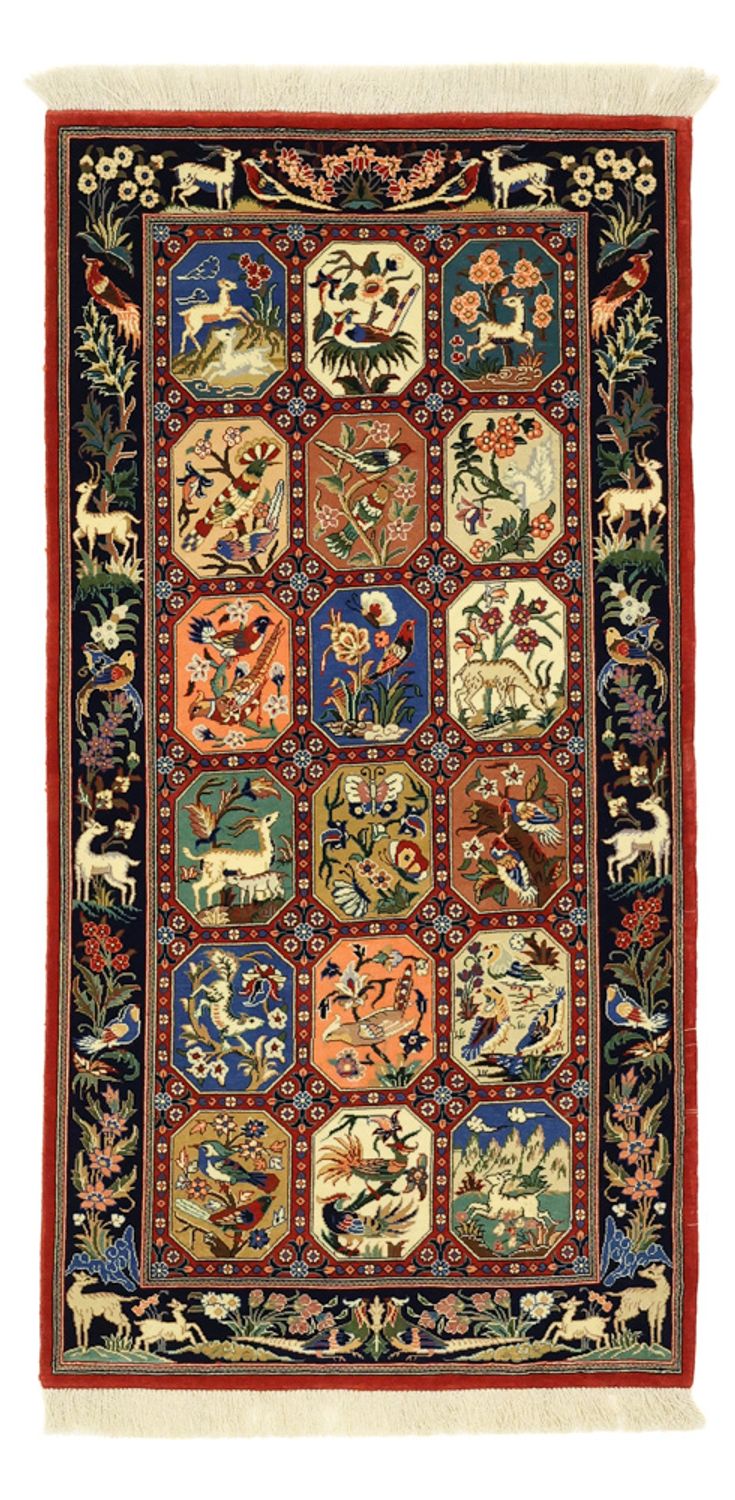
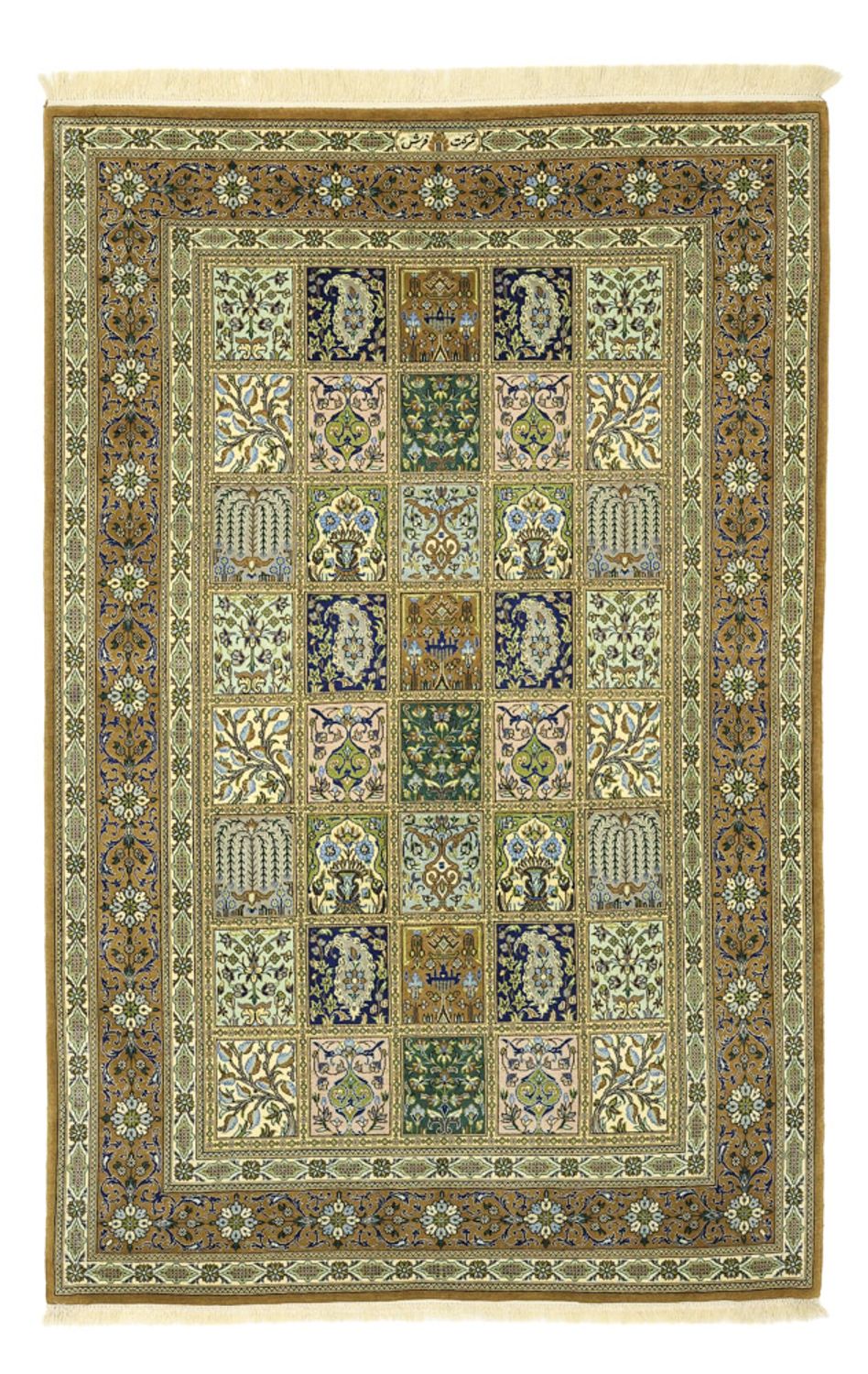
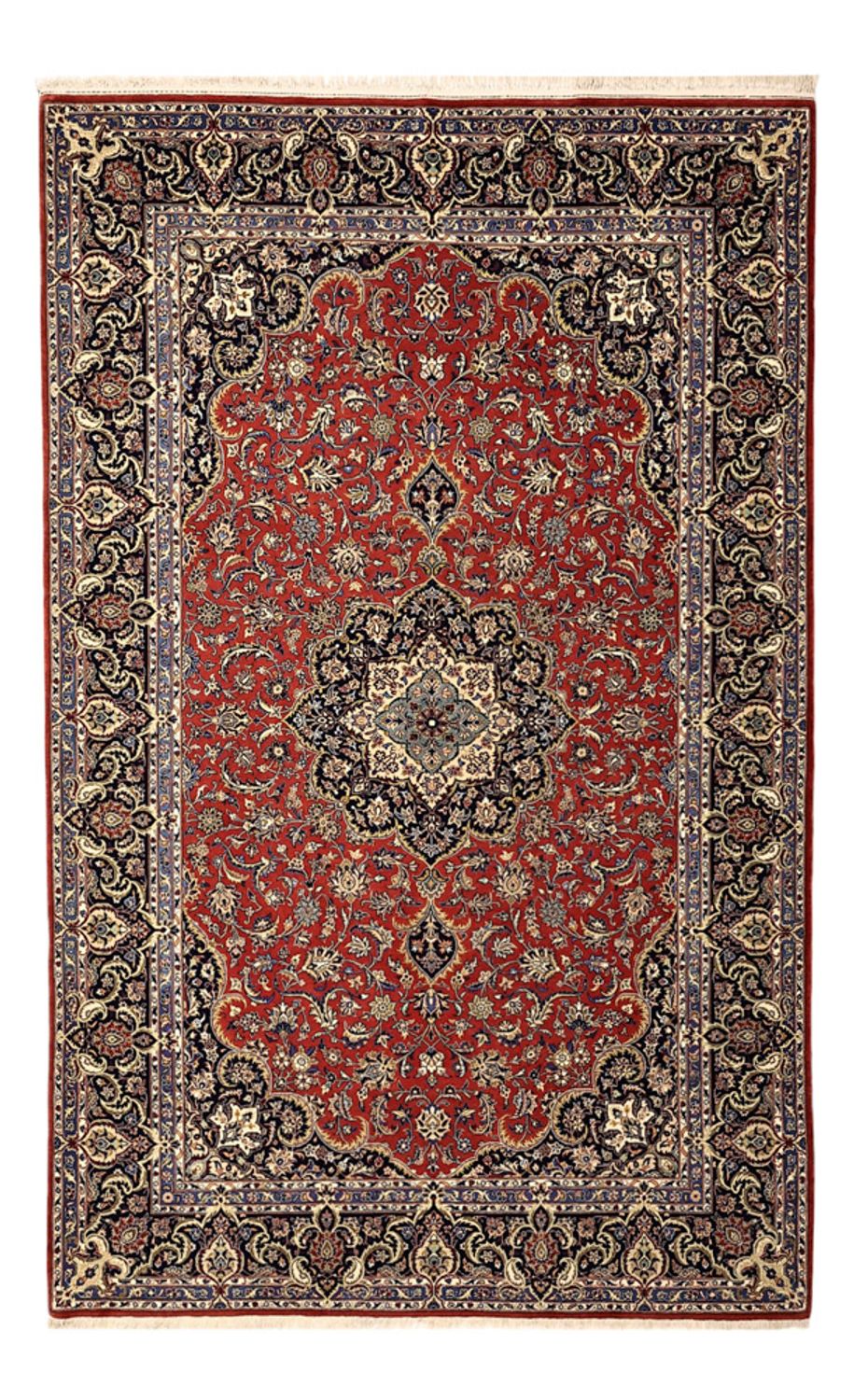
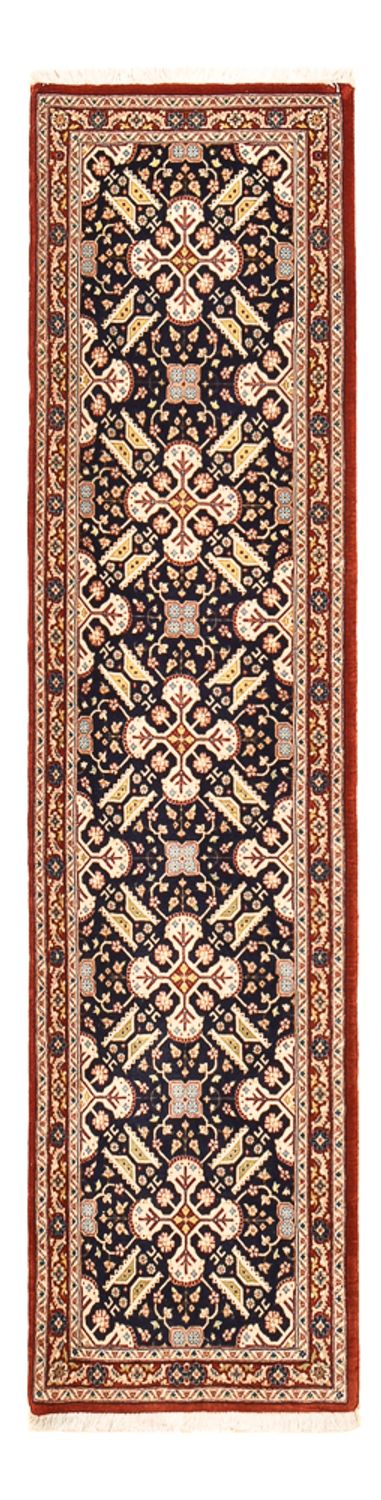
Photo: Morgenland Rugs
Ilam rugs are sturdy, Kurdish-influenced tribal rugs from the province of the same name in western Persia, close to the border with Iraq. The remote mountain region along the Zagros produced rugs that combine Kurdish and Persian influences: strongly geometric patterns, earthy colors, and a stable, practical construction. That places the Ilam among the western Iranian tribal and village rugs of Kurdish tradition.
What is an Ilam rug?
An Ilam is a hand-knotted wool rug from Ilam Province, knotted by the region's Kurdish tribes. Characteristic are angular, geometric medallion patterns and a slightly irregular knotting that underscores the craft-driven, original character. The Ilam thus counts among the tribal Persian rugs of western Iran.
The Ilam sits alongside other Kurdish styles such as Koliai, Senneh, and Bidjar. Compared with the very fine Senneh or the extremely dense Bidjar, the Ilam is coarser and more rustic, but particularly sturdy and original in drawing.
Origin
Ilam Province lies in western Iran on the border with Iraq and is shaped by the Zagros ranges. It is inhabited mainly by Kurdish tribes who lived partly nomadic, partly semi-nomadic lives. Knotting has a long tradition here and is closely tied to that way of life: the rugs were originally made for personal use in tent and home.
Because of the remote location, traditional patterns and techniques remained unchanged over long periods. Many Ilam rugs still show designs passed down for generations. In recent decades, production has declined significantly because many younger people have left the region. This blend of Kurdish and Persian influence gives the Ilam its own character within western Iranian knotting art.
Pattern and color
Ilam rugs usually show medallion patterns with angular, stylized forms, along with floral elements rendered in strictly geometric translation. The field is often filled with small hooks, diamonds, and stars. Borders are multi-tiered and frequently carry hook patterns or stylized blossoms. The slightly irregular knotting gives the patterns a lively, handcrafted look.
The palette stays within earthy tones: dominant red, blue, and brown shades, contrasted by ivory and beige. These muted, warm colors traditionally come from plant dyes applied to local wool. In naturally dyed pieces, hand-dyed yarn produces gentle color shifts, the abrash, which gives the rugs depth.
Material and knotting technique
The basis is mostly sheep's wool from local production, used both for the pile and for warp and weft. Occasionally goat hair is also worked in. The virgin wool of the western Iranian highlands is sturdy and medium-fine, suiting the practical needs of the mountain tribes. The all-wool construction makes the rug flexible and resilient.
Knotting uses the asymmetric Persian knot, the Senneh knot, as is common in the Kurdish tradition of western Iran. Work is often done on simple horizontal looms, which contributes to the characteristically slightly irregular structure. The pile is sheared medium to high. How a rug is made at the loom is described in the overview of production, and the materials used are also explained there.
Knot density and quality
The knot density of an Ilam typically lies between 60,000 and 140,000 knots per square meter, placing it solidly in the mid-range of tribal goods. The somewhat irregular knotting is not a flaw here but an expression of the village-nomadic origin. Quality is consistently solid and durability is notable.
How knot density shapes quality and price, and why it must be read differently for tribal rugs than for manufactory goods, is the subject of its own article. For the Ilam, wool quality, the purity of natural dyes, and the sturdy, clean edge finishing matter alongside density.
Ilam and related western Persian rugs compared
| Style | Origin / tradition | Knot density | Character |
|---|---|---|---|
| Ilam | Ilam Province, Kurdish | approx. 60,000 to 140,000 knots/m² | geometric medallions, sturdy |
| Koliai | western Iran, Kurdish | approx. 60,000 to 120,000 knots/m² | coarse, strongly geometric, sturdy |
| Senneh | Sanandaj, Kurdish | approx. 120,000 to 300,000 knots/m² | very fine, Herati pattern, flat pile |
| Bidjar | western Iran, Kurdish | approx. 120,000 to 300,000 knots/m² | extremely dense and heavy, very durable |
| Shal | Kermanshah region, Kurdish | approx. 60,000 to 140,000 knots/m² | stripe and band patterns |
| Hamadan | Hamadan Province | approx. 60,000 to 150,000 knots/m² | village rugs, single weft, geometric |
What is an Ilam rug worth?
The value of an Ilam depends on age, condition, size, knot density, wool quality, and dyeing. Because Ilam is one of the less well-known Persian rug types, pieces are often less expensive than comparable goods from more famous knotting centers, with consistently solid quality and good durability. Older examples with original patterns and pure plant dyeing are more sought after.
Value drivers are handspun wool, natural colors with lively abrash, and a clearly drawn, traditional pattern. Among the Persian rugs, the Ilam is considered an affordable entry into authentic tribal work. A market value classification is offered by the overview of rug value and the general buying guide.
How to recognize an authentic Ilam rug
Typical features of an authentic Ilam are:
- Angular geometric medallions: Stylized medallion patterns with hooks, diamonds, and stars.
- Slightly irregular knotting: The handcrafted, village-nomadic origin shows in small irregularities.
- Pure wool, sometimes with goat hair: Pile, warp, and weft are wool, occasionally with goat hair.
- Earthy natural colors: Muted reds, blues, and browns with ivory and beige.
- Hand-knotted back: The pattern is clearly visible; the fringes are part of the warp.
- Multi-tiered border: Hook patterns or stylized blossoms frame the field.
How to check material, knotting, and origin is described in the guide Recognizing a rug, complemented by Recognizing origin.
Care
The sturdy all-wool construction of an Ilam is very resilient and low-maintenance. Regular vacuuming in the pile direction is enough for everyday care. For heavier soiling, a professional rug cleaning is recommended. Blot stains immediately with clear water, without rubbing. Long direct sun exposure fades natural colors. Detailed guidance is given in the care overview.
Frequently asked questions
Is the Ilam a Kurdish rug?
Yes. Ilam Province in western Iran is mainly inhabited by Kurdish tribes, and its rugs stand in the Kurdish knotting tradition. At the same time they show Persian influences, which give the Ilam its own character within western Iranian knotting art.
What is the difference between Ilam and Koliai?
Both are Kurdish-influenced, sturdy rugs from western Iran with strongly geometric patterns. The Koliai is often especially coarse and decidedly bold in drawing, while the Ilam is somewhat more variable in pattern and pile height. Both use pure wool and the Persian knot.
Why are Ilam rugs often less expensive?
Because Ilam is one of the less well-known Persian rug types and does not carry the name of a famous knotting center. Quality is nonetheless solid and durability notable, making Ilam rugs a good entry into hand-knotted tribal rugs.
What sizes are Ilam rugs offered in?
Traditionally smaller formats up to about 2 x 3 meters, suited to nomadic needs. Larger formats are rarer and mostly of more recent date.
How do I recognize an authentic Ilam?
By the angular geometric medallions, the slightly irregular knotting, the pure wool, and the earthy natural colors. The hand-knotted back shows the pattern clearly, and the fringes are part of the warp.
How do I properly care for an Ilam rug?
Vacuum regularly in the pile direction, blot stains immediately with clear water and do not rub. For heavier soiling, have it professionally cleaned. Long direct sun exposure should be avoided so that the natural colors are preserved.
Impressions of the origin
Places, landscapes and landmarks around the home of Ilam rugs. Click any image for a larger view.
Related styles
Koliai
Koliai rugs are knotted by Kurdish tribes in western Iran and combine geometric motifs with a robust pile.
Senneh
Senneh rugs from Sanandaj in Iranian Kurdistan are some of the finest tribal rugs, known for their thin, almost flat pile.
Bijar
Bijar rugs from Iranian Kurdistan are considered the most durable Persian rugs, densely knotted and exceptionally hard-wearing.


