Hamadan rugs: robust village knotting from western Persia
Hamadan rugs come from western Iran and are produced in countless village workshops, robust, affordable, and highly varied.
- Region
- Persia / Iran
- Category
- Persian rugs
- Manufacturing
- Hand-knotted
- Knot density
- 60,000 – 150,000 knots/m²
Profile
- Manufacturing
- Hand-knotted
- Origin
- Iran — Hamadan Province, numerous villages
- Pile material
- Wool on cotton
- Knot density
- 60,000 – 150,000 knots/m²
- Features
- Single-weft, robust, geometric motifs, great variety
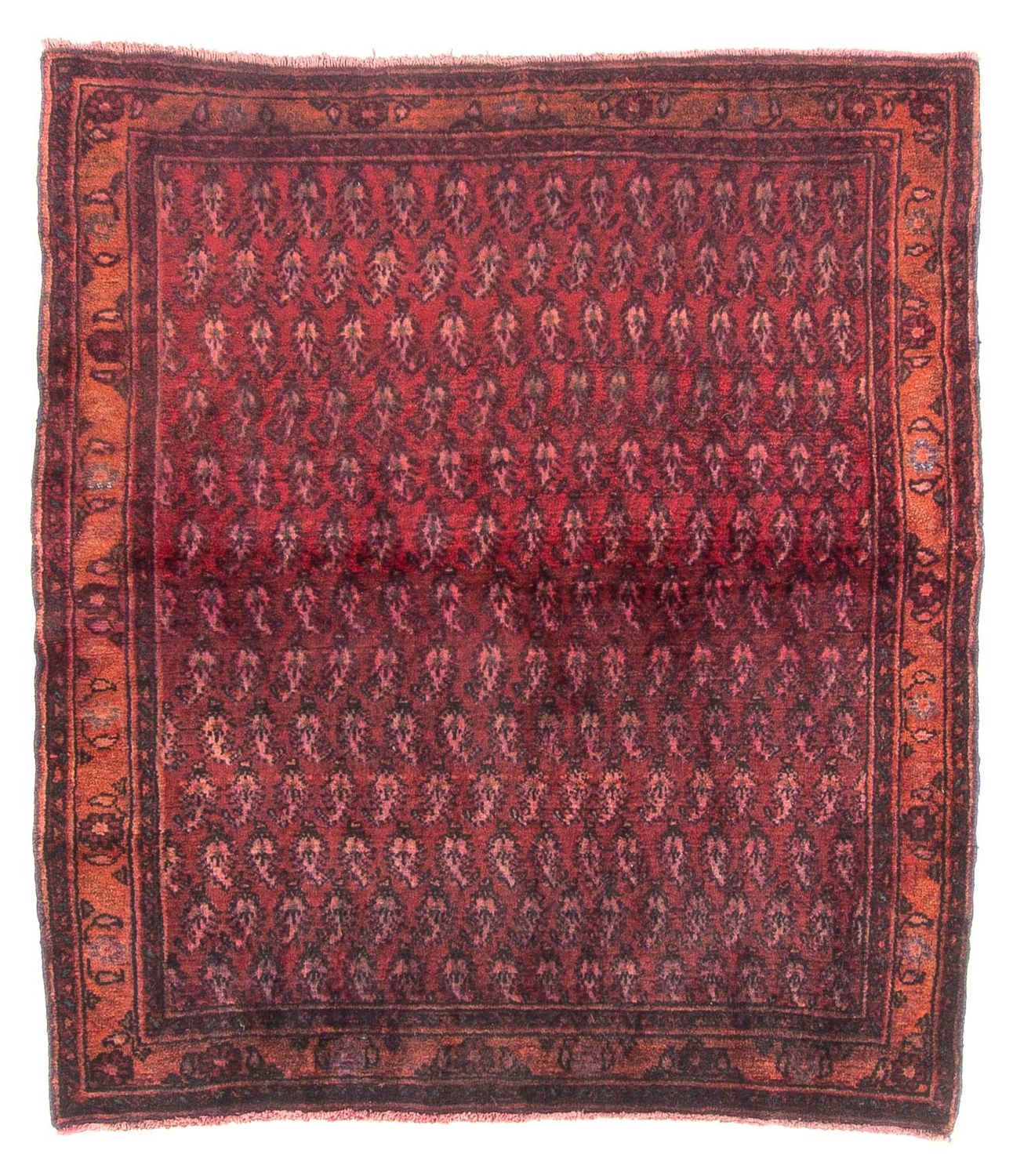
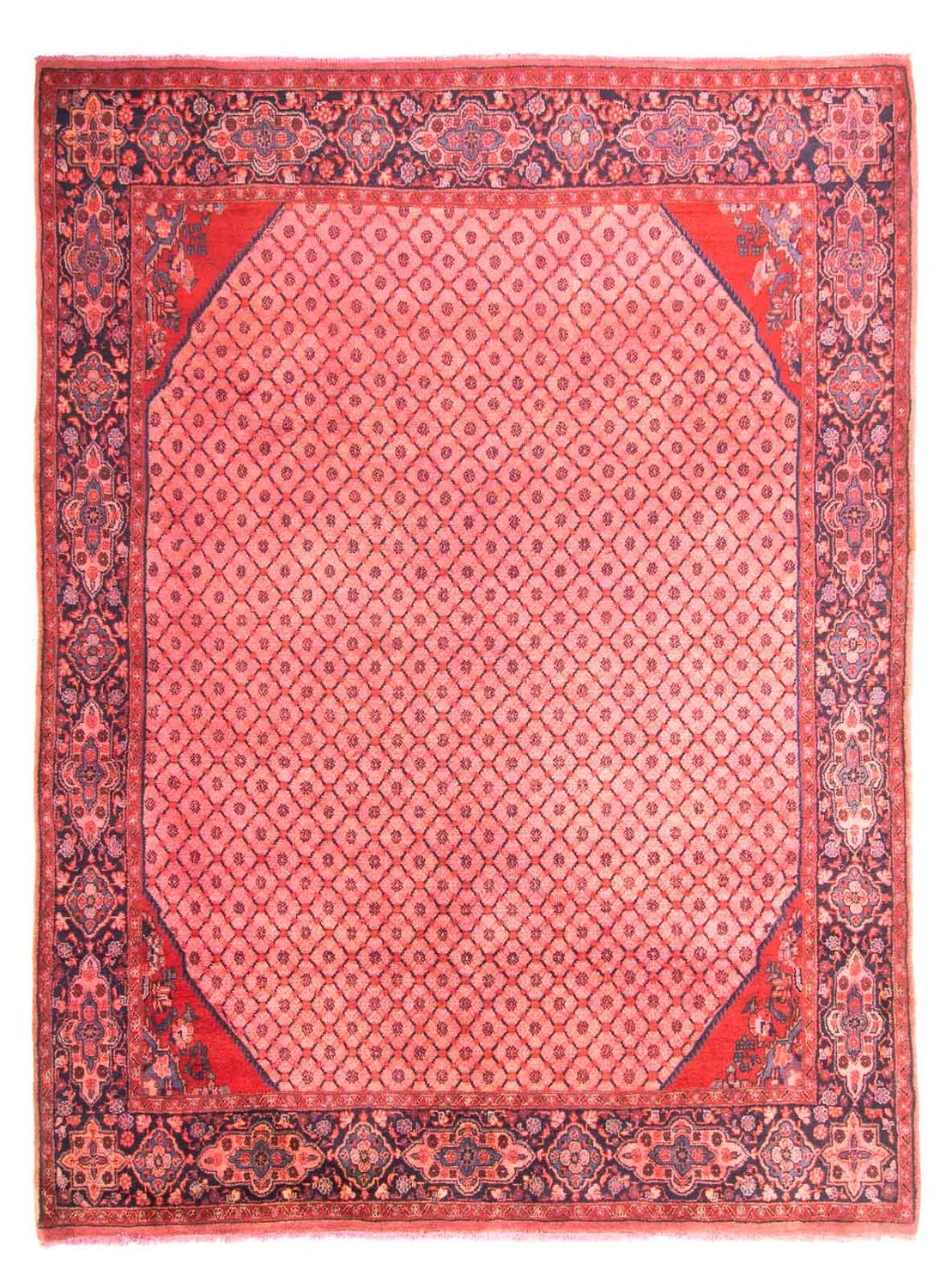
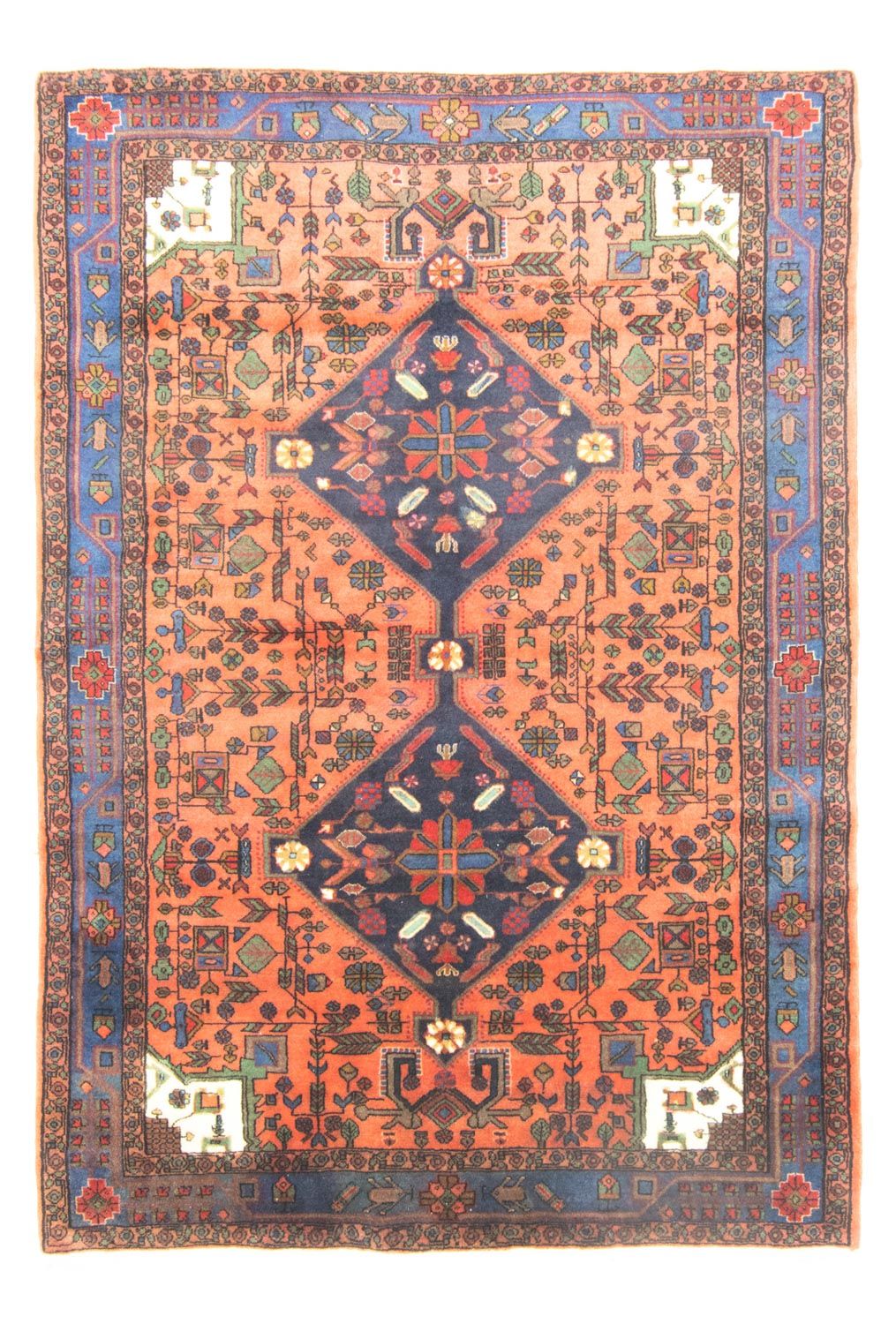
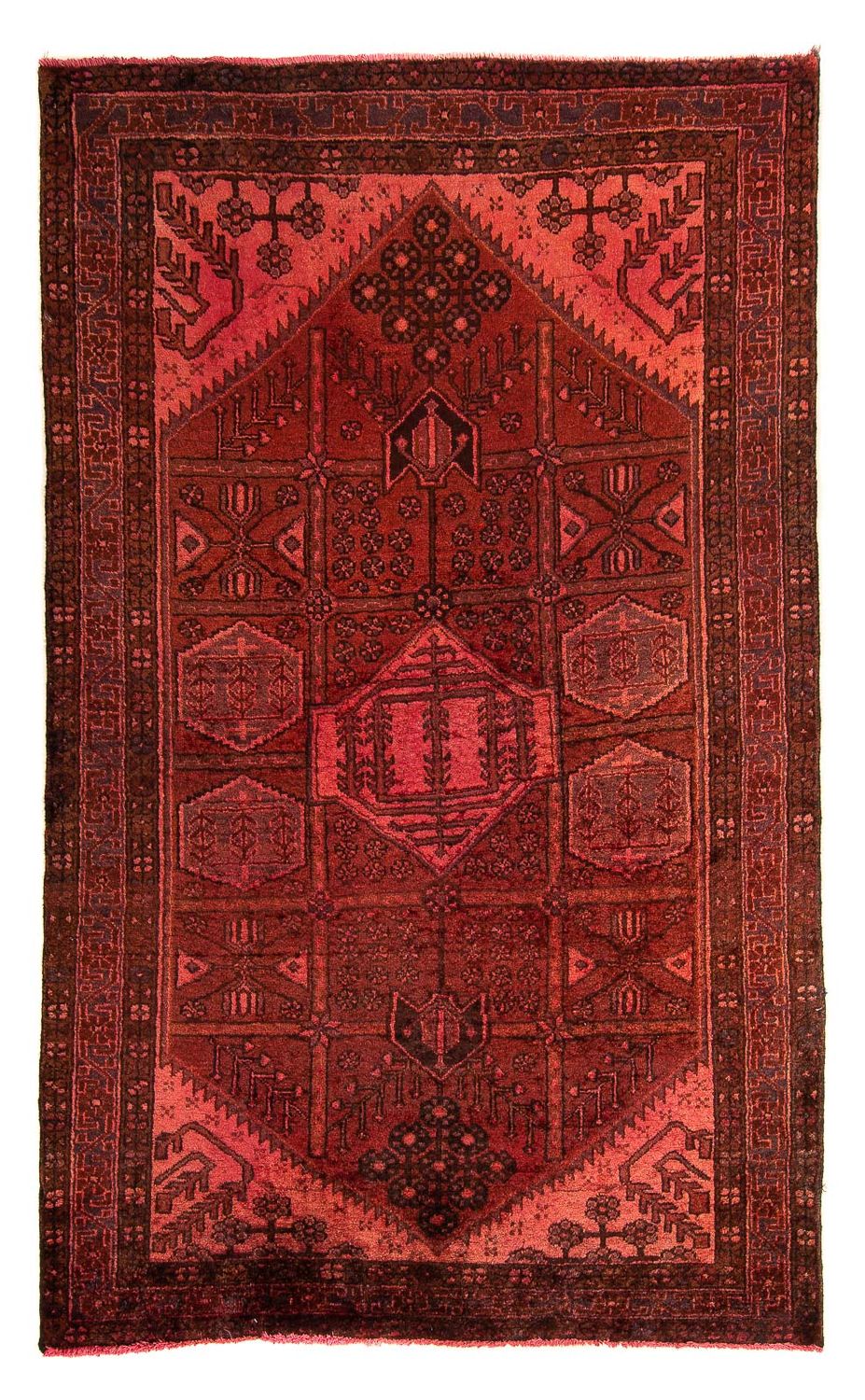
Photo: Morgenland Rugs
Hamadan rugs are robust hand-knotted Persian rugs from the Hamadan region in the west of Iran. The term does not stand for a single style but for a whole group of western Persian village rugs with geometric patterns, vigorous colours and daily-suitable quality. They belong among the most widespread Persian rugs of all and cover a wide span from simple commercial goods to finer pieces from a well-known place.
What is a Hamadan rug?
A Hamadan is a hand-knotted rug from the city of Hamadan and its surrounding villages in the province of the same name. Characteristic are the symmetric Turkish knot, a cotton warp, a wool pile and the typical single-weft structure, in which only a single weft thread lies between two rows of knots. This construction makes Hamadan rugs flat, stable and hard-wearing.
Hamadan is a collective term for village rugs
Many hand-knotted village rugs from the city of Hamadan and the surrounding places in the west of Iran are called Hamadan rugs. Pattern, colour, quality and knot density can therefore differ markedly. The city was for centuries the central trading market of the region, on which the goods of several hundred villages came together and entered the trade under the name Hamadan.
Well-known variants and neighbouring provenances include Nahavand, Malayer, Touiserkan and the Kurdish-influenced Koliai. Finer pieces from individual places can turn out markedly higher quality than the simple commercial qualities also sold under the name Hamadan. Anyone wanting to place a Hamadan should therefore always consider the particular piece and not orient solely on the name.
Origin: the city and province of Hamadan
Hamadan lies about 300 kilometres south-west of Tehran at the foot of the Alvand mountains, in one of the oldest continuously settled regions of the world. As Ecbatana the city was the capital of the Median empire and later an important residence of the Persian Achaemenid empire. The knotting tradition reaches far back here and is closely tied to the rural life of the surrounding villages.
The province comprises several hundred knotting places. Larger names such as Nahavand and Malayer have established themselves as their own provenances, while many smaller villages still sell their goods through the city's market. The whole region belongs to the wider family of Persian rugs.
Typical features
Hamadan rugs usually show a central medallion, often in the form of a diamond or a hexagon, surrounded by stylised flowers and vines. The continuous Herati pattern is also widespread. The palette is dominated by deep red and blue tones, supported by beige, ivory and accents in green or yellow. The borders are usually laid out in several layers and pick up classical Persian motifs such as palmettes or the Herati pattern. Overall, Hamadan rugs feel more geometric and more village-like than the curvilinear manufactory patterns from Isfahan or Nain.
Material and knotting technique
The warp is traditionally made of cotton; the weft is cotton or wool. The pile is virgin wool from local flocks, valued for its hard-wearingness. Hamadan rugs are knotted with the symmetric Turkish knot, also called the Ghiordes knot. This is somewhat unusual for Persian rugs, since most provenances use the asymmetric Senneh knot.
The most important technical feature is the single weft: between two rows of knots lies only one weft thread. This construction distinguishes Hamadan from double-weft provenances and produces the flat, firm character. The knot density of simple village qualities usually lies between 60,000 and 150,000 knots per square metre. Finer Hamadan variants and related provenances from individual places can lie above, which is why higher values are also given in the trade. How knot density bears on quality and price is treated in its own article.
Quality differences in Hamadan rugs
Hamadan rugs range from simple, robust village rugs to finer pieces from well-known surrounding places. The differences arise above all from wool quality, type of yarn, dyeing, knot density, pattern clarity and age. Older or finer pieces often show hand-spun wool, natural dyes and more precise patterns, while cheaper commercial qualities can be more simply worked and partly use machine-spun yarn.
Older Hamadan rugs traditionally enjoyed a good reputation as long-lived everyday rugs. Anyone judging quality looks for an even knotting, a saturated colour image without garish tones, a clean back and the state of the pile and edges.
Hamadan and its variants in comparison
| Provenance | Relation to Hamadan | Typical features |
|---|---|---|
| Hamadan | umbrella term and region | robust village rugs, single weft, geometric patterns |
| Nahavand | nearby region, related style | vivid patterns, robust quality, geometric medallion |
| Malayer | neighbouring provenance | often finer, floral and geometric motifs |
| Touiserkan | surrounding region | village knotting, traditional patterns |
| Koliai | western Iranian, Kurdish-related | very robust, strongly geometric |
| Bidjar | neighbouring knotting region | extremely dense and heavy, very durable |
What is a Hamadan rug worth?
The value of a Hamadan rug depends above all on age, condition, size, knot density, pattern clarity, wool quality, dyeing and precise provenance. Simple Hamadan village rugs are usually more affordable than finer Persian provenances such as Nain, Isfahan or Qom. Especially well-preserved older pieces or finer variants from well-known places can however be significantly more valuable.
For a grounded estimate see recognising valuable Persian rugs and the general buying guide.
How do you recognise a genuine Hamadan rug?
Reliable indicators of a genuine Hamadan are:
- Hand-knotted back: the pattern is clearly mirrored on the reverse, and individual knots are visible.
- Fringes as part of the warp: the fringes are the extended warp threads, not sewn on afterwards.
- Symmetric Turkish knot: Hamadan uses the Ghiordes knot, unlike most Persian provenances.
- Single-weft structure: only one weft thread lies between the rows of knots, which is readable on the back.
- Vivid red and blue tones with geometric medallion or Herati patterns.
- Wool pile on cotton ground with a robust, rather village-like presence.
Because Hamadan is a collective term, individual pieces vary strongly. A precise estimate should therefore always consider pattern, back, material, condition and provenance together. A step-by-step guide is given in Is my rug genuine?.
For which rooms is a Hamadan suitable?
Thanks to the flat, firm single-weft structure and the robust wool, Hamadan rugs are well suited to heavily used rooms such as living rooms, hallways and dining rooms. They lie stably, can be cleaned easily and cope with daily use. The vigorous geometric patterning suits both classical and modern interiors.
Care
Regular vacuuming in the pile direction and the occasional professional cleaning preserve the quality. Stains should be treated immediately with clear water, without rubbing. Direct sunlight over a long time bleaches the colours. Detailed notes are given in the care overview.
Frequently asked questions
How do I recognise a genuine Hamadan rug?
Genuine Hamadan rugs are hand-knotted, use the symmetric Turkish knot and have a cotton warp with a single-weft structure. The back shows the pattern clearly, the fringes are part of the warp, and typical are vivid red and blue tones with geometric patterns.
What does it mean that Hamadan is a collective term?
Under the name Hamadan, rugs from the city of Hamadan and several hundred surrounding villages are traded. Pattern, quality and knot density can therefore vary strongly, from simple commercial goods to finer pieces from a well-known place.
What does a Hamadan rug cost?
The price depends on age, condition, size, knot density, wool quality and precise provenance. Simple village qualities are affordable; well-preserved older pieces and finer variants from well-known places can cost significantly more.
Are Hamadan rugs suitable for heavily frequented areas?
Yes. The flat single-weft structure and the robust wool make Hamadan rugs very hard-wearing. They are well suited to living spaces with high use and are easy to care for.
What distinguishes a Hamadan from other Persian rugs?
Hamadan rugs use the symmetric Turkish knot and a single-weft structure, while most other Persian rugs are worked with the asymmetric Senneh knot. The patterns are more geometric and more village-like than the fine manufactory patterns from Isfahan or Nain.
How do you care for a Hamadan rug properly?
Regular vacuuming in the pile direction and professional cleaning every few years are enough. Treat stains immediately with clear water, without rubbing. Long direct sunlight should be avoided.
Impressions of the origin
Places, landscapes and landmarks around the home of Hamadan rugs. Click any image for a larger view.
Related styles
Bijar
Bijar rugs from Iranian Kurdistan are considered the most durable Persian rugs, densely knotted and exceptionally hard-wearing.
Nahavand
Nahavand rugs come from the Hamadan region and show a more open weave with bold geometric medallions.
Koliai
Koliai rugs are knotted by Kurdish tribes in western Iran and combine geometric motifs with a robust pile.


