Abadeh rugs: geometric urban patterns from Fars Province
Abadeh rugs come from the eponymous town between Isfahan and Shiraz and stand out with their clean geometric medallions.
- Region
- Persia / Iran
- Category
- Persian rugs
- Manufacturing
- Hand-knotted
- Knot density
- 100,000 – 200,000 knots/m²
Profile
- Manufacturing
- Hand-knotted
- Origin
- Iran — Abadeh, Fars Province
- Pile material
- Wool on cotton
- Knot density
- 100,000 – 200,000 knots/m²
- Features
- Geometric medallions, Herati pattern, compact format
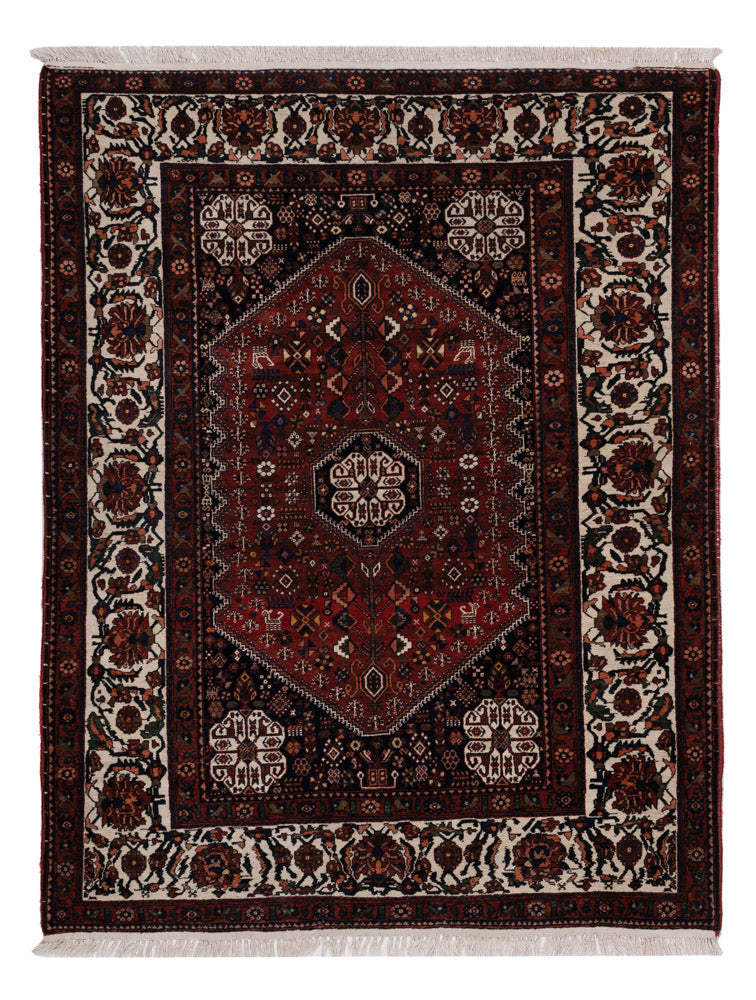
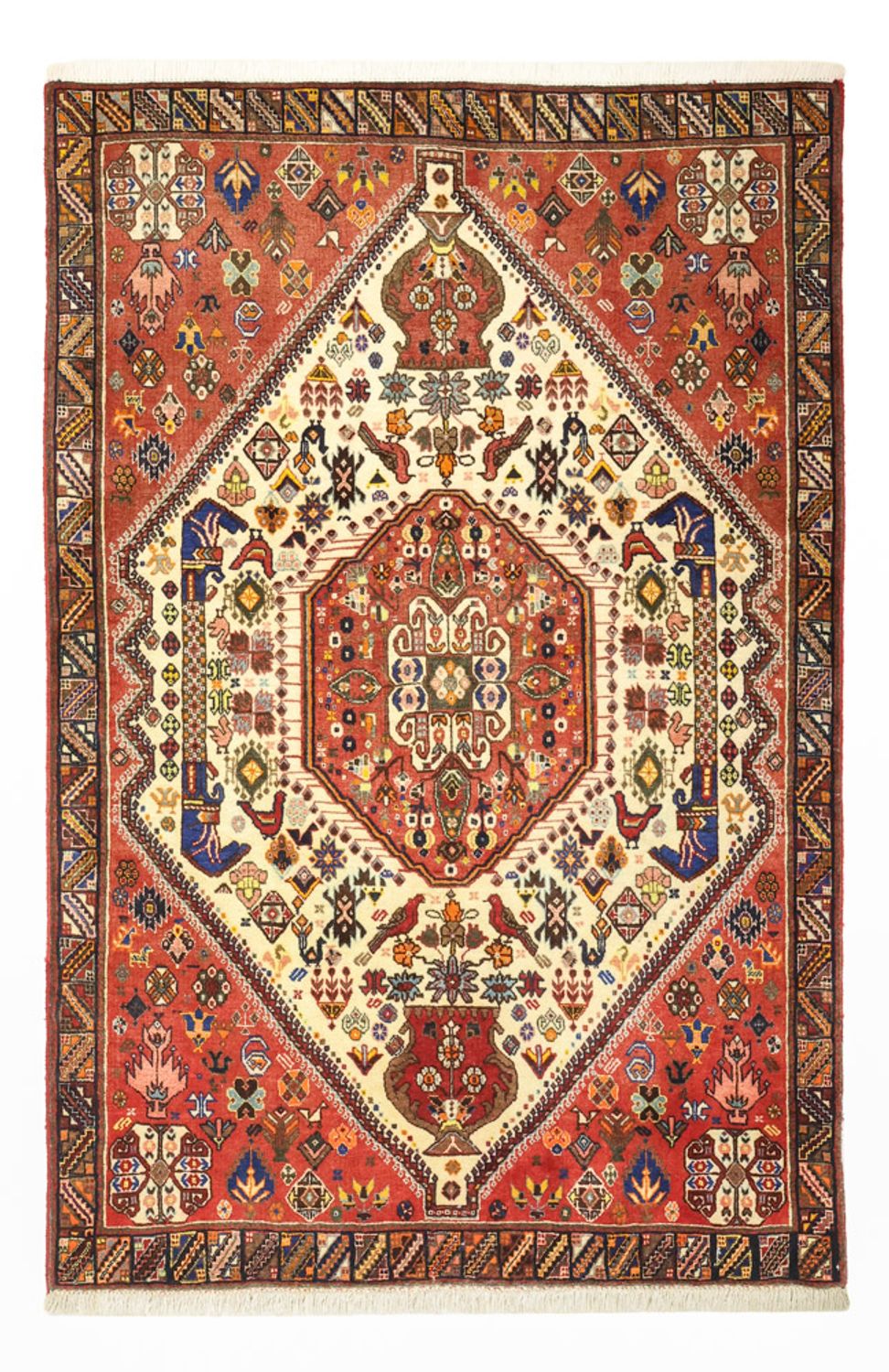
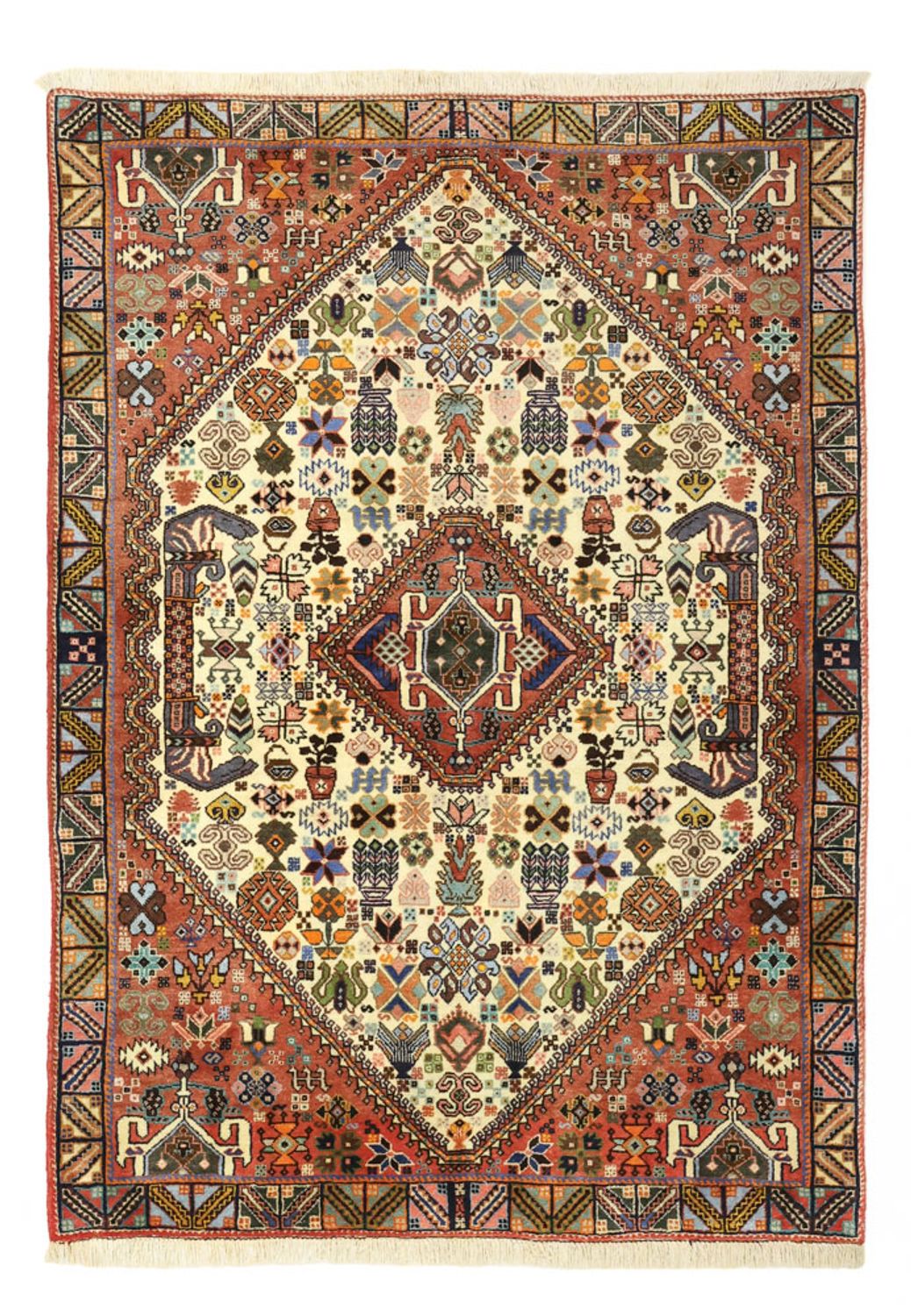
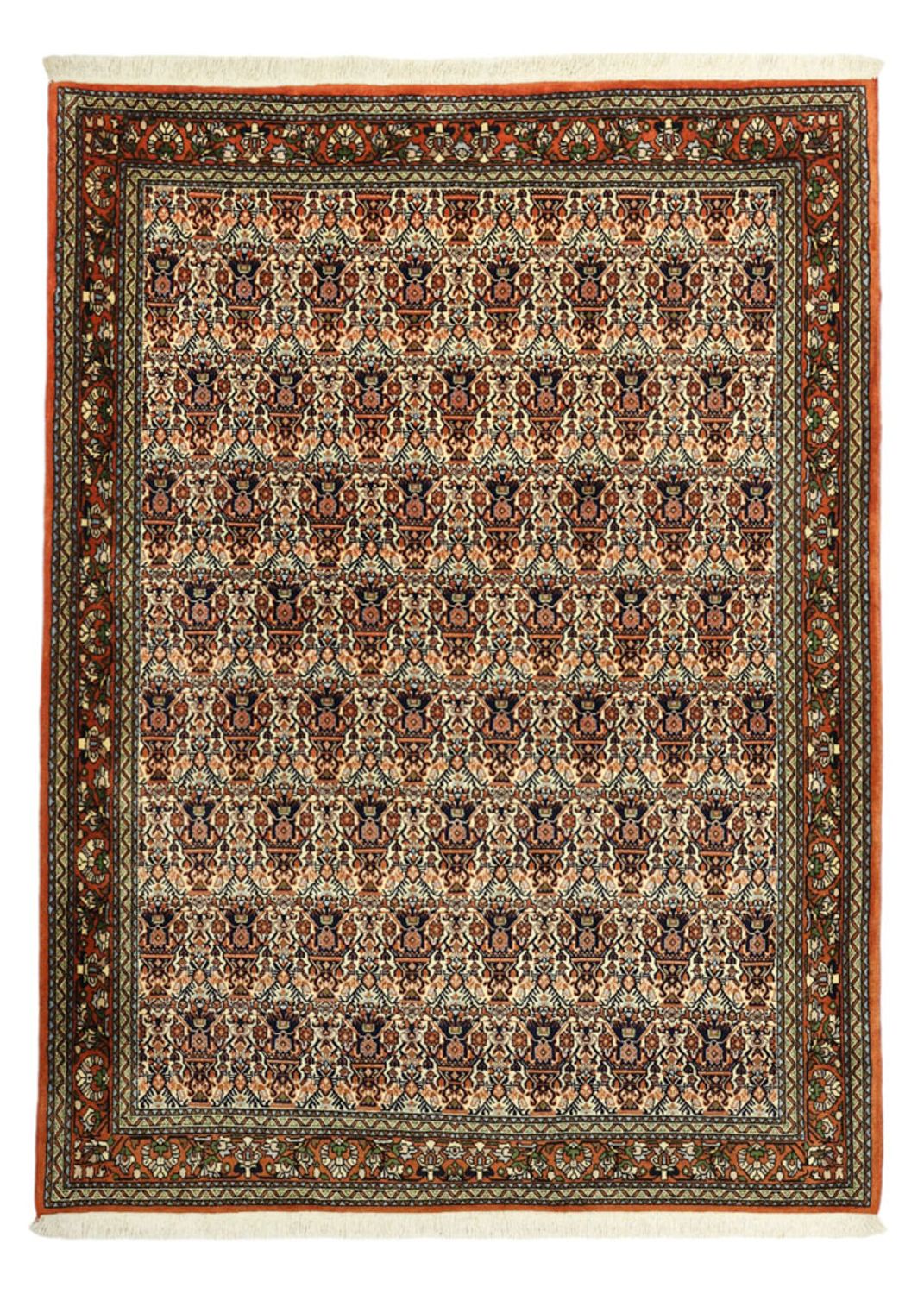
Photo: Morgenland Rugs
Abadeh rugs are hand-knotted Persian rugs from the town of Abadeh in the southern Iranian province of Fars. They combine the geometric framing of urban designs with the bold colour vocabulary of the surrounding nomadic tribes, and are regarded as solidly made everyday rugs with strong value for money. The defining traits are the angular central medallion, a restrained palette of red, blue and ivory, and a medium knot density that yields clear contours without exaggerated detail.
What is an Abadeh rug?
An Abadeh is a hand-knotted rug from the town of Abadeh and its surrounding villages in the province of Fars in southern Iran. The pile is virgin wool; warp and weft are usually cotton. Knotting is done with the asymmetric Persian knot, also known as the Senneh knot. The drawing is geometrically framed with an angular medallion, often in the so-called Heybatlu pattern, which draws on classical templates from Isfahan and the area around Shiraz. The knotting is even and suited to daily use, without reaching the fineness of the great manufactory centres.
Origin
Abadeh lies about 180 kilometres north-east of Shiraz on the historic trade route between Isfahan and Shiraz, at an elevation of roughly 2,000 metres. This position between two major weaving centres still shapes the style today: floral urban patterns came down from the north, while the geometric vocabulary of the nomads, above all the Qashqai and the Khamseh, came in from the surrounding country.
Rug knotting in Abadeh is younger than in many other Persian towns. Only over the course of the 20th century, with marked growth from the 1960s onwards, did the town develop into a meaningful production centre. From the outset the workshops oriented themselves to proven templates from other regions, which earned Abadeh the reputation of making classical Persian patterns available at affordable quality. The whole tradition belongs to the wider family of Persian rugs.
Typical features
The hallmark of the Abadeh is the angularly contoured central medallion, often diamond-shaped and framed by four corner spandrels. Inside the field and in the surrounding spaces stand stylised flowers, palmettes and occasionally small animal or vase motifs. The best-known scheme is the Heybatlu pattern, a geometric adaptation of floral templates with a strictly symmetrical composition.
The border is usually laid out in several bands, with a wide main border and narrow guard stripes, often filled with zigzag or vine motifs. The composition feels ordered and calm, which sets Abadeh rugs apart from the more densely packed curvilinear designs of the urban manufactories.
Patterns and colours
The colour palette is restrained and harmonious. Deep reds and blues dominate, supported by ivory, cream and beige. Accents in green, yellow or brown pick out individual pattern elements. Many Abadeh rugs show a bright cream ground with contrasting dark drawing, which gives them a clear, legible presence.
Where older pieces were often dyed with natural colours, modern production also uses synthetic dyes. Both can be long-lived and colourfast if cleanly processed. The difference between plant-based and chemical dyes is treated in detail in Natural versus chemical dyes.
Material and knotting technique
Warp and weft are usually cotton; the pile is virgin wool from local flocks, valued for its hard-wearing character. Knotting is done with the asymmetric Persian knot (Senneh knot), as is typical for most central and southern Persian provenances. A survey of the different knot types is given in the knot types article.
The pile is sheared medium-high, which combines a pleasant feel with good pattern clarity. The weave density is even, and the back shows a clean, regular knot picture. How a hand-knotted rug is made in general is explained in the production overview.
Knot density and quality
The knot density of an Abadeh typically lies between 200,000 and 400,000 knots per square metre. That puts the Abadeh among the medium-fine Persian rugs: fine enough for clearly drawn medallions and borders, but deliberately more robust than the extremely dense manufactory qualities from Nain or Qom. How knot density bears on quality, pattern sharpness and price is treated in its own article.
For judging quality, wool quality, evenness of knotting, depth of colour and pattern clarity matter alongside knot density. High-quality Abadeh rugs show hand-spun wool, saturated colours without garish tones, and precisely worked contours.
| Variant / quality | Knot density (approx.) | Material | Character |
|---|---|---|---|
| Simple commercial grade | 200,000 to 250,000 | wool on cotton | robust, clear drawing, affordable |
| Standard Abadeh | 250,000 to 320,000 | wool on cotton | even, good everyday quality |
| Fine Abadeh (Heybatlu) | 320,000 to 400,000 | fine wool on cotton | precise medallion, saturated colour |
| Older piece with natural dyes | variable | hand-spun wool | mellowed patina, collector interest |
| Comparison Shiraz | 100,000 to 250,000 | wool, partly on woollen warp | more nomadic, more loosely knotted |
What is an Abadeh rug worth?
The value of an Abadeh depends on age, condition, size, knot density, wool quality, dyeing and pattern clarity. As solidly made everyday rugs, Abadehs are usually more affordable than finer Persian provenances such as Isfahan, Nain or Qom. Well-preserved older pieces with hand-spun wool and natural dyes can however lie significantly higher than simple commercial grades.
In the trade, Abadeh rugs are valued more as decorative and functional pieces than as outright collector items. For a grounded assessment, see recognising valuable Persian rugs, the general value overview and the buying guide.
How do you recognise a genuine Abadeh rug?
Reliable indicators of a genuine Abadeh are:
- Hand-knotted back: the pattern is clearly mirrored on the reverse, and individual knots are visible.
- Asymmetric Persian knot: Abadeh uses the Senneh knot, as do most southern and central Persian provenances.
- Wool pile on cotton ground: virgin wool pile on cotton warp and weft, with a firm and even structure.
- Angular central medallion: geometrically framed medallion, often in the Heybatlu scheme, with symmetrical corner spandrels.
- Restrained palette: red, blue and ivory, often on a cream ground.
- Fringes as part of the warp: the fringes are the extended warp threads, not sewn on afterwards.
A step-by-step authentication walk-through is given in Is my rug genuine?; a general orientation can be found in the recognising rugs guide.
Care
Regular vacuuming in the pile direction and an occasional professional cleaning preserve the quality of an Abadeh. Stains should be lifted immediately with clear water, without rubbing. Long direct sunlight bleaches the colours and should be avoided. Because of the robust wool and medium knot density, the Abadeh is comparatively easy to care for. Detailed notes are given in the care overview.
Frequently asked questions
Where do Abadeh rugs come from?
Abadeh rugs come from the town of Abadeh in the province of Fars in southern Iran, about 180 kilometres north-east of Shiraz. The town lies on the old trade route between Isfahan and Shiraz and grew into a notable weaving centre above all from the 1960s onwards.
What does an Abadeh rug cost?
The price depends on age, condition, size, knot density and wool quality. Simple Abadeh rugs are affordable and sit below many fine Persian provenances. Well-preserved older pieces with natural dyes and hand-spun wool can cost significantly more.
How do I recognise a genuine Abadeh rug?
A genuine Abadeh is hand-knotted, worked with the asymmetric Persian knot and made of a virgin-wool pile on a cotton warp. The back shows the pattern clearly, the fringes are part of the warp, and the typical sign is the angular medallion in the Heybatlu scheme.
What is the difference between an Abadeh and a Shiraz?
Both come from the province of Fars, but the Shiraz is of nomadic origin, more loosely knotted and often worked on a woollen warp. The Abadeh is an urban rug with finer, more even knotting on a cotton ground and a more strongly geometric drawing.
Are Abadeh rugs genuine Persian rugs?
Yes. Abadeh rugs are hand-knotted in Iran and are therefore authentic Persian rugs. They belong to the younger Persian production, whose tradition in Abadeh only gained wider importance in the 20th century.
Are Abadeh rugs suitable for heavily used rooms?
Yes. Thanks to the robust virgin wool and medium knot density, Abadeh rugs are hard-wearing and well suited to living and dining rooms. They lie stably and cope with daily use.
How do I care for an Abadeh rug properly?
Vacuum regularly in the pile direction and have it professionally cleaned every few years. Lift stains immediately with clear water, without rubbing. Avoid long direct sunlight so the colours do not fade.
Impressions of the origin
Places, landscapes and landmarks around the home of Abadeh rugs. Click any image for a larger view.


