Lilian rugs: Sarouk variant with floral medallion
Lilian rugs come from a village in the Markazi province and show classic Sarouk-style floral medallions in compact sizes.
- Region
- Persia / Iran
- Category
- Persian rugs
- Manufacturing
- Hand-knotted
- Knot density
- 100,000 – 200,000 knots/m²
Profile
- Manufacturing
- Hand-knotted
- Origin
- Iran — Lilian village, Kamareh district, Markazi Province
- Pile material
- Wool on cotton
- Knot density
- 100,000 – 200,000 knots/m²
- Features
- Sarouk-style floral medallions, compact sizes, classic reds
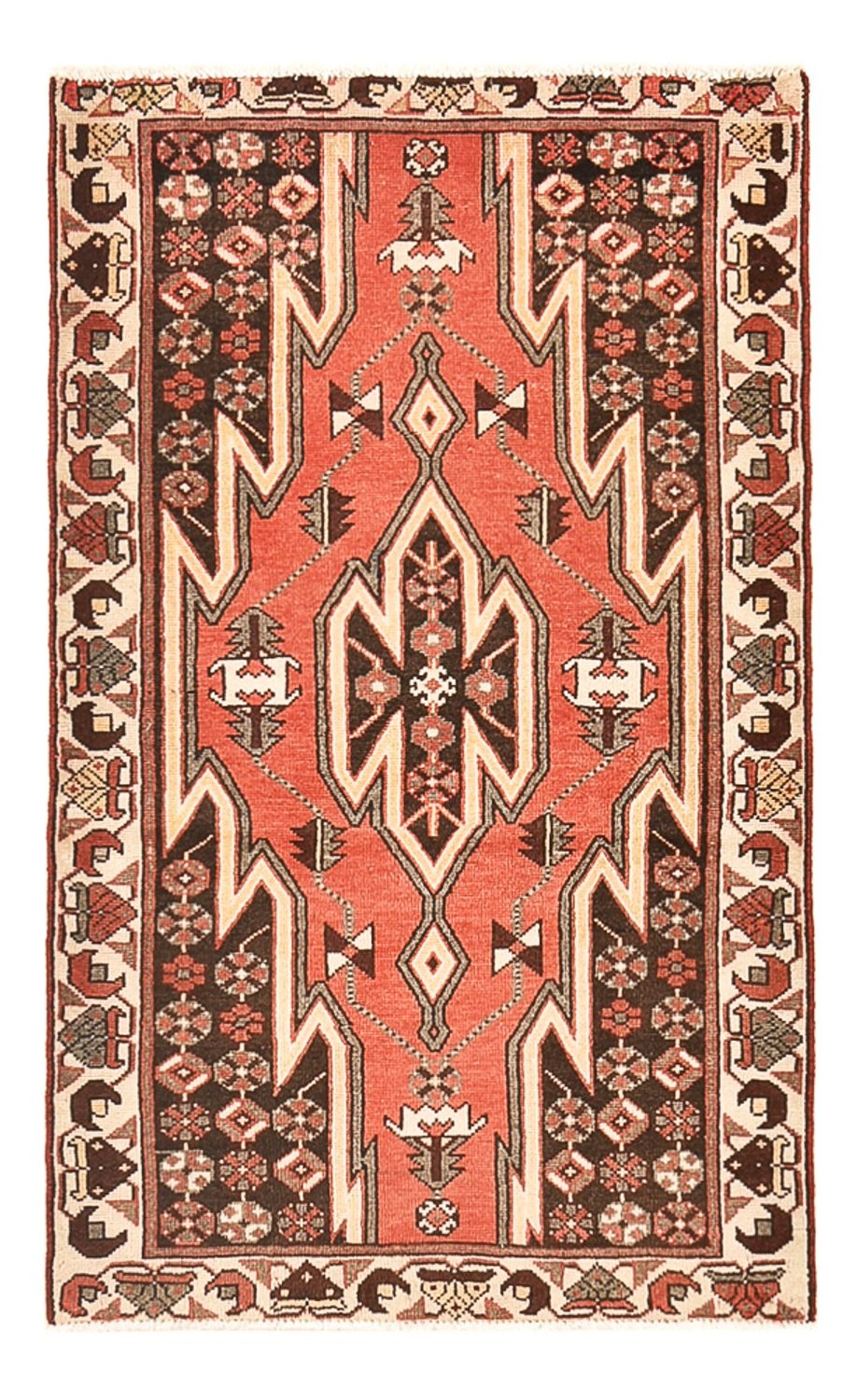
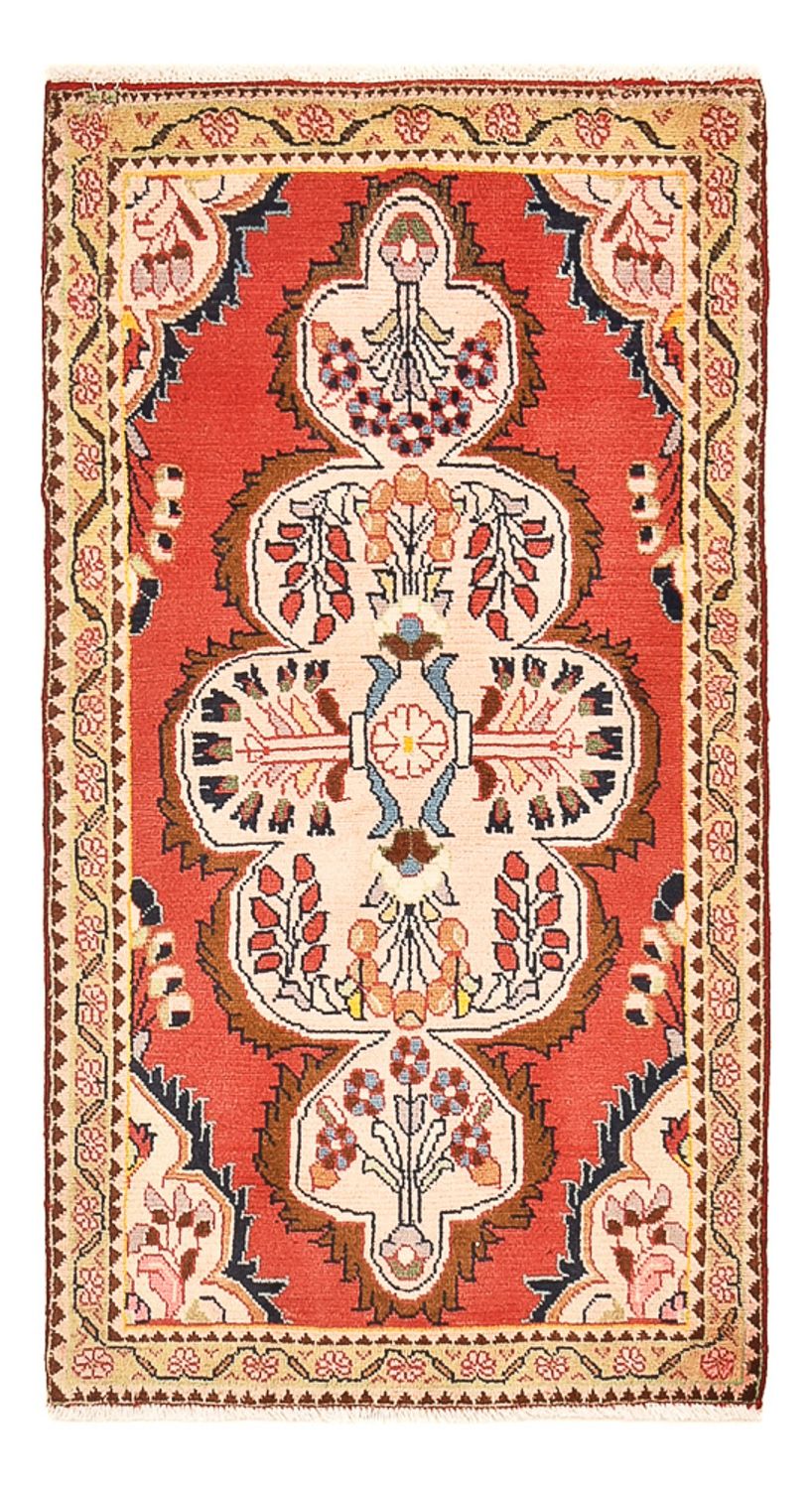
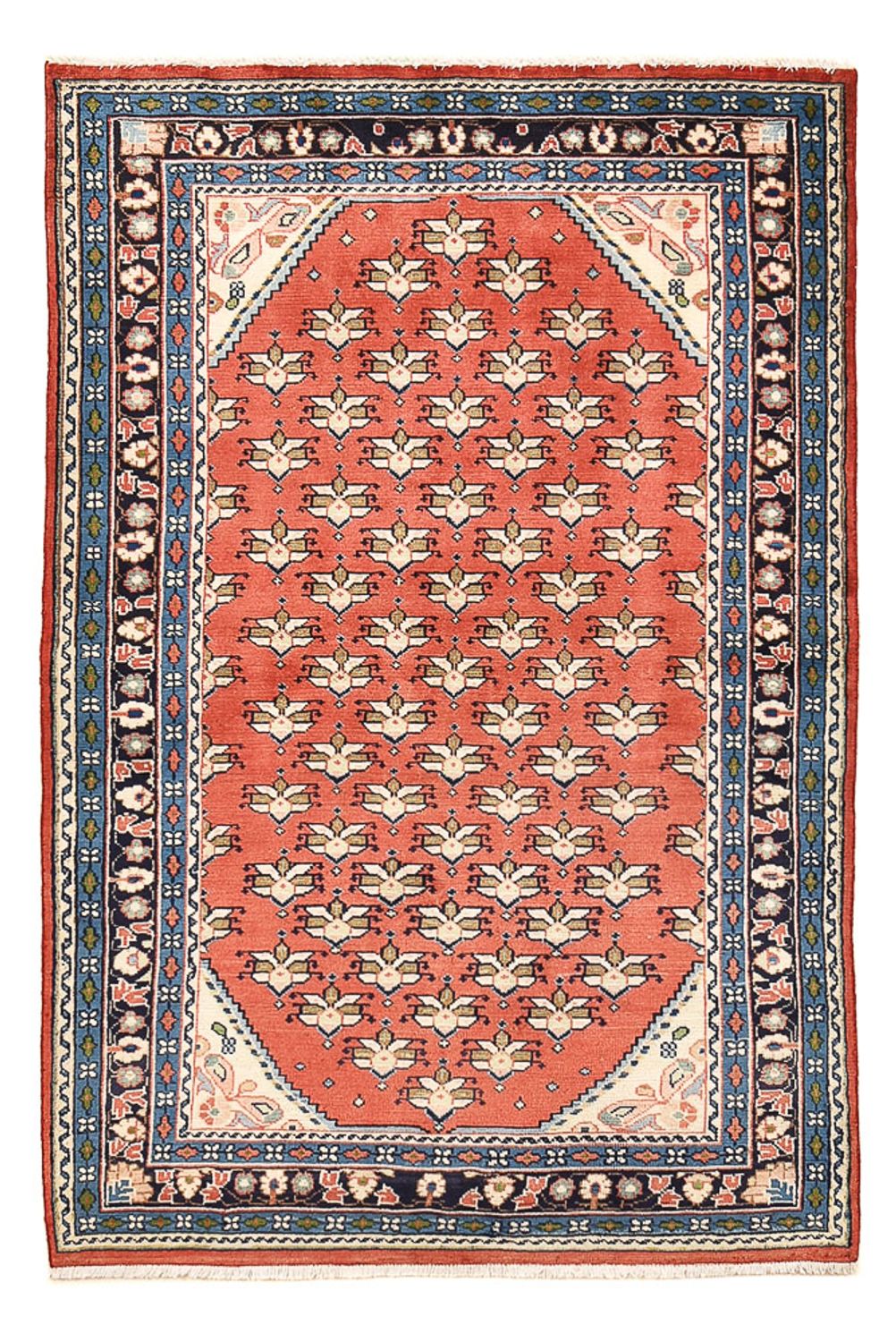
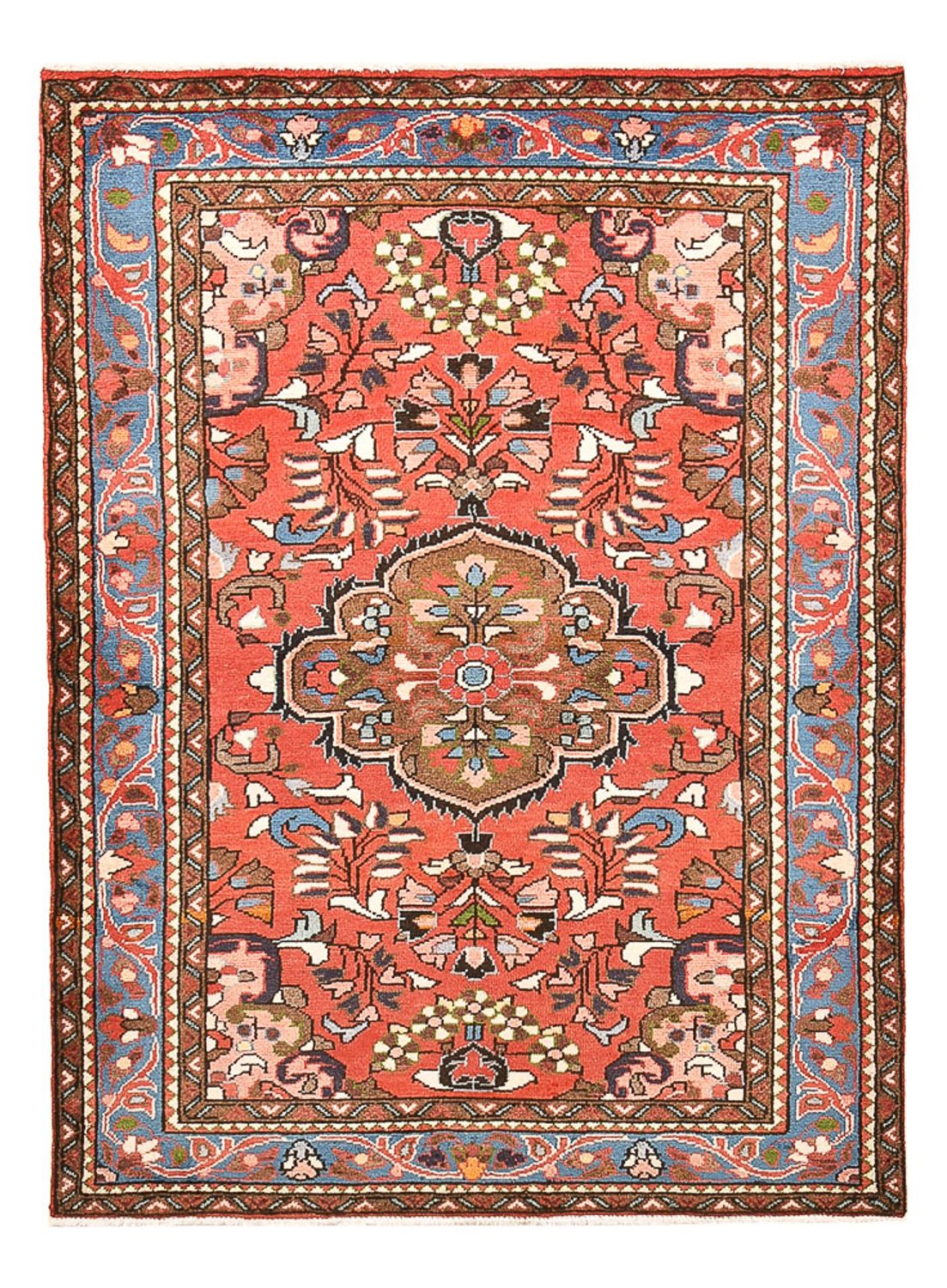
Photo: Morgenland Rugs
Lilian rugs are hand-knotted Persian rugs from the village of Lilian in the Arak region in western central Iran. Unlike the geometric village rugs of the neighbouring Hamadan belt, they belong stylistically to the family of Sarough rugs and show a floral central medallion in deep red. They link a dense knotting worked with the Persian knot to a warm, collector-prized colour scheme. This article explains origin, pattern, material and knotting technique, value and authenticity markers of a Lilian rug.
What is a Lilian rug?
A Lilian is a hand-knotted village and workshop rug from the place of Lilian south of Malayer, which historically belongs to the great knotting area around the city of Arak. Characteristic are a floral central medallion, deep red and navy blue tones, a cotton warp and a wool pile knotted densely with the asymmetrical Persian knot. This floral hand and the Persian knot place the Lilian close to the Sarough style and distinguish it clearly from the geometric, Turkish-knot village rugs of the Hamadan region.
Lilian was long knotted by Armenian families of the village, which is reflected in the name of many older pieces. As with many village provenances, the term is not narrowly bounded: under the name run pieces of varying quality, from the plain utility rug to the carefully drawn, densely knotted work.
Origin
Lilian lies in western central Iran between Malayer and the city of Arak, in Markazi province. The whole region around Arak, formerly called Sultanabad, has been a significant centre of Persian rug production since the late 19th century and produced with the Sarough and the Mahal some of the best-known provenances of Persia. Lilian belongs geographically to this knotting belt and took over its floral, curve-emphasised style but lies at the same time close to the neighbouring province of Hamadan.
In Lilian it was knotted predominantly by settled families, for a long time by the Armenian community of the village. Its heyday came in the first half of the 20th century, when European and North American dealers prized the robust, densely knotted rugs. Unlike some other Persian styles, Lilian knotting remained relatively stable across political upheavals. Today production has declined significantly, which is why many pieces on the market date from the 1960s to 1980s and older work counts as collector-worthy.
Pattern and colour
The defining design element of many Lilian rugs is a floral central medallion, surrounded by large, stylised blossoms and rosettes. The drawing is more curve-emphasised and more floral than on the geometric Hamadan village rugs, without reaching the fine density of city manufactory work. Frequently narrow, clearly structured borders frame the field. Alongside this also occur allover arrangements with flower motifs distributed across the surface.
The colour palette is warm and saturated. Deep reds dominate the ground field, complemented by navy blue, beige and ivory. Older pieces often show natural colour nuances with slight abrash, the fine colour gradations that arise when shifting between hand-dyed yarn lots. This saturated, red-emphasised colour scheme with floral medallion is the most important visual identifying feature of the Lilian.
Material and knotting technique
Lilian rugs are knotted on a warp of cotton; the weft consists of cotton or wool. The pile is of virgin wool from regional herds, valued for its robustness. An overview of the fibres used is offered by the survey of materials.
It is knotted with the asymmetrical Persian knot, also called the Senneh knot. With this the Lilian follows the knotting technique of the Sarough family and differs from the village rugs of the Hamadan region, which use the symmetrical Turkish knot. The differences of both knot types are explained in the overview of knot types; the whole process from warping to shearing is described in the article on rug manufacture. The pile is sheared medium-long, which gives the pieces a pleasant feel.
Knot density and quality
The knot density of Lilian rugs typically lies between around 100,000 and 200,000 knots per square metre and so somewhat higher than on many geometric Hamadan village rugs. What knot density says about fineness and price in detail is covered in its own article.
Quality is decided, besides density, above all by wool quality, the clarity of the floral drawing, the saturation of the colours and the condition. Older Lilians often show hand-spun wool and natural colour nuances, while newer trade qualities can read more uniformly but less lively. The Lilian was long regarded among connoisseurs as an insider tip, because it offered solid quality at affordable prices.
| Provenance | Relation to Lilian | Typical features |
|---|---|---|
| Lilian | village of the Arak region | floral medallion, deep red, Persian knot |
| Sarough | stylistic kinship, Arak region | dense, floral, curve-emphasised, Persian knot |
| Mahal | neighbouring provenance of the Arak region | broad floral, robust quality |
| Malayer | geographical neighbour | transition between Hamadan and Sarough, single weft |
| Hamadan | neighbouring rug belt | geometric village rugs, Turkish knot, single weft |
| Jozan | finer neighbouring provenance near Malayer | dense floral medallion, high quality |
What is a Lilian rug worth?
The value of a Lilian rug depends on age, condition, size, knot density, pattern clarity, wool quality and dyeing. As densely knotted village rugs of the Arak region, Lilians lie in price mostly below fine city manufactory work such as Nain, Isfahan or Ghom but can rank above plain geometric Hamadan qualities. Well-preserved older pieces with hand-spun wool, natural colours and a clearly drawn floral medallion are sought after and correspondingly higher valued.
For a grounded assessment a look at the overview what is my rug worth? and at the article recognising valuable Persian rugs is worthwhile. Practical guidance on selection and purchase is given in the buying guide.
How do you recognise a genuine Lilian rug?
Typical indicators of a genuine, hand-knotted Lilian include:
- Asymmetrical Persian knot: Lilian follows the Sarough technique, not the Turkish knot of the Hamadan village rugs.
- Floral central medallion in deep red with navy blue, narrow borders and large rosettes.
- Hand-knotted back: The pattern is clearly recognisable in mirror image; individual knots are visible.
- Genuine fringes: The fringes are the extended cotton warp threads, not sewn on afterwards.
- Wool pile on cotton ground with dense, medium-long knotting.
- Slight abrash on older pieces speaks for hand-dyed wool and grown handwork.
On valuable or old pieces an expert appraisal can be sensible. A general step-by-step check is offered by is my rug genuine?; an overview of the features of hand-knotted rugs is found under recognising hand-knotted.
Care
Lilian rugs of robust wool are easy to maintain and everyday-capable. Regular vacuuming in the direction of the pile and an occasional professional cleaning preserve colours and pile. Stains should be blotted immediately with clear water, without rubbing. Long direct sunlight fades the bold reds and should be avoided. An occasional rotation distributes wear evenly. Detailed guidance is set out in the care overview.
Frequently asked questions
Where does a Lilian rug come from?
From the village of Lilian south of Malayer in the Arak region in western central Iran, Markazi province. It was long knotted there by settled, often Armenian families. Stylistically Lilian belongs to the family of Sarough rugs.
What distinguishes a Lilian from a Hamadan rug?
The Lilian is more floral and more curve-emphasised in drawing than the geometric Hamadan village rugs and is knotted with the asymmetrical Persian knot, while the Hamadan region uses the symmetrical Turkish knot throughout. Stylistically the Lilian stands closer to the Sarough than to the Hamadan.
Which knot is a Lilian rug made with?
With the asymmetrical Persian knot, also called the Senneh knot. With this it follows the technique of the Sarough family and differs from the village rugs of the Hamadan region. The differences are explained in the overview of knot types.
What does a Lilian rug cost?
The price depends on age, condition, size, knot density, wool quality and dyeing. Plain pieces are affordable; well-preserved older Lilians with hand-spun wool and a clearly drawn floral medallion can cost considerably more.
Are Lilian rugs suitable for daily use?
Yes. Through the robust wool and the dense knotting, Lilian rugs are very hard-wearing and suit living spaces with normal to high use well.
Which sizes are usual for Lilian rugs?
Lilian rugs are woven above all in medium to larger formats, around 200 x 300 cm, 250 x 350 cm and 300 x 400 cm. Smaller pieces and runners are rarer.
How do I care for a Lilian rug properly?
Vacuum regularly in the direction of the pile, blot stains immediately with clear water without rubbing, and have it professionally cleaned every few years. Avoid long direct sun so that the bold reds do not fade, and rotate the rug occasionally.
Impressions of the origin
Places, landscapes and landmarks around the home of Lilian rugs. Click any image for a larger view.


