Kashan rugs: classic floral medallions from central Iran
Kashan rugs from central Iran are classic Persian carpets, elegant, finely knotted, and rich in floral patterns.
- Region
- Persia / Iran
- Category
- Persian rugs
- Manufacturing
- Hand-knotted
- Knot density
- 150,000 – 500,000 knots/m²
Profile
- Manufacturing
- Hand-knotted
- Origin
- Iran — city of Kashan, Isfahan Province
- Pile material
- Wool on cotton, sometimes with silk
- Knot density
- 150,000 – 500,000 knots/m²
- Features
- Classic central medallion, fine wool, often dark red palette
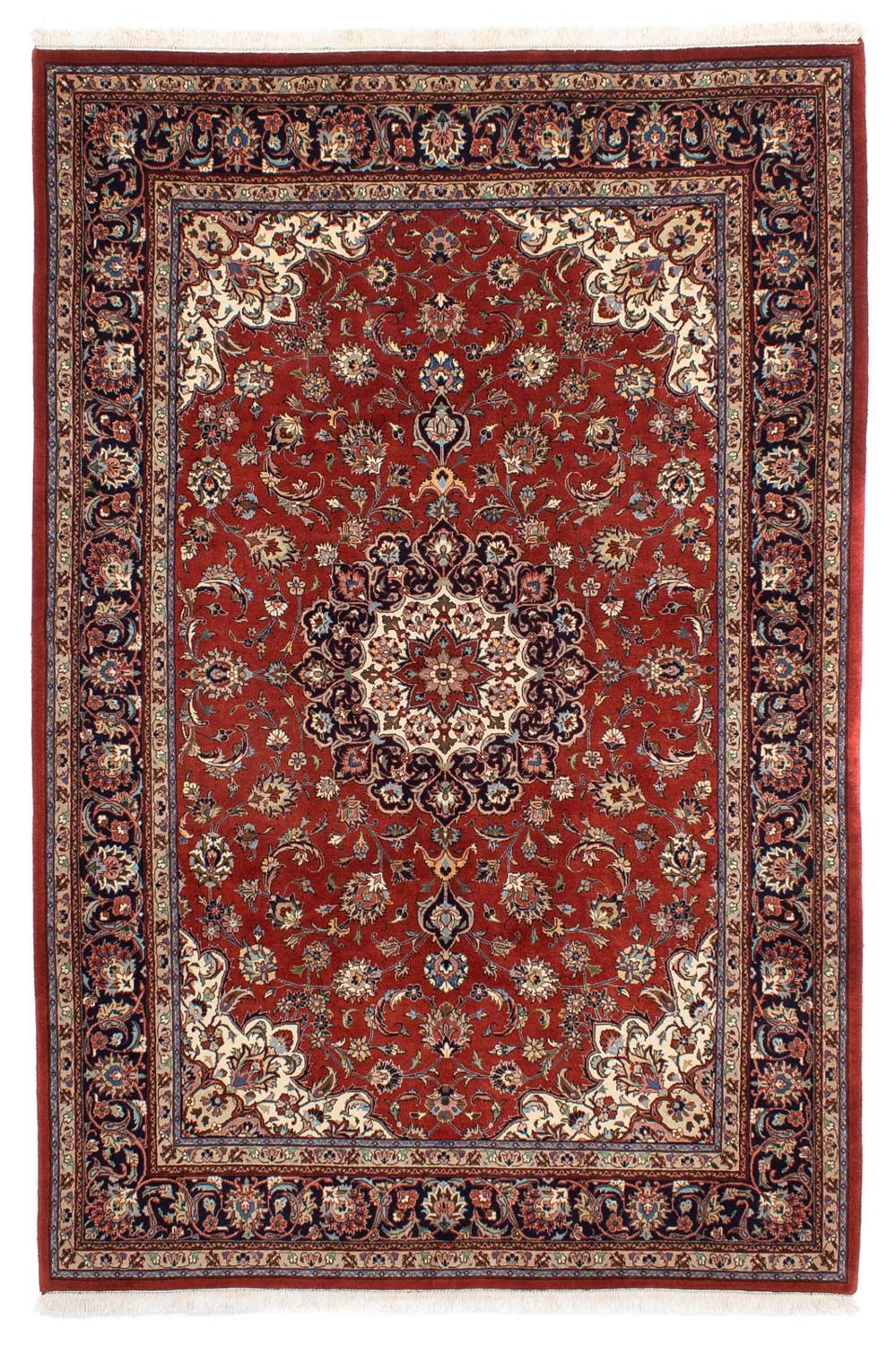
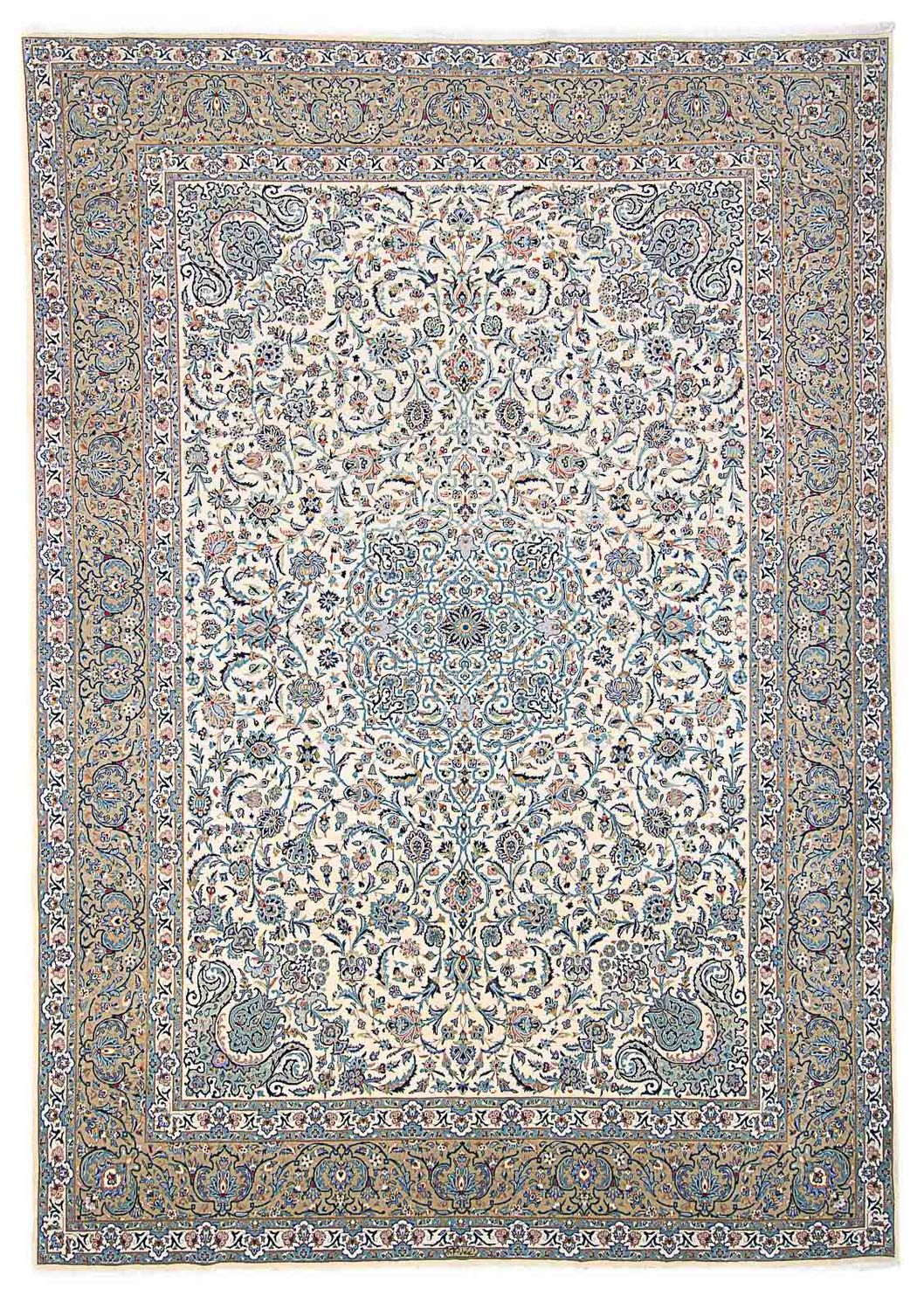
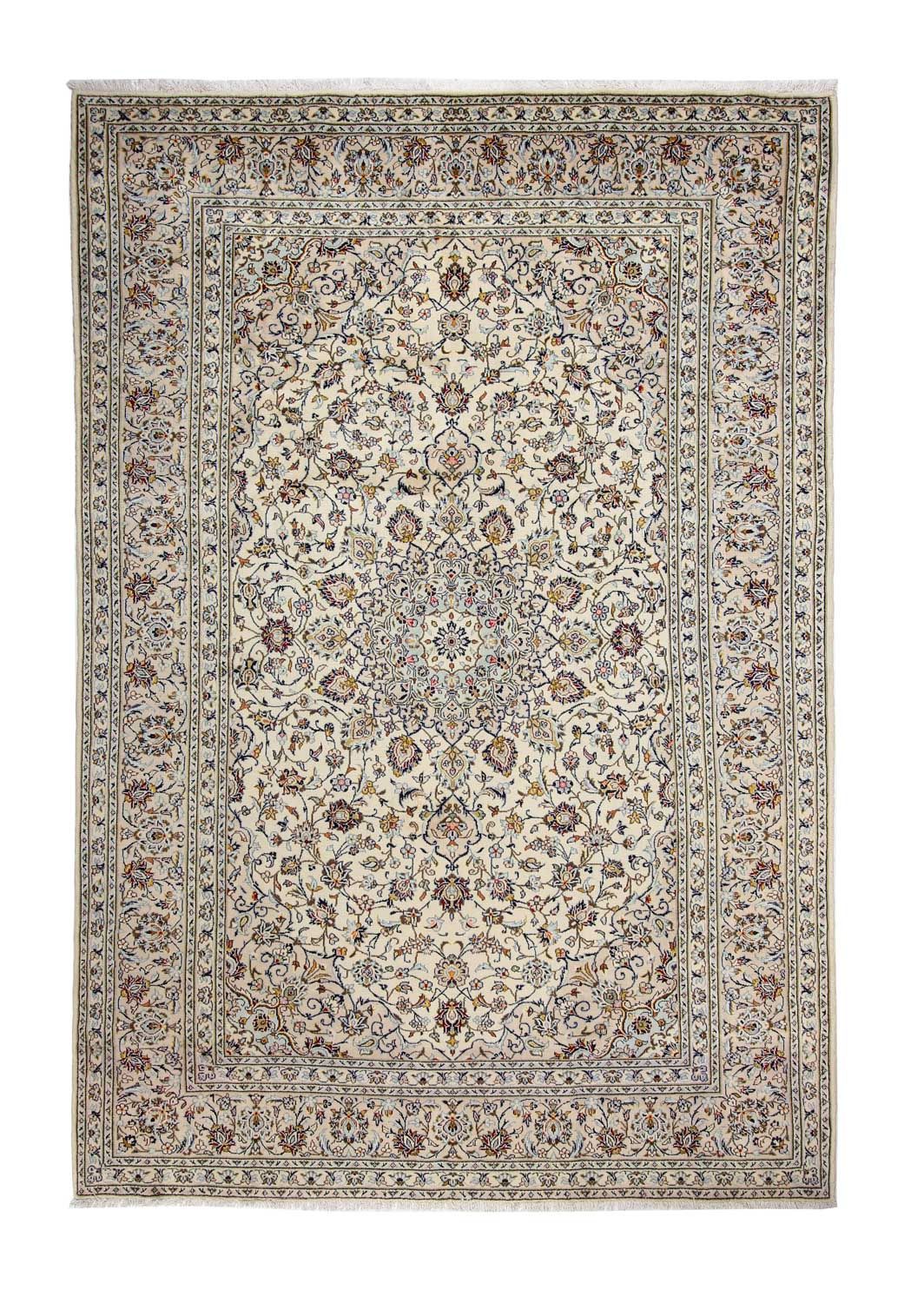
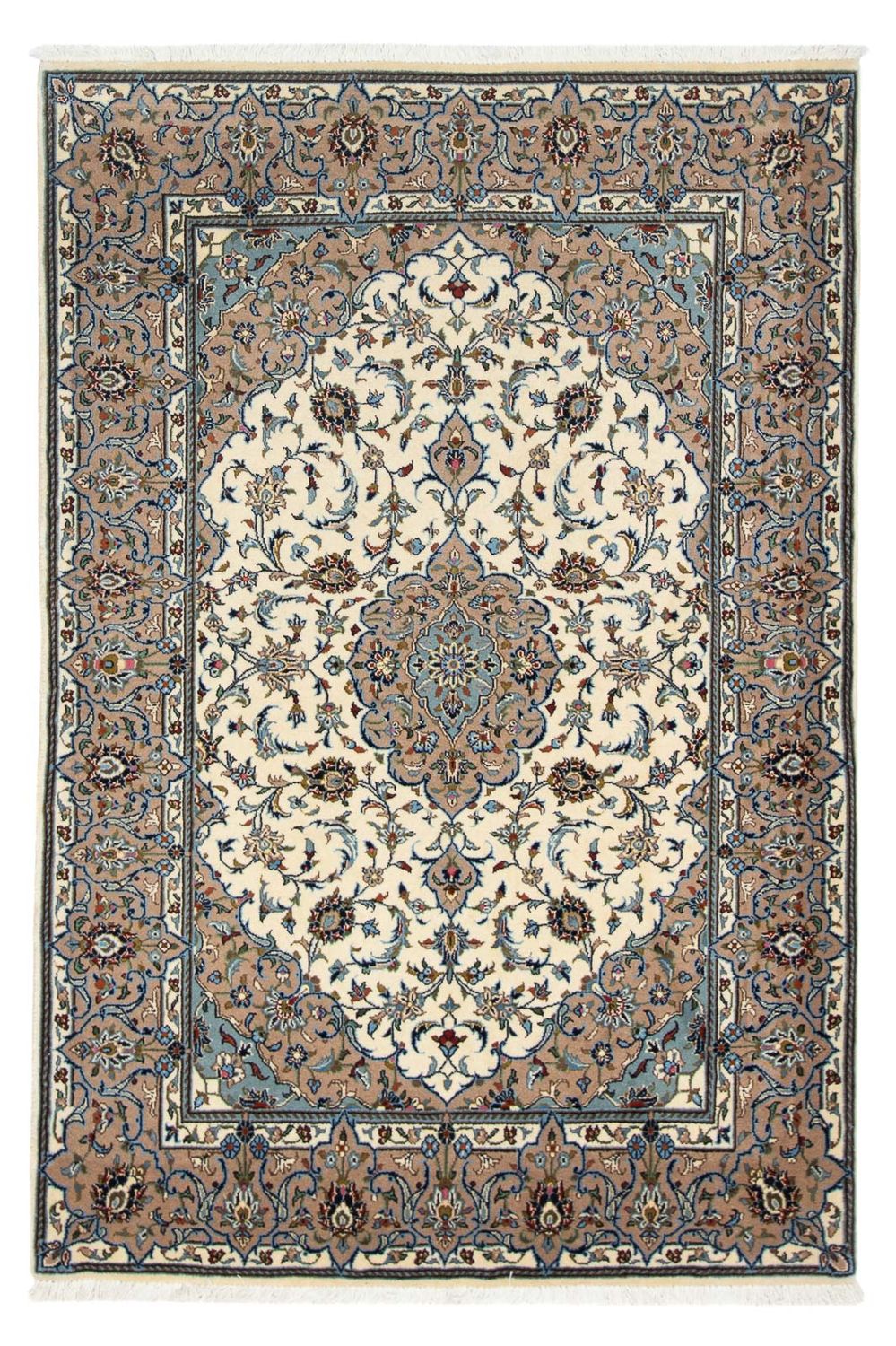
Photo: Morgenland Rugs
Kashan rugs are among the finest and most artful Persian rugs of central Iran. They stand for classical floral medallion patterns, exceptionally precise knotting, and a silky wool sheen that has made them sought-after pieces at court and on the world market for centuries. The name Kashan is closely tied to the courtly knotting art of the Safavid era and remains to this day the byword for the classic, curvilinearly drawn Persian rug.
What is a Kashan rug?
A Kashan is a hand-knotted rug from the city of Kashan in the province of Isfahan in central Iran. Characteristic are a florally drawn central medallion with matching corner ornaments, a densely filled vine field, the fine asymmetric Persian knot, and a short-sheared pile of lustrous kork wool. Unlike the geometric village rugs from Heriz or Hamadan, the Kashan follows an exactly pre-drawn, curvilinear pattern template that precisely fixes every vine and palmette. From this comes the typical, almost painterly clarity of the drawing.
The Kashan thus belongs to the group of classical Persian workshop rugs, which also includes Isfahan, Nain, and Qum. Within this family, the Kashan stands for the older, tradition-rich school with a rather dark ground and a deep, rich color scheme.
Origin: city of Kashan and the Safavid tradition
Kashan lies about 200 kilometers south of Tehran on the edge of the central Iranian desert and looks back on a centuries-old tradition of rug knotting. As early as the 16th and 17th centuries, during the Safavid dynasty, high-quality rugs emerged here that were valued at the royal court. From this epoch come some of the most famous surviving Persian rugs of all, kept today in major museums and which founded the classical visual language of the style.
After a decline in the 18th and early 19th centuries, knotting in Kashan saw a renaissance around 1890. New workshops were founded, traditional patterns revived, and the fine kork wool consistently used again. A key role was played by the master knotter Mohtascham, whose workshop in the second half of the 19th century shaped the reference quality of antique Kashan rugs. A signed Mohtascham Kashan is still considered a seal of the highest order by collectors and auction houses today. Historically Kashan was famous not only for rugs but also for ceramics, tiles, and silk weaving, and this artistic tradition is reflected in the rugs' sophisticated color harmony.
Patterns and colors
The classic Kashan design is a florally drawn central medallion framed by four matching corner ornaments and lying on a field densely filled with vines, palmettes, and rosettes. Characteristic are the Shah Abbas palmettes taken from Safavid models, as well as the continuous Herati pattern, which some Kashan rugs lay across the entire field in place of a medallion. Alongside this stand figurative picture rugs with courtly, mythological, or literary scenes that were produced as commissioned works.
The traditional palette is dominated by deep red, often tending to plum, rich indigo blue, and pure ivory, complemented by warm accents in gold, green, and subdued pink. The deep red of older pieces was often obtained from the lac dye of the scale insect and ages to that unmistakably warm depth that reproductions lack. The border is built in several stripes, with a wide floral main border and accompanying narrow borders. Modern Kashan rugs also frequently use lighter ground colors such as beige or ivory to meet current taste.
Material and knotting technique
High-quality Kashan rugs are knotted from the finest kork wool, the soft underwool of young sheep from the neck, shoulder, and flank. This wool is distinguished by particular sheen and suppleness and absorbs natural dyes particularly deeply. The warp is usually made of cotton, in particularly valuable pieces also of silk. Pure silk Kashans form the most exclusive variant of the style.
The Kashan is knotted with the asymmetric Persian knot, also called the Senneh knot. This binding wraps only one of the two warp threads and allows particularly fine, dense knotting with soft, flowing contours, which suits the curvilinear floral pattern language ideally. The Kashan thus belongs to the large majority of central and eastern Persian provenances that use the Persian knot, unlike the Turkish knot of the northwest Iranian village rugs such as Heriz or Bidjar. The differences between the two basic knots are explained in the essay on knot types and on production.
After knotting, the pile is sheared short, which makes the contours of the patterns stand out particularly sharply. Finally the rug is washed and dried, which gives the material additional sheen.
Knot density and quality
First-class Kashan rugs reach knot densities of 400,000 to over 1,000,000 knots per square meter. The historical Mohtascham qualities typically lie in the range of 400,000 to 800,000 knots and combine high density with the finest kork wool and natural dyeing. A high knot count is genuinely meaningful for the Kashan, because the style lives on the richly detailed, curvilinear drawing that only succeeds cleanly with fine knotting. How knot density influences quality and price, and why it must always be read together with material and dyeing, is covered in a dedicated essay.
Alongside density, wool quality, natural dyeing, and the precision of drawing decide the rank of a Kashan. Anyone wanting to assess quality looks for a silky, low-grease wool sheen, sharp pattern contours without distortion, a clearly legible back, and a harmonious, deep color picture without garish tones.
Kashan and related provenances at a glance
| Provenance | Relationship to Kashan | Typical features |
|---|---|---|
| Kashan | umbrella term and main town | floral medallion, dark ground, fine kork wool |
| Mohtascham Kashan | finest antique quality | lac red, very high density, collector pieces |
| Isfahan | classical sister city | very fine, often light-ground, silk warp |
| Nain | fine workshop ware | light, blue-beige, often with silk contours |
| Qum | younger center | very fine, many pure silk rugs |
| Sarouk | neighboring region (Arak) | floral, dense pile, muted colors |
| Indo-Kashan | Indian reproduction | same design, other wool, mostly cheaper |
What is a Kashan rug worth?
The value of a Kashan depends above all on age, condition, size, knot density, wool quality, dyeing, and provenance. New Kashan rugs of solid quality move in a medium to upscale price segment, while antique pieces from the classical period around 1900 to 1930 are traded markedly higher. The absolute top is formed by signed Mohtascham Kashans and fine figurative picture rugs, which fetch five- to six-figure prices at international auctions, in exceptional cases more.
For a sound estimate, see the overview of rug value, the guide identify valuable Persian rugs, and the general buying guide. Why genuine hand-knotted pieces carry their price is explained in the article why genuine rugs are expensive.
How do you recognize a genuine Kashan rug?
Typical signs of a genuine Kashan include:
- Fine asymmetric Persian knot: the back shows a very fine, sharp, and even knot picture worked with the Senneh knot.
- Silky wool sheen: high-quality Kashan rugs consist of lustrous kork wool that feels supple and cool.
- Clearly drawn floral medallion with matching corner ornaments and exactly drawn vines without distortion.
- Deep, harmonious colors of rich red, indigo blue, and ivory; in old pieces with warm lac red and fine abrash.
- Short-sheared pile that makes the sharp pattern contours visible.
- Possible signature in a small cartouche, especially in fine and antique workshop pieces.
- Fringes as extended warp, not sewn on afterwards.
A step-by-step inspection guide is given in Is my rug genuine?. How to read signatures and whether the colors are natural or chemical is covered in the corresponding articles. Note: floral medallion rugs in the Kashan style are now also produced in India as Indo-Kashan. They draw on the patterns but differ in wool quality, sheen, and knotting from the Persian original.
Care
Because of the fine knotting and the short pile, the Kashan demands somewhat more care than a robust village rug. Regular vacuuming in the pile direction and professional cleaning every three to five years preserve sheen and color depth. Direct sunlight should be avoided to prevent fading. Blot stains immediately and expertly with clear water from the outside in, without rubbing, since the fine fibers react sensitively. With valuable or silk-containing pieces, cleaning by a specialized firm is recommended when in doubt. Detailed notes are in the care overview and in the guide on cleaning wool rugs.
Frequently asked questions
What does a Kashan rug cost?
Prices vary widely with age, size, knot density, and condition. New Kashan rugs of solid quality move in a medium to upscale range, while antique pieces sit markedly higher. Signed Mohtascham Kashans and fine picture rugs fetch five- to six-figure prices at auction.
What is a Mohtascham Kashan?
Mohtascham was a master knotter and workshop operator in Kashan in the second half of the 19th century. His name stands for the highest quality tier of antique Kashan rugs, recognizable by deep lac red, the finest kork wool, and very high knot density. A signed Mohtascham Kashan is considered a seal of quality and is found in all major collections.
What is the difference between Kashan and Isfahan?
Both are classical central Persian workshop rugs with a floral medallion and the Persian knot. The Isfahan is usually even more finely knotted, often light-ground, and frequently worked on a silk warp, while the Kashan traditionally shows a darker ground and a deeper, richer color scheme. Both belong to the top of Persian knotting art.
Is a Kashan rug suitable for heavily used rooms?
How do I recognize a genuine Kashan and not an Indo copy?
Floral medallion rugs from India, traded as Indo-Kashan, adopt the Kashan design but mostly differ in wool quality, sheen, and knotting. With the Persian original, the silky kork wool sheen, the very fine, sharp knot picture on the back, and the deep natural dyeing speak for authenticity. When in doubt, the guide Is my rug genuine? helps.
How do I care for a Kashan rug properly?
Regular vacuuming in the pile direction and professional cleaning every three to five years are recommended. Avoid direct sunlight and blot stains immediately and expertly with clear water, without rubbing. Because of the fine fibers and possible silk content, a specialized firm should take over with valuable pieces.
Impressions of the origin
Places, landscapes and landmarks around the home of Kashan rugs. Click any image for a larger view.
Master weavers
These masters and workshops have shaped the Kashan tradition.


