Qom rugs: finest knotting from the holy city of Qom
Qom rugs from the holy city are among the finest Persian rugs and are particularly prized in pure-silk versions.
- Region
- Persia / Iran
- Category
- Persian rugs
- Manufacturing
- Hand-knotted
- Knot density
- 300,000 – 1,000,000+ knots/m²
Profile
- Manufacturing
- Hand-knotted
- Origin
- Iran — city of Qom (Ghom)
- Pile material
- Silk on silk or wool on cotton
- Knot density
- 300,000 – 1,000,000+ knots/m²
- Features
- Very fine knotting, often pure silk, elegant designs
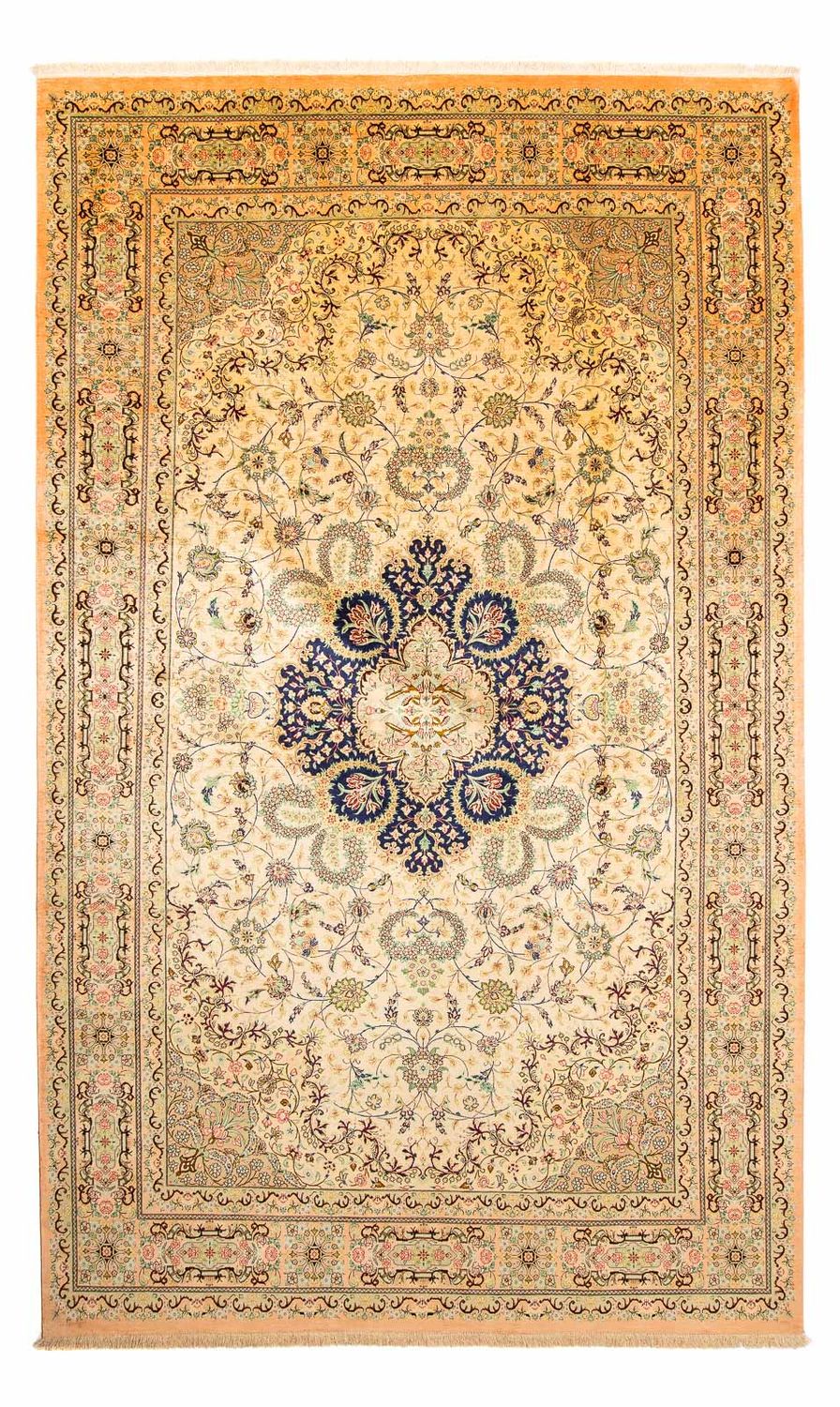
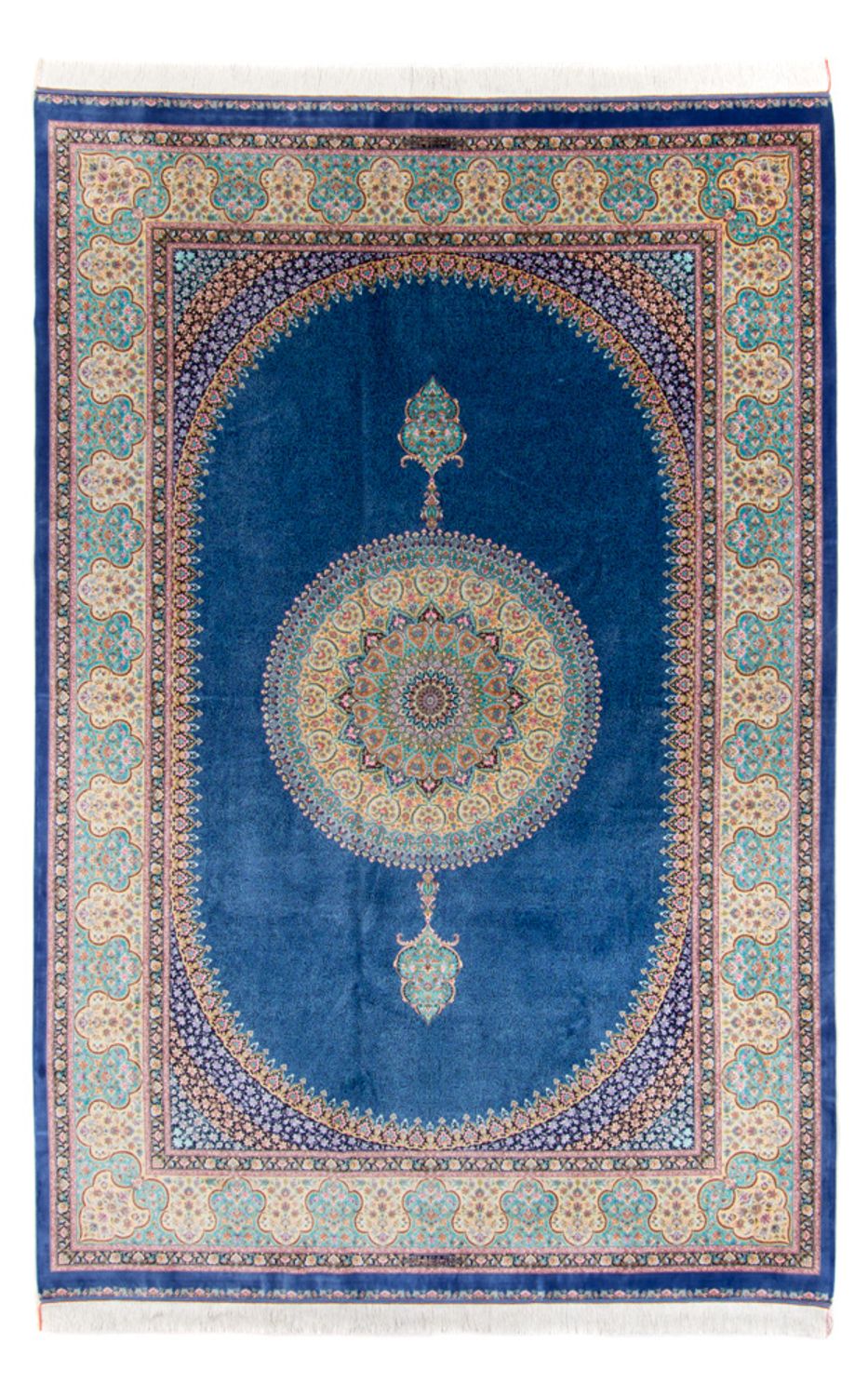
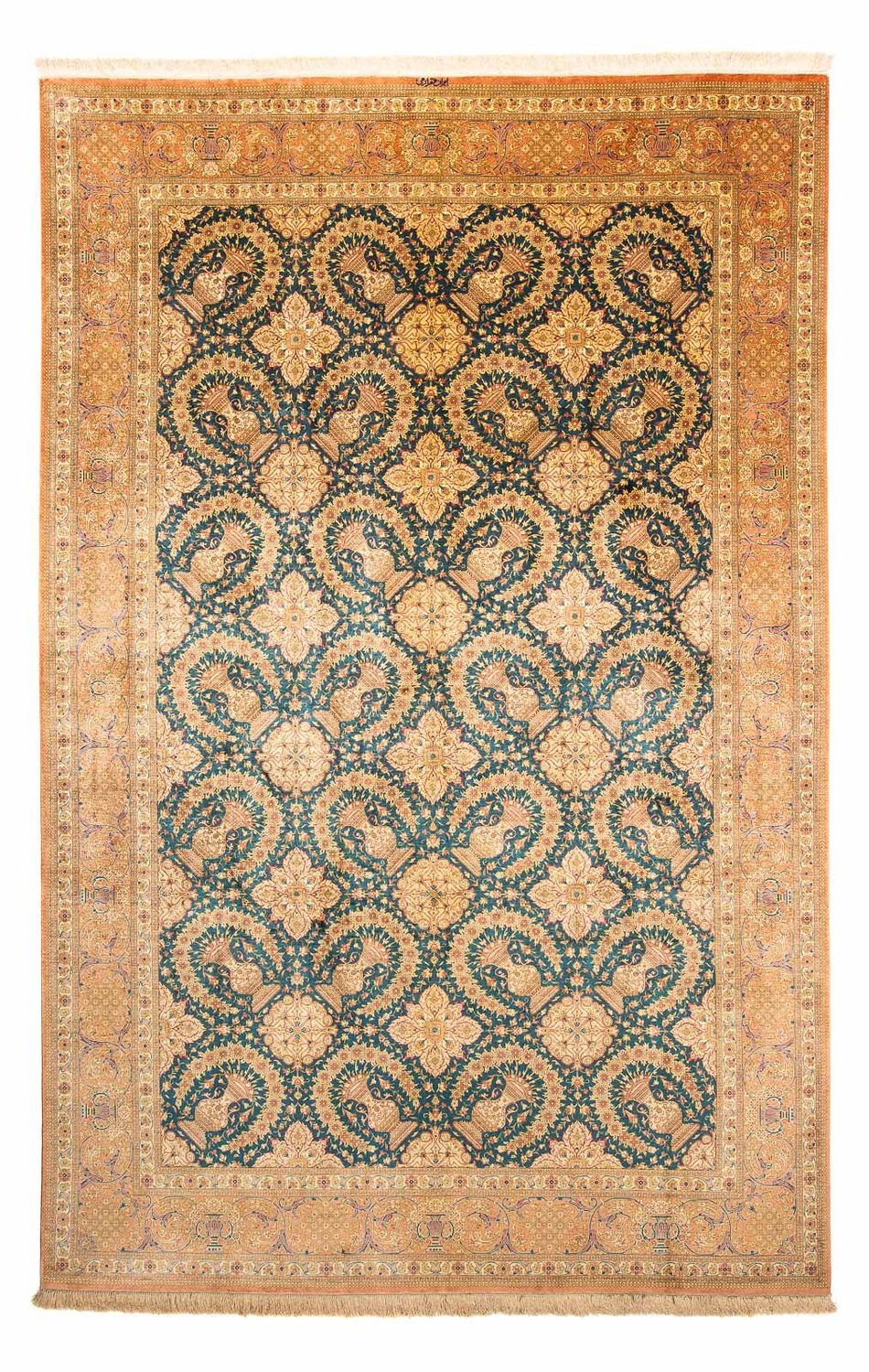
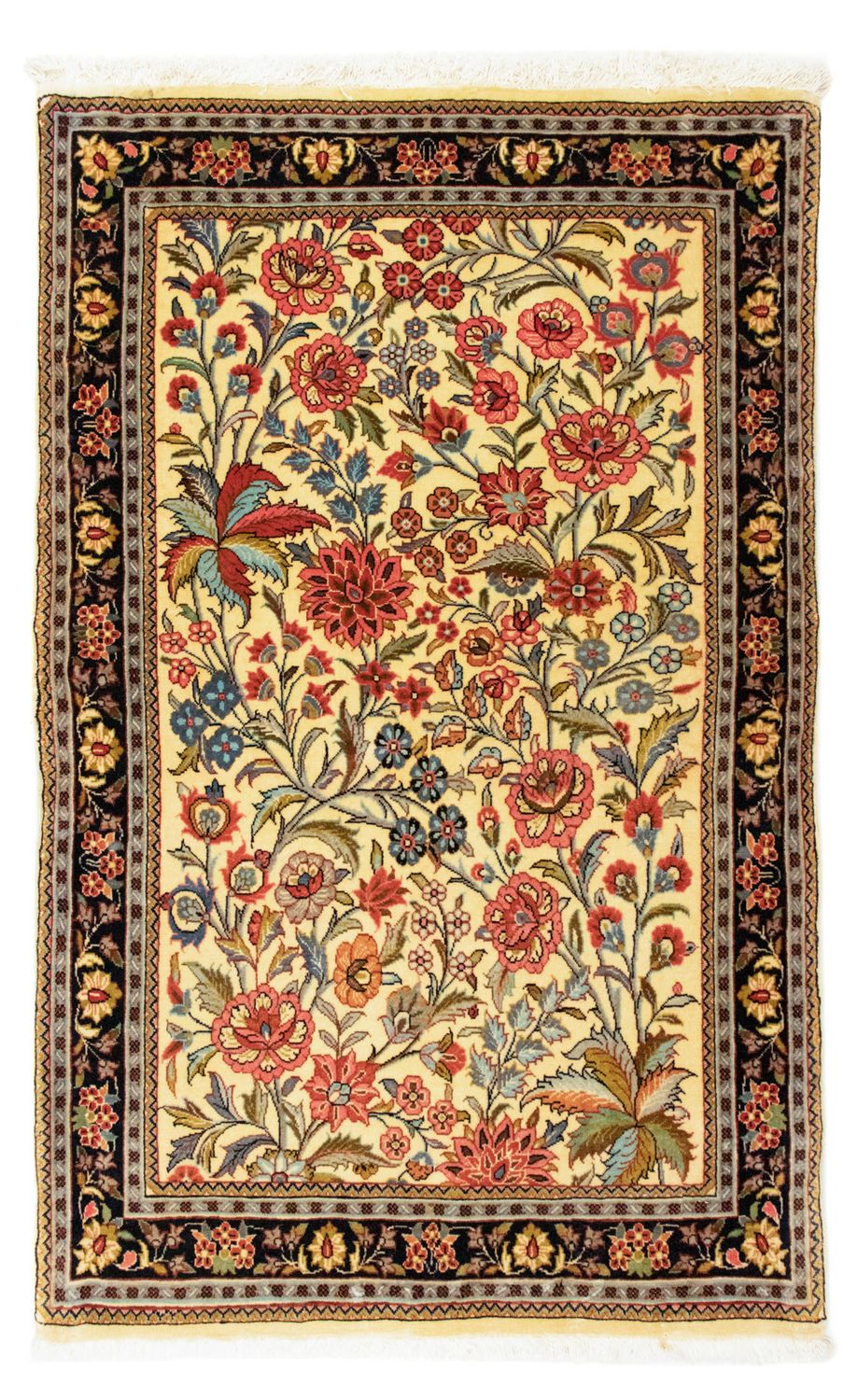
Photo: Morgenland Rugs
Qom rugs are the finest hand-knotted Persian rugs from the Iranian city of Qom and stand above all for high-quality silk rugs. Although production only began in the 1930s, pure-silk Qoms today count among the most valuable knotted works in the world. Defining traits are the exceptionally fine knotting, the richly detailed floral and figurative patterns, and the intense sheen of the silk used.
What is a Qom rug?
A Qom is a hand-knotted rug from the city of Qom (also written Ghom or Qum) south of Tehran. It is knotted with the asymmetric Persian knot; in the finest pieces, entirely of silk for warp and pile. There are also variants with a cotton warp and silk pile, as well as pure wool rugs. The knot density usually lies between 400,000 and over 1,000,000 knots per square metre, which makes possible the very fine, almost painterly pattern drawing.
Origin: the city of Qom south of Tehran
Qom lies about 150 kilometres south of Tehran and is one of the most important Shia pilgrimage sites of Iran. Rug production only began here in the 1930s and is thus, compared with old centres such as Tabriz or Kashan, very young. It was established by weavers from other traditional centres who brought their skill to Qom, among others from Kashmar and Isfahan. The famous medallion and vine repertoire of Kashan, associated with master weavers such as Mohtesham, also influenced the city's formal language.
Within a few decades Qom developed into one of the most important centres for fine silk rugs. Because the city had no centuries-old knotting tradition of its own, it could orient itself from the outset on the upper quality segment. Today Qom produces both classical and modern designs, and pure-silk Qoms belong among the most expensive Persian rugs of all. They count as status symbols and are often regarded as collector's items and investment objects.
Typical features
Qom rugs are distinguished by their exceptionally fine knotting and richly detailed patterning. The repertoire is broad and ranges from geometric through floral to figurative and pictorial motifs. Widespread is the central medallion on a calm, often single-coloured ground; alongside stand hunting, garden and vase patterns, as well as all-over compositions of small pictorial fields. The pile is usually sheared short, which emphasises the precision of the drawing. Especially characteristic are the silky sheen effects that shift with the angle of light and give a silk Qom its lively depth.
Patterns and colours
The palette of a Qom is usually rich and finely shaded. Frequent are deep red, blue, beige and ivory; in silk pieces, also delicate pastel tones that bring out the material especially well. The sheen of silk lets the same colour appear lighter or darker depending on the angle, an effect particularly pronounced in pure silk rugs. This optical depth sets the Qom apart from woollen provenances and also makes it popular as a wall hanging.
Material and knotting technique
The best-known Qom rugs are made entirely of silk, both for the warp and for the pile. Mostly mulberry silk is used, which gives the rug its unmistakable sheen. Alongside there are variants with a cotton warp and silk pile, as well as pure wool rugs of virgin wool. Fibre study is treated in the materials area; silk in particular on the silk page.
Knotting is done with the asymmetric Senneh knot, the Persian knot. It allows the fine, almost painterly pattern resolution for which Qom is famous, and is the precondition for the very high knot densities of pure silk pieces. The complete production sequence is described in the production area.
Knot density and quality
Knot density belongs to the most important quality features of a Qom. It ranges from about 400,000 knots per square metre in good qualities to well over 1,000,000 knots in the finest silk pieces. The finer the knotting, the more detailed patterns and shading can be worked, and the higher the labour input. Unlike Tabriz with the Raj system or Nain with the La grades, the fineness of a Qom is usually given as a pure knot count. What this number actually says is explained in the article knot density explained.
| Quality | Material | Knots/m² (approx.) | Features |
|---|---|---|---|
| Wool | wool on cotton | 300,000 to 500,000 | robust everyday rug, clear patterns |
| Wool-silk | wool with silk accents | 400,000 to 600,000 | silky shimmer in contours and details |
| Silk on cotton | silk pile, cotton warp | 500,000 to 800,000 | fine drawing, high sheen |
| Silk Qom | pure silk | 800,000 to more than 1,000,000 | finest, collector quality, often signed |
| Indo Qom | wool or silk | 150,000 to 400,000 | Persian pattern, knotted in India |
What is a Qom rug worth?
Qom rugs, above all pure silk pieces, belong among the most valuable Persian rugs on the market. The price depends on material, knot density, size, age, state of preservation and a possible signature. Pure silk Qoms with a very high knot density achieve a multiple of simple wool qualities, and a single fine rug can occupy several years in the making. Signed pieces count as sought-after collector's and investment objects.
Whether a Qom represents an investment depends on rarity, material and condition; there is no guarantee of value gain. For classification, recognising valuable Persian rugs and the general buying guide help.
How do you recognise a genuine Qom rug?
Reliable indicators of a genuine Qom are:
- Very fine, precise back: the pattern stands out sharply even from behind; individual knots in silk pieces are extremely small.
- Asymmetric Senneh knot: Qom is knotted with the Persian knot, which makes possible the fine pattern resolution.
- Shifting silk sheen: in pure silk pieces the colour changes with the angle, an authenticity indicator against lustreless synthetic yarn.
- Weaver's signature: many high-quality Qoms carry a woven-in signature.
- Characteristic colour combinations with finely graded tones and richly detailed patterning.
- Silk fringes in pure silk pieces: the fringes are the extended warp threads and consist of silk.
The Qom is to be distinguished from the Indo Qom, that is, rugs knotted in India after the Persian model, and from machine-made art-silk goods that imitate the sheen but are not genuine silk. A step-by-step guide is given in Is my rug genuine?; the basics are gathered under recognising oriental rugs.
Care
Silk rugs from Qom need especially gentle care. They should be protected from direct sunlight and cleaned exclusively by specialists. For daily care, careful, regular vacuuming is enough, ideally with reduced suction and without a rotating brush. Do not treat stains on silk yourself; bring in a specialist firm immediately. Woollen Qoms are somewhat more robust but also benefit from gentle handling. Detailed notes are given in the care overview.
Frequently asked questions
Why are Qom rugs so expensive?
The high prices arise from the elaborate handwork, the very high knot density and the use of high-quality silk. A single fine silk Qom can occupy several years in the making, which is reflected in the value.
What does a Qom rug cost?
The price depends on material, knot density, size, age and condition. Woollen Qoms lie in the range of good Persian rugs; pure silk pieces with a high density are several times more expensive; signed collector's pieces lie significantly above that again.
How do I recognise a genuine Qom?
By the very fine, precise back, the asymmetric Senneh knot and, in silk pieces, by the shifting sheen that changes with the angle of view. Many Qoms carry a woven-in weaver's signature.
Are all Qom rugs made of silk?
No. Silk rugs from Qom are the best-known and most valuable, but there are also variants of wool and mixtures of wool and silk. Pure wool qualities are more robust and more affordable than the fine silk pieces.
What is the difference between a Qom and an Indian Qom?
A genuine Qom comes from Iran and, at the top end, is knotted from pure mulberry silk. Indo Qom rugs are made in India after the Persian model, are more affordable and usually do not reach the fineness and material quality of the originals.
How does Qom differ from Qom silk?
In the trade, Qom denotes the whole provenance, while Qom silk refers expressly to the pure silk rugs. These are finer, more lustrous and more expensive than the wool or silk-mixed pieces from the same city.
How do I care for a Qom rug properly?
Protect from direct sun and have it cleaned only by specialists. For daily care, careful vacuuming without a rotating brush is enough. Do not treat stains on silk yourself; bring in a specialist firm immediately.
Impressions of the origin
Places, landscapes and landmarks around the home of Qom rugs. Click any image for a larger view.
Master weavers
These masters and workshops have shaped the Qom tradition.