Ziegler rugs: muted floral rugs from Arak
Named after the Swiss trading house Ziegler & Co., Ziegler rugs blend oriental patterns with a Western sense of color and rank among the most popular oriental rugs.
- Region
- Persia / Iran
- Category
- Ziegler
- Manufacturing
- Hand-knotted
- Knot density
- 80,000 – 250,000 knots/m²
Profile
- Manufacturing
- Hand-knotted
- Origin
- Iran — Sultanabad (Arak), today also Pakistan / Afghanistan
- Pile material
- Wool on cotton
- Knot density
- 80,000 – 250,000 knots/m²
- Features
- Muted Western colors, large floral patterns, robust pile
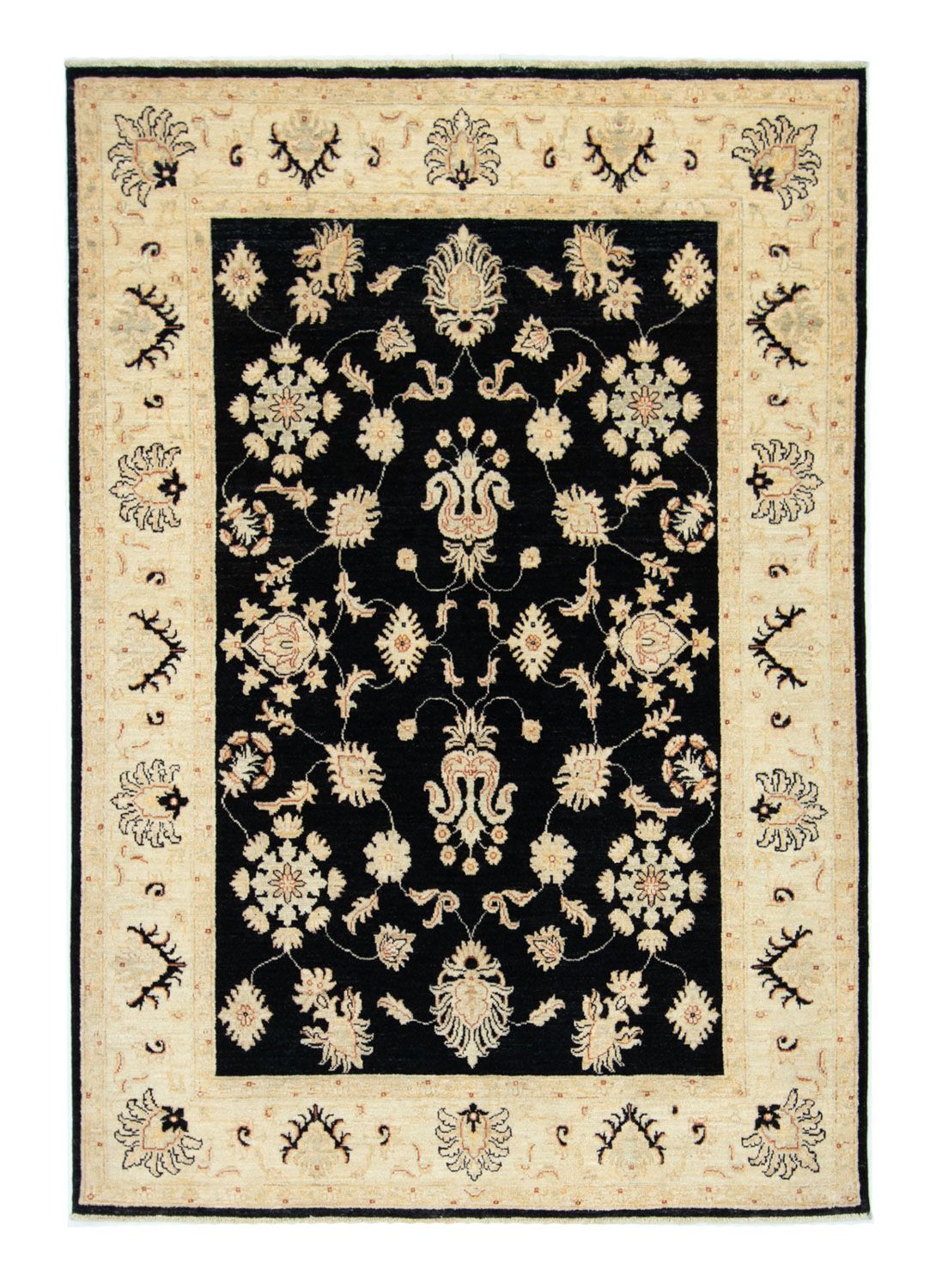
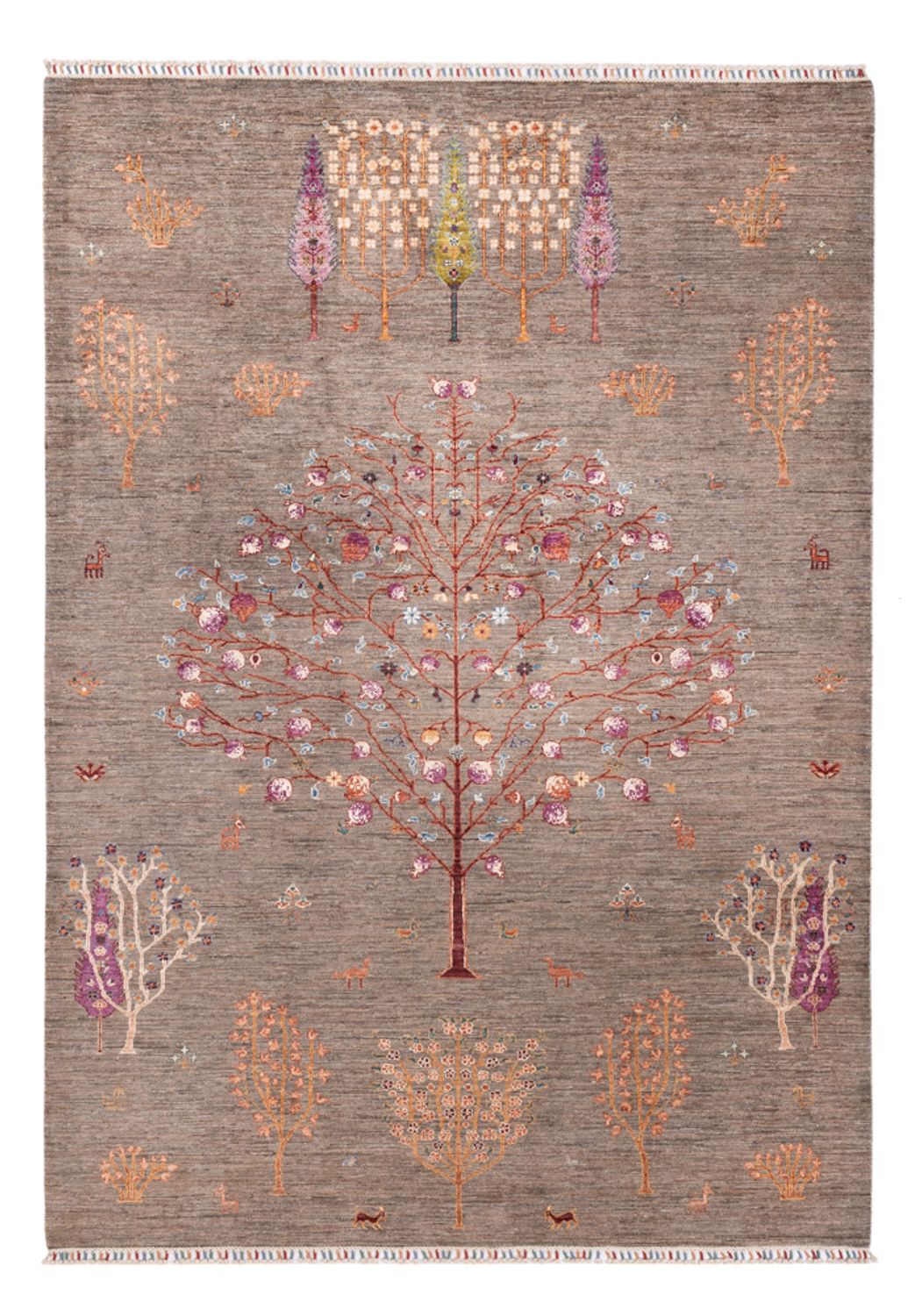
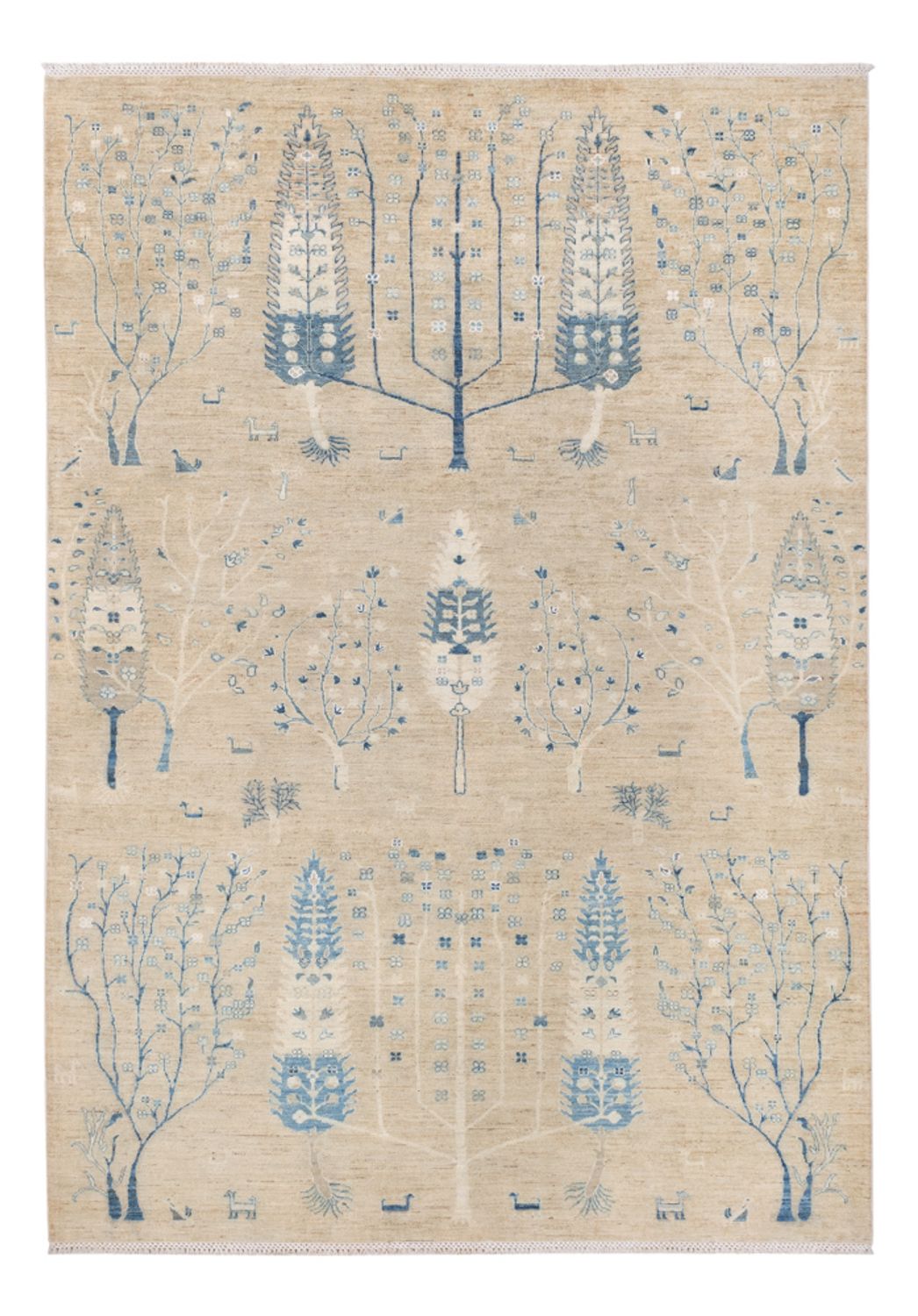
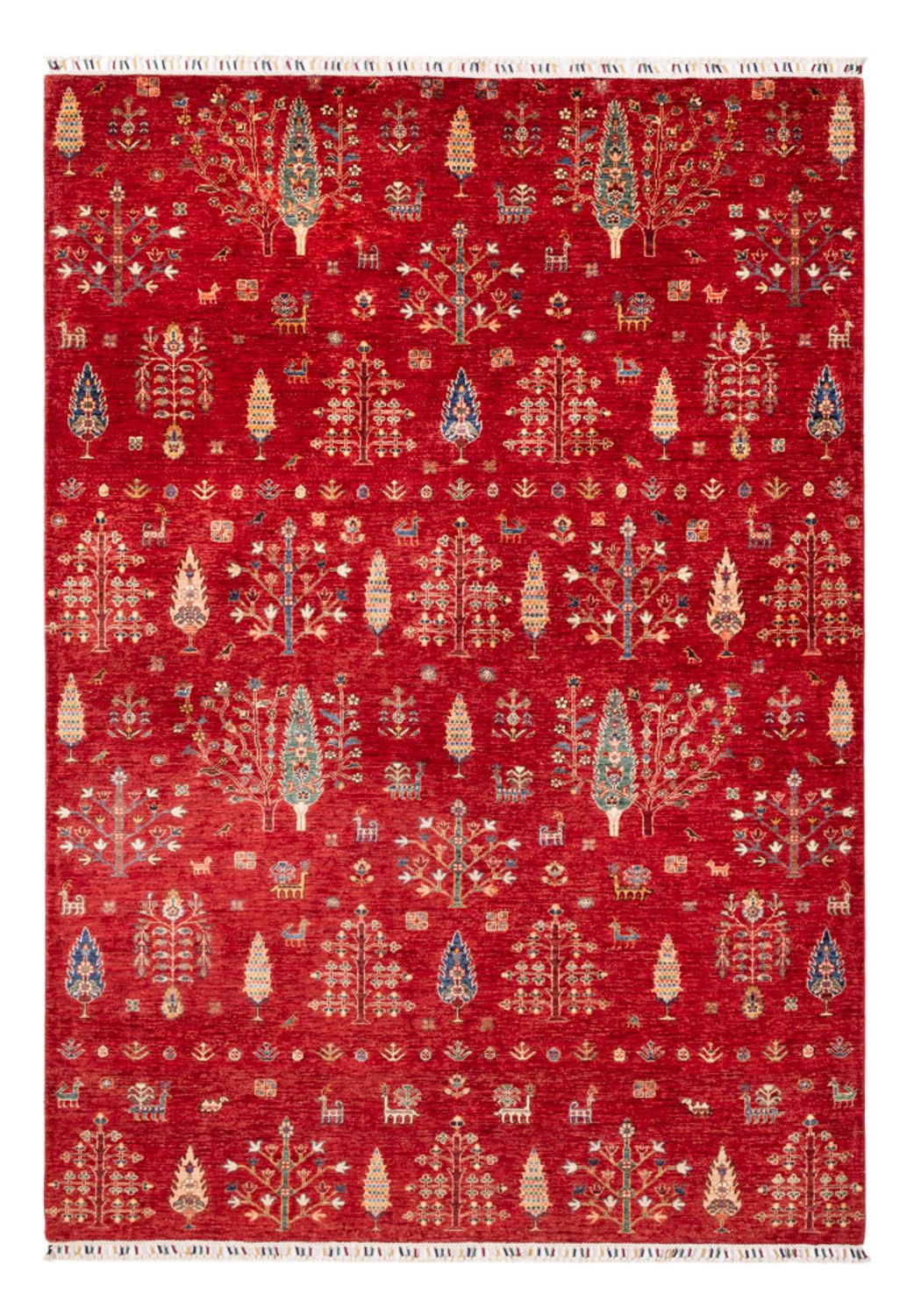
Photo: Morgenland Rugs
Ziegler rugs are hand-knotted floral rugs that have their origin in the Persian Sultanabad region around the town of Arak and go back to the eponymous Swiss trading house Ziegler & Co. They combine classical Persian patterns with a muted, western-oriented palette and belong to the most popular oriental rugs for modern living rooms. This article covers the knotted Ziegler style; a market overview of the whole offering is in the category page Ziegler rugs.
What is a Ziegler rug?
A Ziegler is a hand-knotted rug with a large-area floral pattern, muted pastel and earth tones, and a wool pile on a cotton warp. The name goes back not to a city but to the trading firm Ziegler & Co., which composed the style at the end of the 19th century in the Persian Sultanabad region for the European and American market. The Ziegler is knotted with the asymmetric Persian knot. Today Ziegler rugs are produced after the historical models above all in Pakistan and Afghanistan, but the original home of the style remains Persia.
Origin
The history of the Ziegler style begins in Sultanabad, today's Arak, about 200 kilometres south-west of Tehran. The city was an important knotting centre in the 19th century, whose villages produced the inherited Mahal rug. In 1883 the Manchester-based Swiss trading house Ziegler & Co., founded by the Ziegler family from Aargau, established itself here. The company had already maintained a branch in north-west Persian Tabriz and shifted the focus of its rug production to Sultanabad.
Ziegler & Co. took a path new for the time: instead of buying up finished goods, the firm commissioned its own designs, had templates from European designers adapted to the Persian taste of the buyers, and tuned the colours deliberately to restrained western living rooms. On several thousand looms of the region there arose large-area floral rugs with a soft palette that differed from the bolder classical Persians. These original Ziegler rugs were produced between roughly 1880 and 1920 and today count as sought-after collector pieces. After the First World War and the end of the firm's activity, the historical production declined; the style lived on as a model for later knotted work.
Patterns and colours
Ziegler rugs follow classical Persian models but render them on a larger scale and more calmly. Typical is an all-over floral repeat of palmettes, curving vines, and stylised blossom sprays, often without a dominant central medallion, so the pattern runs evenly across the surface. The drawing is more open and less densely filled than on fine urban rugs.
The trademark is the palette: soft earth and pastel tones in beige, cream, muted rust, soft terracotta, muted blue, and sage green. This restrained, slightly lightened colour effect arises through the use of plant dyes and often through a subsequent washing process that gives the tones a matte, matured character. The multi-tiered borders take up floral motifs and are tuned in colour to harmonise with the main field.
Material and knotting technique
Ziegler rugs are knotted from high-quality sheep's wool, often from hand-spun yarn with a light sheen. The warp is cotton; the weft is wool or cotton. The pile is sheared medium-long, which gives the rug its soft, velvety surface.
Knotting uses the asymmetric Persian knot, also called the Senneh knot, which allows the flowing floral drawing of the Sultanabad model. The original dyeing used natural dyes, which produce the typical patina and colour depth. On modern Ziegler rugs the natural dyeing is often supplemented by a special washing process that creates a matured, muted appearance and reinforces the characteristic matte presence. How a rug arises in general is described in the overview of production.
Knot density and quality
The knot density of a Ziegler usually lies between 80,000 and 250,000 knots per square metre. The style therefore covers a broad range from decorative standard quality to more finely knotted pieces. The generous floral drawing manages well with a medium density because it relies on calm planar effect rather than on maximum detail resolution. A factual placement of what the knot density says about quality and price is in its own article.
For the quality of a Ziegler, what matters alongside density is above all the wool and the dye. Hand-spun yarn with a light sheen, a balanced plant dyeing, and an even, cleanly sheared pile point to a high-quality piece.
Mahal, Ziegler, and Sultanabad compared
| Provenance / style | Relation to the Sultanabad region | Typical features |
|---|---|---|
| Sultanabad (Arak) | region of origin | knotting centre, Persian knot, classical floral patterns |
| Mahal | inherited village quality of the region | loose floral all-over, muted colours, medium density |
| Ziegler | style composed by Ziegler & Co. | especially soft pastel palette, large-area, often washed |
| Ziegler Modern | today's Pakistan / Afghanistan production | pastel colours, restrained patterns, often large format |
| Ziegler Kazak | Ziegler quality in the Kazak design | bold colours, geometric medallions |
| Gabbeh (comparison) | independent tribal rug | high-piled single-colour design, see comparison below |
For those weighing whether a planar floral rug or a single-colour tribal piece fits better, the comparison Gabbeh or Ziegler offers a direct side-by-side of the two styles.
What is a Ziegler rug worth?
The value of a Ziegler depends on age, origin, condition, size, knot density, wool quality, and dye. Antique original pieces from the era of the firm Ziegler & Co. fetch high prices at auction because they show the style in its historical form and with genuine patina. Modern Ziegler rugs knotted after the models in Pakistan and Afghanistan are decorative working rugs and sit in the middle range, depending on size and fineness.
Since Ziegler and Mahal come from the same region, a direct comparison helps in assessment. Orientation is given in the rug value overview, the article Identifying valuable Persian rugs, and the buying guide. A market overview of current offerings is in the category Ziegler rugs.
How can you tell a genuine Ziegler rug?
Typical signs of a genuine Ziegler include:
- Large-area floral all-over with an open drawing and often without a dominant medallion.
- Muted pastel and earth tones in beige, rust, sage, and muted blue.
- Matte, matured colour effect, often reinforced by a subsequent washing process.
- Asymmetric Persian knot: the back shows the flowing pattern clearly.
- Wool pile on a cotton warp with a soft, velvety surface and a medium-long pile.
- Fringes as part of the warp, not sewn on afterwards.
Antique originals from the era of Ziegler & Co. additionally show natural signs of age, uneven wear, and a patina that has grown over decades; with valuable pieces, provenance documentation is important. The detailed check is described in Is my rug genuine?; a general introduction is in the guide to identifying rugs.
Care
Ziegler rugs are vacuumed regularly in the direction of the pile. Blot spills at once with clear water, do not rub. Professional cleaning is recommended every three to five years, with the natural materials handled gently. Because of the often bright palette, long, direct sunlight should be avoided, since it lightens the muted tones further. Detailed guidance is in the care overview.
Frequently asked questions
Are Ziegler rugs Persian or Afghan?
The Ziegler style arose in the Persian Sultanabad region around Arak and goes back to the Swiss trading house Ziegler & Co. The original home is therefore Persia. Today Ziegler rugs are knotted after the historical models above all in Pakistan and Afghanistan.
What is the difference between Mahal and Ziegler?
Both come from the Sultanabad region and share the Persian knot as well as the large-area floral pattern. The Mahal is the inherited village quality of the region, while the Ziegler is the style deliberately composed by Ziegler & Co. with a particularly soft pastel palette. The Mahal counts as the forerunner of the Ziegler.
Who was Ziegler & Co.?
Ziegler & Co. was a Swiss trading house based in Manchester that settled in Sultanabad from 1883. It commissioned its own designs, tuned patterns and colours to western taste, and had rugs knotted on several thousand looms of the region for export.
Are all Ziegler rugs washed or treated?
No. There are untreated variants with natural colour intensity and specially washed examples. The treatment is usually recognised by the matte sheen and the evenly muted colour effect.
Which knot do Ziegler rugs use?
Ziegler rugs are knotted with the asymmetric Persian knot, also called the Senneh knot. This knot type allows the flowing floral drawing of the Sultanabad model.
How do I recognise a genuine antique Ziegler?
Antique Zieglers show natural signs of age, uneven wear, and a patina that has grown over decades. The back often shows characteristic discolouration; fringes may have been renewed in places. With valuable pieces, provenance documentation is particularly important.
How do you care for a Ziegler rug correctly?
Vacuum regularly in the direction of the pile and have the rug professionally cleaned every three to five years. Blot spills at once with clear water, do not rub. Avoid long, direct sunlight, since it lightens the muted tones further.
Quality grades
Ziegler rugs are made in various quality grades. Each grade differs in knot density, material, and price.
Ziegler Modern
Shop →A contemporary take on the classic Ziegler style with pastel colors and pared-back patterns.
- Pile material
- Wool on cotton
- Knot density
- 80,000 – 200,000 knots/m²
- Features
- Modern pastel colors, pared-back patterns, often oversized
Ziegler Kazak
Shop →Bold colors and geometric medallions in the Kazak idiom, knotted to Ziegler quality standards.
- Pile material
- Wool on cotton
- Knot density
- 100,000 – 200,000 knots/m²
- Features
- Geometric medallions, bold reds, dense pile
Ziegler Ariana
Shop →Softly post-washed Zieglers in the Afghan tradition with a modern color sense.
- Pile material
- Wool on wool
- Knot density
- 80,000 – 180,000 knots/m²
- Features
- Modern color palette, Afghan tradition, often washed
Ziegler Bakhtiari
Shop →The garden-panel pattern of the Bakhtiari nomads in the Ziegler-typical color palette and knotting quality.
- Pile material
- Wool on cotton
- Knot density
- 100,000 – 220,000 knots/m²
- Features
- Garden-panel patterns, warm earth tones, robust quality
Ziegler Shal
Shop →A fine shawl pattern (boteh / paisley) in the muted color scheme typical of Ziegler.
- Pile material
- Wool on cotton
- Knot density
- 100,000 – 200,000 knots/m²
- Features
- Boteh / paisley patterns, muted colors, elegant impression


