Senneh Kelim: finest Persian kelim from Sanandaj
Senneh kilims from Iranian Kurdistan are among the finest flat-woven rugs, exceptionally thin and finely worked.
- Region
- Persia / Iran
- Category
- Kilim
- Manufacturing
- Hand-woven
- Knot density
- Flat weave (extremely dense)
Profile
- Manufacturing
- Hand-woven
- Origin
- Iran — Sanandaj, Kurdistan Province
- Pile material
- Wool on cotton
- Knot density
- Flat weave (extremely dense)
- Features
- Very fine flat weave, classic Herati or boteh fields, restrained palette
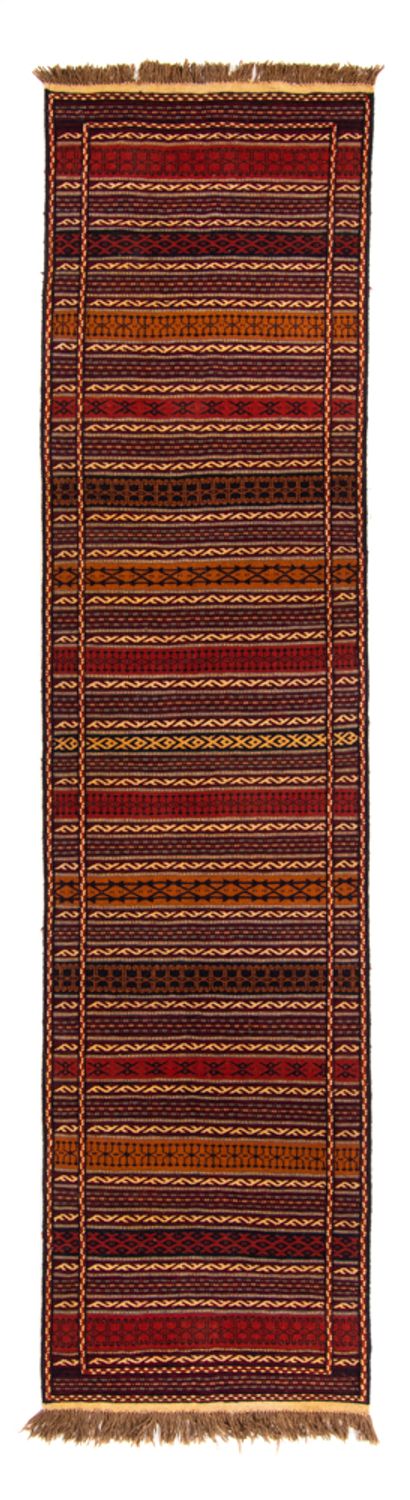
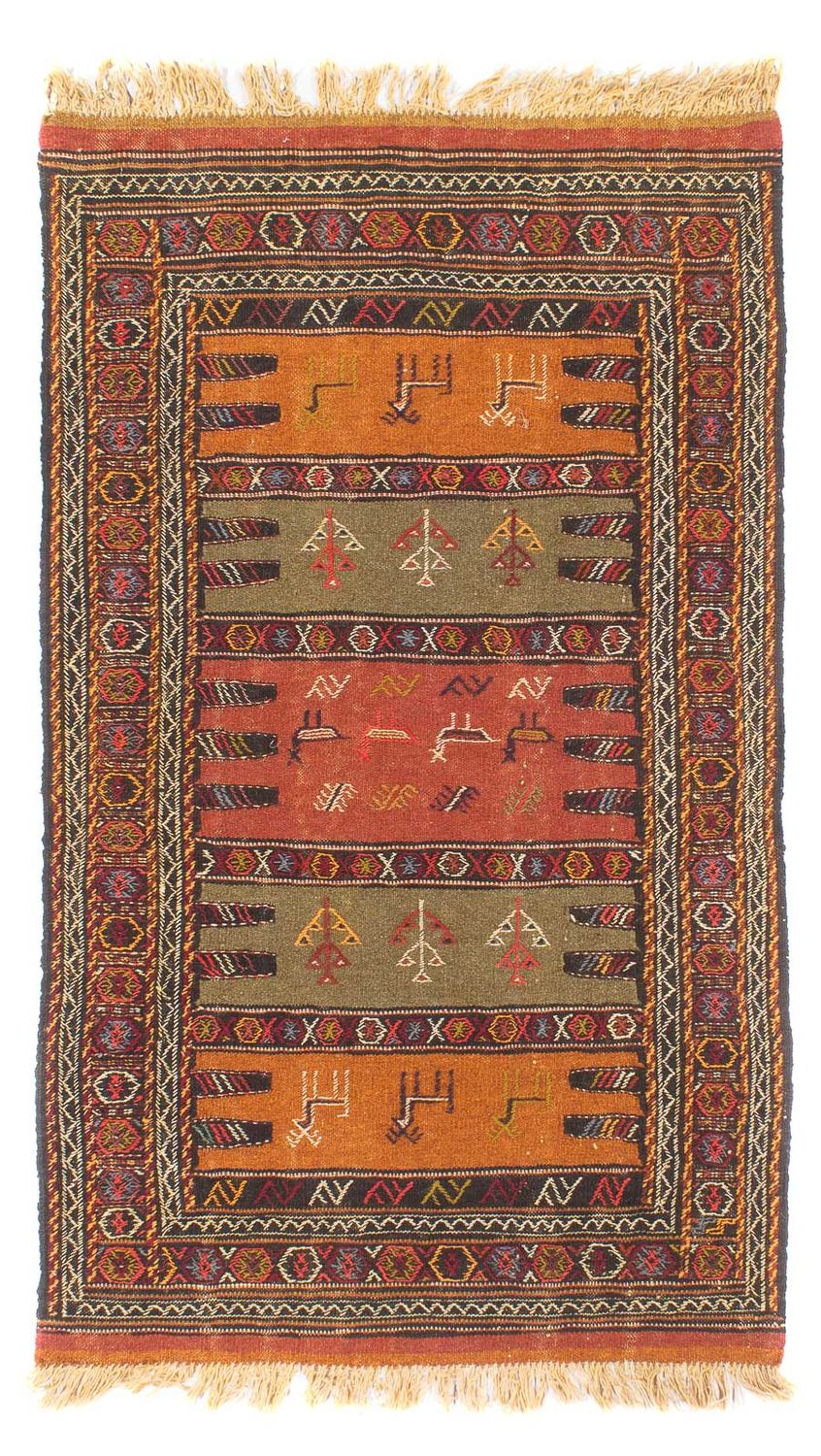
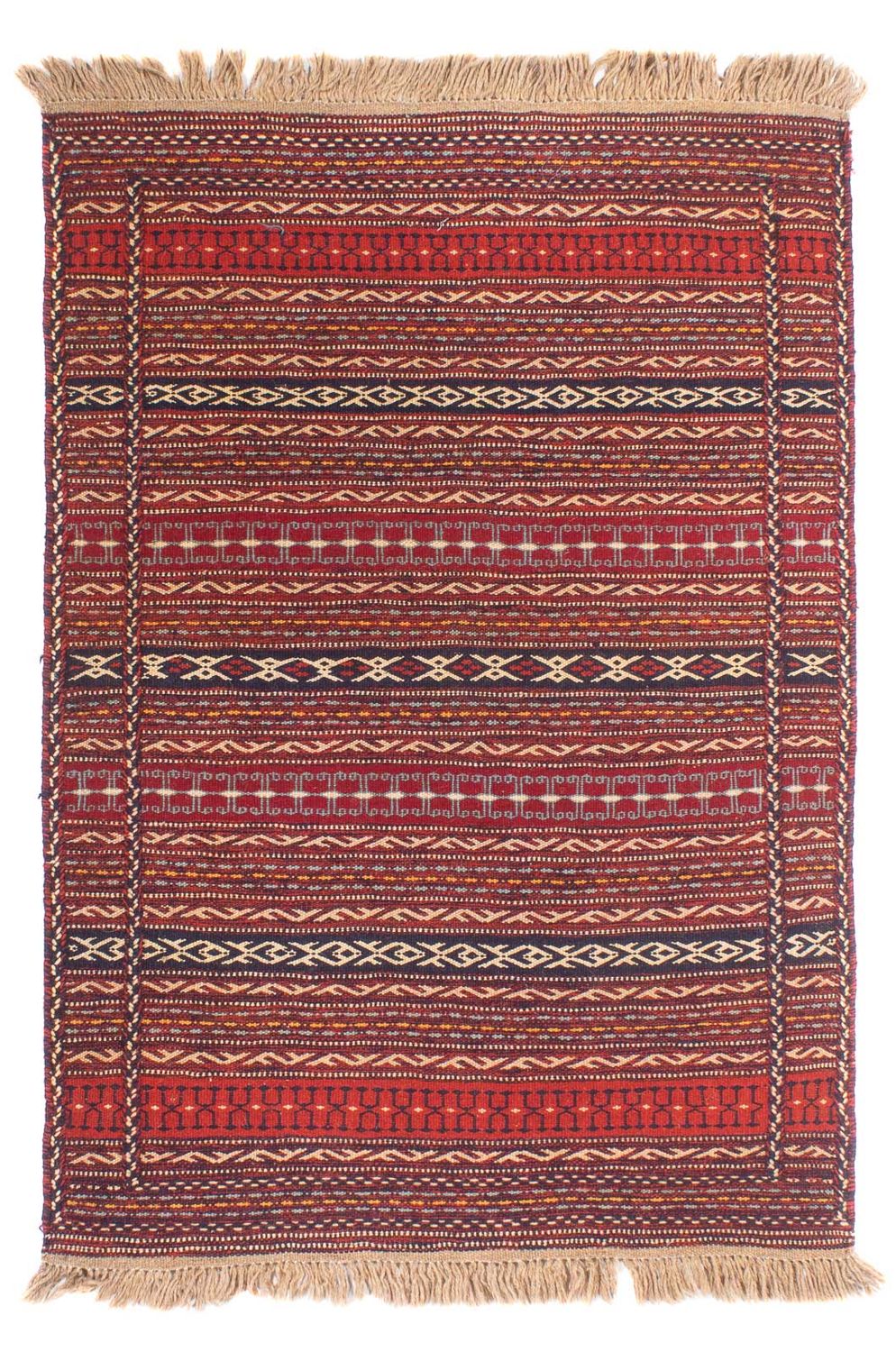
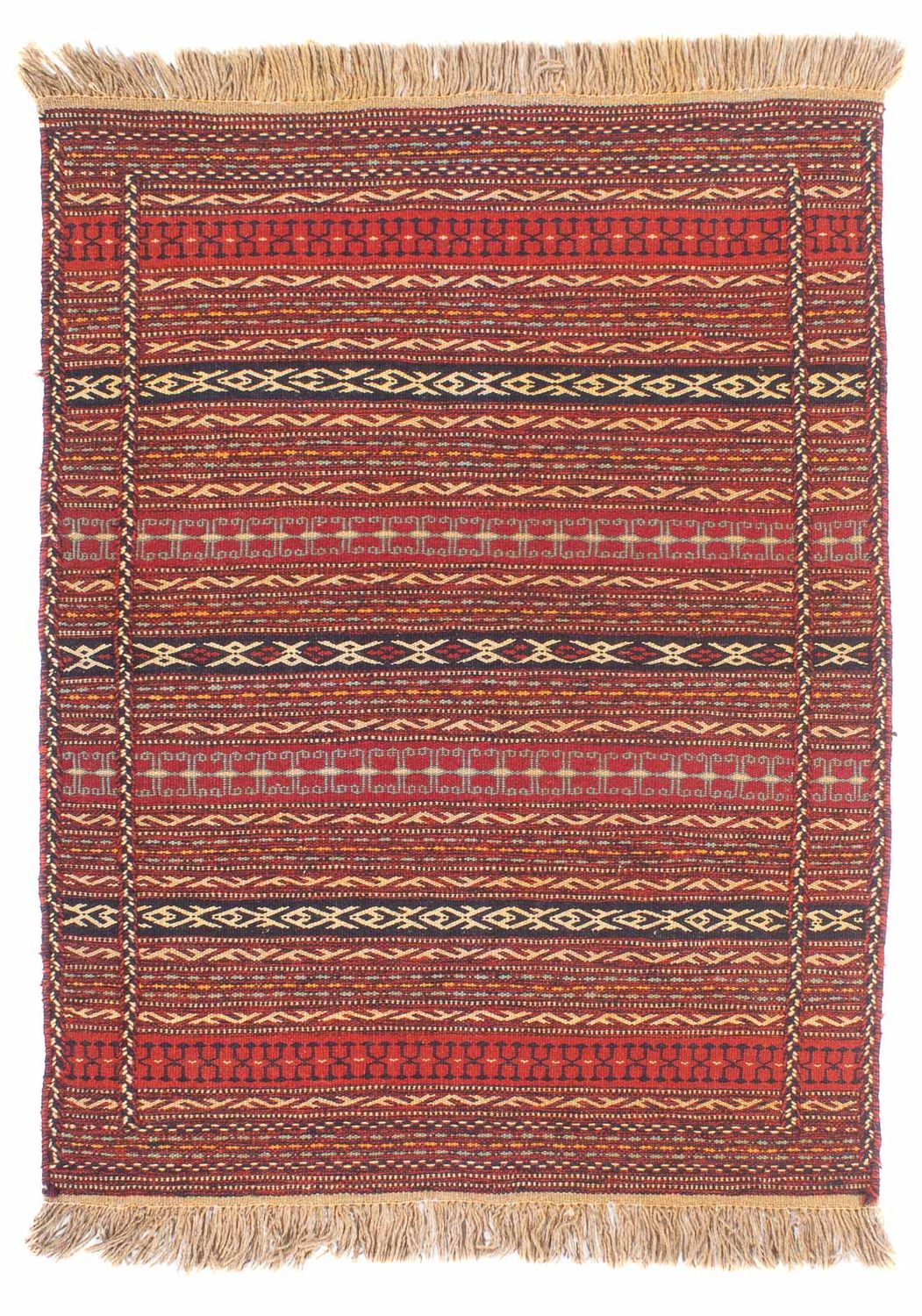
Photo: Morgenland Rugs
A Senneh kelim is a flat-woven, pile-free rug from Sanandaj in Kurdish western Iran and is considered the finest Persian kelim. Unlike the strong tribal kelims, it relies on an extremely dense, precise weave and small-scale patterns that come surprisingly close to knotted rugs, without a single knot being tied. This combination of delicate drawing and pure flatweave technique makes the Senneh kelim a sought-after collector piece.
What is a Senneh kelim?
A Senneh kelim is a woven rug without knots and without pile. Its pattern is formed solely by colored weft threads, which are passed densely over and under very finely tensioned warp threads. There is no knotted pole, the surface stays flat and is patterned almost identically on both sides. The Senneh kelim thus belongs to the family of kelim flatweaves, not to the knotted rugs, even though its fineness often suggests a knotted rug.
The distinction from the knotted Senneh rug of the same name is important: both traditions developed in parallel in Sanandaj, but the Senneh rug has a wool pile and knots, while the Senneh kelim is a pure flatweave. The term Senneh knot, which denotes an asymmetric knot type, has nothing to do with the kelim, because a kelim is not knotted.
Origin
The Senneh kelim comes from Sanandaj, historically Senneh, the capital of the Iranian province of Kurdistan in the west of Persia. The Kurdish weavers of the town were considered masters of particularly fine textiles as early as the 18th and 19th centuries. Sanandaj developed into one of the most important Persian weaving centers and produced two famous outputs: the knotted Senneh rugs and the fine Senneh kelims.
The heyday lay in the late 19th and early 20th centuries; the particularly prized collector pieces of today come from this period. The fine weave required specialized skill that only a few families mastered. Compared with the nomadic Fars kelims, the Senneh kelim is an urban, highly cultivated fabric that stands closer to the courtly Persian pattern tradition.
Typical patterns and colors
The Senneh kelim is known for its small-scale, finely drawn patterns. At the center stands often an elongated diamond medallion, surrounded by densely filled fields. Very common are the continuous boteh, which here runs in delicate rows across the field, and the Herati pattern with diamond frame, rosette, and stylized fish. The border usually consists of a narrow main border with several accompanying minor stripes.
The palette is refined and balanced. Rust red and madder red, deep indigo and mid-blue, ivory, beige, and soft green form a harmonious, rather restrained picture that emphasizes the fineness of the drawing. Dyeing was traditionally done with plant-based colors from madder, indigo, and walnut shell, the recognition of which is covered in the article recognize natural dyes.
Material and weaving technique
For the Senneh kelim the warp is usually spun from fine cotton, and the pattern-forming weft consists of high-quality, finely spun virgin wool. There is no pile and no knots; the piece is made in pure tapestry technique. The weft thread runs in plain weave over and under the warp and fully covers it. The process is explained on the page weaving.
Characteristic is the exceptionally dense, even slit-weave. The weavers beat in the weft so finely and in such a controlled manner that the vertical slits at the color boundaries stay tiny and the pattern draws very precisely. This care requires great skill and sets the Senneh kelim apart from coarser fabrics. Like every kelim, the Senneh is light, foldable, and fully reversible, and the fringes are the extended warp threads.
Weave density and quality
The quality of a Senneh kelim is measured by weft density and the fineness of the yarns, not by a knot count. A good Senneh kelim reaches a very high number of weft threads per centimeter and thus an almost rug-like, closed structure that makes small-scale boteh and Herati patterns possible in the first place. The denser and more even the weft, the clearer and sharper the drawing.
Alongside this, wool quality, fineness of spinning, and purity of the natural dyes decide rank. High-quality pieces show silkily lustrous, finely spun wool, rich plant-based colors with lively abrash, and absolutely clean, straight edges. Because the kelim lacks the pile that conceals irregularities, the precision of the Senneh weavers stands out particularly clearly here, which founds the reputation of this provenance.
Persian and Afghan kelims at a glance
| Type | Origin | Weave density | Typical features |
|---|---|---|---|
| Senneh Kelim | Sanandaj, western Iran (Kurdish) | very fine, extremely dense | boteh and Herati patterns, precise slit-weave |
| Kelim Fars | southern Iran, Qashqai and Lori | medium-fine to coarse | strong tribal motifs, warm earth tones |
| Afghan Kelim | northern Afghanistan | medium to coarse | stripes and diamonds, deep reds |
| Maimene Kelim | Faryab, northern Afghanistan | medium to coarse | Turkmen guls, lively red and blue tones |
| Silk Kelim | Hereke, Kashan, Kashmir | finest structure | silk weft, high sheen, decorative pieces |
What is a Senneh kelim worth?
The Senneh kelim belongs to the most valuable Persian flatweaves. Its price depends on age, fineness of the weave, purity of the natural dyes, condition, and design quality. Fine pieces from the late 19th and early 20th centuries are sought by collectors and sit markedly above ordinary kelim market ware such as coarse Fars or Afghan kelims. Since the traditional weaving art is mastered by only a few masters today, high-quality new ware is rare. At the top of the kelim family stand only pure silk kelims.
Why such handwork carries its price is explained in why genuine rugs are expensive; a placement of valuable Persian pieces is offered by identify valuable Persian rugs. Before buying, the buying guide helps.
How do you recognize a genuine Senneh kelim?
Typical signs of a genuine Senneh kelim include:
- Very fine, dense weave: tiny slits and a closed fabric draw small-scale patterns precisely.
- Boteh and Herati patterns: finely arrayed boteh or the Herati field with rosette and fish are classic Senneh motifs.
- Same pattern on both sides: front and back look almost identical, the piece is fully reversible.
- No pile: the surface is flat and smooth, there is no pole and no rows of knots.
- Fine wool on a cotton warp with a refined palette and clean, straight edges.
Anyone placing it should not confuse the Senneh kelim with the knotted Senneh rug, which has a pile. The full authenticity check is in Is my rug genuine? in the recognize oriental rug area.
Care
The Senneh kelim is a fine, thin fabric and should be handled gently to preserve its value. In daily life, careful vacuuming with reduced suction and the brush roll switched off is enough; smaller pieces can be gently shaken out. Blot stains immediately with a slightly damp cloth and a mild agent, never rub, since the fine wool is sensitive. Heavier soiling and older collector pieces belong in cleaning specialized in oriental rugs. Turn the piece occasionally and protect it from long direct sunlight. Full routines are in the care overview.
Frequently asked questions
What is the difference between a Senneh kelim and a knotted Senneh rug?
Both come from Sanandaj but are technically different. The Senneh rug is knotted, has a wool pile, and is usable on one side. The Senneh kelim is a pure flatweave without knots and without pile, thin, light, and reversible.
Why is the Senneh kelim considered the finest Persian kelim?
Because the Kurdish weavers of Sanandaj beat in the weft exceptionally densely and evenly. This keeps the slits tiny and allows small-scale boteh and Herati patterns to be drawn that coarser kelims do not reach.
Does a Senneh kelim have knots?
No. A Senneh kelim is a flatweave and has neither knots nor pile. Its pattern is formed solely by woven weft threads. The term Senneh knot refers to knotted rugs and not to this kelim.
Why are genuine Senneh kelims so rare and expensive?
The fine weave requires highly specialized skill that only a few masters command today. Production is time-consuming, good pieces are rare, and well-preserved examples from the late 19th and early 20th centuries are strongly sought by collectors.
Is a Senneh kelim suitable for daily use?
Valuable and older Senneh kelims are mostly treated as collector pieces and used gently. Simpler newer pieces can take moderate use but should be handled more carefully than coarse wool kelims because of the fine wool.
How do I care for a Senneh kelim properly?
Vacuum carefully with reduced suction and the brush roll switched off, or shake gently. Blot stains immediately with a slightly damp cloth and a mild agent, never rub. Leave heavier soiling and older pieces to specialized cleaning and protect the piece from long sun exposure.
Impressions of the origin
Places, landscapes and landmarks around the home of Senneh Kilim rugs. Click any image for a larger view.
Related styles
Senneh
Senneh rugs from Sanandaj in Iranian Kurdistan are some of the finest tribal rugs, known for their thin, almost flat pile.
Fars Kilim
Fars kilims are flat-woven by Qashqai nomads in southern Iran and show vivid tribal motifs in a graphic style.
Afghan Kilim
Afghan kilims are flat-woven by Turkmen and Uzbek weavers in northern Afghanistan and stand out with their geometric stripes.


