Gabbeh rugs: high-pile nomadic style from the Zagros
Gabbeh rugs are coarsely knotted by Qashqai nomads in the Zagros and feature long pile and abstract symbolism.
- Region
- Persia / Iran
- Category
- Gabbeh
- Manufacturing
- Hand-knotted
- Knot density
- 40,000 – 200,000 knots/m²
Profile
- Manufacturing
- Hand-knotted
- Origin
- Iran — Zagros mountains, Fars Province
- Pile material
- Wool on wool
- Knot density
- 40,000 – 200,000 knots/m²
- Features
- Long pile, abstract motifs, lively colors
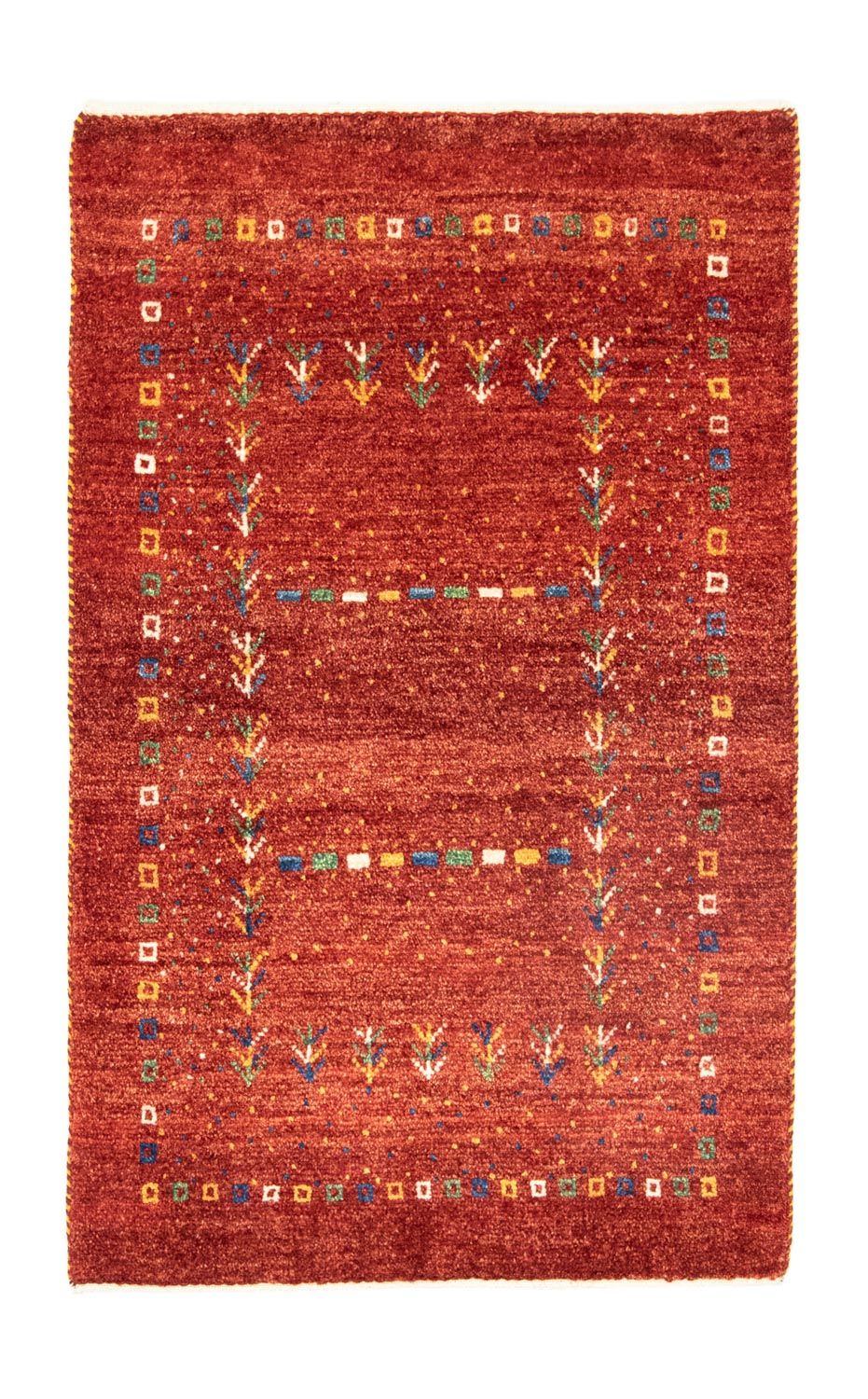
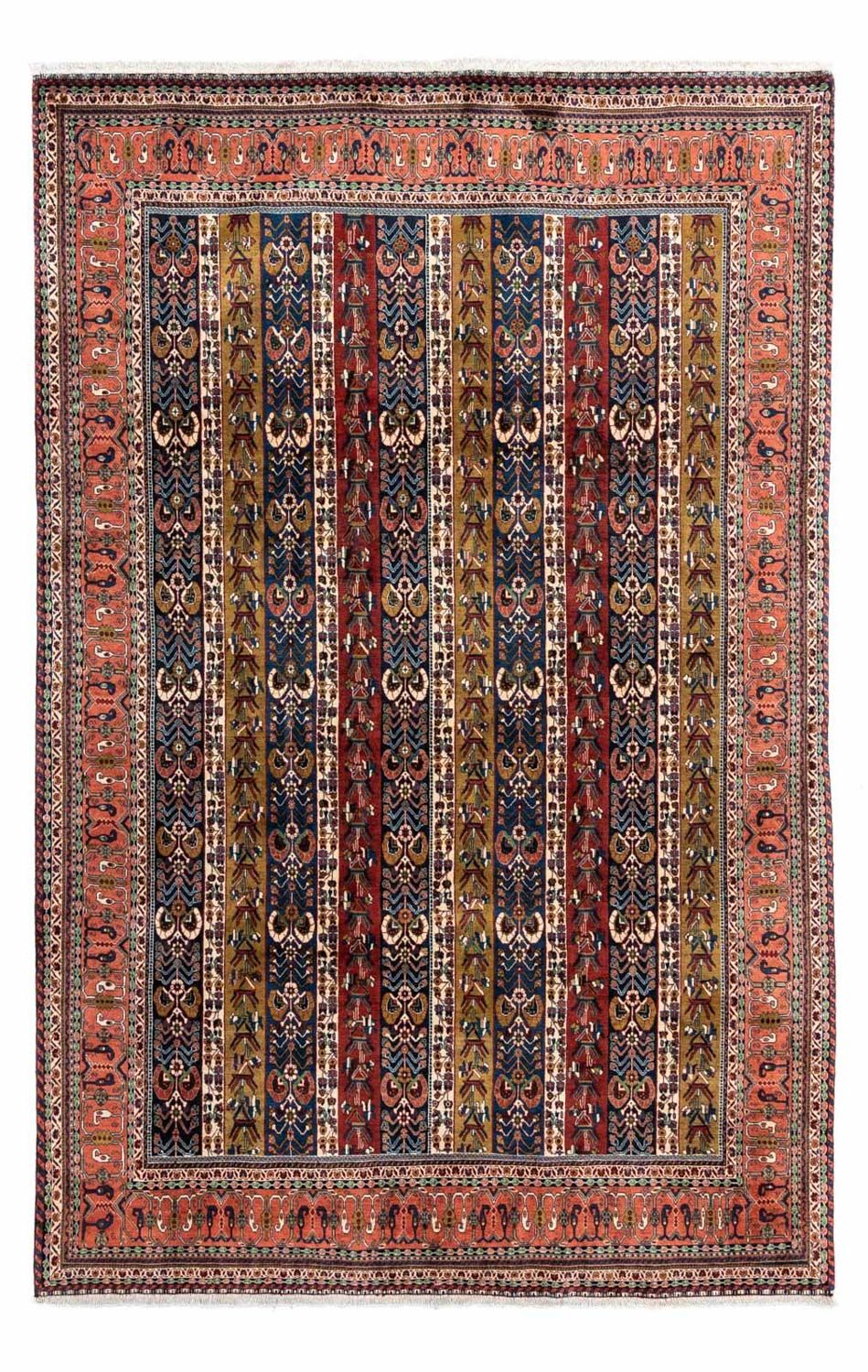
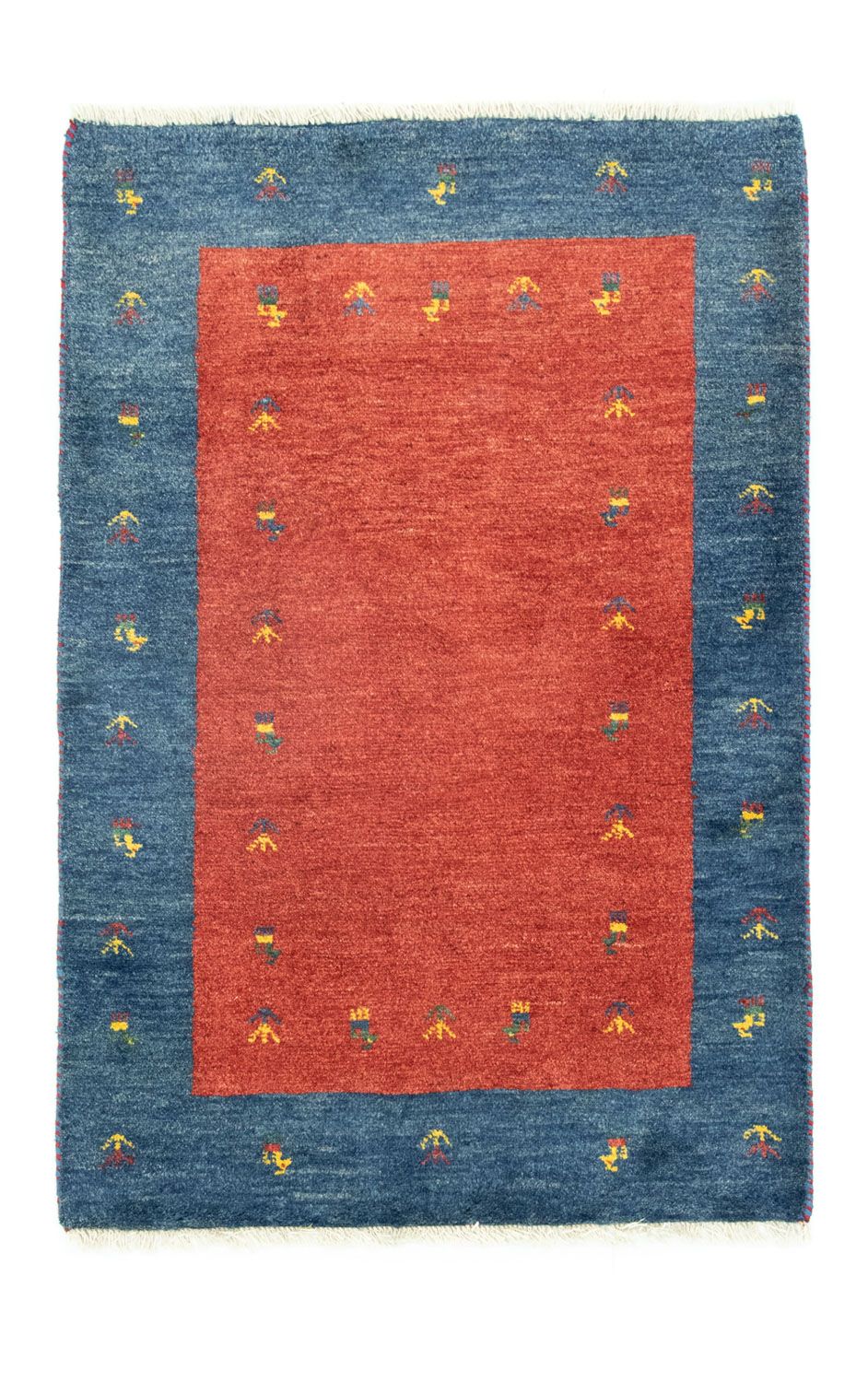
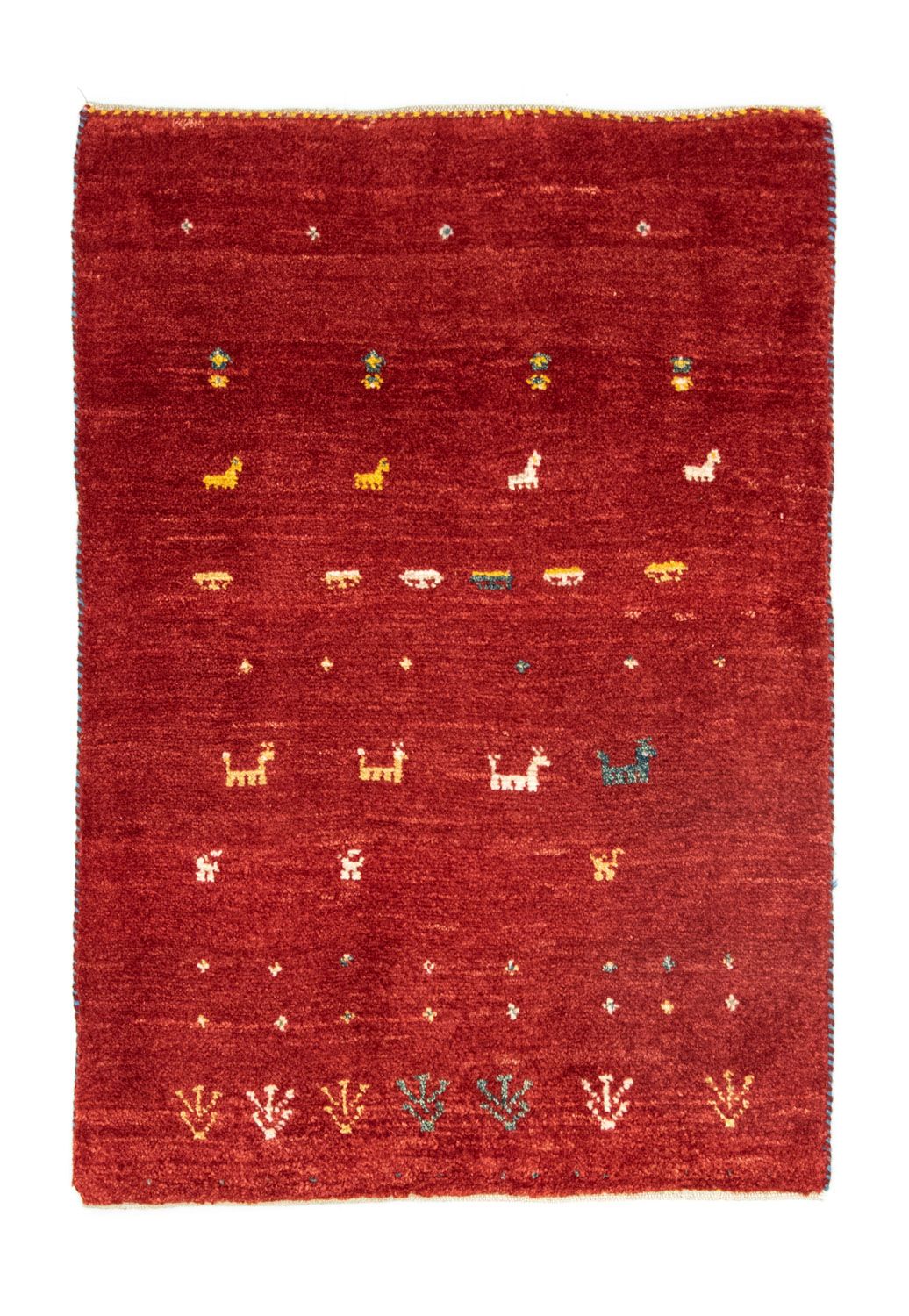
Photo: Morgenland Rugs
Gabbeh rugs are high-pile, coarsely knotted nomadic rugs from the Zagros mountains in the south-west of Persia. They belong among the most original products of the Persian knotting tradition: thick wool pile, reduced patterns and a colour world of plant-dyed wool. They are knotted above all by the Qashqai and Lori tribes in the province of Fars. This article treats the knotted nomadic style. An overview of all Gabbeh variants, including manufactory goods, is given in the Gabbeh rugs category.
What is a Gabbeh rug?
A Gabbeh is a hand-knotted wool rug with a high pile, low to medium knot density and a deliberately plain, often abstract pattern. The name derives from the Persian word gabeh, which means as much as raw, unhewn or unfinished, and aptly describes the original character of these pieces. Against the finely drawn Persian rugs of the urban manufactories, the Gabbeh stands for the exact opposite: few motifs, a lot of surface, thick hand-spun wool.
Unlike a flat urban rug, a Gabbeh lies soft and voluminous. The weavers work without a drawn cartoon, which is why each piece is one of a kind. Characteristic are the natural colour shifts, the so-called abrash, which arise from differently dyed portions of wool.
Origin
The Gabbeh comes from the mountain regions of the province of Fars and the adjacent slopes of the Zagros mountains in the south-west of Iran. The tradition is carried by the Turkic-speaking Qashqai and the Lori tribes, who for centuries led a semi-nomadic life between the winter pastures in the lowland and the summer pastures in the high mountains. On these migrations a rug arose that was at first no trade good but a sleeping and seating mat in the tent.
For a long time Gabbehs counted in the West as coarse utility goods and were hardly noticed by collectors. That changed from the 1980s onwards, when targeted support programmes in Iran revived the old plant dyeings and the reduced, almost modern character of the pieces found international attention. Since then Gabbehs have been knotted both by nomads and in village workshops and manufactories. Genuine nomad Gabbehs have become rarer because many tribes have become sedentary.
Patterns and colours
The Gabbeh pattern lives from reduction. Instead of dense floral fields it shows large, calm colour areas, isolated geometric forms, stylised animals such as lions, goats or birds, and occasionally tree-of-life or landscape elements. Some pieces dispense with a central motif altogether and rely on the colour field alone.
The palette rests on warm earth tones: rust red, terracotta, beige, camel and saturated brown, with accents in indigo blue, green, yellow or ivory. Because the wool is hand-dyed and hand-spun, the tones vary within a single area. This lively play of lighter and darker bands is not a defect but the most important aesthetic feature of a genuine Gabbeh.
Material and knotting technique
Traditional Gabbehs consist entirely of virgin wool. Both warp and weft are wool, which gives the rug its high flexibility and its warm, soft lie. The wool comes from the robust mountain sheep of the tribes and is often still hand-spun, which gives the yarn an uneven, lively structure. In manufactory qualities a cotton warp is sometimes used.
Knotting is done with the asymmetric Persian knot, also called the Senneh knot. Decisive for the Gabbeh character is the high pile: after knotting the yarn stands markedly longer than in a classical Persian rug, often between one and two centimetres. Anyone wanting to know how a rug is generally made on the loom will find this in the production overview. Which materials are processed in oriental rugs is also explained there.
Knot density and quality
The knot density of a Gabbeh is intentionally lower than in fine urban rugs and lies, depending on the make, roughly between 40,000 and 200,000 knots per square metre. Simple nomad pieces sit at the lower end, carefully worked Loribaft-related qualities reach to the upper end. A low density here is not a defect but part of the concept: the coarse knot and the high pile belong to the Gabbeh as the fine weave belongs to the Isfahan.
How knot density bears on quality and price, and why it is to be read differently in nomadic rugs than in manufactory goods, is treated in its own article. For the Gabbeh, wool quality, purity of the colours and the presence of the pattern count moreover for more than the sheer knot count.
Gabbeh, Loribaft and related nomadic rugs in comparison
| Style | Tribe / origin | Pile and density | Character |
|---|---|---|---|
| Gabbeh | Qashqai and Lori, Fars and Zagros | high pile, approx. 40,000 – 200,000 / m² | coarse, reduced, abstract motifs |
| Loribaft | Lori tribes, Zagros | medium-high pile, more finely knotted | finer Gabbeh variant, clearer motifs |
| Kashkuli | Qashqai subgroup, Fars | flatter, very fine | finest nomadic knotting, diamond medallions |
| Yalameh | Qashqai-related tribe, Fars | medium | rows of diamond medallions, luminous colours |
| Qashqai | Qashqai confederation, Fars | medium | medallions, animal motifs, lively colours |
| Shiraz | Fars tribes, traded through Shiraz | medium to long | collective term for Fars nomadic goods |
What is a Gabbeh rug worth?
The value of a Gabbeh depends on age, origin, wool quality, dyeing, size and condition. Modern Gabbehs from workshop production are affordable and belong to the more reasonably priced hand-knotted wool rugs. Old, purely plant-dyed nomad Gabbehs with expressive abrash and rare motifs lie significantly higher and are sought after by collectors.
Value-forming are hand-spun wool, natural dyes, a clear and balanced pattern, and an even, firm pile. Anyone wanting to place the market value will find orientation in the overview of rug value and in the general buying guide.
How do you recognise a genuine Gabbeh rug?
An authentic, hand-knotted Gabbeh can be read off from several features:
- Hand-knotted back: the pattern mirrors on the underside; individual knots are recognisable and slightly irregular.
- High, dense wool pile: the pile stands markedly higher than on a classical Persian rug and feels full and elastic.
- Pure wool: in nomad pieces, warp, weft and pile are wool; the yarn looks hand-spun and lively.
- Abrash and colour shifts: visible variations in the colour areas speak for hand-dyeing and natural dyes.
- Fringes as part of the warp: the fringes are the extended warp threads, not sewn on afterwards.
- Reduced, free pattern: few motifs, much surface, slight asymmetries rather than machine-precise repetition.
How hand-knotting, material and origin can be checked step by step is shown in the recognising a rug guide, with identifying origin as a supplement.
Care
The thick wool pile of a Gabbeh is robust and forgives daily strain. Regular vacuuming in the pile direction removes dust; with a higher pile, without a rotating brush. Stains are lifted immediately with clear water, without rubbing. A professional cleaning every few years preserves sheen and colour. Long direct sunlight bleaches natural colours. Detailed notes are given in the care overview.
Frequently asked questions
What is the difference between Gabbeh and Loribaft?
Both come from the Zagros and share the high-pile, rustic build. The Loribaft is knotted by the Lori tribes and counts as the finer, more densely worked Gabbeh variant with somewhat clearer motifs. A classical Gabbeh is coarser, higher-pile and freer and more abstract in its drawing.
Why are the patterns of a Gabbeh so simple?
The weavers work without a drawn cartoon and translate impressions from their world into a few stylised forms. With the mobile life of the nomads, densely drawn patterns would be impractical. The reduction is thus an expression of the tradition, not a sign of lesser care.
What does a Gabbeh rug cost?
Modern Gabbehs from workshop production count among the more affordable hand-knotted wool rugs. Old plant-dyed nomad Gabbehs with pronounced abrash lie significantly higher. The price is determined by age, wool, dyeing, size and condition.
Are Gabbeh rugs suitable for heavily used rooms?
Yes. The pure wool and the dense, high pile make Gabbehs hard-wearing and insensitive to traffic marks. They are well suited to living rooms and sitting areas and lie pleasantly soft thanks to the wool weft.
How do I recognise a hand-knotted Gabbeh?
By the back with visible, slightly irregular knots, by the high wool pile, by hand-spun wool with abrash, and by fringes that are part of the warp. Machine-made imitations look too even on the back and often have a glued-on or sewn-on backing layer.
Which wool is used for a Gabbeh?
Traditionally the virgin wool of the mountain sheep of the Qashqai and Lori, often hand-spun. This wool is lanolin-rich, hard-wearing and takes plant dyes well, which yields the characteristic warm, slightly shifting colour tone.
How do I care for a Gabbeh rug?
Vacuum regularly in the pile direction, dab stains immediately with clear water and do not rub. Every few years a professional cleaning, and avoid long direct sunlight so that the natural colours are preserved.
Quality grades
Gabbeh rugs are made in various quality grades. Each grade differs in knot density, material, and price.
Gabbeh Classic
Shop →The traditional Gabbeh quality of the Qashqai and Lori nomads, coarsely knotted with a long, soft pile and free, abstract patterns.
- Pile material
- Wool on wool
- Knot density
- 40,000 – 90,000 knots/m²
- Features
- Long pile, abstract motifs, natural dyes, strong abrash
Gabbeh Loribaft
Shop →More finely knotted Gabbehs of the Lori nomads with higher knot density, softer pile, and more detailed abstract patterns.
- Pile material
- Wool on wool or cotton
- Knot density
- 90,000 – 200,000 knots/m²
- Features
- Finer than classic Gabbeh, abstract motifs, natural colors
Impressions of the origin
Places, landscapes and landmarks around the home of Gabbeh rugs. Click any image for a larger view.
Related styles
Qashqai
Qashqai rugs are knotted by the eponymous nomadic tribe in Fars Province and stand out with their distinctive medallion style.
Shiraz
Shiraz rugs are produced in the famous market town of southern Iran by Qashqai and Khamseh tribes, vibrant nomadic pieces.
Loribaft
Loribaft rugs are knotted by Lori nomads in the southern Zagros and combine the long pile of a Gabbeh with finer detail work.


