Usak rugs: star and medallion designs from western Anatolia
Ushak rugs from western Anatolia are classic Ottoman carpets known for large medallion compositions in soft tones.
- Region
- Turkey
- Category
- Turkish rugs
- Manufacturing
- Hand-knotted
- Knot density
- 60,000 – 140,000 knots/m²
Profile
- Manufacturing
- Hand-knotted
- Origin
- Turkey — Ushak, western Anatolia
- Pile material
- Wool on wool or cotton
- Knot density
- 60,000 – 140,000 knots/m²
- Features
- Large medallion compositions, soft tones, large formats
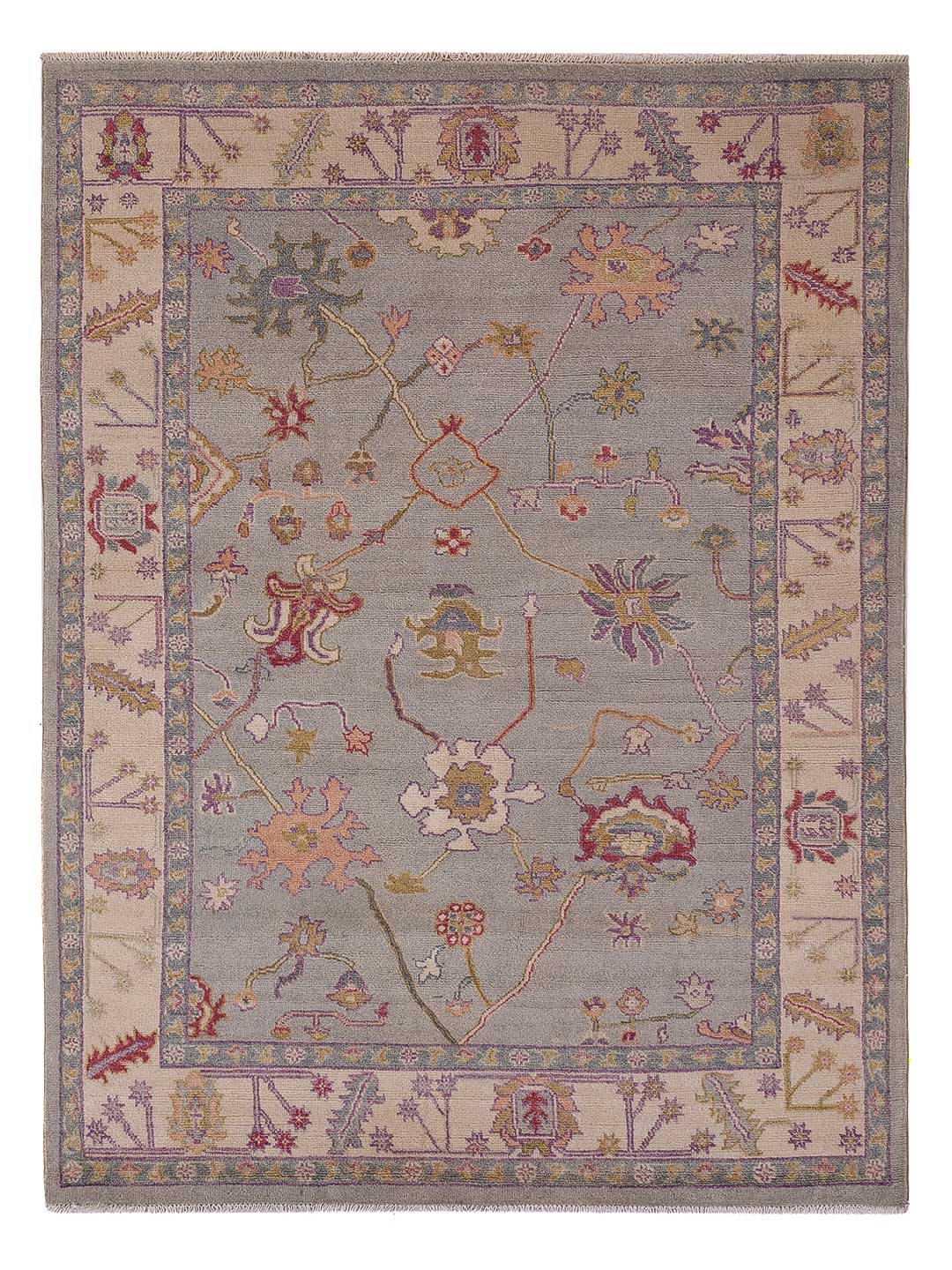
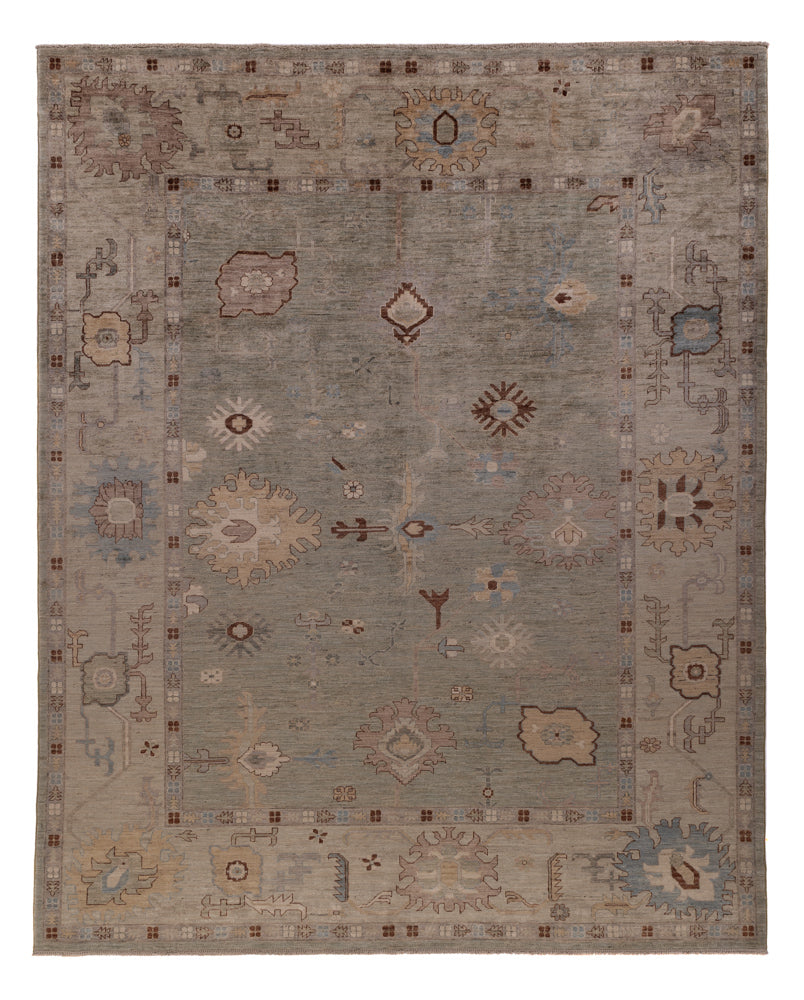
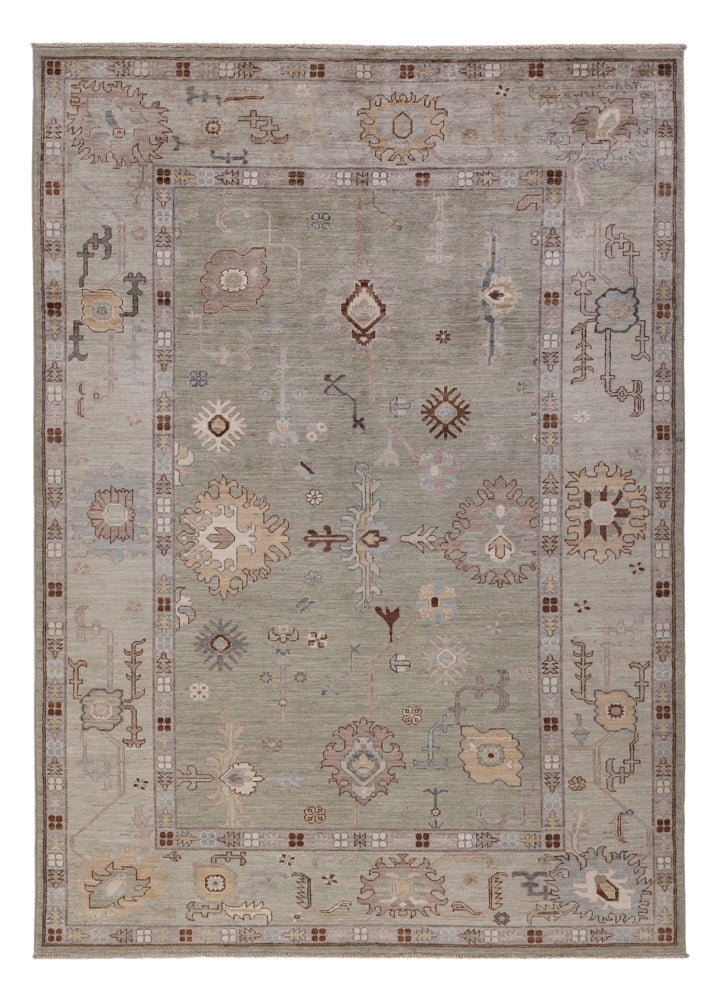
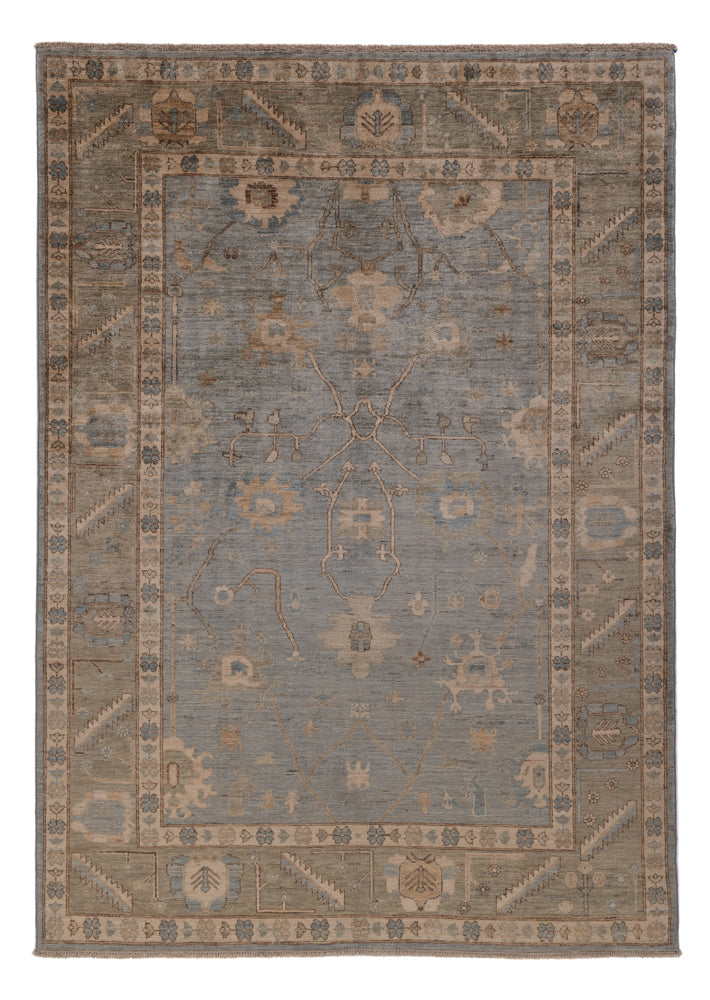
Photo: Morgenland Rugs
Usak rugs, also spelled Oushak in trade, are among the oldest and most history-rich knotted work of Anatolia. They come from the city of Uşak in the west Anatolian highlands of Turkey and shaped the picture of the Turkish rug in Europe for centuries. Characteristic are generous star and medallion designs, a soft, lustrous wool pile, and a muted palette of terracotta, mustard yellow, and sage tones. Historical Usak rugs from the 15th to the 17th century today count among the most sought-after collector pieces of all and are documented in European Renaissance paintings.
What is a Usak rug?
A Usak is a hand-knotted Turkish rug from the city of Uşak and its surroundings in western Anatolia. Knotting uses the symmetric Turkish knot, the Ghiordes knot, on a cotton or wool warp with a wool pile. The name stands at the same time for a whole design tradition: over centuries Uşak supplied large-format rugs with central star or round medallions that filled whole halls and reached Ottoman palaces, mosques, and European noble houses.
Unlike the fine court workshops of Hereke or the central-Anatolian Kayseri rugs, the Usak is a more coarsely knotted, decorative area rug. Its strength lies not in the highest knot density but in the generous composition, the warm wool, and the calm, muted palette.
Origin
Uşak lies about 200 kilometres inland from İzmir in the west Anatolian highlands, on old trade routes between the Aegean coast and central Anatolia. The region counts among the oldest knotting centres of Anatolia. It had its heyday in the 15th to 17th centuries, when Uşak rose to become the leading production place of the Ottoman Empire for representative large rugs.
From this era come several rug groups that carry fixed names in research. The early geometric patterns with interlocking octagons are called Holbein rugs after the painter Hans Holbein the Younger, because he reproduced them in his pictures. The somewhat later pieces with offset diamonds and cross forms are called Lotto rugs after the painter Lorenzo Lotto. Also famous are the large Star Usaks with jagged star medallions and the Medallion Usaks with a central, often oval round medallion on a dark-red or deep-blue ground. These historical Usak rugs reached Europe via Venetian and Genoese merchants and are depicted there in numerous Renaissance paintings, which is why whole pattern types are named after the painters in the art trade.
Uşak belongs to the wider family of Anatolian rugs and stood in direct exchange with the court workshops of the empire for centuries. While the imperial workshop in Hereke was founded only in 1843, Uşak was already by then an established centre with a centuries-old tradition.
Patterns and colours
The defining feature of a Usak rug is the large-format medallion composition. At the centre usually stands a jagged star medallion or an oval round medallion played around by smaller geometric secondary forms and stylised vines. Alongside stand the all-over patterned fields of the Holbein and Lotto tradition with their repeat-pattern octagons and diamond grids. The drawing remains geometric and planar overall, not finely curvilinear as with Persian workshop patterns.
The palette of historical Usak rugs is warm and saturated, with bold brick red, deep indigo blue, and golden yellow. Modern Usak productions, as often made today as decorative home rugs, show by contrast a deliberately muted, slightly washed palette of terracotta, mustard, sage green, grey, and ivory. These muted tones and the soft, silken-shimmering pile make the modern Usak a sought-after furnishing rug. The borders are usually multi-tiered and take up geometric bands, palmettes, or stylised plant motifs.
Material and knotting technique
The pile of a Usak is sheep's wool, traditionally from the lustrous, long-staple wool of west-Anatolian sheep. This wool takes colour well and gives the rug its characteristic soft shimmer. Warp and weft are usually cotton; on older and nomadically influenced pieces also wool. High-quality examples can carry silk accents in the pile that bring additional glow to individual pattern parts. Which fibres are processed in oriental rugs is covered in the overview of materials.
The Usak is knotted with the symmetric Turkish knot, also called the Ghiordes knot, characteristic of the whole of Anatolia. The pile is sheared medium-long, so the large-area patterns stand out clearly and the wool keeps its sheen. How the individual steps from spinning through knotting to shearing work is described in the article on production. The selvedges and fringes are part of the basic construction and are not added on afterwards.
Knot density and quality
Usak rugs belong to the rather coarsely to medium-finely knotted Anatolians. Knot density typically lies between 80,000 and 200,000 knots per square metre. This range is chosen on purpose: the generous star and medallion patterns do not need extreme fineness, and the somewhat coarser knotting gives the rug its robust, everyday-suitable character. How knot density affects quality and price is covered in detail in its own article.
The quality of a Usak therefore measures itself less by the plain knot count than by the wool, the dye, and the cleanness of the drawing. High-quality pieces show lustrous, hand-spun wool, a balanced colour picture without garish tones, and evenly drawn borders. Antique Usak rugs from natural dyes develop a fine patina over the decades and a characteristic abrash, that is, slight colour variations from hand-dyed yarns.
| Feature | Expression on the Usak |
|---|---|
| Knot type | symmetric Turkish knot (Ghiordes) |
| Knot density | approx. 80,000 – 200,000 knots/m² |
| Pile material | sheep's wool, occasionally with silk accents |
| Warp and weft | usually cotton, older also wool |
| Pile height | medium-long sheared |
| Typical patterns | star medallion, round medallion, Holbein and Lotto fields |
| Colour character | muted terracotta, mustard, and sage tones; historically saturated |
What is a Usak rug worth?
The value of a Usak rug depends strongly on age and category. Antique pieces from the 16th and 17th centuries are museum-grade collector objects and fetch top prices at international auctions; large Star and Medallion Usaks of this era count among the most expensive oriental rugs of all. Such pieces only rarely reach trade and are usually handled through specialised auction houses.
Modern and semi-antique Usak rugs, by contrast, move in a more accessible range and are bought above all as decorative home rugs. Here size, wool quality, dye, and condition set the price. For the basic placement of material and workmanship, see why genuine rugs are expensive, the value overview, and the general buying guide.
How can you tell a genuine Usak rug?
Typical signs of a genuine, hand-knotted Usak include:
- Hand-knotted back: the pattern is mirrored clearly; individual knots are visible. Machine ware lacks this structure.
- Symmetric Turkish knot: the Usak is worked with the Ghiordes knot, typical of the whole of Anatolia.
- Large-format medallion or field composition: star medallion, round medallion, or repeated Holbein and Lotto patterns.
- Lustrous sheep's wool with a soft, slightly silken hand rather than dull synthetic.
- Muted, harmonious colours, with older pieces in natural dyes showing fine abrash.
- Fringes as part of the warp, not sewn on afterwards.
Since Uşak today also produces machine-made rugs in the same style, back, knot type, material, and pattern guidance should be judged together. A step-by-step guide is in Is my rug genuine?; pointers for the regional placement are in identifying provenance.
Care
Thanks to the robust wool pile and the medium knot density, the Usak is an easy-care working rug. Regular vacuuming in the direction of the pile and occasional professional cleaning preserve sheen and colours. Blot spills at once with clear water, without rubbing. Long, direct sunlight will fade naturally dyed tones above all and should be avoided. With antique pieces particular caution is required; when in doubt they belong in expert hands. Detailed guidance is in the care overview.
Frequently asked questions
What is the difference between Usak and Oushak?
Usak and Oushak denote the same rug; these are just two spellings of the city name Uşak. In German-speaking trade Usak is widespread, in the English-speaking world and with designer rugs usually Oushak.
Are Usak rugs Turkish or Persian?
Usak rugs are unambiguously Turkish. They come from western Anatolia and are knotted with the symmetric Turkish knot. With the fine, curvilinear Persian rugs, they share only some motifs, not knot type and construction.
What makes historical Usak rugs so valuable?
Antique Usak rugs from the 15th to the 17th century stand at the beginning of European oriental rug trade and are depicted in numerous Renaissance paintings, for instance as Holbein and Lotto rugs. Their rarity, age, and art-historical significance make well-preserved pieces high-priced collector objects.
What distinguishes a Usak from a Hereke rug?
The Usak is a more coarsely knotted, large-area wool rug from western Anatolia with geometric medallions. The Hereke is a fine court workshop ware in pure silk or the finest wool with a very high knot density and curving court patterns. Both are Turkish but differ strongly in fineness and character.
Which colours are typical for modern Usak rugs?
Modern Usak rugs usually show a muted, slightly washed palette of terracotta, mustard yellow, sage green, grey, and ivory. This calm colour world and the soft wool sheen make them popular furnishing rugs.
Are Usak rugs suitable for heavily used rooms?
Yes. The robust sheep's wool and the medium knot density make hand-knotted Usak rugs hard-wearing and suited to daily use. They suit living and dining areas well; only antique collector pieces do not belong in heavily walked zones for conservation reasons.
How do I care for a Usak rug correctly?
Regular vacuuming in the direction of the pile and professional cleaning every few years are enough. Blot spills at once with clear water, do not rub, and avoid long, direct sunlight. Antique pieces should be cleaned only by experts.
Impressions of the origin
Places, landscapes and landmarks around the home of Ushak rugs. Click any image for a larger view.


