Kazak rugs: bold medallions from the southern Caucasus
Kazak rugs from the southern Caucasus impress with bold geometric patterns and luminous colors.
- Region
- Caucasus
- Category
- Nomad rugs
- Manufacturing
- Hand-knotted
- Knot density
- 80,000 – 180,000 knots/m²
Profile
- Manufacturing
- Hand-knotted
- Origin
- Southern Caucasus — Azerbaijan, Armenia, Georgia
- Pile material
- Wool on wool
- Knot density
- 80,000 – 180,000 knots/m²
- Features
- Bold geometric motifs, intense reds and blues, robust weave
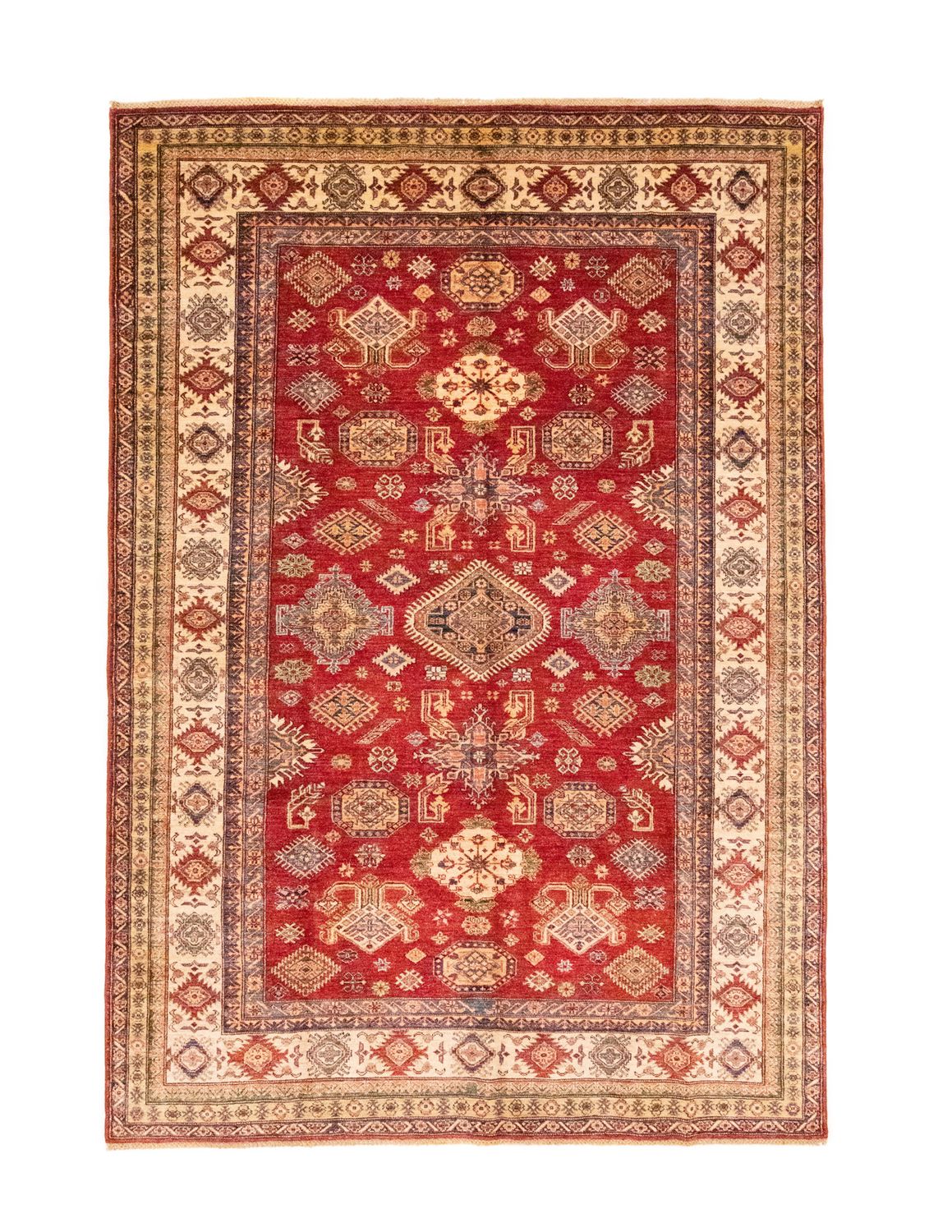
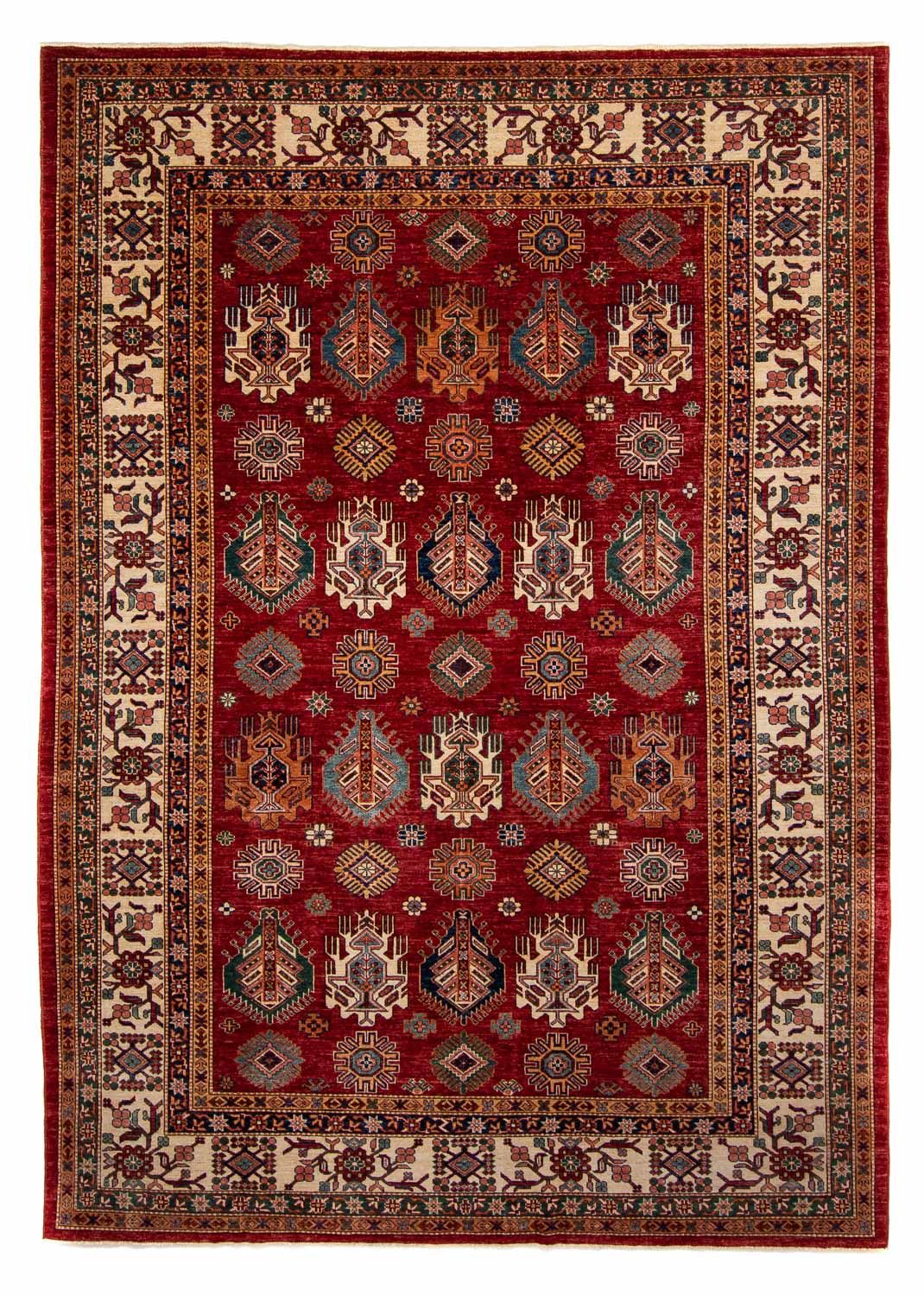
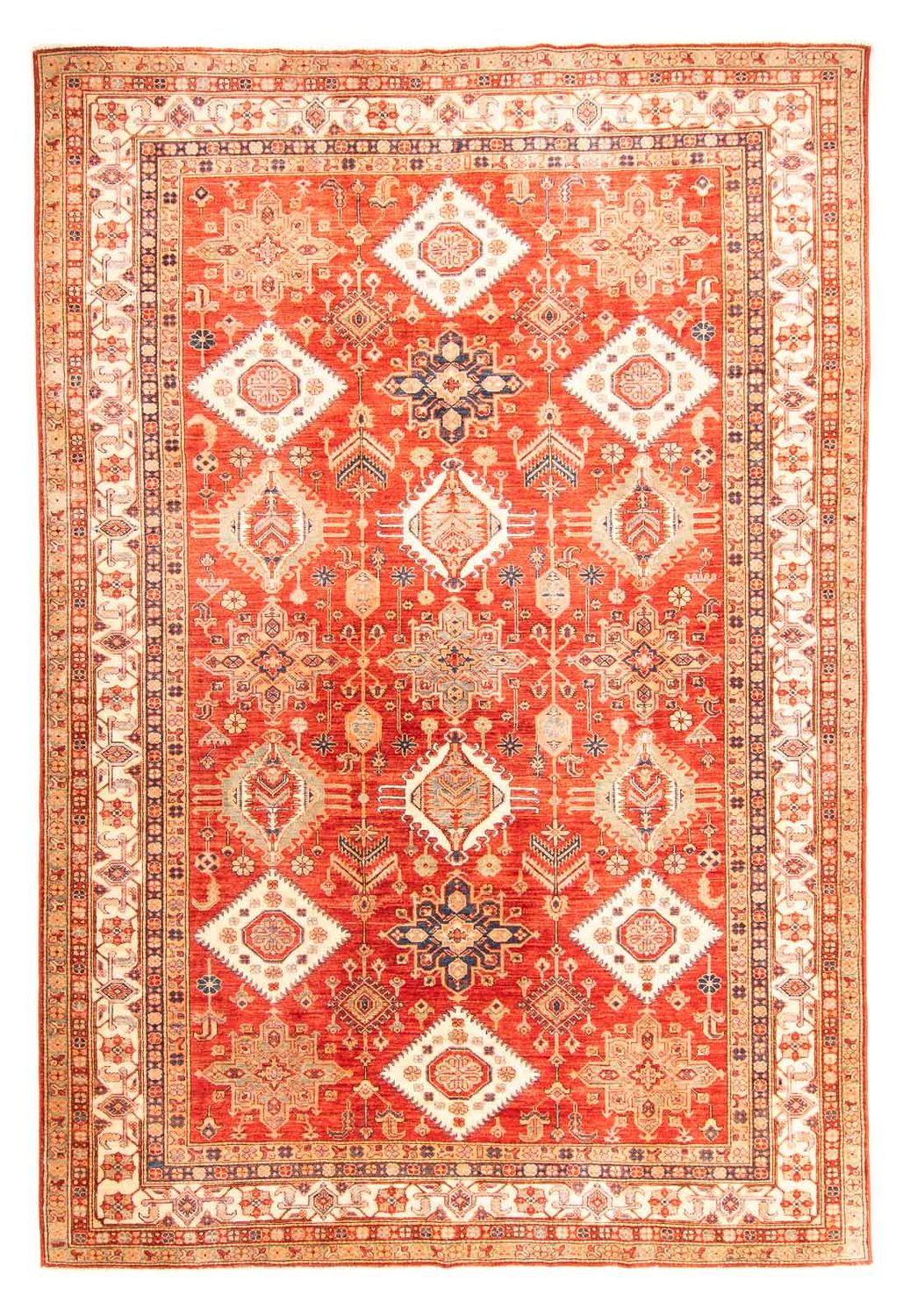
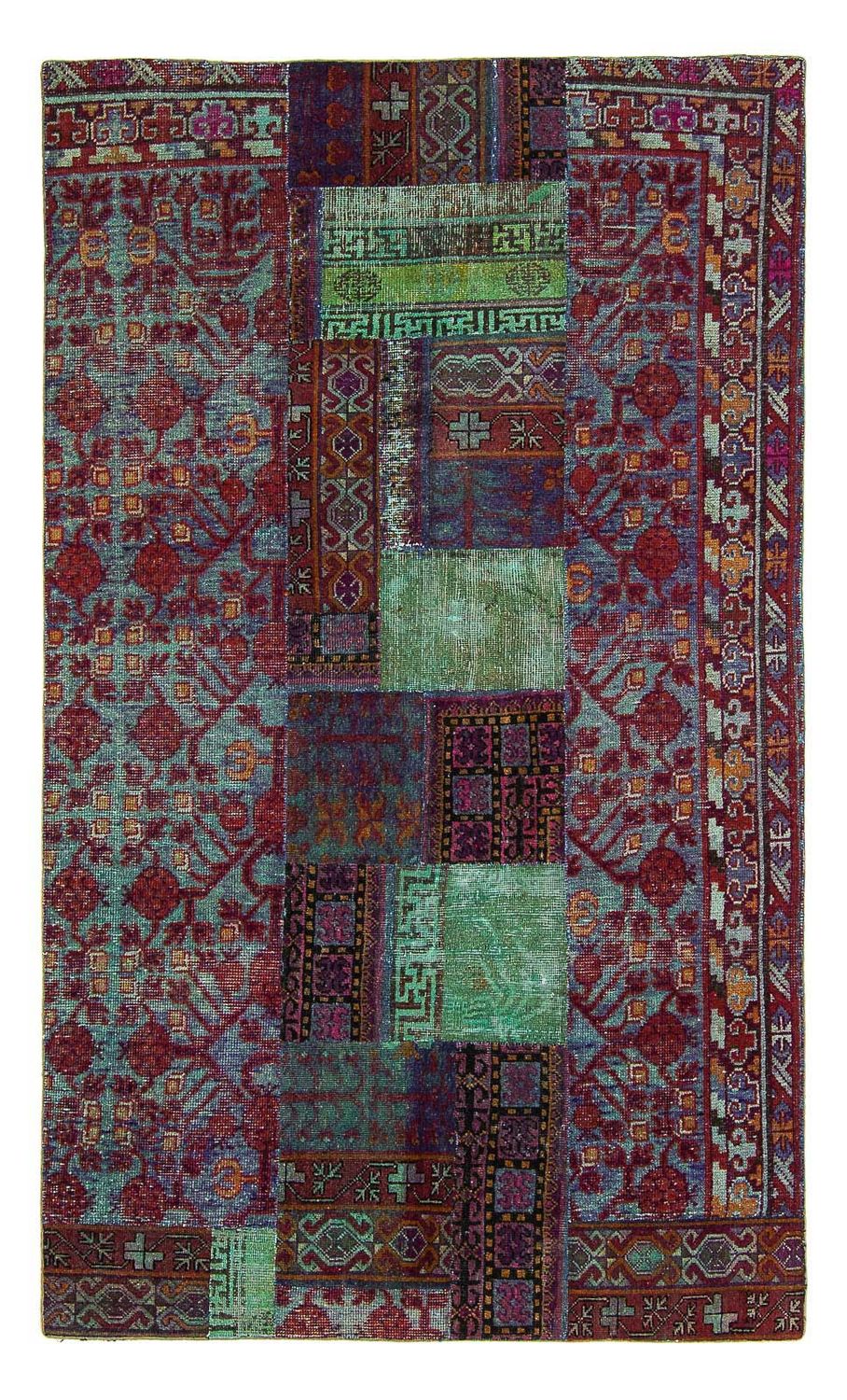
Photo: Morgenland Rugs
Kazak rugs are among the best-known and most expressive representatives of Caucasian knotting art. They come from the southern Caucasus in the border area of present-day Armenia, Georgia, and Azerbaijan, and stand out through large, bold geometric medallions, luminous colors, and a vigorous wool knotting. Unlike the fine Persian workshop patterns, the Kazak relies on few, striking forms and an unmistakably archaic character. Antique Kazak rugs are still among the most sought-after Caucasian collector pieces today.
What is a Kazak rug?
A Kazak is a hand-knotted rug from the southwestern Caucasus, known for its geometric, large-scale design. Important for placement: the Kazak is a Caucasian rug, not a Persian one. It is knotted with the symmetric Turkish knot, the material is pure wool, and the patterns have a particularly striking effect through their clear, planar geometry. The term at the same time covers an entire stylistic family, since many subtypes are named after places and valleys of the region.
The Kazak rug has nothing to do with the Central Asian population group of the same name or the present-day state of Kazakhstan. The name goes back to the historical knotting area around the town of Kazak in the southern Caucasus, near the present Armenian-Azerbaijani border.
Origin
The historical Kazak area extended over parts of present-day Armenia, Georgia, and Azerbaijan in the southern Caucasus. Knotting was traditionally done by Armenian and Georgian villagers and by Turkic-speaking tribes who settled in the region. The population lived partly settled in mountain villages, partly semi-nomadically, which is reflected in the robust, village-archaic character of the rugs.
The heyday of Kazak production lay in the 18th and 19th centuries. The most valuable examples with clear natural dyeing and vigorous drawing come from this period. The Caucasus was for centuries a melting pot of many peoples and religions, and its location between the Ottoman and Persian empires is mirrored in the variety of patterns. After World War II, production in the historical region declined sharply. Since then, rugs in the Kazak style have been knotted mainly in Afghanistan and Pakistan, often using natural dyes and hand-spun wool.
Patterns and colors
The hallmark of the Kazak is large, stylized medallions on an open, often luminously red field. The drawing is strictly geometric and symmetrically built. Typical motifs are stepped diamond medallions, eight-pointed stars, horned hooks, stylized animals, and the tree of life. Many subtypes are recognizable by fixed pattern types: the Lori-Pambak shows a large open medallion, the Sevan a striking turtle motif, the Karachof large square medallions with a white ground.
The palette is dominated by warm, luminous reds, complemented by deep indigo blue, rich green, clear yellow, ivory, and black. The contrast is deliberately hard, which gives the patterns their characteristic radiance. The borders usually consist of several bands, often with the well-known wineglass and leaf border or jagged wave motifs. Slight abrash, that is, color shifts from changing wool batches, is frequent in old Kazaks and counts as a sign of authenticity, not a defect.
Material and knotting technique
Traditional Kazak rugs consist entirely of sheep's wool, both in the pile and in warp and weft. The wool of local mountain sheep breeds is firm, long-fibered, and of natural sheen, lending the rug durability and luminosity. It is hand-spun and traditionally dyed with natural colors: madder for reds, indigo for blue, walnut shells for brown, plus various plant extracts for yellow and green. More on the fibers can be found in materials and virgin wool.
The Kazak is knotted exclusively with the symmetric Turkish knot, also called the Ghiordes knot. This knot type is characteristic of Caucasian and Anatolian rugs and emphasizes the geometric, planar pattern language, since it is particularly suited to clear straight contours. How the individual steps from spinning to shearing proceed is described in the article on production. The pile is sheared medium-high to high, giving the Kazak its full, soft handle. The lateral edges are wrapped with wool, and the fringes are the natural extension of the warp threads.
Knot density and quality
The knot density of a Kazak usually lies between 80,000 and 150,000 knots per square meter, classifying it as medium-fine to coarse. This relatively open knotting is not a quality defect but part of the style: it reinforces the rustic character and lets the large geometric forms stand out strikingly. For strongly geometric rugs, density is in any case less decisive than for fine floral patterns. How knot density influences quality and price is explained in a dedicated essay.
More important than pure knot counts for the Kazak are the wool quality, the clarity and luminosity of the natural dyes, and the balance of the drawing. A good Kazak shows lustrous, fat-rich wool, rich colors, and a vigorous, well-proportioned pattern composition. Antique 19th-century pieces with a preserved natural-dye palette are considered the most valuable representatives.
Kazak and related Caucasian types at a glance
| Provenance | Region | Typical features |
|---|---|---|
| Kazak | southern Caucasus | large geometric medallions, coarse, luminous red |
| Shirvan | eastern Caucasus (Azerbaijan) | more finely knotted, small-scale geometric patterns |
| Karabagh | Mountain Karabakh | strong colors, partly floral influences |
| Gendje | near the Kazak area | elongated formats, diagonal stripe patterns |
| Heriz | northwest Persia | Persian, geometric medallion, firm comparison style |
| Caucasus | collective region | umbrella term for all Caucasian provenances |
What is a Kazak rug worth?
The value of a Kazak depends on age, condition, size, wool quality, dyeing, and the clarity of the pattern. Antique pieces from the 18th and 19th centuries with pure natural dyeing are sought-after collector items and accordingly fetch high prices. Modern reproductions from Afghanistan and Pakistan are more affordable but, as hand-knotted wool rugs, remain more value-stable than industrial ware.
Since the Kazak is a popular style, many pieces are knotted outside the historical region. For placing age and authenticity, identify valuable Persian rugs offers methodological orientation, alongside the value overview and the buying guide.
How do you recognize a genuine Kazak rug?
Typical signs of a genuine Kazak include:
- Wool on wool: warp, weft, and pile consist of hand-spun sheep's wool, not cotton.
- Symmetric Turkish knot: the Kazak uses the Ghiordes knot, readable on the back, unlike most Persian provenances.
- Large geometric medallions: few, bold forms on an open ground instead of small-scale floral vines.
- Luminous natural dyes with abrash: madder red, indigo, and green with slight color shifts speak for handcrafted origin.
- Medium-high to high pile with lustrous, fat-rich wool and a full handle.
- Fringes from the warp: the fringes are the extended warp threads, not sewn on afterwards.
Since Kazak is now also knotted outside the Caucasus, pattern, material, back, and age patina should be assessed together. A step-by-step guide is given in Is my rug genuine?; for regional placement, recognize origin helps.
Care
The firm, fat-rich wool makes Kazak rugs robust and easy to care for, even in heavily used rooms. Regular vacuuming in the pile direction and occasional professional cleaning preserve sheen and colors. Stains should be blotted immediately with clear water, without rubbing. Long direct sunlight fades the colors and should be avoided. Detailed notes are in the care overview.
Frequently asked questions
Where does a Kazak rug come from?
Kazak rugs come from the southern Caucasus, from the border area of present-day Armenia, Georgia, and Azerbaijan. The name goes back to the town of Kazak near the Armenian-Azerbaijani border. Today, many pieces in the Kazak style are knotted in Afghanistan and Pakistan.
Is a Kazak rug a Persian rug?
No. The Kazak is a Caucasian rug, not a Persian rug. It is worked with the symmetric Turkish knot and differs through its large-format, bold geometry markedly from the fine floral patterns of Persian workshops.
Which knot does a Kazak rug use?
The Kazak is knotted exclusively with the symmetric Turkish knot, also called the Ghiordes knot. This knot type is typical of Caucasian and Anatolian rugs and is particularly suited to clear geometric contours. More on this under knot types.
What do the patterns on a Kazak rug mean?
The geometric medallions, stars, and hook motifs go back to inherited tribal and village symbols. Many subtypes such as Sevan or Karachof are recognizable by fixed pattern schemes. An interpretation of common symbols is offered in the symbol overview.
Are modern Kazak rugs authentic?
Modern Kazak rugs follow the inherited patterns and natural colors but are mostly knotted outside the historical Caucasus. They are stylistically authentic and well crafted but do not come from the original region of origin. Antique pieces from the Caucasus itself are markedly rarer and more valuable.
What does a Kazak rug cost?
The price depends on age, condition, size, and dyeing. Modern reproductions are affordable, while antique 19th-century Caucasian Kazaks with natural dyeing fetch significantly higher prices as collector pieces. The value overview provides placement.
How do I care for a Kazak rug properly?
Regular vacuuming in the pile direction and professional cleaning every few years suffice. Blot stains immediately with clear water, without rubbing. The robust wool handles heavy use well; long direct sunlight should be avoided.
Impressions of the origin
Places, landscapes and landmarks around the home of Kazak rugs. Click any image for a larger view.


